“one of the most brilliant performers of his era anywhere in the world”
Professor Colin Lawson CBE, Director Emeritus, Royal College of Music
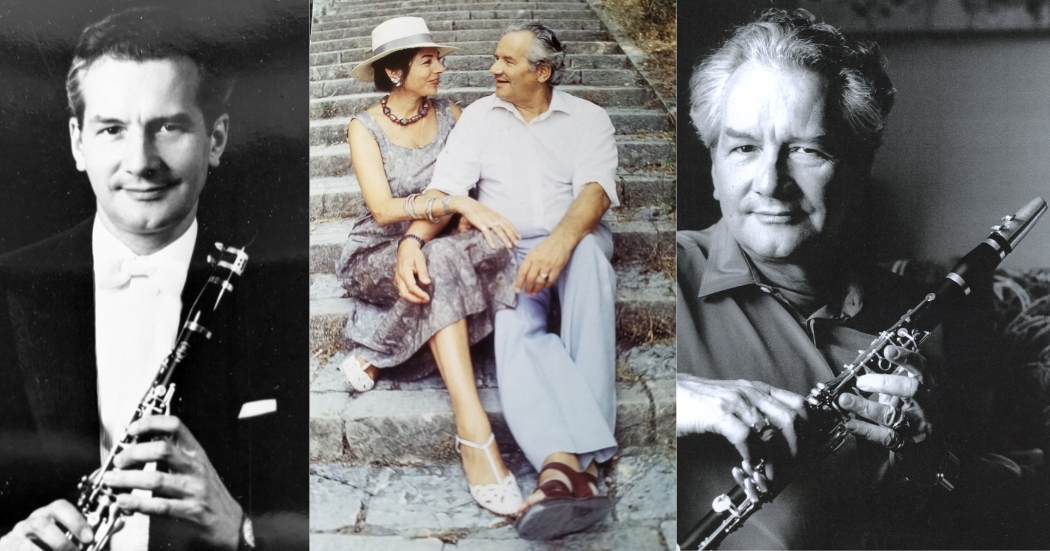
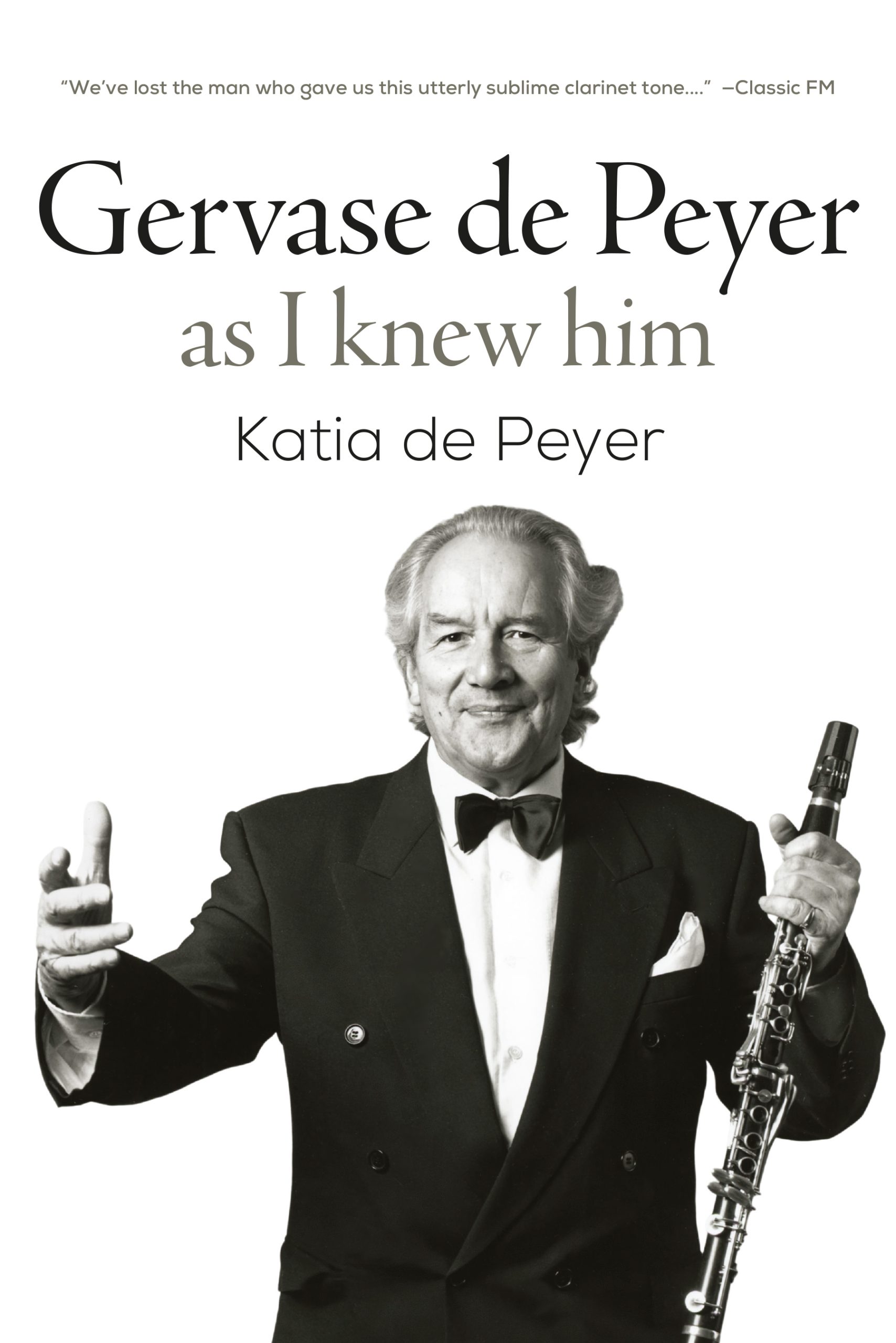
Gervase de Peyer as I Knew Him is an intimate portrait of renowned classical clarinettist Gervase de Peyer by his wife and partner of forty years, published to mark the centenary of his birth. A musician’s musician, Gervase was admired by his peers for extending the range of the clarinet as a solo instrument, inspiring many acclaimed classical composers to write with his tone in mind, and for the musical brilliance and flair that spurred his international career, including as principal clarinet of the London Symphony Orchestra and a founding member of the Chamber Music Society of Lincoln Center.
Praise for Gervase de Peyer:
“It’s a real delight to have within these pages so many fascinating insights into the life of one of the most distinguished alumni of the Royal College of Music. Gervase de Peyer was an inspiration to many generations of clarinettists and his influence extended well beyond his own instrument as one of the most brilliant performers of his era anywhere in the world.”
Professor Colin Lawson CBE, Director Emeritus, Royal College of Music
“We’ve lost the man who gave us this utterly sublime clarinet tone….” Classic FM
“Clarinettist who had Aaron Copland, Paul Hindemith and Francis Poulenc queuing up to have their works performed by him.” The Times
“…an outstanding soloist and chamber musician…[who] inspired several composers to write new works….” The Guardian
“Acclaimed as the most recorded clarinet soloist in the world….” The Independent
Review copies (PDF and physical book) available on request
In the days before self-service machines, when library books were issued by hand and date-stamped, I would feel sorry when I opened a book to see it last stamped more than a decade before. I thought of the volume standing slightly lop-sided on the shelf, waiting for a person to stop and take it home. I’ve been feeling a similar way recently, as I take down off my shelf music that I haven’t looked at for years. One such collection is Francis Poulenc’s Three Novelettes, speckled with a scattering of pencil markings and an old PIN for a bank card. So last year I sat down and learned the first of the Novelettes, playing it in an informal concert for my students (they are very forgiving of my significant lapse in regular practice).
Even as I discover more of Poulenc’s piano music, Novelette No. 1 remains one of my favourite works by this French composer. Written in 1927, when Poulenc was about 28, it’s a joyful piece and full of character. The opening melody is serenely beautiful, and it always gives me a sense of calm. Enjoy this for its own sake, it’s saying; just listen, and stop rushing around. It floats over an arpeggiated bassline in C major and although there are discords, they are so subtle as to pass almost unnoticed. There’s then a minor section, where the discordancy becomes more obvious, but it’s over with quickly and after a lyrical passage we’re into a bawdy dance; I can just imagine drinkers stomping round the bar in days gone by. A reflective passage follows and we head away from the party back into the peaceful serenity of the opening theme, with the thick chords near the end sounding bell-like in their brightness.
Novelette No. 2 is, on first hearing, very different. It brings to mind, for me, a company of elves, cavorting around a woodland fire. The upbeat tempo, staccato articulation and use of the piano’s range helps conjure up this image. The melody is so dance-like, but light and quick, suggesting something other than even the most agile of human dancers. Introduced to this revelry is a stately tune that threatens to calm the festivities, but it lasts merely a few bars before tumbling down and jostling with the opening pixie theme, eventually succumbing in a ff glissando. The opening music returns, and the elves dance away into the night, sans relentir.
There is a third Novelette, which was written many years later, in 1959. For me, it feels like a separate piece; it’s based on a theme by Manuel de Falla, and is beautiful, yes, but also nostalgic and reflective with a tinge of melancholy. To me, it’s another example of Poulenc seeming to make the task of composition so easy. The melody soars above the bass and then appears in the middle of the piano before flying up again and ending at peace, or so I like to think.
I was introduced to Poulenc’s music through the ABRSM; Improvisation No 13 by Francis Poulenc was on the Grade 8 piano list around the turn of the millennium and I still have the collection. Written in 1958, this Improvisation is wistful and yearning; a composer looking back, perhaps. Poulenc had a playful nature, but there was a deeply serious side to his character, which is evident in so much of his work (his piano pieces are just a small part of his output). Poulenc’s writing is so expressive, and although there’s a melancholy air scattered across his piano music, somehow I always find it uplifting (with the possible exception of Mélancolie itself, written in 1945). It’s the ability to seemingly pluck a melody out of the air that I love; his writing is both graceful and perfectly formed, and with bursts of humour that show a different side of his personality.
Replaying the Novelettes has spurred me on to find more of Poulenc’s piano music. I love the first Nocturne but haven’t looked properly at the other seven, nor learnt the Impromptus. Despite the fact that attempting any of the above will be a challenge, I can’t wait.
Frances Jones read music at York University followed by a PGCE at Cambridge. She teaches piano in SW London.
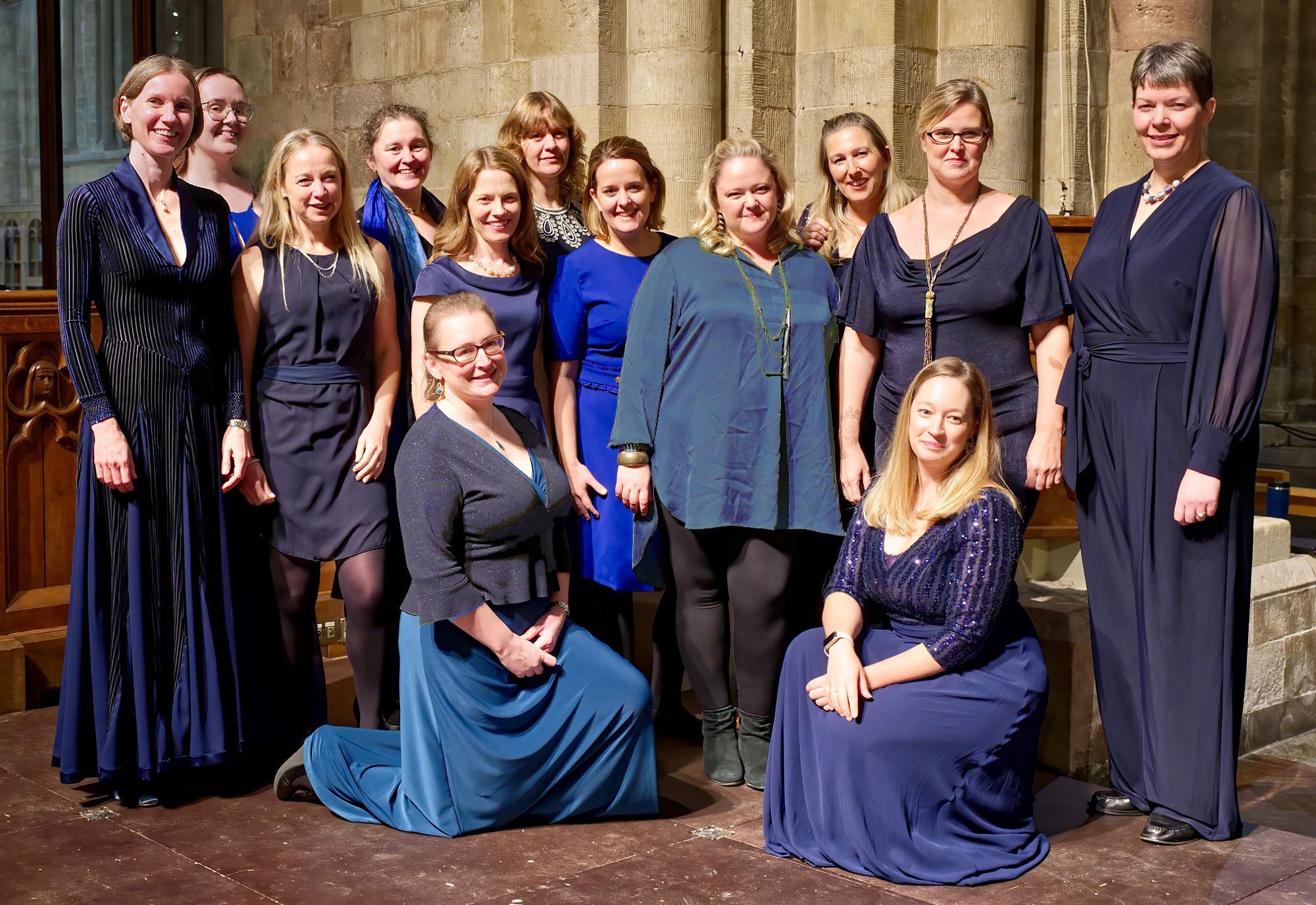
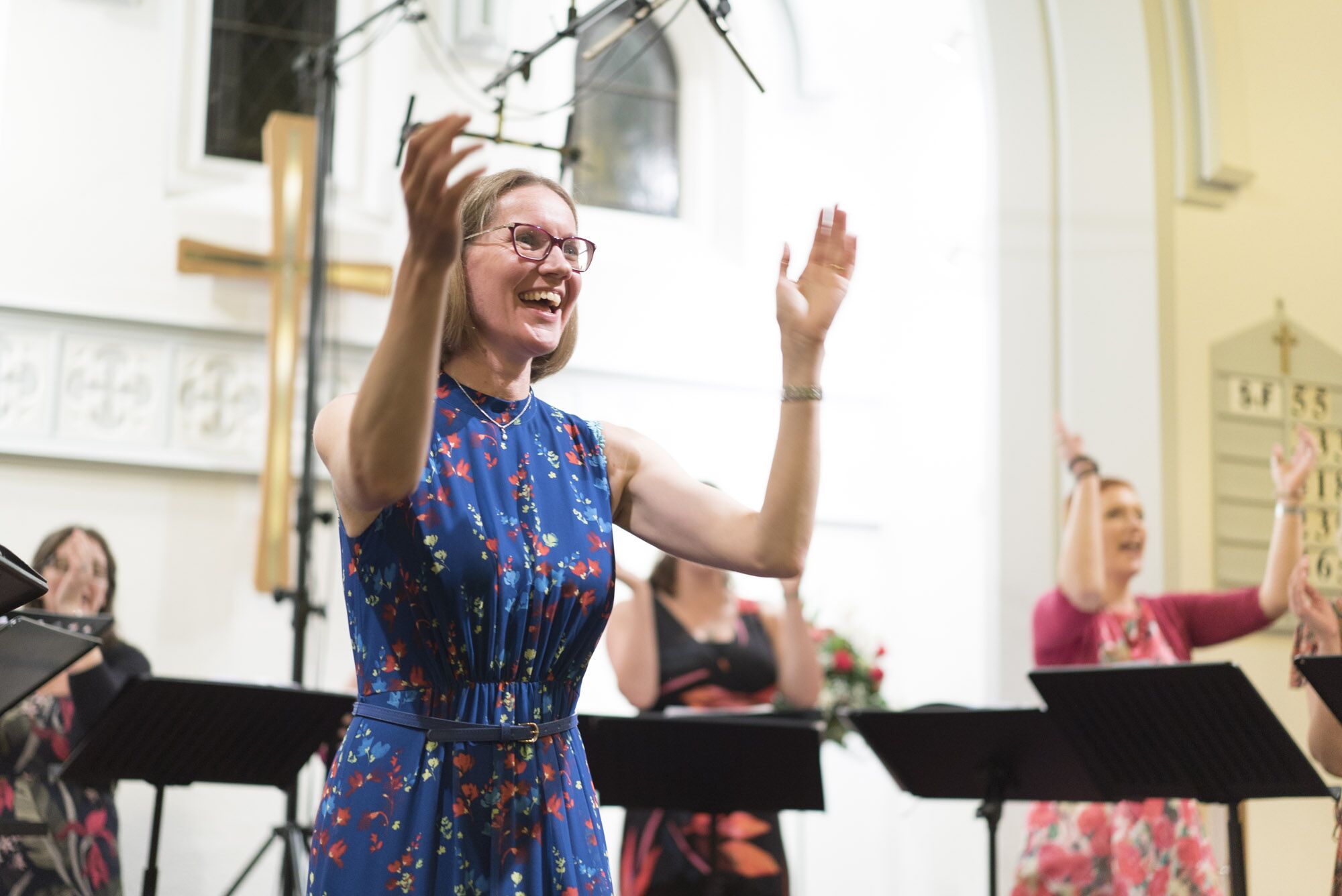
Five Beacons of Light: A Cantata for the Sea is a new large-scale choral work composed by award-winning British composer Cheryl Frances-Hoad with words by Di Sherlock. Commissioned to celebrate the 10th anniversary of Sonoro, the piece received its world premiere on 25th April at Worcester Cathedral, performed by Youth Choral Worcs, Sonoro, and the English Symphony Orchestra, conducted by Neil Ferris.
An astonishing work that engages young voices working equally with professional singers…
A superb evening of excellence. Outstanding singing from Sonoro and Youth Choral Worcs. Tremendous opportunity for young singers
An astonishingly good event
Audience comments from world premiere performance
The project moves to Cornwall for its next performance, taking place on Friday 3rd July at the striking Minack Theatre, a unique open air venue built into the cliff side on the coast, just four miles from Land’s End, and a fitting location for a choral work which expresses fears and hopes about the environment and the threat of rising sea levels through powerful music and words. For this performance, Sonoro is joined by Cornwall Youth Choirs.
A Narrative of History, Community and Environmental Crisis
The cantata brings to life the vibrant characters and communities associated with four iconic UK lighthouses: Bell Rock, Bishop Rock, Les Casquets, and Haulbowline. Scored for a unique ensemble of string quintet, piano, percussion, Sonoro, and youth choir, the piece explores a poignant role reversal in our relationship with the natural world. It contrasts the historical purpose of these rock lighthouses – built to safeguard humanity from the peril of the sea – with the modern reality that the sea is now in peril from humanity due to man-made climate change.
The ‘Fifth Beacon’: Empowering the Next Generation
At the heart of the project is the “fifth beacon”: the young people themselves. Through Di Sherlock’s imaginative and beautifully-crafted words, these young performers will illuminate the work with their own voices and perspectives. The voices of these young singers serve as a new “beacon of light”, celebrating the human spirit as a creative force and guiding us towards a more responsible relationship with our oceans.
Librettist Di Sherlock says, ‘I’d long been wanting to voice my concern about the state of our oceans, rivers, lakes in a way that did not deny the reality but, equally, did not feed into the doom and gloom that brings only despair and overwhelm. Ideas floated about but they needed an anchor. Then I fell upon Tom Nancollas’ ‘Seashaken Houses’ and read all about rock lighthouses – referred to in past times as ‘Beacons of Light.’ The vision, courage, perseverance and sheer grit of the engineers, workmen, keepers, investors and corporations who made these ‘impossible Houses’ possible seemed to echo what is needed today as we face irrefutable climate change – not all of it man-made but our contribution is significant. The rock lighthouses were built to save us from the peril of the sea. Today rising sea levels still threaten lives and livelihoods. But, equally, the sea is in peril of us. And of course the two are connected.
During my research I asked scientists what would be their ‘Beacon of Light’ today – if there even was one. They were unanimous: “Young People!” And so Cheryl and I got funding from the Genesis Foundation to explore ideas at Albyn School, Aberdeen. Working with Cheryl is like handing over a map to a fellow voyager confident not only that she’ll know how to read it, but that she will use it to conjure worlds in a way I never could imagine. We were awed and heartened by the passion and commitment of the students as we workshopped marine issues of pollution, plastic and extinction of species in music, movement and spoken word. Cleaning up the mess (of their elders but not betters), restoration and care were no brainers. They were one, not just with each other in recognising our global responsibility, but with the animals, minerals, trees, plants and waters with whom we share the Earth. And they most definitely were not giving way or giving up.
For the singers who give their amazing voices and the audiences who receive them, I hope the work will inspire a love for our waters and the creatures who live in them, allowing their voices not just to be heard but taken to heart. New ways to clean up our House, aligned with Nature’s intelligence, are firing up scientists and the school lab. Even in a post-truth world, the true Human is a Beacon of Light.’
Conductor Neil Ferris says, ‘This major new work combines the instinctive brilliance of two outstanding artists, Cheryl Frances-Hoad and Di Sherlock, and I am so happy that Sonoro can bring it to young people and audiences in Worcester and Cornwall, with more to come. Both Cheryl and Di have written an inspiring piece that is so beautifully judged in its imagination, its musical and expressive language, and its offer of hope. It will capture the minds of a generation and give an outlet to express themselves in words and music.’
Supported by the Bransford Trust, the Blyth Watson Charitable Trust and the Pamela Matthews Charitable Trust, the project will reach hundreds of young people, many of whom will be performing alongside professional musicians for the first time. Local youth groups joining Sonoro include Youth Choral Worcs and Cornwall Youth Choir. Further UK performances in 2026 and 2027 are in the pipeline.
This ambitious project promises to blend world-class professional performance with community engagement to address the most pressing environmental questions of our time.
Cheryl Frances-HoadMinack TheatreDi Sherlock, writerLes Casquets lighthouseHawlbowline lighthouseBishop Rock lighthouseBell Rock lighthouseSonoro
Pianist Anastasiya Bazhenova explores the fragility of the human condition in her debut album
In her debut recording, pianist Anastasiya Bazhenova presents a programme that goes beyond a simple chronological survey of keyboard music. From Mendelssohn to Madness is not just about contrasting different historical periods; it is a deep exploration of the human condition and how our inner worlds change when external stability starts to fade.
For me, the tension is already present in the Mendelssohn. His music often sounds lyrical and balanced, but there is also something fragile in it, as if the stability could break at any moment. The Fantasia in F-sharp minor begins to open up that tension — it is more restless, more searching. And by the time we reach Prokofiev, the tension is no longer hidden. It becomes direct, physical, almost violent. So the “madness” in the title is not only the destination. It is something that slowly reveals itself along the journey.
Anastasiya Bazhenova (interview with Indie Boulevard magazine)
The album begins within the world of Felix Mendelssohn Bartholdy, a composer whose music hails from an era where form offered a sense of reassurance. In his Songs Without Words, Bazhenova uncovers a serene human voice that communicates with the confidence that it can still be heard without exertion. During this period, qualities such as clarity, proportion, and beauty were not merely ornamental; they were fundamental tools for understanding both oneself and reality.
However, even within this transparent beauty, a subtle tension begins to emerge. In the Fantasia in F-sharp minor, this balance is no longer an automatic state but a conscious effort. Here, the music becomes a battleground where light and darkness clash, symbolising an inner struggle to preserve wholeness against forces that seek to dismantle it. For Mendelssohn, form serves as a final battleground against chaos.
The narrative takes a sudden turn with Sergej Prokofiev’s Sixth Sonata, which opens the space beyond the rupture of the old order. This is music for a world that no longer promises stability—a world where the pace of change has quickened beyond our ability to comprehend.
Within this sonata, intense emotional states coexist in a raw, exposed form: fear, fury, despair, irony, and paranoia. The music forsakes the pursuit of traditional harmony, opting instead to record reality in its most unfiltered state. As the album moves from Mendelssohn to Prokofiev, the listener undergoes a inward shift: a transition from trusting in form to living without guarantees, and from viewing beauty as a support to acknowledging the need to live without it.
Rather than viewing these pieces as a collection of separate works, Bazhenova considers the programme as a single internal trajectory. The album does not seek to resolve the tensions it presents or provide simple explanations. Instead, it allows the music to unfold as a continuous process – a musical narrative of a human being who keeps feeling, thinking, and searching for meaning even when the structures of the past have broken down.
We often think of madness as something extreme or pathological, but in reality it is much closer to ordinary human experience. It can grow out of fear, obsession, loneliness, or simply from the unbearable tension between what we feel inside and what the world expects from us. In that sense, “madness” in this album is not something distant or theatrical. It is something that lives quietly inside many people. Music simply gives it a voice.
Anastasiya Bazhenova
From Mendelssohn to Madness is released on CD and streaming 1 April 2026 on the Etcetera Records label
The Cross-Eyed Pianist is free to access and ad-free, and takes many hours every month to research, write, and maintain.
If you find joy and value in what I do, please consider making a donation to support the continuance of the site