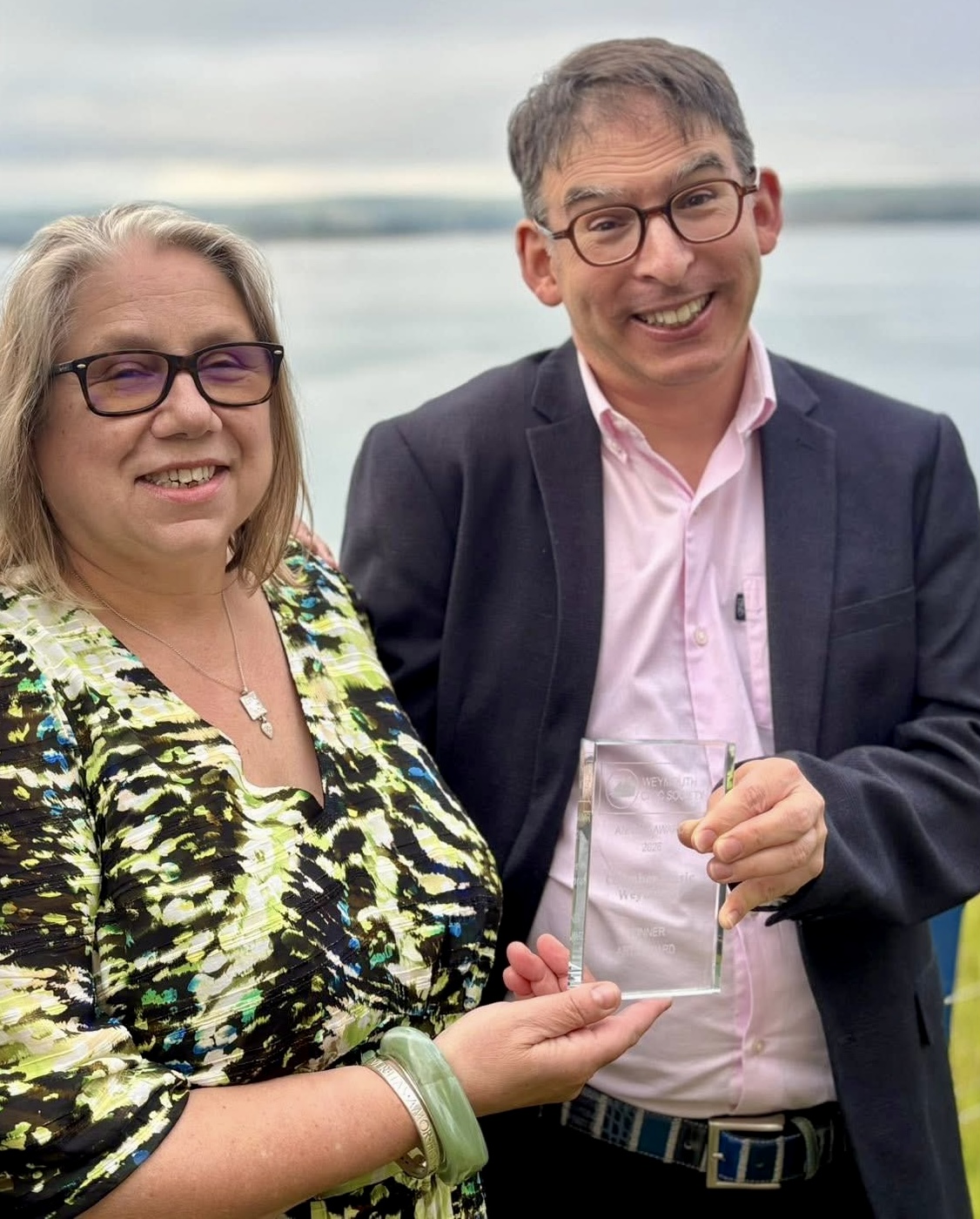
Chamber Music Weymouth (formerly Weymouth Lunchtime Chamber Concerts) has received the Arts award from Weymouth Civic Society in recognition of the contribution the concert series makes to the cultural life of Weymouth and Portland. The award was presented at a special event at Nothe Fort in Weymouth, attended by the Mayors of Weymouth and Portland, and by members of the civic society and other award winners (find full details here.

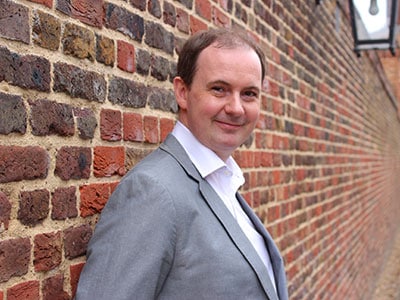
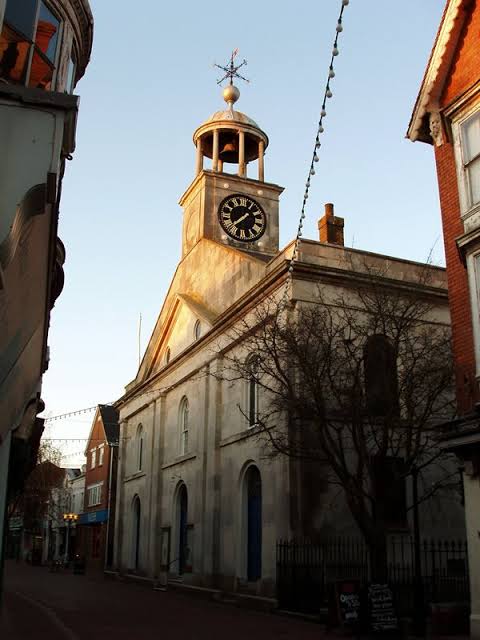
Founded in 2002 by concert pianist, pedagogue and Weymouth resident Duncan Honeybourne, the series presents monthly lunchtime concerts in the attractive, historic church of St Mary’s in the heart of Weymouth. Over the years, the series has attracted leading musicians, including pianists Margaret Fingerhut, Joseph Tong, piano duo John Humphreys and Allan Schiller, Penelope Roskell, James Lisney, and most recently Graham Caskie (who gave a spellbinding performance of the Bach-Busoni Chaconne at the June concert); cellist Joseph Spooner; violinist Catrin Win Morgan; and bass-baritone Timothy Dickinson. In keeping with the series’ mission to support and nurture young talent, recent seasons have seen performances by the Woolf String Quartet, pianists Lewis Kingsley Peart, Nina Savicevic, and Siqian Li, violinists Leora Cohen and Rose Gosney, and cellist Hoda Jahanpour. During the 25/26 season in addition to a wide variety of chamber music, the series also presented a special concert exploring the music Jane Austen would have known and played, performed by soprano Penelope Appleyard and pianist Jonathan Delbridge (playing an Austen-era square piano) to coincide with the author’s bicentenary in 2025.
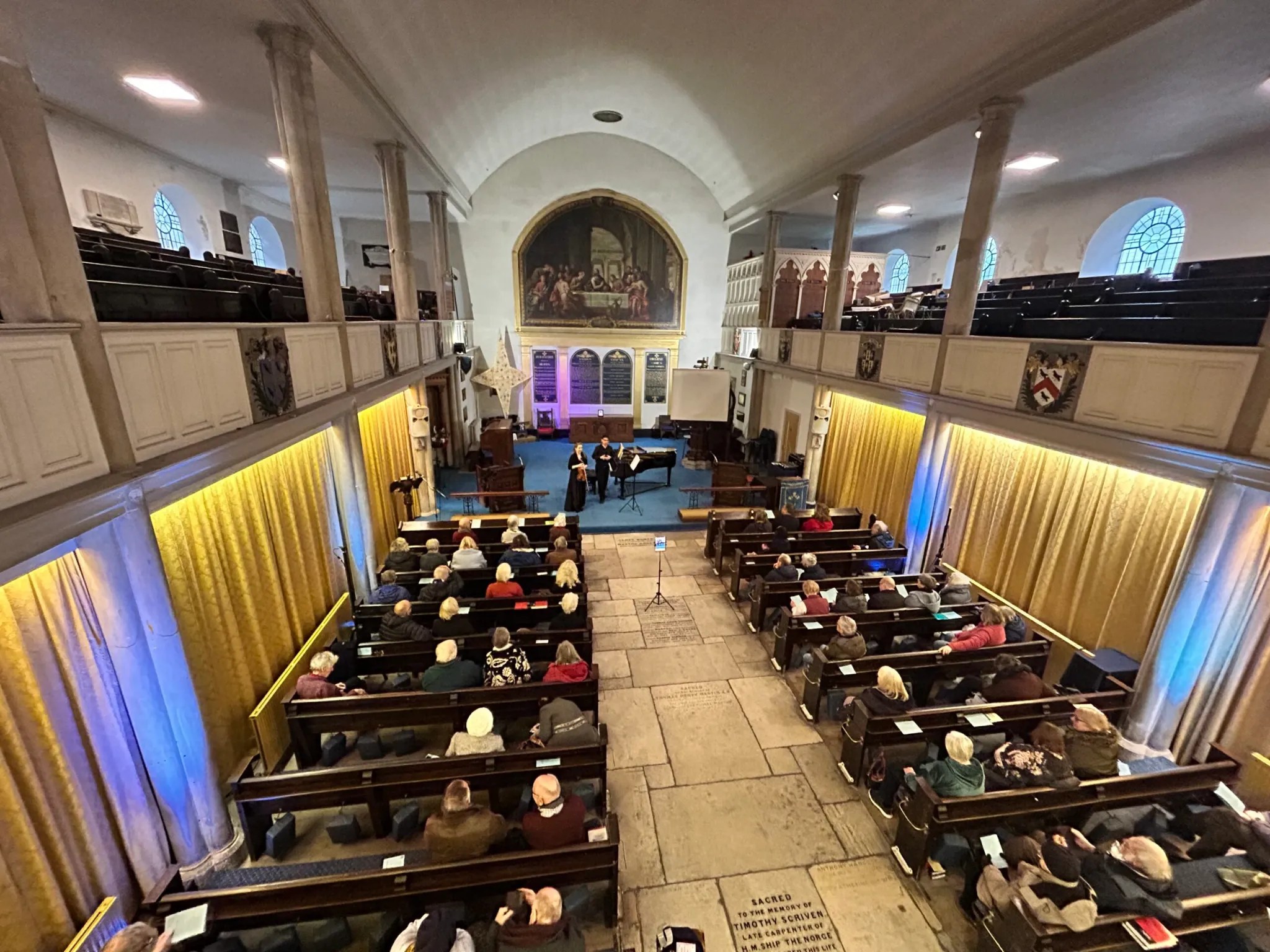
CMW Concert at St Mary’s Church (photo by Jon Jacob)

The Weymouth Civic Society award comes at a significant moment as the series celebrates its 25th anniversary in 2027. This is also the bicentenary of the birth of Beethoven and the centenary of the birth of composer John Joubert, whom Duncan Honeybourne knew. These anniversaries will be reflected in the programming for the series.

Despite the challenge of Covid and the lockdowns of 2020 and 2021, the series goes from strength to strength, enjoying record audiences, who praise the series for its variety of repertoire and artists, and for the low ticket price. Another important aspect to the series’ popularity is the pre-concert refreshments, served by a duo of loyal volunteers. Alongside this, both Duncan Honeybourne and concerts manager Frances Wilson (AKA The Cross-Eyed Pianist) strive to ensure the concerts are friendly and welcoming, while presenting world-class classical music in the heart of Weymouth.

The 2026/27 25th Anniversary season of Chamber Music Weymouth begins on Wednesday 23rd September, with a solo performance by Duncan Honeybourne.
Find out more here

one of the most brilliant performers of his era anywhere in the world”

Professor Colin Lawson CBE, Director Emeritus, Royal College of Music

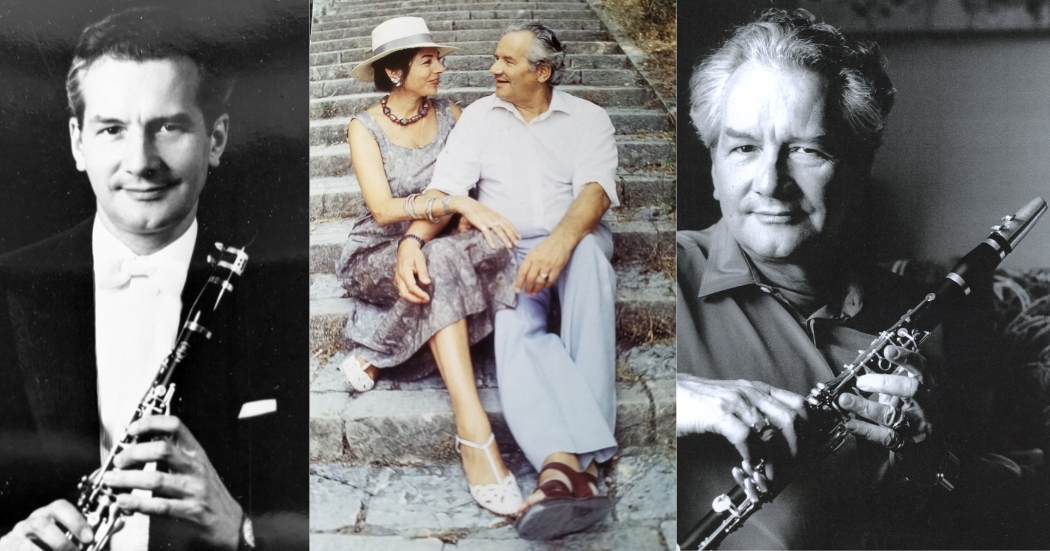
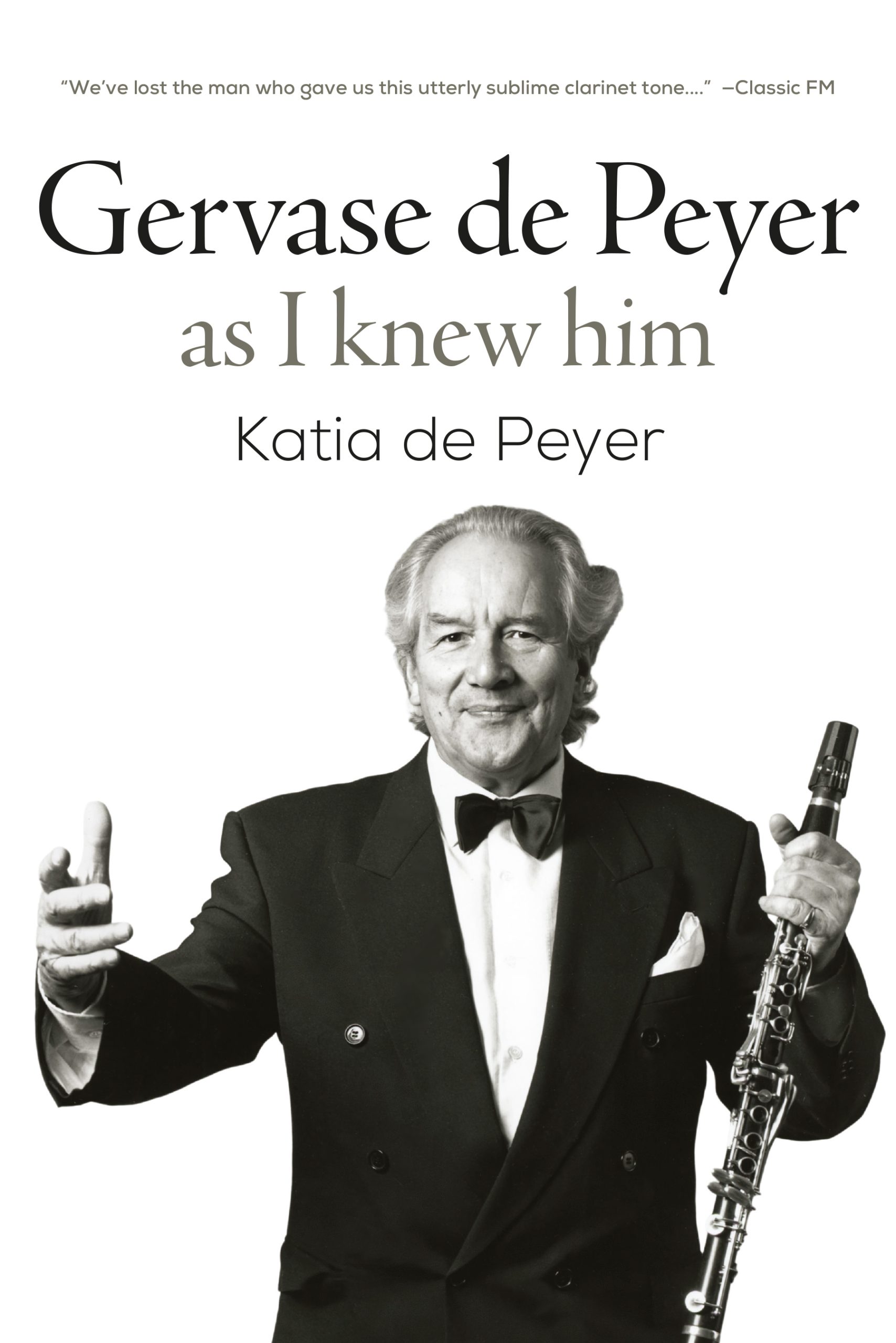
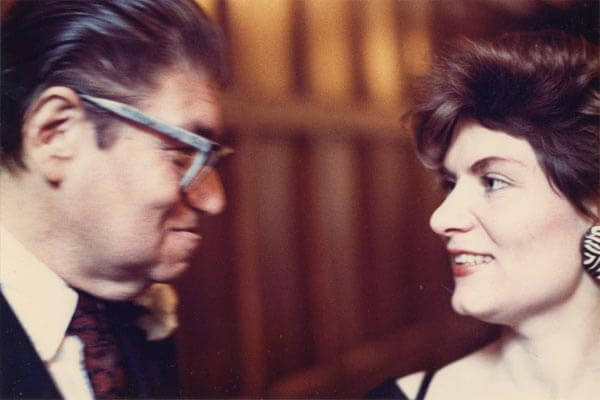
Gervase de Peyer as I Knew Him is an intimate portrait of renowned classical clarinettist Gervase de Peyer by his wife and partner of forty years, published to mark the centenary of his birth. A musician’s musician, Gervase was admired by his peers for extending the range of the clarinet as a solo instrument, inspiring many acclaimed classical composers to write with his tone in mind, and for the musical brilliance and flair that spurred his international career, including as principal clarinet of the London Symphony Orchestra and a founding member of the Chamber Music Society of Lincoln Center.

Praise for Gervase de Peyer:

“It’s a real delight to have within these pages so many fascinating insights into the life of one of the most distinguished alumni of the Royal College of Music. Gervase de Peyer was an inspiration to many generations of clarinettists and his influence extended well beyond his own instrument as one of the most brilliant performers of his era anywhere in the world.”

Professor Colin Lawson CBE, Director Emeritus, Royal College of Music

“We’ve lost the man who gave us this utterly sublime clarinet tone….” Classic FM

“Clarinettist who had Aaron Copland, Paul Hindemith and Francis Poulenc queuing up to have their works performed by him.” The Times

“…an outstanding soloist and chamber musician…[who] inspired several composers to write new works….” The Guardian

“Acclaimed as the most recorded clarinet soloist in the world….” The Independent

Review copies (PDF and physical book) available on request

For further press information, please contact Frances Wilson frances_wilson66@live.com

GERVASE DE PEYER As I Knew Him is published in the UK by Kahn & Averill. Find out more

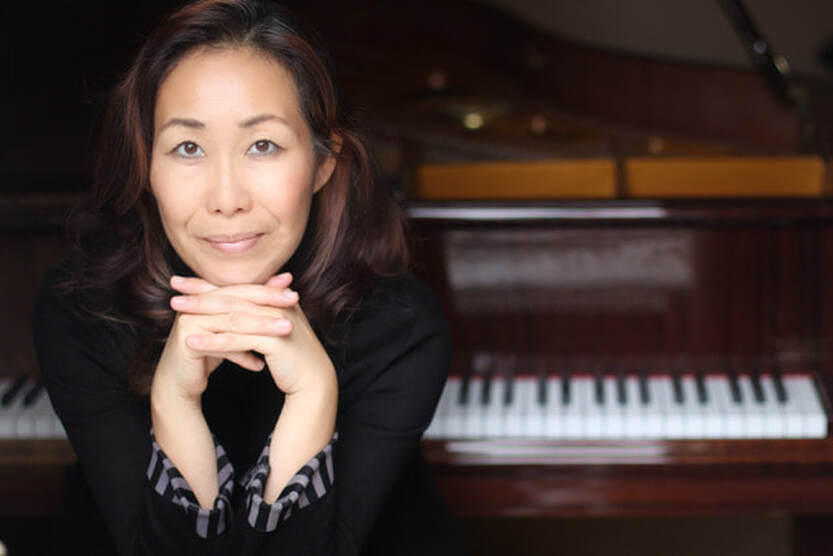
Ailsa Dixon’s sonata for piano duet Airs of the Seasons, is the latest work to be published by Composers Edition, in a new edition by pianist Waka Hasegawa. This is part of an ongoing project to bring Ailsa Dixon’s music to a wider audience; the publication of scores of her music coincides with the release of The Spirit of Love, a landmark recording of her chamber music and songs on the Resonus Classical label. (Find out more here)

Airs of the Seasons is in four movements, each prefaced by a short poem, evoking in turn the magical stillness after a winter snowfall, the first stirrings of spring, a dragonfly darting over the water in summer, and finally amid the turning leaves of autumn, a retrospective mood which recalls the earlier seasons and ends with the hope of transcendence in ‘Man’s yearning to see beyond death’.

The sonata was unperformed in Ailsa’s lifetime, but in the months before she died in 2017 the score was sent to pianists Joseph Tong and Waka Hasegawa, who would give the work its posthumous premiere at St George’s Bristol in November 2018.  A week before her death, Tong wrote with the news that they were already rehearsing: ‘It is a beautiful set of pieces and each of the movements ‎evokes aspects of the seasons suggested in the poems in an original and imaginative way – the musical language itself and the way in which Ailsa creates four-handed piano textures are absorbing and distinctive.’  For a composer who received very little recognition in her lifetime, it was a poignant indication that her music would survive her.

In a review of the premiere, Frances Wilson (AKA The Cross-Eyed Pianist) wrote ‘The opening chords of the first movement are reminiscent of Debussy and Britten in their distinct timbres, and the entire work has a distinctly impressionistic flavour. Ailsa’s admiration of Fauré for his “harmonic suppleness” is also evident in her harmonic language, while the idioms of English folksong and hymns, and melodic motifs redolent of John Ireland and the English Romantics remind us that this is most definitely a work by a British composer with an original musical vision.  The entire work is really delightful and inventive, rich in imagination, moods and expression.’ 
 
Airs of the Seasons has subsequently been performed for Wye Valley Music in 2019, for Wessex Concerts at St Mary’s church in Twyford near Winchester in 2022, and in a concert in 2024 celebrating Ailsa Dixon’s musical legacy at St Mary’s College, Durham University where she studied in the 1950s. 

Order the score from Composer’s Edition here

This article, written by Ailsa’s daughter Josie, first appeared on the Ailsa Dixon website. Find out more about Ailsa Dixon’s music here

Guest post by Michael Johnson

Morton Feldman’s delicate, will o’ the wisp compositions demand a spiritual investment, a belief in music’s potential to enter the human consciousness almost unnoticed. The simplicity can be deceptive. One is tempted to say, as a young English mother whispered to me recently at a Feldman recital, “My ten-year-old could play this.”

Marc-André Hamelin and a large fan club disagree. Hamelin once told me that the first time be heard Feldman’s For Bunita Marcus he felt he was transported to an entirely new dimension. He was stunned, and went on to perform, and finally to record (Hyperion  B06Y3L26GC)  the entire one hour and twelve minutes of Bunita Marcus. Now I was stunned and transported.

Here is the Feldman sheet music played by Hamelin.

Ivan Ilic, the Serbian-American pianist based in France, is also leading a renaissance of the Feldman oeuvre – dormant for decades. He says he might be tempted to retort to the mystified mother, “Madame, either you get it or you don’t.”

Ilic and Hamelin and I got it, profoundly, as a result of an effort to get into Feldman’s head and play him the way his work was intended. Ilic says he is determined to show the way to the rapture  he felt, which he describes as wanting “the spell to continue … interruption seems unthinkable”.

His Bunita Marcus CD, ‘Ivan Ilic Plays Morton Feldman’ (Paraty/Harmonia Mundi), delivers a rarefied performance that gets to the very essence of music. “Nothing distracts from the backbone of single notes or quiet chords,” he wrote.  In one of the tracks, Feldman creates a tremendous feeling of space, with a hollow chord in the left hand and only two notes in the right hand. “Few composers can do so much with so little,” says Ilic.

To quote poet Robert Frost, the minimalist playing enters your mind on “little cat feet”. Feldman and his mentor John Cage believed in the wisdom of India that says quietude in music can trigger divine intervention in the mind.

Feldman also saw a morbid side. He has written,“In my art I feel myself dying very, very SLOWLY.’ The last third of For Bunita Marcus’ is a wonderful illustration of that idea.

Ilic has attempted to describe in his liner notes the Feldman ceffect. “Ever patient, using the same notes, (Feldeman ) wears me down. Then slowly I start to forget my feelings. I hear the music again, but now it has a glow to it. My ears and mind have adjusted, and  my ego fades into the background.”

Who was this enigmatic Bunita Marcus? They met at the University of Buffalo, in New York State, in 1975. She was a doctoral student in composition and her professor Feldman was clearly star-struck. No photos survive.  “I am very enthusiastic about this girl,” he once said. “I think she is something to be enthusiastic about. I am never going to have another student like her as long as I live. Never.” Although he  called her compositions “gorgeous and elegant” they left no trace in the repertoire. Nevertheless, his hour-long tribute guaranteed a certain notoriety.

Ilic admits that his first brush with Feldman left him feeling “edgy”. He says he felt that “the music isn’t going anywhere”.  He warns that others might feel the same initial barrier. But his experience consisted of “puzzlement-tension-release-trance”. 

He discovered that his sense of time could disappear. “The piece can last one hours, or four hours; I know I’ll follow it to the end.”

Feldman the writer published his music philosophy in a collection of his works, Give My Regards to Eighth Street. He offers this thought – that the “chronological aspect of music’s development is perhaps over, and that a new mainstream of diversity, invention and imagination is indeed awakening. For this we must thank John Cage.”

In the years following his voluminous oeuvre, he has proven to be at least partially right.


MICHAEL JOHNSON is a music critic and writer with a particular interest in piano. He has worked as a reporter and editor in New York, Moscow, Paris and London over his journalism career. He covered European technology for Business Week for five years, and served nine years as chief editor of International Management magazine and was chief editor of the French technology weekly 01 Informatique. He also spent four years as Moscow correspondent of The Associated Press. He is a regular contributor to International Piano magazine, and is the author of five books. Michael Johnson is based in Bordeaux, France. Besides English and French he is also fluent in Russian. He is a regular reviewer for this site’s sister site ArtMuseLondon.com.