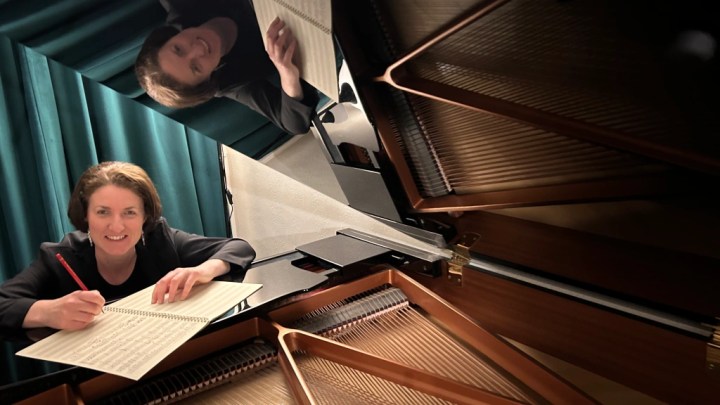
Are there pieces that are simply too challenging for non-professionals to even attempt?

Guest post by Caroline Wright

There are those who believe that, yes, there are indeed pieces that amateurs should leave well alone. Hugely technically challenging pieces – of which there are many in the piano repertoire –  should be respected by those who cannot hope to do them justice. We should all be aware of our limits, and leave the tough stuff to those who can handle it!

I think most musicians probably disagree with this position. Personally I don’t think any repertoire should be off-limits, to anyone. We all need to be aware of our level and personal limitations, but that’s true of professionals and amateurs alike. Many individuals have physical limitations that mean they will never be able to play certain pieces, but that has no effect on their ability to play other repertoire – for example, having small hands is a curse for pianists who wish to play Brahms, Rachmaninoff and Ravel, but may actually bean asset in Bach, Scarlatti and Mozart. Finding and expressing the beauty of a piece of music can be both a challenge and a joy for anyone, irrespective of it’s technical demands.

I cannot think of a better way of respecting the music of great composers than by dedicating many hours to playing and memorising it. Listening to recordings and live concerts given by great performers is wonderful too, of course, but undoubtedly a more passive way to experience music than playing it and internalising it yourself. Learning the music, to such a level that you can see the score in the mind’s eye and listen along without the need for external sound, is surely a greater mark of respect than playing it note-perfect in every performance?

In reality, the boundary between amateurs and professional musicians is blurred. Many amateurs are highly skilled, qualified musicians, and many professionals rarely perform in public. At the end of the day, any musician (particularly soloists!) must decide what repertoire they are happy to play in concert in front of strangers, versus that which they prefer to play for their own enjoyment, in the safety of their own home. And here, I believe, is where the most stark difference occurs between amateurs – literally ‘lovers’ of music – and professional performers who must make a living from music. Those of us who have the (dubious!) ‘luxury’ of earning a living outside of performing can afford never to play to a fee-paying public, if we so desire. We may play to friends and family, students and colleagues, or simply to ourselves, without having to conquer performance anxiety and the very real possibility of making fools of ourselves on stage. This choice should certainly not act as a barrier to playing particular repertoire. Professional performers, on the other hand, must make a living from performing and accept that anything less than a polished performance is unlikely to help their career progression or recording sales.

As an amateur pianist, there is no doubt that there are many pieces that I will never be able to play well enough even for my own satisfaction (and wouldn’t dare inflict on anyone else!), and others that I believe I play well enough both for myself and others to enjoy. There’s a balance that I find hard to strike between painstakingly learning more challenging repertoire and playing technically easier repertoire to a higher musical level. The guidance of a teacher to steer any unwary students towards repertoire that they will find challenging yet satisfying is crucial. But no music should be off-limits and, regardless of one’s ability, it is a privilege to be able to study some of the greatest works that have ever been created by the human mind.


Caroline Wright is a musician (MMus, LTCL) and scientist (MSci, PhD). Her compositions have a diverse range of influences, from classical and contemporary to blues and jazz, film and folk, dance and electronica.
An essay in six variations
Written by GPT-3 and Howard Smith


The six essays below were written by an Artificial Intelligence called GPT-3. In the final essay, Satie speaks in his own voice and composes a poem reflecting on the influences of his work. The AI-generated essays were guided by Howard Smith, a human. Howard only had to give the briefest of instructions to the remarkable AI. Such ‘generative’ systems are making waves across the world. GPT-3 is but a taste of what’s to come. Humankind will shortly have many new AI companions.

Howard Smith is the human author of Note For Note, Bewitched, Bothered and Bewildered. Howard is also the author of an experimental book on the topic of Climate Change. The 180 page book was written by GPT-3 in response to questions posed by Howard. The two collaborators ‘wrote’ the book in just 12 hours. The work was self-published 6 days later and is now available via Amazon worldwide. In Conversation with GPT-3: An AI On Climate Change  is a taste of what’s ahead for anyone working in any creative field. 


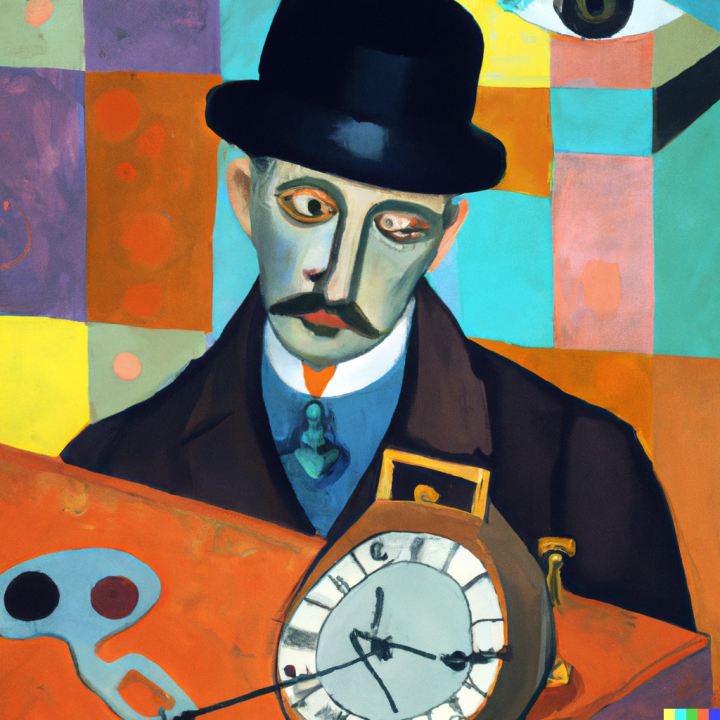
One of 30 images generated by DALL*E 2 in response to a prompt by the author: A painting in the style of Dada art of the composer Erik Satie and a ticking clock

And now, dear friends, the essays:

Version 1

Human in italics. All else written by an AI.

Write an essay about the music of Erik Satie. Concentrate on explaining the musical influences and genres that led to Satie’s unique style. Also cover the way Satie’s music influenced composers that followed him.

Erik Satie was a French composer and pianist known for his unique and unconventional musical style. He was born in 1866 and began composing music at a young age. Throughout his career, Satie experimented with a wide range of musical genres and influences, which ultimately led to the development of his distinctive style.

One of the major influences on Satie’s music was the impressionism movement in art. Impressionist painters, such as Monet and Degas, were known for their use of light and color to create a sense of atmosphere and mood. Satie similarly sought to evoke a sense of atmosphere in his music through the use of harmonic and melodic color. He often employed unconventional harmonies and dissonant chord progressions to create a sense of tension and dissonance.

Another important influence on Satie’s music was cabaret and café-concert culture. These venues were popular in Paris during the late 19th and early 20th centuries and featured a wide range of musical styles, including folk songs, popular songs, and vaudeville. Satie was heavily influenced by the playful, irreverent, and often satirical spirit of these performances, and he incorporated elements of cabaret and café-concert music into his own compositions.

Satie’s music also drew inspiration from other genres, including folk music, medieval and Renaissance music, and popular music. He was particularly interested in the use of simple, repetitive rhythms and melodies, which he often incorporated into his music to create a sense of hypnotic and meditative states.

Satie’s unique and unconventional musical style had a significant influence on composers that followed him. Many of his techniques and ideas were adopted and adapted by other composers, particularly those working in the field of minimalism. Satie was one of the first composers to use repetitive rhythms and simple harmonies, techniques that would become central to the minimalist style. He was also an important influence on the development of ambient and experimental music.

In conclusion, Erik Satie’s music was shaped by a wide range of musical influences and genres, including impressionism, cabaret and café-concert culture, folk music, medieval and Renaissance music, and popular music. His unique and unconventional style had a significant influence on composers that followed him, particularly in the field of minimalism and experimental music. His music still continues to be celebrated and performed today.

Version 2

Improve the essay please by including some quotes by Erik Satie. 

Erik Satie was a French composer and pianist known for his unique and unconventional musical style. He was born in 1866 and began composing music at a young age. Throughout his career, Satie experimented with a wide range of musical genres and influences, which ultimately led to the development of his distinctive style.

One of the major influences on Satie’s music was the impressionism movement in art. Impressionist painters, such as Monet and Degas, were known for their use of light and color to create a sense of atmosphere and mood. Satie similarly sought to evoke a sense of atmosphere in his music through the use of harmonic and melodic color. He often employed unconventional harmonies and dissonant chord progressions to create a sense of tension and dissonance. In his own words, Satie stated “I have found it necessary to get rid of all the parts that everyone likes and keep all those which no one likes”

Another important influence on Satie’s music was cabaret and café-concert culture. These venues were popular in Paris during the late 19th and early 20th centuries and featured a wide range of musical styles, including folk songs, popular songs, and vaudeville. Satie was heavily influenced by the playful, irreverent, and often satirical spirit of these performances, and he incorporated elements of cabaret and café-concert music into his own compositions. He once said, “I am a country whose boundaries are the imagination.”

Satie’s music also drew inspiration from other genres, including folk music, medieval and Renaissance music, and popular music. He was particularly interested in the use of simple, repetitive rhythms and melodies, which he often incorporated into his music to create a sense of hypnotic and meditative states. His music was described as being “inventive and original” by himself.

Satie’s unique and unconventional musical style had a significant influence on composers that followed him. Many of his techniques and ideas were adopted and adapted by other composers, particularly those working in the field of minimalism. Satie was one of the first composers to use repetitive rhythms and simple harmonies, techniques that would become central to the minimalist style. He was also an important influence on the development of ambient and experimental music.

In conclusion, Erik Satie’s music was shaped by a wide range of musical influences and genres, including impressionism, cabaret and café-concert culture, folk music, medieval and Renaissance music, and popular music. His unique and unconventional style had a significant influence on composers that followed him, particularly in the field of minimalism and experimental music. His music still continues to be celebrated and performed today. Satie’s own words offers a glimpse into his artistic vision, his revolutionary approach and his enduring legacy.

Version 3

Can you extend the essay by listing some of Satie’s best loved music. Place the list of works at the end of the essay. 

Erik Satie was a French composer and pianist known for his unique and unconventional musical style. He was born in 1866 and began composing music at a young age. Throughout his career, Satie experimented with a wide range of musical genres and influences, which ultimately led to the development of his distinctive style.

One of the major influences on Satie’s music was the impressionism movement in art. Impressionist painters, such as Monet and Degas, were known for their use of light and color to create a sense of atmosphere and mood. Satie similarly sought to evoke a sense of atmosphere in his music through the use of harmonic and melodic color. He often employed unconventional harmonies and dissonant chord progressions to create a sense of tension and dissonance. In his own words, Satie stated “I have found it necessary to get rid of all the parts that everyone likes and keep all those which no one likes”

Another important influence on Satie’s music was cabaret and café-concert culture. These venues were popular in Paris during the late 19th and early 20th centuries and featured a wide range of musical styles, including folk songs, popular songs, and vaudeville. Satie was heavily influenced by the playful, irreverent, and often satirical spirit of these performances, and he incorporated elements of cabaret and café-concert music into his own compositions. He once said, “I am a country whose boundaries are the imagination.”

Satie’s music also drew inspiration from other genres, including folk music, medieval and Renaissance music, and popular music. He was particularly interested in the use of simple, repetitive rhythms and melodies, which he often incorporated into his music to create a sense of hypnotic and meditative states. His music was described as being “inventive and original” by himself.

Satie’s unique and unconventional musical style had a significant influence on composers that followed him. Many of his techniques and ideas were adopted and adapted by other composers, particularly those working in the field of minimalism. Satie was one of the first composers to use repetitive rhythms and simple harmonies, techniques that would become central to the minimalist style. He was also an important influence on the development of ambient and experimental music.

In conclusion, Erik Satie’s music was shaped by a wide range of musical influences and genres, including impressionism, cabaret and café-concert culture, folk music, medieval and Renaissance music, and popular music. His unique and unconventional style had a significant influence on composers that followed him, particularly in the field of minimalism and experimental music. His music still continues to be celebrated and performed today. Satie’s own words offers a glimpse into his artistic vision, his revolutionary approach and his enduring legacy.

Some of Satie’s best known works include:

“Gymnopédies” (1888)

“Sports et divertissements” (1914)

“Vexations” (1893)

“Socrate” (1918)

“Parade” (1917)

“Three pieces in the form of a Pear” (1903)

“Avant-dernières pensées” (1911-1915)

“Furniture Music” (Musique d’ameublement) (1917)

“Sonatine bureaucratique” (1908)

“Véritables préludes flasques (pour un chien)” (1913)

Version 4

Rewrite the essay please, in a writing style that Satie might have used.

My dear friends, let me regale you with tales of my musical endeavors. I, Erik Satie, have always been drawn to the unconventional, the unorthodox. I sought to challenge the status quo and to push the boundaries of what is considered to be “music.”

The movement of Impressionism, with its emphasis on light and color, has had a profound influence on my compositions. I strive to evoke a sense of atmosphere and mood through the use of harmonic and melodic color. I often employ unconventional harmonies and dissonant chord progressions to create a sense of tension and dissonance. As I have said before, “I have found it necessary to get rid of all the parts that everyone likes and keep all those which no one likes.”

The cabaret and café-concert culture of my beloved Paris have also had a great impact on my music. The playful, irreverent, and often satirical spirit of these performances has been a constant source of inspiration for me. I have incorporated elements of cabaret and café-concert music into my own compositions, always seeking to push the boundaries of what is considered acceptable. As I have said, “I am a country whose boundaries are the imagination.”

I have also been heavily influenced by the simplicity and repetition found in folk music, medieval and Renaissance music, and popular music. These have all played a role in my quest to create music that evokes hypnotic and meditative states. My compositions have been described as “inventive and original,” and I take great pride in that.

My unique and unconventional style has had a significant influence on composers that have followed me. My use of repetitive rhythms and simple harmonies, for instance, have become central to the minimalist style. And I have also been an important influence on the development of ambient and experimental music.

In conclusion, my dear friends, my music is the product of a wide range of influences and genres. I have always sought to challenge the status quo, to push the boundaries of what is considered to be “music.” And I will continue to do so, for as I have said, “The essential thing is to invent.” And with that, I bid you adieu, and hope that you will enjoy my compositions.

Some of my most notable works include:

“Gymnopédies” (1888)

“Sports et divertissements” (1914)

“Vexations” (1893)

“Socrate” (1918)

“Parade” (1917)

“Three pieces in the form of a Pear” (1903)

“Avant-dernières pensées” (1911-1915)

“Furniture Music” (Musique d’ameublement) (1917)

“Sonatine bureaucratique” (1908)

“Véritables préludes flasques (pour un chien)” (1913)

Version 5

Rewrite the essay once again to make it sound like Dada art. 

Ladies and gentlemen, behold the absurdity of my musical creations. I, Erik Satie, have always been attracted to the nonsensical, the illogical. I sought to mock the status quo and to shatter the boundaries of what is considered to be “music.”

The movement of Impressionism, with its emphasis on light and color, has been a source of inspiration for my compositions. I strive to evoke a sense of chaos and confusion through the use of harmonic and melodic nonsense. I often employ unconventional harmonies and dissonant chord progressions to create a sense of confusion and disorder. As I have said before, “I have found it necessary to get rid of all the parts that make sense and keep all those which don’t.”

The cabaret and café-concert culture of my beloved Paris have also been a great influence on my music. The nonsensical, irreverent, and often satirical spirit of these performances has been a constant source of inspiration for me. I have incorporated elements of cabaret and café-concert music into my own compositions, always seeking to mock the boundaries of what is considered acceptable. As I have said, “I am a country whose boundaries are the absurdity.”

I have also been heavily influenced by the simplicity and repetition found in folk music, medieval and Renaissance music, and popular music. These have all played a role in my quest to create music that evokes hypnotic and chaotic states. My compositions have been described as “nonsensical and illogical,” and I take great pride in that.

My unique and unconventional style has had a significant influence on composers that have followed me. My use of repetitive rhythms and simple harmonies, for instance, have become central to the Dada style. And I have also been an important influence on the development of chaotic and experimental music.

In conclusion, my dear friends, my music is the product of a wide range of influences and genres. I have always sought to mock the status quo, to shatter the boundaries of what is considered to be “music.” And I will continue to do so, for as I have said, “The essential thing is to invent absurdity.” And with that, I bid you adieu, and hope that you will enjoy my nonsensical compositions.

Some of my most notable works include:

“Gymnopédies” (1888)

“Sports et divertissements” (1914)

“Vexations” (1893)

“Socrate” (1918)

“Parade” (1917)

“Three pieces in the form of a Pear” (1903)

“Avant-dernières pensées” (1911-1915)

“Furniture Music” (Musique d’ameublement) (1917)

“Sonatine bureaucratique” (1908)

“Véritables préludes flasques (pour un chien)” (1913)

Version 6 (the ‘final’ version, or is it?)

Include and invent an absurdist poem by Satie.

Ladies and gentlemen, behold the absurdity of my musical creations. I, Erik Satie, have always been attracted to the nonsensical, the illogical. I sought to mock the status quo and to shatter the boundaries of what is considered to be “music.”

The movement of Impressionism, with its emphasis on light and color, has been a source of inspiration for my compositions. I strive to evoke a sense of chaos and confusion through the use of harmonic and melodic nonsense. I often employ unconventional harmonies and dissonant chord progressions to create a sense of confusion and disorder. As I have said before, “I have found it necessary to get rid of all the parts that make sense and keep all those which don’t.”

The cabaret and café-concert culture of my beloved Paris have also been a great influence on my music. The nonsensical, irreverent, and often satirical spirit of these performances has been a constant source of inspiration for me. I have incorporated elements of cabaret and café-concert music into my own compositions, always seeking to mock the boundaries of what is considered acceptable. As I have said, “I am a country whose boundaries are the absurdity.”

I have also been heavily influenced by the simplicity and repetition found in folk music, medieval and Renaissance music, and popular music. These have all played a role in my quest to create music that evokes hypnotic and chaotic states. My compositions have been described as “nonsensical and illogical,” and I take great pride in that.

My unique and unconventional style has had a significant influence on composers that have followed me. My use of repetitive rhythms and simple harmonies, for instance, have become central to the Dada style. And I have also been an important influence on the development of chaotic and experimental music.

In conclusion, my dear friends, my music is the product of a wide range of influences and genres. I have always sought to mock the status quo, to shatter the boundaries of what is considered to be “music.” And I will continue to do so, for as I have said, “The essential thing is to invent absurdity.” And with that, I bid you adieu, and hope that you will enjoy my nonsensical compositions.

Here is an example of my absurdist poetry:

“The notes danced on the page

With no care for time or age

They sang of chaos and confusion

In a melody of self-illusion

The harmony was out of tune

But that only added to the moon

The rhythm was a mess

But it was the best

For in this madness, we find art

In this chaos, a brand new start

So let us revel in the absurd

For it is in this, true beauty is heard”

Some of my most notable works include:

“Gymnopédies” (1888)

“Sports et divertissements” (1914)

“Vexations” (1893)

“Socrate” (1918)

“Parade” (1917)

“Three pieces in the form of a Pear” (1903)

“Avant-dernières pensées” (1911-1915)

“Furniture Music” (Musique d’ameublement) (1917)

“Sonatine bureaucratique” (1908)

“Véritables préludes flasques (pour un chien)” (1913)

End of interaction with GPT-3


This site is free to access and ad-free, and takes many hours to research, write, and maintain. If you find joy and value in what I do, please consider making a donation to support the continuance of this site Make A Donation

Guest post by Clare Hammond

Since 2017, British pianist Clare Hammond has given 25 concerts in 8 prisons across the South-West of England. Here she describes her experience of performing in prisons and how music can inspire, console and heal.


Prisons can be daunting environments. A trek through long concrete corridors and heavy iron gates, negotiating lock after lock, to find a community of adults, trapped, bound together by adverse circumstance. Emotions run high yet are often impossible to express – shame, detachment, fear, denial. A sense of loss and frustration is palpable.

These environments are so distinct from our usual lives that the experience of visiting one for the first time is profoundly disorientating. Not only the physical environment, but the social hierarchy, is unfamiliar. I had never previously been so aware of a disparity of power, of the tension that a necessary hierarchy between staff and prisoners can produce. Words become charged and communication falters.
Unlikely as it may seem, music can provide a way to overcome some of these obstacles. I started to perform in prisons in 2017 as I was recovering from a severe and disorientating bout of postnatal depression. Not only had I been profoundly depressed for a year, but at times I had sensed my grasp on sanity weakening. This in itself was so alarming, and my obsessional focus on disaster and despair so wearing, that I decided to take drastic action. I needed to try something new, something challenging enough to distract me from my interior monologue.
I contacted a friend of my husband, a prison Chaplain, and asked if he might be willing to arrange a concert. I had no idea whether a recital of classical music would be of interest, but he accepted. A few weeks later, I found myself at Security, lugging my electronic piano behind me. After a thorough search, I was admitted and made my way to the Chapel. As I unspooled the extension cord, heard just how thin the piano sounded in the acoustic, and watched the rows of men file in, I wondered whether this had been a sensible decision.
I took a deep breath. Some listened expectantly while others were conspicuously indifferent. Two small pockets of young men were joking around, elbowing each other and sniggering. After a couple of virtuosic Chopin études, I decided to focus on the human stories behind the music, describing obstacles that the composer had faced and the way these emerge in their music. I described Schubert’s final illness, the isolation he experienced, and the beauty of the music he composed during that period. This was more powerful than I could have anticipated. The audience were completely still during his Impromptu in G flat major and, to this day, this remains one of my most moving concert experiences.
I have now given 25 recitals in 8 different prisons and still follow this format. I present, in turn, Robert Schumann’s battle with bipolar disorder, Beethoven’s contemplation of suicide in the Heiligenstadt Testament, or Hélène de Montgeroult’s imprisonment and sensational trial before the Committee of Public Safety, evading execution by the skin of her teeth. I programme tonal music with familiar melodies alongside more adventurous repertoire. Unsuk Chin’s phenomenally inventive Toccata, as ‘uneasy’ a listen as you could hope for, has become a surprise hit. To see the eyes of a young man light up in enthusiasm at his first encounter with hardcore contemporary music was not something I had anticipated. I donate copies of my discs, often of obscure repertoire, to the prison libraries and hear, months later, that a man who had never listened to classical music before has become a fan of Szymanowski.
From a personal perspective, these concerts have healed and grounded me. I have always been an anxious person, and suffered from debilitating guilt when I was ill with depression. Seeing the power music has to connect people, to console and inspire in such difficult environments, has taught me the value of my work. I now feel that I am making a real contribution and am much calmer as a result.
I believe firmly that everyone should have access to classical music, in all its forms. It broadens horizons, offering a glimpse of what life could be, what adventures are possible. Most importantly, though, it creates a visceral link between us – between those who hear a performance, those who play together in a band, or between a long-dead composer and the people their music inspires. Music is powerfully communicative, particularly in environments where words are too charged for comfort. It transcends our daily struggles and brings hope.
If you would like to support music in prisons, please consider donating to the Irene Taylor TrustChanging Tunes or Koestler Arts.
Read Jailhouse Moose’s account of a prison concert given by Clare Hammond

Acclaimed as a “pianist of extraordinary gifts” (Gramophone) and “immense power” (The Times), Clare Hammond is recognised for the virtuosity and authority of her performances.

In 2016, she won the Royal Philharmonic Society’s ‘Young Artist Award’ in recognition of outstanding achievement. Recent highlights include Grieg Piano Concerto with the City of Birmingham Symphony Orchestra, Moussa and Carwithen with the BBC Symphony Orchestra and BBC Concert Orchestra, Panufnik with the Warsaw Philharmonic Orchestra, and recitals at the Aldeburgh Festival, Palazzetto Bru Zane in Venice (broadcast on RAI 3), Husum Festival in Germany, and in Denmark and Norway with Henning Kraggerud.

Read more


Guest post by Rhonda Rizzo

When did I begin my love affair with the music of living composers? The moment I found Yvar Mikhashoff’s ‘Incitation to Desire’ CD of tango music for the piano. The smoky cover, the provocative title track – I was caught before I listened to a single piece. Ah, and what a collection! Tangos from multiple eras and in multiple styles. Tangos that spoke of something illicit, a smoky world of furtive late-night romance, smoky dance halls, and sensuality. These tangos represented a freedom I craved – freedom from the performance practice expectations of standard repertoire, and freedom from the years of insecurities and assumptions I brought to the music I’d been playing my whole life. Tangos broke the rules. I’d never danced a tango in my life, but I knew I needed to make music with the freedom I heard in these pieces.

I’d never worked on music by a living composer before I found this CD, but my love of this music was such that I set about tracking down the scores of my favourite pieces. Many of the tangos were unpublished, which meant I wrote to the composer to purchase a copy. Scott Pender’s tango, ‘Ms Jackson Dances for the World’ was one of these. After I received it, Scott and I kept corresponding. We became friends and have remained so for over a decade. And I loved his music – so much so that I eventually played, performed, and taught most of what he’s written for the piano. Ironically, although Chester Biscardi’s ‘Incitation to Desire’ was easier to find (it was published), I never felt I got inside it well enough to perform it publicly. It sat in my music collection, its provocative title and gorgeous writing teasing me with the promise of something I couldn’t quite grasp.

It took me over a decade to put ‘Incitation to Desire’ on a concert programme. I think this was because I needed to live more before I truly understood it. I needed to go tango dancing and feel the freedom and sensuality of the Argentine tango in my bones. I needed to perform and record Piazzolla tangos with my duo partner Molly Wheeler. And, on a deeper level, I needed to break a whole lot of rules. I needed to experience the judgment that comes from choosing to leave a marriage that had been on life-support for years. I needed to experience being swept off my feet by an unexpected grown-up romance that changed my entire life. In other words, I needed to know freedom before I could play it on the piano.

Because ‘Incitation to Desire’ is about sensuality and freedom. Much like the Argentine dance, it relies on the pianist’s ability to instinctively feel their way through the score. This piece begs to be played almost as an improvisation – just the same way that the Argentine tango is danced. It’s the pianist and the piano and the interplay of notes – sensuous, slinky, unapologetic. Chester Biscardi asks for a flexible interpretation of dynamics and tempi. I take this to mean that that this piece is best played from the senses, not the brain; instinct, not reason. In other words, you can’t play this music until you let yourself be seduced by it.

It was my No Dead Guys post about (and YouTube recording of) ‘Incitation to Desire’ that prompted Chester Biscardi to email and tell me how much he enjoyed my performance of it. That correspondence led to me learning ‘In Time’s Unfolding’ and ‘Companion Piece (for Morton Feldman)’, two pieces that, ironically, I still feel I had more of an innate understanding of than the tango that introduced me to Chester’s music. Best of all, Chet and I kept corresponding, and that correspondence blossomed into another friendship that I cherish.

I’ve never coached a student on ‘Incitation to Desire’; I’m not sure it can be done without introducing topics to a lesson that can get an instructor arrested. Furthermore, because it’s so improvisatory, the key to playing this piece well lies within each pianist’s personal experience. If they’ve lived it, they can play it. If not, no amount of musicianship or technique will bring this piece to life. I can, however, offer some general guidelines on how to navigate the score:

1) Don’t be in a hurry. This is slowly unfolding, sensuous music that can’t be forced by the pianist. All forward momentum must come from the sense that the power of the moment itself is what propels the music forward.

2) Don’t dig in too deeply on the scale passages. These are flourishes, the twirl of a tango skirt, a spin. They’re caresses, not demands.

3) Don’t start your accelerando too quickly at m. 29; you’ve got a very long way to do before you hit the end of it. This – like everything else in the piece – should feel inevitable and effortless.

4) Pay very close attention to the pedalling; it makes or breaks the piece.

5) If you’ve never danced the Argentine tango, watch some videos of it. This will explain the start/stop, slow/fast, gesture-driven nature of the score.

6) When you play it, drop all expectations of the piece, surrender to the music, and let it take you where it wants to go.

Sometimes the best way to find ourselves is to break a bunch of rules. Incitation to Desire gave me the permission I needed to follow my instincts rather than others’ expectations. It seduced me into a lifelong passion for the music of living composers. And even today, it reminds me to let moments and situation unfold naturally; it reminds me that the richest life (and my best playing) lies in releasing rigidity and entering the messy, beautiful, passionate dance of earthy, real life with my hands and heart wide open.


Rhonda (Ringering) Rizzo is a writer and a former performing and recording pianist. Her novel, The Waco Variations, was released in the summer of 2018, and her numerous articles have appeared in national and international music magazines, including Pianist Magazine, American Music Teacher, Clavier, Piano & Keyboard, and Flute Talk. A specialist in music that borrows from both classical and jazz traditions, Rizzo released four CDs, Made in America, Oregon Impressions: the Piano Music of Dave Deason, 2 to Tango: Music for Piano Duet, and A Spin on It.

She holds a BA from Walla Walla University and a MM from Boston University and is a passionate advocate of new music and living composers.

Find out more

Chester Biscardi, composer


This site is free to access and ad-free, and takes many hours to research, write, and maintain. If you find joy and value in what I do, please consider making a donation to support the continuance of this site

Make A Donation