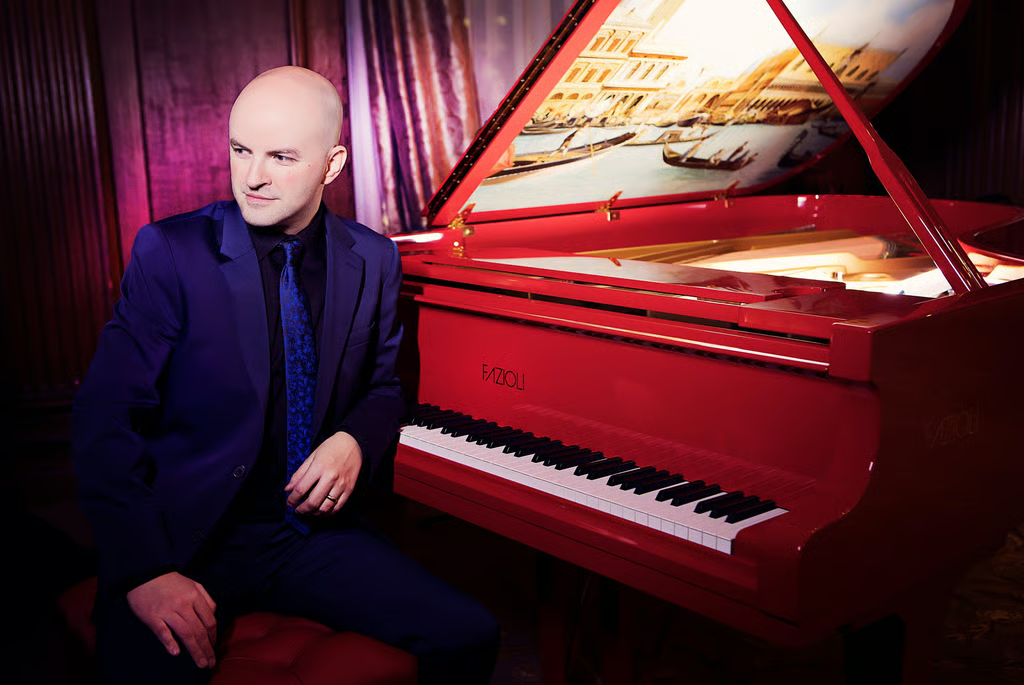
Guest post by Natalie Tsaldarakis

I came across a video of an exasperated ballet dancer talking about parents who had turned to AI to correct their children’s posture. It prompted this article, a response to the dizzying speed at which AI is infiltrating every facet of our lives. The uptake is so fast that the night before, I had been reading through people’s responses to a question about jobs they thought were safe from AI-driven redundancy. Several suggested cleaning or other manual work, apparently unaware of another post showing a robot slowly but methodically cleaning a house and neatly folding clothes. One thing is for certain: we still can’t grasp how our lives will change in the next few months and years.

Meanwhile, my path as pianist, teacher, musicologist has had a surprising turn: I am conducting a pilot study with Imperial College, on the biomechanics of elite piano performance and training, with access to resources provided by Steinway Hall and Goldsmiths College’s Deptford Town Hall. AI is not going to trail very far behind: there is 3D body imaging, motion tracking and data to analyse. In this narrower respect, AI is simply an augmentation of a computer’s abilities.

Since the advent of the internet, availability of information masks from view the more concerning shrinking of the new ‘reality’ into a colourful yet ‘flat’ experience: that of the phone, tablets and tv screens. Everything is one, or a few swipes away. In the case of a non-domain expert parent, i.e. someone who hasn’t trained in the same subject, AI can provide some background information fast, provided the right questions are asked and provided that the AI’s limitations are acknowledged. AI itself is not a ‘knowing’ entity, but a processing entity. The instigator and recipient of this knowledge is the human. A deceptive communication, which is actually cyclical: it reflects and engages with the human input in a seeming loop. So, yes, the information is available, but the context, in terms of indispensable layers such as aesthetic pursuits and creativity, is missing.

If we try to probe the matter deeper, AIs such as the general public uses, Gemini, Claude, ChatGPT, are actually language models. The basis of their functionality is that of predicting a probability distribution over next tokens and sampling from it to arrive at cogent and context-realistic verbal responses. And I am reminded of a very pertinent excerpt highlighting the process in humans, which connects internal thought processes with language, from Language, Thought, and Reality: Selected Writings of Benjamin Lee Whorf, edited and with an
introduction by John B. Carroll, Foreword by Stuart Chase

The Greeks took it for granted that back of language [sic] was a universal, uncontaminated essence of reason, shared by all men, at least by all thinkers. […] Whorf flatly challenges it in his second major hypothesis. “A change in language,” he says, “can transform our appreciation of the Cosmos.”

Taken simply, internal processes of thought and experience go at least hand-in-hand with language. Although AI are language models, their output is not an interaction in the sense of having the initiative to communicate unprompted or the result of thought: the initial stimulus is the user’s thought and it is anchored in that. It could be that our over-reliance on AI ‘transforms our appreciation of the Cosmos’ in unintended ways. This is certainly
unchartered territory. What about the teacher’s concern over AI teaching movement without human supervision? Expert skill acquisition, such as required for elite ballet dancing or piano performance, is narrow and deep. The idea that anyone will do because ‘the child will not pursue seriously music’ is wrong on so many levels it requires a separate article. And I think that it is this attitude which operates in the background when parents think that AI can be a good substitute for a teacher or a sufficient supplement. The generalisations that come out of Google currently have to do both with data poverty and the fact that biomechanics, the abstraction of art to physical movement, are the necessary substrate of what we call Art, but these two cannot be equated. A good teacher is simply indispensable to instil the basics for specific outcomes to be achieved. Strategy is also not the strong point of AIs.

Teaching is an interaction, so the process is not just a passing down or the rehearsing of a physical skill, but a process within a social context. For non-expert parents, the necessary critical faculty to efficiently sift through sometimes conflicting information is lacking precisely because the requisite is not just information; it is lived experience. In her book Producing Excellence: The Making of Virtuosos, Izabela Wagner writes about this very idea
in terms of “socialisation” in the arts: you need a human to transmit not only physical technique but also the lived experience of the milieu you are trying to become a member of.

The Arts are quintessentially the means of probing the eternal questions that torture us, to echo nineteenth century sentiments, a time when many of the canonic works of classical music were composed and are heard regularly on concert stages around the world to this day. More to the point, unlike science which seeks to prove and to know, the Arts seek to engage, no matter what the answer might be, or even when the ‘answer’ represents, like Edvard Munch’s painting The Scream (1893), an expression that cannot be ‘answered’. It just is. Uniqueness would be the other identifier, discussed in connection to seemingly artless or mundane, now iconic, works such as Andy Warhol’s Campbell’s Soup Cans (1962): the ability to reproduce it, underlines its emphasis away from the skill of the craft and on the effect on its unsuspecting audiences. This then supplies the third aspect of human artistic production, the intent to communicate and the decision to take action towards this direction. This is what parents of young learners miss: to develop a real relationship with the arts is to engage with socialisation which cannot be abstracted or equated to ‘interaction’ with a machine and ultimately to connect through one of the most fundamental of human needs: love, and belonging.


1 Benjamin L. Whorf, Language, Thought, and Reality: Selected Writings of Benjamin Lee Whorf, edited and with
an introduction by John B. Carroll, Foreword by Stuart Chase (The Technology Press of Massachusetts Institute
of Technology and John Wiley & Sons, Inc. New York London, 1956) Foreword, p. 8.

Natalie Tsaldarakis is a Greek concert pianist, researcher, and co-Artistic Director of the PianoPlus International Recital Series, now in its 4th edition. Her research sits at the intersection of biomechanics and piano pedagogy, currently underway in collaboration with the MSk Lab at Imperial College London, and she is completing a forthcoming Routledge publication on the pianist and pedagogue Gordon Green (1905–81). A graduate of Royal Holloway, where her teachers included Chopin scholar Prof. John Rink, she performs internationally as a member of the Ivory Duo Piano
Ensemble and Convivium Label Artist, and is a published author (
Classical Music in a Changing World, eds. Kramer & Nones, Vernon Press, 2021).
Guest post by Frances Jones

As a big fan of Poulenc’s music, I’m delighted to see his Concerto for Two Pianos on the Proms programme this year. It’s an exciting piece, both for performers and audience alike, and great to see in concert. But it’s the solo repertoire that occupies my thoughts at the moment, as I try to get to grips with another of his Nocturnes. I mentioned in a previous article back in May that I was working on the first Nocturne and although I haven’t made as much progress as I might in learning the rest, snatches of these sublime musical portraits have been flitting around my head like moths around a camp-fire (more on moths later).

There are eight Nocturnes, composed between 1929 and 1938 when Francis Poulenc was in his 30s. Some of them have descriptive titles, suggesting glimpses of civilised nocturnal scenes, and they alternate between the serenely beautiful and the fast and furious.

Number 1 falls into the first category; Poulenc’s ability to write a beautiful melody is proven in the opening bars, and he uses the range of the piano and takes unexpected harmonic turns as the music progresses. It is at once original, with an edge of melancholy, and also deeply comforting to listen to. Despite the discords, the music always resolves but almost never to a straightforward major chord; there’s always a note that ‘jars’ slightly with the rest. I like to think this is Poulenc’s way of telling us that, whilst there might be great beauty in the world, there is no such thing as perfection in life and his music does not intend to escape this.

Number 3, ‘Les Cloches de Malines’, gives us the bell-like sound promised in the title. He sets up an almost-repeated bassline to represent the bells, switching from 3 time to 4 time and back so it feels out of kilter; with Poulenc, there is always a twist. After being lulled into a false sense of security with the bells’ gentle music, there is a bar of complete silence, followed by a passage of brash accented chords, marked agité. It is as if the bells have gone rogue, and reminds me of one of Charles Dickens’ Christmas stories, in which the traveller is tormented by incessant ringing and imagines climbing up the church tower to the bells which have taken on frightening forms. He awakes in the morning and, of course, it’s all been a dream. So it is in this nocturne; after the clanging and clashing there’s another bar of silence and the familiar bassline of the opening returns; all is well, and normality has been restored.

The fifth nocturne is a portrait of moths (‘Phalènes’) and, as the music is both presto and staccato in the opening section, these insects seem to be clamouring around a light; a street-lamp perhaps, or a glint from a window. The music is animated and there’s no real let-up until the end. It switches between pp and f, even ff, from legato to staccato, until finally coming to rest with a big sforzando chord.

Number 7 is another of the faster pieces but this one is joyful from the outset. It was written in August, 1935; perhaps the composer was enjoying a summer holiday in the country or at the coast – but this is speculation. The music runs up and down the keyboard in a friendly chase. Even the middle section, steady and perhaps somewhat cautious if a depiction of a character was intended, lasts only a short time before the carefree melody of the opening returns. This nocturne has no title; it’s up to the listener to make their own conjectures.

The final nocturne, Number 8, was written as a coda to the collection. It’s another lyrical melody, but concise; a final moment of gentle beauty after the antics of the previous piece. Number 8 brings the cycle full circle, using the ending of the first nocturne to draw the piece, and the collection, to a close. Having listened to these pieces countless times, I feel I’ve gained a glimpse into the composer’s life. But only a glimpse and, after all, that’s what these nocturnes are; sounds of the evening, auditory shapes in the twilight. I like that about them; the titles of some give us ideas but, for the rest, we can make our own suppositions. I haven’t yet come close to learning all eight, but I feel much better acquainted with them, and that’s a good start.


Frances Jones read music at York University followed by a PGCE at Cambridge. She teaches piano in SW London.

Guest post by Noah Bradley

AI has caused a bit of a fuss in Art. Classical music has long subsisted on a few immortal masterpieces a century. Before long, will we be swamped?

I think most people would agree that classical music is an art of a different kind to pop music, advertising, and cooking. To compare Beethoven and Michelangelo is fair enough, but Beethoven and fried chicken less so. The word we have for the former kind (the latter would be “pre-concert KFC”), is “high art” which sounds perhaps a little pretentious, so we shall simply call it “art”.

With Beethoven as a starting point, it becomes clear that Bach is really the same sort of thing, and that Stravinsky is too. And Hucbald of St Amand? Well not really. Nonetheless, it has been traditional to lump all four of them together; sharing as they do, a place in the history of European music.

Of late, it has seemed rather arbitrary that Hucbald gets to be associated with “classical art”, whereas Ravi Shankar doesn’t. So nowadays (because of its extraordinary refinement) we call that type of Indian folk music “Indian classical”, and classical “Western classical”. I believe this has muddied the waters, and I shall explain why.

This takes us to 19th-century Munich, where “kitsch” was invented to describe paintings that were very clearly not art (it has since taken on another meaning). The difference between “art” and “kitsch” the theorists say, is that kitsch doesn’t need a soul; it doesn’t need refinement or sincerity, only lustre.

Which brings us to our first distinction, that real art has a soul, and that if something is utterly soulless, then it is not art. I can hear a soul in Bach, but in a (average) pop song, only lustre. Now our second distinction; that there are two types of art- one where you can feel cultures, and another where you can feel individuals. The first type is called “folk art”, whereas the second type doesn’t really seem to be called anything.

There is a bit of a grey line, because in a work of art you can sometimes feel a culture and an individual. In other cases it is simpler: of all the great cathedrals of Europe, none are by a single hand. They were also designed according to tradition- one of the main precepts of folk art.

But isn’t it common to hear it said that Mozart and Haydn sound rather similar? And isn’t Bach unimaginable without the heavy air of Protestantism? Well even if Mozart and Haydn share twinkly melodies, simple harmonies, and regular symmetry, they both have their own, separate, heartbeats. The trappings of the eighteenth century or the atmosphere of German Protestantism is not what moves us; what does is the soul of the individual.

If all this sounds terribly abstract, it is a comfort to know that it is true in practice. No computer, no matter how many instructions you give it, will ever make a real work of art. It is all mediocre because the surest route to mediocrity is copying. Composers who do nothing but copy, do not write art, they write kitsch. And if in Saint Hildegard you can hear the cold damp air of Eibingen Abbey, and not her own heartbeat, then maybe she is a folk artist. But it is important not to confuse clarity of thought with mediumship, and I only hope to make such subjective judgements a little clearer.

Noah Bradley is a young composer, writer and polymath, deeply passionate about the art of music. He has written for Music Teacher magazine and InterludeHK

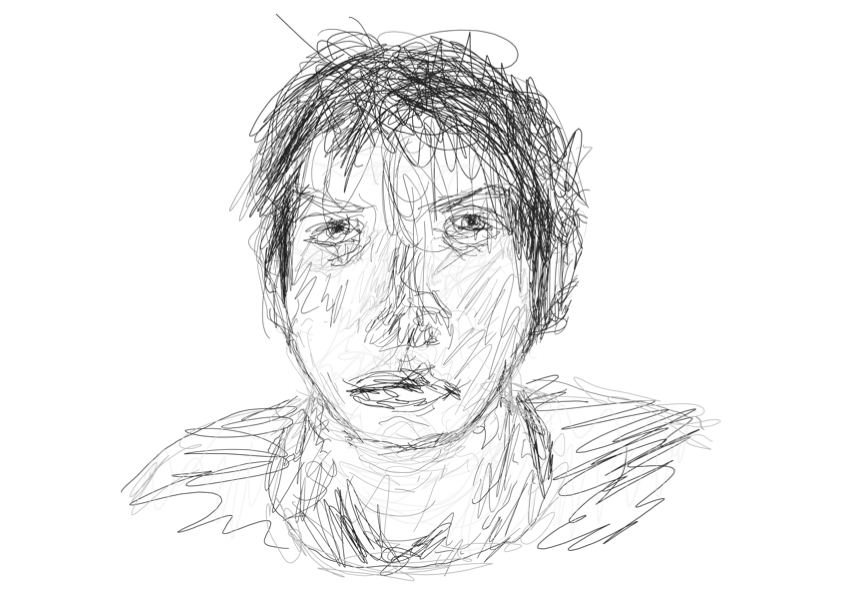
Self Portrait by Noah Bradley

Guest post by Martin Mayer

It took nearly 30 years to get here: the tail-end of another successful 20-city concert tour across China’s top performance halls, thousands of eager fans embracing a cross-cultural meeting through music. And for all the lessons, the endless gigs, and the gambles I took to start my career – all of it nearly ended in less than 30 seconds.

It was just another post-tour early wakeup call. The two-hour show had ended at 10 pm, with multiple standing ovations – the audience wouldn’t let me go. To be on a stage speaking only through music has always been my dream.

That night, I signed every autograph and took every selfie requested for as long as the fans were there. As I write this now, I hold onto that joy – because in a matter of hours, my world would be turned upside down.

It was nearly 2:00 am when I got to my hotel room – too much adrenaline to sleep. I packed and braced for a 5:30 am wakeup: a flight to Guangzhou for a layover, then the long-haul home to Vancouver.

Once in Guangzhou, an airport shuttle picked me up for a nearby hotel where I’d catch a few hours of sleep.

I never made it to that hotel room.

As the shuttle pulled away, the driver slammed on the brakes – a pedestrian had darted across the road. No seatbelts. I flew straight into my luggage, hands stretched out to brace myself. Natural human reaction. For a pianist, an absolute nightmare.

Within seconds: immense agony. Left hand – dislocated 5th finger jutting outward at a 90° angle. Right hand – sprained 4th finger.

At the hotel, at least 20 staff were waiting, alerted by radio. Three cars stood by to rush me to priority ER. I had to fight – in a language I didn’t speak – to stop the doctor from reinserting the bone without X-rays. My tour manager had flown back to Beijing, so I called him in a panic. He tried to explain my profession. They didn’t quite get it. Writhing in pain, I pulled out my phone and held up a tour poster. I’ve never seen people look so shocked. The nurse called out and seven additional people filled the room.

What followed: X-rays, local anaesthesia in both hands, warm compresses, injections, a rush of documents – because I had seven hours before an international flight and two more airports to navigate. Nothing touched the pain or the anxiety. I was alone and vulnerable, in a place where only the hotel staff spoke English. I made both flights, collapsed into my lay-flat seat, and awoke what felt like five minutes later in Vancouver.

Getting off that plane was the start of a five-year journey: 233 medical appointments, a major surgery, a traumatic incident involving a doctor charged with my care, and a rotating door of specialists trying to piece together what had really happened. My family doctor of 16 years wrote it off – no imaging for six months, just pain medication that did nothing. Like handing someone Tylenol for a broken leg. I fired him. My new family doctor actually saw me through to the other side.

It took nearly 4 years to get the diagnosis: the impact had compressed the thoracic outlet – the space between my first rib and collarbone where veins, arteries, and nerves travel into the arms and hands. Surgery to remove the rib was the only fix.

What nobody tells you about an odyssey like this is just how much it impacts your mental health and sense of self and worth. More than once, I was ready to walk away from everything. Music, which had defined me for nearly three decades, became something I couldn’t even listen to. Too painful a reminder of what I might never get back. Over those five years, I questioned everything about who I was as an artist – and there were times I wasn’t sure that person was coming back. Or whether I even wanted to. This broke me more than anything before, because it was who I had been for my entire life up until then. My partner carried me through the darkest of it – certain of my return when I no longer was. The doctors, family and friends who refused to let me disappear mattered more than they’ll ever know.

I learned a great deal – some of it I wish I’d found far earlier:

Treat your body as an elite athlete would. Because when you consider how we use our bodies to make music, that’s exactly what we are.

Practicing alone is not enough. Take care of the rest of your body, too.

Warm up before you play – every time. Stretch, warmup, stretch, warmup, repeat.

After a long break, start lower than you left off. A runner who finished a marathon three weeks ago doesn’t restart at race pace. Neither should you.

If it hurts, stop. Stretch, rest, ease back in – don’t push through it.

Most doctors don’t understand what musicians go through. Call yourself an elite athlete. They’ll understand a tennis player tearing their ACL far sooner than a pianist with nerve entrapment in their elbow.

Find specialists who work with musicians – a hand therapist, physiotherapist, and hand surgeon. They should be part of your team.

Be your own best advocate, and don’t give up.

I went from not being able to hold a teacup after my accident, to 5 years of doubting whether I’d ever be able to play. And I am playing again. Did it come easy? Definitely not. Do I play better because of adjusting my technique and how I hold my body better? Absolutely!

What you do now will keep you stronger and healthier in the long run. We’re always taught how to practice and how to play – what’s been missing is how to take care of the parts of us that make it all possible: our body and our mind.

In the music industry, there is a stigma that once you are broken, you can never heal or get back to what you were doing. I am proof that is not the case. And the more we raise our voices when we overcome the impossible, the more we can squash that stigma.

Martin Mayer is a Canadian pianist and composer.

Read an interview with Martin here

martinmayermusic.com


Resources for musicians:

BAPAM Medical Charity for Performing Arts

Specialist Musicians Health Services