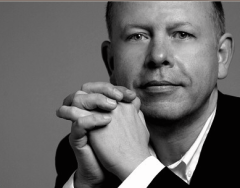
Jeffrey Biegel, pianist

Who or what inspired you to take up the piano, and make it your career? 

There was a piano in the house – an old Estey upright. I gravitated to it after my sister’s piano lessons. Like a magnet, I was drawn to the piano.

Who or what were the most important influences on your playing/composing? 

In piano playing, my teachers, of course. Aside from Morton Estrin and Adele Marcus, I would have to say Josef Lhevinne, Artur Schnabel, Rachmaninov and of living pianists, Murray Perahia among many others.

What have been the greatest challenges of your career so far? 

The greatest challenge in any career is to maintain a steady flow of employment. Fortunately, with standard repertoire, new concerto projects written for me, plus recordings and teaching, there is a nice flow and momentum to keep evolving as a musician.

Which performances/compositions/recordings are you most proud of?  

I would have to say in 1983, performing my debut with orchestra, Prokofiev’s Second Piano Concerto, with the Juilliard Philharmonic in Lincoln Center; same concerto with the National Symphony Orchestra in Washington DC; Prokofiev’s Third Piano Concerto with the Philadelphia Orchestra; and performances of concerti with the following composers in the audience: Keith Emerson, Neil Sedaka, Lowell Liebermann, William Bolcom, Richard Danielpour, Charles Strouse, Marjorie Rusche and Ellen Taaffe Zwilich.

Which particular works do you think you play best?

I love playing everything actually. I never know which is best, however.

How do you make your repertoire choices from season to season?

I normally base the repertoire on new works being premiered and recorded, and the concerti asked for that particular season. next season includes Beethoven’s Choral Fantasy, Saint-Saens Concerto no. 2, Grieg’s Concerto, and Rachmaninov Concerti nos 2 and 3.

Do you have a favourite concert venue to perform in? 

I enjoy everywhere I perform – each venue has its own magic.

Favourite pieces to perform? Listen to?

Too many to list!!

Who are your favourite musicians? 

Too many to list!! In the pop world, David Foster, Keith Emerson, Neil Sedaka (and I can’t get Pink’s song, ‘Just Give Me a Reason’ out of my head – liking it!); pop/classic pianists, Victor Borge and Liberace; classical world – everyone! I always enjoy listening to other pianists and hearing their interpretations of music we all know and love.

What is your most memorable concert experience? 

If I must narrow it down, it would have to be my New York recital debut on April 14, 1986, in Lincoln Center’s Alice Tully Hall for the Juilliard William Petschek Piano Debut Award–an annual honor given to a pianist. I remember looking out through the backstage to see all of my family, friends and colleagues go to their seats. It was like getting married to the instrument, formally, in New York, in front of everyone I know.

What do you consider to be the most important ideas and concepts to impart to aspiring musicians? 

I would suggest creating and maintaining a network of musician friends, and friends in all artistic capacities. You never know when you might collaborate in special projects in performance, audio/video recording etc.

What are you working on at the moment? 

I am now at work for a recording project in the fall of 2014 featuring the following works:
Gershwin: Rhapsody in Blue (1924)
Ellington: New World A-Comin’ (1945, orchestration by Maurice Peress; solo cadenza by Sir Roland Hanna)
Keith Emerson: Concerto no. 1 (1977)
Neil Sedaka: Manhattan Intermezzo (2010; piano part enhanced by Jeffrey Biegel)

Additionally, I will record Lucas Richman’s “Piano Concerto: In Truth” during the 2014-15 season; orchestra tba; and will learn a new concerto based on the famous rock group, The Monkees, to be composed by Dick Tunney out of Nashville. That will be premiered with Orchestra Kentucky in January 2015, along with Peter Tork’s “Moderato ma non troppo” for piano and orchestra. Kenneth Fuchs will be composing a Piano Concerto for me, which will have its world premiere in 2015-16 with the Springfield Symphony Orchestra in Massachusetts with Kevin Rhodes conducting. For the Dicterow-DeMaine-Biegel trio, I will be learning Suk’s “Elegie”, and Dohnanyi’s “Quintet” for our January debut in Fort Worth, Texas. Also, the world premiere of Jeremy Lubbock’s new composition, “Moods–a duet for Piano and Strings” will take place in February 2015 with the orchestra of Moravian College in Pennsylvania.

 
Where would you like to be in 10 years’ time? 

Still alive, performing and recording.

What is your idea of perfect happiness? 

A peaceful world, allowing us to travel anywhere, anytime, without religious or political boundaries.

What is your most treasured possession? 

A photo of pianist Josef Lhevinne to his student (and my teacher) Adele Marcus from May 26, 1928 – Adele changed the date to 1938 to make her younger!

Jeffrey Biegel’s biography

My review of Jeffrey Biegel’s CD ‘A Grand Romance’


Who or what inspired you to take up the piano/composing/conducting, and make it your career? 

Not just a single person has inspired me. I’ve had some great piano teachers before and during my time at university. My last lessons were with Mikhail Kazakevich from Trinity College of Music. I found it amazing that every piece I wanted to learn he was already able play from memory, while looking at me, and could really shake the grand piano playing Liszt. It was a really relaxed environment where I was able to not just ask questions, but also have discussions about the music and I learnt an incredible amount from this. I discovered during this time how to really uncover and convey the music’s narrative as opposed to just learning the technical aspects of a piece.

Do you have a favourite concert venue to perform in? 

Unsurprisingly, especially for the people that know me, I relish the spotlight and the idea of putting on a grand performance is always on my mind. However, I do a lot of lounge jazz playing, and I love having an audience who are doing other things and where music isn’t the main focus. I feel completely free to explore music and try new things without the pressure of the spotlight. It’s really easy to make the space a performance for myself.

Favourite pieces to perform? Listen to? 

I love the intense emotion and raw power of the late romantic Russians (Rachmaninov, Mussorgsky, Scriabin, etc). I think this is in part due to my style of composition, as I love creating piano works in their style and I can never resist learning a challenging piece of music. However, I’ve always loved the simple beauty and lyricism of Chopin, so I always try and have a piece of his on the go.

Who are your favourite musicians? 

Musicians like Vladimir Ashkenazy and Leonard Bernstein I really aspire to, as they are greats in more than just one field. However, for specific pieces, composers and genres I have my favourites. Jazz Trio playing – Brad Mehldau, Rachmaninov’s Third Piano Concerto – Olga Kern, Conducting Stravinsky’s Firebird – Valery Gergiev. The very long list goes on.…

What is your most memorable concert experience? 

My first time as a concert pianist, I was performing Gershwin’s Rhapsody in Blue. This was such a fun piece to learn, and even though I was nervous before, the moment I started playing I relaxed into the music and for 15 minutes the audience didn’t exist, it was just the music and me. It was over way to soon, and I felt such an incredible rush I wanted to do it again straight away. However, I wasn’t fully satisfied and I think I will always be looking for bigger and better things to get involved in. After the concert, I was told there where children dancing at the back, a success in my opinion!

What do you consider to be the most important ideas and concepts to impart to aspiring musicians? 

Always have a performance to work toward otherwise it’s really easy to put practicing to the side. Keep an open mind to new pieces of music you are introduced to, I know my taste in music has dramatically changed over the last few years. Join in everything!

What are you working on at the moment? 

Mussorgsky’s Pictures at an Exhibition for a concert later this year, and Blumenfeld’s Etude for the Left Hand, Op.36 for my birthday party/jam night next week – I want to be able to finish a drink in my right hand before the piece is over!

Where would you like to be in 10 years’ time? 

I would love to have my hand firmly in the three things I love, which is Performing, Composing and Conducting. My idea of perfect happiness is centre stage in a grand concert hall abroad with the Berlin Philharmonic performing and conducting a piano concerto I have composed.

Ho Wan Jeremy Leung 梁皓雲

www.howanjeremyleung.com

Interview date: September 2013

grahamfitchWho or what inspired you to take up the piano and make it your career? 

I was destined to read modern languages at Oxbridge but my heart wasn’t really in it. The piano was an all-consuming passion by my mid teens, and I’m afraid once the blinkers went on I couldn’t see myself being happy doing anything else.

Who or what were the most important influences on your musical life and career? 

Apart from my wonderful teachers Stephen Savage, Peter Wallfisch and Nina Svetlanova (each of whom gave me different parts of the puzzle), I was very influenced by András Schiff. Not only his playing (which blew me away the first time I heard it) but having the privilege of studying with him at Dartington in 1982 and then privately afterwards. Another profound influence was Leon Fleisher’s weekly piano class during my Peabody year, studying Chopin with Ann Schein and having some marvelous lessons with Julian Martin. Playing chamber music with some amazing string players and also playing the song repertoire have made me a more rounded musician than if I had just played solo.

What have been the greatest challenges of your career so far? 

I think juggling the various elements of what I do – playing, teaching, writing, adjudicating and now in my role as a principal tutor on the Piano Teachers’ Course (EPTA) UK. There never seems to be enough time to practise!

Which particular works/composers do you think you play best? 

I have played a wide variety of styles in my time, from the French and German baroque through to contemporary music. If push comes to shove I would have to say I identify most with the mainstream Classical and Romantic repertoire. I can’t imagine a world without Bach, Haydn, Mozart, Beethoven, Schubert, Schumann, Chopin – to name but a few.

What is your most memorable concert experience? 

If you mean as a listener, it would have to be Schiff’s Goldbergs at Dartington in 1982. One of the most memorable of my own would probably be playing the same work in Perth, Australia in the late 90’s – in front of an audience of pianists.

What do you consider to be the most important ideas and concepts to impart to aspiring musicians? 

A love of music, an appreciation of how music is built and how to communicate this in your playing. Aspiring musicians need a heck of a lot of discipline if they are going to amount to anything, but so often they don’t really know how to work. Part of my mission seems to be helping them learn how to practise.

Your ‘Notes & Notes’ recital on 14th September includes works by J S Bach and Haydn. Tell us a little more about why you selected these particular composers and works? 

I chose to play these particular works because I think Bach and Haydn go very well together. The B flat Partita and the G major French Suite are very often played, and I find I often teach them. The Haydn C major is such an inventive work – I just love the humour in it.

Why perform and talk about the music? How do you think this approach illuminates the music and composers for the audience? 

There is a growing trend for performers to talk about music, and to engage with their audience on a more personal and intimate level. If the venue is small enough, it can be a great way of enhancing the listening by offering what are basically spoken programme notes – and maybe some personal observations and anecdotes.

Graham Fitch’s ‘Notes&Notes’ recital is on Sunday 14th September 2014 at 3pm at Craxton Studios, Hampstead, north London. After the concert, the audience is invited to join Graham for a cream tea and a chance to socialise with other music lovers. Further information and tickets here. This concert marks the launch of the 2014/15 season of the innovative and popular South London Concert Series.

Graham Fitch, now based in London, maintains an international career not only as a pianist, but also as a teacher, adjudicator and writer. He has been appointed to the piano staff at the Royal Welsh College of Music and Drama, and runs private teaching studios in South West London, and the West End of London.

A published author, Graham has written several articles on aspects of piano playing and musical style. He has also produced a generation of teachers through his influence as a teacher. He is a regular contributor to Pianist Magazine, and is the author of a very successful blog, http://practisingthepiano.com/

www.grahamfitch.com


by James Holden

Stephen Hough’s recording of Liszt, ‘Bénédiction de Dieu dans le solitude’, Harmonies poétiques et religieuses, S.173/III on the CD Rhapsodie espagnole; Mephisto Waltz; Bénédiction de Dieu  released on Virgin as 724356112926.

There are moments when the piano ceases to sound like a box full of hammers being thrown against metal. It ceases to be a blacksmith’s instrument, all anvil-struck notes, all blows and impact.

Stephen Hough’s performance of Liszt’s ‘Bénédiction de Dieu dans la solitude’ is one such moment.

I first heard this recording when I was still relatively unversed in the nineteenth-century piano repertoire. I had listened to some Chopin and knew a few of Mendelssohn’s Songs Without Words.I wasn’t familiar with anything by Schumann and knew no Thalberg, Alkan or work by any of the other virtuosos.What little I knew of Liszt I had learnt from reading, and not least from those references to him in Proust.

Like so many other happy cultural discoveries, I first borrowed the CD on which this recording is to be found from the local library (Barnsley). It was there on the racks with the other discs, compilations, popular classics, opera box sets and the like. Stephen Hough, Liszt: Rhapsodie espagnole; Mephisto Waltz; Bénédiction de Dieu.I turned it over, looked at the track listing on the back, weighed it up and then walked it to the desk. I thought, ‘Why not?’

The love I immediately felt for the ‘Bénédiction’ made me a confirmed musical Romantic.There is something in its combination of simple melody and complex accompaniment that, from the very first notes, seems to care for me, the listener, and seeks to protect me. This is not just music to love but music by which one is loved. I’ve only ever had this same feeling with a few other recordings, including Björk’s song ‘Undo’ from her 2001 album Vespertine.

Under Hough’s hands, Liszt’s notes spread outwards; they diffuse themselves. There is nothing struck here, or so it seems, nothing metallic. All is radiated.

Hough’s gestures respect both the work’s grandeur and the composer’s profound religiosity whilst never straining for emotion or effect. Consider, for example,the moment when the right hand part is extended by a series of arpeggios (the passage marked ‘poco a poco animato il Tempo’ on the score). The upper notes seem to open out of the main melodic material, as though the chord was always already there, in the tune, and has only now risen to an audible volume.What great touch on the keyboard; what pedal control!

No other performance of the ‘Bénédiction’ has affected me in quite the same manner. Leslie Howard’s recording of it for Hyperion is undoubtedly brilliant but its brilliance is that of the bright midday sun reflected off of polished stone surfaces. It’s a little too insistent, too sharp edged, a performance whose volume and clarity causes the overall effect to be lost. The more Howard makes things visible the harder it is to see the work. I own a recording of Claudio Arrau playing this piece that is, by contrast, seemingly formed of those reflective stone surfaces themselves. It gives the impression of blocks of notes being moved into place. The Andante is especially hard, too clearly delineated, too marked in outline.

For all its wavering poetry, Hough’s performance is unwaveringly certain of the work’s coherence. As the piece stretches out to over seventeen minutes this is very welcome – essential, even. To take some examples: we can sense the connection between the partial melody in bars 44-49 and that in the later ‘quasi Preludio’ passage; and at the end of that same Preludio, just before the return of the main melodic material, Hough calls our attention to the communication between the hands, the passing backwards and forwards of the notes. In the Coda we can feel everything combine in one final, calm cadence.

Hough’s recording has affected my own playing. I’m only an enthusiastic amateur at best and doubt that I’ll ever be able to play the ‘Bénédiction’ properly and in full (I can play the comparatively simple Andante and quasi Preludio sections). However, my joy at listening to this recording did lead me to learn Liszt’s ‘Schlummerlied’, another work in F♯ major, one with a similar, albeit much simpler, repeating C♯-D♯ right hand figure. When I worked at this piece it was like working at a ‘Bénédiction’ in miniature, only one within my ability range.

As the piece ends, as the last chord dies away I have felt myself suspended, unwilling to speak or move, to intrude into the space created by Liszt and Hough.

Dr James Holden was born in Ashford and educated at Loughborough University. He graduated with his PhD in 2007. He is the author of, amongst other things, In Search of Vinteuil: Music, Literature and a Self Regained (Sussex Academic Press, 2010). His website is www.culturalwriter.co.uk and he posts on Twitter as @CulturalWriter

© James Holden 2014