Introducing Zenezen – a “creative ecosystem for musicians, by musicians.”

[ze-neh-zen]

Zene [noun, Hungarian] music

Zen     1. [noun] A state of meditative calm, in which one uses direct, intuitive insights as a way of thinking and acting

2. [adjective/colloquial] Wise, enlightened, relaxed, capable

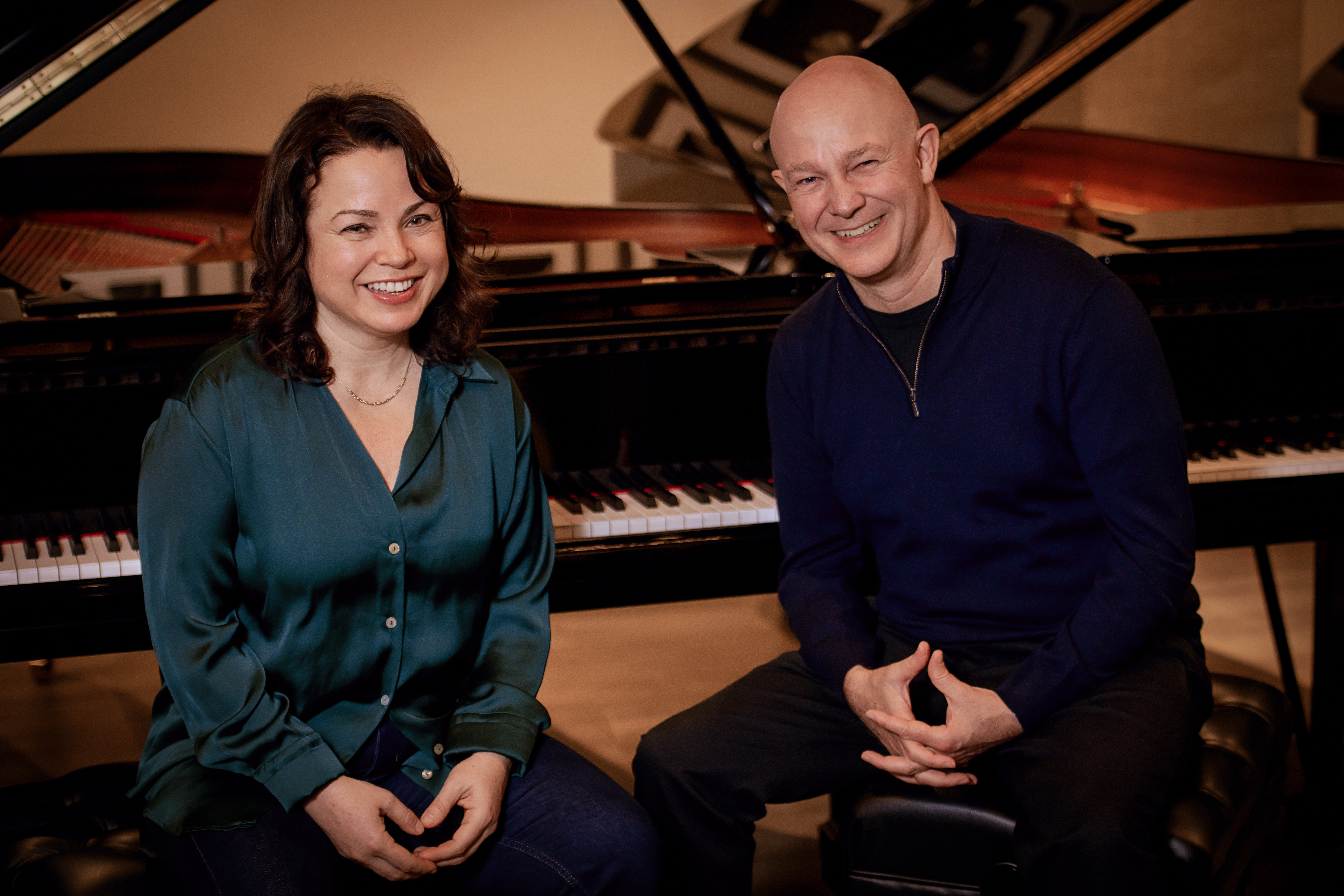
Zenezen is an emerging initiative and digital platform designed to support the professional and personal development of musicians. Founded by British concert pianist and educator Ashley Wass, it brings together a global network of artists, educators and industry professionals to share knowledge, mentorship and resources aimed at improving the sustainability and wellbeing of careers in music.

I spoke to Ashley Wass to find out more about Zenezen and his motivation for establishing it.

What inspired you to create Zenezen, and what gap in the music profession are you hoping to address?

It’s something that’s been building for a long time – over three decades of experience in the profession (plus the years of study at a specialist music school before that) have ultimately led me here. And it’s not only my experiences; the countless conversations I’ve held with friends and colleagues over the course of my career are part of it too.

What’s clear is that many musicians traverse their entire careers without fully understanding how the industry works, and that’s often a source of intense frustration, loneliness and instability. Zenezen aspires to promote greater transparency, deepen knowledge, and champion a culture of sharing. I’m a big believer in peer-to-peer support, and everyone who contributes to Zenezen does so because they want to help their fellow musicians.

How would you describe the core mission of Zenezen to someone encountering it for the first time?

Quite simply, we want to make the world of classical music a happier and healthier place. Our platform will be a safe space where people can share their expertise and experience for the benefit of their peers. It will be a place where musicians can access beautiful content that supports their wellbeing and professional development. We will promote live events, both online and in-person. And there will be opportunities for mentoring and networking. With the desire to promote togetherness at its heart, Zenezen will be a community.

Musicians often face pressures that aren’t always visible from the outside. What kinds of challenges is Zenezen trying to help address?

For such a communal activity, a life in music can be surprisingly lonely. Many musicians feel unable to express their vulnerabilities for fear of damaging their reputations, but deep down, most of us are facing the same challenges. As mentioned above, there’s a general lack of knowledge about the industry, and we want to break down those barriers. And we also aspire to support musicians across the wide range of skills that are required to manage oneself effectively and healthily in the profession. Of course, the nature of those skills is constantly evolving – who would have predicted 15 years ago the role that social media would play in our careers, for example? – and we need to ensure that appropriate and contemporary training is available, such that musicians are well-equipped to keep pace.

The data is deeply worrying – a 2020 survey of musicians around the globe found that 71% reported stress and anxiety, 76% had suffered playing-related injuries, 66% faced discrimination, and 82% felt the industry provided inadequate support for their mental health. Since 2019, no doubt partly due to the pandemic, there has been a 396% increase  in consultations for musicians with mental health concerns. There are all sorts of factors at play – unsociable working hours, poor pay, inconsistency of bookings, accessibility, etc, etc. What Zenezen can do is raise awareness of the challenges, offer help and guidance through them, champion togetherness as a core value, and serve as an advocate for positive change whenever the opportunity exists.

Zenezen brings together artists, educators and industry professionals. Why is this kind of cross-disciplinary community important for musicians today?

The music industry is made of lots of moving parts, and for too long, there hasn’t been enough transparency and understanding between them. It’s vital that educators hear from artists about the demands of the industry so that they can evolve their offerings accordingly. It’s crucial that artists hear from promoters and agents what it is they’re looking for. And it’s important that promoters work more closely with artists to find ways of developing the audiences of the future. Without that, the industry – and everyone in it – will continue to struggle.

At Zenezen, we keep repeating the slogan “Making music together”. It’s not a trite piece of marketing text – we really mean it. Positive change will only happen if we work together.

Can you share an example of a project, activity or conversation within Zenezen that has had a particularly meaningful impact?

It’s difficult to single out any one thing, to be honest. What I will say is this; the support and enthusiasm with which the idea of Zenezen has been embraced – by individuals and institutions – has been truly humbling. So often, the response has been, “this is not just important, it’s essential”. We live in a fascinating time – where people are questioning how we interact with one another – and there’s no doubt the appetite exists for a stronger sense of community.

How does Zenezen aim to support both emerging musicians and more established artists?

I’ve mentioned the word “community” several times already, and that’s the key. Zenezen exists to support our fellow musicians, and we will take direction from them as to what they want us to produce. Everyone who engages with Zenezen has a voice and the opportunity to help shape the platform. So, with that in mind, we would love to hear from musicians at all stages of their careers; their feedback and suggestions will be invaluable as we seek to create the resources that they find helpful.

What role do wellbeing, resilience and sustainability play in the philosophy behind the platform?

For so long, there’s been an attitude that the suffering of great hardship is a requisite to becoming a great artist. It’s a myth that exists in our worship of musical idols, it has been a fundamental part of certain pedagogical traditions for decades, and it pervades our psychologies such that we tend to ‘muddle on’ in the face of unjust, unfair practices. The profession of music lags massively behind other industries when it comes to caring for the wellbeing of its constituents, and we want that to change. Music has an astonishing power to bring joy, hope, healing and redemption to our societies, and we are blessed to be the practitioners who have the talent to deliver it. But there’s an imbalance which is demonstrated by one startling statistic; recent surveys reveal that 71% of people who listen to music report a positive impact on their wellbeing, yet as mentioned above, the very same percentage – 71% – of people who perform music professionally are citing depression and anxiety. There will always be ups and downs – successes and failures – no matter what your job, but we believe that fundamentally, the classical music industry can, and must, become a happier and healthier place.

Looking ahead, what are your hopes for how Zenezen might grow or influence the wider musical community?

We will strive for Zenezen to become an influential voice in the push for positive change, and we will listen to our community members and champion their causes as much as we can. But perhaps I can best answer the question by sharing a little story from my past.

The year was 2016 and the world felt like a turbulent place. The UK had just voted for Brexit, elections around the world had thrown up worrying results, and conflict and division raged throughout our societies. At the time, my first child was 4 years old, and I worried desperately about what the future held in store for her. Late in the year, I was invited to give a concert in an abbey. It was a beautiful place, and in between rehearsal and concert, I decided to explore. It was then that I met a resident monk who was keen to chat. At some point during our conversation, I expressed my concerns and told him I felt helpless in my desire to bring harmony to the world around me. He thought for a few moments and then offered a word of wisdom that’s stayed with me ever since. “Don’t try to change the whole world”, he said. “Focus on making the world a better place for one person at a time”.

And that’s where I stand with Zenezen. Yes, we have grand ambitions. But ultimately, if we can become a space where fellow musicians find things that resonate and reassure – just one at a time – then it will all be worthwhile.

Find out more and explore Zenezen resources here: https://zenezen.net/

Guest post by Thomas Taaffe

Buying a piano has never been a simple decision, but in recent years it has become noticeably more nuanced. Through running an online piano marketplace and directory, I’ve had the opportunity to observe hundreds of enquiries from buyers across the UK, from complete beginners to experienced pianists returning to the instrument.

What stands out is not just what people are buying, but how they are approaching the process. The priorities have shifted in subtle but important ways.

One of the most consistent themes is a growing desire for reassurance. Buyers are more cautious than they once were, particularly when navigating online listings. Questions around condition, history, and authenticity come up time and again. People want to know not only what a piano is, but where it has been, how it has been maintained, whether it has been restored, and who is standing behind the sale.

This has naturally led to increased interest in trusted sellers and verified businesses. While private sales still play an important role, there is a clear preference emerging for some level of accountability. Buyers are often willing to travel further, or spend slightly more, if it means dealing with someone they feel they can rely on.

At the same time, there is a noticeable return to acoustic instruments. While digital pianos remain popular for certain situations, many families and students are actively seeking out upright or grand pianos for the long term. This is particularly evident among parents of younger students, often guided by teachers who recognise the musical and technical benefits of an acoustic instrument early on.

In fact, a significant proportion of enquiries are for well-maintained second-hand instruments. Buyers are increasingly aware that a carefully selected used piano can offer exceptional value, provided it has been properly prepared and supported. Many begin their search by browsing a wide range of pianos for sale in the UK (https://pianosphere.com/ads/), comparing options across different sellers before making contact. This is where clear information and transparency become even more important.

Another shift is the level of research buyers are doing before making contact. Many arrive with a strong understanding of brands, models, and pricing. It’s not uncommon for someone to enquire about a specific Yamaha or Kawai model, already having compared multiple options. However, despite this preparation, there is still a need for guidance, particularly when it comes to interpreting condition, tone, and long-term suitability.

For teachers, this presents both an opportunity and a challenge. Students and parents are more informed, but also more exposed to conflicting information. Helping them navigate those decisions, especially when buying remotely, has become an increasingly important part of the teaching role.

Location and logistics also play a bigger role than they once did. Delivery, access, and aftercare are frequently discussed at an earlier stage in the process. Buyers are not just purchasing an instrument, but thinking about how it fits into their home and daily life. Practical considerations, such as space and placement, often influence the final decision just as much as musical ones.

What all of this points to is a more considered and deliberate approach to buying a piano. The impulse purchase has largely disappeared. In its place is a slower, more thoughtful process. One that places equal weight on trust, information, and long-term value.

Platforms such as PianoSphere (https://pianosphere.com/) have emerged in response to this shift, aiming to bring together buyers, sellers, and piano professionals in one place. The goal is not to replace traditional routes, but to support them — offering a clearer, more connected way to navigate what has always been a complex purchase.

For those advising students or considering a purchase themselves, the key takeaway is this: today’s buyers are not just looking for a piano. They are looking for confidence in their decision.

And perhaps that is no bad thing.


Thomas Taaffe is the founder of PianoSphere, a UK-based piano marketplace connecting buyers with trusted sellers and piano professionals across the UK. He is a classically trained pianist and a graduate of the Royal Birmingham Conservatoire.

Five Beacons of Light: A Cantata for the Sea is a new large-scale choral work composed by award-winning British composer Cheryl Frances-Hoad with words by Di Sherlock. Commissioned to celebrate the 10th anniversary of Sonoro, the piece receives its world premiere on 25th April at Worcester Cathedral, performed by Youth Choral Worcs, Sonoro, and the English Symphony Orchestra, conducted by Neil Ferris.

A Narrative of History, Community and Environmental Crisis

The cantata brings to life the vibrant characters and communities associated with four iconic UK lighthouses: Bell Rock, Bishop Rock, Les Casquets, and Haulbowline. Scored for a unique ensemble of string quintet, piano, percussion, Sonoro, and youth choir, the piece explores a poignant role reversal in our relationship with the natural world. It contrasts the historical purpose of these rock lighthouses – built to safeguard humanity from the peril of the sea – with the modern reality that the sea is now in peril from humanity due to man-made climate change.

The ‘Fifth Beacon’: Empowering the Next Generation

At the heart of the project is the “fifth beacon”: the young people themselves. Through Di Sherlock’s imaginative and beautifully-crafted words, these young performers will illuminate the work with their own voices and perspectives. The voices of these young singers serve as a new “beacon of light”, celebrating the human spirit as a creative force and guiding us towards a more responsible relationship with our oceans.

Footage from Five Beacons rehearsal, January 2026 (filmed by Michael Whitefoot)

Librettist Di Sherlock says, ‘I’d long been wanting to voice my concern about the state of our oceans, rivers, lakes in a way that did not deny the reality but, equally, did not feed into the doom and gloom that brings only despair and overwhelm. Ideas floated about but they needed an anchor. Then I fell upon Tom Nancollas’ ‘Seashaken Houses’ and read all about rock lighthouses – referred to in past times as ‘Beacons of Light.’ The vision, courage, perseverance and sheer grit of the engineers, workmen, keepers, investors and corporations who made these ‘impossible Houses’ possible seemed to echo what is needed today as we face irrefutable climate change – not all of it man-made but our contribution is significant. The rock lighthouses were built to save us from the peril of the sea. Today rising sea levels still threaten lives and livelihoods. But, equally, the sea is in peril of us. And of course the two are connected.

During my research I asked scientists what would be their ‘Beacon of Light’ today – if there even was one. They were unanimous: “Young People!” And so Cheryl and I got funding from the Genesis Foundation to explore ideas at Albyn School, Aberdeen. Working with Cheryl is like handing over a map to a fellow voyager confident not only that she’ll know how to read it, but that she will use it to conjure worlds in a way I never could imagine. We were awed and heartened by the passion and commitment of the students as we workshopped marine issues of pollution, plastic and extinction of species in music, movement and spoken word. Cleaning up the mess (of their elders but not betters), restoration and care were no brainers. They were one, not just with each other in recognising our global responsibility, but with the animals, minerals, trees, plants and waters with whom we share the Earth. And they most definitely were not giving way or giving up.

For the singers who give their amazing voices and the audiences who receive them, I hope the work will inspire a love for our waters and the creatures who live in them, allowing their voices not just to be heard but taken to heart. New ways to clean up our House, aligned with Nature’s intelligence, are firing up scientists and the school lab. Even in a post-truth world, the true Human is a Beacon of Light.’

Conductor Neil Ferris says, ‘This major new work combines the instinctive brilliance of two outstanding artists, Cheryl Frances-Hoad and Di Sherlock, and I am so happy that Sonoro can bring it to young people and audiences in Worcester and Cornwall, with more to come. Both Cheryl and Di have written an inspiring piece that is so beautifully judged in its imagination, its musical and expressive language, and its offer of hope. It will capture the minds of a generation and give an outlet to express themselves in words and music.’

Supported by the Bransford Trust, the Blyth Watson Charitable Trust and the Pamela Matthews Charitable Trust, the project will reach hundreds of young people, many of whom will be performing alongside professional musicians for the first time. Local youth groups joining Sonoro include Youth Choral Worcs and Cornwall Youth Choir.

‘Five Beacons of Light’ receives its World Premiere at Worcester Cathedral on Saturday 25 April 2026, followed by a performance at the Minack Theatre in Cornwall on Friday 3 July 2026. Expected further performances in the UK in 2026 and 2027 are in the pipeline.

This ambitious project promises to blend world-class professional performance with community engagement to address the most pressing environmental questions of our time.

Pianist Anastasiya Bazhenova announces her debut album, From Mendelssohn to Madness, exploring how music reflects psychological shifts in the human condition when stability falters.

Bazhenova traces an inward journey through the music of Mendelssohn and Prokofiev, moving from certainty to uncertainty.

The journey begins with Mendelssohn’s Songs Without Words, representing an era where clarity and beauty served as fundamental ways of understanding reality and oneself. Yet, even in this apparent transparency, Mendelssohn hints at emerging instability, setting the stage for a deepening exploration.

In the Fantasia in F-sharp minor, Mendelssohn’s music becomes a field of resistance, depicting an inner struggle between the desire for wholeness and the forces that threaten to dismantle it.

As the narrative unfolds, the focus moves to Prokofiev’s Sixth Sonata. Here, the music records reality in its most exposed form. In a world where the pace of change exceeds human grasp, Prokofiev’s work navigates extreme emotional states—including fear, fury, despair, irony, and paranoia.

For Bazhenova, this album is not merely a collection of distinct works, but a “single inner trajectory”. It serves as a musical narrative of a human being searching for meaning even when the old order no longer holds.

Track Listing:

Felix Mendelssohn Bartholdy

• Lieder ohne Worte (Songs without Words, selections from Opp. 19, 38, 67, and 85)

• Fantasia in F-sharp minor, Op. 28

Sergej Prokofiev

• Piano Sonata No. 6 in A major, Op. 82

From Mendelssohn to Madness is released on CD and streaming on 1 April 2026 on the Etcetera label. Anastasiya performs in London at the 1901 Arts Club on Friday 24 April.

Pre-order From Mendelssohn to Madness

PRAISE FOR ANASTASIYA BAZHENOVA

“Superb musicianship and captivating stage presence.”

“A pianist capable of drawing an astonishing range of colour and depth from the instrument.

“A highly sincere and intelligent musician with a unique artistic voice.”

(Comments from colleagues and audience)

Anastasiya Bazhenova is a concert pianist based in Norway, recognised for her intense musical concentration, refined sound palette, and a strongly individual artistic voice. She received her early training in Russia through the ten-year specialised programme for gifted children, a rigorous system known for producing pianists of exceptional technical and artistic discipline. This formative background continues to shape her uncompromising approach to sound, structure, and musical narrative.

Bazhenova later completed her advanced studies in Norway, earning a Master’s degree from the Norwegian Academy of Music in Oslo, where she is now based.

Her artistry is defined by a deep inner world and a strong sense of dramaturgy, with programmes conceived as coherent artistic statements rather than conventional recital formats. Her interpretations are often described as psychologically focused, emotionally charged, and marked by a distinctive clarity of musical thought.

She performs internationally as a soloist and chamber musician across Europe and North America. Her debut album, From Mendelssohn to Madness, is released on Etcetera Records in 2026 and presents a sharply articulated artistic concept, positioning her as a distinctive voice on the contemporary piano scene.

anastasiyabazhenova.com