Pianist Anastasiya Bazhenova explores the fragility of the human condition in her debut album

In her debut recording, pianist Anastasiya Bazhenova presents a programme that goes beyond a simple chronological survey of keyboard music. From Mendelssohn to Madness is not just about contrasting different historical periods; it is a deep exploration of the human condition and how our inner worlds change when external stability starts to fade.

For me, the tension is already present in the Mendelssohn. His music often sounds lyrical and balanced, but there is also something fragile in it, as if the stability could break at any moment. The Fantasia in F-sharp minor begins to open up that tension — it is more restless, more searching. And by the time we reach Prokofiev, the tension is no longer hidden. It becomes direct, physical, almost violent. So the “madness” in the title is not only the destination. It is something that slowly reveals itself along the journey.

Anastasiya Bazhenova (interview with Indie Boulevard magazine)

The album begins within the world of Felix Mendelssohn Bartholdy, a composer whose music hails from an era where form offered a sense of reassurance. In his Songs Without Words, Bazhenova uncovers a serene human voice that communicates with the confidence that it can still be heard without exertion. During this period, qualities such as clarity, proportion, and beauty were not merely ornamental; they were fundamental tools for understanding both oneself and reality.

However, even within this transparent beauty, a subtle tension begins to emerge. In the Fantasia in F-sharp minor, this balance is no longer an automatic state but a conscious effort. Here, the music becomes a battleground where light and darkness clash, symbolising an inner struggle to preserve wholeness against forces that seek to dismantle it. For Mendelssohn, form serves as a final battleground against chaos.

The narrative takes a sudden turn with Sergej Prokofiev’s Sixth Sonata, which opens the space beyond the rupture of the old order. This is music for a world that no longer promises stability—a world where the pace of change has quickened beyond our ability to comprehend.

Within this sonata, intense emotional states coexist in a raw, exposed form: fear, fury, despair, irony, and paranoia. The music forsakes the pursuit of traditional harmony, opting instead to record reality in its most unfiltered state. As the album moves from Mendelssohn to Prokofiev, the listener undergoes a inward shift: a transition from trusting in form to living without guarantees, and from viewing beauty as a support to acknowledging the need to live without it.

Rather than viewing these pieces as a collection of separate works, Bazhenova considers the programme as a single internal trajectory. The album does not seek to resolve the tensions it presents or provide simple explanations. Instead, it allows the music to unfold as a continuous process – a musical narrative of a human being who keeps feeling, thinking, and searching for meaning even when the structures of the past have broken down.

We often think of madness as something extreme or pathological, but in reality it is much closer to ordinary human experience. It can grow out of fear, obsession, loneliness, or simply from the unbearable tension between what we feel inside and what the world expects from us. In that sense, “madness” in this album is not something distant or theatrical. It is something that lives quietly inside many people. Music simply gives it a voice.

Anastasiya Bazhenova

From Mendelssohn to Madness is released on CD and streaming 1 April 2026 on the Etcetera Records label

Anastasiya Bazhenova performs in London at the 1901 Arts Club, a delightful salon-style concert venue, on 24th April. Details here https://www.1901artsclub.com/24-apr-2026-from-mendelssohn-to-madness.html

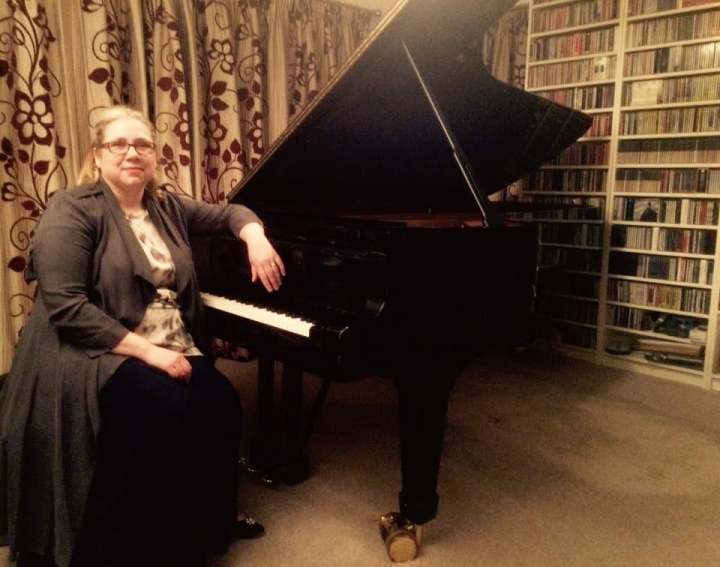
Anastasiya Bazhenova pianist

Photo credits Torgeir Rørvik

Guest post by Noah Bradley

AI has caused a bit of a fuss in Art. Classical music has long subsisted on a few immortal masterpieces a century. Before long, will we be swamped?

I think most people would agree that classical music is an art of a different kind to pop music, advertising, and cooking. To compare Beethoven and Michelangelo is fair enough, but Beethoven and fried chicken less so. The word we have for the former kind (the latter would be “pre-concert KFC”), is “high art” which sounds perhaps a little pretentious, so we shall simply call it “art”.

With Beethoven as a starting point, it becomes clear that Bach is really the same sort of thing, and that Stravinsky is too. And Hucbald of St Amand? Well not really. Nonetheless, it has been traditional to lump all four of them together; sharing as they do, a place in the history of European music.

Of late, it has seemed rather arbitrary that Hucbald gets to be associated with “classical art”, whereas Ravi Shankar doesn’t. So nowadays (because of its extraordinary refinement) we call that type of Indian folk music “Indian classical”, and classical “Western classical”. I believe this has muddied the waters, and I shall explain why.

This takes us to 19th-century Munich, where “kitsch” was invented to describe paintings that were very clearly not art (it has since taken on another meaning). The difference between “art” and “kitsch” the theorists say, is that kitsch doesn’t need a soul; it doesn’t need refinement or sincerity, only lustre.

Which brings us to our first distinction, that real art has a soul, and that if something is utterly soulless, then it is not art. I can hear a soul in Bach, but in a (average) pop song, only lustre. Now our second distinction; that there are two types of art- one where you can feel cultures, and another where you can feel individuals. The first type is called “folk art”, whereas the second type doesn’t really seem to be called anything.

There is a bit of a grey line, because in a work of art you can sometimes feel a culture and an individual. In other cases it is simpler: of all the great cathedrals of Europe, none are by a single hand. They were also designed according to tradition- one of the main precepts of folk art.

But isn’t it common to hear it said that Mozart and Haydn sound rather similar? And isn’t Bach unimaginable without the heavy air of Protestantism? Well even if Mozart and Haydn share twinkly melodies, simple harmonies, and regular symmetry, they both have their own, separate, heartbeats. The trappings of the eighteenth century or the atmosphere of German Protestantism is not what moves us; what does is the soul of the individual.

If all this sounds terribly abstract, it is a comfort to know that it is true in practice. No computer, no matter how many instructions you give it, will ever make a real work of art. It is all mediocre because the surest route to mediocrity is copying. Composers who do nothing but copy, do not write art, they write kitsch. And if in Saint Hildegard you can hear the cold damp air of Eibingen Abbey, and not her own heartbeat, then maybe she is a folk artist. But it is important not to confuse clarity of thought with mediumship, and I only hope to make such subjective judgements a little clearer.

Noah Bradley is a young composer, writer and polymath, deeply passionate about the art of music. He has written for Music Teacher magazine and InterludeHK

Self Portrait by Noah Bradley

Guest post by Martin Mayer

It took nearly 30 years to get here: the tail-end of another successful 20-city concert tour across China’s top performance halls, thousands of eager fans embracing a cross-cultural meeting through music. And for all the lessons, the endless gigs, and the gambles I took to start my career – all of it nearly ended in less than 30 seconds.

It was just another post-tour early wakeup call. The two-hour show had ended at 10 pm, with multiple standing ovations – the audience wouldn’t let me go. To be on a stage speaking only through music has always been my dream.

That night, I signed every autograph and took every selfie requested for as long as the fans were there. As I write this now, I hold onto that joy – because in a matter of hours, my world would be turned upside down.

It was nearly 2:00 am when I got to my hotel room – too much adrenaline to sleep. I packed and braced for a 5:30 am wakeup: a flight to Guangzhou for a layover, then the long-haul home to Vancouver.

Once in Guangzhou, an airport shuttle picked me up for a nearby hotel where I’d catch a few hours of sleep.

I never made it to that hotel room.

As the shuttle pulled away, the driver slammed on the brakes – a pedestrian had darted across the road. No seatbelts. I flew straight into my luggage, hands stretched out to brace myself. Natural human reaction. For a pianist, an absolute nightmare.

Within seconds: immense agony. Left hand – dislocated 5th finger jutting outward at a 90° angle. Right hand – sprained 4th finger.

At the hotel, at least 20 staff were waiting, alerted by radio. Three cars stood by to rush me to priority ER. I had to fight – in a language I didn’t speak – to stop the doctor from reinserting the bone without X-rays. My tour manager had flown back to Beijing, so I called him in a panic. He tried to explain my profession. They didn’t quite get it. Writhing in pain, I pulled out my phone and held up a tour poster. I’ve never seen people look so shocked. The nurse called out and seven additional people filled the room.

What followed: X-rays, local anaesthesia in both hands, warm compresses, injections, a rush of documents – because I had seven hours before an international flight and two more airports to navigate. Nothing touched the pain or the anxiety. I was alone and vulnerable, in a place where only the hotel staff spoke English. I made both flights, collapsed into my lay-flat seat, and awoke what felt like five minutes later in Vancouver.

Getting off that plane was the start of a five-year journey: 233 medical appointments, a major surgery, a traumatic incident involving a doctor charged with my care, and a rotating door of specialists trying to piece together what had really happened. My family doctor of 16 years wrote it off – no imaging for six months, just pain medication that did nothing. Like handing someone Tylenol for a broken leg. I fired him. My new family doctor actually saw me through to the other side.

It took nearly 4 years to get the diagnosis: the impact had compressed the thoracic outlet – the space between my first rib and collarbone where veins, arteries, and nerves travel into the arms and hands. Surgery to remove the rib was the only fix.

What nobody tells you about an odyssey like this is just how much it impacts your mental health and sense of self and worth. More than once, I was ready to walk away from everything. Music, which had defined me for nearly three decades, became something I couldn’t even listen to. Too painful a reminder of what I might never get back. Over those five years, I questioned everything about who I was as an artist – and there were times I wasn’t sure that person was coming back. Or whether I even wanted to. This broke me more than anything before, because it was who I had been for my entire life up until then. My partner carried me through the darkest of it – certain of my return when I no longer was. The doctors, family and friends who refused to let me disappear mattered more than they’ll ever know.

I learned a great deal – some of it I wish I’d found far earlier:

Treat your body as an elite athlete would. Because when you consider how we use our bodies to make music, that’s exactly what we are.

Practicing alone is not enough. Take care of the rest of your body, too.

Warm up before you play – every time. Stretch, warmup, stretch, warmup, repeat.

After a long break, start lower than you left off. A runner who finished a marathon three weeks ago doesn’t restart at race pace. Neither should you.

If it hurts, stop. Stretch, rest, ease back in – don’t push through it.

Most doctors don’t understand what musicians go through. Call yourself an elite athlete. They’ll understand a tennis player tearing their ACL far sooner than a pianist with nerve entrapment in their elbow.

Find specialists who work with musicians – a hand therapist, physiotherapist, and hand surgeon. They should be part of your team.

Be your own best advocate, and don’t give up.

I went from not being able to hold a teacup after my accident, to 5 years of doubting whether I’d ever be able to play. And I am playing again. Did it come easy? Definitely not. Do I play better because of adjusting my technique and how I hold my body better? Absolutely!

What you do now will keep you stronger and healthier in the long run. We’re always taught how to practice and how to play – what’s been missing is how to take care of the parts of us that make it all possible: our body and our mind.

In the music industry, there is a stigma that once you are broken, you can never heal or get back to what you were doing. I am proof that is not the case. And the more we raise our voices when we overcome the impossible, the more we can squash that stigma.

Martin Mayer is a Canadian pianist and composer.

Read an interview with Martin here

martinmayermusic.com


Resources for musicians:

BAPAM Medical Charity for Performing Arts

Specialist Musicians Health Services

Guest post

PianoMe: The Smart Way to Share Rehearsal Spaces and Earn Money with Your Music Room

What can you do when rehearsal rooms and instruments stand empty for hours or even days?

The answer is simple: share them through www.piano.me/en and turn unused space into income.

PianoMe is a growing online platform that enables musicians, music schools, studios, churches, and private hosts to rent out rehearsal spaces with instruments by the hour. At the same time, musicians can book affordable practice rooms exactly when they need them—no long-term contracts, no unnecessary costs.

Rehearsal Spaces Sharing Community – Built by Musicians for Musicians

PianoMe was created by musicians who experienced the same problem many artists face: finding a suitable place to practice is often difficult, expensive, and inflexible.

The idea behind the platform is based on the sharing economy: if a room and an instrument are not in use, they can be shared with others.

This creates a classic win-win situation:

  • Hosts generate additional income from otherwise idle rooms
  • Musicians pay only for the time they actually use
  • Cities benefit from a reduction in rehearsal room shortages

Traveling musicians, in particular, appreciate being able to book a nearby practice room within minutes, whether for an audition, an exam, or a recording session.

Monetize Your Empty Rehearsal Room

If you own a rehearsal room or a studio that is not used 24/7, PianoMe offers an easy and secure way to earn money.

Creating a listing takes only a few minutes:

  • Upload photos
  • Set your availability
  • Define your own rental rules and cancellation terms
  • Start receiving bookings

All processes—from request to payment—are fully digital and automated, which means no paperwork and minimal administrative effort.

A Lifeline for Music Schools

Music schools are facing increasing financial pressure due to rising costs and reduced public funding. PianoMe helps them:

  • Generate additional revenue from unused rooms during off-peak hours
  • Digitize and automate their rental processes
  • Reach new target groups such as freelance teachers, ensembles, and choirs

For some institutions, hourly room sharing has already become a second financial pillar that helps stabilize operations.

Flexible Solutions for Music Teachers

Freelance music teachers benefit from a highly flexible, on-demand room model:

  • No long-term rental contracts
  • No deposits
  • Hourly bookings based on actual teaching needs
  • Easy cancellations within the respective host’s policy

This supports the growing agency model in music education, where teachers operate independently and require adaptable teaching spaces.

Growing Demand and a Diverse Rehearsal Space Marketplace

The response on social media has been overwhelmingly positive. The general consensus is clear: without PianoMe, many rehearsal rooms would remain unused for hours or even days, generating costs instead of value. With PianoMe, this situation is reversed. As one private host wrote in a Google review, their grand piano used to be played only on weekends, but thanks to the platform, both the instrument and the room are now actively used during the week as well.

As the PianoMe network continues to expand, the range of available spaces is becoming increasingly diverse. Today, the platform offers far more than single piano practice rooms. Musicians can find studios equipped with drum kits, electric guitars, or even full recording setups. Room sizes vary widely—from small attic spaces and basement studios to full concert halls and modern event venues with stage and seating.

Browsing PianoMe feels like discovering the hidden musical infrastructure of a city. Many users are surprised by how many rehearsal rooms and instrument-equipped venues exist behind the scenes—places they would never have found without the platform.

Despite this wide selection, choosing the right room remains simple. User reviews provide real insights into the quality of the space and the instruments. In addition, each listing includes detailed information such as available equipment, room size, hourly price, capacity, concert suitability, rental conditions, and real-time availability.

The platform is used not only by professional musicians but also by hobbyists. And it is no longer limited to pianists—singers, amateur bands, choirs, violinists, composers, and many others are now part of the growing PianoMe community.

Free Music Event Promotion and Digital Tools for Musicians

Every musician wants to perform live—and ideally to a full audience. PianoMe makes this easier by allowing users to promote their music events completely free of charge. The platform’s event promotion page, together with its integrated event QR code feature, has recently been expanded with additional functions. Event announcements can now be created on any device within minutes and shared directly across social media channels.

For those who prefer physical promotion, PianoMe also offers a one-click poster generator. Users can design, download, print, and display posters without needing external design tools. Concert programs can be distributed digitally via QR codes, enabling audiences to access them instantly on their smartphones—saving both printing costs and large amounts of paper.

By combining rehearsal spaces with digital promotion and content sharing, PianoMe goes far beyond room booking. It creates a connected ecosystem where musicians support each other, exchange ideas, and present their work.

Read PianoMe’s interview with Frances Wilson (The Cross-Eyed Pianist)