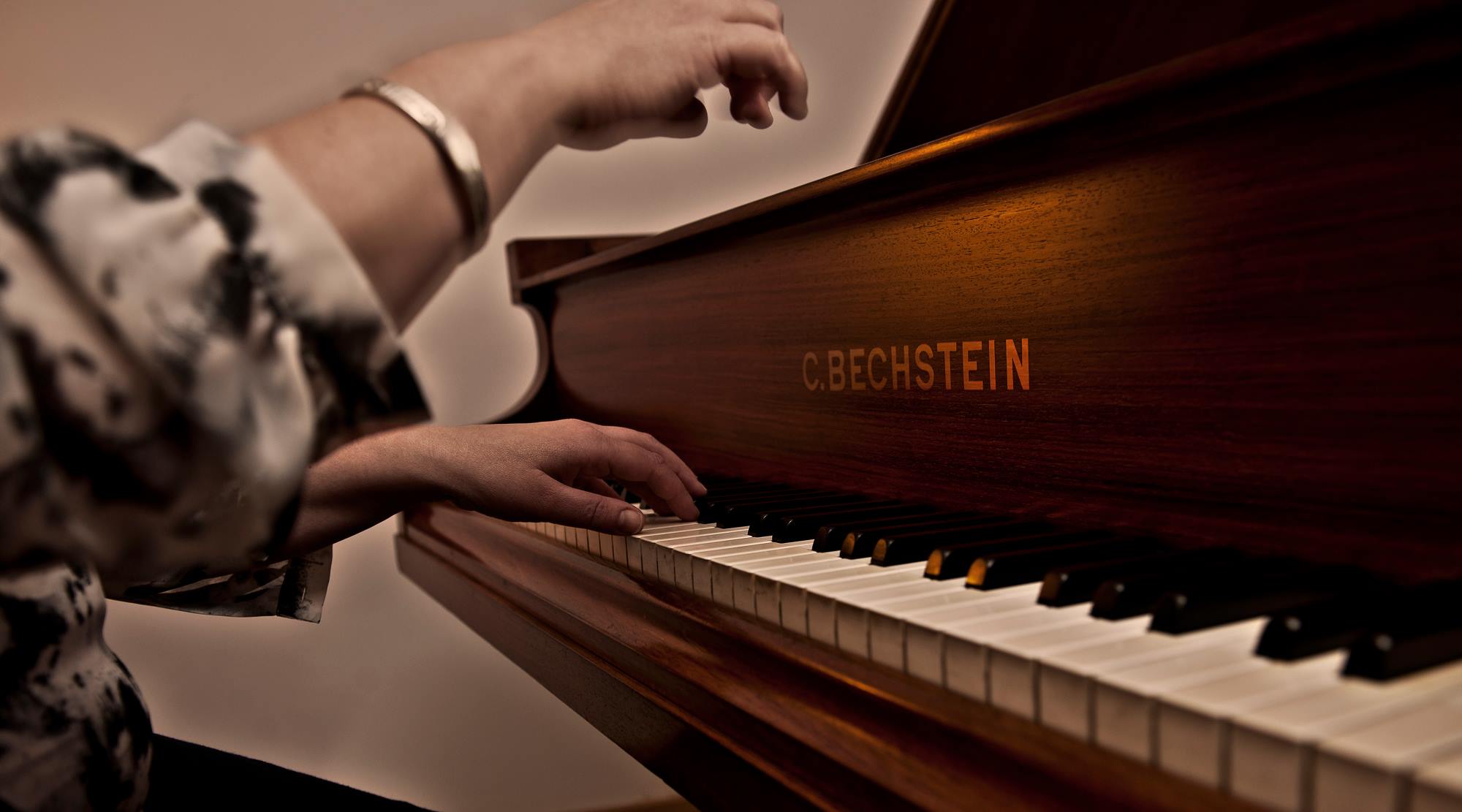
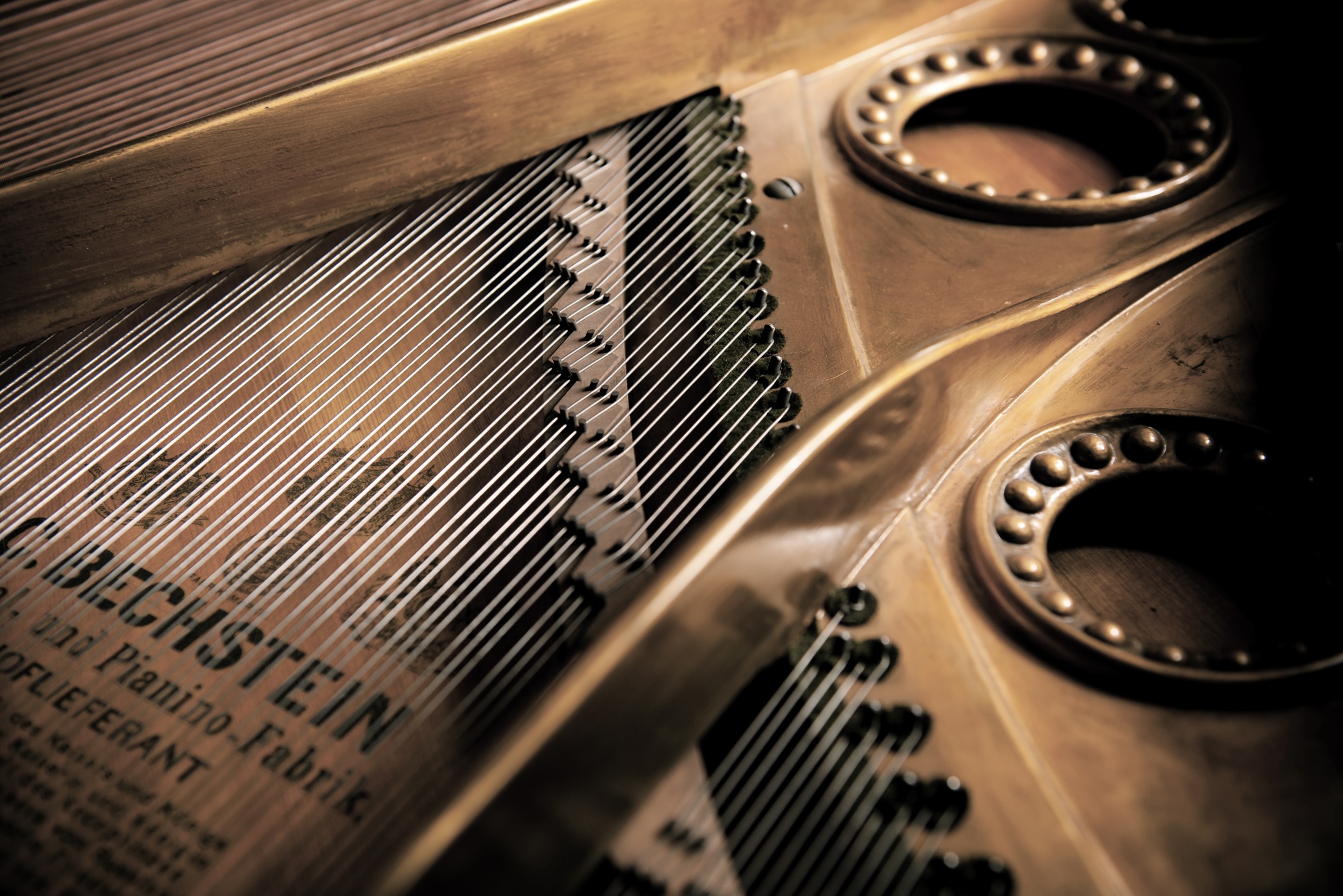
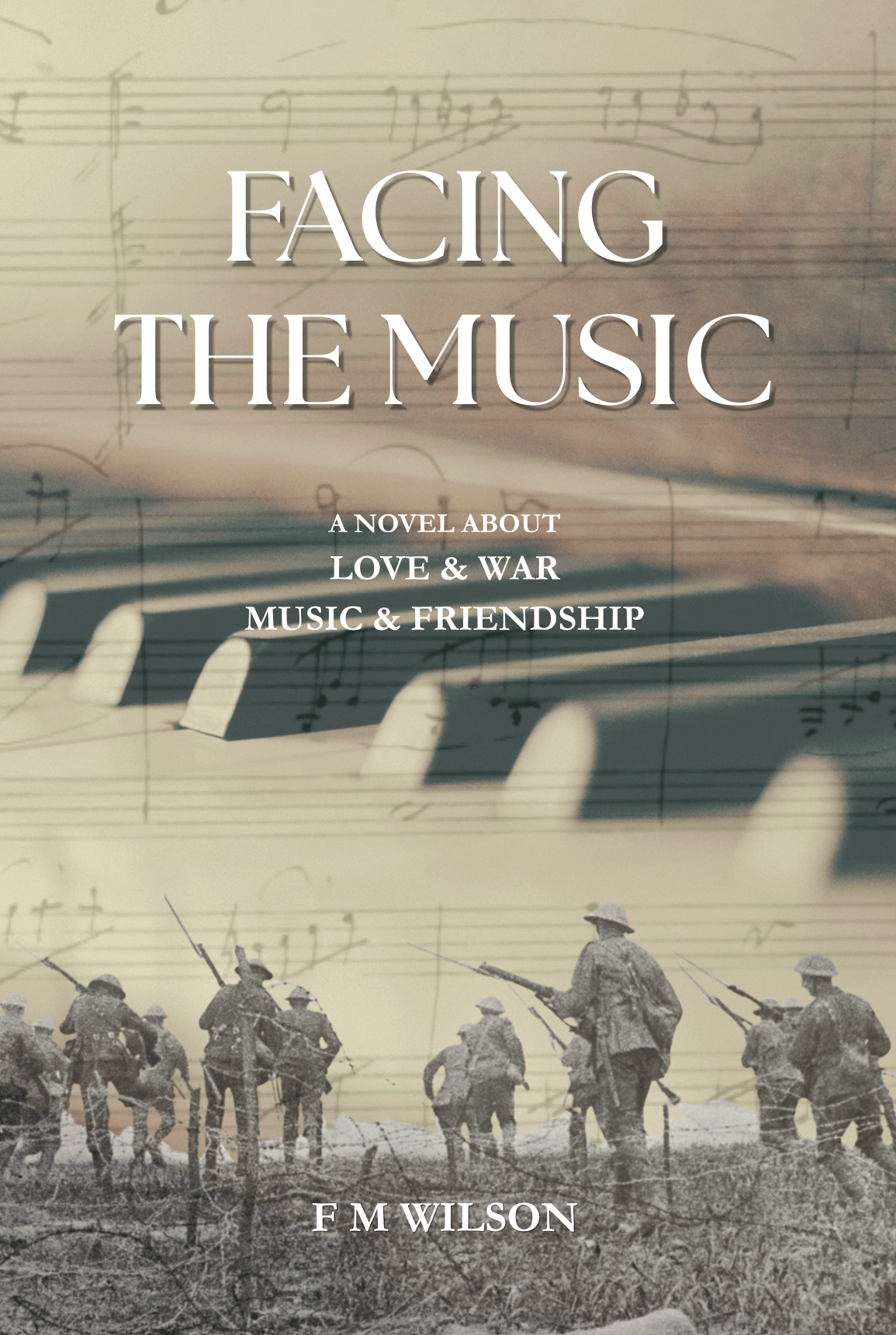
‘The 1913 C. Bechstein grand piano in F M Wilson’s Dorset home predates the opening of ‘Facing the Music’ by a single year, a coincidence so precise that it already belongs in fiction. Wilson has spent much of her life at the keyboard and an equally substantial part writing about the people who sit there, listening for the point where technique ends and personality takes over. Her first novel grows from years of close attention to musicians, their habits, ambitions and the identities built through daily practice.
After reviewing concerts, interviewing pianists and editing The Cross-Eyed Pianist since 2010, Wilson now claims the freedom reserved for a novelist: she decides who enters the room, which piece reaches the music stand and what follows the applause. A critic receives the finished performance, while a novelist can enter the rehearsal, interrupt it, and follow the players home. Wilson has moved from observing musicians to controlling the clock around them.
By introducing pianist Theo Browne and violinist Jonathan Lane-Fox in London in 1914, just as their careers begin and Europe edges toward war, ‘Facing the Music’ places the reader in a peculiarly painful position. Theo and Jonathan can plan their futures, while a century of hindsight has already changed the meaning of every plan. Wilson’s task is to keep their ambitions vivid under a date that has become a verdict. Published through her own Nine Barrow Press, the novel brings her years as a pianist and critic into a form where every performance can alter a life. We spoke with F M Wilson as her first novel entered the world.’
I came across a video of an exasperated ballet dancer talking about parents who had turned to AI to correct their children’s posture. It prompted this article, a response to the dizzying speed at which AI is infiltrating every facet of our lives. The uptake is so fast that the night before, I had been reading through people’s responses to a question about jobs they thought were safe from AI-driven redundancy. Several suggested cleaning or other manual work, apparently unaware of another post showing a robot slowly but methodically cleaning a house and neatly folding clothes. One thing is for certain: we still can’t grasp how our lives will change in the next few months and years.
Meanwhile, my path as pianist, teacher, musicologist has had a surprising turn: I am conducting a pilot study with Imperial College, on the biomechanics of elite piano performance and training, with access to resources provided by Steinway Hall and Goldsmiths College’s Deptford Town Hall. AI is not going to trail very far behind: there is 3D body imaging, motion tracking and data to analyse. In this narrower respect, AI is simply an augmentation of a computer’s abilities.
Since the advent of the internet, availability of information masks from view the more concerning shrinking of the new ‘reality’ into a colourful yet ‘flat’ experience: that of the phone, tablets and tv screens. Everything is one, or a few swipes away. In the case of a non-domain expert parent, i.e. someone who hasn’t trained in the same subject, AI can provide some background information fast, provided the right questions are asked and provided that the AI’s limitations are acknowledged. AI itself is not a ‘knowing’ entity, but a processing entity. The instigator and recipient of this knowledge is the human. A deceptive communication, which is actually cyclical: it reflects and engages with the human input in a seeming loop. So, yes, the information is available, but the context, in terms of indispensable layers such as aesthetic pursuits and creativity, is missing.
If we try to probe the matter deeper, AIs such as the general public uses, Gemini, Claude, ChatGPT, are actually language models. The basis of their functionality is that of predicting a probability distribution over next tokens and sampling from it to arrive at cogent and context-realistic verbal responses. And I am reminded of a very pertinent excerpt highlighting the process in humans, which connects internal thought processes with language, from Language, Thought, and Reality: Selected Writings of Benjamin Lee Whorf, edited and with an introduction by John B. Carroll, Foreword by Stuart Chase
The Greeks took it for granted that back of language [sic] was a universal, uncontaminated essence of reason, shared by all men, at least by all thinkers. […] Whorf flatly challenges it in his second major hypothesis. “A change in language,” he says, “can transform our appreciation of the Cosmos.”
Taken simply, internal processes of thought and experience go at least hand-in-hand with language. Although AI are language models, their output is not an interaction in the sense of having the initiative to communicate unprompted or the result of thought: the initial stimulus is the user’s thought and it is anchored in that. It could be that our over-reliance on AI ‘transforms our appreciation of the Cosmos’ in unintended ways. This is certainly unchartered territory. What about the teacher’s concern over AI teaching movement without human supervision? Expert skill acquisition, such as required for elite ballet dancing or piano performance, is narrow and deep. The idea that anyone will do because ‘the child will not pursue seriously music’ is wrong on so many levels it requires a separate article. And I think that it is this attitude which operates in the background when parents think that AI can be a good substitute for a teacher or a sufficient supplement. The generalisations that come out of Google currently have to do both with data poverty and the fact that biomechanics, the abstraction of art to physical movement, are the necessary substrate of what we call Art, but these two cannot be equated. A good teacher is simply indispensable to instil the basics for specific outcomes to be achieved. Strategy is also not the strong point of AIs.
Teaching is an interaction, so the process is not just a passing down or the rehearsing of a physical skill, but a process within a social context. For non-expert parents, the necessary critical faculty to efficiently sift through sometimes conflicting information is lacking precisely because the requisite is not just information; it is lived experience. In her book Producing Excellence: The Making of Virtuosos, Izabela Wagner writes about this very idea in terms of “socialisation” in the arts: you need a human to transmit not only physical technique but also the lived experience of the milieu you are trying to become a member of.
The Arts are quintessentially the means of probing the eternal questions that torture us, to echo nineteenth century sentiments, a time when many of the canonic works of classical music were composed and are heard regularly on concert stages around the world to this day. More to the point, unlike science which seeks to prove and to know, the Arts seek to engage, no matter what the answer might be, or even when the ‘answer’ represents, like Edvard Munch’s painting The Scream (1893), an expression that cannot be ‘answered’. It just is. Uniqueness would be the other identifier, discussed in connection to seemingly artless or mundane, now iconic, works such as Andy Warhol’s Campbell’s Soup Cans (1962): the ability to reproduce it, underlines its emphasis away from the skill of the craft and on the effect on its unsuspecting audiences. This then supplies the third aspect of human artistic production, the intent to communicate and the decision to take action towards this direction. This is what parents of young learners miss: to develop a real relationship with the arts is to engage with socialisation which cannot be abstracted or equated to ‘interaction’ with a machine and ultimately to connect through one of the most fundamental of human needs: love, and belonging.
1 Benjamin L. Whorf, Language, Thought, and Reality: Selected Writings of Benjamin Lee Whorf, edited and with an introduction by John B. Carroll, Foreword by Stuart Chase (The Technology Press of Massachusetts Institute of Technology and John Wiley & Sons, Inc. New York London, 1956) Foreword, p. 8.
Natalie Tsaldarakis is a Greek concert pianist, researcher, and co-Artistic Director of the PianoPlus International Recital Series, now in its 4th edition. Her research sits at the intersection of biomechanics and piano pedagogy, currently underway in collaboration with the MSk Lab at Imperial College London, and she is completing a forthcoming Routledge publication on the pianist and pedagogue Gordon Green (1905–81). A graduate of Royal Holloway, where her teachers included Chopin scholar Prof. John Rink, she performs internationally as a member of the Ivory Duo Piano Ensemble and Convivium Label Artist, and is a published author (Classical Music in a Changing World, eds. Kramer & Nones, Vernon Press, 2021).
A new piano competition for emerging professional musicians is being launched in Weymouth, Dorset, with its inaugural Final taking place on Saturday 13 February 2027.
The Weymouth International Piano Competition (WIPC) is open to pianists aged 18 to 35 and has been established to provide talented young musicians at the beginning of their professional careers with a valuable platform for performance, recognition and artistic development.
At a time when opportunities for young classical musicians are increasingly competitive, WIPC aims to offer a supportive but professionally rigorous environment in which pianists can present themselves and their chosen repertoire. Rather than prescribing a particular style or period of music, the competition places the emphasis on musical personality, communication and individuality.
Entrants will be selected for the live Final through a preliminary recorded round. The finalists will then travel to Weymouth to perform before a panel of professional musicians and a live audience on 13 February 2027.
The winner will receive a First Prize of £500. More broadly, the competition aims to give its finalists the experience and exposure that come from preparing for and taking part in a public professional event. The competition is adjudicated by renowned pianists Margaret Fingerhut and Duncan Honeybourne.
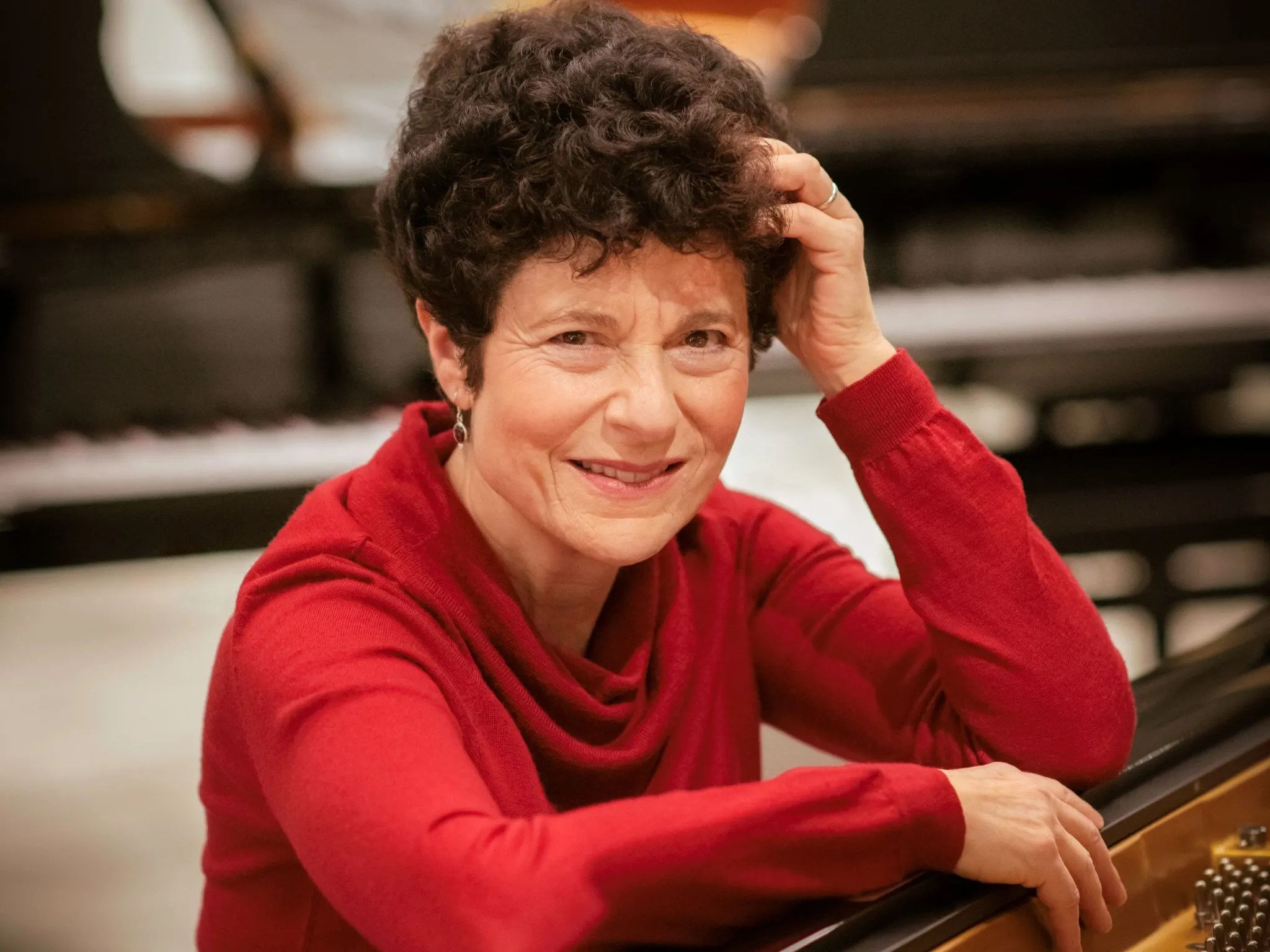
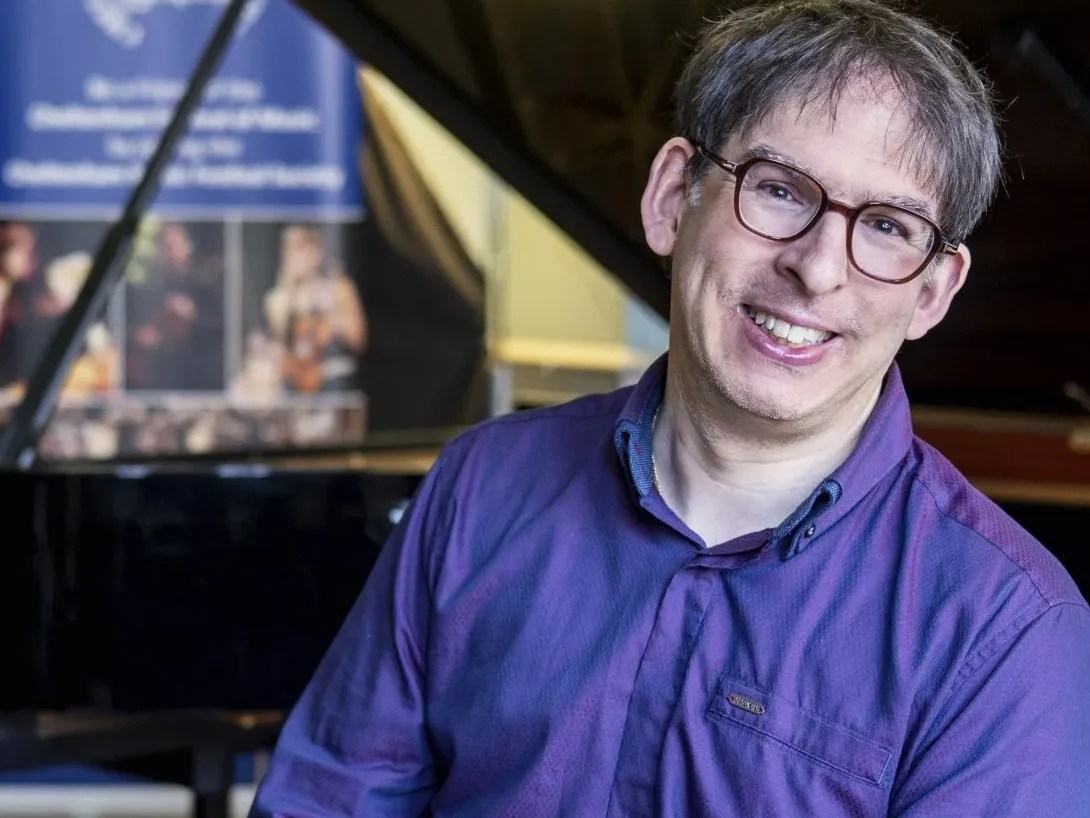
Margaret FingerhutDuncan Honeybourne
Based on Dorset’s Jurassic Coast, the competition also reflects Weymouth’s growing profile as a centre for high-quality classical music-making. Its creation builds on the success of Chamber Music Weymouth, formerly Weymouth Lunchtime Chamber Concerts, which celebrates its 25th anniversary season in 2026/27 and has a long-standing commitment to presenting established performers alongside outstanding musicians of the younger generation.
The competition is hosted by Chamber Music Weymouth (formerly Weymouth Lunchtime Chamber Concerts), a popular and successful concert series founded by Duncan Honeybourne in 2002, which presents some of the best young and established artists in varied and imaginative programmes, mixing well-known works and classical favourites with lesser-known repertoire and composers. In 2026 the series was recognised with an award from Weymouth Civic Society for its continuing commitment to making high-quality live music accessible to everyone and for its contribution to arts and culture in and around Weymouth.
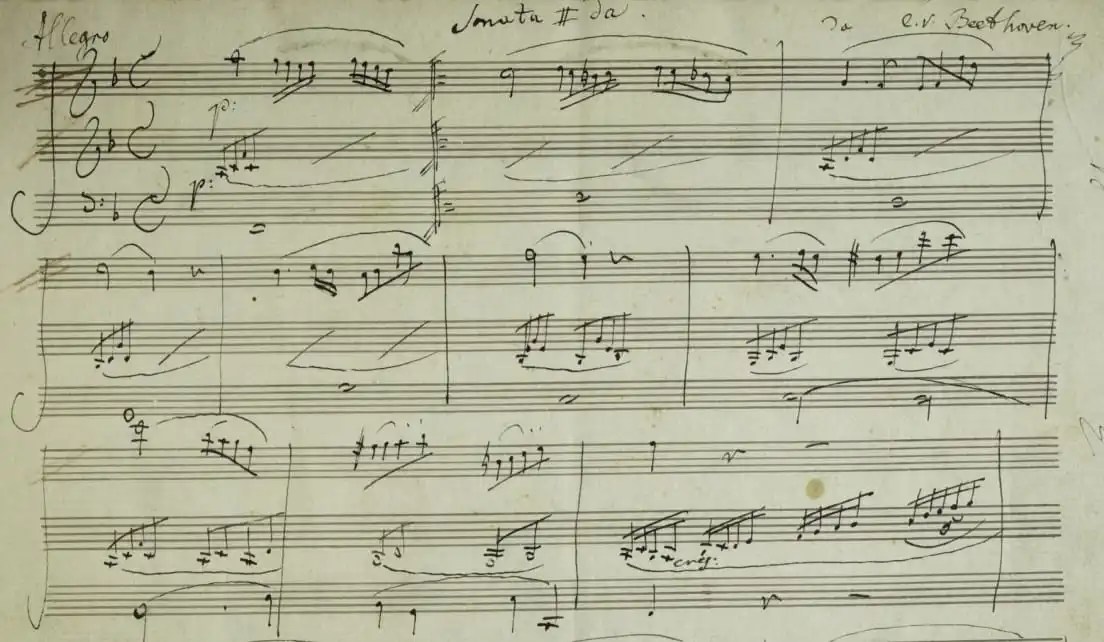
Around 20 years ago, I caught the first movement of his ‘Spring’ Sonata for violin and piano on Radio 3 one morning, and was struck by the freshness and optimism of its opening theme. There is something wonderfully youthful about this music: an openness, an eagerness, a sense of possibility, as if everything still lies ahead.
The other spark for the book was my rediscovery of live music, after a period when I was occupied with looking after my young son, in particular via good friend who was a regular at London’s Wigmore Hall. I developed a deep affection for that venue and grew more and more interested in its history, together with a fascination with the people who make music and the particular intensity of live performance. This was some years before I started my blog The Cross-Eyed Pianist, but even then I was interested in what it means to bea musician, though my notion of artistic identity was at that time rather vague. I also wanted to write about music from the point of view of a practising musician as well as a listener, and to explore both the physical and emotional experience of playing certain pieces.
From there, an idea for a book began to emerge featuring two gifted young musicians – a pianist and a violinist. I imagined them playing the ‘Spring’ Sonata together, and gradually their musical partnership became a friendship stretching back to their schooldays. They were talented and ambitious, young people for whom music was not simply something they did but an essential part of who they were. So I started to write and found a narrative emerged surprisingly easily…
I started playing the piano seriously again in 2008, after an absence of some 20 years, and the novel, by now around 180,000 words (!), was set aside as I found an outlet for my writing through this blog and concert reviewing. Over the past 16 years, the many encounters and conversations I’ve had with musicians through concert attending and reviewing, the Meet the Artist interview series, and this site has given me an increasingly rich insight into the musician’s life: the importance of teachers, mentors and colleagues, the routines of practice, the deep preparation and exhilaration of performance, the doubts and disappointments, and the extent to which being a musician is not simply a profession but an identity.
A conversation with a good friend in Spring 2026 and the publication of a new history of the Wigmore Hall set me thinking about those 180,000 words which were lying dormant on a hard drive or memory stick somewhere in my home. At first, I couldn’t locate the files and I convinced myself they were gone for good, and that it didn’t really matter…. But when I did eventually find them again and I started to read the text, I felt there was something worth revising.
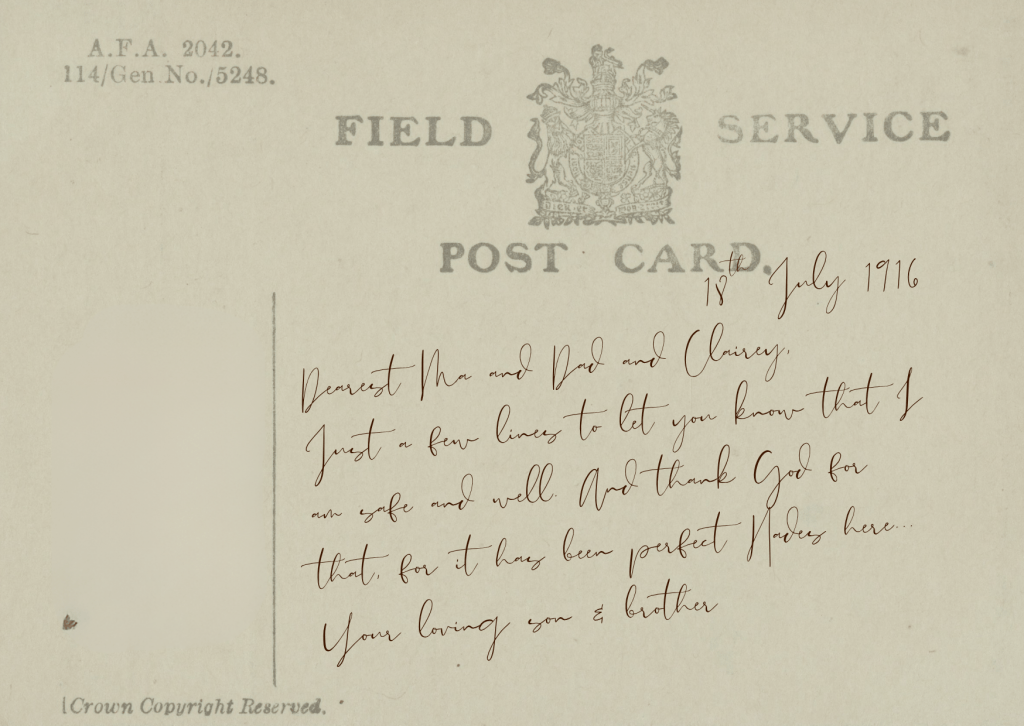
Facing the Music follows the activities of two young musicians: Theo Browne, a pianist, and Jonathan Lane-Fox, a violinist. I imagined them in London in the summer of 1914, talented, ambitious and standing on the threshold of successful professional careers. They have been friends since school and their friendship has been forged, above all, through making music together, the ‘Spring’ sonata being their ‘signature piece’. They understand one another through music in ways they cannot always express in words. And then I began to wonder what would happen if music were taken away from them…
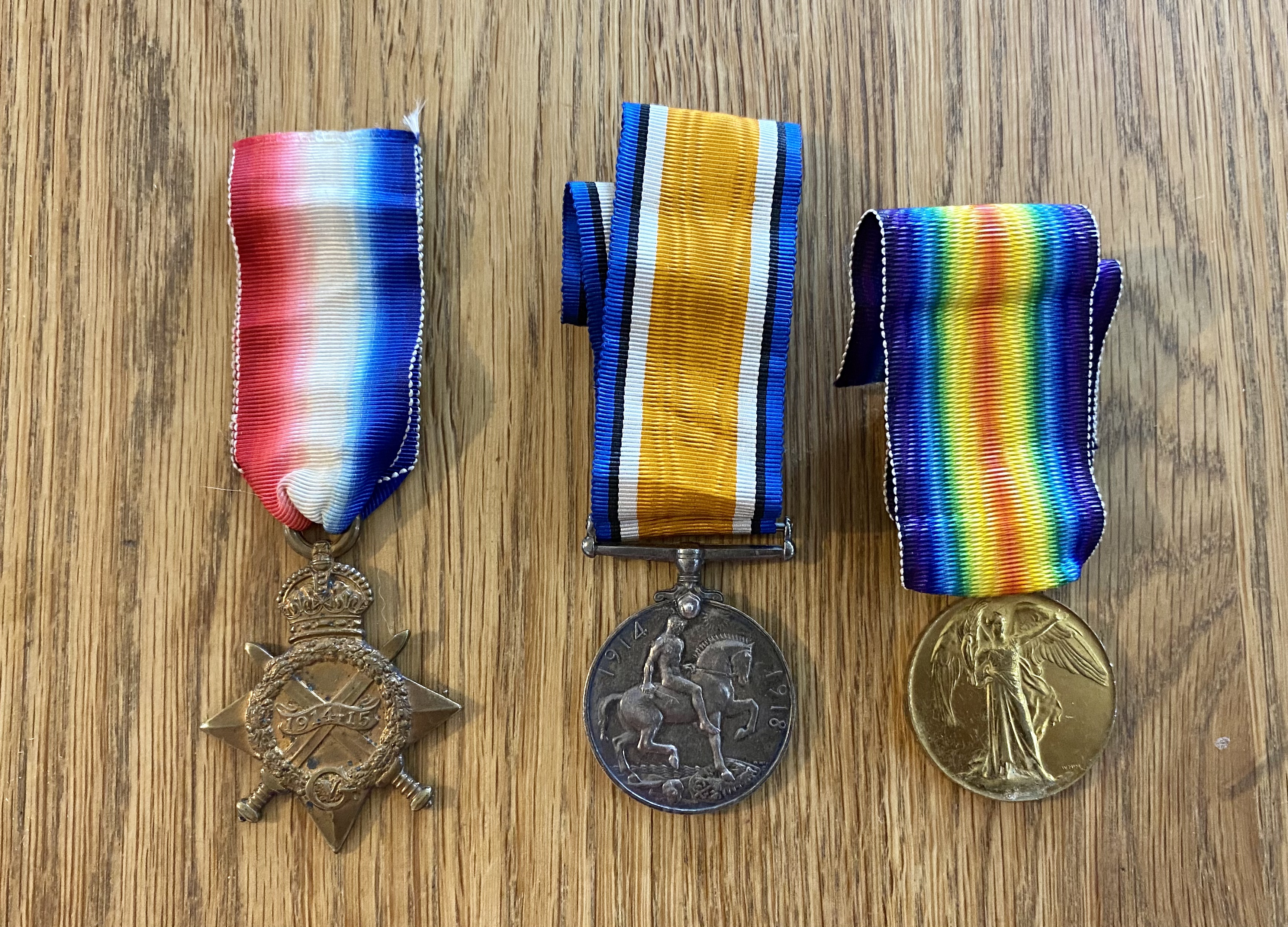
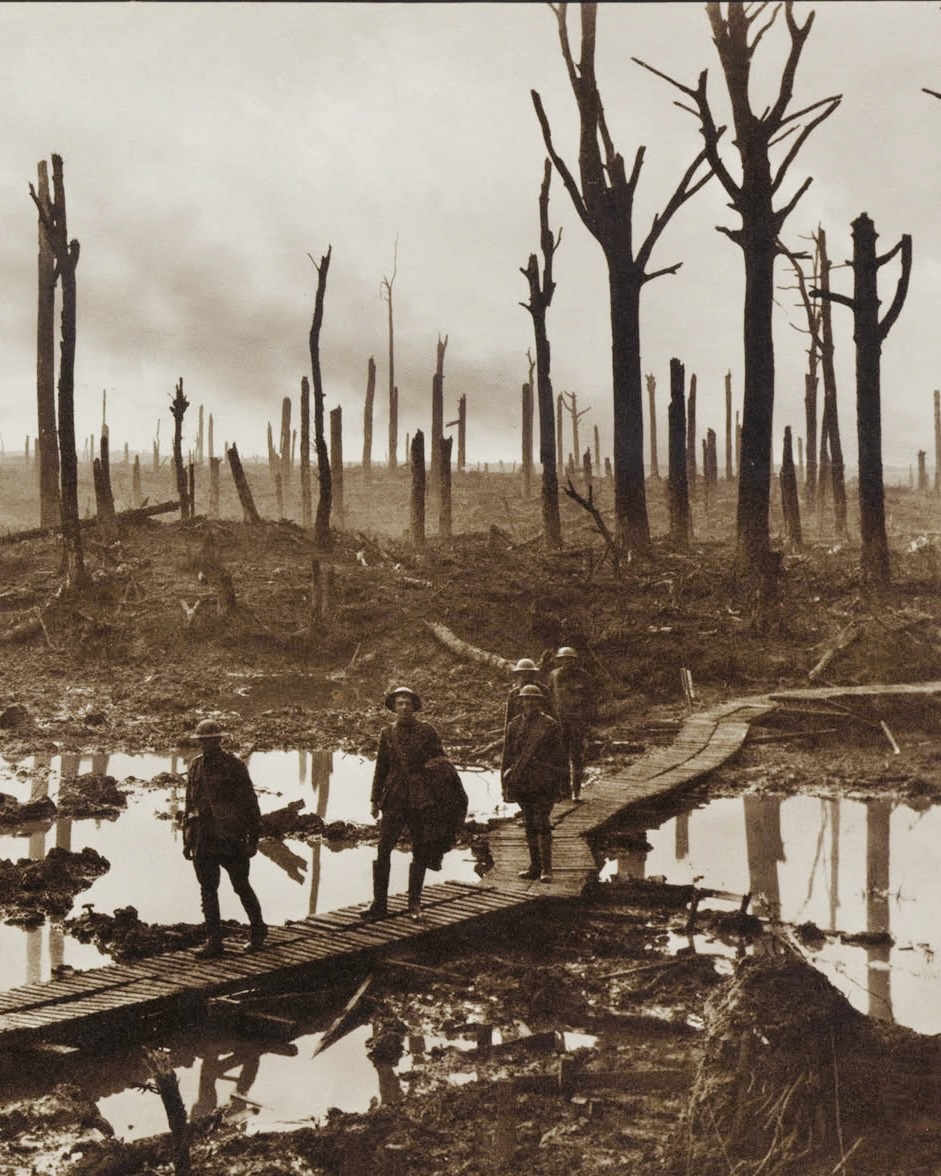
I’ve been fascinated by the First World War and its literature since my teens, and have visited the Somme battlefields several times. But I didn’t want to write a conventional war novel. Rather, the war offered an extreme version of something that has come to interest me greatly: what happens when circumstances over which we have little or no control disrupt the life we thought we were going to lead.
This became particularly resonant during the Covid pandemic. In conversations with professional musicians during the lockdowns, I was struck by the sense of dislocation many experienced when concerts and live music disappeared. At first, some welcomed an unexpected period in which to rest, practise without the pressure of engagements, and learn new repertoire. But as the months passed, without the focus of concerts, for many musicians spare time became an affliction rather than a gratification, and they felt bereft without the opportunity to perform and share their music with live audiences. For someone whose sense of self is so closely bound up with making and sharing music, being unable to do so can feel like losing part of one’s identity. That idea found its way into Facing the Music, though in very different circumstances.
Music is therefore not simply a backdrop to the novel. It is embedded in the lives of its characters. Beethoven, Brahms, Rachmaninoff, Bach, Schubert and others accompany Theo and Jonathan through the narrative, and certain works acquire different meanings as their lives change. Music becomes a repository for memory: of people, places, friendships and former selves.
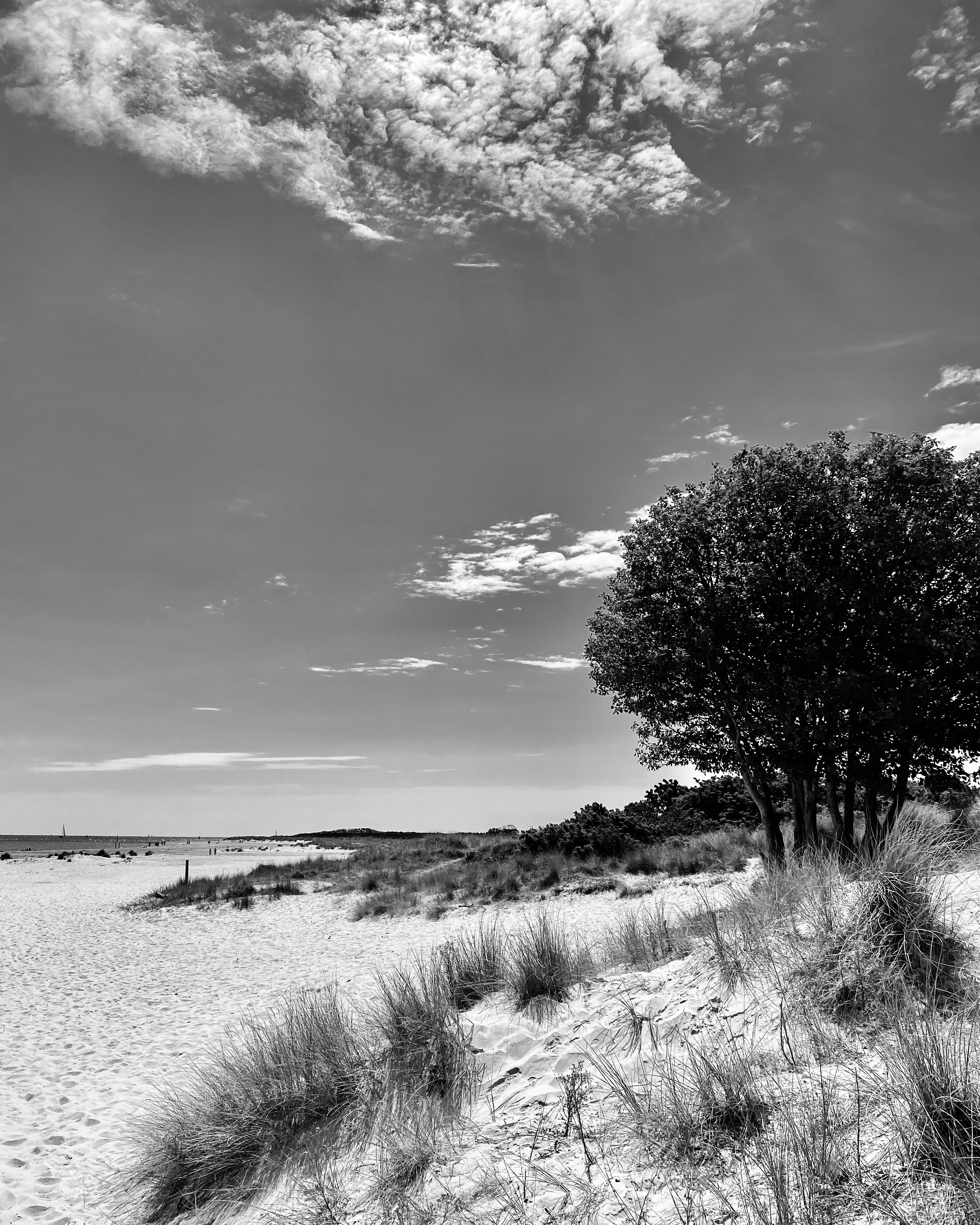
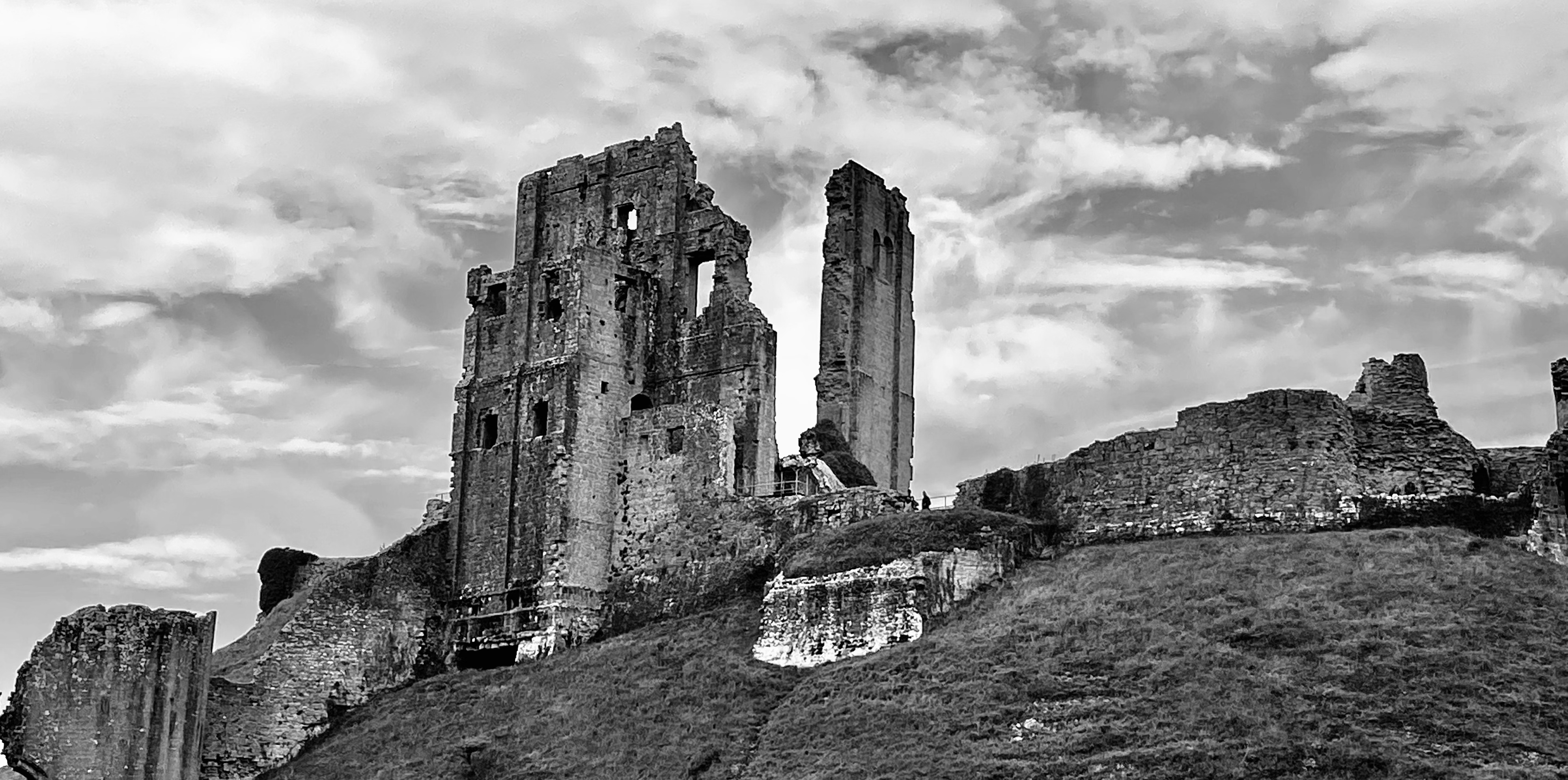
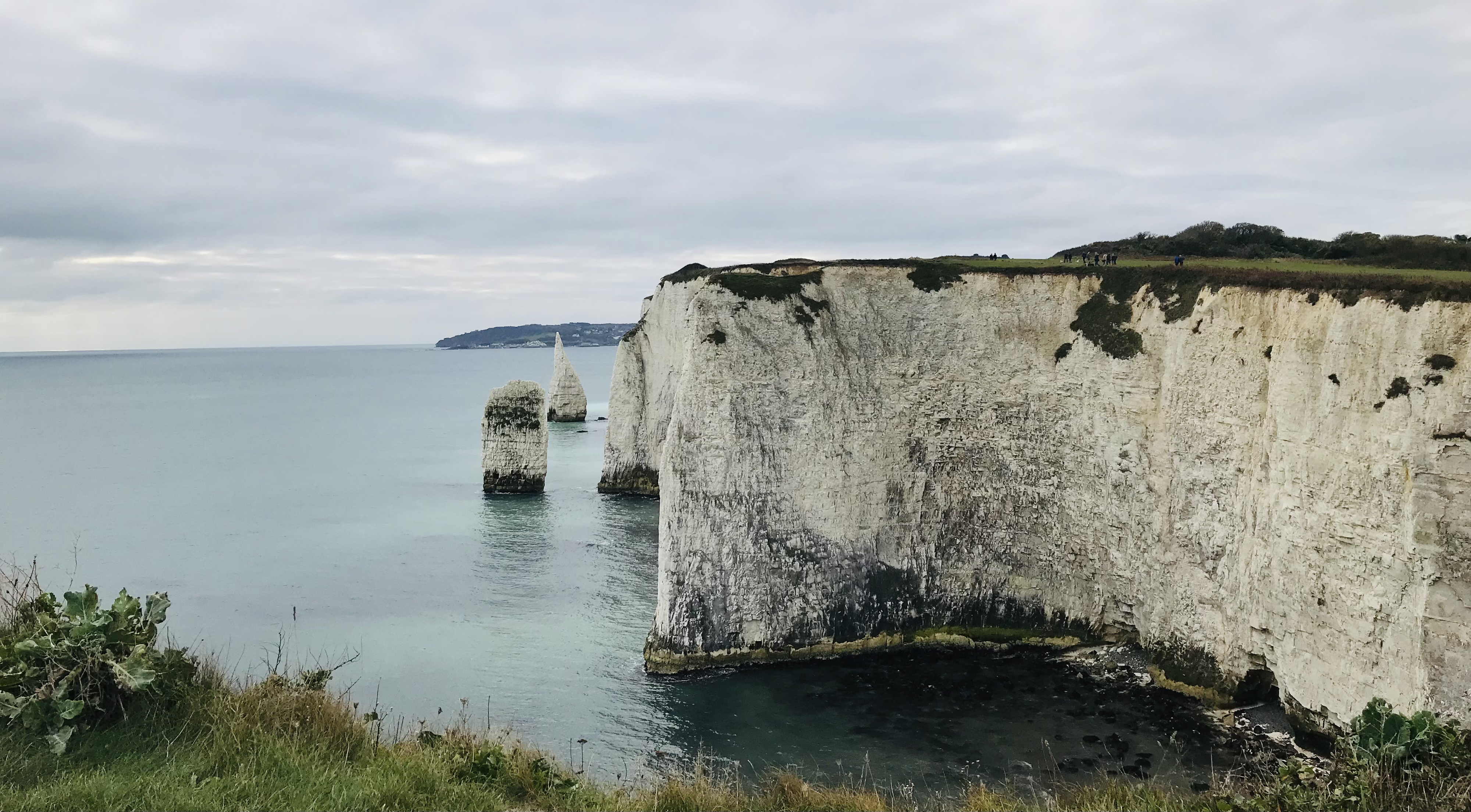
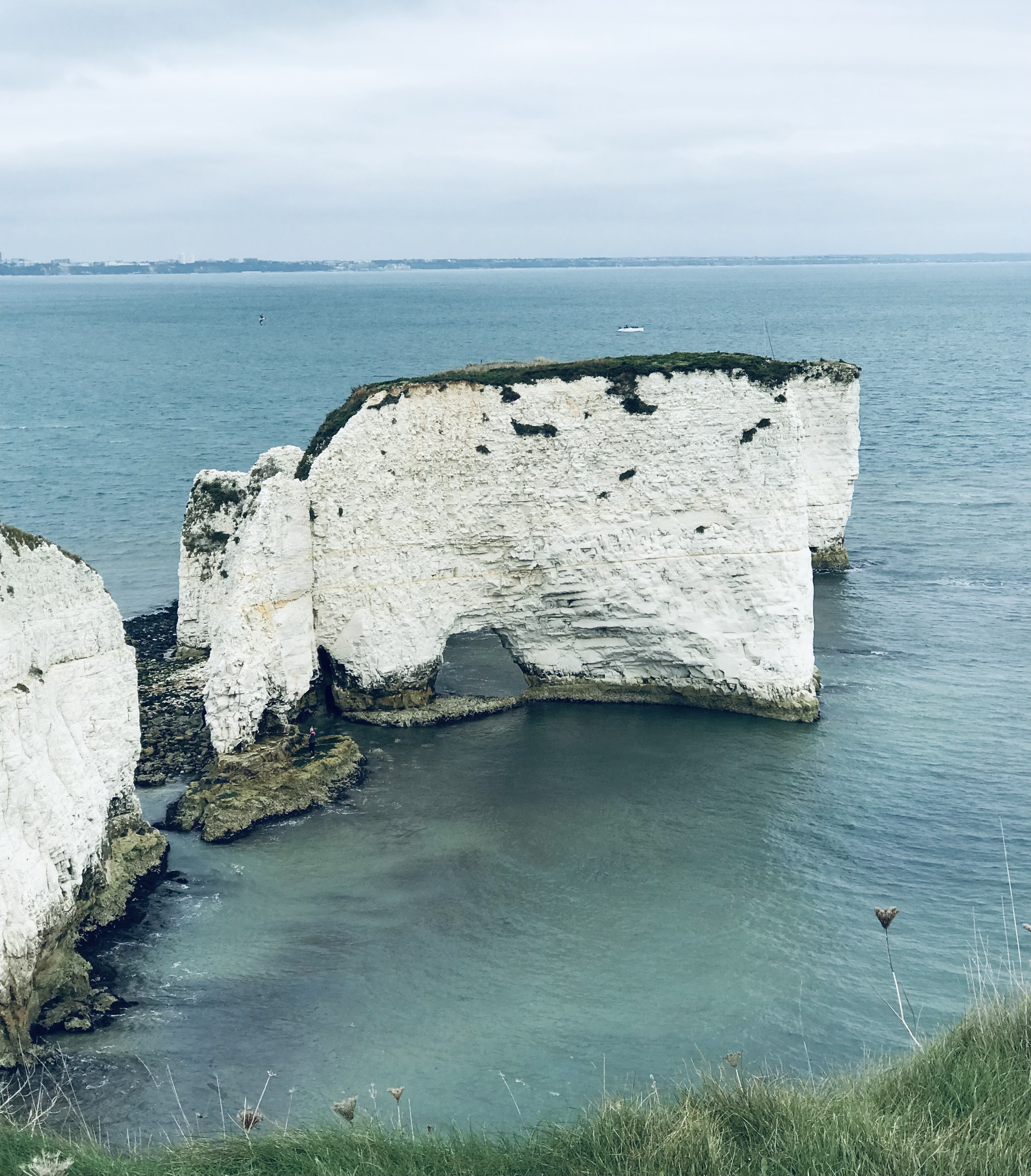
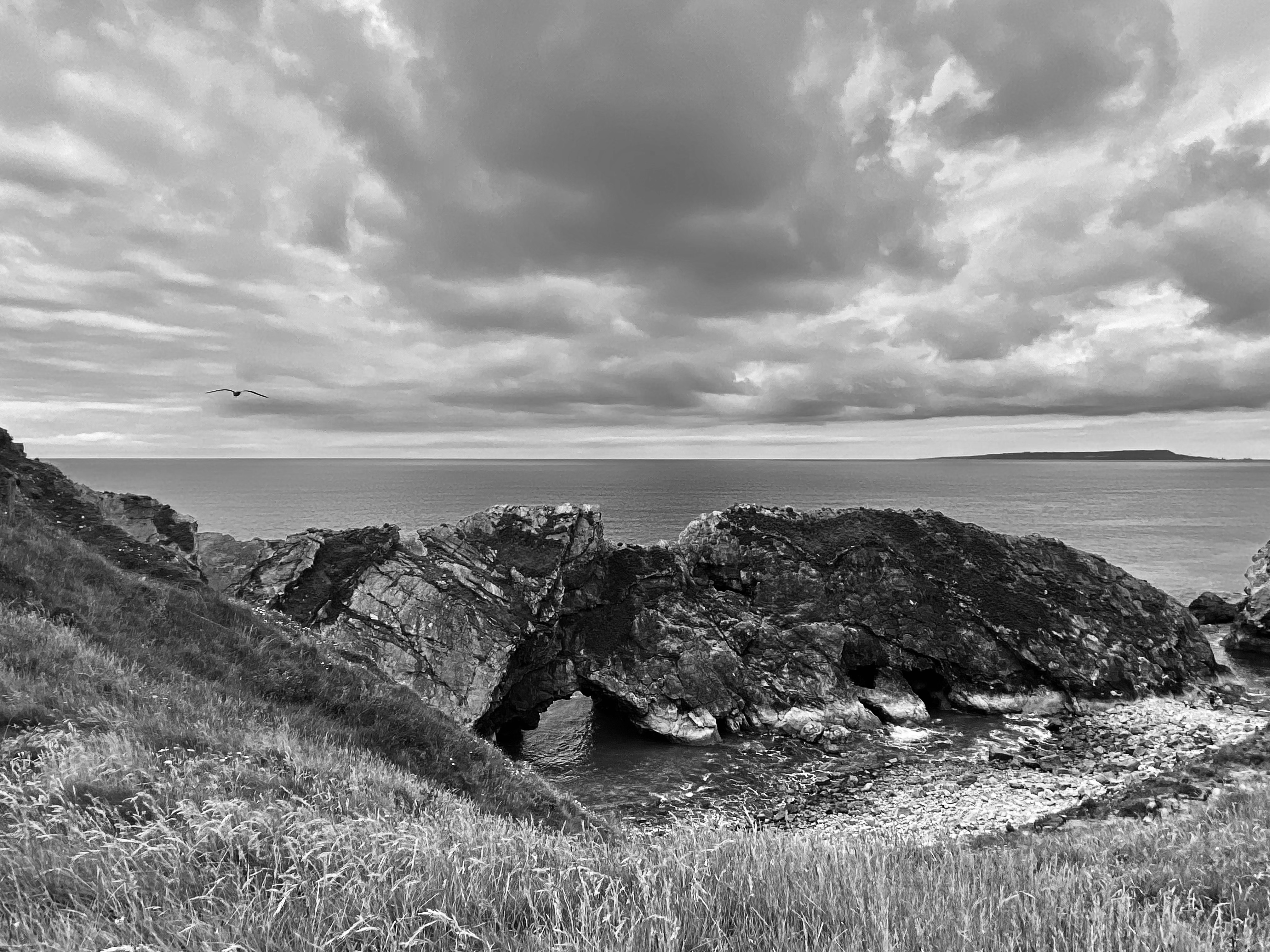
The other important landscape of the novel is Dorset, a county I have been associated with for nearly forty years through my husband and his family – and is now my home. The cliffs, beaches and open skies of the area around Studland and the Isle of Purbeck provide a counterweight to London and, later, the Western Front. For Theo in particular, Dorset represents freedom, sanctuary and continuity – a place to which he can return both physically and in memory.
At the centre of everything, however, is the deep platonic friendship between Theo and Jonathan. Their relationship stretches from schoolboy music-making through youthful ambition and into experiences neither could have anticipated. It is affectionate, occasionally difficult, often humorous. Most importantly, it is inseparable from their musical partnership. Perhaps this is why writing the novel began to feel like a natural extension of the subjects I have explored on this site for so long. The Cross-Eyed Pianist has given me the opportunity to talk to hundreds of musicians about their lives and work: their ambitions, doubts, routines, teachers, friendships, successes and disappointments. Facing the Music allowed me to explore some of those same questions through fiction.
And there was one question to which I kept returning:
If music is part of who you are, what remains when circumstances make music impossible?
I don’t think Facing the Music offers a simple answer. Nor did I want music to function as a sentimental cure for suffering. Music cannot undo experience. But perhaps it can preserve something of who we were – and help us discover who we might become afterwards.
The title has more than one meaning. There is the literal act of facing the music in practice and performance, but also the more familiar meaning: accepting the consequences of choices, circumstances and experience. For Theo and Jonathan, ultimately, it means both.
Author’s note: I am profoundly grateful to the many musicians I have encountered over the years, in person, through their concerts, and via my Meet the Artist interview series. Their insights and reflections on practising, performing, teaching and living with music have greatly enriched my understanding of what it means to be a musician. While none of the characters in the novel is based on any one individual, their experiences have informed many aspects of the story.
The Cross-Eyed Pianist is free to access and ad-free, and takes many hours every month to research, write, and maintain.
If you find joy and value in what I do, please consider making a donation to support the continuance of the site