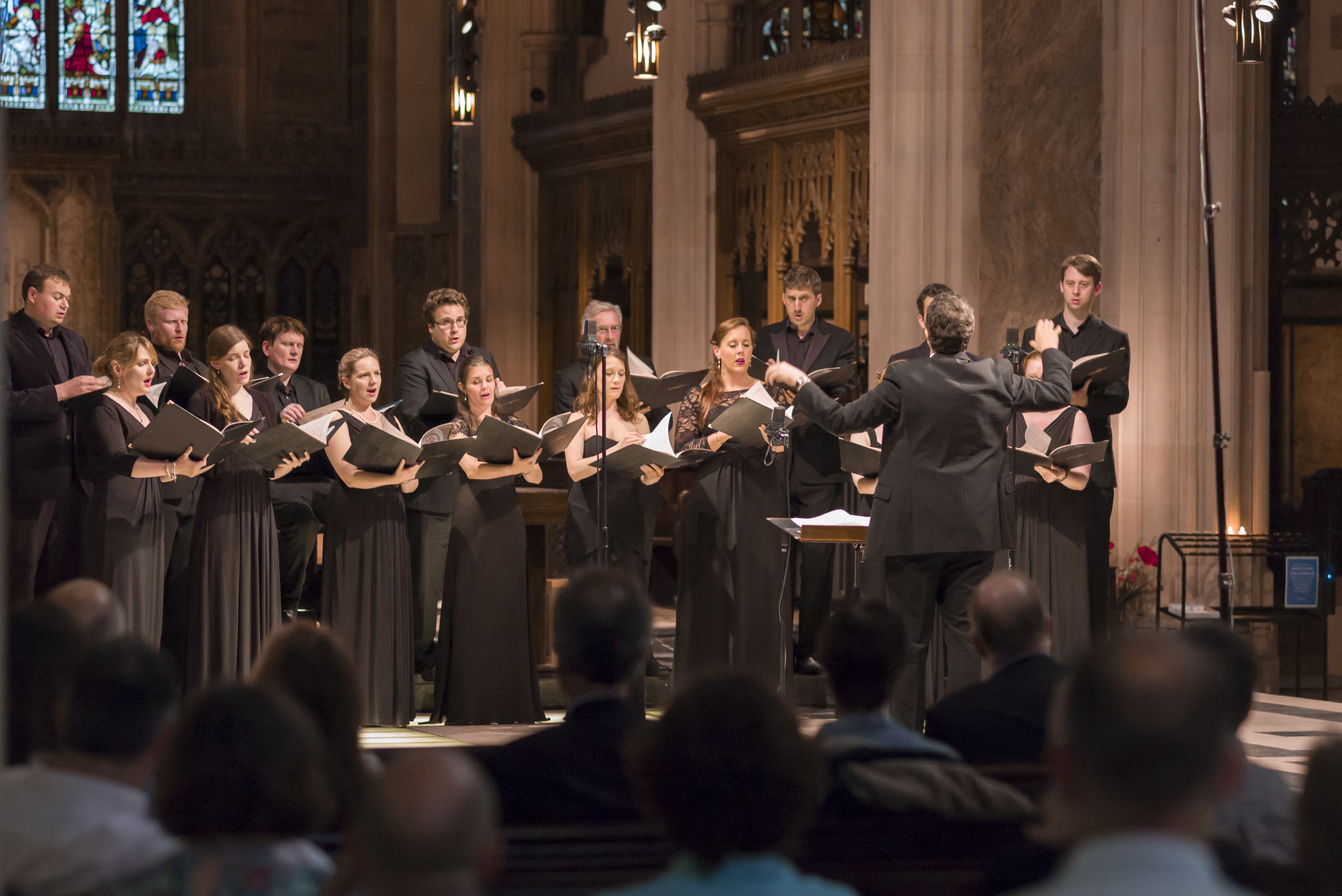
Five Beacons of Light: A Cantata for the Sea is a new large-scale choral work composed by award-winning British composer Cheryl Frances-Hoad with words by Di Sherlock. Commissioned to celebrate the 10th anniversary of Sonoro, the piece receives its world premiere on 25th April at Worcester Cathedral, performed by Youth Choral Worcs, Sonoro, and the English Symphony Orchestra, conducted by Neil Ferris.

A Narrative of History, Community and Environmental Crisis

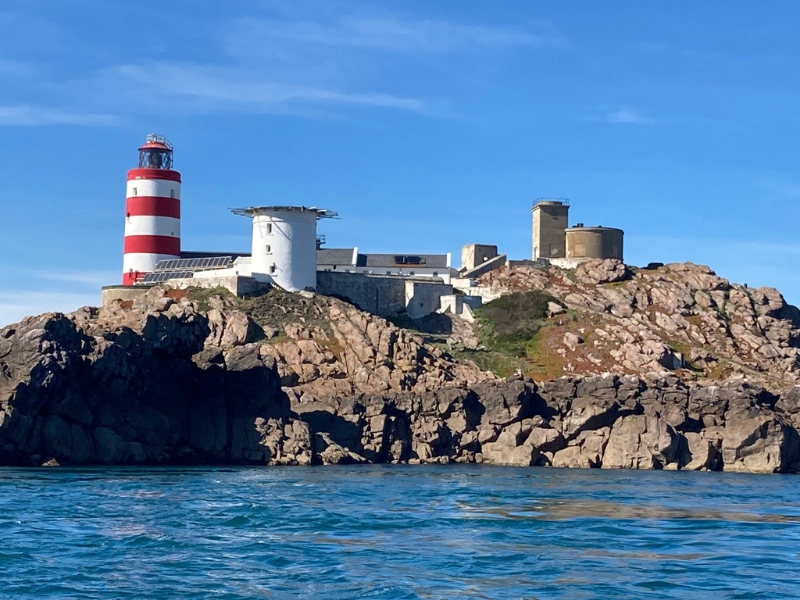
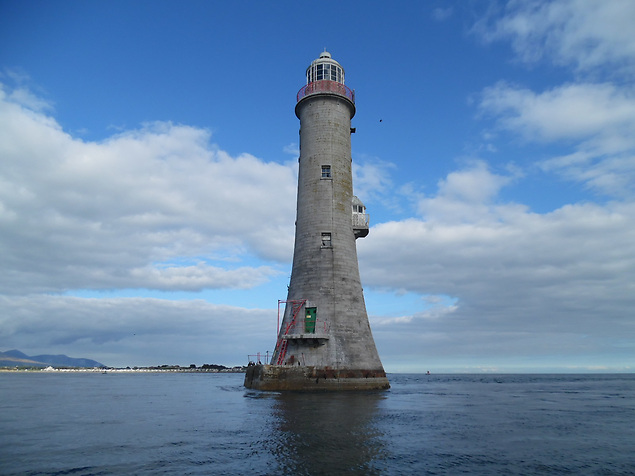
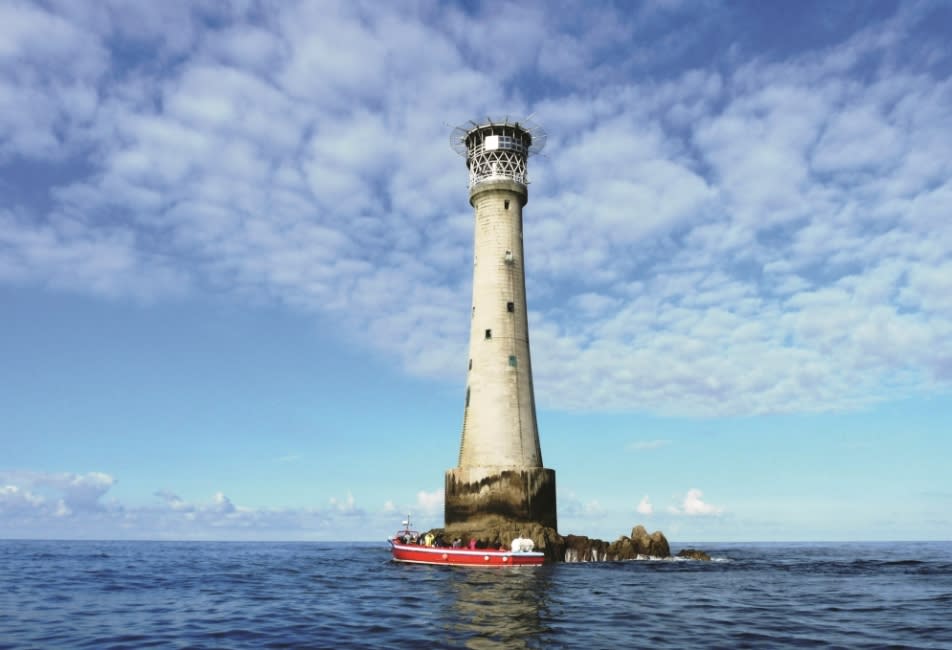
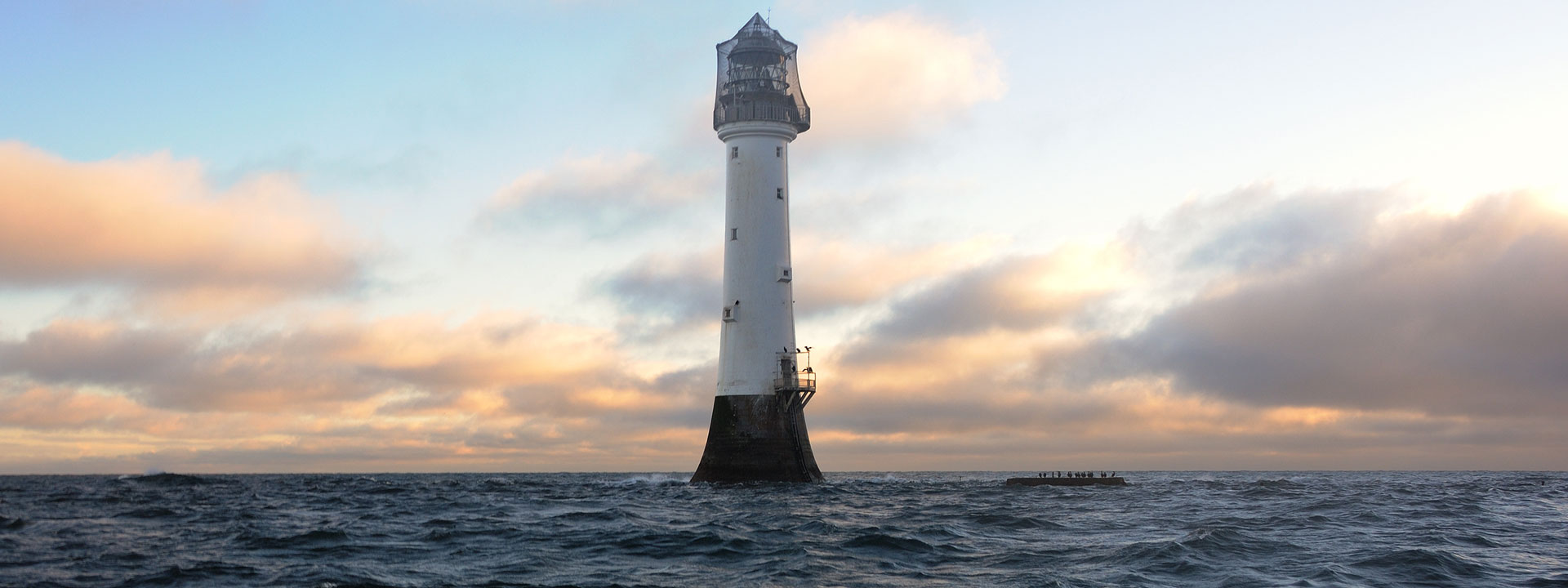
The cantata brings to life the vibrant characters and communities associated with four iconic UK lighthouses: Bell Rock, Bishop Rock, Les Casquets, and Haulbowline. Scored for a unique ensemble of string quintet, piano, percussion, Sonoro, and youth choir, the piece explores a poignant role reversal in our relationship with the natural world. It contrasts the historical purpose of these rock lighthouses – built to safeguard humanity from the peril of the sea – with the modern reality that the sea is now in peril from humanity due to man-made climate change.

The ‘Fifth Beacon’: Empowering the Next Generation

At the heart of the project is the “fifth beacon”: the young people themselves. Through Di Sherlock’s imaginative and beautifully-crafted words, these young performers will illuminate the work with their own voices and perspectives. The voices of these young singers serve as a new “beacon of light”, celebrating the human spirit as a creative force and guiding us towards a more responsible relationship with our oceans.

Footage from Five Beacons rehearsal, January 2026 (filmed by Michael Whitefoot)

Librettist Di Sherlock says, ‘I’d long been wanting to voice my concern about the state of our oceans, rivers, lakes in a way that did not deny the reality but, equally, did not feed into the doom and gloom that brings only despair and overwhelm. Ideas floated about but they needed an anchor. Then I fell upon Tom Nancollas’ ‘Seashaken Houses’ and read all about rock lighthouses – referred to in past times as ‘Beacons of Light.’ The vision, courage, perseverance and sheer grit of the engineers, workmen, keepers, investors and corporations who made these ‘impossible Houses’ possible seemed to echo what is needed today as we face irrefutable climate change – not all of it man-made but our contribution is significant. The rock lighthouses were built to save us from the peril of the sea. Today rising sea levels still threaten lives and livelihoods. But, equally, the sea is in peril of us. And of course the two are connected.

During my research I asked scientists what would be their ‘Beacon of Light’ today – if there even was one. They were unanimous: “Young People!” And so Cheryl and I got funding from the Genesis Foundation to explore ideas at Albyn School, Aberdeen. Working with Cheryl is like handing over a map to a fellow voyager confident not only that she’ll know how to read it, but that she will use it to conjure worlds in a way I never could imagine. We were awed and heartened by the passion and commitment of the students as we workshopped marine issues of pollution, plastic and extinction of species in music, movement and spoken word. Cleaning up the mess (of their elders but not betters), restoration and care were no brainers. They were one, not just with each other in recognising our global responsibility, but with the animals, minerals, trees, plants and waters with whom we share the Earth. And they most definitely were not giving way or giving up.

For the singers who give their amazing voices and the audiences who receive them, I hope the work will inspire a love for our waters and the creatures who live in them, allowing their voices not just to be heard but taken to heart. New ways to clean up our House, aligned with Nature’s intelligence, are firing up scientists and the school lab. Even in a post-truth world, the true Human is a Beacon of Light.’

Conductor Neil Ferris says, ‘This major new work combines the instinctive brilliance of two outstanding artists, Cheryl Frances-Hoad and Di Sherlock, and I am so happy that Sonoro can bring it to young people and audiences in Worcester and Cornwall, with more to come. Both Cheryl and Di have written an inspiring piece that is so beautifully judged in its imagination, its musical and expressive language, and its offer of hope. It will capture the minds of a generation and give an outlet to express themselves in words and music.’

Supported by the Bransford Trust, the Blyth Watson Charitable Trust and the Pamela Matthews Charitable Trust, the project will reach hundreds of young people, many of whom will be performing alongside professional musicians for the first time. Local youth groups joining Sonoro include Youth Choral Worcs and Cornwall Youth Choir.

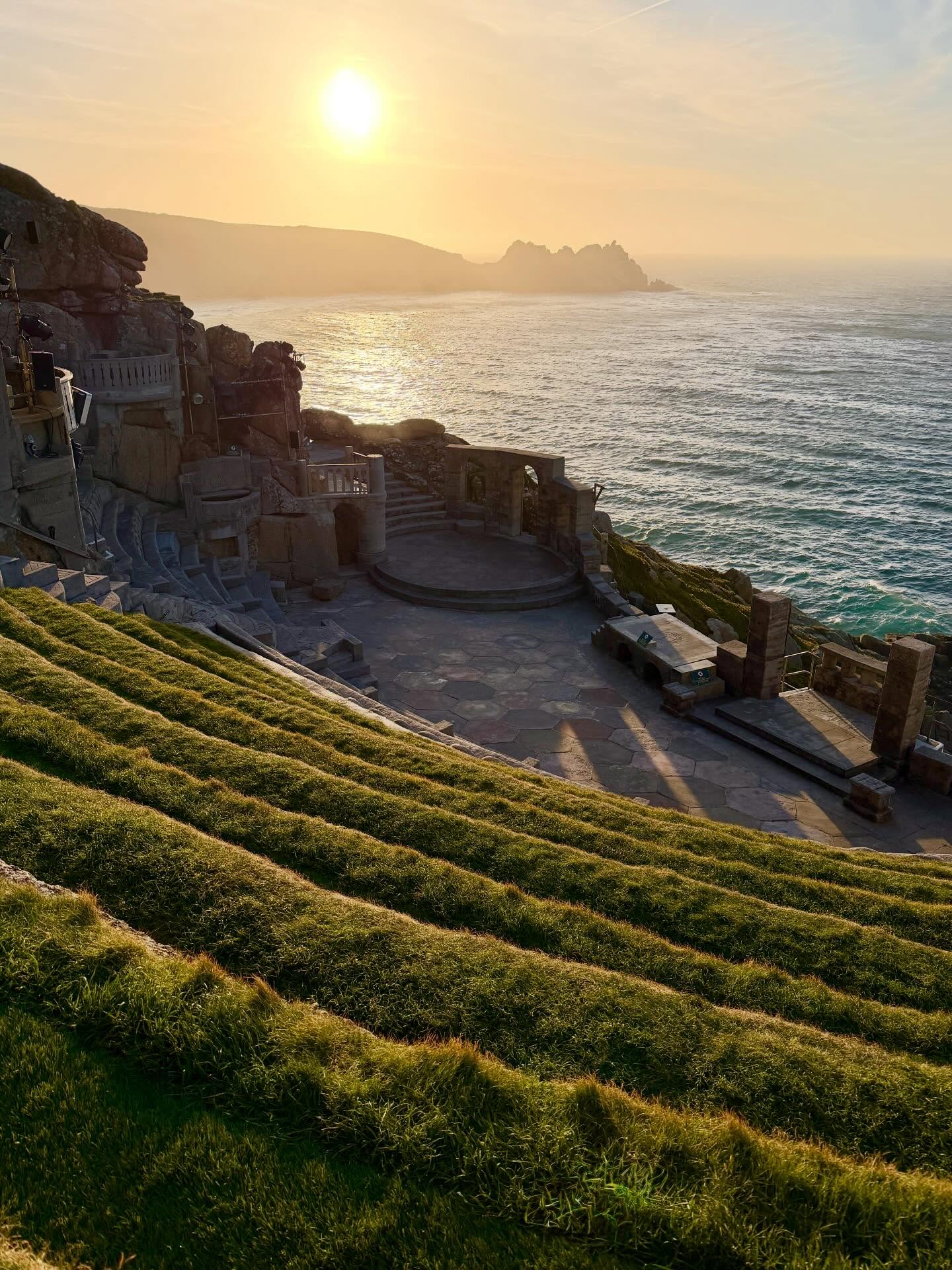
‘Five Beacons of Light’ receives its World Premiere at Worcester Cathedral on Saturday 25 April 2026, followed by a performance at the Minack Theatre in Cornwall on Friday 3 July 2026. Expected further performances in the UK in 2026 and 2027 are in the pipeline.

This ambitious project promises to blend world-class professional performance with community engagement to address the most pressing environmental questions of our time.
Ivana Gavric (image credit: Sussie Ahlburg)

Sarajevo-born British pianist Ivana Gavric gave a lunchtime recital of great insight, emotional intensity, and colourful storytelling combined with musicality and pianism of the highest order at London’s Wigmore Hall on Thursday 28th November. The concert, part of Lisa Peacock Concert Management’s Lunchtime Showcase Recitals series, marked the launch of Ivana’s new disc of works by Grieg and multi award-winning British composer Cheryl Frances-Hoad for Champs Hill Records, a label which actively supports young artists. The Two Lyric Pieces by Cheryl Frances-Hoad received their London premiere at the concert.

Ivana opened her concert with Ravel’s Valses nobles et sentimentales, which the composer transcribed for piano in 1911. The work was presented in a concert of new music hosted by the Société Musicale Indépendante where the composers’ names were withheld to avoid favouritism or prejudice on the part of audience and critics. The Valses nobles et sentimentales were greeted with protests, cat-calls and booing, so acerbic was the harmonic and tonal palette, and only a handful of people correctly identified their composer. Ravel intended his Valses nobles et sentimentales to follow Schubert’s example (the 34 Valses Sentimentales D779 and 12 Valses nobles D969), creating a seamless suite of eight waltzes whose tonal colourings and harmonic complexities were already signposted in Gaspard de la Nuit (1908).

Ivana retained strong sense of the waltz rhythm throughout, and took the listener on a sensuous, romantic journey, conjuring up images of decadent Belle Epoque Paris and hinting at the Jazz Age to come. These stylish pieces were brought to life with subtle dynamic shadings, delicacy of touch (particularly evident in the final waltz), and sensitive articulation and pedalling. Moments of reflection were contrasted with bright exuberance in a performance rich in spontaneity, flexible yet convincing tempi, expression and musicality.

Janacek’s Piano Sonata 1.x.1905, “From the Street” signalled a complete change of mood, plumbing, as it does, the depths of melancholy with an aching poignancy in two movements entitled ‘Presentiment’ and ‘Death’ respectively. The incident which triggered the composition of this sonata was the death of a young worker during an anti-German demonstration on 1st October 1905. Ivana’s reading of this angry, agonised and profoundly emotional work was alert to the changing textures of Janacek’s writing, with fluid phrasing, and a convincing  judgement of mood, tempo and tonal colour. The first movement was haunting, with a tolling bell motive at the opening to which Ivana brought a spare stridency, which served to underline the tragedy in inherent in the entire work.

The Two Lyric Pieces by Cheryl Frances-Hoad, receiving their London premiere at the concert, formed a neat bridge between Janacek and the works by Grieg which closed the concert. The first piece, In the Dew, was inspired by the third of Janacek’s In the Mists and his Piano Sonata, and makes use of harmonic material from the former, and melodic material from the latter. The composer intended the piece to be performed after the Sonata, described by the composer as “something of a palate cleanser” after the sombre mood of Janacek’s work, with twinkling sounds and an accessible tonal idiom. Winsome and folksy in its outer sections, the lyrical middle section recalled Messiaen in some of its harmonies.

The second piece, Contemplation, is “a meditation (or contemplation!) on a few bars from the second movement of Grieg’s Sonata Op 7 (bars 17-20)…….I simply elaborated upon Grieg’s chords” (Cheryl Frances-Hoad). The work had a wonderfully transparency, thoughtfully translated by Ivana’s precise and delicate touch, and her clear understanding of the serenity of the piece.

The handful of bars which inspired Cheryl Frances-Hoad came after two charming short pieces by Grieg. The Sonata, in four movements, was performed with great colour, poetry and spaciousness, vividly evoking the landscape and folk music of the composer’s native Norway. And for an encore, Ivana treated us to more Grieg, a bright and rousing Wedding Day at Troldhaugen bringing to a close a recital replete in transparent sound, varied tonal shadings, technical security and an acute musicality.

Ivana Gavric’s new recording Grieg: Piano Works is available now. Details here

www.ivanagavric.com

Who or what inspired you to take up composing and make it your career?

I heard a ‘cello being played on the radio (I can’t remember who was playing) when I was about 6, and just knew that was the instrument I had to play. I fully intended to just become an internationally famous concert ‘cellist (as you do!) but gradually composing took over.

Who or what are the most important influences on your playing?

As a composer I think my greatest influences came from the music I played at the Yehudi Menuhin School (I studied ‘cello, piano and composition there for 10 years). But some of my favourite composers are Britten, Ligeti, Beethoven and Prokofiev, as well as many composers who are writing today.

What have been the greatest challenges of your career so far?

Trying to get a balance between composing and life: I’ve still not quite worked it out, although, after hardly going out the house for six months whilst writing an opera, I’m determined to be a bit better at it!

What are the particular challenges/excitements of working with an orchestra/ensemble?

Working with any group is exciting for me. I think as long as you treat musicians with the respect they deserve, and prepare parts properly (enough time for page turns!) then they will hopefully be receptive to your music.


Do you have a favourite concert venue?

Not really, as a composer you are just very grateful that your music is being played! Perhaps I’ll get pickier about this later in life! I had a mini opera performed in park in Hammersmith – a group of children gathered round and started answering the questions the singers were posing – it was fantastic!

Who are your favourite musicians?

I’ve mentioned the composers above…I’ve been so lucky and had such a fantastic time with all the performers who have performed my work: there are too many to list!

What is your most memorable concert experience?

I had my Concertino for Cello, Piano, Percussion and orchestra performed by the BBC Philharmonic as part of the BBC Young Composers Competition (when it still existed, back in 1996). I think that experience more than any other convinced me that I wanted to make composing my career. It was just mind-blowing to hear something that I’d only heard in my head played by a massive orchestra.

What is your favourite music to play? To listen to?

I don’t regularly play in public any more, but I play keyboards in a salsa band and am also learning jazz piano. I played in a rock band until recently and am soon to join a hip hop band – all very different from my composing life, and my past life as a cellist at the Yehudi Menuhin School!

Recently I’ve hardly been listening to music not directly related to my work (for my opera I listened to a lot of 1930’s dance music for instance as this was one of the main influences) because I’ve been writing so much – something I’m determined to rectify soon.

What do you consider to be the most important ideas and concepts to impart to aspiring musicians/students?

I think you just have to be determined to the point of utter bloody minded-ness. Part of the reason why I’ve managed to make a kind-of living out of composing is that I have always just refused to acknowledge that it might not be possible. I recently got a new composing job after applying for it twice – although I’ve applied for other opportunities up to ten times before I’ve finally been awarded them. A thick skin for rejection is very useful I think, and somewhere (however deep down) you need total self confidence in what you are writing, even if this partly achieved by self-deception…

What is your present state of mind?

My present state of mind is probably calmer and happier than I’ve ever been. Everything seems to be fitting into place recently and I’ve come to realise that life outside of composing is also very important (something which I perhaps didn’t when I was younger). The older I get, the happier I get, which is rather fortunate for me!


Cheryl Frances-Hoad was born in Essex in 1980 and received her musical education at the Yehudi Menuhin School, Gonville and Caius College (University of Cambridge) and Kings College London. She currently divides her time between Cambridge and Leeds, where she is the first DARE Cultural Fellow in the Opera Related Arts in association with Opera North and the University of Leeds. Cheryl won the BBC Young Composer Competition in 1996 at the age of 15 and since then her works have garnered numerous prizes and awards, including the Royal Philharmonic Society Composition Prize (UK, 2007), the Sun River Composition Prize (China, 2007), The International String Orchestra Composition Competition (Malta, 2006), The Bliss Prize (UK, 2002), the first Robert Helps International Composition Prize (University of Florida, 2005), the Mendelssohn Scholarship (UK, 2002) and the Cambridge Composer’s Competition (UK, 2001). In 2010 Cheryl became the youngest composer to win two awards in the same year at the BASCA British Composer Awards (her setting of Psalm 1 won the Choral category, and Stolen Rhythm for solo piano won the Solo or Duo category). Many of her works have been generously supported by the RVW Trust, the Britten Pears Foundation, the PRS for Music Foundation, the Nicholas Boas CharitableTrust and the Bliss Trust.

In 2008 Cheryl was awarded a Leverhulme Trust Artists in Residence Fellowship at the University of Cambridge, enabling her to investigate aspects of the mind at the Psychiatry Department, which resulted in a new work for piano premiered at the 2009 Cambridge Clinical Neuroscience and Mental Health Symposium. Also In 2008, Cheryl was awarded the Wicklow County Council Per Cent for Arts Commission (Ireland), which enabled her to compose her first piano concerto, premiered by Bobby Chen and the Greystones Orchestra in May 2009.

Cheryl’s work has been premiered in some of the world’s most important chamber music venues, including the Wigmore Hall (Melancholia (piano trio), Excelsus (solo ‘cello) and My fleeting Angel (piano trio)) and the Purcell Room (The Glory Tree (for soprano and six instruments), and The Ogre Lover (for string trio)). Her debut CD of chamber works, The Glory Tree, was released in 2011 by Champs Hill records and received excellent reviews in The Times, Telegraph and Guardian, and was chosen as “Chamber Music Choice” by BBC Music Magazine in October 2011.

www.cherylfranceshoad.co.uk

Interview date: January 2013