© Wikipedia

2012 is the 150th anniversary of the birth of Claude-Achille Debussy (22 August 1862–25 March 1918), and, all being well, there will be plenty of performances of his fabulous music to celebrate the occasion.

2011 was of course Franz Liszt’s year, but despite many fine performances to mark the occasion (a couple of which I was fortunate enough to attend – reviews here and here), I suspect the case for Liszt still needs pleading (not something Debussy need worry about, given the perennial popularity of his music). Much of Liszt’s music remains obscure or impenetrable, or simply totally ‘over the top’ to many listeners and performers, and a common misconception remains that much of his music is unplayable, except by top flight virtuosi.

Not so the music of Debussy, which is accessible and generally easy on the ear, and which can be enjoyed by the proficient amateur as well as the professional musician. I can’t remember how old I was when I first heard Debussy’s music: I suspect it may have been a recording of La Mer, a richly evocative piece completed in 1905, after the composer enjoyed a stay at the English seaside resort of Eastbourne. The first piano piece by Debussy I learnt was a simplified version of the languorous Prélude ‘La fille aux cheveux de lin’ (‘the girl with the flaxen hair’); my father and I also played a clarinet and piano version of this, and later I learnt the original piano version. In my teens, I learnt another of the Préludes, ‘La cathédrale engloutie’ (‘the submerged cathedral’), in which the composer evokes the ancient Breton legend of the cathedral of Ys, which was said to rise from the waves, with its bells tolling, priests chanting, and the organ playing. Subsequently, I’ve dabbled with other Préludes, some of Children’s Corner, and the first two movements of the suite Pour le Piano. This year I’ll be learning more, probably the Hommage à Rameau, more Préludes, and the Valse Romantique.

Together with Maurice Ravel, Debussy is considered to be one of the most prominent figures in the “impressionistic” movement, though he himself disliked the term intensely when applied to his compositions. It is too sweeping a term, making a strong connection with Impressionist painters such as Claude Monet (the Dover editions of Debussy’s piano music have reproductions of paintings by Monet on their covers), and suggesting that Debussy’s music is all about blurred edges and misty harmonies. In a letter from 1908, Debussy described his music as being “an effect of reality”. His musical influences and style are far wider, and his early music demonstrates his interest in the Symbolist movement of art and literature with its dreamy, often morbid romanticism. Already, he was experimenting with harmonic colour, the use of whole-tone scales, and a move away from strictly classical forms of musical construction towards music with a single, continuous theme.

At times, he seems the natural heir to Chopin, with his sensitive approach to melody, filigree passagework and articulation, and fioriture, and his music bridges the gap between the Romantic period and the twentieth-century. In other works, he looks back to ancient music such as Gregorian chant, or East to Javanese gamelan music. In Pour le Piano, he makes direct reference to his French Baroque antecedents in both the organisation and style of the material. His two books of Préludes are related to Bach’s and Chopin’s, but they are impressionistic tone poems, their titles suggesting literary or artistic stimuli. Each is complete within its itself, but by including the title at the end of the piece, Debussy implied a “story” within the music. Meanwhile, his Prélude à l’après midi d’un faune is a revolutionary work, both in style and execution, perhaps the first piece of truly ‘modern’ music, and demonstrating the key features of his music: uncertain or parallel harmonies, unprepared modulations which lack a harmonic ‘bridge’, the use of harmony and chord progressions for colour and timbre, and the use of whole-tone and pentatonic scales.

Debussy is regarded as one of the most influential composers of the twentieth century. His use of harmony had a direct influence on composers such as Ravel, Stravinsky, Bartok, Messiaen, Boulez, as well as the minimalist composers Steve Reich, Philip Glass and Toru Takemitsu, and jazz musicians including George Gershwin, Bill Evans and George Shearing.

Today, in performance, his piano music in particular seems to “suffer” occasionally from too impressionistic a reading: there is a misconception that all his music is dreamy, fluid and gentle. It was, compared to the style prevailing at the time of its composition, but we have almost gone too far now. In any event, I am sure we can look forward to plenty of varied performances this year.

I expect everyone has their favourite works by Debussy. I list a handful of my own here:

La plus que Lente (literally “as slow as can be”). A decadent, tender and languorous cocktail waltz, full of subtle ambiguities and sly ironies.

Pascal Rogé – La Plus Que Lente

‘Voiles’ (from Préludes Book 1). More eroticism in a piece employing whole-tone and pentatonic scales to great effect, suggesting both veils and sails

Maurizio Pollini – Debussy: Préludes – Book 1 – 2. Voiles

‘La fille aux cheveux de lin’

Nelson Freire – Debussy: Préludes – Book 1 – 8. La fille aux cheveux de lin

‘La cathedréle engloutie’

Maurizio Pollini – Debussy: Préludes – Book 1 – 10. La cathédrale engloutie

Pour le Piano – there is a pleasing stridency and uprightness in Gilels’ performance, even in the ‘Sarabande’

Hommage à Rameau – another work which harks back to the Baroque, but which shares some of the decadent languor of La plus que lente

Pierre-Laurent Aimard – Debussy : Images Set 1 : II Hommage a Rameau

Syrinx

Emmanuel Pahud – Syrinx

Sonata for Violin and Piano in G minor

Janine Jansen – Debussy: Sonata for Violin and Piano in G minor – 1. Allegro vivo

Further reading/resources:

Images: the Piano Music of Claude Debussy – Paul Roberts (Amadeus Press)

The Piano Works of Claude Debussy – E. Robert Schmitz (Dover Publications)

Debussy at the Piano – interesting website with accounts describing Debussy as a pianist. Some useful insights into his playing style and how he wanted his piano music to be played.

Playing Debussy’s Piano Works – website by an amateur pianist with playing notes and analysis of many of Debussy’s piano music.

Notes from a Pianist – pianist and blogger Christine Stevenson will be writing about Debussy this year, following on from her journey through the music of Franz Liszt in 2011

Unveiling Debussy – an earlier blog post
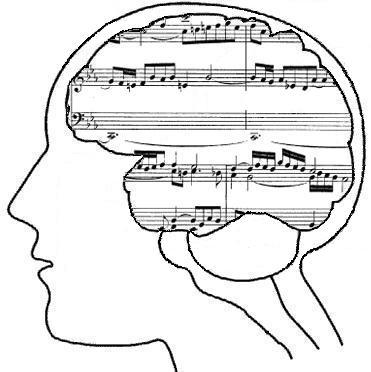
It’s one of the great romantic images, isn’t it? The lone performer, faced with the huge black beast of a full-size concert grand piano on a bare stage, armed with nothing but his or her memory. And it’s one of the most absurd things musicians put themselves through. We have Clara Schumann and Franz Liszt to thank (or blame!) for the tradition of the concert pianist playing from memory, and both were significant in turning the piano recital into the spectacle it is today. Before the mid-nineteenth century, pianists were not expected to play from memory. Few pianists today would dispute this legacy, and now it is almost de rigeur, so much so that if you go to a concert where the pianist plays from the score, you may hear mutterings amongst the audience, suggesting the performer isn’t up to the job. Which is of course rubbish: sometimes, especially in contemporary or very complicated repertoire, it is simply not possible to memorise all of it. No other musician is expected to play from memory, though some virtuosi, and of course opera singers do.

When I had piano lessons as a child and teenager, I was not taught how to memorize music. Thus, there are very few pieces in my repertoire which I can play from memory now. However, in the course of my study for my Diploma, I realised the benefits of memorization, and I’ve made the practice and exercise of memory part of my daily diet in my practising. Piano students in music colleges and conservatoires are expected to memorise all their music and to perform from memory, and are taught the skills to facilitate successful memorization.

Playing from memory is not a virtuoso affectation. It allows the performer greater freedom of expression and communication with listeners, and if one is not glued to a score, one can be far more gestural. Memorization demonstrates a high degree of skill and application (high-level musicians often display mental agility akin to that of chess masters), and people often exclaim of concert pianists “how on earth does he/she remember all those notes?” (as pianists, we have to learn more than double the number of notes of any other musician). While each individual musician will have his or her own particular method of memorization, there are a number of proven strategies to assist in memorising music, and the storage and recall of information.

For the pianist, there are four kinds of memory, all of which must be employed when learning music:

Visual Memory: human beings use this part of their memory function to record large amounts of information, such as faces and colours and everyday objects. Music is made up of patterns and shapes, and the pianist uses visual memory to “picture” the score, as well as to recall the physical gestures involved in playing.

Aural/Auditory Memory: this is what enables us to sing in the shower! Music is an assortment of sounds, arranged in a certain order. The pianist uses aural memory to know he/she is playing the correct notes and to anticipate what he/she will play in the next few seconds.

Muscular/Kinaesthesic Memory: the ability to recall all the movements, gestures and physical sensations required to play music. Muscular memory is trained by repetitive practice: just as the tennis player practices his over-arm serve in exactly the same way each time to ensure a perfect delivery, so the pianist must employ repetitive practice to ensure the fingers land on the right notes every time.

Analytical/Conceptual Memory: the pianist’s ability to fully comprehend, absorb and retain the score through his/her intimate study and knowledge of it. This involves understanding structure, harmony, dynamics and nuances, phrasing, reference points, modulations, repetitions etc, as well as the context in which the music was composed, whether it is Baroque, Classical or Romantic, for example. This “total immersion” in the score should result in a rich, multi-layered awareness of it.

Many young students rely, often unconsciously, on auditory and visual memory, or on auditory and muscular memory, and many can play competently from memory. However, to play expertly from memory, and to ensure that one’s ability to download and deliver music accurately is completely secure, all four aspects of memory must be trained and maintained.

Students should be encouraged from the very first lesson to memorise their music, but discouraged from relying purely on muscular memory. They need to understand both the building blocks of the music, and its unique language.

Secure memorisation can lead to an assured performance and less performance anxiety. However, even the very best people can suffer from memory lapses, perhaps due to anxiety, lack of proper preparation, tiredness, stress, or any number of other factors. I’ve witnessed memory lapses in concert a few times: on each occasion, the performer managed to maintain the harmonic framework of the music, thus making the errors less obvious, but no less unsettling, and I’ve often wondered how many times post-performance the performer went over that section of the score to exorcise the mistake.

More on strategies for memorisation from The Musician’s Way blog.

My reviewing job for Bachtrack.com has enabled me to attend many more concerts than I used to, and I am at the Southbank at least as frequently as I am at the Wigmore Hall these days.

Each venue has its own audience, with its own quirks and foibles. The Wigmore audience is famously high-brow – or at least would like to be regarded as high-brow – elderly and “north London” (the hall is often nicknamed ‘The North London Concert Hall’). Members of the audience are expected to sit in reverential silence, to know when to clap, and to generally behave impeccably. I have twice been asked to remove my watch at the Wigmore because “the tick is too loud”. Sometimes, if a member of the audience coughs too much, or fidgets, or – Heaven forfend! – rustles a programme, they will be met with fierce looks and angry, hissed “shusshings”. It is therefore always interesting to see who has turned out for a more unusual or adventurous concert programme, or a young performer debuting at the Wigmore (“doing a Wigmore” as it is known in the trade). At Di Xiao’s recent debut, the audience were younger, many were fellow Chinese, and my friend and I also spotted quite a few musical “slebs” including cellist Julian Lloyd-Weber. The presence of such “slebs” may suggest that these people know something we don’t, or that the soloist is “one to watch”. Last summer, at a charming and touching Chopin concert with readings, organised by pianist Lucy Parham, one couldn’t move for theatrical lovies: both the Fox’s, Martin Jarvis, Timothy West and Prunella Scales, to drop but a few names. Stephen Hough tends to attract young, mostly gay, acolytes, and if Till Fellner is performing, you can almost guarantee to see his teacher, Alfred Brendel in the front bar. As a member of the ‘press pack’ now, I often arrive at a concert to find the venue has put all the journos together (excellent seats at RFH and QEH, right at the back at the Wigmore), and we all scribble away trying not to read what our neighbour has written, just like being back at school!

The audience at Cadogan Hall is different. Stepping into the champagne bar there’s always a great buzz of chat and shouts of laughter, enough to suggest that this audience is likely to be younger, more awake and maybe more receptive to what they are about to hear. Audiences on the Southbank are generally younger, more trendy, more relaxed, while the Proms audience is different again – a real mixture of music afficionados, groupies, students, curious tourists, old timers who go year after year and people who are just beginning to explore the great annual music festival. The enthusiasm of the Proms audience is really infectious and undoubtedly contributed to my enjoyment of the Proms this summer.

Sometimes the soloist or musicians themselves can affect the way the audience responds and behaves during a concert. At Maria Joao Pires’s wonderful Schubert series at the Wigmore a few years ago, the musicians (the Brodsky Quartet and singer Rufus Muller) remained on the stage while Pires played her solo pieces (a selection of Schubert’s Impromptus) and the audience was asked not to applaud until the end of the first half. This created a wonderful sense of an intimate, shared event, and we might have been in Schubert’s salon, enjoying an evening of music making amongst friends, for friends.

But if we, the audience, are too much in awe of the soloist, we can put up invisible barriers which can affect the atmosphere in the concert hall. This was very apparent when I heard Daniel Barenboim perform as part of his Beethoven Piano Sonatas series some years ago.

Recently, I’ve attended and performed in informal concerts in other people’s homes. My husband likes these kinds of concerts, with wine and friends and chat between pieces. As he rightly points out, this is a much more natural way of enjoying music that was written before c1850 (when Liszt, almost single-handedly, made the concert into the event as we know it today), and reminds us that music is, above all, for sharing. With the increasing popularity of presenting music in more unusual and intimate venues like The Red Hedgehog or Sutton House (London), or in the beautiful library of the cloisters in Wittem (Belgium), musicians are able to bring music much closer to the audience, literally and metaphorically, while events such as Speed Dating with the OAE (Orchestra of the Age of Enlightenment) offer audiences the chance to meet the musicians after the performance.

Audiences Behaving Badly

Some other small venues:

Woodhouse Copse, near Dorking, Surrey

Riverhouse Barn Arts Centre, Walton, Surrey

Guildford Guildhall, Surrey

The Forge, Camden, London

Rook Lane Arts Centre, Frome, Somerset

technique |tekˈnēk|
noun
a way of carrying out a particular task, esp. the execution or performance of an artistic work or a scientific procedure.
• skill or ability in a particular field
• a skillful or efficient way of doing or achieving something

Everything you do, sounds. All your movements, both intended and unintended, have their effect on the sound you produce

Alan Fraser

Technique lies at the foundation of piano playing, and good technique can serve the beginner student right through to advanced level. However, it should never be the “be all and end all”. Rather, it should serve the music – to create when required, for example, the lightest staccato, the most cantabile melodic line, a bubbling Alberti bass, sprightly trills and tremolandos, the most fluid legato.

Pianists are often praised for having “fine technique” or “superb technique”: this can range from obvious things such as physical agility/velocity and stamina to more esoteric, “hidden” aspects such as arm weight, wrist rotation, and alignment. These days, with the prevalence amongst mostly oriental generic pianists for putting technique above all else, piano “technique” has come to mean sheer physical capability, speed and sound production (usually too loud!) without a true understanding of how a particular technique specifically relates to the music, and the effects the composer is asking for.

Perhaps the most obvious example of this is staccato, of which there are different kinds:

  • Arm staccato gives equal measure to each note and is particularly useful for a crisp, short or bouncy sound. Involve the forearm and keep the wrist soft. Avoid pure wrist staccato as this pulls up the fingers and creates tension. Aim for a free drop of the arm and then bounce off the keyboard on the rebound.
  • Jeu Perlé literally “pearly playing”, this is particularly useful for semi-quaver passage work in Mozart and the like, also in Debussy, where such passages should be played quickly, lightly and clearly, and where too much obvious articulation would create dryness. It is a type of staccato playing that creates the tiniest sense of separation between each note (like the knots between the pearls in a necklace), and requires small movements and a close attack. Play the note and let it bounce up at you – i.e. do not pick the fingers up.
  • Finger staccato/flicking staccato Possibly the hardest staccato technique to perfect, this requires the fingers to flick off the keys and back towards the palm of the hand. Beware of tension in the hand and wrist when practising this technique, and employ the alignment of arm and wrists to fingers. To play repeated notes with finger staccato, practice using different fingers (say 1,2,3,4) but allowing the wrist and arm to take the fingers into position with a “polishing” movement in the wrist (I imagine there is a tiny pencil under my wrist, drawing an ellipse shape).

A pianist who has done their homework, and has fully studied, understood and absorbed the composer’s intentions and instructions in the score, will know what kind of staccato technique to employ for a particular section or passage.

When starting out with any new aspect of technique, whether teaching it or doing it for yourself, it helps to enlarge the movement. Thus, when I am teaching rotary movement, I get the student to make the movement in a broad brush away from the piano. I like to use the image of windscreen wipers for this – a visual cue which children find particularly easy to understand. Also, one is trying to suggest an ‘outwards-inwards’ movement rather than the reverse. Never attempt to teach a technique you have not learnt and understood yourself first.

Don’t practice technique in isolation, but rather understand how it should be employed in your music and then make a technical exercise out of a small passage or section from that music. Doing exercises like those by Czerny or Hanon are, in my view, less worthwhile than a technical exercise you have devised yourself to practice a particular aspect of your repertoire; it is also more interesting! Having said that, I have found Brahms’s ’51 Piano Exercises’ helpful, and also tuneful to play.


