***UPDATE*** Loving Miss Hatto will be broadcast on the BBC on 23rd December 2012

The name Joyce Hatto has been in the news again this week, as the BBC announced it will be making a TV film about her, to be shot on location in Dublin. Starring Alfred Molina and Francesca Annis, Loving Miss Hatto is scripted by British comedienne and writer, Victoria Wood, which immediately set alarm bells ringing in my head and that of a pianist friend: “It will be sentimental!” he declared. “It will be Joyce’s story told through the medium of ‘Acorn Antiques'”, I replied. All this remains to be seen until the film is broadcast….

It was perhaps inevitable that someone, somewhere would eventually pick up the Joyce Hatto story and run with it. In an unremarkable town in Hertfordshire, an astonishing fraud was born out of passion and ambition, a CD recording scam so jaw-droppingly artful it rocked the polite world of classical music, and provoked a firestorm of talk in internet forums and chat rooms around the world.

When the story broke early in 2007, I recall discussing it with aforementioned friend. I remember finding the story of Joyce Hatto and her devoted husband William ‘Barry’ Barrington-Coupe rather touching: a supreme act of love for his terminally ill wife. The whole story turned out to be a tale of plagiarism on a grand scale, a scheme so clever it left the musical establishment questioning everything they knew. It was quite probable that Joyce had colluded with Barry in the scam.

But why? Was it really an act of love, or was it to cock a massive snook at the stuffy, pompous classical music world and to raise two fingers to the critics who had panned Joyce’s last recitals, given when she was said to be sick with the cancer which eventually killed her (one critic said of her: “it was impolite to look ill” and, after adverse comments were made about her appearance on stage, she abandoned performing altogether in the 1970s)?

When her recordings started to appear on CD, critics praised them to the rafters, eulogising over her skill, her range, her technical prowess, and describing her variously as “the indomitable champion of Liszt” (Daily Telegraph), and a pianist with a broad and rich repertoire not seen since Busoni. The music critic of the Boston Globe declared her “the greatest living pianist that almost no one has ever heard of.” Clearly, in the years since she retired from the concert platform, she had been working hard producing wondrous recordings, with the help of her husband, Barry, who owned the Concert Artists label. Her output was as astonishing as the wide range of her repertoire. She was compared to some of the greatest pianists of all time, such as Claudio Arrau, Dinu Lipatti and Sviatoslav Richter.

Her recordings were still receiving glowing plaudits when she died in 2006, but there were detractors too, as pianophiles in internet chat rooms around the globe gathered to discuss her oeuvre. How was it possible that every single CD was perfection? Was she really such an exceptional pianist, who could turn her hand to anything with apparent ease? A number of people began to suspect they might be prey to some sort of hoax, but when critic Jeremy Nicholas, who had staked his reputation on Joyce Hatto, made an open challenge in Gramophone magazine to anyone who had evidence of fakery to present it in a court of law, no one came forward. He had reckoned without the technology of iTunes…..

The rest, as they say, is history. After her recording of Liszt’s ‘Transcendental Studies’ was found to have been manipulated and “doctored”, more recordings were examined, and evidence of the forgery became clear: put simply, Barry had been ripping off recordings of other pianists – Lazlo Simon, Marc-André Hamelin, Ingrid Haebler to name a few – and, with a little clever technological tweaking, passing them off as Joyce’s. Gramophone broke the story in February 2007, and the furore quickly earned the nickname ‘Hattogate’.

I started to collect articles and other snippets and morsels about Joyce with the intention of writing a short story or novella about her. The story of her life, her marriage to Barry, the scam itself seemed at once the stuff of fantasy – and self-delusion – and proof that truth is stranger than fiction. In reality, she probably wasn’t that great a pianist: there is very little biographical and documentary information about her, but patchy reviews from the 1950s, when she married Barry, reveal something about the true nature of her playing and her pianistic personality. It also emerged that statements about Joyce’s family were untrue, and that Barry had spent a year in prison in 1966 for wrongful tax submissions.

Did the recording scam start out as a game, a bit of fun that got out of hand? Or was there more malign intent on the part of Joyce and Barry to hoodwink the music press? It’s unlikely we’ll ever know for sure as Barry maintains tight-lipped on the subject. The only thing he has stated, and restated, is that he did it for love.

And what of the artists whose recordings were plagiarised? Some have enjoyed renowned acclaim and recognition as a consequence, proving that the scam has had a curiously double-edged effect. A number of the artists who were involved could call for criminal charges to be brought against Barry, but it seems that quite a few people just feel sorry for him.

It’s a peculiarly English tale, in my view: the domestic setting, the eccentric characters, the lame attempts to invent orchestras with which Joyce was said to perform (such as the National Philharmonic-Symphony Orchestra). And fakery like this is nothing new: remember the Hitler diaries, or Van Meegeren’s fake Vermeers? The acclaimed author William Boyd invented an artist, Nat Tate, wrote a biography for him, and even produced some pictures by him (in fact, Boyd’s own doodles). I suspect people do this simply because they can (the technology Barry used to fake Joyce’s recordings was not particularly complicated), and there’s a certain amount of delicious schadenfreude to be gained in sitting back and waiting for the reaction of the critics and the so-called ‘experts’. I admit I rather enjoyed it too.

Let us hope that the film of Joyce Hatto’s life is balanced, sympathetic and unsentimental. The story certainly has plenty of scope for comedy, but I would hate to think the main players were turned into figures of fun as a result. Meanwhile, it’s still possible to find a handful of Joyce’s recordings on eBay.

These are my personal thoughts on ‘Hattogate’, and do no reflect the views of anyone else or any music publications. This post was first published in spring 2012.

Trailer of forthcoming BBC tv dramatisation:
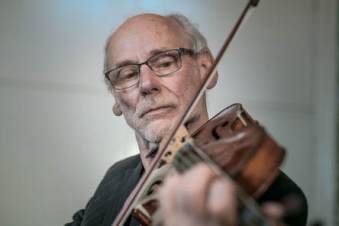
Who or what inspired you to take up your chosen instrument and make music your career?
My mum and dad: Dad was a devoted brass band player, there was always music in the house (he had a gorgeous walnut radiogram, with piles of records – mostly 78s!). They fixed up violin lessons for me, made me practise, came to almost every concert I did, helped get me in the NYO, and thence to Cambridge.

Who or what are the most important influences on your playing?

My colleagues in the Fitzwilliam Quartet! But before that, our mentor, Sidney Griller and his quartet; the Smetana Quartet; the Beethoven and Borodin Quartets (for Shostakovich); violinist Alfredo Campoli (the ideal violin sound); conductors Otto Klemperer and Roger Norrington (two totally opposite approaches to Beethoven); clarinettists Alan Hacker and Lesley Schatzberger (opening my eyes to historical performance practice); Dmitri Shostakovich himself – the greatest man I have ever met, whose very presence and humility imparted a belief in what we were doing, and a confidence to press on into the future; the greatest performer I have ever heard (not in the flesh, sadly): Dietrich Fischer-Dieskau;

What have been the greatest challenges of your career so far?

Starting off and making headway in the real world as a professional string quartet; playing to Shostakovich; our New York debut – then the complete Shostakovich cycle there; re-building the quartet post- Chris Rowland (it took over twelve years!), and maintaining its profile and pre-eminence in these times of age discrimination in the music world; getting John Eliot Gardiner to observe the spirit and letter of Beethoven’s metronome marks (without seeming too cocky for my position!); getting my own playing onto a higher level, in order not to let the other three down (whilst spending a disproportionate amount of time on admin….).

What are the pleasures and pitfalls of ensemble work?

As a “team player” (which is the most satisfying role for a violist) one can achieve collective heights one could never achieve on one’s own – especially since the FSQ plays to a higher standard than I could ever reach myself! Those concerts (which happen rarely) when everyone is pulling together for the common benefit of quartet and composer, when you feel anyone can do anything, and everyone else will respond and be with each other. The pitfalls are when that doesn’t happen…. Or when individuals prioritise themselves before the group.

Which performances/recordings are you most proud of?

The Shostakovich cycle, of course – although many of them we play better now! The Franck quartet. The Brahms clarinet quintet (with Lesley Schatzberger). Wolf’s Italian Serenade – as virtuosic as we could get in the old days! Then, latterly, our first ever public performance of Schubert’s Death & the Maiden (after 42 years! – as good as I’ve ever heard it from anyone…..).

Who are your favourite musicians?

The ones I play with: my colleagues in the quartet, plus Anna Tilbrook (piano), Moray Welsh (cello), Lesley Schatzberger (clarinet), Carolyn Sparey (viola); also those influential musicians mentioned above.

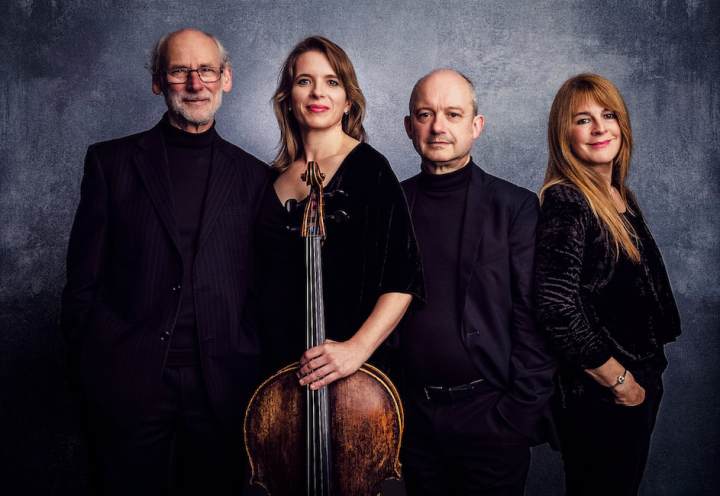
The Fitzwilliam Quartet

What is your most memorable concert experience?

16th November 1972, Lyons Concert Hall, York: packed to the rafters to witness us play Shostakovich No.13 with the composer in the audience. I have never in my life experienced such electricity in the air, or intensity of applause.

What advice would you give to aspiring musicians/students?

Don’t get in the way of the music or the composer! Be faithful to both the spirit and the letter of the score – i.e. inform yourself as to the exact meaning of the notation, the performing conventions and sound according to the period of music in question. Aim to perfect every aspect of your “craft”, in the service of both the music and your own self-expression – but never impose the latter: this would imply that your own personality is not strong enough to stand on its own. Ego is no substitute for the humility and character required to communicate with your audience.

What is your idea of perfect happiness?

Manchester United overturning the rich pretenders from Man City next year!

What is your most treasured possession?

My family, my friends, my health, my viola, a lock of my late daughter’s hair

What do you enjoy doing most?

Drinking good beer or wine, eating Italian food (or Indian), playing (now watching…) cricket, walking, cycling.

The Fitzwilliam Quartet with pianist Anna Tilbrook perform music by Hugo Wolf, Rebecca Clarke, Franz Schubert and Johannes Brahms on Sunday 8th May as part of the London Chamber Music Society’s Sunday Concerts series. More information/tickets

The Fitzwilliam Quartet

Several of my students have been learning and enjoying this well-known piece by the Penguin Café Orchestra, and so I thought it might be helpful to have some background.

The Penguin Café Orchestra (PCO) was a collective of musicians, founded by Simon Jeffes in the 1970s. It is hard to categorise their music, but it combines elements of exuberant folk music, and the minimalist music of composers such as Philip Glass and Michael Nyman. The music also contains references to South American and African music, and uses a variety of instruments including strings, pianos, harmoniums, slide guitars, cuatros, kalimbas, experimental sound loops, mathematical notations and more. A number of their works are very familiar as they have been used in film, tv and advertising.

Perpetuum Mobile is one of PCO’s most famous pieces, and comes from their fifth album, ‘Signs of Life’ (1987). The title is Latin for “perpetual motion” (or continuous motion) and in music it refers to two things:

  1. pieces or parts of pieces of music characterised by a continuous steady stream of notes, usually at a rapid speed
  2. whole pieces, or large parts of pieces, which are to be played repeatedly, often an indefinite number of times.

In both cases, there should be no interruption in the ‘motion’ of the music. Examples from classical music include the presto finale of Chopin’s Piano Sonata No. 2 in B flat minor. Marked “sotto voce e legato” (literally “under the breath and smoothly”), the entire movement is a musical stream of consciousness of unremitting parallel octaves, with unvarying tempo and dynamics, and not a single rest or chord until the final bars. The difficulty for the pianist, aside from keeping the triplets absolutely equal and even throughout, is the sotto voce (a fairly common marking in Chopin’s music) which suggests a muted sound. Careful pedalling will, in part, create the desired effect but the sound should never become woolly or muddy: we want to hear every single note. This movement has a strange and mysterious cast: Arthur Rubenstein remarked that the fourth movement is like the “wind howling around the gravestones”, and a pianist colleague of mine described performing it as “horrible – like having your entrails picked over on stage”. Interestingly, Chopin himself said of the movement: “The left hand unisono with the right hand are gossiping after the [Funeral] March” (source: James Huneker in his introduction to the Mikuli edition of the Sonatas). Played well it is inscrutable and brief; played badly and it’s just a muddle.


Here is Ivo Pogorelich, with a good view of his hands at work


Schubert’s Impromptu in E flat is another perpetuum mobile, at least in the outer sections (the middle section of the piece is a rough gypsy waltz), which, like the example by Chopin, is built from almost continuous triplets in swirling, tumbling scalic figures which never quite break free from the secure tether of the bass line. The difficulty in this piece, as in the Chopin, is keeping the triplets even, though with some give-and-take/rubato and dynamic shading to add interest: unlike the Chopin, there is prettiness and charm in this piece, and the dance rhythm of the bass line should be highlighted too. My problem when I was learning this piece (or rather relearning – I first encountered it in my teens) was lifting the fingers too high, which produced a chunky, “notey” sound and interrupted the flow of the music. It also made my arm tense. I taught myself to keep the fingers curled into the keys and to start with a slightly higher hand position: the result was a pleasing “trickling” effect in the long scalic runs, and the piece was far less tiring to play.

Pedalling is another issue in this piece, and I had a long discussion with a colleague about this, who kindly heard my Diploma programme ahead of the exam. In the end, I compromised on 1/8 pedal: like the Chopin Sonata, you don’t want a muddy sound (and I’ve heard plenty of live and recorded performances of this work with some very sloppy pedalling!). The beauty of this music, in my opinion, is the clarity of the writing, and the elegant song lines which are subtly embedded in the triplet figures. Careless or over-pedalling won’t highlight these interior elements to the listener.

A further danger of this piece is getting so caught up in the perpetual motion of it that you forget to breathe! This may sound daft, but I can confirm that in my Diploma recital, I probably played the restatement of the opening section on one breath. And in rehearsal one afternoon, my page turner was so absorbed in the music, he forgot to turn over the pages for me!


Walter Gieseking:


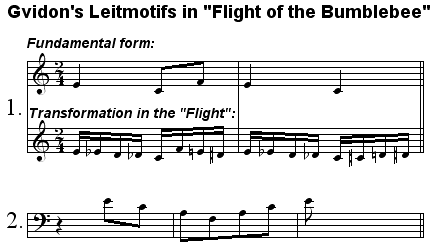
Perhaps the most famous example of a musical perpetuum mobile is Rimsky-Korsakov’s Flight of the Bumble Bee, an orchestral interlude from his opera The Tale of Tsar Saltan. This popular work, often performed as an virtuosic encore, consists of nearly uninterrupted runs of chromatic semiquavers, with leitmotifs (Givdon’s themes) from the opera. It is not so much the pitch or range of notes that present the challenge, but the sheer speed of it and the musician’s ability to move quickly around the notes.

(picture source: Wikipedia)


Other famous perpetuum mobiles from classical music include Debussy’s ‘Mouvement’ for piano (from the first book of Images), and Francis Poulenc’s Trois Mouvements perpétuels.


PCO’s Perpetuum Mobile is built on a simple repetitive melody which is put through several harmonic and textural changes, building in grandeur as it goes. The repetitions of the melody make it a hypnotic piece, but the changes prevent it from being boring. Instead, the accumulation of elements and orchestration make this an energetic and exciting piece to listen to, and to play.

A friend of mine has adapted the music for easy piano (Grade 2-3 level), and although simplified, the music retains key features from the original, including the harmonic and textural changes. After the introduction, the main melody is introduced and repeated in the right hand before the left hand joins in with a progression of stern chords in open 5ths and octaves. Further along in the score, and both hands play the melody unison, reflecting the string articulation in the original. The two-bar melody, which is scored in 7/8 and 4/4, contains an octave leap which might be tricky for smaller hands. However, this also offers a great opportunity to practice ‘rotary motion’: I get students to practice the second, 4/4, part of the melody first, as the smaller stretches make rotary movement easier to grasp.

Before playing a single note on the piano, we practice rotary motion above the keyboard, or even away from the keyboard. Many teachers and tutor books describe rotary as “turning a doorknob” (an old-fashioned round doorknob, obviously) or turning cooker knobs. But my teacher and I decided the movement was more like the windscreen wipers of a car: it’s an “out-in” movement rather than “in-out”. To practice it at the piano, start in a 5-1 position, G-C (either Middle C position or an octave higher, if more comfortable), and place the hand in a “karate chop” position on the G with the fifth finger. Allow the hand to “flop” onto C with the thumb, and repeat. Encourage the student to watch the movement of the wrist: if the wrist isn’t moving, it ain’t rotating! Speed the movement up so that the student understands that it is the rolling (“rotary”) movement of the wrist that makes the sound, rather than the fingers. Keep the wrist and hand flexible and soft throughout: this will also help achieve a good tone.

Everyone I’ve taught this piece to wants to play it fast, but to try and play it up to tempo before you have practised rotary motion and grown comfortable with it will lead to tension in the hand and possibly pain. Keep the tempo sensible and perfect the rotary motion and good legato-playing before cranking it up. Meanwhile, enjoy experimenting with different dynamic levels for dramatic effect. The unison section should be light, nimble and nicely articulated to achieve the effect of the strings from the original.

Download the easy piano version from the SE22 Piano School blog

And the original, composed by Simon Jeffes:

A shorter version of this article was published on my sister blog, Frances Wilson’s Piano Studio

Craig Stratton (photo: Peter Humfryes)

Who or what inspired you to take up the violin, and make it your career?

I used to hear my grandfather play violin when I was 7 years old and just seemed to be fascinated by the instrument itself and by his sense of humour that seemed to harmonise with it. After that, it was a question of parental encouragement and getting my first inspirational teacher, Mr. Duckering who lived locally. I think when you get good at something quickly you hang on to it and before you know it, it becomes a way of life, or indeed a living. I was also learning piano and the two instruments seem to go hand in hand right through University and music college. When you meet others along the way that are also learning an instrument and experiencing similar musical times, then inspiration comes naturally all around you.

Who or what were the most important influences on your playing?

My two years spent studying in Prague, Czech Republic, became a huge influence in the way I played. My teacher there was Prof. Ivan Straus, who really changed the way that I practised, and helped me to think about my vibrato and sound. I attended numerous master courses in Austria and in the Czech Republic where I met some incredible players who shared invaluable musical and technical ideas that I try now to share with my students. Feats of brilliance in any discipline, being music or indeed any other, always evoke the question: “How on earth do they do that..?”. When you hear or see great artists both on the stage and in close proximity, it is bound to influence the way you approach your own skills in some from or another.

What have been the greatest challenges of your career so far?

Recording my CD From the Homeland was one of the biggest challenges to date. It’s the actual process of getting to that red button that makes it so rewarding. It’s not just the hours of rehearsing, but all the administration and phone calls that go with it!

Which performances/recordings are you most proud of?

My CD is definitely something I am proud of. Any recital that I have done I would like to be proud of for similar reasons as in the previous question. There is something, however, about live performing though that is endearingly unpredictable! Each performance is so different (hopefully), and one never knows how the audience is going to react. Whatever the case, it’s a sense of accomplishment coming off the stage and is sure to make you feel proud. Whatever happens during performance, good or bad, you learn from the experience.

Do you have a favourite concert venue to perform in?

The Bergersen Quartet, in which I play, performed at the Barbican in London late last year. So many amazing musicians have played there, so definitely one to tick off the list.

I did a recital in a Norman church down in a small village in the south of England. It has great acoustics and a very appreciative audience. I had the opportunity to play with my country folk band Pig Earth at Wembley Arena in London last month. It’s hard to beat the feeling of exhilaration as 6000 people cheer you on!

Favourite pieces to perform? Listen to?

The Violin Concerto No. 1 in D major by Prokofiev is a particular favourite of mine to listen to. I’ve never got tired of it. At the moment I love performing works by Astor Piazzolla, especially the Grand Tango, which I played at a recital recently. The Czech Rhapsody by Martinu is another work I love to play purely because of its driving folk rhythms and “on the edge of your seat” ensemble writing with the piano. I always like to put into a programme a work or two, which may be lesser known by audiences. I must also mention the Scriabin piano Preludes, some of which I love to play (although a little rusty these days). Many of these Preludes are barely a minute long but brimming with intense dynamics and incredible harmonies.

Who are your favourite musicians?

Most people reading this question will be screaming simultaneously at their screens, claiming that such a list is far too big to put on here, but since you’re asking, Shlomo Mintz or David Oistrakh have to be on my personal list favourites for violin tone. Others on that list include Sarah Chang, Itzhak Perlman and Vadim Repin. For technical prowess, check out violinist Ning Feng. I also love pianists Vladimir Ashkenazy, Evgeny Kissin, Vladimir Horowitz and John Lill. Outside the classical world, I’ve always been a huge fan of Prince, who is certainly one of the most talented musicians and songwriters I’ve ever heard. His after show gigs are unforgettable and in fact I managed to meet him personally in a bar in New York a couple of years ago. I’m learning how to play banjo at the moment (but don’t tell anyone) and admire the picking of Bela Fleck, Noam Pikelny and Tony Trischka.

What is your most memorable concert experience?

Years ago, I went with my dad to hear Shlomo Mintz perform at the Barbican playing Paganini’s Concerto No. 1. Talk about faultless technique and a warm rich sound! I remember a close friend of mine at school introduced me to a recording of Shlomo Mintz playing the Prokofiev Violin Concertos, particularly No.1 in D major. I just couldn’t believe how sublime and dream-like this music was. Years later I managed to get Shlomo Mintz to sign that CD for me after a concert he played in London. Must also mention that I had the pleasure of looking after John Ogden when he came to give a concert at my school. As a young pianist, that was a musical experience that I wasn’t going to forget in a hurry and still remember vividly.

What do you consider to be the most important ideas and concepts to impart to aspiring musicians?

As with any art form, I would say the bottom line is work at it everyday. Find a teacher that comes highly recommended and that can inspire you. There is an ever increasing number of great and talented musicians out there so you have to be on top of your game. Get out there and go to concerts. Try to find other like-minded musicians that you can form groups with. You’ll be amazed how much you can learn from your colleagues or indeed they can learn from you! Try to perform regularly, even if to just family and friends. Setting concert dates is important, as you will have a target to work towards. Don’t forget to enjoy it!

What are you working on at the moment?

At the moment I am working on the usual suspects of scales and studies. I have some concerts coming up with the quartet next month at the Brighton Fringe Festival, and solo work in the Czech Republic. For the latter, some unaccompanied Bach is on the menu. On the piano, I am pretending to learn Un Sospiro by Liszt.

Where would you like to be in 10 years’ time?

I often have this conversation with friends who ask me of where I want to be in the next 10 years or what my dreams are for the future. I always reply that I hope I am doing exactly the same variety of projects as I am now. I like to think that I am indeed living the dream now, as we speak.

Craig Stratton studied violin performance in London and in Prague, with Professor Ivan Straus. He has attended courses in Bechyne, Czech Republic and spent numerous summers at the master courses in Semmering, Austria.

Craig has given solo recitals in the UK, France, Czech Republic and Florida and has also performed extensively on Fred Olsen, Page and Moy and Noble Caledonia cruises. He has performed duo recitals with pianists Sholto Kynoch, Simon Howat and Liz Rossiter.

He has appeared on countless film and TV productions including, Downton Abbey (Series 3), Star Wars Episode 1, Bridget Jones, Die Another Day, Holby City, Miss Marple, Foyles War, and Midsomer Murders.

As a session player, Craig has performed on Julian Cope’s album ‘Interpreter’ and appeared on the Jools Holland Show with Tindersticks. He is a member of the BERGERSEN STRING QUARTET which specialises in spectral music and contemporary works by living composers. The quartet performed on the recent “Songs to Save a Life” album for the Samaritans.

In 2004, Craig released From the Homeland which is now available online. The CD was featured on the Classic Fm Evening Concert and given three stars in the Classic FM magazine. From the Homeland has also been broadcast on Lyric FM, Dublin.

Craig plays violin, banjo and mandolin in the country folk group PIG EARTH who won best Horizon Act of the Year at the British Country Music Awards and performed at Wembley Arena in February 2012

www.craigstratton.co.uk

blog: www.craigstratton.wordpress.com
Pig Earth: www.pigearth.com