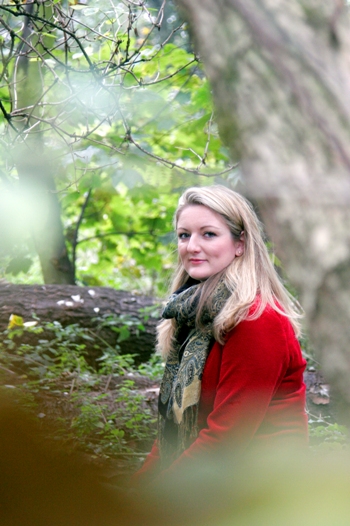
Jane Wilkinson

Who or what inspired you to take up singing, and make it your career?

As a child I went to dancing class at a very early age. I would often get picked to sing solos in the annual dancing shows and I discovered that I was a better singer than dancer! So I started singing lessons at the age of nine and never looked back.

Who or what were the most important influences on your singing?

I was always a big musicals fan, and I would go to see West End shows and would be desperate to join in! I also loved Phantom of the Opera. To play Christine would have been a dream! Consequently, many years later, I auditioned for the role and was told I was too tall!

What have been the greatest challenges of your career so far?

One of the biggest challenges for a singer is that you have to wait for your voice to mature and as an impatient teenager that can be very frustrating. There is no rushing nature but at the same time you seem to be wishing your years away. Not anymore! I still feel as though my voice will improve with age, but I’m no longer in any hurry!

Which performances/compositions/recordings are you most proud of?

I am most proud of my concerts in South Africa in 2011. I went on a tour for 2 weeks and did 10 concerts in the space of those 2 weeks. I was part of a trio – The Nightingale Trio – which was voice, flute and piano. We flew the flag for English Songs and the audiences loved it. The travelling was amazing and I was so thrilled to just get through the concerts without any sore throats or illnesses.

Do you have a favourite concert venue to perform in?

Generally I love performing in churches and cathedrals. They always have amazing acoustics which are fantastic for the voice. They also have a great sense of stillness about them which is so calming. They are fascinating places full of history and are like little museums of the local area.

Favourite pieces to perform? Listen to?

One of my favourite pieces to perform is Da Tempeste by Handel from his opera Guilio Cesare. It is like gymnastics for the voice. It’s such a showy piece full of runs and acrobatics. I also love playing around with ornaments. It’s a real chance to stretch the voice to the extreme. Sometimes the ornaments are different every time I perform them. It just depends on the day and I like to keep my accompanist on their toes! I also love the other Cleopatra arias, especially Ah! Mio cor. It’s beautiful in many ways and just shows the versatility of Handel’s compositions. They are a real work out for the voice but so rewarding to sing.

Who are your favourite musicians?

I really admire Renée Fleming. She has such a shimmering voice with so much depth and body to it. She is extremely charismatic when she performs and never fails to deliver. She has had a wonderful career and deserves all of her successes.

What is your most memorable concert experience?

I once did a concert in a restaurant and the owner had two big Great Dane dogs. I am not the biggest fan of dogs and so I was very nervous when they lumbered into the room and came to sit at my feet. I couldn’t concentrate on performing for the fear of being licked!

What do you consider to be the most important ideas and concepts to impart to aspiring musicians?

My most important bit of advice to aspiring singers would be to enjoy the journey. Training can be frustrating but it’s also a time for experimentation. Use the training years as a time to explore a vast array of repertoire. You will then hopefully find your niche which will eventually allow yourself to carve out a career based upon your area of expertise.

What are you working on at the moment?

At the moment I am working with a composer called Andrew Keeling on a new album. It has a rocky feel to it which is totally new for me! We are in the middle of recording it and it is all very exciting. Then I’m back to opera with a new production in the Autumn.

What is your most treasured possession?

The article that has been with me throughout my career to date is my black leather music bag. My mum bought me it when I started singing lessons at the age of nine and I still keep music in it. It was my pride and joy!


English soprano Jane Wilkinson grew up on the Fylde Coast in Lancashire and began her vocal training with singing teacher Brenda Waddington. After a year studying with Barbara Robotham, she was accepted in 2002 to study at the Royal Scottish Academy of Music and Drama, Glasgow, on the Bachelor of Music course with Helen Lawson. Jane then studied as a post-graduate at the Royal College of Music, London, with Jennifer Smith. Her current teacher is Jane Irwin.

Jane is an experienced performer in all aspects of singing – opera, recitals, concerts, choral singing and competitions. She currently sings and teaches in London.

Jane recently was short listed for the BBC Radio 2 Kiri Te Kanawa Prize. She was lucky enough to sing for Dame Kiri in a masterclass at the Royal college of Music.


www.janewilkinson.co.uk

Who or what inspired you to take up the piano, and make it your career?

I was brought up by a musical mother who studied the piano with Moisés Moleiro, and sang in the choir in the premiere of the ‘Cantata Criolla’ by Antonio Estévez. Unfortunately she fell ill very young and had to abandon music. When I was 7 I was accepted as a student at the Conservatorio Juan José Landaeta in Caracas where I had the most wonderful and generous teachers. My piano teacher was Guiomar Narváez, strict and very artistic, with a great passion for the classical composers and Latin American music. At 16 I won a scholarship to come to the Royal College of Music in London, where I was assigned to Phyllis Sellick as the teacher who would carry on developing what Mrs. Barbara Boissard and Michael Gough Matthews saw in my style of playing when they heard me in the audition in Caracas. For that I am very grateful: Phyllis was an extraordinary human being who taught me the art of piano playing.

Who or what were the greatest influences on your playing?

My main teachers obviously, including Polish pianist Regina Smenzianka and Paul Badura-Skoda, and also the many concerts I went to as a child growing up in Caracas. I remember listening to Martha Argerich, Claudio Arrau, George Demus, Willhem Kempf, Yoyoma, Alicia De La Rocha, and conductors such as Charles Dutoit, Cuban Nicolás Guillén reciting his poetry, popular singers like Mercedes Sosa, the cinema of Carlos Saura, Stanley Kubrik, Herzog, Chaplin….all these wonderful true artists, giving us the best of their knowledge and gigantic talents, seeing, listening and receiving all the universal and most humane expression and energy.

Then in London I have enjoyed many concerts of classical music and jazz, plus all my friends who also play and are now the great musicians of our time.

What have been the greatest challenges of your career?

Every concert you play, every CD you make is a challenge. To teach very gifted children is also a challenge. I think we face climbing Everest nearly every day! Nothing is easy. To play phrases in the most clear of ways, respecting the intentions of the composer is a challenge. When you decide that you are a pianist you understand that the challenge is what motives you, that’s what takes you out of bed.

A big challenge we face today is that classical music has been marginalised by the media, and by the idea that fashion, cookery and frivolous cinema or football stars are more important than profound thought, creativity and art. We have to keep going, as it is now up to us to make sure that this precious legacy we have acquired through centuries survives. It is a very hard and heavy burden!

Which CD in your discography are you most proud of?

Although I have recorded about 9 hours of music from Venezuela, by Venezuelan composers, I consider them all to be very different from each other. I have also recorded one CD of music by Chopin and another one by Ernesto Lecuona, which will come out in the autumn. I am sensitive to the qualities of the piano, acoustics and sound engineer. I have produced most of my CDs and am in general satisfied with the results; perhaps sometimes I am over critical and cannot bear listening to something that is too slow (I can think of one piece that I let myself be influenced by the engineer and now I do not agree with the tempo…). I think each CD is a world of its own: they are “concepts” and represent moments of our lives.

Critics are not familiar with Venezuelan music and a few years ago those CDs represented a kind of “political statement”. What’s good now is that those critics are more receptive, less “Eurocentric” and are beginning to understand (after 500 years) that Latin America is part of western culture.

Do you have a favourite concert venue to perform in?

I love the Purcell Room, the Wigmore Hall, St John’s Smith Square, Invalides in Paris, and the Teatro Teresa Carreño and Municipal in Caracas. Any hall with a decent piano and lovely audience will be always great!

Favourite pieces to perform? Listen to?

I love every piece I play, and with each of them there really is a love affair. From Bach, Scarlatti, Mateo Albéniz, Mozart, Beethoven, Schubert, Brahms, to Chopin, Liszt, Rachmaninov, Debussy, Ravel, Gershwin, Scriabin…the list is very long. Equally I have to constantly listen to classical music, salsa and Latin American popular music.

Who are your favourite musicians?

All the musicians that show passion, love, understanding, involvement, imagination… There are millions of fantastic musicians in our planet.

What do you consider to be the most important ideas and concepts to impart to students/aspiring musicians?

I think I have answered this above, but there is a concept I have discovered recently and it is to do with sharing with the young one’s knowledge, experiences and very importantly giving these young, very talented musicians the opportunities to perform and express their ideas and art. I think experienced, successful musicians should open the path for the young. Not many people in the “business” will do it for them now days.

What are you working on at the moment?

Beethoven ‘Emperor’ Concerto, Mozart Sonatas, Villa-Lobos, Chopin, Piazzolla, exploring Colombian music…

What is your idea of perfect happiness?

Perfect happiness can be found anywhere, at any time, the thing is to be aware of this and enjoy it while it lasts.

‘Joropo’ by Moisés Moleiro

Caracas-born pianist, Clara Rodriguez studied with Phyllis Sellick after winning a scholarship from the Venezuelan Arts Council to train in London at the Royal College of Music. There she was the recipient of numerous prizes and performed as a soloist with the RCM orchestras including De Falla’s Nights in the Gardens of Spain and the Ravel Concerto in G at St. John’s Smith Square.

In Caracas she made her debut playing Mozart’s last piano concerto with the Simón Bolívar Orchestra under the baton of José Antonio Abreu at the age of sixteen; from then on Clara Rodriguez’s career as a concert pianist has taken her to perform all over the world. Her large and interesting repertoire covers works of the best known Baroque, Classical, Romantic and Modern composers; she has also intensely promoted the music of the Latin American continent.

Her discography includes CDs of the piano music of the Venezuelan composers Moisés Moleiro, Federico Ruiz and Teresa Carreño; her catalogue also includes Popular Venezuelan Music Vol. 1; El Cuarteto con Clara Rodríguez en vivo as well as the piano works by the Cuban composer Ernesto Lecuona and of Frederic Chopin late works.

Her recordings are regularly played on BBC Radio3, Classic FM, Radio Nacional de Venezuela, Radio France International, and networks from Argentina to the USA, Australia and China.

Clara Rodriguez teaches piano at the Junior Department of The Royal College of Music in London.


Scott Inglis-Kidger (photograph: Clive Boursnell)

Who or what inspired you to take up conducting and make it your career?

My first inspiration was my music teacher, Matthew Grehan-Bradley. He had a meticulous attention to detail which inspired me in my own pursuit of perfection. He took a small group of us to Prague to sing Palestrina masses; this was when I decided to become a countertenor. The second and most influential musician in my life is Stephen Cleobury, Director of Music for the Choir of King’s College, Cambridge. It was a privilege to sing in this marvellous choir in my final year at Cambridge. I was enthralled by Stephen’s conducting during a performance of Handel’s Messiah, and from then on I knew I wanted to be a conductor.

Who or what were the most important influences on your conducting?

I have always admired the work of Harry Christophers’ The Sixteen and John Eliot Gardiner’s Monteverdi Choir. These immensely successful ensembles were founded during university days by conductors who had a vision, not only for the performance of renaissance and baroque music, but also for the growth of the ensembles. It was this which encouraged me to form Platinum Consort, which I co-founded with Claire Jaggers. I am now beginning to realise my dream with a professional ensemble of singers, a boys’ choir and thriving diary of choral workshops.

What have been the greatest challenges of your career so far?

The greatest challenge so far has been leaving the security of my post as a school Director of Music. Teaching was such a valuable experience in terms of mastering the art of positive reinforcement, essential for children and adults alike. I also learnt a lot about management. I like to think of myself as being quite entrepreneurial, and the experience of managing a busy team of music teachers was crucial in building the ‘business’ side of Platinum. I knew I would miss the children and my staffroom colleagues but now that I am a fully freelance conductor I realise it was the right thing to do.

Which performances/compositions/recordings are you most proud of?

I will never forget conducting my very first Platinum Consort concert in 2005. I had little experience in programming and managed to cram 15 of the most difficult pieces of choral music (Gesualdo featuring heavily) and a new mass setting by my friend Richard Bates into 90 minutes. It was a learning curve, to say the least, but I still listen to the recording and I am very proud of the amazing sounds we created. In terms of my latest activities, I am immensely proud of Platinum’s debut album In The Dark which will be released later this year. It represents the journey of Platinum over the last seven years. In many ways, it really doesn’t feel like a debut!

Do you have a favourite concert venue to perform in?

One of my most treasured places to perform is the chapel of Jesus College, Cambridge. It is one of the oldest chapels in the university and has the most sublime acoustic, perfectly suited to the early and early-inspired choral repertoire. Having said that, I am very excited to be performing in the newest concert hall in London. The interior of Hall One at Kings Place was created with wood from a single oak tree. This makes for a pretty awesome atmosphere! I will conduct Platinum Consort there later in 2012 and also in 2013 as part of their series of concerts.

Favourite pieces to perform? Listen to?

At the moment they are James MacMillan’s Miserere and Gesualdo’s Tristis est anima mea. The MacMillan is ecstatically beautiful and the Gesualdo wonderfully perverse. In fact I am listening to Tristis now against a backdrop of thunder and lightening. Both will feature on our debut album In The Dark.

Who are your favourite musicians?

In the early music field I have a massive soft spot for soprano Dame Emma Kirkby and baroque violinist Rachel Podger. Their performances are spirited and free from constraint, something every musician strives for. My favourite choir at the moment is the young British ensemble, Stile Antico.

What is your most memorable concert experience?

I conducted my first Handel Messiah in November 2011. I had the combined forces of Thomas’s Choral Society, Saraband Consort and a stunning line up of soloists, all housed in a precariously packed Holy Trinity, Sloane Square. We have all heard a hundred renditions of the ‘Hallelujah’ chorus but this one was different – it was ‘Scott’s Way’. I will never forget it.

What do you consider to be the most important ideas and concepts to impart to aspiring musicians?

As a singer myself – and someone who was politely told at primary school he was tone deaf – I encourage everyone to realise the potential in their own voice, whether they are children, amateurs or professionals. The crucial thing I realised from a very early stage in my career is that there should be no distinction between these three types of musician. Imparting good vocal technique and unbounded passion and enthusiasm is crucial across the board. Something I impart to the young choristers of Platinum Boys’ Choir is the importance of them carrying on a deeply rooted tradition. Choral singing is alive and well, but could disappear as easily as it was invented. The only constant is the walls in which we sing.

What are you working on at the moment?

I have just completed a very busy two months, including Platinum’s first commercial recording project and a Boys’ Choir tour to Venice. I have a number of workshops to look forward to in London as well as our very first workshop – Vivat – in Durham on 2nd June, celebrating the Queen’s Diamond Jubilee. I am conducting a very special concert in May to launch Platinum Choral Foundation and later this year I am looking forward to the release of our album and appearing at Kings Place.

Where would you like to be in 10 years’ time?

In 10 years’ time I would like to be recording a new album several times per year, performing in festivals in the UK and abroad, and for Platinum Consort to have recognition as being amongst the top choral groups in world. I would also like to have thriving Boys’ and Girls’ Choirs along with a young singers’ scheme, creating a path for talented young singers to realise their potential.

What is your most treasured possession?

Apart from my Apple Mac, which I couldn’t function without, my most treasured possession is a signet ring passed down to me by my grandmother. I wear it for good luck when I’m conducting.

Scott Inglis-Kidger is a conductor and vocal coach based in London. He is Founder and Director of Platinum Consort and Director of Music for Thomas’s Choral Society. He read Music at the University of Cambridge, where he sang as a countertenor in the world famous King’s College Choir. In addition to conducting, Scott directs many workshops around the country and is much in demand as a vocal coach for individuals and groups, and as an early music specialist. He was previously Director of Music at Willington Independent Preparatory School and Thomas’s Preparatory School, Battersea, establishing highly regarded liturgical choirs in both schools.

Platinum Consort was founded by Scott Inglis-Kidger and Claire Jaggers in 2005. The consort specialises in bringing vibrancy to early music, as well as breathing life into newly commissioned pieces. Originating at the University of Cambridge, the consort attracted singers from the renowned choirs of St John’s, Jesus, Trinity and King’s Colleges. Now a professional vocal octet, Platinum Consort boasts some of the best young singers in London. The group has an affinity with the music of composer Richard Bates and recently premiered his Tenebrae Responsories. Platinum also comprises a Boys’ Choir which aims to be one of the best of its kind in the UK. In addition to this our Choral Workshops provide a wealth of opportunities for singers who wish to explore glorious repertoire in smaller groups. You can find out more at:

www.platinumconsort.com.

www.twitter.com/SInglisKidger

www.twitter.com/PlatinumConsort

www.facebook.com/PlatinumConsort

www.youtube.com/PlatinumConsort

www.vimeo.com/PlatinumConsort

www.soundcloud.com/PlatinumConsort

A pleasing trend is the increasing number of enthusiastic adult amateur pianists who are enrolling for lessons. Some are players who had lessons in their youth but who gave up, for various reasons, and who are returning to the piano after a prolonged period away from it. Others simply want to learn a new skill, or, in the case of two of my adult students, want to learn so they can help their children who are learning to play the piano.

I am what is classed as an “adult returner”: I took lessons from the age of 5 to nearly 19, with two teachers, and worked through all the exams (practical and theory). Then I went to university, fell in love, started work in London, got married, all things that conspired to keep me away from the piano. It was only when I started writing a novel in which the principal character is a pianist that I began to play again, figuring the best way to research the music I was writing about was to actually play it. It was hard, at first, to return to pieces I’d played well in my teens, but it was also cheering to find I hadn’t forgotten that much.

I started taking lessons again in my 40s, in part to try and understand the psychology of being taught as an adult, so that I could help my own adult students, all of whom are very nervous and lacking in confidence.

This is a key factor in teaching adults: building confidence. As we get older, we seem more aware of the embarrassment of making a mistake or appearing foolish in front of someone else. Just as my teacher does with me, I try to make my adult students feel comfortable and confident. Yes, it is hard to play for someone else, but they know I am not going to bite them!

Confidence comes through good and thorough preparation, self-belief, and praise from a teacher or mentor. Many adults arrive at lessons with an idea of what kind of music they want to play, and many find their own choices are too difficult. I try to select repertoire which will suit my adult students, taking into account their individual abilities and tastes.

One of the nicest aspects of teaching adults is more involved communication than one enjoys with a child. One can explain concepts and technical issues, and feel that the student has understood what is being asked of them. There is greater opportunity for more discussion about the music, and many adults have a good grounding in music history and/or theory (if they had studied music as a child), or general music appreciation, which helps enormously. The relationship often becomes personal and close; one of my adult students has become a very good friend.

Some of my other observations on teaching adult amateur pianists:

Practising: many adult students have busy lives with other commitments such as work, family and so forth which can prevent them from practising as regularly as they would like to. A teacher should be able to guide and advise an adult student on best and most effective ways to practice given time constraints. I encourage focussed practice: breaking down the music into manageable chunks and learning how to spotlight tricky or problem areas for special attention.

Repertoire: some adults, especially “returners”, can have ideas somewhat above their capabilities and will arrive with music that is, in reality, beyond them. Rather than dampen their enthusiasm, I will either find a simplified version of the piece for them to learn, or suggest learning just a small part of the piece – though it can be frustrating, as a teacher, to listen to Debussy or Chopin being mangled week after week (!). I always let adults select the repertoire they would like to learn, rather than be dictatorial about it.

Exams and benchmarking: No one, neither adult nor child, is forced to do exams in my studio. I have two adult students who want to take exams because they enjoy the challenge of studying for an exam, and find that this keeps them focussed. When my student Sarah, who has been learning with me for four years now, achieved a Merit in her Grade 1 exam, we both enjoyed a huge sense of achievement! Other adult students are more than happy to play for pleasure, with the teacher offering more advanced repertoire so that they have a sense of progression. Another of my adults regularly asks me what level the music she is learning is (roughly around Grades 2-3 at the moment).

Performance anxiety: Many adult students can be very very nervous when faced with a performance situation. I can sympathise with this, having been in a similar condition myself a few years back when I first started having lessons again. But adult students who want to take exams need to be taught how to overcome their anxiety. First, they should be encouraged to play within their capabilities; and, secondly, they should take every opportunity to practice performing – be it to the family, pets, neighbours, or in the more formal setting of a music festival. “Mock” exams are useful, along with physical exercises away from the piano to help relieve tension.

Enthusiasm: Adult amateurs are generally very enthusiastic about their piano lessons, usually because they are learning for completely different reasons to children (sense of enjoyment, fulfillment, personal development etc). Never dampen that enthusiasm, and be accommodating if the student cannot make a lesson one week (I find it helpful to have adult students on a “pay as you play” basis) or hasn’t completed their practising.

Courses and workshops: a great way for adult amateur pianists of all levels to get together, share repertoire, receive tuition from top-class teachers (often professional pianists), and simply enjoy playing the piano! More on courses here.

