Guest post by Charlotte Tomlinson

January 2025 will mark the 3rd anniversary of the Oxford Piano Weekends, and the thirteenth weekend. I can hardly believe that what started on the back of an envelope in late 2021, has developed into such a fixture in the piano course market that pianists return again and again.

We started in 2021 with the legacy of Covid and all the social and musical anxiety that came with that. It was essential to find a way of getting people to know each other quickly so I devised a mini workshop to be held before supper on the first evening, in which people get into pairs to chat about a particular musical and performing issue. Within a short space of time, the conversations are animated, social anxiety disappears and people feel relaxed and comfortable. By the time we start the evening session, a united and supportive group has already established itself.

It can’t be underestimated how important this group bonding is. A good number of pianists who come on the Oxford Piano Weekends struggle with performance anxiety and physical tension, and feeling emotionally safe within the group is essential to move through these issues.

I used to have crippling performance anxiety and now I really enjoy performing, something that would have been previously unimaginable. The weekends have helped me immeasurably.

Right from the start, Oxford Piano Weekends have had a wonderfully diverse pool of advanced and committed pianists taking part: bankers, medics, piano teachers, lawyers, choir directors, pianists returning after many years, battered and bruised pianists from a legacy of harsh teaching, students preparing for final recitals and many, many more. Pianists come from all over the UK, as far afield as Dublin, Finland, Malta and most recently, Canada.

The weekend is a chance to reflect deeply on your playing with expert guidance to take away and improve your practice.

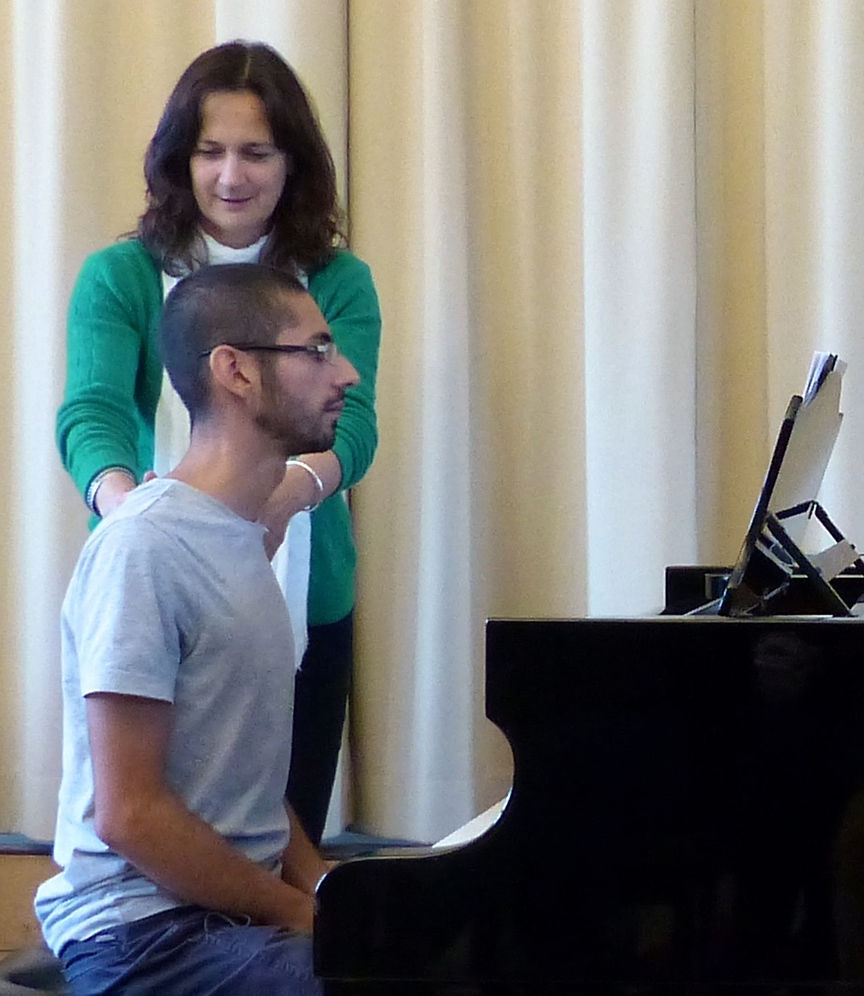
On any one Oxford Piano Weekend, the numbers are kept deliberately low with six or seven as the ideal. Each pianist has twenty minutes teaching within the group, in rotation over the weekend, and it’s extraordinary how much can be packed into that short time. I listen to each pianist to see what they need, and then make sure that my response is valuable not just for the pianist themselves, but also for the group. Participants learn so much from watching and listening to each other, seeing their own challenges reflected in other pianists and then observing that pianist transform in front of their eyes.

A truly wonderful weekend. Charlotte is so caring, and teaches with such empathy, understanding & musical knowledge and expertise.

And what’s more important than the meal times? Homemade, tasty, nutritious food with free flowing wine in the evenings, the now-famous homemade flapjacks for coffee breaks, all provide a wonderful back drop for lively, stimulating conversations among like-minded people. They truly are full and rich weekends, and I, for one, come away at the end of each one feeling exhilarated and all ready to go for the next one.

Next weekend: January 17th -19th 2025

For more details go to: https://www.charlottetomlinson.com/oxford-piano-weekends

Watch a podcast with Charlotte Tomlinson and The Cross-Eyed Pianist

To coincide with the release of her new album ‘Chopin: Voyage’, Russian pianist Yulianna Avdeeva talks about her life in music, balancing one’s artistic needs with the external pressures of a professional career, and how inspiration “can be found anywhere”.….


Who or what inspired you to pursue a career in music and who or what have been the most important influences on your musical life and career?

In my childhood I was surrounded by music. Although my parents are not professional musicians, they were great music lovers and had an upright piano at home, as well as a solid LP collection. At some point they realized that I was trying to play a melody that I had just heard with one finger on the piano, and took me to the Gnessin Special Music School. When I was 5 years old I entered the piano class of Elena Ivanova, with whom I studied for 13 years, until my graduation, and who became a family member for me. Thanks to her amazing admiration and approach to music, I was able to discover this magical world for me as well. However, the moment I remember so well, which was crucial to me, was my first public performance, when I was 6. I was supposed to play 2 Tchaikowsky pieces from his Children‘s album, and my parents and teacher were explaining that I shouldn‘t be scared by the light and people and the audience and should be concentrating on the music I’d play for them. I was not scared at all; on the contrary, I enjoyed very much communicating with the audience through the language of music! And I wished to perform again. So the solution for how to stay motivated for practice was found! I keep that feeling until today and am so grateful to be able to speak this universal language with people all over the world.  

What have been the greatest challenges of your career so far?

I think the greatest challenge is to find out what your mental and physical needs are in order to achieve the most satisfying artistic result. This result depends on many factors, which I had to recognize and acknowledge in my preparation work as well as in my stage performance. Time management is one of the most essential elements; it means that I must know how I should organize my practice, so that I give each piece I perform enough space not only in my daily practice but also in my soul, since I need to “live” with a piece for a while so that it becomes, in a way, my co-creation. On the other hand, I have to know my limits — for instance, if I have a very tight schedule, how many programmes can I really handle? And does it make sense, artistically? My personal goal is to be in the best shape when I walk onstage, and it is probably a never-ending process to understand myself.

Which performances/recordings are you most proud of? 

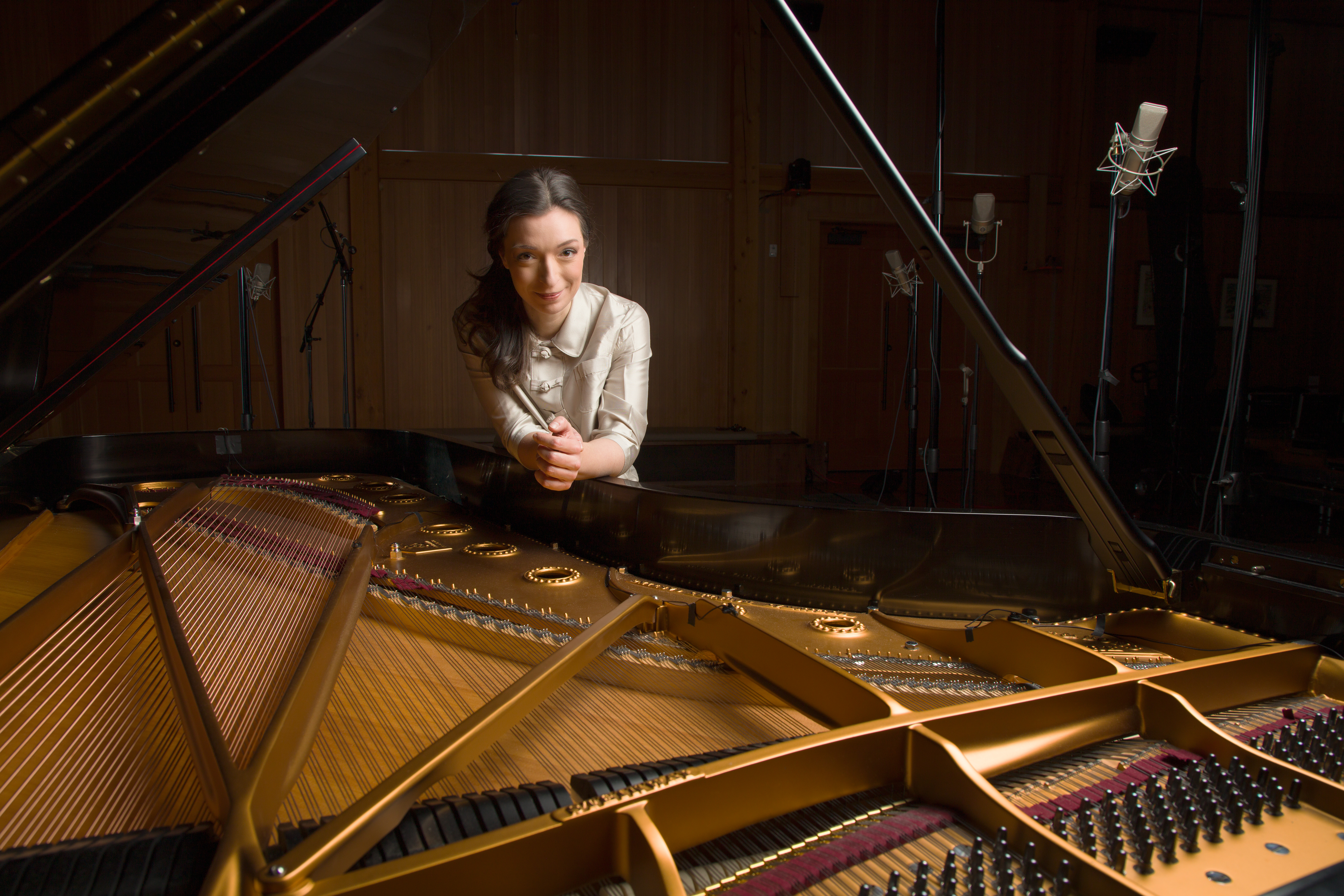
It is always very difficult for me to listen to my own recordings or the recordings of my own concerts. I almost always think, “Oh, now I would play that completely differently!”. This is the charm and challenge of music — it exists only in the moment when it is being performed, and it is not easy to capture this moment on any recording. So I very rarely listen to my own performances — with some exceptions, of course. For example, it is an amazing inspiration and joy to work with Bernhard Guettler, the sound producer I have worked with for my latest two recordings — Resilience, and Voyage, my new Chopin album, on the Pentatone label, featuring his late works, which has just been released. This particular recording experience was absolutely unique for me for two essential reasons: the location and the instrument. I was so lucky to make this recording at the one and only Tippet Rise Arts Center, in Fishtail, Montana, surrounded by nature and a wonderful team. And on top of that, I played the music on Vladimir Horowitz’s personal piano, which has an exceptionally long and warm sound that opens up like a flower.

When I first touched this piano in September 2022 at the TIppet Rise Arts Center, my first thought was, “This piano is my dream partner for Chopin’s music!”. So I am very thankful to Peter and Cathy Halstead and the entire team at Tippet Rise Arts Center for their most kind support; Mike Toya for his amazing care of the piano; Bernhard Guettler for his patience and his unlimited desire to explore the sound worlds; and the Pentatone team for bringing this recording to life.

Which particular works/composers do you think you perform best?

The moment I decide to play any piece, it becomes “the best and dearest piece” for me, otherwise I will not be able to find an authentic approach to it. Nevertheless, of course there are composers I admire so much, since they have an enormous emotional impact on me, such as Bach, Beethoven, Schubert, Schumann, Chopin, Liszt, Rachmaninoff, Mahler, Prokofiev, Shostakovich, and Bartok, to name just a few. A great discovery for me was Bernstein’s Second Symphony, “Age of anxiety,” in which the piano has a very important solo-like part. It was an exciting process to prepare this unique work, based on Auden’s poem, and I am so lucky to have performed it a couple of times in Spain and Italy and finally to play it in the United States with the Minnesota Orchestra and Robert Trevino on October 18th and 19th, 2024!

How do you make your repertoire choices from season to season?

The piano repertoire is just limitless, which is the pianist’s curse and blessing! My personal list of pieces I would love to play is getting longer every year, so I have to make decisions about what I would like to play next. Sometimes it takes a long while to decide on a recital programme; for me it is important that there is a certain concept, or at least a connecting idea between the pieces. The programme I am performing at Carnegie Hall on October 22, 2024 is a Chopin and Liszt recital. They were the two giants of the Romantic era, both unique performers, and both were trying out the most extreme ways of expression on the piano, even if they were moving on very different paths.

Next year I will be performing Shostakovich’s 24 Preludes and Fugues, op 87, which for me is one the greatest cycles for piano of all time. It was inspired by Bach’s The Well-Tempered Clavier, which I will be playing in 2027. These cycles require my entire concentration in the preparation. At the same time, for next year I also prepared a programme that connects two composers you wouldn’t expect to see together — Chopin and Shostakovich. But Shostakovich was a participant at the first Chopin Competition, in 1927, in Warsaw, and he played Chopin a lot in his younger years. So it is always kind of a work of investigation to create a recital programme.

Do you have a favourite concert venue to perform in and why?

There are many; I could not pick only one. Some of the halls are very inspiring because of their history and the musicians who have performed there — like Carnegie Hall, or the Musikverein in Vienna, but also some modern halls are amazing because of their acoustics and atmosphere — for example, Disney Hall in Los Angeles, or Elbphilharmonie in Hamburg. 

What do you do off stage that provides inspiration on stage?

I am convinced that inspiration can be found anywhere — it can be a color from the sky or of the leaves on a tree; it can be a conversation, or a great book, or even a smell — like the smell of the air in the autumn, or the aroma of a fantastic meal. I just have to be very open to be able to absorb it.

What is your most memorable concert experience?

It is difficult to say. In every concert I share a part of my soul, and my soul in turn keeps the memories of each single concert. And, as I mentioned, the music exists only in a moment when it is being performed and cannot be repeated — that is why each concert experience, even with the same repertoire, is always different.

As a musician, what is your definition of success?

Artistic success for me is probably when I am able to present an interpretation of a piece which on the one hand comes as close as possible to the composer’s will — though this criteria is very subjective — so, on the other hand, it is about my personal feelings about the music, which should be very strong and authentic. And the message of the music I perform should be acceptable for the audience, otherwise I have failed to translate the music score into human feelings. 

What do you feel needs to be done to grow classical music’s audiences?

It is essential to give access to music to the youngest. That can be through playing an instrument, singing, dancing, or any other kind of musical activity, because music also helps children to feel and articulate the emotions they experience. This is what makes human beings unique and irreplaceable. Later on, children who have been exposed to these experiences will decide whether they want to play or sing for their family, or go to concerts, or become a professional musician. Maybe they will not have any interest in it at all. But our goal should be to give them a chance to explore this magical world of music.

What advice would you give to young or aspiring musicians?

I would like to encourage young musicians to think, before they go on stage, about how lucky we are to be able to speak the language of music and share our passion with the audience. And it does not matter if their audience is big or small, or if it is a concert, an exam, or a competition — it is only music, which matters for the performer, and we should only focus on it. I am wishing you a long, happy life, full of wonderful sounds! 

Yulianna Avdeeva performs music by Chopin and Liszt at Carnegie Hall, New York, on 22nd October. Find out more here

Yulianna Avdeeva’s new recording ‘Chopin: Voyage’ is available now on the Pentatone label.


Weymouth Lunchtime Chamber Concerts (WLCC), which celebrated its 20th anniversary in 2022, is undergoing a ‘rebrand’ to reflect exciting expanding plans to bring more high-quality classical music and musicians to the popular Dorset seaside resort.

The series, founded by Weymouth-born pianist Duncan Honeybourne on his return to his hometown at the age of 25, has become well known as a platform for young professionals and established artists, and is now taking its activities up a gear. Last year’s summer concert, featuring chamber musicians coached by Duncan at the Royal Academy of Music Junior Department, was such a success that this year a special summer series of four extra Sunday afternoon concerts is being presented under the organisation’s new name CHAMBER MUSIC WEYMOUTH.

In addition to two Young Artist Showcase events on 9th and 16th July, Chamber Music Weymouth will also present a special concert of sea shanties and music inspired by or evocative of the sea and coastal landscapes with Lyme Bay Moonrakers and Duncan Honeybourne (14th July). The summer series will conclude on 28th July with a song recital given by baritone John Barker and pianist Helen Cawthorne.

Artistic Director Duncan Honeybourne says, “We’ve always made a point of welcoming young musicians, and last year’s young piano trio thoroughly enjoyed their trip to the seaside, eating ice cream on the beach after playing Mendelssohn to a large, supportive and enthusiastic audience. Everyone loved the event, and there were calls for a repeat, so this year we decided to expand the enterprise.”

Frances Wilson, herself a major voice in the piano world through her blog ‘The Cross-Eyed Pianist’, joined Duncan in 2019 as Concerts Manager, and together they plan to put their stretch of the Jurassic Coast firmly on the musical map. Frances says, “We have enjoyed record audiences since we returned to our regular monthly concerts following the challenges of the covid lockdowns, and we look forward to capitalising on this enthusiasm for what we do here with an expanded programme of concerts and other related events as we approach our 25th anniversary in 2027.”

Thanks to a generous donation from the Weymouth Music Club, which closed in 2023 after presenting concerts in the town for almost 80 years, Chamber Music Weymouth will, in addition to the regular monthly lunchtime concert series, offer further opportunities to young musicians at the start of their professional careers. Future plans also include a music festival, piano competition and masterclasses/piano courses.

The first Young Artist Showcase concert, presented by Chamber Music Weymouth, takes place on Sunday 9th June at 3pm at St Mary’s Church in central Weymouth. Students of Duncan Honeybourne from the Royal Academy of Music Junior Department and the University of Southampton will perform music by Mozart, Lalo, Paganini, and Beethoven. Tickets cost just £5, available online or on the door.

Book tickets

Full details of all concerts/events and a detailed history of the series can be found at weymouthchamberconcerts.com

a really special concert series” – Joseph Tong, pianist

“Weymouth is truly fortunate to have a concert series that benefits both local people and the wider musical community…..this is a valuable initiative that deserves continuing support and celebration.” – James Lisney, pianist


Launched in 2002 by concert pianist and Weymouth resident Duncan Honeybourne, Weymouth Lunchtime Chamber Concerts presents high-quality chamber music in the heart of Weymouth and offers a platform for musical partnerships with friends and colleagues. The concerts also give young musicians, often recent graduates from conservatoire or university, valuable performing experience to a friendly, loyal audience.

Programmes are varied and imaginative, mixing well-known works with lesser-known repertoire and composers, and all concerts take place in the attractive surroundings of St Mary’s Church, an early 19th-century church in central Weymouth, built of Portland stone.

Since its return to normal concert-giving following the covid lockdowns, the series has enjoyed record audience numbers with concerts by, amongst others, pianists Margaret Fingerhut, Joseph Tong, Allan Schiller and John Humphreys, Viv McLean, Penelope Roskell, James Lisney, Matthew Schellhorn and Katharine Lam, cellist Joseph Spooner, bass-baritone Timothy Dickinson, violinists Peter Fisher, Christopher Horner and Leora Cohen, and clarinettist Poppy Beddoe, as well as talented young musicians or recent graduates from conservatoire. Featured contemporary composers include Sadie Harrison, Adam Gorb, Ben Gaunt, Liz Dilnot Johnson and Fazil Say.

The series receives no funding or sponsorship, and all artist fees and other costs are met through ticket sales alone.

Helmut Deutsch memoirs jacket imageNew from Kahn & Averill

Helmut Deutsch

MEMOIRS OF AN ACCOMPANIST

Foreword by Alfred Brendel

Publication date: 15 September 2020

“a declaration of love – for all the many wonderful songs and cycles, and for many singers”

Robert Jungwirth, BR Klassik

During a career spanning more than 50 years, pianist Helmut Deutsch has accompanied over 100 singers, including Ian Bostridge, Grace Bumbry, Diana Damrau, Brigitte Fassbaender, Jonas Kaufmann, Angelika Kirchschlager, Christoph Prégardien, Mauro Peter, Hermann Prey, Thomas Quasthoff, Yumiko Samejima, Peter Schreier, Irmgard Seefried and Anne Sofie von Otter.

Translated from the German by Richard Stokes, professor of lieder at the Royal Academy of Music, this memoir describes, with humour, honesty and intelligence, Helmut Deutsch’s journey from unknown repetiteur to one of the most refined and sought-after accompanists of the modern era, respected by the leading singers of our time, who make music with him and revere him as a great artist and strong musical partner.

In this engaging and entertaining account, Deutsch offers fascinating insights into pianistic technique, repertoire, performance, interpersonal relationships, and the special qualities required for his profession: empathy, flexibility, sensitivity, patience and the ability to stand back in the service of others.

Deutsch is a captivating narrator, frank and entertaining. From out of tune pianos to jealous singers, his memoir teems with anecdotes and reflections on his multi-faceted life as a musician, offering readers a glimpse of unforgettable moments on and off stage without a trace of vanity.

“quite simply treasure-trove: required reading for all those devoted to Lieder, and a wonderfully tasty appetizer for those as yet unfamiliar with the genre.”

Rotary-Magazin

“Outstanding. How often does one read a book from the first page to the last without putting it down? And feel sad when one has finished?”

Ingrid Wanja, OperaLounge

“This autobiography should be on the bookshelves of every singer and pianist, and everyone for whom classical music is more than just a hobby.”

Martin Hoffmeister, MDR Kultur

Memoirs of an Accompanist is published in paperback by Kahn & Averill on 15 September 2020.

£17.95 / $26.95

Further information/order a copy


Richard Stokes, the distinguished translator of this memoir, is Professor of Lieder at the Royal Academy of Music. He has written and lectured copiously on German song, and his singing translations of Berg’s Wozzeck and Lulu, and Wagner’s Parsifal, have met with high critical acclaim. He was awarded the Order of Merit of the Federal Republic of Germany in 2012.

Image: Shirley Suarez