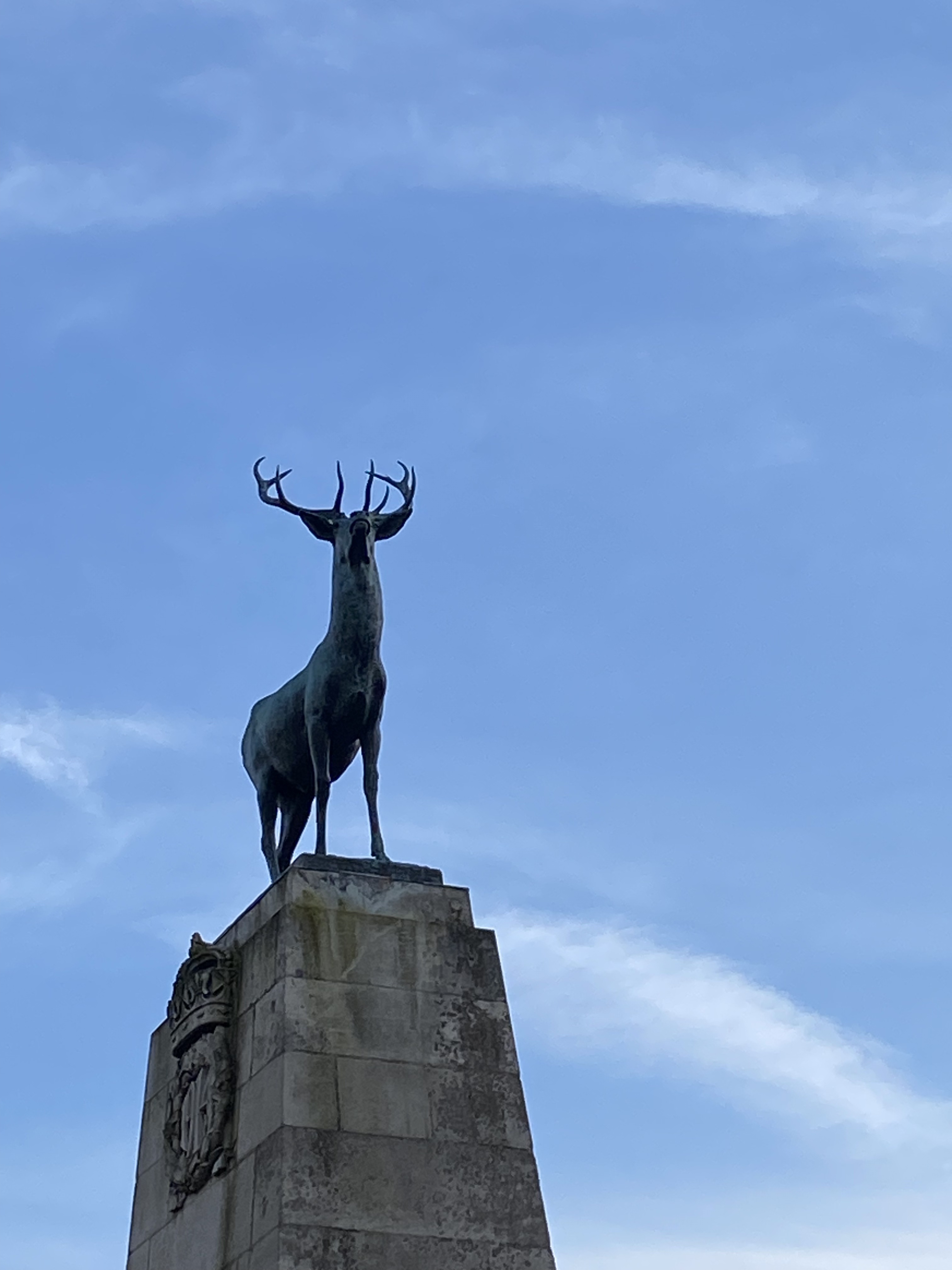
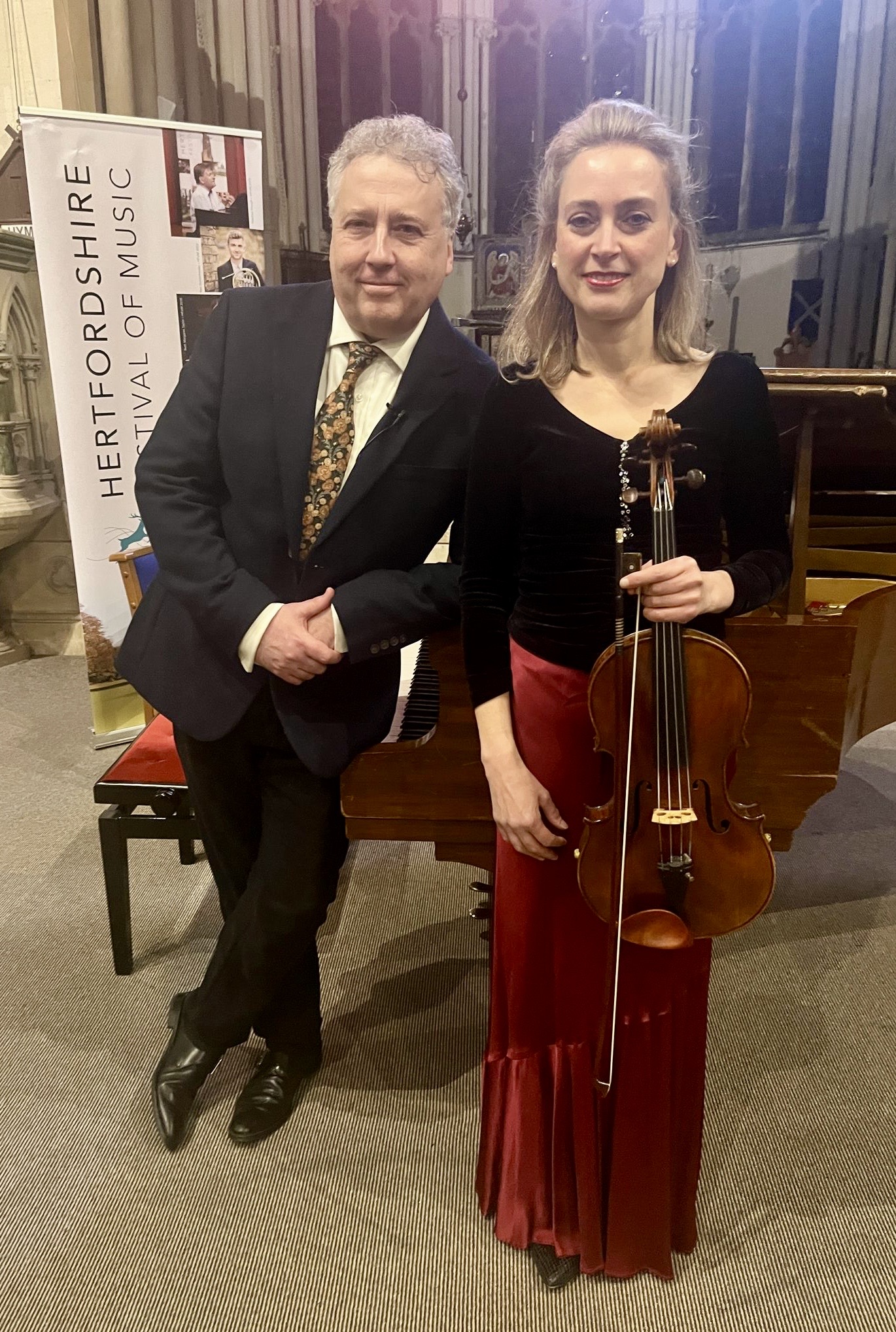
Last week I went up to Hertford, the attractive county town of Hertfordshire, to attend an inaugural concert and reception, ahead of this year’s Hertfordshire Festival of Music (HFoM) which runs from 7 to 14 June.

I have been involved in the Festival since its founding by conductor Tom Hammond (who tragically died in 2021) and composer James Francis Brown, initially in an ad hoc way by sharing details of the festival here and on my social networks, and since 2020 as the Festival’s publicist.

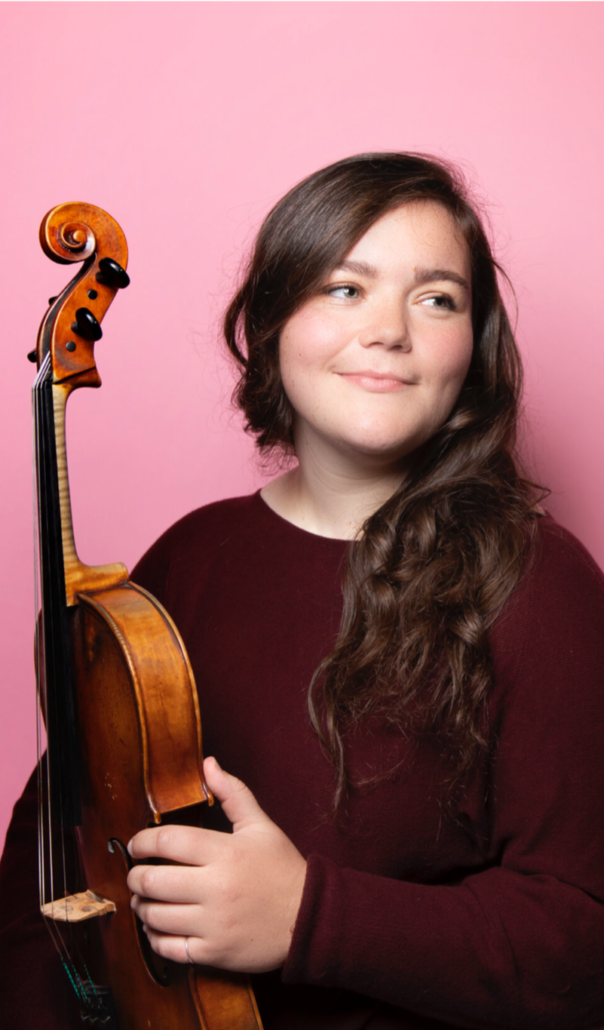
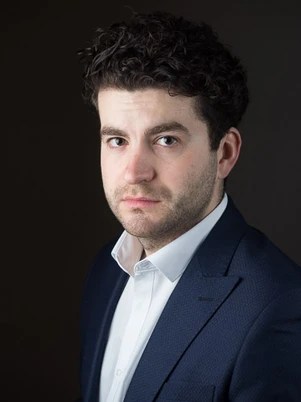
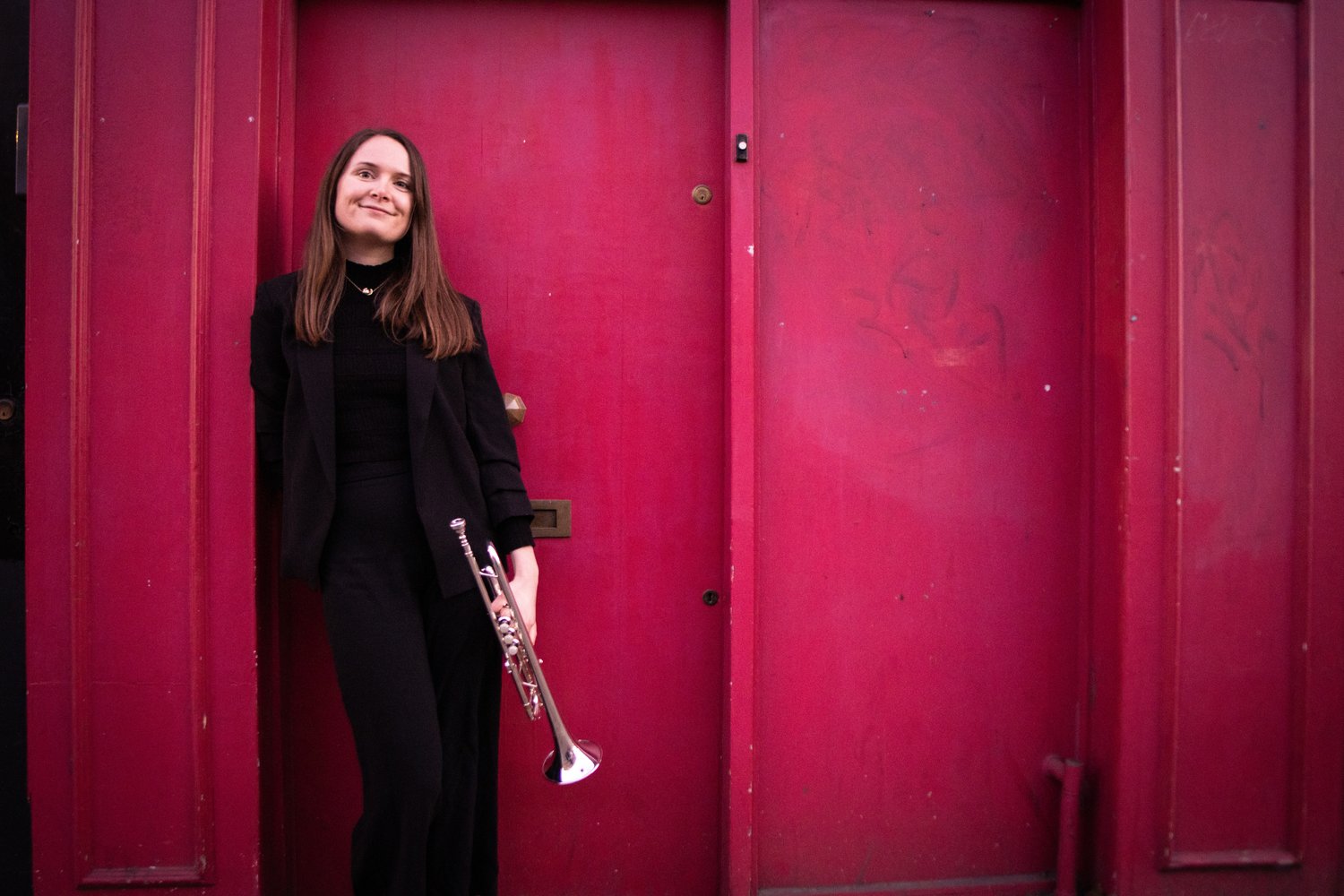
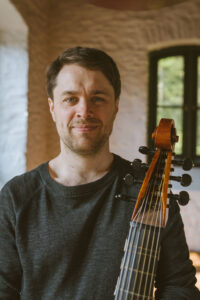
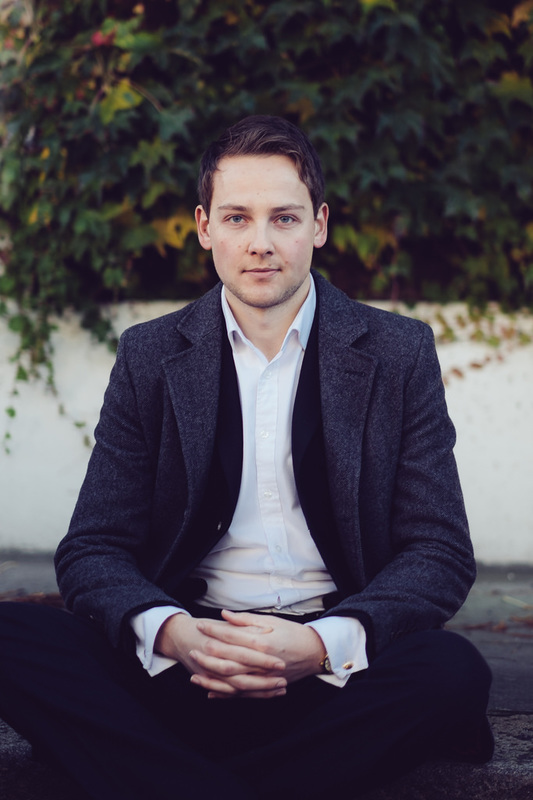
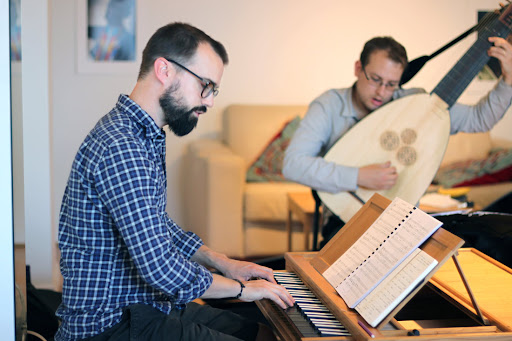
Now in its ninth year, the festival has grown from a weekend to a full week of concerts and related events/activities. The ethos and aims of the festival have remained largely the same – presenting world class classical music and musicians in the heart of Hertfordshire alongside education and outreach projects within the local community – and each year sees a different Principal Artist (Emma Johnson, Ben Goldscheider, Steven Isserlis and Stephen Hough to name a few) and Featured Living Composer (e.g. Judith Weir, CBE, David Matthews), as well as musicians who live and/or come from Hertfordshire (flautist Emma Halnan, pianist Florian Mitrea). The concert programmes are varied and imaginative, and the range of artists is impressive. Previous performers/ensembles have included ZRI, the Rosetti Ensemble, pianists Katya Apekisheva and Charles Owen, violinists Litsa Tunnah, Mathilde Milwidsky and Chloe Hanslip, cellist Guy Johnson, and guitarist Jack Hancher.

Potential audiences (and reviewers) who live in London are often reluctant to journey too far out of the metropolis to experience live music (it was via an online discussion about this issue that I first met Tom Hammond, back in 2015), yet the ease with which one can travel to Hertfordshire was quite evident when, after having lunch with my father near Kings Cross, I took the Circle Line a few stops to Moorgate and thence a train to Hertford North station (Hertford has 2 railway stations; trains from Hertford East go to Liverpool Street). The journey was less than an hour, comfortable and pleasant, and my hotel was an easy 10-minute stroll from the station to the attractive historic centre of town. Hertford is also easily accessible by road, again less than an hour’s drive from London.

HFoM concerts take place in the town’s two main churches, St Andrew’s and All Saints, both of which are within walking distance of the town centre. Other events take place at the Hertford Quaker Meeting House (the oldest meeting house built by Friends that has remained in unbroken use since 1670), and other local venues.

If you were to make a mini break or weekend visit to Hertford, or even just a day trip, you’ll find the town has a good range of independent shops, cafes, restaurants and pubs. Ahead of the evening event, I enjoyed a stroll around the town in unexpectedly mild sunshine.

This year’s festival runs from 7 to 14 June. I can’t reveal the full programme yet but I can tell you that this year’s Festival theme, ‘Shadows to Light: Musical Journeys in Conflicts and Peace’, which celebrates the universal language of music through times of adversity and peace, and touches on the 80th anniversary of VE Day alongside contemporary global conflicts. From young musicians to established international artists, jazz music, the Hertford Community Concert Band, and even a special Festival Church Service, this year’s Festival offers something for everyone and features over 30 events across music and outreach activities, of which 50% are free, with concessions applied to ticketed events.

You can enjoy early access to Festival news by signing up to the HFoM newsletter or by following the festival on social media.

Hertfordshire Festival of Music website

Hertfordshire Festival of Music is built on the involvement, support and encouragement of Hertford and the county’s communities who help build a thriving and rich Festival for the communities HFoM wishes to serve.

HANDEL’S MESSIAH

The Echoing Air and Music for Awile

Thursday 19 December at 6pm at St Mary’s church, Bruton, Somerset

A rare intimate chamber performance of Handel’s great work, ‘Messiah’, featuring world-class musicians.

The Echoing Air, a vocal ensemble of eight singers will sing both the choruses and solos, accompanied by the instrumental ensemble Music for Awhile, a quartet of baroque string players, led by Margaret Faultless, a harpsichordist and a trumpeter. This is an abridged performance of Messiah, with significant cuts, but including the famous ‘Hallelujah’ chorus. Running time approx. 1.5 hours.

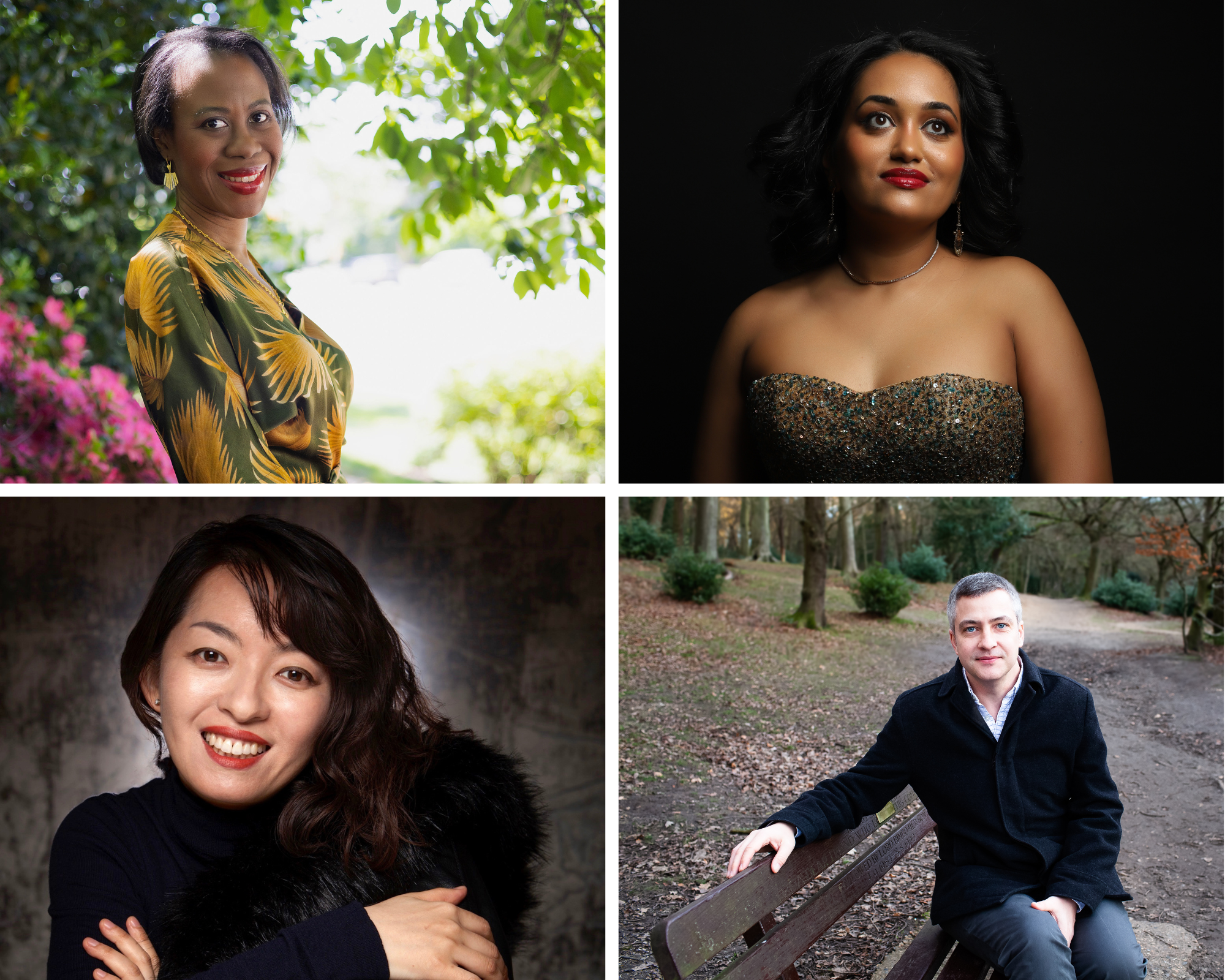
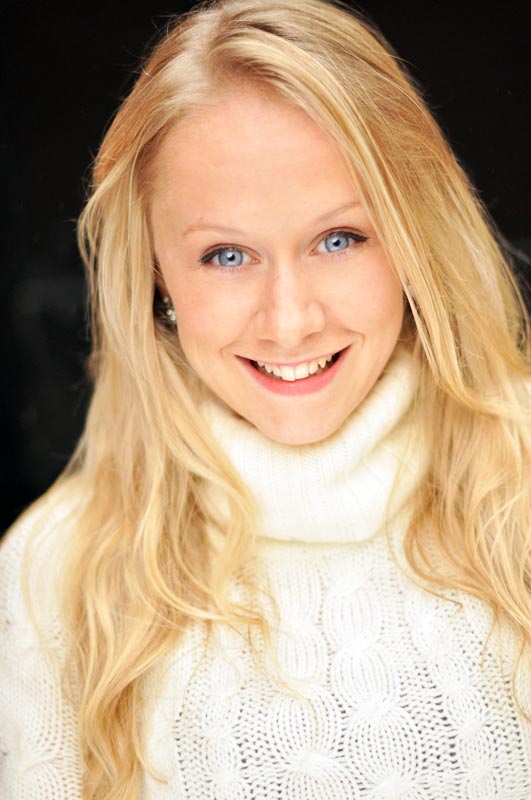
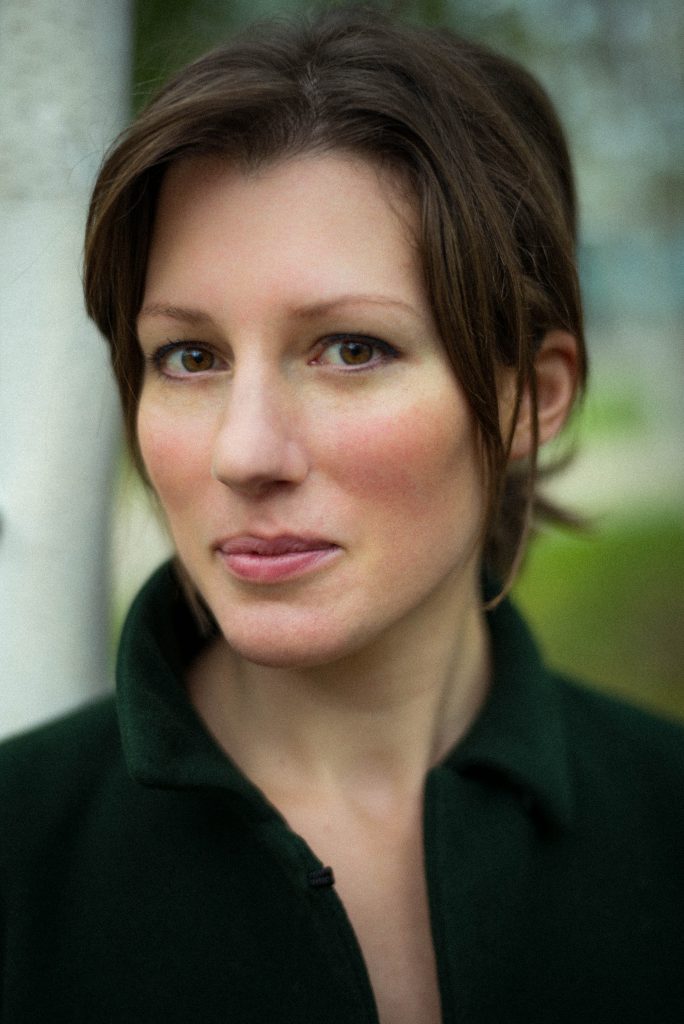
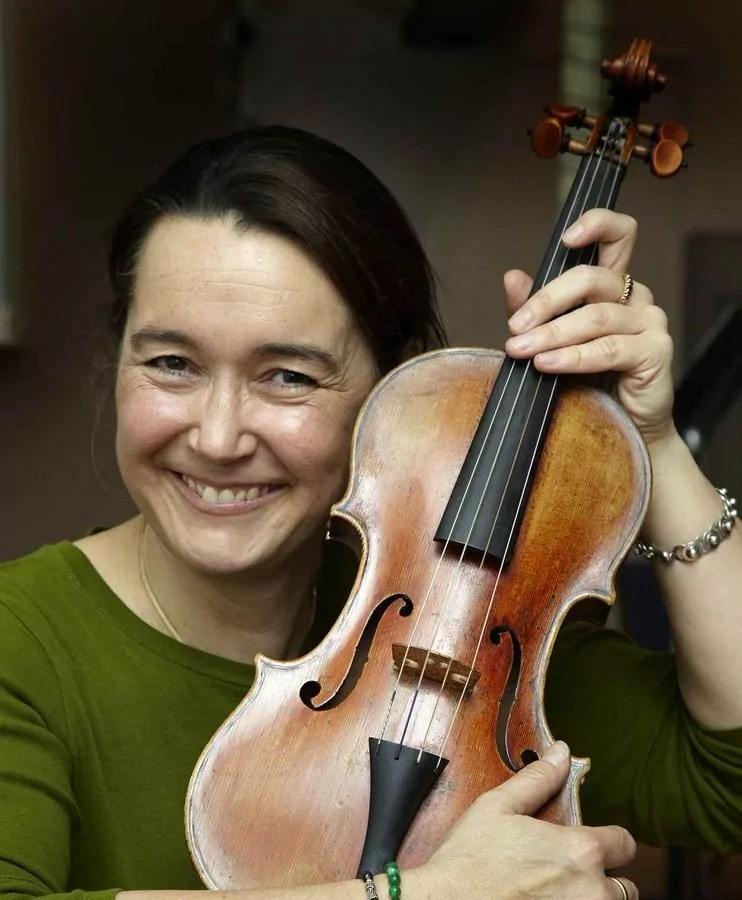
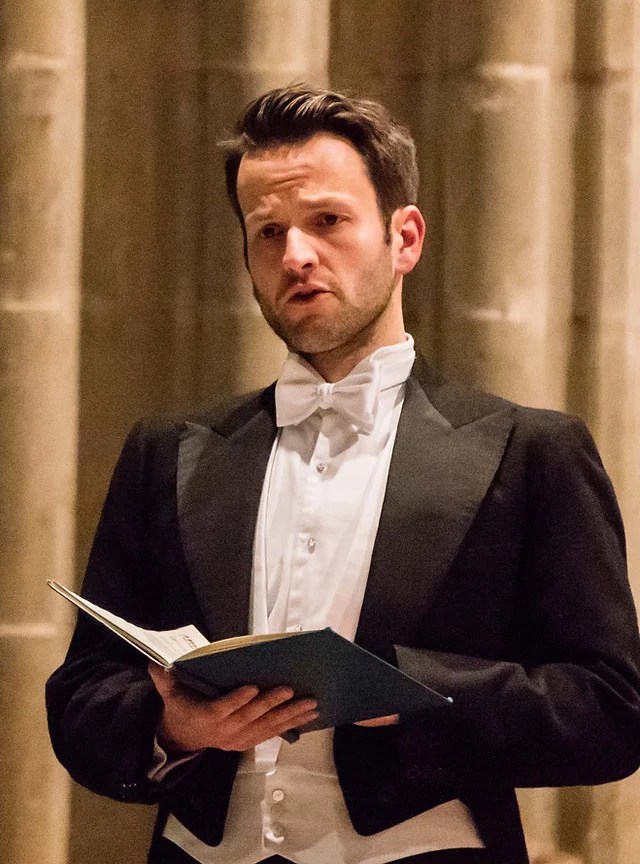
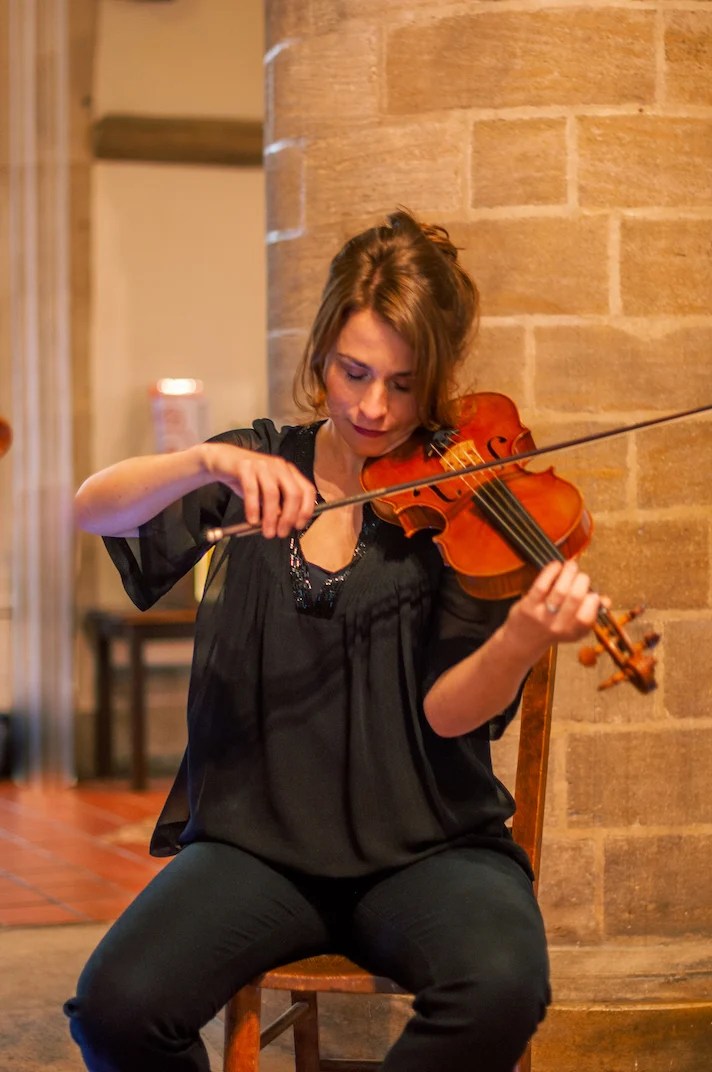
Performers: Amy Carson (soprano), Timothy Dickinson (bass-baritone), Frederick Long (bass-baritone), Emily Vine (soprano), Rebecca Leggett (mezzo-soprano), Edmund Hastings (tenor), David de Winter (tenor), Margaret Faultless (violin), Rachel Stroud (violin), Francesca Gilbert (viola), Jonathan Rees (cello), Katie Lodge (trumpet), Oliver John Ruthven (continuo).

This performance follows popular performances by The Echoing Air at Wyke House in Somerset, and at St Mary’s church, Bruton.

Praise for The Echoing Air (audience comments from previous performances)

‘Really great performance and we couldn’t have enjoyed it more.’

‘I came to the Messiah concert in Bruton. Absolutely superb! I have never heard it sung with such meaning or passion.’

‘Absolutely brilliant performance….such a high standard.’

‘Superb. The chamber music atmosphere made one really engage with the music. The standard of the players was amazing and the whole performance was totally engaging. I found it both emotional and hugely enjoyable.’

‘It was a huge privilege to attend a performance of The Messiah. An extraordinary experience.’

Thursday 19 December 2024, 6pm (doors 5.30pm)

Tickets £12.50 in advance/£15 on the door

Booking link: https://www.ticketsource.co.uk/theechoingair/handels-messiah/e-dqyjgq

Guest post by Charlotte Tomlinson

January 2025 will mark the 3rd anniversary of the Oxford Piano Weekends, and the thirteenth weekend. I can hardly believe that what started on the back of an envelope in late 2021, has developed into such a fixture in the piano course market that pianists return again and again.

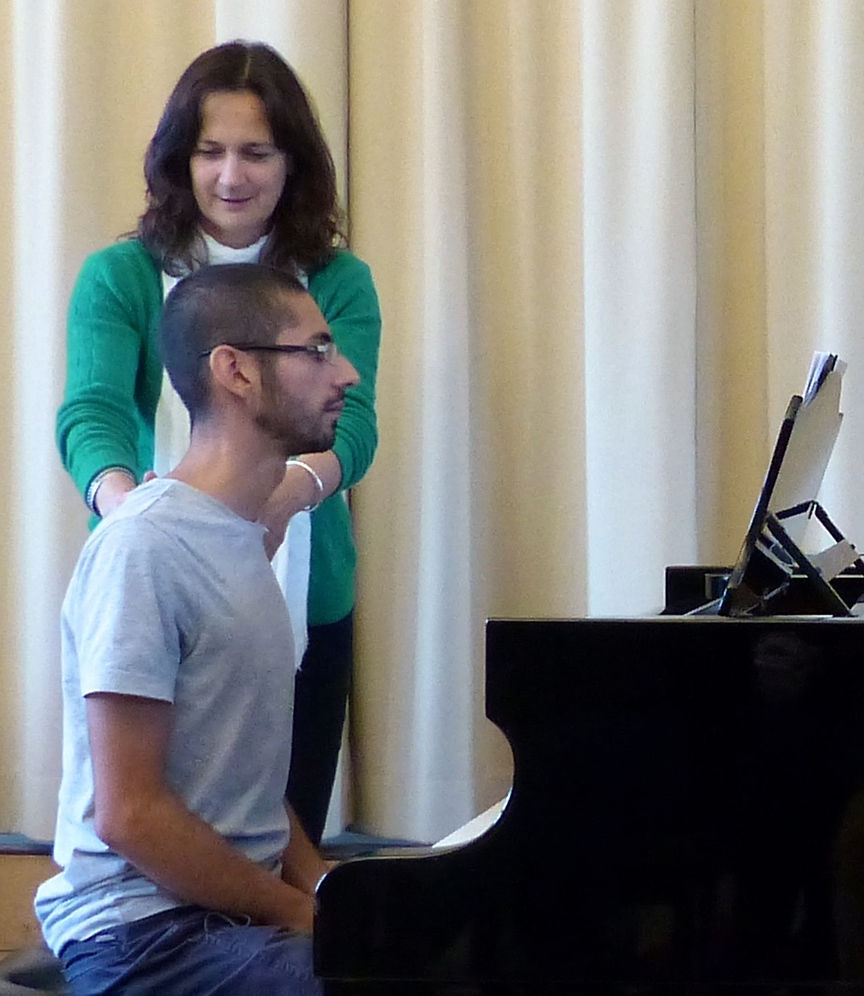
We started in 2021 with the legacy of Covid and all the social and musical anxiety that came with that. It was essential to find a way of getting people to know each other quickly so I devised a mini workshop to be held before supper on the first evening, in which people get into pairs to chat about a particular musical and performing issue. Within a short space of time, the conversations are animated, social anxiety disappears and people feel relaxed and comfortable. By the time we start the evening session, a united and supportive group has already established itself.

It can’t be underestimated how important this group bonding is. A good number of pianists who come on the Oxford Piano Weekends struggle with performance anxiety and physical tension, and feeling emotionally safe within the group is essential to move through these issues.

I used to have crippling performance anxiety and now I really enjoy performing, something that would have been previously unimaginable. The weekends have helped me immeasurably.

Right from the start, Oxford Piano Weekends have had a wonderfully diverse pool of advanced and committed pianists taking part: bankers, medics, piano teachers, lawyers, choir directors, pianists returning after many years, battered and bruised pianists from a legacy of harsh teaching, students preparing for final recitals and many, many more. Pianists come from all over the UK, as far afield as Dublin, Finland, Malta and most recently, Canada.

The weekend is a chance to reflect deeply on your playing with expert guidance to take away and improve your practice.

On any one Oxford Piano Weekend, the numbers are kept deliberately low with six or seven as the ideal. Each pianist has twenty minutes teaching within the group, in rotation over the weekend, and it’s extraordinary how much can be packed into that short time. I listen to each pianist to see what they need, and then make sure that my response is valuable not just for the pianist themselves, but also for the group. Participants learn so much from watching and listening to each other, seeing their own challenges reflected in other pianists and then observing that pianist transform in front of their eyes.

A truly wonderful weekend. Charlotte is so caring, and teaches with such empathy, understanding & musical knowledge and expertise.

And what’s more important than the meal times? Homemade, tasty, nutritious food with free flowing wine in the evenings, the now-famous homemade flapjacks for coffee breaks, all provide a wonderful back drop for lively, stimulating conversations among like-minded people. They truly are full and rich weekends, and I, for one, come away at the end of each one feeling exhilarated and all ready to go for the next one.

Next weekend: January 17th -19th 2025

For more details go to: https://www.charlottetomlinson.com/oxford-piano-weekends

Watch a podcast with Charlotte Tomlinson and The Cross-Eyed Pianist

‘….simply beautiful choral writing by someone who knows, from a singer’s perspective, how to compose music which every choir will want to sing.’ Sir John Rutter CBE, composer

Following Heaven to Earth, Joanna Forbes L’Estrange’s first album on Signum Classics, Winter Light is an album of works (complete with some world premiere recordings and new arrangements) celebrating the season of Winter, as well as Christmas and Advent. The common themes linking all 19 tracks are of light triumphing over darkness, good overcoming evil and, ultimately, love conquering all.

The first 12 tracks tell the familiar Christmas story, from the eager anticipation of the saviour’s birth (Advent ‘O’ Carol, track 1) and its foretelling by the prophet Isaiah (Isaiah’s Prophecy, track 2) to the Annunciation (I Will Hold Him, track 3, and O Virgo Virginum, track 4), to the birth itself (Carol of the Crib, track 5 and Jesus Christ is Born Today, track 7) and its significance for humankind (In the Bleak Midwinter, track 8, and Love Came Down, track 9). Thereafter, the visitation from the shepherds (Song of the Shepherds, track 10) and the arrival of the magi at Epiphany (A Present for the Future, track 12) remind us that we, like the shepherds and wise men, need also to follow the light (A Story of Light, track 11). In the midst of this nativity narrative sits the title track (Winter Light, track 6) whose words mark the transition from darkness to light.

The second part of the album takes on an altogether different tone to reflect secular winter themes. As a professional singer Joanna Forbes L’Estrange is known for performing in a wide variety of styles and this is reflected in her compositions. Whereas the first half of this album is stylistically largely within the familiar realms of the sacred choral music tradition, the latter leans towards jazz and folk. The Three Wise Women (track 13) was written in response to a commission from St Swithun’s School in Winchester. ‘There are numerous pieces in the Christmas choral repertoire
about the three wise men so it was about time for the women to have their own song,’ says the composer. The remaining six tracks explore various winter themes. Winter Songs (tracks 14-16) was composed for the 60th anniversary of Finchley Children’s Music Group. Though conceived for children’s voices, the songs’ themes of hibernation, homelessness and human kindness are relevant to all ages. Green Christmas (track 17) was written during the first covid lockdown and is a subtle play on Irving Berlin’s classic, White Christmas. Track 18, Spring Will Come Again, is a folk-style song about the cyclical nature of the seasons. The album concludes with an arrangement of Auld Lang Syne (track 19) which Joanna wrote many years ago when she was Musical Director of The Swingle Singers.

Joanna Forbes L’Estrange says, ‘The impetus for recording this album sprang from my desire to present choirs with some contemporary yet singable Winter/Christmas-themed pieces which they might like to add to their repertoire.’

Praise for Joanna Forbes L’Estrange
‘Joanna has an amazing understanding of both the human voice and the human heart. The result: quality music making effective use of the voice, with tunes and harmonies and a wonderful storytelling quality to the songs which lift the hearts of singer and listener heavenward. These will surely be part of the Christmas choral canon for centuries’ – Ken Burton, conductor, composer & arranger

…an album of fresh new gems, full of Christmas warmth and great tunes’ – Louise Clare Marshall, singer

‘Forbes L’Estrange seems to have been born with catchy melodies coursing through her veins’ – BBC Music Magazine

Winter Light is released on 18 October on the Signum Classics label on CD and streaming.
Joanna Forbes L’Estrange, composer
London Voices
Ben Parry, conductor
Richard Gowers, organ
Olivia Jageurs, harp
Harry Baker, piano