A post on Gretchens Pianos inspired this one!

My grandfather played the piano, mostly Methodist hymns and his favourite bits of Bach, Beethoven and Haydn. I suppose I was always aware of it and probably messed about on his piano, an Edwardian upright, which was on the left as you went into the front room (kept for Sundays and special occasions) when we went to visit. The piano stool was full of interesting song sheets and hymnals, friable and speckled with age, with that special antique smell, like the musty reminiscence of an old church….. My younger uncle also played the piano, passably well, while my eldest uncle was a fine amateur violinist. There was often music in my grandparents’ house, live and on the ‘gramophone’ (as it was called).

I don’t recall actually asking if I could learn the piano; rather, my parents acquired an old Challen upright for me when I was about 5. It had lived in a greenhouse for 2 years and needed a lot of restoration. It was overhauled, refelted, and given lots of TLC, and was gradually brought up to concert pitch by the tuner to become a much-loved and regularly-played instrument. It saw me through to Grade 8, but when I left home, I stopped playing seriously for some years, and when my parents divorced, my father sold the piano because I did not have room for it in my flat.

My first teacher, Mrs Scott, in Sutton Coldfield, seemed ancient. She had a grand piano in the front room of her house and during the lesson, her husband would silently bring her a cup of tea, served in a bone china cup and saucer. She always wore mauve or pink, and smelt faintly of lavender. I took my exams at the Birmingham School of Music, one exam a year, a veritable treadmill. When we moved to Hertfordshire, I took lessons with Suzette Murdoch, who taught me to love the intricacies of Bach and the passion and humour of Beethoven. She had an Old English Sheepdog and a spaniel, who would lie across my feet as I sat at her Steinway. My music teacher at school was also very influential. He was endlessly enthusiastic and inspirational, and I often find myself repeating things he said when I am teaching (“pretend you’re a trumpet!”). Twenty-five years since leaving school, I started having lessons again, an experience which I find endlessly absorbing, interesting and fulfilling. The most satisfying part is seeing how quickly I have progressed from post-Grade 8 repertoire to “proper” advanced repertoire – Chopin Etudes, a Ballade, Schubert’s last sonata…. Three years ago, I didn’t think I would be playing Liszt, but now I no longer look at music and think “there’s no way I can play that!”.

My current piano is a Yamaha, purchased four years ago, and chosen for quality and price. Of course, I dream of owning a grand, when space and budget permit, but in the meantime, I play my teacher’s antique Bluthner regularly, and a friend’s Steinway B, which I find as quirky as driving my old Porsche. Last summer, while on holiday in southern Ireland, I had the good fortune to play a rather special Bluthner which lives at Russborough, a beautiful 18th century stately home in County Wicklow. The piano belonged to Sir Alfred Beit, who, with his wife, was a great society host, and a fine amateur pianist. It was wonderful to see Sir Alf’s music in the rack next to the piano: the same Peters edition of Schubert’s Impromptus I had when I was in my teens, and a book of Czerny studies. Next to the Bluthner is an older Steinway, which was played by Paderewski when he visited Russborough.

Russborough, County Wicklow

I am fascinated by the connection pianists, in particular, seem to have to their instruments, and also the stories which illustrious instruments can tell us, in their own way. In a novel (as yet unpublished!) I wrote some years ago, about a young man poised on the cusp of a fantastic career as a concert pianist, before the Great War cruelly intervenes, the various pianos he plays have great significance for him – his teacher’s Broadwood, his mother’s Pleyel, his patron’s grandiose Steinway, a rickety upright in the officers’ mess – and the music he plays on each has very special and symbolic resonances (Beethoven, Scriabin, Debussy, Schubert, Rachmaninov). We grow very attached to our instruments, and we are often very protective of them. Although I teach, and am happy to do so, I do get upset when children treat my piano badly. Luckily, this does not happen that often – and when it does, I am quick to point out that such treatment will not do the instrument any good!

The loneliness of the pianist also interests me. While other musicians, be they soloists, ensembles or orchestras, sit largely facing the audience, the pianist does not, and this immediately changes the dynamic between performer and audience. Some people have suggested that I chose the piano because I am an only child and that I like being on my own. It’s true that I am content in my own company, and am happy to spend hours alone with my piano, but I don’t buy into the only child theory. Discussing this with fellow students on the piano course in April, we all agreed that one of the chief attractions of being a pianist, aside from the vast and wonderful repertoire, is the solitariness of the role.

I used to play the clarinet as well, an instrument which I love to listen to, which allowed me to join an orchestra and wind ensemble. However, I did not choose to learn it (I wanted to play the flute), and I always felt overshadowed by my father, who was a talented amateur clarinettist. Fortunately, I could accompany him on the piano, as I grew more proficient, and one of our favourite pieces was the Brahms E flat Clarinet Sonata. My father is now learning the piano, though he refuses to take any advice whatsoever from me!

When I was at school, I played the harpsichord, often being called upon to play continuo with the chamber orchestra. It was, by turns, a fascinating and frustrating experience, as it is not an easy instrument to master, and the school harpsichord (a modern instrument made from a kit) was beset with problems and regularly disappeared for maintenance.

My piano tuner keeps urging me to visit the Chappell showroom in central London to “try the Bosendorfers”, but, as I said to him, I know if I try one I will want one! And I’d love to play a Fazioli. And when I had a backstage tour of the Wigmore Hall some years ago, it was hard to resist sitting down at the Steinway on the hallowed stage there, and rattling through a drop of Schubert…..

How did you choose your instrument? What’s your story? Please feel free to reply!

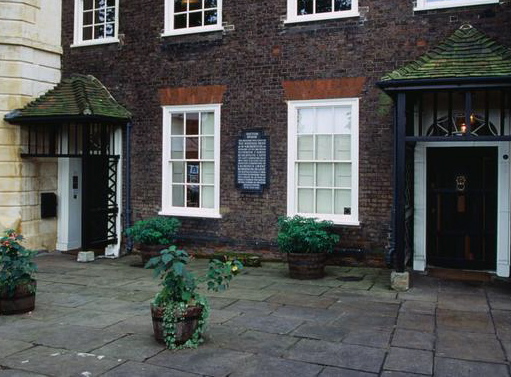
My piano teacher, Penelope Roskell, is peforming in two concerts at the delightful and intimate small venue Sutton House this month and next.

Sunday 15th May, 7pm

‘An English Summer Evening’ – Fitzwilliam String Quartet with Penelope Roskell

Artists in residence, the Fitzwilliam String Quartet, and Artistic Director of SHMS, Penelope Roskell, present a programme celebrating the work of those two quintessentially English composers, Ralph Vaughan Williams and Edward Elgar. Both the works being performed were written during war-time and are profound and intense music.

Ralph Vaughan Williams – String Quartet No. 2 (‘for Jean on her birthday’)

Sir Edward Elgar – Piano Quintet in A minor Op. 84

To reflect the English nature of the concert, there will be Pimms and Punch on sale from 6.30pm and during the interval. The bar will also be open after the concert to allow audience members to enjoy a drink with the performers.

Sunday 19th June, 7pm

‘Reason and Romance’

A solo concert by Penelope Roskell, juxtaposing the reason and intellect of J S Bach with the mercurial romance of Robert Schumann.

J S Bach – Chromatic Fantasia and Fugue

Robert Schumann – ‘Papillons’

J S Bach – French Suite No. 2 in C minor

J S Bach – Partita No. 5 in G

Robert Schumann – Piano Sonata No. 2 in G minor

Sparkling wine will be on sale with complimentary strawberries and cream in the courtyard during the interval.

Sutton House, a National Trust House in Hackney, is a really lovely venue. I was very impressed the first time I visited, two year’s ago, both by the quality of the performances, and the commitment and support of the audience.

For more information and online booking go to www.shms.org.uk

Apple tree iPad stand

I’ve recently become the proud, selfish, and somewhat geeky, owner of an iPad. Not, I hasten to add, the iPad 2, which is apparently already hard to come by, just over two weeks since its release by Apple. I decided that the additional cost (c£100) was not worth all the extra bells and whistles: I don’t need a camera and I don’t need all that memory/power, since my primary motivation for purchasing an iPad (apart from the need to add yet another Apple gadget to my toybox) is to use it as a teaching aid.

I have blogged before about the piano teacher’s need to keep abreast of new technology. If we can’t offer it in our studio, we are going to lose students, especially younger students who are turned on by gadgets and gizmos. It is already clear that such gadgetry can be put to good use during teaching: I have a gallery of composer photos in my iPad, a selection of pictures of old pianos, including Beethoven’s and Chopin’s, diagrams of the guts and action of the piano (grand and upright), and a pot-pourri of “oddments”, including an old photograph of Rachmaninov’s huge hands, and a picture of Glenn Gould hunched at the keyboard in his characteristic crouching posture. The iPad, when produced during lessons last week, was met with oohs and aahs of delight: the kids loved it, and I could feel my street-cred rocketing as we scrolled through the pictures together. “Look how small the keyboard is!” Eli exclaimed on seeing a picture of a Clavichord. “Is that really Beethoven’s piano?” Ben asked, with awe.

Add in a powerful iPod capacity, loaded with exam music, ‘Fran’s Easy Guide to Classical Music’, and a selection of other music of interest, plus a score-reading app which plays the music as you read it, or can print it, wirelessly, straight from the iPad, and you’ve got a neat and versatile all-in-one teaching tool.

Today, IMSLP (International Music Score Libary Project/Petrucci Music Library) announced plans to develop an IMSLP app for use on the iPad, selling the idea to users with the catchy, green tag “make music with free public domain scores without chopping down trees”.

A number of score reading apps already exist. I use ForScore, which allows you to upload your own scores in PDF format, or download from IMSLP or Pianostreet.com or other sites which offer PDF downloads. The programme allows editing and annotating so that you can add your own notes and comments to your scores. It also has a link with your iPod so that you can listen to the music as you read it. It’s neat and fairly easy to use, though it can be a little quirky. I am just getting to grips with it. I like the portability of it: I was actually annotating Debussy’s Sarabande while commuting to my ‘other’ job yesterday.

IMSLP’s announcement suggests that traditional scores may eventually become obsolete as musicians opt to load their scores onto their iPads, or similar e-reading devices, and prop them on their music stands, instead of carting around a hefty Henle or Wiener Urtext edition. James Rhodes proved this point during his encore in Cambridge last year, playing a Chopin Prelude from his iPad. I still hold that this is just showboating, crowd-pleasing gimmickry (the fact that he had to pause in his playing to swipe the iPad to turn the page shows that the app is not perfect: if he’d been using a proper score, the music would have filled a two-page spread, thus removing the need for a showy page turn), but it more than demonstrates that it is possible to play from such a device, and I do not think it will be too long before we see string quartets or choral ensembles using iPads during concerts.

(A fermata here while the luddites throw up their hands in horror.)

The huge capacity of the iPad, and its neat, handbag dimensions, means that soon you won’t have to pack your briefcase with heavy Urtext scores. Just load them onto your iPad and off you go. But something’s not quite right: trying to sight-read through Chopin’s Polonaise-Fantasie Op 61 on the score reading app on my iPad the other day made my eyes strain and my head hurt: the smaller-than-A4 format is just not big enough for my cross eyes. It’s fine away from the piano: I can read it comfortably, but I can’t work from it at the keyboard. And I want to be able to scribble notes directly onto the score from the pencil I keep behind my ear. And, if I’m completely honest, I really love that smooth heavy cream paper and dusky blue covers of a Henle edition.

We all got very heated a few years ago when the first e-reader appeared and people lamented the death of the traditional book. But, amid all the hand-wringing and eye-pulling, book sales remain strong and while e-readers are becoming increasingly popular, it is unlikely they will ever replace a book, for various reasons (for example, a book containing many notes, index, bibliography etc is not suited to the e-reader format). I don’t think I will be giving up my Urtext scores just yet – I love all my annotations, my personal markings, hints and reminders, interspersed with notes from my teacher, and I particularly enjoy coming back to a well-marked score after a break from that piece – but I can definitely see the benefits of having scores uploaded to an iPad, and I welcome IMSLP’s initiative to develop an app, thus making their vast and fascinating resource more readily available. How we will react to an entire symphony orchestra all playing from their iPads remains to be seen……

IMSLP’s announcement

ForScore score reading app

iStand for iPad app

iPadPunk – articles on apps for musicians and music production

Boy Bland

Norman Lebrecht has been highlighting on the pages of his blog Slipped Disc the sad facts of the nominations for this year’s Classic Brits Awards (formerly the Classical Brits). I say “sad” because, as Norman says, the nominations and awards are going not to artists of genuine talent and true artistic integrity, but to manufactured “boy bands” (for band read “bland”) and an opera singer whose main claim to fame is his appearance on a reality tv show (‘From Popstar to Operastar’), the tenor Roland Villazon (he’s up for Best Male Artist of the Year). The Artist of the Decade award goes to “four young men from a barbershop on the wrong side of town” (NL), Il Divo, a group straight out of Simon Cowell’s stable.

Piano-babe

Other nominations, for the ClassicFM Album of the Year (we kinda guessed ClassicFM would be “in” on this one!) include Russell ‘The Voice’ Watson, The Choirgirl Isabel (eeugh!), Aled’s Christmas Gift (sweet!), and The Band of the RAF (cue the theme from The Dambusters….).  The awards will be presented, also unsurprisingly, by “classically-trained” vacuous piano-babe Mylene Klass at the RAH on 14th May.

A quick Google of nominations for other categories was somewhat sparse, though an article on the BBC website revealed that pianist Mitsuko Uchida, trumpeter Alison Balsom and violinist Nicola Benedetti will be competing for the coveted title Female Artist of the Year. Well, that information does redeem these awards slightly – but only slightly….. And I suspect amid all the hoopla and medi-yar loviness, these artists, who really do display true commitment, integrity and talent, will be somewhat sidelined. I do hope not, but with Mr Cowell on the prowl, we can kinda guess the rest.

I don’t have a problem with awards, per se, but I do have a problem with manufactured artists and bands, especially those which serve only to line the already bulging pockets of Simon Cowell, and his ilk. I ranted extensively on this subject just before Christmas, when another of Simon Cowell’s progeny, a young man so forgettable I have forgotten his name, was up for the Christmas No. 1. I joined the campaign ‘Cage Against the Machine’ to have John Cage’s seminal work 4’33” take the Christmas 2010 No. 1 spot, because I just could not bear to see yet more Cowellness invading our music charts and tv screens, and the thought of all the millions he was making from the enterprise.

The other, more fundamental Problem with Cowell is that he peddles the idea that it is easy to make it in the music business, that success and celebrity are easily-won, without the many hours of training, study and discipline that real musicians – be they pop, jazz, world or classical – must undergo to achieve longevity and recognition.

So, as a challenge to The Classic Brits, may I suggest The Alternative Classic Brits? Nominations are invited for the following categories (genuine artists only please; reality-show participants need not apply):

Best Male Artist

Best Female Artist

Best Album

Best Newcomer

Best Ensemble/Orchestra

Best Opera

Best New Work

Lifetime Achievement Award

Critics’ Award


Please feel free to leave your nominations and additional award categories here – or follow me (and Norman Lebrecht) on Twitter. And if this takes off, I may even be announcing a Facebook campaign! Watch this space.