Weymouth Lunchtime Chamber Concerts (WLCC), which celebrated its 20th anniversary in 2022, is undergoing a ‘rebrand’ to reflect exciting expanding plans to bring more high-quality classical music and musicians to the popular Dorset seaside resort.

The series, founded by Weymouth-born pianist Duncan Honeybourne on his return to his hometown at the age of 25, has become well known as a platform for young professionals and established artists, and is now taking its activities up a gear. Last year’s summer concert, featuring chamber musicians coached by Duncan at the Royal Academy of Music Junior Department, was such a success that this year a special summer series of four extra Sunday afternoon concerts is being presented under the organisation’s new name CHAMBER MUSIC WEYMOUTH.

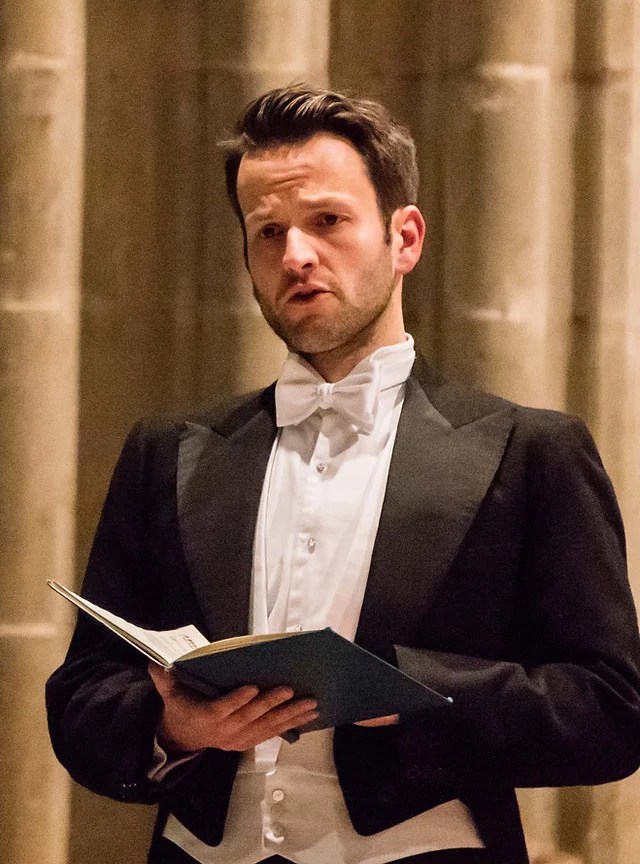
In addition to two Young Artist Showcase events on 9th and 16th July, Chamber Music Weymouth will also present a special concert of sea shanties and music inspired by or evocative of the sea and coastal landscapes with Lyme Bay Moonrakers and Duncan Honeybourne (14th July). The summer series will conclude on 28th July with a song recital given by baritone John Barker and pianist Helen Cawthorne.

Artistic Director Duncan Honeybourne says, “We’ve always made a point of welcoming young musicians, and last year’s young piano trio thoroughly enjoyed their trip to the seaside, eating ice cream on the beach after playing Mendelssohn to a large, supportive and enthusiastic audience. Everyone loved the event, and there were calls for a repeat, so this year we decided to expand the enterprise.”

Frances Wilson, herself a major voice in the piano world through her blog ‘The Cross-Eyed Pianist’, joined Duncan in 2019 as Concerts Manager, and together they plan to put their stretch of the Jurassic Coast firmly on the musical map. Frances says, “We have enjoyed record audiences since we returned to our regular monthly concerts following the challenges of the covid lockdowns, and we look forward to capitalising on this enthusiasm for what we do here with an expanded programme of concerts and other related events as we approach our 25th anniversary in 2027.”

Thanks to a generous donation from the Weymouth Music Club, which closed in 2023 after presenting concerts in the town for almost 80 years, Chamber Music Weymouth will, in addition to the regular monthly lunchtime concert series, offer further opportunities to young musicians at the start of their professional careers. Future plans also include a music festival, piano competition and masterclasses/piano courses.

The first Young Artist Showcase concert, presented by Chamber Music Weymouth, takes place on Sunday 9th June at 3pm at St Mary’s Church in central Weymouth. Students of Duncan Honeybourne from the Royal Academy of Music Junior Department and the University of Southampton will perform music by Mozart, Lalo, Paganini, and Beethoven. Tickets cost just £5, available online or on the door.

Book tickets

Full details of all concerts/events and a detailed history of the series can be found at weymouthchamberconcerts.com

a really special concert series” – Joseph Tong, pianist

“Weymouth is truly fortunate to have a concert series that benefits both local people and the wider musical community…..this is a valuable initiative that deserves continuing support and celebration.” – James Lisney, pianist


Launched in 2002 by concert pianist and Weymouth resident Duncan Honeybourne, Weymouth Lunchtime Chamber Concerts presents high-quality chamber music in the heart of Weymouth and offers a platform for musical partnerships with friends and colleagues. The concerts also give young musicians, often recent graduates from conservatoire or university, valuable performing experience to a friendly, loyal audience.

Programmes are varied and imaginative, mixing well-known works with lesser-known repertoire and composers, and all concerts take place in the attractive surroundings of St Mary’s Church, an early 19th-century church in central Weymouth, built of Portland stone.

Since its return to normal concert-giving following the covid lockdowns, the series has enjoyed record audience numbers with concerts by, amongst others, pianists Margaret Fingerhut, Joseph Tong, Allan Schiller and John Humphreys, Viv McLean, Penelope Roskell, James Lisney, Matthew Schellhorn and Katharine Lam, cellist Joseph Spooner, bass-baritone Timothy Dickinson, violinists Peter Fisher, Christopher Horner and Leora Cohen, and clarinettist Poppy Beddoe, as well as talented young musicians or recent graduates from conservatoire. Featured contemporary composers include Sadie Harrison, Adam Gorb, Ben Gaunt, Liz Dilnot Johnson and Fazil Say.

The series receives no funding or sponsorship, and all artist fees and other costs are met through ticket sales alone.

Award-winning British composer Thomas Hewitt Jones releases a new version of the much-loved hymn Abide With Me on the 80th anniversary of D-Day, the invasion of Normandy by Allied forces which marked a crucial turning point in the Second World War.

American troops arriving in Normandy on D-Day (National Geographic)

Originally written in 1847 by Scottish Anglican cleric Henry Francis Lyte, with words based on Luke 24: 13–35, ‘Abide with Me’ is a prayer for God to stay (“abide”) with the speaker through the trials and tribulations of life and death. Traditionally sung at remembrance events and services, and at funerals, it offers comfort to the bereaved and hope for the coming weeks. The hymn speaks to the universal human condition, and it is that feeling of hope and assurance which makes this hymn so special. It is most often sung to the tune “Eventide” by the English organist William Henry Monk.

Abide with me; fast falls the eventide;
The darkness deepens; Lord with me abide.
When other helpers fail and comforts flee,
Help of the helpless, O abide with me.

This new version by Thomas Hewitt Jones is performed by the Scottish Session Orchestra, conducted by Adam Robinson, recorded remotely in Glasgow – with Thomas on solo cello and pipe organ from his home studio.

Composer Thomas Hewitt Jones says, “‘Abide with Me’ is such a well-loved tune which typically has resonances with wartime and remembrance. However, as my friend Gordon Giles, Canon at Rochester Cathedral, reminded me, the words also allude to the resurrection. As such, I think it can be seen as a song of great comfort in trying times. I have given it the unashamedly rich string treatment here, with nods to Vaughan Williams but also a couple of subtle harmonic twists. I have also showcased the Lammermuir pipe organ, which is in my studio, and it is wonderful to have the excuse to get the cello out again! I hope you enjoy this new take on the beloved melody.”

‘Abide with Me’ – arranged by Thomas Hewitt Jones (solo cello & organ), with the Scottish Session Orchestra conducted by Adam Robinson.

Full text of ‘Abide with Me’ here

Mozart wrote 18 piano sonatas and American pianist Orli Shaham has recorded all of them for the Canary Classics label, the final two volumes of the series being released in February this year. These sonatas have an enduring appeal, for players, both professional and amateur, and audiences alike.

For Orli Shaham the fascination with Mozart’s piano music began at an early age: this recording is the result of an exhilarating 40-year journey through the sonatas, getting to know them intimately, studying them deeply to appreciate their individual characters, and to understand the composer’s musical methods and motivations. “Was he trying out that piano? Was he writing for someone’s daughters? I want that something from every single one of them.” (Orli Shaham)

The recording was made in August 2019 and August 2020, at Mechanics Hall in Worcester, Massachusetts. The timing was deliberate to ensure consistent humidity in the hall: the result is a wonderful clarity and evenness of sound.

The piano sonatas reveal Mozart’s compositional genius in microcosm – from big orchestral gestures and brass fanfares to chamber music textures and eloquent operatic arias. Shaham pays great attention to the changing textures of Mozart’s writing but also his chiaroscuro – those remarkable emotional shifts from light to dark and back to light which occur in phrases or indeed a single bar. This is most evident in the slow movements where Shaham finds particular intimacy, poignancy and depth of expression – for example, as here in the Adagio from the sonata no. 2 in F Major, K.280:

There’s a delightful clarity too, in Shaham’s approach, with impeccable attention to details of dynamics, phrasing and articulation combined with tasteful use of pacing and rubato to create drama (take the opening movement of the sonata K.310, for example, where she takes time to appreciate the increasing operatic tension). There are moments of wondrous spaciousness, especially in the slow movements, where the contrasting hues of Mozart’s compositional palette are really brought to the fore.

I interviewed Orli Shaham to find out more about the pleasures and challenges of recording the complete Mozart piano sonatas

Congratulations on completing your recording of Mozart’s piano sonatas. What have been the particular challenges and pleasures of recording this cycle?

From a pianistic point of view, the greatest pleasure has been feeling Mozart’s hand at the keyboard and the way that he must have used his musculature, the technique. When you play all of these sonatas you feel like you know how it felt to be inside his hands and some of the brilliant ideas that he came up with of getting your fingers around the keyboard in virtuosic and delightful ways.

The complete sonatas run from his earliest maturity to quite late in his output. Therefore, the musical trajectory of how he put together notes, how he was thinking from a formal point of view, how he was thinking of the storytelling of a sonata and how the audience would be engaged throughout that whole time, that’s been a tremendous pleasure to learn from him.

The challenges are many. Mozart had a tremendous technique, so the sonatas are challenging to play because he was such a master of the keyboard and was so free to express himself in so many different ways. Internalizing what that is and getting to the place where I felt comfortable to convey as many of his intentions as possible, was certainly a wonderful challenge from the beginning.

There’s no question that part of the challenge of playing his sonatas is the fact that I’m playing them on a beautiful modern Steinway, which of course he didn’t have access to. While I love that, and it is a pleasure, the question of how do I make this as close to what I think he would have done if he were around in 2020 to record it is definitely challenging and something that I put a lot of thought into.

In terms of the recording sessions of the sonatas, we had a great challenge. Our first session was in August 2019. The world looked quite different when we recorded the second session in August 2020, during the first months of the Covid pandemic, and we came up against quite a lot of challenges. This was before any of the technologies were available for remote recording and remote engineering. We had to use 27 different apps and programs to make that second recording session possible.

Orli Shaham in the recording studio

A particularly tough moment was when I had just finished playing the first movement of the C Minor Sonata, which is so emotional and such a moment of vulnerability for the performer. I played my heart out, and then there was radio silence from my wonderful producer Erica Brenner hundreds of miles away in Cleveland, because the internet service for the entire neighborhood had failed. Luckily, the audio was captured, and a few hours later, using a lot of workarounds, we were able to continue recording.

Schnabel said of the sonatas “too easy for children, and too difficult for artists”. What do you think he meant by this statement?

It’s a really interesting commentary. I’m not sure I entirely agree with “too easy,” but there are places in those sonatas where the writing is something that makes sense for a student to play because it’s so idiomatic for the keyboard. It will teach you how to use your hand correctly at the most basic level. But at the same time, he’s doing it with such grace and artistry and intelligence that there are layers and layers of meaning to unpack, even with the simplest phrase.

Why, in your opinion, do Mozart’s piano sonatas have an enduring popular appeal, with both artists and audiences?

They have an enduring popular appeal because Mozart had an enduring popular appeal in mind. I love that that’s so, so true. You see it in his letters. He writes to his father, “Don’t worry. I’m putting something in for the really super educated. I’m putting something in for the ones who really don’t know anything about music yet. I’m putting something in for the ones who want to play themselves but aren’t that good.” He thought about everybody and he tried from very early on to consciously put all of that into every sonata, into every work of music that he wrote, actually. I love that he was very mindful of his audience. Of course, that’s part of where he was in time. He was one of the first composers to try to get by without the benefit of somebody’s patronage, meaning he had to appeal to the audience.

Do you have a favourite sonata out of the entire cycle?

Yes. The one I’m playing at the moment.

Orli Shaham’s complete Mozart Piano Sonatas are available in 6 volumes on the Canary Classics label and via streaming

Photo credit Karjaka Studios

Dr Michael Low, pianist and pedagogue, leads a masterclass for advance adult pianists at Coach House Pianos London showroom on 1 June. Ahead of the event, get to know Michael, and your host, Frances Wilson AKA The Cross-Eyed Pianist…..

Michael

Who is your favourite composer for the piano?

There are quite a few! Beethoven, Brahms, Chopin, Liszt, Schubert and Rachmaninoff.

If you have to be one piece of music, you would be…

Either Brahms Opus 5 or Brahms Opus 15.

How do you feel about your upcoming masterclass at Coach House Pianos?

A mixture of excitement and nervousness.

Knowing what you know now, what would you say to your teenage self?

I would put my arm around his shoulder and tell him not to be so harsh on himself. It is okay to doubt yourself from time to time, but someone somewhere believes in you always. Keep going and everything will make sense eventually.

Who is your greatest teacher in your musical journey?

Life itself.

You watch a lot of movies, name the most enjoyable movie portrayal of a pianist (Drum roll)…

It is a three-way tie between Colm Feore as Glenn Gould, Geoffrey Rush as David Helfgott and Michael Douglas as Liberace.

And the performance(s) that annoys you most are:

The Oscar goes to JK Simmons as Terence Fletcher in Whiplash closely followed by Sir John Gielgud as Cyrill Smith (Helfgott’s teacher at RCM) in Shine.

Using one word, describe the interpretation of the following pianists:

1: Barenboim: Prolific

2: Berman: Powerful

3: Biss: Bohemian

4: Bolet: Virtuoso

5: Brendel: Classical

6: Buniatishvilli: Salacious

Name one pianist dead or alive you will travel to the ends of the earth to hear in concert.

Vladimir Horowitz

If you have to be the title of a book…

All God’s Children Are Lost, But Only A Few Can Play The Piano.

Steak of Sushi?

That would depend on who the chef is…

And finally, If I wasn’t a pianist, I’d be…

PGA Golfer


Frances

What is your earliest memory of the piano?

Hearing my paternal grandfather playing Methodist hymns and bits of Beethoven and Haydn on the upright piano in the front room (used only on Sundays) of his home.

Your favourite composers for piano?

An impossible question! But I adore the music of Schubert, Debussy, Beethoven, Liszt and Messiaen. Especially Schubert’s D899 Impromptus, which have been with me since I was about 13….

Most memorable concert experience?

There have been a few – Evgeny Kissin at the Proms in 1997, when he played the longest series of encores in the Proms’ history.

Steven Osborne playing Messiaen’s Vingt Regards sur l’enfant Jesus at the Queen Elizabeth Hall, without an interval. An epic, musical journey.

My students’ concerts.

What advice would you give to your teenage musician self?

Be yourself, trust your musical instincts, and don’t compare yourself to others. It took me a long time to become a self-confident musician (a 25-year absence from the piano didn’t help) and I’m grateful for the support and encouragement from a variety of teachers, including Penelope Roskell and Graham Fitch.

And what advice would you give to people returning to the piano, or thinking of taking it up later in life?

Do it! It’s never too late! And it’s so rewarding.

Why the pen-name The Cross-Eyed Pianist?

When I was thinking about starting this blog, I wanted a catchy title for it. Originally, I thought of The Naked Pianist (at the time Jamie Oliver’s The Naked Chef was popular), but I thought it might attract the ‘wrong’ kind of readers! I am genuinely cross-eyed, and also a pianist.

How did you and Michael get to know one another?

Initially, through our mutual teacher Graham Fitch. We met for lunch in China Town – must be 10 years ago! – and never stopped talking. Although we live on different continents (Michael lives in South Africa) we keep in regular touch via the wonders of modern technology. A shared outlook on music, music teaching, and life in general, and mutual respect, is, I think the basis of our friendship.

What are you most looking forward to at the masterclass with Michael at Coach House Pianos?

The opportunity to hear a variety of repertoire and learn from Michael’s wisdom and experience. And to meet fellow pianists and enjoy plenty of “piano chat”!

Steak or sushi?

Both. Especially if my son (a chef) is cooking!

Join Michael and Frances at Coach House Pianos sumptuous London showroom on Saturday 1 June. Observer places still available – book here