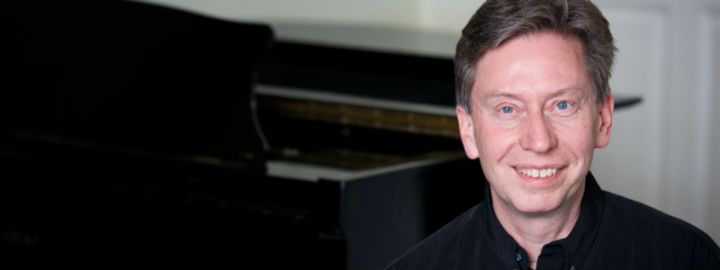
Who or what inspired you to take up the piano, and pursue a career in music?
I don’t remember myself NOT playing piano.As I was told by my parents (non-musicians but avid music lovers) I was drawn to the piano from a very young age. I was not that interested in toys – the piano was my toy. Pursuing a career in music must have been my first teacher’s idea: Natalia Litvinova was and has been a very important influence in my life (musical and not).My conservatory professor, Lev Naumov, remains to this very day an inspiration and a driving force for my musical endeavors.
What have been the greatest challenges of your career so far?
Can’t put challenges on the scale. Everything becomes a challenge and a reward when done with utmost dedication.
Which performance/recordings are you most proud of?
I believe they are to come. There is a light at the end of the tunnel….
Which particular works do you think you play best?
I try to play works that I play best.
How do you make your repertoire choices from season to season?
I choose whatever fascinates me hoping my audience doesn’t mind my whims.
Do you have a favourite concert venue to perform in and why?
There are many and they change. I suspect it has nothing to do with geography.
What is your most memorable concert experience?
Once I was scheduled to perform a concerto in Santiago, Chile. At the rehearsal ( fortunately not at the performance itself) I found out that the conductor and the orchestra were playing a different version of the piece. I had to change the concerto on the spot. Will never forget that.
As a musician, what is your definition of success?
I don’t have one. I just want to do my job well.
What do you consider to be the most important ideas and concepts to impart to aspiring musicians?
To be a musician is a privilege.
Where would you like to be in 10 years’ time?
I hope I am still around in 10 years ( roviding the world is still there as well)
What is your idea of perfect happiness?
Would not be perfect happiness if I were able to explain it.
What is your most treasured possession?
I don’t treasure my possessions.
What do you enjoy doing most?
I enjoy non-doing most
What is your present state of mind?
Ambivalent
Ilya Itin performs sonatas in D by Schubert and Rachmaninov on Saturday 7th October, part of the London Piano Festival at King’s Place. Further information here
Acclaimed impressionist, comic and actor Alistair McGowan shares his passion for the piano and reveals how he prepared for his debut recording.
What are you first memories of the piano?
My mother had and still has a very good Chappell upright – ‘from Corporation St in Birmingham’. She was always playing the piano when I was young. She was the accompanist at the Evesham Amateur Operatic and Dramatic Society for years and was always playing and practising the score for the latest Rodgers and Hammerstein or Gilbert and Sullivan show they did. She also played a few classical pieces which I would often ask her to play to send me to sleep. She was a fabulous sight-reader and could play almost anything. It breaks my heart that she no longer plays.
My older sister, Kay, learnt to Grade Eight and so was constantly practising. My father and I would listen to her pieces again and again and again as we tried to watch ‘Star Soccer’ in the room next door. It’s the only way to practise but it gave me a very good idea of how hard it is to live with or next door to a pianist. She didn’t touch the piano after her final exam. She is making noises about playing again after all the interest I have shown and I really hope she does go back to it. She was very good!
Did you have piano lessons as a child?
I did two years and passed two grades but stopped when I was 9. I regretted it for the rest of my life and finally took up the piano again for a couple of years in my 30s and then TV stardom got in the way. So, I have only really, finally, finally thrown myself at it again over the last 2-3 years and particularly since being involved in my debut recording project.
What kind of repertoire do you enjoy playing, and listening to?
Nothing too ‘bangy’ and anything marked ‘lento’! Over the years, I’ve also loved piano music that I can work to and I think the album reflects that. The music is reflective and romantic, spanning everything from Bach and Field via Satie to Philip Glass. I hope it’s good to revise to, to work to, eat to and even to fall asleep to, too.
How do you make the time to practise?
At first, it was a struggle fitting things in around other work and I had to cut a lot of things out of my life, but I began to love playing and improving so much that I soon didn’t miss reading about and watching endless football or even playing tennis. I watched less television in general with no regret and played less snooker too. I changed a few habits but have simply acquired new ones and made a lot of new friends through it too. Through it all, I kept on swimming as a wonderful release for mind and body!
Do you enjoy practising?
I have to force myself to do scales and arpeggios and Hanon but otherwise, yes. I had some very good advice from lots of people. Fellow comic, Rainer Hersch, suggested putting a stop-watch by the music and making sure that every fifteen minutes you change your practise to a different piece or a different exercise to keep the brain active and receptive. I tried to do that. James Lisney [concert pianist and teacher at piano summer schools] is very keen on pianists getting up and stretching regularly, which is also very important (though not a good idea in a concert!). I am a little troubled with a sore right thigh and foot from all the pedalling though.
Have you participated in any masterclasses or piano courses?
The person who got me playing again, the fabulous accompanist Lucy Colquhoun, suggested that I attend a weekend course with Paul Roberts in Sussex. I learnt a huge amount there in three days and realised above all how much I had to learn and that the learning is never done. Paul was just inspirational and in 2015 I went on his week-long piano course in France and then attended two courses in subsequent years at the delightful La Balie (in south-west France).
I also returned to Paul in 2016 for another woodsmoke-filled weekend. As well as learning from such inspirational players and teachers (James and Paul), who both have such a huge knowledge of piano history, it was great to meet other amateur pianists who shared my passion – most of whom were way ahead of where I was – all willing to play and share and talk about this fantastic repertoire that has been left to us by these amazing composers. I also performed in a number of practise concerts in Barnes with my teacher, Anthony Hewitt, and watching Anthony play live was a masterclass in itself.
What have you gained/learnt from this experience?
Well, obviously, how much I enjoy playing the piano, but also the importance of goals and patience. I’ve gained even more respect for professional pianists and feel I’ve enriched my life and my soul. I have been a little surprised by how much I have enjoyed regularly turning my back on the modern world.
As an adult amateur pianist, what are the special challenges of preparing for a performance?
Believing that the sound you are about to make is worth listening to. Believing that you know the music and not letting the occasion distract you from listening to the sound you are making with every note. I had moments of being very focused (reading ‘The Inner Game of Tennis’ was a big help), but often heard myself saying ‘What on earth do you think you’re doing?” If you can keep that voice out of your head, you will generally be fine!
How did you prepare the pieces featured on your new disc?
I worked very hard, bringing each of them to the boil in turn. I did a lot of note-bashing on the electric piano at home but there is no substitute for a real piano for the touch. I was lucky enough to have some sessions in St Mary’s Church in Barnes on their excellent Steinway, which got me used to the touch and sound of the best big pianos. I also went to listen to a good few pianists in concert and learnt a lot from hearing James Lisney, Lucy Parham, Viv McLean and, of course, Anthony Hewitt.
I also listened to and registered recordings of the pieces I was playing – to get to know them intimately – on trains and even, especially, peacefully, in bed.
And how did you find the experience of recording the music?
It was like a lesson, an exam, a recital and the greatest pleasure all at the same time – immensely draining and yet utterly thrilling to hear the music I had learnt and loved coming out of the best pianos in the world !
It was also terrifying knowing that this was the one chance to get each piece recorded. I read a wonderful book called ‘Piano Notes’ by Charles Rosen which has a very helpful chapter on the challenge of recording and refers especially to the need to not to worry about mistakes. They can be covered. My teacher/mentor, Anthony Hewitt, was wonderfully helpful at and about the recordings. My producer, Chris Hazel, was unbelievably supportive, helpful and strict!
I had to pinch myself after each recording. I couldn’t believe what I was being allowed to do. I had been to drama school at The Guildhall and worked at The Barbican Centre tearing tickets as a student. So, to be recording in St Giles Cripplegate, just opposite these two important buildings in my life, felt like some sort of karma. And after the eight-hour sessions, I felt like some sort of korma!
What was your motivation for making the disc?
It was principally the challenge of seeing if I could get to a level somewhere near good enough that people would want to listen to the music I was playing. We all need an incentive and knowing that my playing was potentially going to heard by thousands was a real carrot.
I also hope that the album encourages people to play by showing them the beauty of some well-known and some much lesser-known pieces. I have often felt that virtuoso playing (impressive as it is) can just as easily put people off playing as it can inspire them. I know I heard myself say for many years, “Well, I could never play Rachmaninov’s Third Piano Concerto like that so, what’s the point…?” I really, above all, hope that people who hear the album will say, “I think I could play that” and do so
What advice would you give to other adults who are considering taking up the piano or resuming piano lessons?
Do it! It has brought me so much pleasure. There are moments of frustration, of course, but, with patience and a lot of hard work, it is just wonderful to be able to play pieces that you’ve loved listening to all your life. I think learning how to learn is as important as learning how to play ; it’s important to get the most from your playing time. Setting goals is also important. Perhaps organise small recitals at home, before friends, in order to give yourself a deadline.
If you could play one piece, what would it be?
Ah! That changes all the time as I hear more and more piano music that I want to play and as I am improving. Currently, I am in love with Madeleine Dring’s ‘Blue Air’ but find even the opening few bars very challenging. It’s a wonderful evocation of ‘cool’ and sounds like a theme from any 1960s Michael Caine film. It’s unlike anything else I play. I also have an eye on Debussy’s ‘Ballade’ – but that’s a good few years away, I fear !
‘Alistair McGowan – The Piano Album’ is available now on the Sony Classical label and is the impressionist’s debut album
As Borough New Music‘s new season begins on 3 October 2017, Artistic Director Clare Simmonds surveys the exciting new piano music on offer from October 2017 to June 2018.
Borough New Music sets out to share music by living composers and the music of today. In each of the eight Series of concerts this season, we feature a different instrument. For Series 2 – which is five free concerts every Tuesday in October 2017 at 1pm at St George the Martyr SE1 1JA – it’s the piano.
In fact, the piano became the featured instrument for this second Series simply because of the preponderance of piano premieres that month. These include a fascinating new piano sonata by Ben Gaunt, based around the architectural principles of light, written for the wonderful pianist Christopher Guild (24 October 2017); eight miniature ‘cryptograms’ by Patrick Nunn, each inspired by composers who have in some way influenced his output; and two works written specially for the virtuoso José Menor: a mighty five-movement cycle by Sam Hayden and a sparkling Toccata by fellow Catalan Tomas Peire Serrate (all on 3 October 2017). Plus there is a selection of new works written specifically for the pianists who will perform them, by composers Michael Worboys , Harry Palmer, Rotem Sherman and Toby Ingram – all outcomes of the 2017 Trinity Laban John Halford Piano and Composition Competition, a little-known public event held every April, which deserves high praise for its innovation.
But that’s just Series 2 – the tip of the iceberg. One of the most fascinating things about the piano is that every player makes it sound different. Over the 2017-18 season, we have the opportunity to hear the voices of 14 very different pianists. That includes established contemporary pianists such as Philip Mead (1 May 2018), who gave the UK premiere of George Crumb’s ‘Makrokosmos’ at the Southbank in 1977, and the first London performance of Henry Cowell’s piano concerto in 2013.
Plus, there is the master improviser Douglas Finch (17 April 2018), toy piano specialist Kate Ryder (20 March 2018), as well as Matthew Schellhorn (30 January 2018), Aleksander Szram (26 June 2018), Christopher Guild (24 October 2017) and José Menor (3 October 2017); and young artists such as Joe Howson, Ieva Dubova, Mahsa Salali, Rotem Sherman and Neus Peris Ferrer (31 October 2017). The pianist Ben Smith deserves special mention not only for his repertoire for piano and electronics (14 November 2017), but also for appearances in six different concerts (November 2017 and February 2018)! Here he is performing Helmut Lachenmann’s ‘Serynade’:
It is always interesting to hear what a composer chooses to give a pianist to play – and what pianists write or improvise for themselves to play. With compelling musical material in hand, what else is important to them: the listener’s impression, the player’s strengths, or the instrument’s potential? When pianists compose, do they opt for an easy life, and write what they find straightforward, or do they demand the (almost) impossible, to show their superhuman virtuosity? (Sometimes I think that’s the equivalent of those gourmets who go for the hottest vindaloo on offer!) It is not hard to be mesmerised by the multifaceted capabilities of the piano, and the programme this season certainly explores that. From a world premiere by Joseph Horovitz (even though he is over 90!) on 30 January 2018, to Edward Henderson’s refreshingly alternative look at piano performance (10 April 2018), the bluesy, frantic etudes of Nancarrow (21 November 2017) to the works of Janet Graham, Haris Kittos, Daryl Runswick and Simon Katan, there is a compelling range of piano works to discover.
Douglas Finch
Borough New Music concerts take place every Tuesday at 1pm from 3 October 2017 to 26 June 2018 at St George the Martyr Church, Borough High Street, London SE1 1JA (just a short walk from London Bridge and Borough tube stations). Admission is free to all events, and light refreshments are served afterwards.
· Thomas Ades (b. 1971) – Concert Paraphrase on Powder Her Face (2009) (Movts I & IV)
· Michael Worboys – Bone Memories (2017)
· Toby Ingram (b. 1998)- Into the Unknown (2017)
· Rotem Sherman – Home (2017)
· Hans Werner Henze (1926-2012) – Präludien zu Tristan (2003)
· Frederic Rzewski (b. 1938) – Piano Piece IV (1977)
Series 3
Tuesday 7 November 2017, 1pm ‘Last Words’
Patricia Auchterlonie (soprano), Antonia Berg (flute), Ben Smith (piano), Yoanna Prodanova (cello)
Salvatore Sciarrino (b. 1947) – Due melodie per soprano e pianoforte (1978)
· Ben Smith (b. 1991) – New Work (WORLD PREMIERE)
· Kate Soper (b. 1981) – Only the words themselves mean what they say (2010-11) (UK PREMIERE)
· Salvatore Sciarrino – Ultime rose (from Vanitas) (1981)
Tuesday 14 November 2017, 1pm ‘Babbitt-Haas-Emmerson’
Ben Smith (piano), Patricia Auchterlonie (soprano)
· Milton Babbitt (1916-2011) – Philomel (1964)
· Georg Friedrich Haas (b. 1953) – Ein Schattenspiel (2004)
· Simon Emmerson (b. 1950) – Time Past IV (1985)
Tuesday 21 November 2017, 1pm ‘Sensations’
PERFORMER: Ben Smith (piano)
· Robert Reid Allan (b. 1991) – The Palace of Light (2016) (LONDON PREMIERE)
· Colon Nancarrow (1912-1997) – Three Canons for Ursula (1988)
· Julian Anderson (b. 1967) – Sensation (2015-16)
Tuesday 28 November 2017, 1pm ‘Haikus’
FEATURED COMPOSER: Eva-Maria Houben
Antonia Berg (flute), Patricia Auchterlonie (soprano), Ben Smith (piano), Yoanna Prodanova (cello)
· Eva-Maria Houben (b. 1955) – Haikus for four (I, V, VIII, IX) (2003-04) (UK PREMIERE)
Series 4
Tuesday 16 January 2018, 1pm ‘Islands’
Carla Rees (flutes), Ian Mitchell (clarinets), Clare Simmonds (piano)
· Robert Percy (b. 1961) – Touching the Void (WORLD PREMIERE)
· Dan Kessner (b. 1946) – Genera
· Robert Percy (b. 1961) – New work (WORLD PREMIERE)
· Tom Ingoldsby (b. 1957) – The Cathedral (WORLD PREMIERE)
· Robert Percy (b. 1961) – Beacons (version for piano, flute and clarinet)
Tuesday 30 January 2018, 1pm ‘Muscle Memory’
Matthew Schellhorn (piano)
· Roger Briggs (b. 1952) – Jitterbug
· Robert Percy (b. 1961) – Chopsticks
· Edwin Roxburgh (b. 1937) – Prelude and Toccata
· Colin Riley (b. 1963) – Joplin Jigsaws
· Joseph Horovitz (b. 1926) – Pierrot’s Hornpipe (WORLD PREMIERE)
Series 5
Tuesday 6 February 2018, 1pm
Ben Smith (piano), Kirsty Clark (viola), Patricia Auchterlonie (soprano)
· Helmut Lachenmann (b. 1935) – Got Lost (2008)
· Peter Maxwell Davies (1934-2016) – The Door of the Sun (1975)
· Martin Lodge (b. 1954) – Pacific Rock (1999)
Tuesday 20 February 2018, 1pm ‘Songwriters of 2018’
Robert Reid Allan (glockenspiel/melodica), Ben Smith (piano, glockenspiel/melodica), Siân Dicker (soprano), Mimi Doulton (soprano), Delphine Mégret (soprano), Krystal Tunnicliffe (piano)
· Jake Dorfman (b. 1993) – Short Songs on Liberty (2016)
· Clare Elton (b. 1993) – Escape (2017)
· James Garner (b. 1992) – Emily Dickinson Settings (2015)
· Jules Pegram (b. 1991) – Valentines (2015)
· Mo Zhao (b. 1993) – Just Watching (2017)
· Rasmus Zwicki (b. 1979) – Fly Little Birdy (2017)
Tuesday 27 February 2018, 1pm ‘Two Sopranos, a Cello & a Piano’
· Joel Järventausta (b. 1995) – New work (WORLD PREMIERE)
· Janet Oates – A Lover (WORLD PREMIERE)
· Frederick Viner (b. 1994) – New work (WORLD PREMIERE)
· Dai Fujikura (b. 1977) – Away we play
Tuesday 26 June 2018, 1pm
Aleksander Szram (piano)
· Hollie Harding – Suite P
· Janet Graham (b. 1948) – Sonata for Piano (2016) (WORLD PREMIERE)
· Daryl Runswick (b. 1946) – Scafra Preludes Book 2
· Haris Kittos – Athrós (2001)
Clare Simmonds performs regularly as a soloist and ensemble pianist, and enjoys presenting unconventional programmes. From 2016-17 she was a staff accompanist at the Guildhall School of Music and Drama for Jane Manning’s contemporary song classes, as well as performing in several chamber groups. She also provides online marketing services to promote contemporary music and is a publicity consultant for Prima Facie Records.
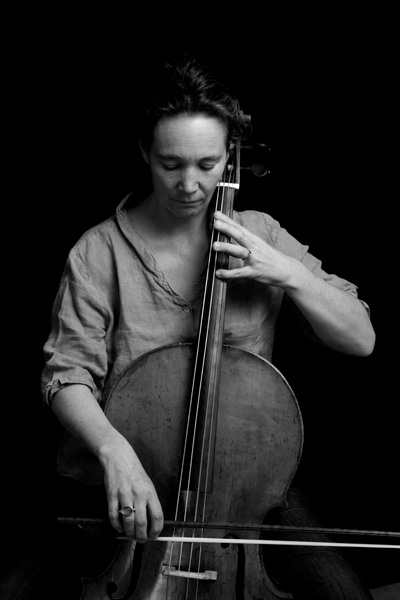
An interview with Ruth Phillips, cellist, teacher and creator of Breathing Body, Breathing Bow workshops for cellists and other musicians
Who or what inspired you to take up the cello and pursue a career in music?
My mother is a music teacher and my father a painter. I started the cello at the age of 4 and had to get up every morning to practice before school. To be honest I remember it being excruciating. I was so uncomfortable in my body for so much of my childhood and early teens that I was unable to feel much connection to the instrument. To this day, I do not know how much the hours of practice on the instrument during those and even some of the subsequent years served me. However, singing and being immersed in music as a language from so early, having it be a source of community and communication, at first in the family and, later, on music courses, in chamber music and orchestras, was something from which I could not, initially, turn away and which, ultimately, I chose as a way of life. Career is a funny word…At the time I would have been ‘choosing a career’ I simply followed my heart and did that which I loved. Both my parents did that. My husband and I do it. I suppose, fortunately, I have never known anything else.
Who or what have been the most significant influences on your musical life and career?
I was a friend (and fan) of Steven Isserlis from a very early age – way before he was famous – and I attended the Cello Centre run by his teacher Jane Cowan both in London and at Edrom. If anyone breathes through their instrument in my opinion, it is Steven. That pretty much set the bar for me, though playing so effortlessly and with such apparent joy was an alien concept for a long time to come. Other inspiration was largely drawn from the extraordinary experiences I had year after year at the International Musicians’ Seminar at Prussia Cove, with Sandor Vegh, Andras Schiff, Daniel Phillips and Johannes Goritzki, and later my wonderful teacher in the US, Timothy Eddy. What touches me is that every one of these people goes back in some way to one person whom I sadly never met or heard play, but the great grand teacher of so many of us – Pablo Casals. I was incredibly lucky to play in the Chamber Orchestra of Europe for eight years under conductors such as Claudio Abbado and Nikolaus Harnoncourt and there are other things too, … standing on a street corner in Bamako (where my son was born) singing and dancing, African drumming, looking at the waves, writing a poem, watching my husband paint….it’s all connected.
What have been the greatest challenges of your career so far?
For musicians, a sense of belonging is important and yet as a freelance musician, that sense can be elusive. One is so easily replaceable, indeed so often replaced, and usually without explanation or a chance to evolve. It is hard not to take this personally (and of course sometimes it is personal) and thus become less and less confident even as one gains experience and ease on the instrument. The challenge seems to be to develop an inner confidence and be true to one’s voice. Now, approaching my mid-fifties, I, along with many of my colleagues I believe, am facing the challenge of moving gracefully into the latter part of my life as a musician. For me, this is about continuing to play whilst allowing the world of concert touring to flourish largely without me, turning my energy instead towards holding and passing on something of that which I have been so lucky to have been given. Happily this period coincides with having a young child late in life so it’s quite a relief on all fronts!
How did you develop your Breathing Bow technique?
I mentioned Steven Isserlis and most of my life has been spent trying to understand how his exquisitely breathing bow worked (because I don’t think he really understands it himself, it’s so natural!). His teacher Jane always spoke about winged bowing which was an important key, but learning how turn the lock and open the door took the next two decades and I am of course still learning.
When my beautiful Banks cello on which I had played all my life was smashed into a hundred pieces on tour with COE in 1989, I was forced to face the fact that it is not the cello but my body (and heart and spirit if you like) that is the instrument through which to express the music. The trouble was, I wasn’t in any way connected to my body. That was a point of breakdown, my starting point, and the point at which I went to study in America.
Since that fateful day, there have been several moments and elements that have come together to influence my approach. The first was my teacher Tim Eddy saying to me in my first lesson ‘Ruthie, something has to move inside you for you to be moved to play‘. It took me the next four years to understand and experience the truth of this, but that phrase changed my direction completely. Initially I became interested in Alexander technique and had a teacher come out to Stony Brook to work with all the string players. Then, on my return to the UK, having developed a frozen shoulder and been told I would never play again (doctors should get some counselling on how to deal with such situations!), I started practicing yoga and was lucky to find a teacher, Peter Blackaby, who revealed to me how movement happens in release, and how that release is connected to the breath. This, itself a mindful practice, led to practicing meditation.
Though I work happily alone, I am lucky to have two dear friends, also cellists, with whom I collaborate, one an Alexander teacher (Dale Culliford) and another a yoga teacher (Jane Fenton). I love working alongside them and increasing my own awareness at the same time, keeping my approach alive and changing rather than fossilizing into a technique. I hope to enjoy other collaborations in the future. For example, I’d love to work with a Feldenkrais teacher.
How has this technique helped you as a musician, performer and a teacher?
At university in America where I performed solo for the first time (having sneakily avoided it until then!) I suffered terribly from stage fright. Before my degree recital I actually thought I was going to die. I have since found out of course that I am not alone with having had these feelings. It’s helpful as a teacher to know that place first hand and, also, to know that it is not something one needs to suffer at all, let alone in silence. Having come through that myself I know that stage presence is something one can practice, just as one practices vibrato. I am now happier on stage than anywhere else. (Well, apart from watching my six year old son make fresh tagliatelle for 25 people!.)
How does your Breathing Bow technique support and help string players?
I suppose wind players have the greatest advantage in uniting their musical phrasing and their technique through the breath, because they can’t play otherwise. As string players, however, the breath is rarely mentioned other than something we have to catch occasionally between phrases. But, there is hope! We have this incredible curved extra limb called a bow which, when connected through the arm to the expanding and contracting rib-cage, can express all the qualities that the breath has – tension, release, expansion, contraction, expression, inspiration, control, letting go, strong, weak – and of course on which the music is based. Rather than the effort involved in sustaining an even bow pressure or speed or contact point resulting from a thought about the music and having to control every millisecond, the breath becomes a sort of limousine in which we can ride, uniting the body, the instrument and the music. Playing becomes such a pleasure!
Do you think Breathing Bow has relevance to other instrumentalists and how might it help them?
I call it the Breathing Bow, but of course it’s not just about the bow. There are so many aspects to this approach that can help performers on all instruments, though I have of course developed it on the cello so I can apply things more easily to that instrument. For example, on the cello, when one releases from an impulse and the elbow drops (as in the release after bouncing a ball) the bow naturally rides up towards the fingerboard which creates exactly the release in the sound that the music demands. However, for a violinist, this is the opposite. Releasing the elbow brings the bow nearer the bridge. I have worked with quite a few violinists and violists and they are helping me with this. But yes, I believe anyone can benefit. I get everyone I work with to watch Andras Schiff play the piano, for example (as well as watching Roger Federer play tennis), and I do think he could do a mean line in the Breathing Keyboard…
How does Breathing Bow help in performance and can it counter the effects of performance anxiety?
I love to think about developing stage presence as opposed to countering the effects of performance anxiety or dealing with stage fright. The language we use is already so negative and I think one of our largest obstacles is that negative thinking and the fact that the subject has been taboo (it’s changing now, happily). Another is that I believe we are taught and therefore we practice being constantly in control – of every split second of every note, or every bit of every phrase. What we do not practice and therefore that with which we are uncomfortable is the aspect of the movement and the music that we do not control. We call this being ‘out of control’ and it terrifies us. No wonder we fall apart on stage when we lose some of our ability to be in constant control. However, we do not need to be in control all the time! In fact, I would say we need to be in control more like 30% of the time. I try and show people how to practice that aspect of letting go, allowing what we have set in motion to live its own life without our constant interference, knowing when to rest and simply listen. This takes a different kind of practice which is very enjoyable, like practicing being on holiday! Developing a quiet non-judgemental mind and knowing how to come into the present moment is naturally a huge part of this, and I would say one of the best things to do before going on stage, rather than running up and down the instrument, is to meditate.
What do you consider to be the most important ideas and concepts to impart to aspiring musicians?
When I was playing under Harnoncourt in the Chamber Orchestra of Europe, I will never forget the experience of the 4th cello, the second oboe, the soloist, the person in the back row of the audience, the conductor, even the space itself, being an equal part of this magical moment-to-moment unfolding. I am still not sure how Harnoncourt created this other than by being a true ‘conductor’, but I know that a search for this humility, this sense of simplicity and common humanity is the most important thing for me. We get so knotted up in ‘my performance’ ‘my technique’ ‘my interpretation’, and that ‘my’ implies a ‘your’ which creates duality. Sometimes the ‘you’ is a voice with whom we are at war within ourselves. If we can find a way to open ourselves and allow the music to flow through us as it is in the present moment then we can be at peace in a non-dualistic world which, especially in this current climate, feels like an urgent need. We are so privileged as musicians to be able to share this. I would encourage all musicians do find whatever way they can to make music not with fear but with joy.
For more information about The Breathing Bow, please visit Ruth’s website:
The Cross-Eyed Pianist is free to access and ad-free, and takes many hours every month to research, write, and maintain.
If you find joy and value in what I do, please consider making a donation to support the continuance of the site






 The Cross-Eyed Pianist