Guest post by Madeline Salocks
Decades later, I recall my first piano performance in front of a large audience as if it occurred only a few years ago. I was in college, and, with another student who I’ll call Michael, had worked up the Beethoven G minor sonata for piano and cello. Wondering if we could take it beyond the practice room, we’d auditioned to perform in a well-attended campus concert series, and had been thrilled to be selected. With the good news, we’d stepped up our rehearsing, and had availed ourselves of expert coaching from our respective noted teachers.

By the time the concert was fast approaching, we were ready. But, once the countdown had progressed from weeks to days to just hours, you’d have thought I was about to make a Carnegie Hall debut I was so keyed up. The entire night before the concert, I tossed and turned in varying states of dread, the quiet darkness enabling my swirling thoughts. How did I ever get myself into this? What if I play fistfuls of wrong notes all over the place? What if I freeze and have to leave the stage, disappointing not only myself, but worse yet, Michael, who is depending on me to play my part? And on and on it went. After hours of this, I began to see the dawn easing in gently through the gauzy white curtains of my bedroom window. I hadn’t slept one minute, but I still had plenty of energy–nervous energy. A little later, the bright spring day brought marginal relief, but I still wished it were some other day. Do I have to do this? Yes, you do! I passed through a few more fretful hours, and then the moment arrived. Alex, in a yellow button-down shirt and gray dress pants, and I, in a long blue and yellow flowered skirt and blue top, stood waiting in the wings, looking through the stage entrance across a wide-open expanse of wooden flooring at the Steinway grand piano, and the chair and music stand in front of it. Michael smiled, perhaps through jitters of his own. But I, feeling as if I were perched on the edge of a cliff, wasn’t smiling, and practically had to be pushed out on stage.
As we started the piece and my fingers shakily navigated the notes I’d spent so many hours drilling, every sound and sensation was magnified, and at the same time the very familiar score in front of me suddenly looked less familiar. Doubts pushed their way in front of the music. What am I doing here? I feel like a fraud! I clung on in autopilot, but would the autopilot be reliable all the way through? Moving past the introductory Adagio Sostenuto ed Espressivo and into the Allegro Molto Piu Tosto Presto, the opportunities for mishap seemed to increase tenfold. So many notes, so fast–I feel like a runaway train! But I hung on. Then, a few pages in, settling down a bit, I began to play some of the phrases less automatically and with more in-the-moment intention, although I still tightened up here and there. Maybe I can get through this. My fingers continued rippling across the keys, through the driving cascades of the Allegro Molto and then through the sparkling passagework of the effervescent Rondo Allegro.
In the end, my sleepless night and apprehensions notwithstanding, the performance was pretty good—about a B in comparison to our best, considering various aspects—accuracy, expression, ensemble. After the clapping died down and we returned back stage, we were both smiling this time, pleased with the outcome and feeling a sense of accomplishment. But my nerves had done their best to derail me, and it was only because I’d been so thoroughly well-rehearsed that I’d been able to still turn in a decent showing. There’s a reason for the adage that there’s no substitute for practice.
Fortunately, since then, I’ve never been affected by performance nerves to the point of missing an entire night of sleep. And on occasion I’ve felt genuinely comfortable performing. But usually I find myself somewhere along the performance nerves scale (excluding zero).
It’s as if your mind’s evil twin swoops in and says, “Ha! Let’s see how you do now!” as it tries to sabotage your hard work by revving you up, planting what-if thoughts, pulling away your focus–or the opposite, heightening your awareness of too many details, and, at the same time, making your hands shaky, sweaty, sticky, ice cold, stiff, or some combination of those sensations. Bringing distraction on the mental side and technical constraints on the physical side, and impeding flow on both sides. Furthermore, the precision required in classical music, with little leeway and no opportunity to pause or “play it by ear”, makes things worse.
What causes stage fright? For some, it could be perfectionism. For others, it could be fear of being judged. For me, it’s that I want the end result—all coming down to this one moment, with no warm-ups or re-starts possible—to be worthy of the time I’ve invested, and at least in the “ballpark” of whatever I’ve managed to achieve. And the fight or flight part of my brain doesn’t seem to like the uncertainty that anything can happen during that one chance. More so, I want the end result to be worthy of the audience’s time, even though, when in the audience myself, I’ve seen other musicians become noticeably out of sync, play those fistfuls of wrong notes, or even stop and regroup, and yet I’ve never thought the concert wasn’t worth my time. In fact, I’ve respected their soldiering on despite a glitch, enjoyed the performance, and left with an overall positive impression. So why wouldn’t I allow myself the same latitude? It’s a good question without an easy answer.
If I’m playing with others, which is usually the case, the biggest stage fright trigger is my fear of letting the other musicians down. They’ve invested a lot of time too, and surely want an outcome that’s at least reasonably representative of the work they’ve put in just as much as I do. I don’t want to throw a wrench into their performance.
So why perform? Because I believe in the tradition of live music. Since I’ve spent a lot of time learning to play an instrument, it makes sense that I put it to use and make a contribution with it.
In my college years studying piano, I found surprisingly little written on the topic of stage fright. And people didn’t freely discuss it–almost as if the subject was taboo. An admission of performance nerves seemed like an admission of inadequacy or unworthiness. Assuming (erroneously) that everyone else was, if not unflappable, then at least far more easy-going than I about performing, I felt isolated. If I asked a teacher or a coach, I might get a blank look, as if stage fright were a foreign concept, then, “Oh don’t worry, you’ll be fine.” This was useless. Other responses were, “Pretend the people in the audience are in their underwear,” or, “It’s just a matter of concentrating.” These too were useless, and as for the latter, this tip was also ironic, since one of the very things stage fright can cause is a problem with concentration. The teachers were well meaning, but unprepared to guide in this aspect. And perhaps those particular teachers had been, luckily for them, relatively free of nerves in their own performances.
But now, stage fright is freely discussed, and recognized as very common, from beginning students to the most seasoned world-class musicians, including the likes of Glenn Gould, Vladimir Horowitz, Emanuel Ax (New Yorker). Many books have been written, the Internet is full of blogs and articles (a particularly good example being The Bulletproof Musician website), and some music schools and departments have classes to help.
I’m still an occasional performer, and always open to ideas for reducing performance nerves, so I’ve read plenty of material and tried various suggestions over the years. Following is a roundup of my personal anecdotal experience with many of them, and a brief assessment of their effectiveness in decreasing my level of nervousness, to the extent that I’ve been able to recognize.
These anti-stage fright suggestions have produced no positive effect on performance nerves in my personal experience, although some are good practices for other reasons:
- Eat a banana shortly before the performance. Bananas are rich in B vitamins and magnesium, which are associated with calming the nervous system and promoting a positive mood. However, I suspect the potential dose of tranquility in a banana is far too miniscule to have any chance against the powerful presence of the stage fright beast.
- Limit caffeine the day of the performance. Saying no to coffee or tea for several hours before the performance won’t lessen jitters, but it’s obviously sensible to avoid exacerbating them.
- Eat a light healthy meal no closer than 2 hours before the performance. This is sensible because a large meal ahead of the concert, no matter how healthy, would likely produce a negative impact on cognitive function due to blood being diverted from the brain to the stomach for digestion.
- Drink plenty of water throughout the day of the performance. This too is sensible since dehydration can also have a negative impact on cognitive function.
- Connect with the audience just before the performance. Chatting with people before the concert or making eye contact with someone in the audience just before playing is nice to do, but here too I’ve found no connection between it and lessened performance nerves.
The next suggestions have produced no obvious positive effect on performance nerves in my personal experience, but I believe they might be helpful, even if only subtly or imperceptibly:
- Take a walk or otherwise exercise moderately on the day of the performance. Since there seems to be no debate on the benefit of exercise for stress reduction overall, I assume this can have a slight positive effect on performance nerves, especially if it’s a regular habit and not just done on the day of the performance.
- Practice meditation. Once, as part of my preparation for a concert, I took a 6-week meditation class and then continued practicing meditation every day for the remaining two months prior to a performance of particularly difficult music. Perhaps my meditation sessions weren’t long enough or the three and a half month duration wasn’t sufficient, because, as it turned out, the level of jitters at the concert was about the same as usual. Still, as with exercise, given the volumes written on meditation and stress reduction, I believe it should be considered as potentially beneficial for performance nerves, even if its effectiveness may vary with the individual.
- Make a fist with your left hand and hold for a few seconds just before performing. The act of making a fist with the left hand is thought to activate the brain’s right hemisphere and thereby counter overthinking, one of the features of performance nerves. Studies have been done on athletes with success, and I’ve occasionally noticed professional tennis players do it. I haven’t detected any difference when I’ve tried it myself, and I also wonder if the desired state is sustained though a piece of music. But it’s certainly easy enough to do.
These suggestions have produced a very modest yet noticeable positive effect on performance nerves for me:
- Turn negative self-talk positive. I’ve heard it said that self-talk can change belief, and I’ve also heard it said that self-talk is ineffective without underlying belief, which sounds paradoxical. I look at it as reinforcing an idea in which one can at least entertain some belief. If I catch adverse self-talk when it comes up (typically on the day of the performance, or even the day before) and turn it into something positive but at the same time realistic (and believable), it helps to avoid the extra shot of jitters that come from self-doubt and adverse predictions. For example, “This is just a thought. It may be worrisome and unpleasant, but it’s not a predictor. I’ve practiced well, so chances are good the concert will go well.” A common recommendation is to reframe “I’m nervous” to “I’m excited”, which might work for some people.
- Breathe deeply with a controlled technique. I like to incorporate this well-known anti-stress measure in general anyway, using the Weil 4-7-8 breathing technique (Weil). When a performance is about to go on, the deep breathing certainly doesn’t usher in total relaxation, but it helps.
- Centre. This technique is based on deep breathing but adds additional steps of finding a physical center, visualizing the release of negative thoughts from the center (described, for example, as an imagined ball being thrown, or a balloon rising up, or even a laser beam of energy directed to a far point), and then affirming positive intention or affirmation. Admittedly, the effectiveness of the ball/balloon/laser beam part has eluded me. But, I find the rest useful as basically a combination of deep breathing and positive self-talk.
The next suggestions are concerned with boosting confidence from having already “been there”, thereby automatically reducing the nerves to some extent for the next performance, and, in my experience, are clearly helpful:
- Record. Turning on a recorder can bring out performance nerves just as if an audience dropped down into the room, especially if it’s a recorder in a professional studio, but even a phone recorder will do. It feels like a performance, and is a performance, except that the audience is a microphone. Also, recording the piece under less-than-optimal conditions, some of which could be the case at the concert, is useful because it makes me realize I don’t have to have my usual comfortable environment in order to play. Possibilities include: a too hot or too cold ambient temperature, poor lighting, noise, and especially, lack of warm-up since, more often than not, there’s little or no chance for warming up at a concert.
- Arrange trial performances. There’s nothing like actually performing the program to build confidence. A home concert works well, and, for me, even a one-person audience counts. A potential added benefit of the trial performance is that it can reveal areas that need more attention.
- At this point, I should mention visualization, which some would put in the same category as the two above, suggesting that visualizing playing a successful performance (complete with audience clapping) results in the same kind of memory as playing an actual successful performance, thus boosting confidence and reducing nerves from having “been there”. I’m aware that studies have shown visualization does lay down neural pathways similar to real action. So, in theory, visualization of a successful performance should plant a desirable imprint in the brain. But, I cannot personally attest to its effectiveness from my own experience, although it’s possible I haven’t tried it enough, or my visualizations haven’t been vivid enough. (However, as an aside, I can say with confidence that visualizing playing a piece in detail is helpful for knowing it better, particularly a memorized piece, performance nerves or no performance nerves.)
The next anti-stage fright suggestion, in a different category, is also clearly helpful in my experience:
- Beta-blockers. These require a doctor’s prescription and may not be medically appropriate for some people. And some might not like the idea. But, for me, Propranolol is definitely helpful for lessening shaking hands, somewhat helpful for reducing sweaty palms, and occasionally (but not reliably) marginally helpful for mentally staying in the moment–although the benefit is almost entirely on the physical side.
In addition, I offer two more ideas that go back to the practicing–but with an eye to performance nerves. These suggestions don’t decrease performance nerves per se, but having done them in practice can be of some help when performance nerves crop up.
- Improve preparations. I’m not talking about thorough preparation of the piece in the general sense, although clearly that’s important. Here, I’m talking about hand preparations at a detailed level. One of the aggravating symptoms of performance nerves during the concert is the feeling of being stiff and stuck, in contrast to a relaxed practice session where it can often feel like there’s all kinds of time to move from note to note with ease and flow. Because of this feeling that there’s plenty of time to move about, I might have drilled in a habit of, for example, moving from a certain chord to the next chord at the last moment, which works fine as long as I’m relaxed. But, in performance, if my hands and fingers feel semi-paralyzed, as if they’re up against a mini headwind, moving from that first chord to the next can be more of a frantic scramble. Anticipating that possibility, I can add a bit of “insurance” with a slightly adjusted gesture where I move to the second chord sooner. There are many variations on this concept, including more efficient hand positions and fingering adjustments. I’ve found it helpful to go through the piece well before the performance and look for places where I can improve motion between notes and positioning, all toward the goal of better preparations. Plus, and this can be harder to detect, I sometimes find spots where I’m mentally lagging or sticking to a spot in my head rather than moving forward. Ideally I’d be efficient with good anticipation everywhere in the piece from the start, both physically and mentally–but I always find room for improvement when I devote time to examining a piece with that purpose in mind.
- Consciously notice details. Another aggravating stage fright symptom during the concert is suddenly noticing details that have been relegated to the background and trusted since earlier stages of working on the piece. Once I look at a phrase or a bar, or even a portion of a bar, in a different way than before, I’m thrown off, and, as the music goes on, I must quickly regroup. One way to help reduce the surprise of details coming out of the woodwork and grabbing my attention is to include some practice starting at odd places. Another is to continue to include, all the way up to the concert, slow deliberate practice with close attention on the “trees”, as long as there is still plenty of at-tempo practice with attention on the “forest”.
And one final suggestion.
Accept the nerves.
As in much of life, accepting “what is” is important, and sometimes that means being willing to feel uncomfortable. Accepting and acknowledging nerves doesn’t make them go away, but removes the compounded fear of the fear—the extra dose of nerves arising from resisting them.
Since my assessment of the performance nerves suggestions isn’t a methodical study with conditions set up perfectly, it’s of course imprecise. Each performance situation is different in terms of the music, the venue, other people involved, and general wellbeing at the time, as well as other life factors that can play in. Plus, if I’ve incorporated more than one suggestion, it’s hard to be sure which ones have helped and how much. It comes down to perception. Still, overall, in my personal experience with this ongoing process, although I’ve found nothing remotely close to a panacea, or with what I’d call a huge impact, I’ve come to believe there are additional measures that can help my chances, at least to some degree, against the stage fright beast who is likely to show up.
Resources:
Weil. Three Breathing Exercises and Techniques. Retrieved from https://www.drweil.com/health-wellness/body-mind-spirit/stress-anxiety/breathing-three-exercises/
New Yorker. I Can’t Go On! Retrieved from https://www.newyorker.com/magazine/2015/08/03/i-cant-go-on
Madeline Salocks is a San Francisco Bay Area-based software and web developer who also enjoys playing chamber music and teaching piano.


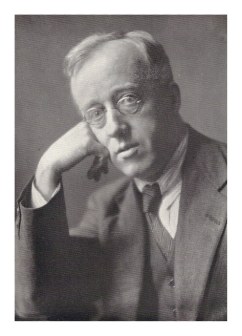 Most of Holst’s composing inspiration took place whilst he was engrossed at his long table in the School’s soundproof studio. Although he was not a brilliant pianist (his technique was severely hindered by neuritis in his right hand), the Broadwood grand was instrumental in helping him create one of the greatest masterpieces of twentieth-century orchestral music: The Planets. Holst would regularly invite two of the School’s music staff – Nora Day and Vally Lasker – to play to him excerpts from the fledgling Planets on the Broadwood grand to hand, just to hear how the composition was progressing.






 The Cross-Eyed Pianist