Pianists remember pianos.
Not necessarily because they were exceptional instruments. Sometimes quite the opposite! We remember the piano in a childhood home, the battered upright in a school music room, a particularly lovely grand encountered at a teacher’s house, an instrument played in a concert hall, or a piano discovered unexpectedly somewhere far from home. We remember their touch and sound, the peculiarities of their actions, even the smell of the room in which they stood. And sometimes we remember them because of the people who played them before us.
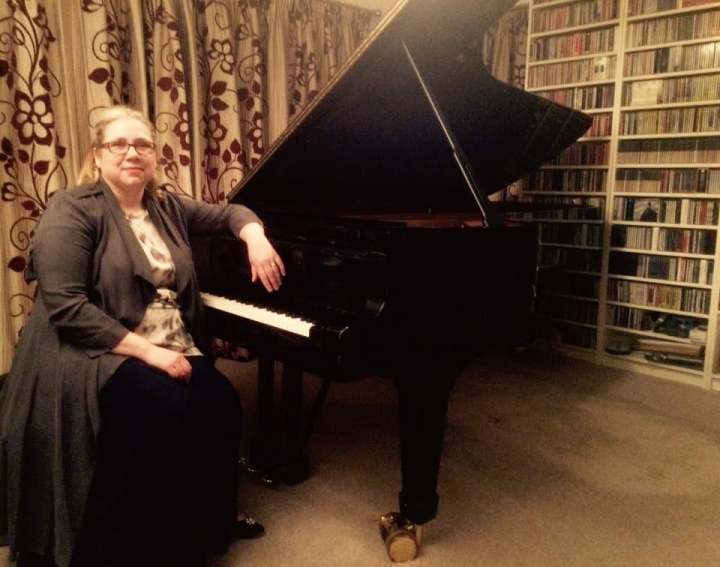
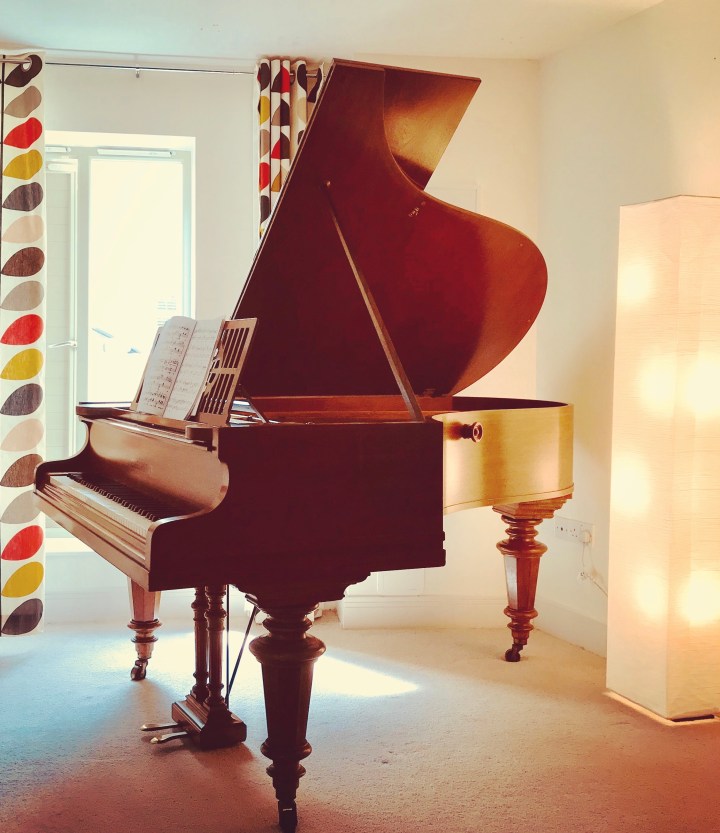
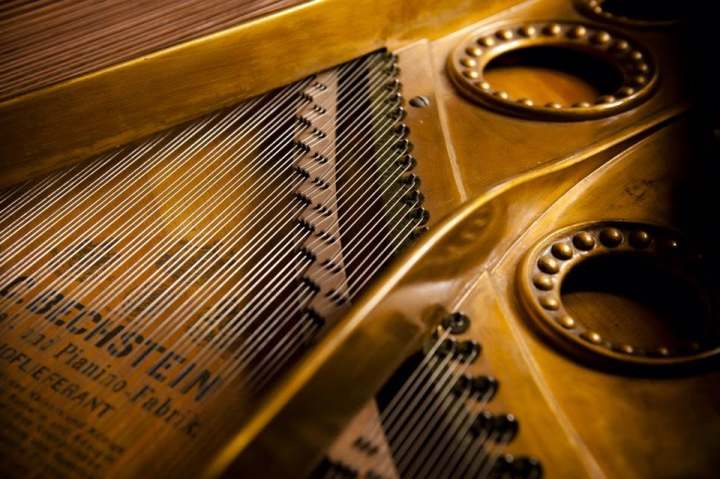
The piano is a machine, but it usually has a soul, and a history too. My 1913 C. Bechstein Model A is redolent of Edwardian drawing rooms. It may well have been sold from the Bechstein piano showroom on Wigmore Street, next door to Bechstein – now Wigmore – Hall, in that golden year when a carefree generation was teetering on the abyss of the First World War. I acquired it in 2013, exactly a century after it was made, a coincidence which seemed especially serendipitous and significant, given the subject matter of the novel I had begun writing some ten years earlier.
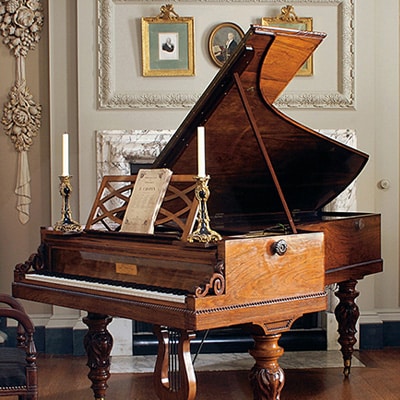
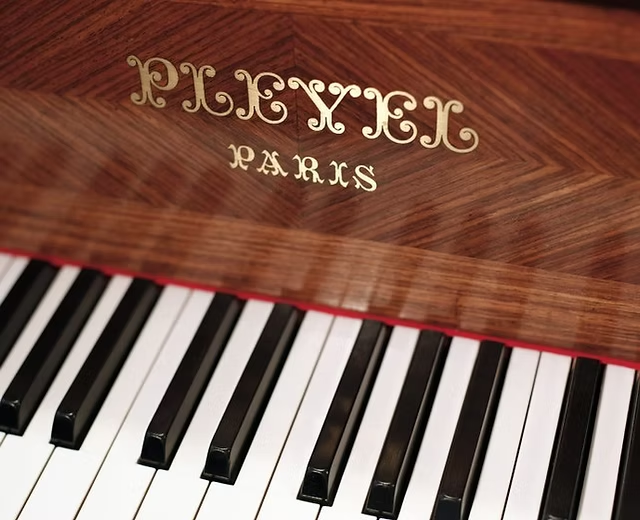
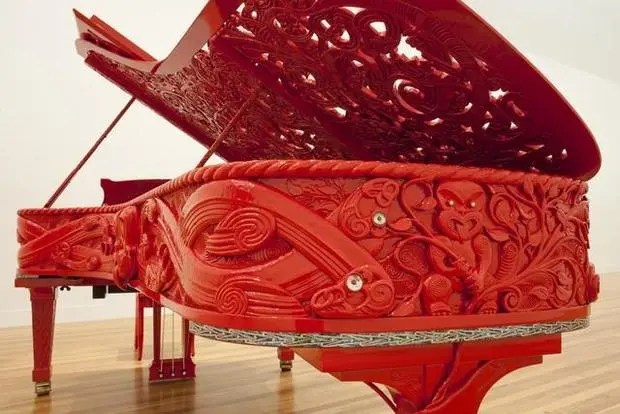
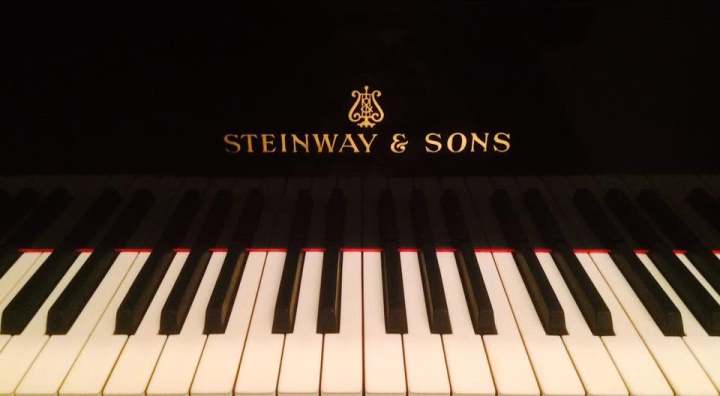
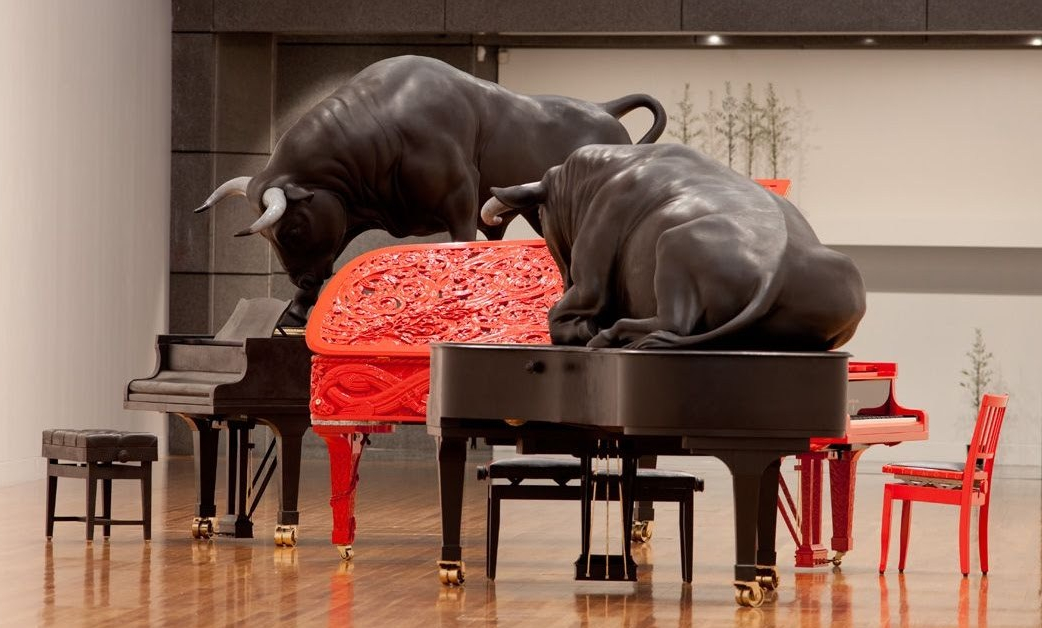
Some years ago, I played a Steinway D with a special heritage. Formerly owned by the Hallé Orchestra in Manchester, it had been played by Sviatoslav Richter and Daniel Barenboim, amongst others. “And now you are playing it!” said its owner, for whose music society I was performing. I’ve also played a square piano owned and autographed by Edward Elgar, a Pleyel said to have been played by Chopin, and an extraordinary ‘Maori’ Steinway, which had belonged to the pianist Lili Kraus. There is a danger, of course, that one can invest too much in these associations, imagining that something of former owners and players remains in the keys and strings and might somehow influence the next person who sits down to play. In reality, it is the pianist at the keyboard now who ignites the soul of the instrument and brings it to life in sound.
Given that Theo Browne, the principal character in my novel Facing the Music, is an ambitious young concert pianist, it was inevitable that pianos would feature prominently in the narrative. Theo encounters a succession of pianos as his life unfolds, each one marking a particular stage in his musical and emotional development. Later in the book, those same instruments become repositories of memory, bound to the people, places and experiences that have shaped him, so that a piano is never simply a piano, but a connection to an earlier period or version of his life.
There is his mother’s Pleyel, the piano of childhood and his earliest encounters with the instrument which will come to define him. Before there is ambition, career or even any real conception of himself as a musician, there is simply the fascination of the keyboard and the discovery of music.
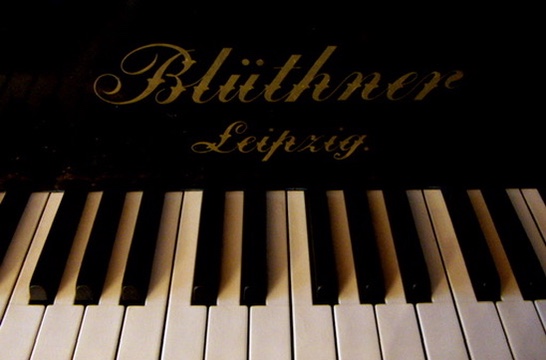
At school there is a Blüthner, an instrument which becomes associated with two of the defining relationships of Theo’s musical life. Here he studies with Mr Hines, whose influence will extend far beyond piano lessons, and here too his deep friendship and musical partnership with violinist Jonathan Lane-Fox begins to take shape – a partnership which lies at the heart of the novel. Teacher and friend offer Theo different kinds of musical companionship: Mr Hines guides and challenges him, while with Jonathan he discovers the particular intimacy of making music with another person.
At Mr Hines’s home in Battersea stands his Broadwood, the piano on which Theo practises Rachmaninoff’s Third Piano Concerto, with Mr Hines beside him at the second piano, taking the orchestral reduction. The scene is charged with ambition: this is the repertoire Theo hopes will belong to his future, music of the international concert platform and the career he is beginning to imagine for himself. But the Broadwood also becomes deeply bound up with Theo’s memories of his beloved teacher, and of the musical life they shared. As the novel unfolds, it acquires a significance that reaches beyond the instrument itself.
Sir Ralph Kaufman’s Steinway has a history which long predates Theo’s first encounter with it. It belonged to Ralph’s father, Jakob, a concert pianist from Vienna, and carries with it the traces of a musical life from an earlier generation. When Theo first sits down at it, he is intimidated by its pedigree and by everything it seems to represent: “This was no ordinary instrument. It was a witness. It had travelled, and it had lived.” But as Theo’s relationship with the Kaufman family deepens, so too does his relationship with the Steinway. Gradually it acquires another layer of associations, becoming a repository not only for the Kaufman family’s musical past, but for Theo’s own memories and experiences.
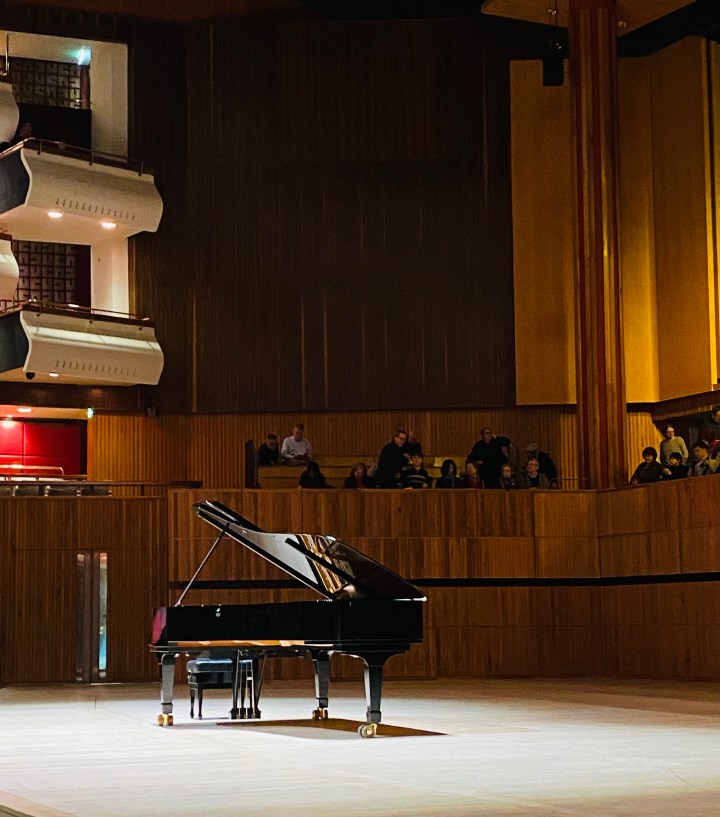
And then comes the C. Bechstein concert grand at Bechstein (now Wigmore) Hall. For Theo, sitting at that piano represents arrival: the concert platform at a prestigious London venue, an audience, and the beginning of the career towards which he has been working for years.
Later, in France, Theo, now an Army officer, encounters a very different instrument: a dilapidated Érard in a château where his battalion is billeted. By then, a piano means something quite different. It is no longer primarily an instrument of ambition or professional advancement. In surroundings unimaginably distant from concert halls and daily practice, the mere presence of a keyboard offers a connection with another life.
I love the physical presence of the piano – from a domestic upright to the grandest Steinway D – as much a piece of furniture as an instrument from which to conjure sound. I love the piano’s complexity, and the way it always seems to invite us to touch it. Put a piano in a public place and people are drawn to it: they will sit down and play, while even those who cannot play are tempted to press the keys, curious to hear the sound they can make. And a piano invites repeated physical contact. Hands have pressed its keys thousands, perhaps millions, of times. Someone practised scales on it, someone struggled with a Beethoven sonata, someone played for a teacher, accompanied a friend, prepared for a concert, played badly, played wonderfully, or simply sat down one evening and played for pleasure.
Perhaps pianos do not remember us at all. My Bechstein keeps its first hundred years of history to itself. We are the ones who supply the memories. We attach people, places, pieces of music and particular periods of our lives to these complicated machines of wood and felt, wire and iron. Yet the moment someone sits at the keyboard, the machine becomes something else. It sounds, responds, resists, sings – and another memory begins.
Which pianos do you remember?
Not necessarily the finest one you have ever played, but the instrument that has stayed with you: your childhood piano, your teacher’s grand, the terrible upright in the school practice room, a concert instrument you were reluctant to leave, or a piano with a history that made you think differently as you placed your hands on its keys.
Leave a comment below or contact me with your piano memories.
Facing the Music is out now in paperback and eBook. Find out more