What is your first memory of the piano?

My maternal grandmother was a professional pianist and teacher, so my mother and her sisters played a bit and my parents loved classical music in particular, so I grew up surrounded by music. I started playing the piano at around aged 6 and I have a very vivid memory of my piano teacher, her house and her beautiful grand piano.

This first teacher was incredibly strict and rather scary, but I loved my piano lessons despite her rather formidable demeanour, and I loved practising. I never had to be reminded to practice, but my siblings often begged my mother to ‘please make her stop now!’ My first piano was a battered old upright but I loved it and just wanted to play constantly so as a result I progressed very quickly, but I think my siblings were relieved when my parents decided to create a downstairs bedroom for me so that my piano could be moved in there and I could play until my heart was content without disturbing everyone else!

Who were your most memorable/significant teachers?

I have been incredibly lucky to study with some wonderful pianists and teachers, both in regular lessons and in masterclasses and workshops, including Graham Fitch, Artur Pizarro, Noriko Ogawa, Leslie Howard, Phillip Fowke, to name just a few. I have learned so much from each one and am fascinated by their individual approaches to the piano. I have often found it a good idea to take different works to different pianists, especially if they are renowned for recording and performing the works of that particular composer.

I think that world renowned pianist and teacher Graham Fitch is a truly wonderful teacher and his approach to effective practice and endless suggestions for ways of working through tricky phrases and passages is invaluable. There is no one quite like Graham in the world of piano teaching, he really is an inspiration both as a pianist and a teacher.

Who or what inspired you to start teaching?

I always knew that I wanted to be a musician, right from the very first time I touched the piano, and I think that my inspiration to teach came from the many wonderful teachers I have had and their gift for sharing the music in such an inspirational way.

The piano is such a huge part of my life and of me, it is something which has brought me much joy and which has also helped me through some very difficult times. The piano feels like a gift that needs to be shared with others and teaching always felt like a natural progression to me. I was very keen from a reasonably young age to pursue qualifications which would enable me to understand how to teach others to play this wonderful instrument.

Who or what are the most important influences on your teaching?

Interestingly, I think this has changed over the years as I have gone through various stages on my musical journey. I have always loved to continue to learn alongside my teaching and I would say that Graham Fitch is perhaps one of the greatest influences of my later teaching career. As well as the wealth of knowledge that Graham possesses, his lessons are delivered in a most respectful and generous way, he is sharing not ‘telling’, he is also a consummate professional and I really admire and love everything about his teaching style.

Your most memorable or significant teaching experiences?

Over my 40 year teaching career I have had many memorable and significant experiences, some are as simple as a student having a lightbulb moment when you explain or demonstrate articulation or phrasing in a certain way, or the look on their face when they are finally able to play the piece that has challenged them, musically and fluently, others are the big moments when a student passes an audition for a place at music college, plays a wonderful concert, passes a diploma or wins a class in a festival. I increasingly find that the simple moments are as significant and as much of a privilege to be part of as the big moments, after all it is the small steps on a student’s musical journey which will lead to the bigger achievements.

I do feel very privileged to be able to teach some wonderful students and to watch them progress over the years, some have gone on to have careers in music and for others music and the piano have become embedded into their lives in such an important way that I can honestly say that all my teaching experiences have felt memorable and significant.

What are the most interesting or challenging aspects of teaching adults?

I really do enjoy teaching adults, I find that most adults usually come to lessons well prepared and enthusiastic, ready to learn. However, adults can sometimes be very impatient with themselves, and a little self-critical particularly if they are juggling busy careers and home lives with trying to fit in time to practice. I often find that those with high flying careers can find it quite hard if progress is slow as they are used to a high level of success in their careers.

I particularly enjoy teaching advanced adult amateurs, I find that they tend to work very hard and are extremely dedicated to their practice and progress.

What do you expect from your students?

I do expect my students to practice and I am rather unbending on this! I realise that there are weeks when due to school or work commitments it can be really challenging to find time, but in all honesty, without effective practice, there will be no, or very minimal progress, and I am really clear about this with my students from the outset.

Effective practice can happen even when time is tight, and my lessons do focus on showing students how to practice effectively so that they can get the most of the practice time they have and progress well.

I also expect students to listen to music, to attend concerts and to turn up to their lessons ready to play and to learn.

What are your views on exams, festivals and competitions?

Exams, festivals and competitions need to work for the student, by that I mean that they can be a very important part of a student’s musical journey, but we have to use them in an appropriate manner and at an appropriate time, they are not the end goal, they are steps along the way, sometimes very helpful ones should the student wish to study for exams, perform in a festival or enter a competition. Equally, they do not suit everyone.

If a student is aiming for a career in music, then exams, festivals and competitions will likely need to be part of their journey. I believe that it is very much our job as teachers to know what our students may be capable of and to advise them accordingly, a student needs to be more than a really good performer to enter competitions, they need to be ready for them emotionally and mentally, as teachers, being as sure as we can be that this is the case is vital, as it can make the difference between a student enjoying a wonderful performance opportunity, or having their confidence damaged if they are not ready or do not have the emotional resilience.

If a student is ready for exams, festivals and competitions then these can be wonderful opportunities and a great experience for the student, however we really need to know our students and how they may cope with the pressure.

One of my huge bugbears in piano teaching is when an exam syllabus is used as a curriculum and a student goes merrily from one exam to another, I find that using exams in this way is soul destroying and totally unmusical, the piano has such extensive repertoire and we should be introducing our students to that rather than sticking rigidly to a graded exam syllabus, we do our students a huge disservice if we do this, quite honestly I find it to be an incredibly lazy way of teaching.

What are your thoughts on the link between performance and teaching?

I think that it is really important for piano teachers to be able to perform, even if this is no longer a regular part of their career, it is important that they understand how to

perform, after all, how can we teach our students to do something which we cannot or have never done ourselves. I realise that not all piano teachers perform regularly, quite often because the teaching aspect of their career leaves little time for the demands of performance, but to have done so is important. Performance is an art and one which we need to have knowledge and experience of to be able to advise our students on all the complexities it entails.

Who are your favourite pianists/pianist-teachers?

Most of my favourite pianists and pianist-teachers have been mentioned in earlier questions, most are people I have been lucky enough to study in some way with, Graham Fitch, Artur Pizarro, Leslie Howard, Noriko Ogawa, Phillip Fowke, Chenyin Li for example.

Murray Perahia is one of my all-time favourite pianists too, I especially love his Bach. Steven Kovacevich’s Schubert too is a must for me. Piers Lane is another favourite as are Marta Argerich and Daniel Barenboim.

I also love listening to Horowitz, Artur Rubinstein, Cortot and Arrau.

I could probably go on…

What’s the one thing we’re not talking about in the piano teaching world which you really think we should be?

The fact that anyone with even the most minimal knowledge of piano playing and perhaps none of teaching, can set up as a piano teacher is one thing that we really need to talk about. I wrote about this recently in one of my blog posts and it really did cause quite a stir, many were not happy to discuss this and some were offended by my raising the subject, however, I do feel that it needs to be discussed, and widely so, as there are far too many students who are having their technique and understanding of piano playing damaged by people who really should not be able to call themselves piano teachers.
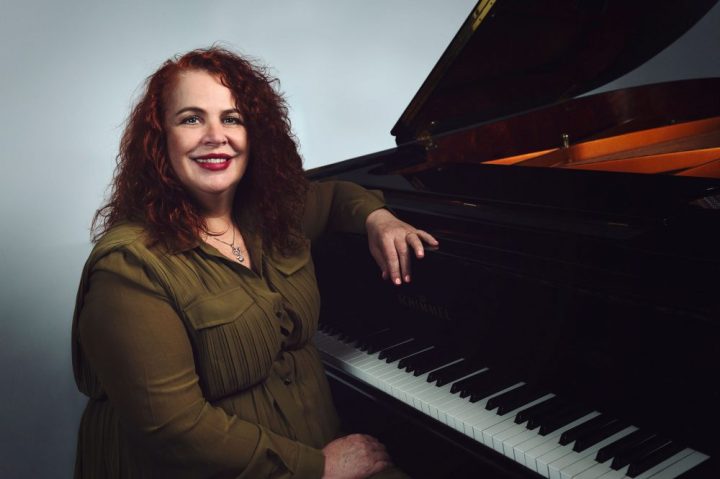

Guildhall School alumni Lorraine Augustine is the granddaughter of a professional pianist and grew up surrounded by music, beginning formal piano lessons at a young age and knowing from the very first lesson that playing the piano was the only thing she really wanted to do.

Lorraine went on to achieve Diplomas in Performance and Teaching and to study with Pianists such as Graham Fitch, Noriko Ogawa, Artur Pizarro and Leslie Howard and holds a Post Graduate Certificate in Performance Teaching from Guildhall School.

Lorraine is a regular Adjudicator for Piano Festivals and competitions including the annual Junior Clementi Competition.

Read more

Guest post by Lorraine Augustine


I am aware that this is a very contentious issue/question for many; however it is something I personally feel very strongly about and believe that it should be addressed and discussed widely within the profession.

To that effect, in preparation for my article, I posed the question on an online piano forum as to whether or not piano teachers ought to have achieved a minimum level of piano specific qualifications in teaching and/or performance before setting themselves up as piano teachers, and whether or not the profession should be regulated to ensure that teachers do have the minimum piano specific qualifications. 

The post drew some pretty strong reactions, and I must admit I was very surprised at the number of piano teachers who strongly disagreed with me. However, there were many who strongly agreed, one of whom is eminent concert pianist and Professor of Piano, Karl Lutchmayer, who has kindly agreed to share his thoughts and views for this article below: 

 “Would you send your child to a ‘paediatrician’ who only had an A level in biology? Of course not, and neither would you be able to because it is a regulated profession. Yet, anyone can set up as a private music teacher. As such, every year, professionally qualified music teachers take on students who have been poorly taught and have to put them through the utterly disappointing process of unlearning bad teaching. This may turn the student off music entirely, and occasionally, particularly at higher levels of study, the student has endured long-term psychological or physically damaged that will seriously undermine their future learning. Yet, as long as the first teacher has done nothing illegal there is no way to prevent them doing the same to hundreds of other students.

Such a situation would be intolerable in other forms of teaching. Various commentators point out that there are bad qualified teachers. This is certainly true, and only means that regulation should set the bar higher, particularly with CPD, than it is at the moment, it is not a reason to avoid regulation. Others point out the cost for teachers, but such regulation is required, for instance, for osteopaths who bear the cost as part of their costs. Would you really want osteopathy without regulation? If we are going to accept that bad teaching can cause both psychological and physical damage, then the lack of the requirement for a regulatory body is not only bizarre, it is a derogation of our duty of care as professionals educators..”

I wholeheartedly agree with Karl. Like many piano teachers I regularly inherit transfer students from other teachers, and whilst many have been well taught, and have strong foundations on which to build, at least an equal number have not. The majority of those students who come to me with poor technique, notes written in the score, no idea about phrasing, articulation, tone production, balance and voicing etc, have been taught by unqualified teachers. By this I mean people who have set themselves up as a teacher with a very minimum level of skills themselves, perhaps a playing level of below even grade 5 standard, and very little understanding of the instrument and its repertoire, nor of pedagogy or andragogy.

Sadly, many of these students will not have realised that their teacher does not have the necessary skills required in order to help them build the strong foundations they will need to be able to play the piano well, and by the time they transfer to a teacher who does they are already frustrated at not being able to play the repertoire which they are learning as they lack the technical and musical skills to do so, unfortunately many find the task of rebuilding those foundations too daunting and will give up. I find that incredibly sad as they will have started out with enthusiasm and joy for the piano.

To add to my concerns, I frequently see job advertisements stating ‘piano teachers required, no qualifications or experience necessary’ this is a very worrying situation and not only will lead to more poor teaching and the increased risk of physical injuries due to poor technique, but it seriously undermines our profession.

Every interview I have ever attended has required me to perform and to teach to a panel of highly qualified professionals, followed by rigorous questions on technique, repertoire, my entire teaching ethos and also questions on child protection/ safeguarding issues. This is in addition to evidencing my qualifications and experience, so for me this is answers the argument that others are raising about qualifications not guaranteeing good teaching, they don’t always, but evidencing them in some way, and a requirement to undergo CPD goes a long way towards doing so.

As Karl mentions, other professions require qualifications and have a system of ensuring that standards are upheld. For example, I have recently completed a Coaching course at Guildhall School of Music and Drama where I teach piano, the course is not specific to piano but I have a great interest in studying and in a wide range different educational approaches so I decided to delve deeper into the coaching approach. On completion of this course I received a certificate from GSMD, but to gain the Foundation level qualification I must now complete another 20 hours of coaching which I must record and send for assessment, then this will be submitted to the EMCC for accreditation, if I did not pass then I would need to complete further training and resubmit an application to gain my qualification. This qualification still does not mean that I would be a qualified Coach, the ‘coaching’ which I have experience of within my teaching does not count at all for this qualification, I must evidence that I am competent in order to call myself a Coach. This first course is just a start, I must then complete another course and another 100 hours of (non paid) coaching practice before I can give myself the title of coach. Do I think this is wrong or unfair, no absolutely not and I believe that a similar system would work well for piano teachers.

Another example is that I sing and have done so all my life – from madrigal groups to London theatre choirs and bands; I have been in many professional shows within these choirs but I would never attempt to teach singing lessons. I know how to use my own voice but I do not have the first clue of how to teach someone else to use theirs so it would be morally and professionally wrong of me to try and do so.

There are other professional issues which are really important to consider, one of which is that without professional status it would be more difficult to obtain public liability insurance and the enhanced DBS certificate along with the necessary child protection/safeguarding training that one should have if teaching children one to one in private practice. It will also not be possible to belong to a professional body such as the ISM as a professional member with private teacher status.

Finally, unfortunately because anyone can set themselves up as a piano teacher, it does lead to us being seen as having a lovely ‘hobby job.’ There is much discussion in the press and within music education in general of how music continues to be downgraded, how it is seen as unimportant and more as an add on hobby than a serious subject. By continuing to allow this situation of unqualified piano teachers setting up to continue are we not perpetuating this school of thought?

I am proud of my career and my hard-earned qualifications, I continue to study not only because I am passionate the piano and my lifelong journey with it as a player and teacher, but because I strongly believe that we owe it to our students to offer the very best teaching we can give them because the students, the music and the piano deserve no less.

This article first appeared on Lorraine Augustine’s blog

Lorraine Augustine is a Pianist, teacher and adjudicator based in Bedfordshire, with over 40 years’ experience of teaching and performing she teaches piano at the Guildhall School of Music and Drama in London and runs a busy private practice in Bedfordshire.

www.lorraine-augustinepiano.com

Episode 2 of the Piano 101 podcast with The Cross-Eyed Pianist and Dr Michael Low is now available on YouTube, Spotify and SoundCloud


This site is free to access and ad-free, and takes many hours to research, write, and maintain. If you find joy and value in what I do, please consider making a donation to support the continuance of this site

Make A Donation

At the beginning of this year, my son (24) passed his driving test, his achievement made more remarkable by the fact that, due to the covid restrictions, his test was postponed 6 times over the course of 18 months. He displayed a dogged pragmatism towards the disappointment of the cancelled tests (he was ready to take his test in July 2020) and simply carried on practicing his driving whenever he could – in my car, his own car, and with his driving instructor.

While my son was having his lessons, I was reminded of my own driving lessons, some 30-odd years ago, and how my instructor stressed the importance of “time at the wheel” – that any driving practice was useful. My son certainly appreciated this and we enjoyed lots of excursions in the car which relieved the monotony of lockdown while also giving him useful driving experience.

While we were out and about, I pointed out to my son that one of the most important aspects of having lessons is so that one learns how to pass the test. A good instructor knows what needs to be covered to ensure the candidate is well-prepared. I remember my instructor made me practice manoeuvres like parallel parking and three-point turns over and over again so that the all the processes, physical and mental, became fixed in my procedural (muscle) memory, were almost intuitive, and ensured that I was not nervous on the day of the driving test. The same was true for my son – his parking abilities impress me no end (especially as I can no longer parallel park successfully!)

What does this have to do with the piano and music practice? Well, playing an instrument, like driving, is a series of movements and processes, which utilise and train the procedural memory. Most of us know well the old adage “practice makes perfect”, but, more importantly, practice also makes permanent, so that movements, processes and gestures become intuitive – we do them without (apparently) thinking.

This permanence comes, of course, from practicing – not mechanical note-bashing, (or mindlessly driving around Tesco’s carpark) but from thoughtful, careful practicing to ensure we are well-prepared.

The great Russian pianist Vladimir Horowitz apparently had a little phrase which he repeated ahead of a performance – “I know my pieces” – meaning he knew he had done his preparation. It’s a helpful mantra, and one which I have used in my own preparation for performance.

It is this preparation which gives us perhaps the most useful skill of all – confidence – which enables us to perform to the best of our abilities in an exam or concert situation, can help allay nerves, and ensures that the odd error or slip will not derail the overall performance.


This site is free to access and ad-free, and takes many hours to research, write, and maintain. If you find joy and value in what I do, please consider making a donation to support the continuance of this site

Make A Donation
