I have been rather disturbed to learn from a couple of teaching colleagues, in discussions in response to “that” tweet from the ABRSM, that music examiners are actively discouraged from saying “well done” to a candidate after their exam performance or writing similarly positive comments on the exam mark sheet. Personally, I can’t see the harm in offering such praise; in fact, I see it as a force for good, something which can help students, especially young children or more anxious players, to find the exam experience more positive. And it’s far more friendly than a rather curt “thank you” from the examiner at the end of the session.

Exam mark sheets are problematic too. Not only does one have to decipher the examiner’s handwriting (which can be as impenetrable as a doctor’s!) but the language can be opaque, full of special “examiner-speak” which is not always easily comprehendible to students and their parents. The often rather brusque comments may seem negative even when intended to be positive. When I taught regularly, I would highlight the good comments for my students and would also go through the mark sheets with them to help them get the best out of the comments and to understand how the more negative feedback could be used to inform their practicing in future.

Within the teaching studio, we should always provide a supportive environment to encourage learning, motivation and confidence. Sadly, some of us will remember dragon-like piano teachers from our childhood who highlighted errors but rarely praised; a few even resorted to physical abuse such as rapping a student’s knuckles with a ruler. Fortunately such abusive practices are rare today and should always be called out.

Negative feedback, such as continually picking up a student over small slips and errors, or constantly asking them to play a section again to “get it right” rather than allowing the student to play through the whole piece before offering critique, will dent a student’s confidence and erode their ability to trust their ability and their musical self. It will also make them more dependent on a teacher’s feedback, anxious for praise and the “credentialisation” that comes from it. This approach is not conducive to encouraging self-critique and independent learning.

How to critique well

Be respectful and kind

Teaching is about respect, between teacher and student and vice versa, regardless of the age or ability of the student.

Be collaborative

Use language which focuses on the playing rather than the person and make the critique collaborative. For example:

DON’T SAY: “You played some wrong notes in Bar 12.”

DO SAY: “Let’s take a look at Bar 12 together and see if we can work out what happened there.”

By involving the student in a problem-solving exercise, we hand them greater autonomy and encourage them to find their own solutions.

Accentuate the positive

In my experience, most students, regardless of the level at which they play, are alert to errors and will be quick to point these out if asked to comment on their own performance. When I taught regularly, I always asked my students to self-critique after they had played and would preface this by asking them to “find three things you liked about your playing today”.  (It says something about our education system, and an undue focus on “getting it right”, that it took some coaxing to steer students away from highlighting mistakes first and to instead focus on “the good bits”.) These needn’t be complicated or expansive, especially for younger/less advanced students – good use of dynamics or articulation, a well-shaped phrase, observing expression marks etc. When it came to my turn to comment, I would also begin with some positive comments and praise. This sets up a supportive and encouraging atmosphere between teacher and student which leads to a better environment for learning and progress.

Be humble and open-minded

The teacher isn’t always right, and even the most junior students has something fresh and insightful to about the music they are learning. Be willing to listen to students’ ideas and help them put them into practice, if applicable, or guide them to understand why something may not be appropriate in the context of the music.

The best teachers want to become ‘redundant’ by giving their students the tools to become confident, independent learners. Giving critique and feedback in positive terms is an important part of this process.


Further reading:

The Perfect Wrong Note – William Westney

The Inner Game of Music – Barry Green

The Art of Practising – Madeline Bruser
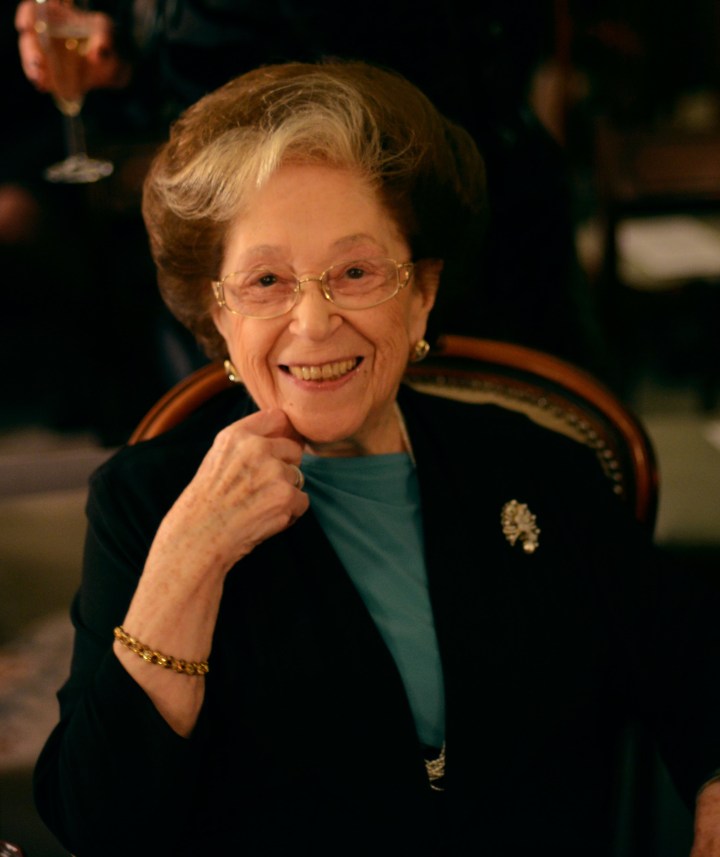
Dame Fanny Waterman, 22 March 1920 – 20 December 2020
 

It is with great sadness that The Leeds International Piano Competition announces the death of its founder and President Emeritus Dame Fanny Waterman at the age of 100

Dame Fanny died peacefully this morning in her residential care home in Ilkley, Yorkshire. She is survived by her two sons, Robert and Paul, and six granddaughters.

Adam Gatehouse, Artistic Director of The Leeds, said:

“Dame Fanny was a force of nature, a one-off, a unique figure in our cultural firmament who infused everyone with whom she came into contact with a passion and enthusiasm and sheer love of music, particularly piano music, that was totally impossible to resist. From nothing she created the world’s most prestigious piano competition and chose to do so not in London but in Leeds, at the time a dark, industrial but incredibly lively and vibrant town in the North of England. From small beginnings it swiftly grew as word spread that here was a competition where music and the musicians came first. The lives she has touched, both through the Competition, but also through her teaching and piano books, are too numerous to mention. She was quite simply irreplaceable, and to have had the chance to work with her and eventually succeed her as Artistic Director of The Leeds has been one of the greatest privileges and joys of my life.”

Dame Fanny Waterman founded The Leeds International Piano Competition in 1961 with her late husband Dr Geoffrey de Keyser and Marion Thorpe CBE, then the Countess of Harewood. The first event followed in 1963 and she remained its Chairman & Artistic Director until her retirement in 2015 at the age of 95. As President Emeritus she attended live concerts and events until the beginning of 2020, although ambitious plans to celebrate her 100th Birthday in March 2020 had to be cancelled due to the COVID-19 pandemic.

Thanks to Dame Fanny Waterman’s artistic integrity, passion, charisma and hard work, ‘The Leeds’ became the most coveted prize in the piano world and internationally acclaimed for introducing some of the greatest pianists of our time. Artists including Radu Lupu, Murray Perahia, Sunwook Kim and most recently Federico Colli and Eric Lu launched their careers by taking first prize; Sir András Schiff, Mitsuko Uchida, Lars Vogt and Denis Kozhukhin meanwhile, are among the Competition’s illustrious finalists. 

Born in Leeds (22 March, 1920), she studied with Tobias Matthay, and later as a Scholar at the Royal College of Music, London, with Cyril Smith. After a notable performing career, including a performance at the 1942 Proms with Sir Henry Wood, she felt that her real vocation would be as a teacher. Over the years she gave masterclasses on six continents, appeared on television and radio, and compiled a series of publications entitled Piano Lessons with Fanny Waterman/Marion Harewood, which now runs to thirty volumes and has achieved sales of over three million copies.

Among her greatest achievements as a teacher was in the 1950s when she trained four pianists under the age of 11 from Leeds to such a standard that they received invitations to perform piano concertos at London’s Royal Festival Hall. The four pianists were Alan Schiller, Wendy Waterman (her niece), Kathleen Jones and future winner of the first Leeds International Piano Competition, Michael Roll.

In recognition of her services to music, Fanny Waterman was awarded an OBE in 1971, the CBE in 1999 and in 2005 she was appointed Dame Commander of the Order of the British Empire. In 2004 Dame Fanny Waterman received the Freedom of the City of Leeds, the highest honour the City can bestow and, in 2009, was invited to become President of the esteemed Harrogate International Festivals. She was made an Honorary Member of the Royal Philharmonic Society in 2010.

A full biography of her life and archive images of Dame Fanny are available at https://www.leedspiano.com/dame-fanny-waterman/

@leedspiano


Source: press release

As some of my friends, readers and followers know, my son is a professional chef who has been working in fine dining in London for 6 years. He’s been living with us during the UK lockdowns and in addition to enjoying his beautiful, inventive and delicious cooking, I have learnt some useful ‘kitchen tricks’ and shortcuts from him.

Homemade pasta was something that had eluded me for years. It’s not that I couldn’t make it, it’s that I could never make it ‘right’. But with my son’s guidance, I have now learnt to make my own egg pasta – and I don’t even use a machine to roll it, just a long rolling pin and a dash of elbow grease. The other day, inspired by one of the ‘skills tests’ on Masterchef The Professionals, a TV series to which we as a family are all glued at this time of the year, I made tortellini (filled pasta) using my own pasta dough. As I was cutting out the discs of dough to be filled with a mushroom stuffing, it occurred to me that if I can make pasta dough and filled pasta, I can also make Japanese gyoza, Chinese wontons and dim sum, Indian samosas, Polish pierogi, and any number of other small stuffed dumpling.

Musical skills, just like culinary skills, once learnt and practiced, can and should be applied to different situations. No learning should ever be done in a vacuum: a single piece of music is not just that one piece, it is a path to other pieces via accrued technical proficiency and artistry. Early students and less advanced pianists often see the pieces they are learning in terms of stand alone works which have no relevance to other music they are working on, or are going to learn. This is also particularly true of scales, arpeggios and other technical exercises which may be studied in isolation instead of appreciating their relevance not just in understanding keys and key relationships, but also in actual pieces of music. This was something I was not taught when having piano lessons as a child, and it’s the fault of the teacher, not the student, if the usefulness and relevance of technical work is not highlighted.

Everything is connected. Chopin knew this: it is said that he studied Bach’s WTC every day, appreciating this music’s relevance to his own musical development, his composing and his teaching. If you can successfully manage Bach’s ornamentation, for example, you should have little difficulty with Chopin’s trills and fioriture.

If we understand how to adapt specific skills, to make them relevant to the repertoire we are currently working on, we can make the learning process less arduous and more rewarding, while also continuing to build on existing skills and develop new ones.

In this guest post, pianist and teacher Helen Reid outlines her approach to teaching and the creation and ethos of her new online piano courses for advanced pianists.


The route towards creating this course – primarily during lockdown, though the idea has been in my mind for some time – has been a fascinating one. Many people have talked about lockdown being a time of creativity, and social media has seen no shortage of incredible video montages and moving living room performances. For many, however, that hasn’t been the case, and indeed the very proliferation of musical offerings on social media platforms has been confusing. Many musicians have felt the uncertainty of the next performance date putting them off playing their instruments altogether. For some, financial fears have far outweighed the desire or ability to think creatively. I found myself falling somewhere in the middle. I struggled to play the piano for myself, but the shift to online teaching, despite the crazily quick need to adapt, also inspired me to expand my teaching skills and techniques. In addition, having to find different ways to motivate students who were no longer going to perform their end of year recitals was a very interesting and important challenge, and I found that no two student routes were the same.

For some students, being released from the pressure to take the exams has allowed more time to work on technical issues around the pieces they were playing. We have explored the musical context in more depth and looked at issues of mental practice and preparation. Other students were excited about their performances and we have had to look at ways of adapting emotionally to the disappointment, devising alternative performance plans, both during and post-lockdown. I have considered this such an important responsibility to my students, to respond to each situation individually, and of course this is what we should aim for continually as teachers.

For many years, I have loved the idea of creating courses which place solo piano at the core and yet encompass many different facets. Just as we talk about portfolio careers, students (both young and old!) can benefit from a ‘portfolio course’. There are so many different skills needed to succeed as a musician. One has to be sensitive to produce beauty in performance, yet have an armoury to deal with the different types of rejection which might occur as a result of auditions, competitions and so on. Musicians must spend many hours in isolation, and yet also be happy in company, travelling to play concerts in varying locations, with different musicians and new audiences. Marketing and networking skills are important; teaching skills will more often than not be needed – the list continues. Lockdown encouraged me to put my thoughts into action, and to take time to create something which I hope can continue when normal life returns.

As Course Leader of the Professional Studies course, delivered to all the first years at the Guildhall School, I am acutely aware of how we must respond to the current situation in the content of what we offer our young musicians. We must give them the skills to help them on their way to a successful career at what is a very challenging period for music making. I am determined to address this with a sense of excitement and potential.

At the Guildhall School, I also work as a mentor on the PGCert in Performance Teaching. In 2014 I created an early years’ curriculum for 3.5 to 7 year olds, building a musical foundation in a holistic manner (www.blackbirdeym.com). I have contributed and led several research projects, primarily around the health of musicians. For the last six years, I have taught piano and accompanied recitals at Bristol University, as well as working privately with advanced students. I wanted to create a course which could combine all these aspects, and respond to some of the issues which arise frequently among my piano students.

The new online courses I have devised consist of focused one-to-one lessons, working on whatever the student wishes to bring. These are complemented by webinars, looking at issues such as structuring practice and other practice techniques, fulfilling potential in performance, keeping our body and mind healthy as musicians and considering how we communicate through our music performance. The webinars are also influenced by questions posed by the students during the course, so that we gain the benefit of exploration as a learning community. In addition, Dr Jonathan James delivers webinars looking at the wider musical context – exploring Bach’s 48 Preludes and Fugues and Beethoven’s Sonatas, for example. Jonathan is a fine speaker and I know he will bring an extra dimension to the courses. The students receive ongoing email support, so that they can ask advice or make suggestions as things occur to them during the course.

The first course takes place in June and is for Advanced Adult Pianists. The following two courses for advanced pianists will start in July and September, with the September course running all the way until Christmas. I was initially sceptical about online teaching, as I think perhaps we all were, and I was very nervous about how the first few lessons might go. However, given a reliable connection, I have found that it has enabled me to build more creativity into my teaching. This has been an exciting personal development and beneficial to my students. The current situation is a challenge for all artists, but the potential is there to connect with people all around the world, and expand our skills and understanding.

For more information on the courses, please visit helenreidpiano.com or email helenreidpiano@yahoo.co.uk


publicity photo.jpg.cropped525x195o73,-13s377x259Helen Reid first came to public attention when she appeared on BBC2 in the National Keyboard Finals of the BBC Young Musician competition in 1998. In 2000 she won first prize in the Karic International Piano Competition. In 2006 she was hailed as a ‘rising star’ in The Independent magazine.

Helen has given recitals all around in England, at venues including the Wigmore Hall, Purcell Room, Fairfield Halls and Blackheath Halls, London, St. George’s, Bristol, Cheltenham, the Bridgewater Hall, Manchester and the Aldeburgh and Buxton Festivals. She has performed in Spain, Slovakia, Hungary, Germany, Austria and the Czech Republic. Concerto performances have included Rachmaninov’s second Piano Concerto with the Westmoreland Orchestra and Gershwin’s Rhapsody in Blue with the Aurelian Ensemble at Blackheath Halls and the world premiere of David Matthews’ Piano Concerto, at Dartington International Summer School. Helen has played a wide range of chamber music, with artists such as Paul Archibald – trumpet, John Kenny – trombone, Sheida Davis – cello, and Fenella Humphreys – violin.

Helen studied at Chetham’s School, Royal Holloway University and Cologne Music College, completing a Master’s Degree at City University and the Guildhall School of Music. She is currently professor of piano at Bristol University; runs the Professiona Studies course at the Guildhall School of Music and Drama, and has been invited to give masterclasses at Gdansk Conservatoire, Wells Cathedral School; The Universities of Bath, Royal Holloway and Hull, Dartington International Summer School and Pro Corda.

Future plans include an exciting new solo programme – Visions of Night, featuring music by Poulenc, Martin Butler, Michael Berkeley, Faure and Schumann. Currently booking for 2020-22.