What was the initial inspiration behind the Living Voices project?
Firstly, I love working with words – almost all the music I compose is to be sung. I’d been talking with the publishers Stainer & Bell about a new collection of choral works for a while, and so I began thinking about texts. I came to the realisation that I’m not really interested in setting words by deceased poets anymore – it’s too one-sided with no possibility of collaboration! Instead I wanted to create a connection with living writers, to communicate and work together; to better understand their words with honest conversations about their intentions; and to hear their responses to my music. So the idea was born – and the next step was to find the ten poets I most wanted to work with, and to see if they might be interested in being part of the project. The final step was to choose a theme, and so I decided to go for as broad a subject as possible, to enable as wide a variety of responses as I could obtain. I therefore asked each poet to write about something connected with ‘life,’ and said they could choose to write in any style and with any tone.
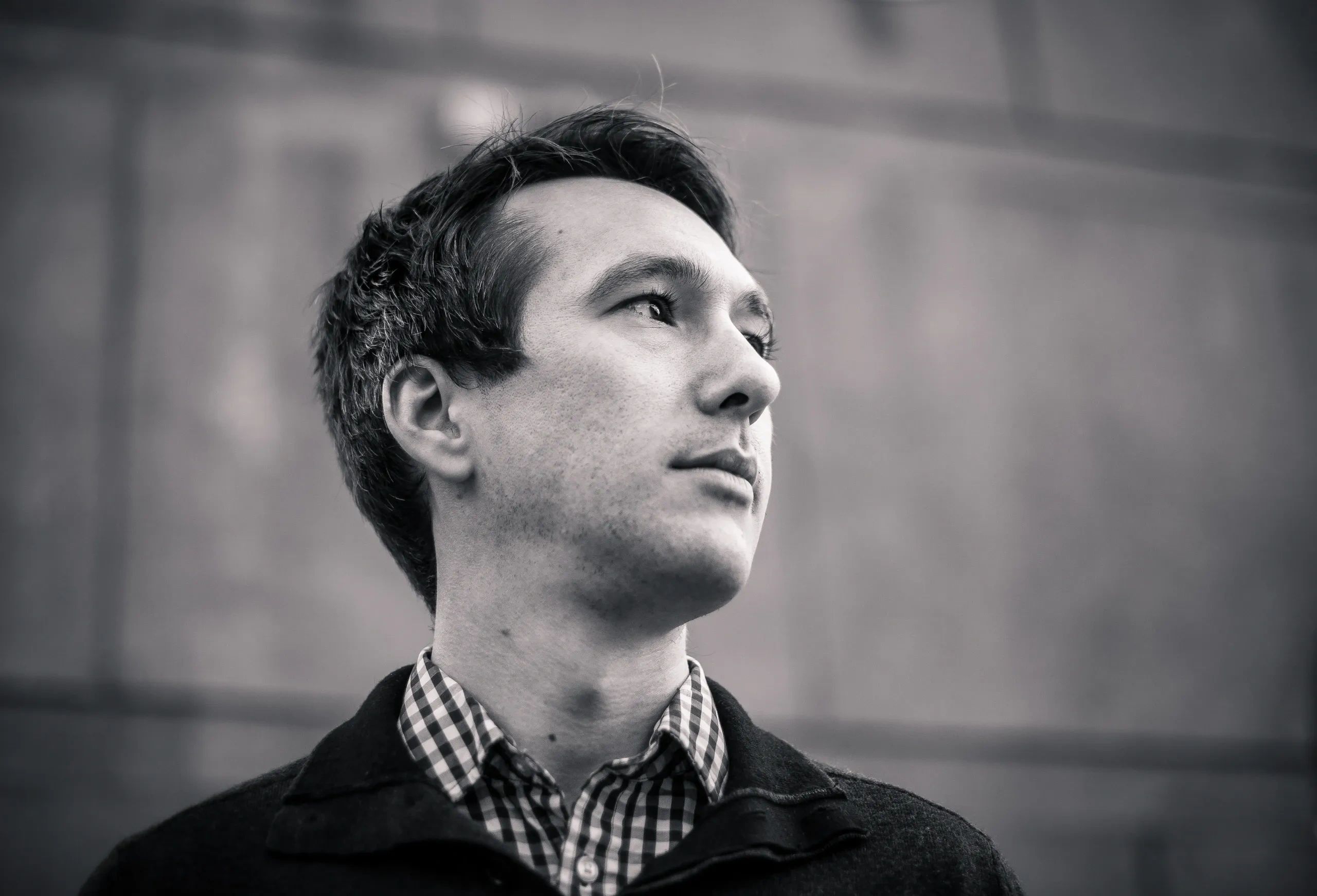
Russell Hepplwhite, composer
Tell us more about the process of selecting the ten poets and how their diverse writing styles/voices and perspectives informed the overall collection?
I simply selected truly brilliant writers that I really wanted to work with. All the writers share something – an ability to write directly, with laser-like clarity, and also a sense of accessibility. I’m interested in poetry that can be understood on first hearing/reading, but that also has more layers to be appreciated upon further exploration. Setting the various poems was fascinating, because I could see whether my own compositional style changed according to the poet that I was setting. I like to think the collection has lots of variety within it as a result of this approach, but that it all still sounds like my music.
How did you approach setting the texts to music for SATB choir and piano, particularly considering the range of themes/emotions explored in the poems?
When I was setting the texts, it was all about the words. So I read the poems, re-read several times, worked out the underlying tone or emotion, and then without any further ado, began setting them. With everything I compose the very first step is the absolutely crucial one – if I can’t find a way in then nothing else can follow; whereas once the piece is underway it becomes like a game of chess – a series of next moves to be made. So, with each poem I was looking for that first step – and mostly this happened very quickly – in the case of some poems it was a couple of chords I liked, with others it was a rhythmic pattern to fit a specific pair of words for example. Something that did surprise me on this journey though was how my appreciation of the poems changed and grew as I went along. At some stage, I can honestly say that each of the ten poems has been my personal favourite.
How has your other choral and opera writing informed your compositional approach/choices for Living Voices and the aim to create a “vibrant collective choral sound”?
With this collection I worked hard to create pieces that are colourful and imaginative, but fundamentally I wanted to do justice to the original poems. The aim was to compose music that would be accessible to the vast majority of choirs, but that still has enough challenges to keep everyone interested. I guess my other work has just made composing a lot easier since I have strategies and familiar processes which I adopt when composing. I also no longer feel any pressure about what I compose – I just write what I want to listen to, and hope others will feel the same.
Given the themes of Living Voices encompass aspects of modern life such as birth, death, youth and memory, what do you hope audiences will take away or reflect upon after experiencing these pieces?
I hope people can relate to both the words and the music, and to appreciate how the two fit together. Some of the texts pack a profound punch on first reading, such as Joseph Coelho’s ‘The Diarist’s Pages’ which tackles the idea of things in life coming round in circles, while others take a more light-hearted approach to make an equally significant point – I’m thinking of Roger McGough’s ‘The Good Ship Attenborough,’ for example, where the climate emergency is explored courtesy of a particularly playful approach.
And what do you hope choirs will take away from singing these pieces?
Goes without saying really, but I want people to enjoy singing them, and to get involved with the ambition of the collection – if they like singing one of the works I really hope they will be inspired to learn another one!
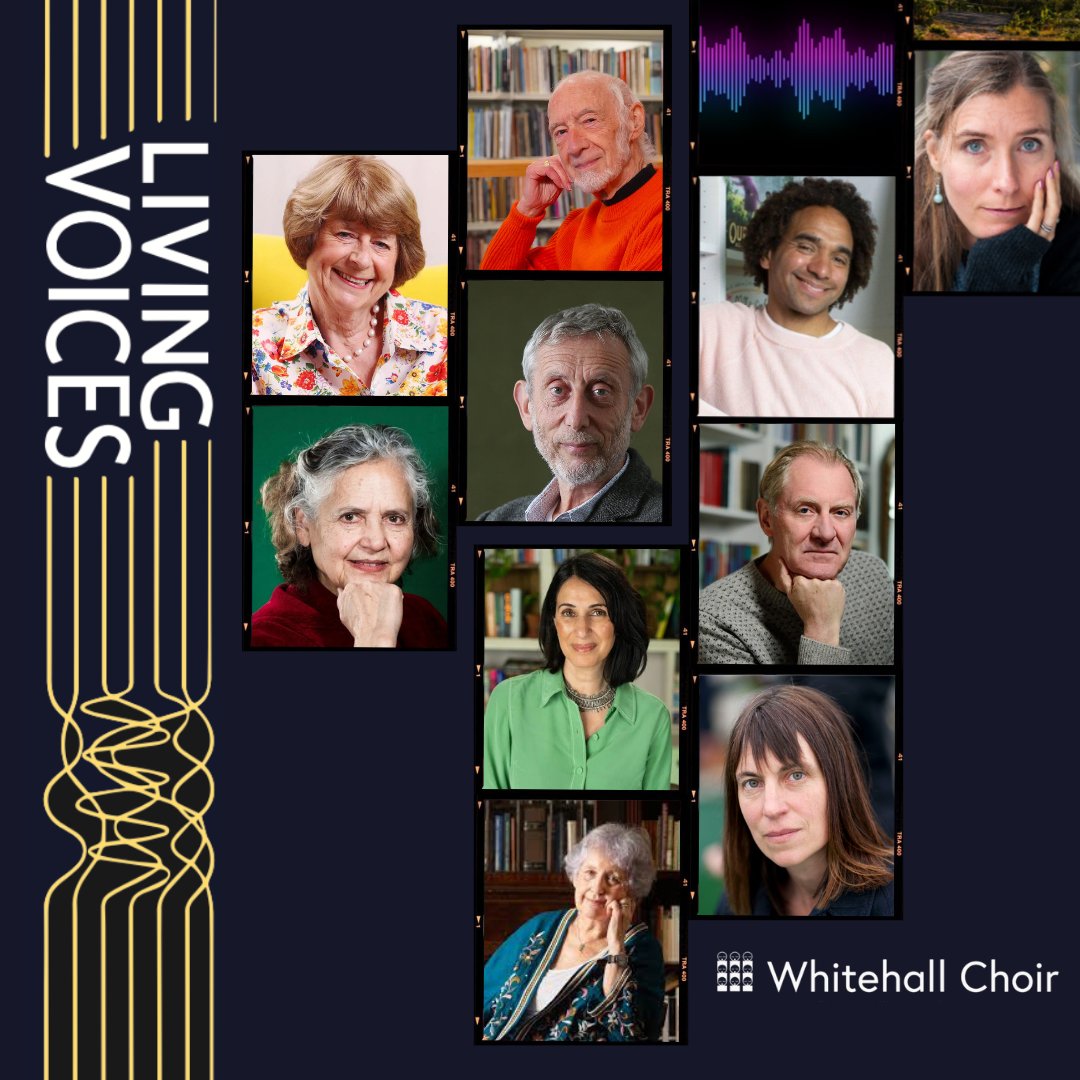
Living Voices is a new collection of ten inspiring choral pieces composed by Russell Hepplewhite. This innovative project brings together the talents of Hepplewhite and ten of Britain’s most outstanding contemporary poets, each commissioned to create poetic responses to our world today.
Regards from Rochester by award-winning British composer Thomas Hewitt Jones was commissioned by Rochester Choral Society to celebrate its 150th anniversary in 2023. The work received its premiere on 18th March 2023 in Rochester Cathedral and was subsequently performed in Wells and Glastonbury respectively in April 2023.
The town of Rochester in Kent is drenched in history. Regards from Rochester celebrates the rich history of the Medway Towns, exploring themes and valuable human stories while relating them to contemporary society. From the first Saxon settlement through to historic stronghold, from pillar of British naval history through to industrial centre and inspiration for Charles Dickens, composer Thomas Hewitt Jones feels that this “postcard from Rochester” celebrates and exudes compassion for our planet, social conscience, humanity and kindness – values that are incredibly important to our world today.
Director of Music, John Mountford, says: “Rochester Choral Society has passed some significant milestones recently, with 2022 marking the 100th anniversary of our first performance in Rochester Cathedral. We wanted to commission a piece which reflected the diversity of this area’s rich and turbulent history, with a historically accurate, humorous and engaging new piece. We wanted to find somebody with a connection and passion for the Medway Towns and who wanted to help raise awareness of the cultural and social heritage of the area.”
Composer Thomas Hewitt Jones, who lives in Rochester, says: “I was delighted when John Mountford approached me to commission this work for Rochester Choral Society’s very exciting 150th anniversary. Quite early on in our discussions, we decided that the richness of Medway’s history was conducive to a new text, so the result is a 10-movement oratorio which we hope tells the story of the area with sweeping melody and angularity where appropriate. I have written it to be as both engaging and as musically interesting as possible.”
John Mountford believes that choral societies are an essential part of national music-making after the COVID era. “Music is central to the lives of so many people; it binds community and enhances wellbeing for singers and audiences alike.
For Thomas Hewitt Jones, writing Regards from Rochester has been an extremely fulfilling and wholesome commission, not only given the richness of local history, but also due to the strength of the musical heritage of Rochester Choral Society dating all the way back to 1873.
“It was a privilege and a pleasure to discover many historic riches of the Medway area, which is often referred to in relation to Charles Dickens, the former Dockyard and as a stronghold to and from London, but in fact contains numerous other riches. Spending extensive time in Rochester library and reading around the history in detail, it became swiftly apparent that the area’s rich social history made up for any perception Medway may have externally of lack of charm; as the text and music were forming, I was delighted to have conversations with local Medway Council operative John Lester, who is an 8th generation of the Lester family in Rochester and who offered personal anecdotes of life in Medway since the Victorian era, some of which I have incorporated into the work.Above and beyond the history books and local connections, in this work I have aimed to reflect throughout the work on the nature of life in 2022, both beyond the recent pandemic (which let’s face it indelibly changed life as we know it) and also in the shadow of contemporary issues that affect our society, not least our collective sense of identity and perhaps most importantly, the current climate change crisis.”
This debut recording of Regards from Rochester features the BBC Singers, the Royal Ballet Sinfonia and Rochester Choral Society, with Harriet Mountford (soprano) and Simon Thorpe (baritone), conducted by John Mountford
Recorded at Henry Wood Hall, London, Regards from Rochester is released by Vivum Music Ltd on all streaming platforms. Physical CDs available from the Rochester Cathedral shop and Rochester Choral Society
For further press information/review copies/interviews, please contact Frances Wilson frances_wilson66@live.com
A SEASON TO SINGby British composer Joanna Forbes L’Estrangeis a brand new 40-minute work for SATB choir/organ or piano, inspired by Vivaldi’s The Four Seasons
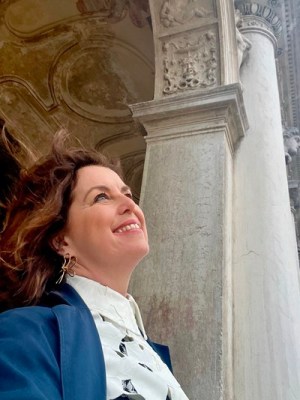
Joanna Forbes L’Estrange
A Season To Sing will be published by the Royal School of Church Music (RSCM) in 2025, marking 300 years since the publication of The Four Seasons. This choral re-imagining of Vivaldi’s enduringly popular set of violin concertos weaves texts from poetry and the Bible on the subject of spring, summer, autumn and winter into Vivaldi’s much-loved melodies. It will also include a new setting by Joanna Forbes L’Estrange of Ecclesiastes 3:2 – To everything there is a season. With its seasonal theme, A Season To Sing can be performed at any time of the year, and is expected to become a firm favourite with choirs throughout the world.
Joanna Forbes L’Estrange recalls, “The Four Seasons is the first piece of music I can remember hearing from my childhood. I used to dance around the sitting room to it! I thought a great way to mark its 300th anniversary would be to make it possible for choirs to perform it. Vivaldi’s tunes are so magnificent they deserve to be sung!”
To make this commission possible, the RSCM is inviting choirs to contribute £300 ($500) each to participate in this project, for which each choir will:
have the opportunity to perform the piece before its general publication
meet Joanna Forbes L’Estrange for a Q&A session via zoom
be listed in the vocal score as one of the commissioning choirs
receive a limited-edition, hardback copy of the vocal score, signed by the composer
This exciting opportunity is open to all choirs, large and small, professional and amateur, and to individual supporters. Deadline for registering – 31 August 2024.
Joanna Forbes L’Estrange (b.1971) is a multifaceted musician who performs, composes, records, directs and produces music in a wide variety of genres. Her career began with seven years as soprano and Musical Director of the five-time Grammy® award-winning vocal group The Swingles, with whom she toured the world and produced six albums. Specialising in contemporary crossover music, Joanna is a regular soloist for Mass in Blue by Will Todd (which she recorded for the Convivium label) and Duke Ellington’s Sacred Concert. With the world’s leading orchestras and contemporary music ensembles she performs works by Steve Reich and Luciano Berio and has sung on over 300 film soundtracks.
One of the Royal School of Church Music’s best-selling composers, Joanna was commissioned to compose an anthem to mark the coronation of King Charles III. The Mountains Shall Bring Peace was sung by over 600 choirs around the world including in the USA, South Africa, Australia, New Zealand and throughout Europe and the UK. Her music has been performed and recorded by Tenebrae, The King’s Singers, The Swingles, The Military Wives Choirs, The National Youth Choir and London Voices. Television credits include Fleabag, which featured her 1940s-style song You Are, and Glee, which featured her Moonlight Sonata arrangement, written for and recorded by The Swingles.
Joanna has written many songs and choral pieces in support of equal opportunities for women: We Will Remember Them (for the Military Wives Choirs of Great Britain), A Woman (Wearing Bloomers) On A Wheel (made into a film by the National Youth Girls’ Choir), Suffragette March (part of a larger work, Freedom! The Power of Song, composed in collaboration with her husband Alexander L’Estrange), A place for us maids (commissioned to mark 40 years of female undergraduates at Trinity College, Cambridge), The Three Wise Women (commissioned to mark the 135th anniversary of St Swithun’s School, Winchester) and Byrd Song (commissioned to mark the 400th anniversary of the death of William Byrd). In 2018 Joanna founded the all-female vocal group AQUILA and, in the same year, made history by organising the first ever all-female recording session at Abbey Road Studios in London, recording her single Twenty-first-century Woman for International Women’s Day.
The Royal School of Church Music (RSCM) is the Salisbury-based, national, independent charity enabling the flourishing of church music. As the central ‘home’ of church music, RSCM provides relevant education, training and resources to its membership, the wider church, and beyond. It is committed to encouraging the best of music in worship, and to advocating music as a tool for growth of the church.
The RSCM supports thousands of member churches across the UK and worldwide through its international partners. In addition, it also supports many schools and Individual members, and its work is sustained by thousands of Friends, Regular Givers and other donors.
The RSCM is an open, life-long learning organisation, offering face-to-face and distance education and training through its programmes, published resources, courses and activities.
Founded by Sir Sydney Nicholson in 1927, the RSCM’s original emphases were English and choral. Now, in a diverse international context, the RSCM’s work is far broader and more diverse, and aims to make all its work ecumenical in purpose, nature and content.
His Majesty King Charles is the RSCM’S Royal Patron, and its president is The Most Revd and Rt Hon The Lord Archbishop of Canterbury. The organisation celebrates its centenary in 2027.
HEAVEN TO EARTH Joanna Forbes L’Estrange, composer London Voices Ben Parry, conductor Andreana Chan, organist
This is simply beautiful choral writing by someone who knows, from a singer’s perspective, how to compose music which every choir will want to sing.
John Rutter CBE
Heaven to Earth is a collection of singable, accessible, sacred choral music by the best-selling choral composer and multi-faceted musician Joanna Forbes L’Estrange.
The album comprises introits, anthems, canticles, a set of Preces and Responses, and a congregational mass setting, and the 17 pieces display a range of styles, from traditional, church choral music to gospel- and jazz-influenced. Each piece sits comfortably within the SATB vocal ranges, the organ accompaniments are designed to support the choir, there is minimal division within the parts, and the harmonies are attractive and approachable. The texts are drawn from the Bible, the Psalms, The Book of Common Prayer, Holy Communion, writers including St Richard of Chichester, Phineas Fletcher, Jane Austen, and the composer herself, and all of the pieces are suitable for church services: Eucharist, Choral Evensong, weddings and funerals. The settings are written with the intention of enhancing the meaning of the words, both for those who sing them and for those who hear them.
I caught up with Joanna to find out more about her influences and inspirations in creating this album:
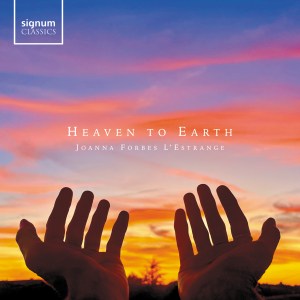
Your new album is called Heaven to Earth. Why this title and how does the music on the album reflect the title?
Anyone who’s ever sat in a beautiful church or cathedral in witnessed the evening sunlight streaming in through a stained glass window will know the sensation of a hint of Heaven coming to Earth. When my sons were choristers in the Choir of St John’s College in Cambridge, I would go to evensong as many times a week as I could just to experience that extraordinary, other-worldly atmosphere. It was like a wonderful reset and I would emerge, less than an hour later, feeling completely different from how I felt walking in. By listening to or singing church choral music, we can sometimes get that feeling of recreating the songs of the angelic hosts in Heaven down here on Earth.
The title for this album came to me during one such service. I remember reciting The Lord’s Prayer along with the rest of the congregation and, during the line ‘Thy will be done in Earth as it is in Heaven’, being struck by the notion of praying for things on Earth to be as they are in Heaven. In our busy lives, we can easily be caught up in the endless day-to-day tasks and minutiae of life and the constant news of conflicts, famine and natural disasters. Evensong services allow us respite from this busyness and to be at one with God, whatever we each perceive God to be, with each other and with ourselves; when the music moves you, it can feel as if Heaven has come to Earth. We’re so fortunate that, wherever in the country you find yourself you can pretty much guarantee that there will be a choral evensong happening not too far away.
Almost every piece on this album mentions or alludes to Heaven and Earth. There are those which create strong visual imagery such as in Let My Prayer Rise Up (track 1), where our Earthly prayers rise like incense to Heaven, and High As The Heavens (track 13) which likens the greatness of God’s love to the expanse between Heaven and Earth. Then there are the pieces which remind us that God’s glory can be found on Earth and not just in Heaven, such as For The Beauty Of The Earth (track 10) – ‘For each perfect gift of Thine, to our Earth so freely given, Graces human and divine, Flowers of Earth and buds of Heaven’ – and in my setting of Jane Austen’s prayer Give Us Grace (track 8) in which she writes ‘thou art everywhere present’. Similarly, the words of Holy, Holy, Holy (track 16) includes the line ‘Heaven and Earth are full of your glory’. Elsewhere on the album, there are reminders that Jesus came from Heaven to Earth, such as in the Magnificat (track 3), Mary’s response to the news that she will be the mother of God, and in Drop, Drop, Slow Tears (track 12) which speaks of Mary Magdalene’s tears bathing the ‘beauteous feet which brought from Heaven the news and Prince of Peace’. In Words From The Cross (track 7) we see Jesus communing from the cross on Earth to his Father in Heaven. Finally, there are the pieces such as The Lord’s Prayer (track 18), The Chorister’s Prayer (tracks 5 and 11) and the Preces and Responses (track 6) which long for Heaven’s blessings to be bestowed on us here on Earth, for example this line from one of the Collects in track 6: ‘mercifully grant that, as thy Holy angels alway do thee service in Heaven, so by thy appointment they may succour and defend us here on Earth’.
You have dedicated the album to your foster father, Rev. Richard Abbott. Tell us more about his influence on your musical life and career.
It’s impossible to overstate Richard’s influence on my musical life and my career. Interviewers sometimes assume that, since I’m the daughter and the granddaughter of professional composers and arrangers, this must have been the reason I became a composer myself. In actual fact, it was my foster father, who brought me up from the age of 4 to 11, who encouraged me to start writing music. He and my sister and I had sung together in our local parish church choir; a humble little choir with just one rehearsal and one service a week, but it got me hooked on church choral music. When Richard became ordained in 2007, he asked me to write a piece for the choir to sing as his ordination. I’d been a professional singer for over ten years by that point and, although I’d written a handful of arrangements in my capacity as Musical Director of The Swingle Singers, I hadn’t composed anything original since my GCSE Music coursework! I remember saying to Richard “but I’m not a composer” and him replying “well, I think you might be.” It was a turning point for me; I wrote a setting of Go Forth In Peace (track 21) which the Royal School of Church Music published. Choirs started singing it and sending me nice messages via my website. Not long after that, I was commissioned to write a congregational setting of the mass (The St Helen’s Service tracks 14-17) which again the RSCM published and which many choirs have since adopted as their weekly setting. I find that my experiences as a chorister, as a choir director and as a life-long church-goer all influence me as a composer. I definitely write music from the perspective of a singer more than of a composer, if that makes sense. It’s got to feel nice to sing.
After I left the foster home, Richard and I remained in touch. Once I’d started composing, he would begin every phone conversation in the following way: “Hello darling, how are you and what are you writing at the moment?” He commissioned Saint Richard’s Prayer (track 19) too and cried when I showed him the dedication at the top of the published music. We all need someone like him in our lives to believe in us and to encourage us to believe in ourselves. I was so lucky that Social Services happened to place my sister and me with Richard and his wife Gillian. Perhaps it wasn’t luck at all but part of a bigger plan. In any case, he was my guardian angel just when I needed one most. When Richard died of cancer in October 2022, I knew I wanted to record an album in his memory. I only wish he could have heard the wonderful London Voices singing my music; he’d have been over the moon.
What do you hope listeners will take from the music on your album?
More than anything, it is my hope that people who hear my album will want to sing the pieces themselves. I’m excited about choir directors listening to a track and thinking “Ooh, that would work well with my choir. I’m going to get hold of the sheet music!” The tracks comprise a mix of introits, anthems, Preces and Responses, Canticles, prayer settings, a Mass setting – some are for SATB choir, with or without organ, some have a unison lower line, some are for upper voices – but what all the pieces have in common is that they are singable. Can you tell how hard I’m trying not to use the word accessible?! I find it can have negative and possibly even patronising overtones. What I mean is that I want people to listen to these tracks and have confidence that, however little experience or musical training they may have, they will be able to sing my music. What’s more, they will hopefully find it enjoyable and pleasurable to sing. My husband and I record all of our compositions: I sing the soprano and alto lines and Alexander sings the tenor and bass. There are two reasons for doing this. It’s by recording every line of a piece that you find out how it feels to sing, whether you’ve got the breath markings, note-lengths, dynamics correct and so on. I always make adjustments as a result of this process. The other advantage is that we can create part-learning tracks which we then make available to choirs who find it beneficial to hear their vocal line sung before they learn it.
When I’m composing music intended for use in church services, my overriding motivation is to set the words in such a way that those who hear them are drawn closer to them. Church choral music doesn’t need to be challenging or ground-breaking, in my opinion. There is such beauty to be found in simplicity, something I learned by singing the music of the Taizé community in France; through musical repetition and familiarity, the words come to the fore and the whole experience becomes almost meditative. The same is true of the familiar Gregorian chants of the Medieval music. I like to write music which every choir can sing, not just the professionals. When I found out that over 600 choirs across the world had sung my coronation anthem The Mountains Shall Bring Peace (track 20) it made me so happy.
Singing in a choir is so completely life-affirming. We are so fortunate to have such a rich heritage of church buildings and church music but, sadly, not all churches and their choirs are thriving. The Royal School of Church Music and other organisations such as the Friends of Cathedral Music are doing wonderful work to keep this heritage alive and I want to do my bit to help. People are sometimes put off joining a choir because they think they’re not good enough or don’t have the right background or musical training but my belief is that if everyone sang in a choir, the world would be a better place. And if I can encourage people to do this by composing tuneful pieces which everyone can enjoy singing, I will.
This music is simply heavenly, and no choir, church or performance venue should miss out on the blessing this music brings. Through beautifully crafted accessible melodies, glorious harmonies, and a real ability to convey the sense of meaning of the text, this richly varied repertoire goes straight to the heart.
Ken Burton, conductor, composer, arranger & performer
The Cross-Eyed Pianist is free to access and ad-free, and takes many hours every month to research, write, and maintain.
If you find joy and value in what I do, please consider making a donation to support the continuance of the site