Guest post by Alexandra Westcott

This article about learning the piano, the skills and the memories was lovely, and jogged my own memories of myself both as student and teacher.

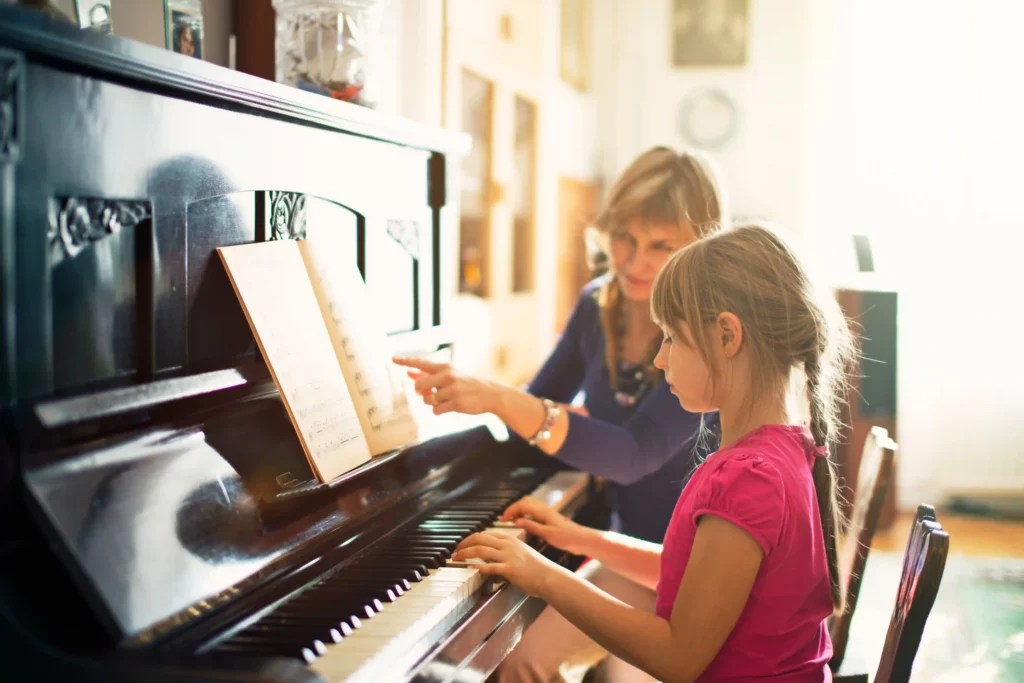
I was about 6 when I used my sister’s books to learn the piano – they had photos for hand positions and finger numbers and that seemed all I needed (I’ve no idea to this day how I learned the rhythm and counting; I don’t remember reading about it but I must have!). I raced through the books and started fiddling with any music floating around, which was a fair amount as my Mum was a singer and also played the piano. I remember having the C major Mozart sonata at home and learning two pages during each holiday when home from boarding school at around 8 or 9. At this point Mum asked me if I wanted lessons, and because all my friends hated it (they hated the
practice); I said no because I loved playing, but she obviously ignored me and I ended up with a teacher I adored with whom I became very close.

I played the piano in all my spare time to the extent my reports used to say ‘she spends a lot of time at the piano’ and during prep, having done my homework as fast as possible, would skip off to the music rooms. I was fussy even then about the piano I played, and only the teachers’ or the grand in the assembly hall would do! None of the awful practice pianos for me!

During my time at school with this wonderful teacher, me and a group of friends would be taken away for a weekend each term to him and his wife at his amazing ancient cottage. He was the church organist and ran the church choir so we ate well on local Devon produce that he was given by local friends and members of the church. At times we also had breakfast in bed (often sugar on toast!), It was all very idyllic and I stayed in touch with him and his wife until they died.

For the 6th form I left there and went to a college local to my home, so I changed teacher and went to a local music school during my A levels. A completely different teacher and one the parents were scared of but the pupils loved. We did Sunday concerts at her house, always with cake, and a large concert once a year at the 6th form college at which she got her advanced students to do a movement of a concerto with her school orchestra. I did the first movement of the Schumann. I never wanted to be a concert pianist but this was good experience and I later had the chance to play on a few occasions with another orchestra, and for one of the concerts performed the whole of the Schumann. It brought back many memories.

I had another teacher for my degree, and then had a break in formal lessons before returning to a commitment to my own playing in my 20s. I had a local teacher for a year but then met Nelly Ben Or and knew I had to learn with her.

Nelly Ben Or

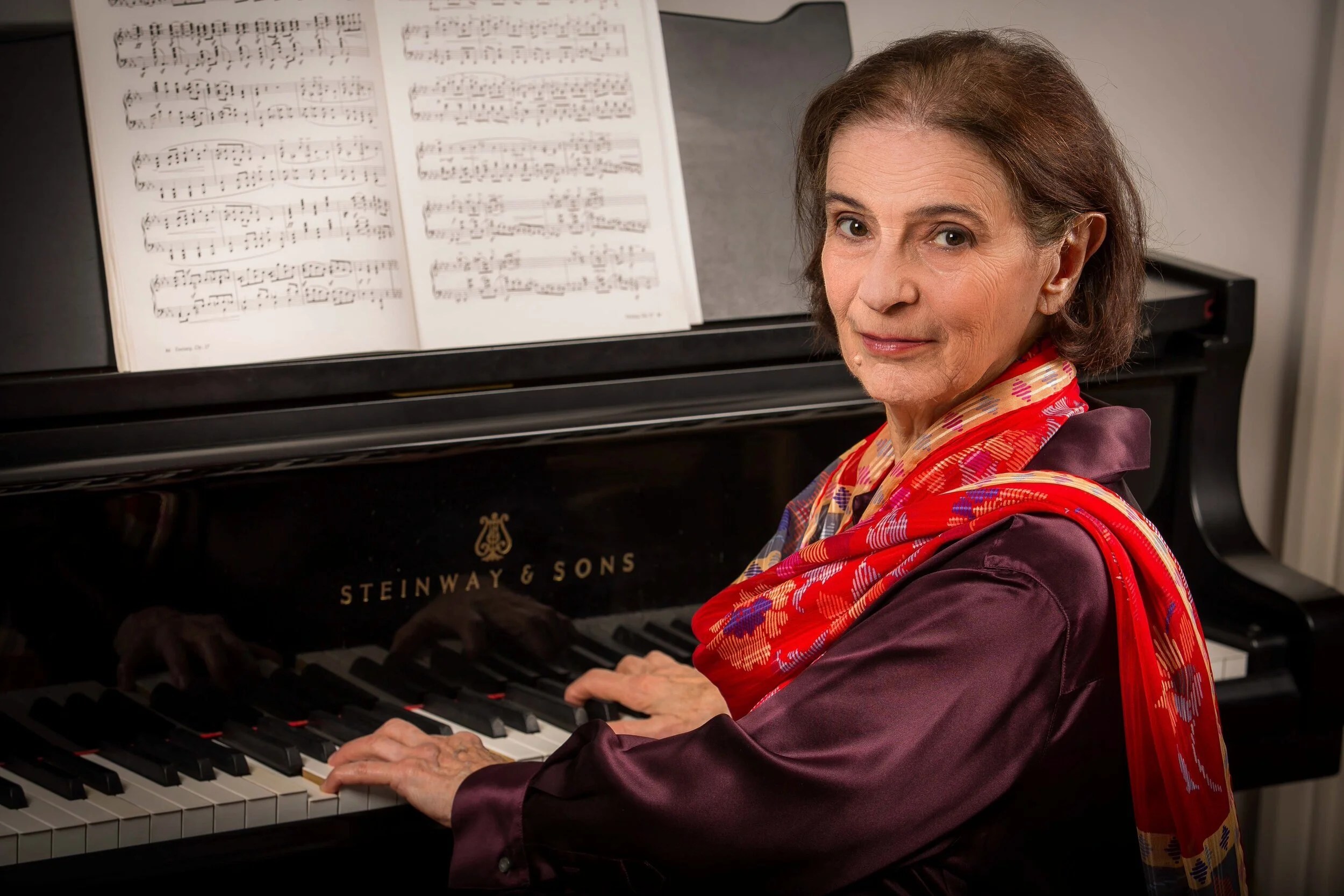
I studied with Nelly for many many years undoing my bad habits in order to acquire new and better ones and becoming a much better pianist, and a better teacher for that. I would often have lunch along with my lessons, and, again, house concerts and other performances enhanced the lessons. And, yes, you guessed it, always with accompanying food and drink.

As a teacher myself I became the sort of teacher I had grown up with; I had close bonds with my students, always had house concerts and local concerts both with tea parties afterwards, usually some chocolate for after lessons, and often would become close friends and either take them out for tea when young, or stay in touch later on.

Piano teachers, or any instrument teacher, hold a particular place in the life of a child. Such a close bond is formed and often many confidentialities shared. There needs to be trust for something that is hard to learn and something that needs self expression in execution. It is maybe not surprising that the bond becomes a firm friendship (and, often, one that needs physical as well as sustenance)!

I often wonder about my students’ memories of their time with me and whether they have similar memories as I do about my own mentors. I hope they hold the same  happy and cherished memories in their hearts for all the hours we spent and fun we had together as I do for my own teachers.

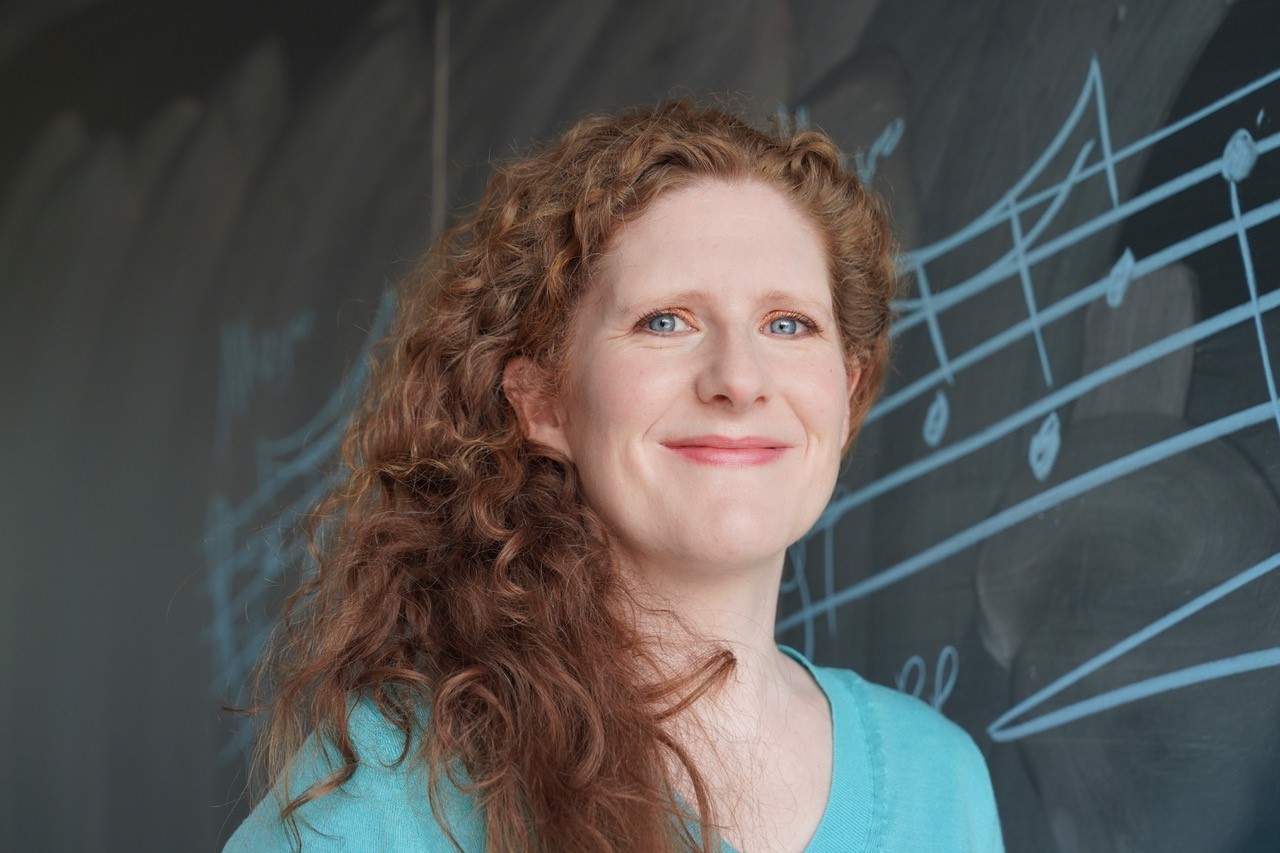
Alexandra Westcott is a piano teacher based in north London who specialises in understanding the piano in the light of the Alexander Technique, as studied with Nelly Ben Or, and encourages all areas of learning in a creative way. Find out more here

If you would like to share your piano memories, whether you are a teacher or pianist, or bothm, please get in touch


This site is free to access and advert-free. If you find joy and value in the content of this site, please consider making a donation to support its continuance, and to ensure it remains free to read.

SONGS OF THE SPIRIT Music & words by Thomas Hewitt Jones

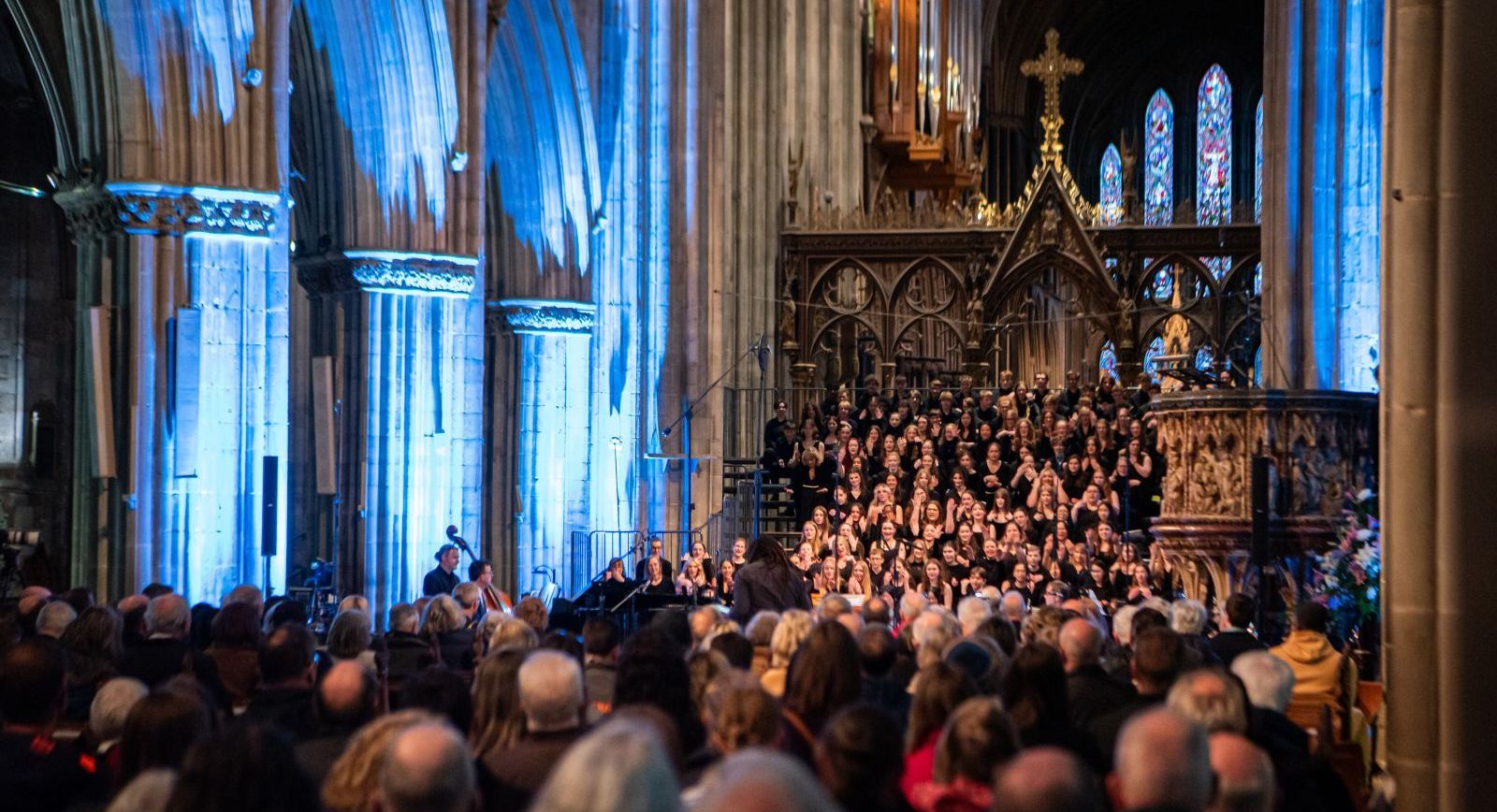
The Royal School of Church Music launches a major new choral commission as part of its centenary celebrations in 2027.

Songs of the Spirit is an exciting new suite of songs by award-winning British composer Thomas Hewitt Jones, created to uplift and inspire singers of all ages and backgrounds. With accessible yet impactful music, this 40-minute piece is perfect for community choirs, youth ensembles, chamber choirs, church choirs and can be performed in a wide range of settings. 

At its heart, the work explores a deeply human theme – the longing for safety and belonging in an increasingly complex world. Rooted in Christian values, the piece offers a message of kindness and hope, whilst inviting reflection on profound questions about identity, purpose and the human spirit in 2026 and beyond.

Unforgettable melodies, lyrical clarity, and radiant harmonies will all weave into a musical tapestry expressing the emotional weight and beauty of the themes at play. 

The piece is scored for SATB but is flexible and will include movements suitable for children’s choir alone, and a rousing final hymn-like movement with the option of audience participation. It will be suitable for performance either as a whole, or as standalone movements, with scoring options for piano, organ and strings. 

Listen to an excerpt here:

Following the success of A Season to Sing, the RSCM’s previous co-commissioning project with composer Joanna Forbes L’Estrange and over 50 choirs worldwide, the RSCM now invites choirs to be part of its centenary celebrations. In exchange for a donation of £300, co-commissioning choirs will have the exclusive right to perform Songs of the Spirit during its first year, and also receive the following benefits: 

  • A commemorative, hard-bound signed score 
  • Your choir’s name in the list of commissioners in the printed score 
  • 30% off all scores purchased for your choir within the first year of publication. 
  • Access to full support resources to aid learning 
  • Media promotion of your choir and its performance of the piece 
  • A personalised video message from Thomas Hewitt Jones for your choir 

This is an exciting opportunity to bring a powerful, appealing and uplifting new work to the contemporary choral music repertoire while allowing choirs to share their journey with the RSCM to ensure choral music stays accessible and widespread.

Songs of the Spirit will be available from September 2026

The success of a previous jointly commissioned work, A Season to Sing by Joanna Forbes L’Estrange (premiered in Spring 2025, with over 50 performances world wide to date), demonstrates the value of this model, with co-commissioning choirs praising the excellent resources provided, efficiency, and feeling valued throughout the process.

Hastings International Piano is thrilled to announce the 40 pianists who have been selected to take part in the 2026 Hastings International Piano Competition, which takes place from 26 February to 7 March 2026 at the White Rock Theatre, Hastings.

Chosen by an experienced pre-selection jury, who watched video auditions of 356
applicants from 46 countries, these 40 pianists – aged between 19 and 29 – will travel from 18 nations to compete in one of the world’s leading competitions for rising stars. This year marks the 18th competition since its revival in 2005, continuing a proud tradition that began over a century ago with the Hastings Musical Festival.

Under the artistic direction of Professor Vanessa Latarche since 2020, the competition is a highlight in the international music calendar. Renowned for its unique format , requiring competitors to perform concertos from the very first round; it offers a platform for young artists to perform with orchestras including the Sinfonia Smith Square and the Royal Philharmonic Orchestra.

The 2026 competitors represent a remarkable breadth of talent, with participants from countries including China, South Korea, Russia, Taiwan, the USA, Ukraine, Japan, and beyond. Full list here


● Competition rounds will run as follows:
➔ Round 1: 26–28 February – 40 competitors perform extracts from two concertos
➔ Round 2: 1–2 March – 20 competitors perform a solo recital including a new work
by Sir Stephen Hough
➔ Semi-Finals: 4–5 March – 10 competitors perform a classical concerto with
Sinfonia Smith Square
➔ Finals: 6–7 March – 5 finalists perform a Romantic or 20th-century concerto with
the Royal Philharmonic Orchestra

All five competitors who reach the final will receive a prize, with first prize worth
approximately £35,000.

Tickets for the first two rounds are free, and the public is encouraged to attend and
experience world-class music in a seafront theatre.

Through its Learning & Participation programme, Hastings International Piano remains committed to bringing classical music to all – from school workshops and community concerts to pop-up pianos across the town – ensuring that the joy of music continues to inspire every generation.

The competition is generously supported by Steinway & Sons and numerous sponsors and benefactors, including the Kowitz Family Foundation, which has supported the competition since 2009.

Vanessa Latarche, Artistic Director, says: ‘We are thrilled to announce forty remarkable young pianists coming to Hastings in 2026. The standard of applications this year was exceptionally high, reflecting the competition’s growing stature. It’s no easy task picking from over 350 applications, but it is inspiring to see so many gifted musicians from around the world share their artistry and passion for piano performance. We look forward to hearing them bring their music to life on the White Rock Theatre stage.’

Find out more here

[Source: press release]

Ailsa Dixon’s sonata for piano duet Airs of the Seasons, is the latest work to be published by Composers Edition, in a new edition by pianist Waka Hasegawa. This is part of an ongoing project to bring Ailsa Dixon’s music to a wider audience; the publication of scores of her music coincides with the release of The Spirit of Love, a landmark recording of her chamber music and songs on the Resonus Classical label. (Find out more here)

Airs of the Seasons is in four movements, each prefaced by a short poem, evoking in turn the magical stillness after a winter snowfall, the first stirrings of spring, a dragonfly darting over the water in summer, and finally amid the turning leaves of autumn, a retrospective mood which recalls the earlier seasons and ends with the hope of transcendence in ‘Man’s yearning to see beyond death’.

The sonata was unperformed in Ailsa’s lifetime, but in the months before she died in 2017 the score was sent to pianists Joseph Tong and Waka Hasegawa, who would give the work its posthumous premiere at St George’s Bristol in November 2018.  A week before her death, Tong wrote with the news that they were already rehearsing: ‘It is a beautiful set of pieces and each of the movements ‎evokes aspects of the seasons suggested in the poems in an original and imaginative way – the musical language itself and the way in which Ailsa creates four-handed piano textures are absorbing and distinctive.’  For a composer who received very little recognition in her lifetime, it was a poignant indication that her music would survive her.

In a review of the premiere, Frances Wilson (AKA The Cross-Eyed Pianist) wrote ‘The opening chords of the first movement are reminiscent of Debussy and Britten in their distinct timbres, and the entire work has a distinctly impressionistic flavour. Ailsa’s admiration of Fauré for his “harmonic suppleness” is also evident in her harmonic language, while the idioms of English folksong and hymns, and melodic motifs redolent of John Ireland and the English Romantics remind us that this is most definitely a work by a British composer with an original musical vision.  The entire work is really delightful and inventive, rich in imagination, moods and expression.’ 
 
Airs of the Seasons has subsequently been performed for Wye Valley Music in 2019, for Wessex Concerts at St Mary’s church in Twyford near Winchester in 2022, and in a concert in 2024 celebrating Ailsa Dixon’s musical legacy at St Mary’s College, Durham University where she studied in the 1950s. 

Order the score from Composer’s Edition here

This article, written by Ailsa’s daughter Josie, first appeared on the Ailsa Dixon website. Find out more about Ailsa Dixon’s music here