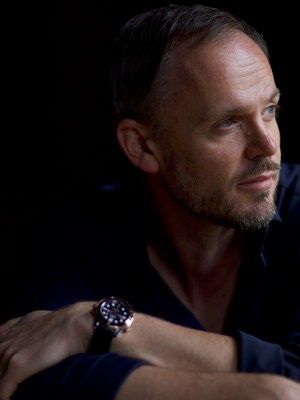
Who or what inspired you to take up the piano and make it your career?

The San Francisco Symphony concerts I attended as a child were my inspiration.  I also attended concerts by brilliant young musicians in Belgrade that were just as inspiring.

In college I studied mathematics, but music seemed like a bigger challenge.  It seemed like a bigger risk too; that attracted me.  Also, I intuited that a career in music would be a more enriching way to develop as a person.

Who or what were the most important influences on your musical life and career?

At a pivotal moment in my musical development, just before I moved to France, I met Steve Coleman, a saxophonist, improviser and composer.  By a stroke of luck, my final year at university coincided with the year he was in residence there.  Studying improvisation with him changed everything for me.  He is the most inspiring musician I’ve ever met.

But in general I’ve learned more from non-musicians than from musicians.  Music is a technical subject; as a result musicians often have limited horizons.  The most important lessons I’ve learned were from personal experience, analogies I drew from other fields, and my own research.

What has been the greatest challenge of your career so far?

The reconciliation of my intellectual curiosity with my career as a performer.  I’m starting to find ways of combining the two.  But for years it was terrifying to be in a field where there is so little critical questioning of the fundamentals.  The typical performer’s career is, in many ways, anti-intellectual.  One is expected to act, and to leave the thinking to others.  Countering that trend has become a guiding principle for me.

Which performances/recordings are you most proud of? 

Recordings are more important to me than performances.  From experience, I know not to trust in-the-moment feelings I have at concerts.  Performances feel like experiences, whereas recordings feel like achievements (or failures).  Studio recordings are, first and foremost, an incredible tool for self-knowledge.  I can’t imagine my musical life without them.  For musicians, a recording is “proof” that they can do something.  It’s a powerful message.

Further, the ability to edit has elevated recording into a process of constructing a version of a piece that is what you would like it to be, within the limits of what you can do.  Recordings have become frozen, idealized performances that can be revisited.  Making them is exhilarating.  At its best, a recorded version of a piece feels like it has an almost physical weight, or inertia, like a sculpture.  It’s built to last.  If it’s good enough, it does.

People often remark that recordings rarely have the same “magical” atmosphere as a fine performance.  There does seem to be a Faustian bargain involved: you trade the feeling of communion with an audience for a musical artifice.  But the insight you gain and the ability to spread the music are just two of many reasons why recordings have become an unavoidable part of how we experience music.

A friend of mine suggested that performers make recordings as a way of compensating for the fact that they don’t “create”.  It’s an interesting idea.  But my reply is that recordings are proof that we do create, that playing is a creative act.  The ability to forge an interpretation that doesn’t instantly evaporate has destabilised the work-performance dichotomy, which has become outdated.  Now there is a trichotomy: work, performance, and recording.  One might even say that recordings are neither performances, nor works, but something in between.  Or perhaps they form a triangle.  The position of recordings is ambiguous and hard to pin down.

This has certain philosophical implications.  For example: does an excellent recording erode the importance of the score?  What is the essence of the work: the dots on the page?  The sounds that result when you play the dots?  Your intention, the ideal that you strive for, or the actual sounds themselves?  A combination of all of these?  These questions are important, and when you try to answer them you realize how elusive they are.  Strangely, classical music is a field in which many people get angry if you even ask such questions.

The recording of sound is only about 140 years old.  It is the musician’s printing press.  We still haven’t come to terms with the extent to which it has changed musical culture.

Which particular works do you think you play best?

Any work I’ve never heard before.  When I have no reference points I am the most free.

How do you make your repertoire choices from season to season?

It’s changed over the years.  I used to play repertoire at the intersection of my interests and those of concert promoters.  Now things are much more skewed towards what I feel I must do, for myself.  I’ve come to rely on fear as a guide for finding the right repertoire.

My left-hand Godowsky project (2012) is an example.  When I had the idea, I was petrified.  As I began to pursue it, many people tried to talk me out of it.  The amount of work was overwhelming.  But it was a great success, the reaction was like a tidal wave.  It allowed me to break out from my generation, and from the pernicious influence of other people’s opinions.  The experience transformed me.

Do you have a favourite concert venue to perform in and why?

Before an important recital I often play for a friend at home, a few days before.  Always a non-musician, and always someone I trust.  The person is only 2 meters away, which makes it very difficult.  But the one to one communication is powerful.

Favourite pieces to perform? Listen to?

At the moment my favourite piece to perform is Morton Feldman’s Palais de Mari (1986).  I’ve never heard audiences listen as intently as they do when they listen to it live.  I expect that in ten years the piece will become mainstream, i.e. it will be programmed alongside Chopin, Debussy, and Scriabin.

When it comes to listening, nothing replaces the physical vibrations and the welling-up of emotion one gets when listening to a first-rate orchestra, live, in a great hall.  And, contrary to popular opinion, we live in an age with many worthwhile composers.  I heard a wonderfully glamorous orchestra piece by Péter Eötvös recently, the orchestra sparkled.

Who are your favourite musicians?

For the past two years my favourite musician has been Morton Feldman.  His works have deeply affected me, as well as his interviews and his lectures about music.  He’s taught me so much, even though he’s been dead for 27 years.

What is your most memorable concert experience?

There have been concerts where I had epiphanies that permanently changed my playing.  Those are the most memorable.

Progress is not linear in music.  You can labour for weeks on something, then one day it comes together.  Sometimes the practice accumulates.  But other times you just try something differently and – bang! – you understand something you never understood before.  For musicians, as with athletes, these moments are usually coupled with a new physical sensation.  Sometimes there is even a transcendental sense of being “connected” to something.

One example was a recital I gave in 2006.  Because the audience was seated all around me in an intimate setting, I changed my gestures at the piano, making them more expressive, because it fit the moment and the sound of the room.  I could never have planned it, I just did it.  And that aspect changed permanently from then on.  Being in a new situation seems to be an important common factor with these experiences.

What do you consider to be the most important ideas and concepts to impart to aspiring musicians?

Read.  Write.  Refine your mind as well as your musicianship.  Cultivate what makes you different from others.  Exercise.  Don’t underestimate the importance of sleep.  Socialize with people with whom you have nothing in common, preferably of all ages.  In addition to music school, study at a university and take classes in as many diverse subjects as you can.  Demand access to the best teachers.  Listen to them carefully and with scepticism.  Never compromise anything having to do with your education.  If a subject is difficult for you, ask for help.  Eat well.  Be wary of distractions (read: smartphones).  If you can, live somewhere other than where you were born, preferably in a foreign language; it’s the best cure for arrogance.  Be generous: if you pursue a living as a musician, chances are you were the recipient of selfless generosity from dozens of people over the years.  Say thank you.  Never let anyone tell you you can’t, or won’t succeed.  You will.

What are you working on at the moment?

Improving my learning speed.  It’s interesting how if you focus on improving one quantifiable aspect of your playing, everything else tends to improve with it.

Ivan Ilić recently released a new CD on Heresy Records entitled The Transcendentalist, featuring works by Alexander Scriabin, John Cage, Morton Feldman and Scott Wollschleger (b 1980). The album has enjoyed substantial critical acclaim and is broadcast often on six continents.  

Ivan Ilić’s full biography
http://www.ivancdg.com


(photo: Robert Philip)

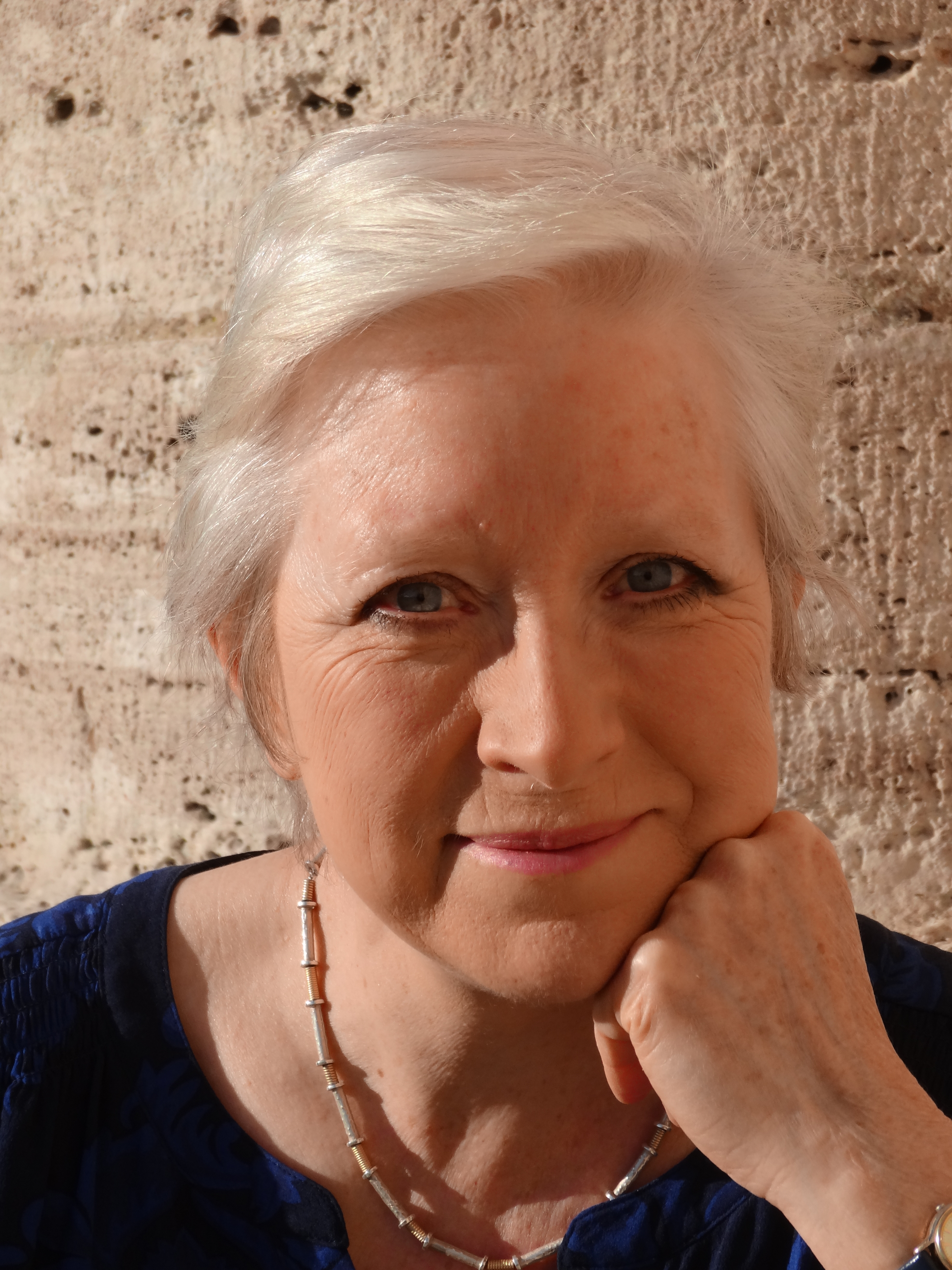
Who or what inspired you to take up the piano and make it your career? 

We didn’t have a piano in the house when I was little, but gradually my friends’ parents started reporting that I had been trying to play their piano when I came to their house. My parents were surprised (neither of them had had the opportunity to learn an instrument) but intrigued, and eventually they decided to take the plunge and acquire an upright piano. It was a make of piano I’ve never come across since: Eungblut & Eungblut. I remember that when it arrived in our living-room I already felt it was an old friend and I ‘knew how to play it’, though I can’t really account for that feeling as I hadn’t yet had a piano lesson.

Who or what were the most important influences on your musical life and career?

I think I’d have to name various professors I met at masterclasses when I was in my twenties and had officially ‘finished my musical education’. In some ways, it was yet to begin! I met the Hungarian violinist Sandor Vegh at the International Musicians’ Seminar in Prussia Cove, Cornwall. Later on I met the Hungarian pianist Gyorgy Sebok when I was spending a semester at the Banff Centre in Canada. Those two musicians with their very different personalities and pedagogical approaches were hugely influential, opening my eyes and ears to a larger, more profound and multi-layered way of thinking about music.

What have been the greatest challenges of your career so far? 

I suppose being an introvert in a ‘public performance’ profession has been my greatest challenge. It isn’t straightforward, of course – I seem to have a deep need to communicate music to an audience and get their reaction, and I love to be appreciated, but there are many other aspects of being ‘on show’ that don’t come naturally. I’m very interested in people, but I’m quite a private person and need lots of time to myself. I suppose the friction between those things has been the reason that I took to writing about music and being a musician [I’ve written four books]. I find that writing about performance helps me to come to terms with the self-imposed challenge of being an introvert in an extrovert profession.

Which performance/recordings are you most proud of?  

I feel very fortunate in having lots and lots of concerts I’m proud of having been part of. I’ve worked with so many amazing musicians. Recording-wise, it’s a little different because I’ve never much enjoyed the process of making records. Nevertheless I am proud that many of my recordings have been well-received and have meant something to people. I guess my favourite one is still the first: the Domus recording of Fauré piano quartets. We were all novices then, of course, but we also had a very special bond. I can still hear our freshness and idealism when I listen to that recording.

Which particular works do you think you perform best? 

I really hope I can say Mozart’s works, because he has always been my favourite composer, and I’ve spent a great deal of time trying to live up to his beautifully lucid yet deep and subtle music. Other favourites are Schumann, Schubert and the French composers of the end of the nineteenth century; I adore the piano music of Debussy, Ravel and Fauré. Then there are two ‘greats’, Beethoven and Haydn, whom I used not to feel so close to, but with time I’ve come to appreciate them more and more, and when I perform their music I feel more confident that I have something to say about it.

How do you make your repertoire choices from season to season?  

That’s always a blend of things that people ask me to play, and suggestions I put forward if I have the opportunity. Unfortunately, programmes usually have to be planned far in advance, which means that you find yourself committed to play something you suggested two years ago, and may not feel like playing quite so much when it comes to it! But somehow, just because you’re committed to playing a certain work on a certain date,  the appetite to prepare and perform it does develop when the time approaches.

Do you have a favourite concert venue to perform in and why? 

For years and years I have loved the Wigmore Hall, where I first played as a child and have been fortunate to play in regularly ever since. Other favourites? Well, there was Domus’s white portable geodesic dome, in which we played memorable concerts and tried to forge a new way of presenting chamber music to new audiences. I also remember a wonderful old hall in Bilbao, very similar in character to the Wigmore in a way. I loved the feeling of Carnegie Hall, where the auditorium seems to open up before you in a very pleasing way as you look from the stage. The Konzerthaus in Vienna is pretty special; I was impressed by a beautiful new hall in Zaragoza, and I have a happy memory of playing in Grieg’s house in Bergen, where the audience sang me ‘Happy Birthday’! I always enjoy playing ‘house concerts’, especially in beautiful drawing-rooms; I often feel that these are the kind of rooms, and the kind of audiences, for which a lot of the classical repertoire was conceived. I love the intimate atmosphere and the closeness of the audience.

Favourite pieces to perform? Listen to? 

I don’t really have favourite pieces to perform; I find that whatever I’m working on occupies my imagination and becomes my ‘favourite’, or at least my obsession. Funnily enough, at the moment I don’t listen to all that much music when I’m away from the piano. When you spend a lot of time practising or rehearsing, you don’t particularly feel the desire to listen to even more music just for fun. I often listen to jazz radio when I’m working in the kitchen, but in fact I just as often enjoy silence.

Who are your favourite musicians? 

I couldn’t single out particular people from the amazing list of musicians I’ve been lucky to work with. There are so many different ways of being a good musician, and so many ways of collaborating with other musicians. Over the years I have been inspired by the attitude and standard of playing of many of the musicians I’ve met and worked with in Prussia Cove, both during the ‘masterclass seminars’ in April, and during ‘Open Chamber Music’ in September. Many of those people have become my long-standing musical colleagues. People travel from all over the world to be in Prussia Cove, and I’ve lost count of the illuminating and stimulating musical experiences I’ve had there. In general, I’ve always got most out of people who are interested in being good chamber musicians rather than single-minded soloists.

What is your most memorable concert experience?

As many writers say when asked which of their books is their favourite, I’d probably say that my most recent concert is the one that’s most vivid in my mind. I don’t have a ‘most memorable’ experience – there have been so many. Just for fun I might mention my first-ever piano trio concert when I was a teenager, still at school. Fellow students and I performed the Arensky piano trio, which we had learned in after-school sessions. Unbelievable fun, and we had such a sense of achievement!

What do you consider to be the most important ideas and concepts to impart to aspiring musicians?

For me, the most important thing to impart to students is that great music is not ‘entertainment’, nor just a social accomplishment, but a reflection of life. Most of the music I care about is a metaphor for life, of its complexity (and sometimes its simplicity). Great composers have found a way of channelling their thoughts and life experiences into music, in such a way that the rest of us can receive a kind of ‘distilled understanding’ through the music. Once a young musician has grasped this point, working on music becomes much more than a surface task, and they can begin a huge journey of exploration.

Where would you like to be in 10 years’ time?

In ten years’ time I’d love to be reading in the press that older women have outstripped every other kind of artist in popularity. They will be top of every concert hall’s agenda; they’ll be the toast of the town because of their wit and wisdom, and governments will plead with them to head important initiatives. Images of glamorous young musicians will disappear from adverts and brochures, to be replaced by iconic portraits of wise women. (We can dream – that’s one thing you learn as a musician!)


Susan Tomes is a leading UK pianist, a rare example of a woman who has achieved several decades as an acclaimed chamber music pianist. In 2013 she was awarded the Cobbett Medal for distinguished services to chamber music.

Born in Edinburgh, she was the first woman to study music at King’s College, Cambridge. She has been at the heart of three internationally admired ensembles: Domus, the Gaudier Ensemble, and the Florestan Trio, winners of the Royal Philharmonic Society Award in 2000. With these groups she has performed and broadcast all over the world. She is a long-standing participant at the International Musicians’ Seminars in Prussia Cove, Cornwall, where she met many of her chamber music partners. She has made over fifty CDs, many of which have become benchmark recordings, winning Gramophone Awards, Classic CD awards, Diapasons d’Or in France, and Deutsche Schallplattenpreise. At Hyperion Records’ 20th anniversary, Gramophone wrote that ‘Susan Tomes’s playing is always magnetic and concentrated whatever the repertory, a rare gift which she consistently employs not for her own glorification but in the cause of corporate music-making.’ Her recital repertoire focuses particularly on French music, Mozart, Schubert and Schumann; as a soloist, she has recorded Mozart piano concertos and 1920s piano music by the Savoy Hotel’s Billy Mayerl.

As well as performing, Susan is a champion of the art of the chamber music pianist, illuminating the role and promoting the status of the collaborative pianist over many years in radio talks, newspaper and magazine articles, keynote speeches, seminars, and masterclasses. She is the author of four books on performance issues: Beyond the Notes (2004), A Musician’s Alphabet (2006), Out of Silence (2010) and Sleeping in Temples (October 2014), which has already been a Books of the Year choice, a Christmas Books selection and Editor’s Choice in various journals. Her books are now studied in ‘performance practice’ courses in various parts of the English-speaking world. She has been a guest on the BBC flagship radio programmes, ‘Today’ and ‘Woman’s Hour’. She has served on many international competition juries and is often invited to give masterclasses at music conservatoires. She is a guest tutor at the European Chamber Music Academy, and holds her own masterclasses every year in London, attracting international chamber groups.

Susan is currently engaged on a long-running duo series with the Austrian violinist Erich Höbarth. They focused on Mozart for two years, and are now exploring the sonatas of Schubert. Susan is the solo pianist on a  record made by the Royal Scottish National Orchestra to celebrate Creative Scotland 2012 with the gift of a special CD for every child born in Scotland during the year.

www.susantomes.com


Who or what inspired you to take up a career in music?

As a teenager I was lucky to have Jeremy Carter as my piano teacher. I also revered the rock’n’roll pianism of Jerry Lee Lewis (and still do).

Who or what were the most important influences on your musical life and career?

I struggled during my first couple of years on the demanding joint course between Manchester University and the RNCM, but my third year was something of a revelation. I learnt reams during my piano lessons with John Gough (including, crucially, a fresh and non-stuffy approach) and also took composition lessons with John Casken and lectures in postmodern music from Kevin Malone and Shostakovich from David Fanning. It was at this point I knew I didn’t want to do anything else. Fulbright studies in the US with Ursula Oppens sealed the deal.

What have been the greatest challenges of your career so far?

Juggling a range of disciplines and trying (hard!) to excel in all of them. Alongside piano I compose frequently for many varied ensembles (that, strangely, hardly ever include piano – for example this one) and I regularly conduct performances of (mainly) new music. My work with CoMA (Contemporary Music for All) is really important because it involves getting amazing people from all walks of life participating in the music, and I also serve on the board of the Riot Ensemble in order to get the most cutting-edge of this stuff out there in concert. I love teaching and am lucky to supervise over 80 groups of all styles and genres as part of my role as Head of Chamber Music at the University of Chichester, and I also have a clutch of brilliant and talented students at the Junior Royal Academy.

Which performance/recordings are you most proud of?

I played Rzewski’s colossal ‘The People United Will Never Be Defeated’ in three venues last year, and I think I am proud to have scaled that particular pianistic mountain (although I haven’t been brave enough to listen to the recording yet!). I’m also pleased to have performed Lutoslawski’s terrific concerto – here’s a clip of the ending in my performance with the Northwestern Symphony Orchestra and Victor Yampolsky.

Which particular works do you think you play best?

Probably pieces by Shostakovich. I relate well to nervous energy, tragedy…. and comedy!

How do you make your repertoire choices from season to season?

Whatever I think will be fun to prepare and fun for people to listen to.

Do you have a favourite concert venue to perform in and why?

Hmm, tricky one. I like venues where it is easy to blur the boundaries between the performers and the listeners, so it’s more of a community experience. Maybe St Martin-in-the-Fields?

Favourite pieces to perform? Listen to?

Kevin Malone wrote me a wonderful and hilarious piece involving plenty of theatre called Count Me In. You can watch a performance here. I also love the sound of wind orchestras and have been lucky to have been involved in quite a few over the years. You can’t beat the Americans for their brass sound.

Who are your favourite musicians?

I’d have to include Pierre Boulez – a great musical polymath with an amazing conducting style. You can see every single composerly detail in the gesture. My American conducting teachers (especially Mallory Thompson) taught me the importance of this. At other ends of the spectrum I love Eddie Cochran and The Who.

What is your most memorable concert experience?

Probably my first outing of Amy Beth Kirsten’s ‘Speak to Me’ in which I have to adopt the persona of two female goddesses as well as play some really imaginative piano music. (You can listen to a performance here.) I’m playing this again in a Riot Ensemble concert on January 30th.

What do you consider to be the most important ideas and concepts to impart to aspiring musicians?

Just to give 100% energy and commitment to whatever is being asked of you, however big, small or unusual.

What are you working on at the moment?

This morning, the John Ireland ‘Phantasie’ Trio. I play in a piano trio with Ellie Blackshaw (violin) and Peter Copley (cello) and we are on a mission to present all three of the Ireland trios. They are wonderful and really reek of Sussex, which is where I live.

Where would you like to be in 10 years’ time?

Doing the same sorts of things, but with less anxiety about note learning/ preparedness.

What is your present state of mind?

Anxious about note learning/preparedness!

Adam Swayne works with a vast range of musical media and styles that go beyond conventional labelling. He is just as at home giving a solo piano recital or conducting an orchestra as he is organising musical installations in art galleries or composing for amateur ensembles. He takes an inclusive, informative and innovative approach to his music making that is drawing an increasingly large audience.

Adam is a graduate of the joint course between Manchester University and the RNCM. He gained first class degrees from both institutions, and an MMus from the RNCM. Manchester University gave Adam their highest award (Sir Thomas Beecham Medal) along with other prizes including the Recital Prize. Prizes from the RNCM included the John Ireland Prize and an award for performances of contemporary music.

In 2003 Adam was awarded a Fulbright Scholarship to begin doctoral studies at Northwestern University, U.S.A. He graduated in 2006 with distinction, having presented several U.S. premières of works by British composers.

Adam is now Senior Lecturer and Head of Chamber Music at the University of Chichester and piano tutor at the Junior Royal Academy of Music.

Adam’s Swayne’s full biography can be found on his website:

www.adamswayne.com

Ashley Wass pianist

Who or what inspired you to take up the piano and make it your career?

My (non-musical) parents ran a seafront guesthouse and had an electric organ standing (unused) in the corner of the lounge. I’m an only-child and got nominated fairly early on to be the one who’d put it to use. (As a 5 year-old I suppose I couldn’t really argue.) I used to play Christmas carols and Richard Clayderman hits to the guests and haven’t looked back since.

Who or what were the most important influences on your musical life and career?

I think it was Stravinsky who said “great artists steal”. Now, I’m not calling myself a great artist by any means, but I do empathise with that quote; I feel I’m constantly learning – or ‘stealing’, if you like – from other musicians. I guess we all do really; part of what ultimately defines our individual musical personalities is the process of choosing which bits of ‘stolen’ information we nurture and which bits we cast aside.

What have been the greatest challenges of your career so far?

Deciding exactly what kind of career it is I want.

Which performance/recordings are you most proud of?

I’m (thankfully) quite fond of my last two CDs. The first – Bach to the Future – features a collection of solo pieces that have been particularly significant in my life and career to date. It was actually recorded just a couple of weeks after my daughter was born, so the fact I managed to produce something vaguely coherent is quite an achievement. More recently, my piano trio released its debut album. It’s called The Seafarer and includes a collaboration with Willard White and a brand new transcription of Debussy’s La Mer by Sally Beamish. It’s a project which took a tremendous amount of time and effort to realise, so it’s lovely to see it hit the shelves.

Which particular works do you think you play best?

Ha – that’s a question which is probably best answered by others. I know what I enjoy playing, but musicians are often their own worst judges.

How do you make your repertoire choices from season to season?

I love the process of developing repertoire-led ideas into fully-fledged projects that can be toured (and sometimes recorded) over a full season. They tend to be getting more eclectic and adventurous as I get older; I think I’m driving my poor agent mad.

Do you have a favourite concert venue to perform in and why?

St. George’s in Bristol. It has the best acoustic of any chamber hall in the UK, a fine piano and – best of all – is within 30 minutes of my home. It means I can play a concert in a beautiful space and still be home in time for Match of the Day. That’s the ideal set-up as far as I’m concerned.

Favourite pieces to perform? Listen to?

In truth, I hardly ever listen to music these days unless I’m in the car, and then it’s either jazz (my choice) or nursery rhymes (my daughter’s choice). The Wass household is a strict no-music zone (piano practice aside).

Who are your favourite musicians?

Ella Fitzgerald, Nina Simone and Oscar Peterson. Oh, and I’d better say my trio [Trio Apache] partners – Matthew Trusler and Thomas Carroll – too. They’d kill me otherwise.

What is your most memorable concert experience?

Probably my Proms debut. Though that’s less because of the performance itself and more because I’d got engaged to my now-wife during the overture.

What do you consider to be the most important ideas and concepts to impart to aspiring musicians?

Variety. It’s essential, both to the maintenance of a career and to one’s musical well-being.

What are you working on at the moment?

I’m working on a big project with Matt Trusler for 2015 which involves commissioning 12 pieces from 12 different composers, plus a yet-to-be-written script, so that’s taking up a huge amount of time. It’s going to be awesome – watch this space.

Where would you like to be in 10 years’ time?

Doing what I’m doing now, but with another ‘0’ added to my fees.

What is your most treasured possession?

Photos of my trek to Everest Base Camp. Not only because going there was a dream come true, but because it also reminds me that I was once relatively fit.

The Seafarer‘, Trio Apache’s debut album, featuring Sally Beamish’s transcription of Debussy’s La Mer alongside her original work, The Seafarer Trio (with Sir Willard White narrating), is now available on the Orchid Classics label.

Ashley Wass, began playing the piano at 5, and studied music at Chethams Music School from age 11. In his teens he studied on scholarship at the Royal Academy of Music, where his teachers included Christopher Elton and Hamish Milne. Wass later studied with Murray Perahia. He is the only British winner of the London International Piano Competition (1997), prize-winner at the Leeds Piano Competition, and a former BBC Radio 3 New Generation Artist.

Described as an ‘endlessly fascinating artist’, Ashley Wass is firmly established as one of the leading performers of his generation. Increasingly in demand on the international stage, he has performed at many of the world’s finest concert halls including Wigmore Hall, Carnegie Hall and the Vienna Konzerthaus. He has performed as soloist with numerous leading ensembles, including all of the BBC orchestras, Philharmonia Orchestra, Orchestre National de Lille, Wiener Kammerorchester, Hong Kong Philharmonic, Royal Liverpool Philharmonic Orchestra, and under the baton of conductors such as Simon Rattle, Osmo Vanska, Donald Runnicles, Ilan Volkov and Vassily Sinaisky.

Ashley Wass’s full biography

www.ashleywass.com