Ashley Wass pianist

Who or what inspired you to take up the piano and make it your career?

My (non-musical) parents ran a seafront guesthouse and had an electric organ standing (unused) in the corner of the lounge. I’m an only-child and got nominated fairly early on to be the one who’d put it to use. (As a 5 year-old I suppose I couldn’t really argue.) I used to play Christmas carols and Richard Clayderman hits to the guests and haven’t looked back since.

Who or what were the most important influences on your musical life and career?

I think it was Stravinsky who said “great artists steal”. Now, I’m not calling myself a great artist by any means, but I do empathise with that quote; I feel I’m constantly learning – or ‘stealing’, if you like – from other musicians. I guess we all do really; part of what ultimately defines our individual musical personalities is the process of choosing which bits of ‘stolen’ information we nurture and which bits we cast aside.

What have been the greatest challenges of your career so far?

Deciding exactly what kind of career it is I want.

Which performance/recordings are you most proud of?

I’m (thankfully) quite fond of my last two CDs. The first – Bach to the Future – features a collection of solo pieces that have been particularly significant in my life and career to date. It was actually recorded just a couple of weeks after my daughter was born, so the fact I managed to produce something vaguely coherent is quite an achievement. More recently, my piano trio released its debut album. It’s called The Seafarer and includes a collaboration with Willard White and a brand new transcription of Debussy’s La Mer by Sally Beamish. It’s a project which took a tremendous amount of time and effort to realise, so it’s lovely to see it hit the shelves.

Which particular works do you think you play best?

Ha – that’s a question which is probably best answered by others. I know what I enjoy playing, but musicians are often their own worst judges.

How do you make your repertoire choices from season to season?

I love the process of developing repertoire-led ideas into fully-fledged projects that can be toured (and sometimes recorded) over a full season. They tend to be getting more eclectic and adventurous as I get older; I think I’m driving my poor agent mad.

Do you have a favourite concert venue to perform in and why?

St. George’s in Bristol. It has the best acoustic of any chamber hall in the UK, a fine piano and – best of all – is within 30 minutes of my home. It means I can play a concert in a beautiful space and still be home in time for Match of the Day. That’s the ideal set-up as far as I’m concerned.

Favourite pieces to perform? Listen to?

In truth, I hardly ever listen to music these days unless I’m in the car, and then it’s either jazz (my choice) or nursery rhymes (my daughter’s choice). The Wass household is a strict no-music zone (piano practice aside).

Who are your favourite musicians?

Ella Fitzgerald, Nina Simone and Oscar Peterson. Oh, and I’d better say my trio [Trio Apache] partners – Matthew Trusler and Thomas Carroll – too. They’d kill me otherwise.

What is your most memorable concert experience?

Probably my Proms debut. Though that’s less because of the performance itself and more because I’d got engaged to my now-wife during the overture.

What do you consider to be the most important ideas and concepts to impart to aspiring musicians?

Variety. It’s essential, both to the maintenance of a career and to one’s musical well-being.

What are you working on at the moment?

I’m working on a big project with Matt Trusler for 2015 which involves commissioning 12 pieces from 12 different composers, plus a yet-to-be-written script, so that’s taking up a huge amount of time. It’s going to be awesome – watch this space.

Where would you like to be in 10 years’ time?

Doing what I’m doing now, but with another ‘0’ added to my fees.

What is your most treasured possession?

Photos of my trek to Everest Base Camp. Not only because going there was a dream come true, but because it also reminds me that I was once relatively fit.

The Seafarer‘, Trio Apache’s debut album, featuring Sally Beamish’s transcription of Debussy’s La Mer alongside her original work, The Seafarer Trio (with Sir Willard White narrating), is now available on the Orchid Classics label.

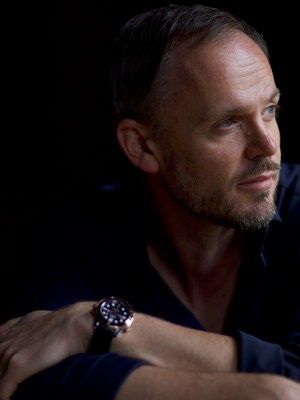
Ashley Wass, began playing the piano at 5, and studied music at Chethams Music School from age 11. In his teens he studied on scholarship at the Royal Academy of Music, where his teachers included Christopher Elton and Hamish Milne. Wass later studied with Murray Perahia. He is the only British winner of the London International Piano Competition (1997), prize-winner at the Leeds Piano Competition, and a former BBC Radio 3 New Generation Artist.

Described as an ‘endlessly fascinating artist’, Ashley Wass is firmly established as one of the leading performers of his generation. Increasingly in demand on the international stage, he has performed at many of the world’s finest concert halls including Wigmore Hall, Carnegie Hall and the Vienna Konzerthaus. He has performed as soloist with numerous leading ensembles, including all of the BBC orchestras, Philharmonia Orchestra, Orchestre National de Lille, Wiener Kammerorchester, Hong Kong Philharmonic, Royal Liverpool Philharmonic Orchestra, and under the baton of conductors such as Simon Rattle, Osmo Vanska, Donald Runnicles, Ilan Volkov and Vassily Sinaisky.

Ashley Wass’s full biography

www.ashleywass.com

Who or what were the most important influences on your musical life and career?

The late Jacob Lateiner (1928 to 2010) who was my teacher at Juilliard. He was an inspiration in more ways than one: as a pianist, a scholar, a collector, a gourmet, a connoisseur, and one smooth talker who could melt the heart of any woman (or so I imagine). Sometimes I wish everyone I know could have the chance of meeting Lateiner, who exerted such a big influence in my life and encouraged me to go down this rabbit-hole. Even now I still feel his presence; I step where he points.

What have been the greatest challenges of your career so far?

Finding my own voice. Not so much about public speaking, though I do tend to speak during concerts, but in the sense of crafting a repertoire that best expresses my personal expressive character. Appreciation is very different from performing; I may appreciate many different composers but performing them convincingly is a whole other matter.

Which particular works do you think you play best?

I have a deep affinity with the late romantics (the generations after Chopin/Schumann/Brahms) whose particular and eloquent way of writing for the piano transcends all language. They used the piano to express an endless spectrum of feelings, from unabashed romanticism to Parnassian intellectual probity, from Panglossian pessimism to spiritual elation.

How do you make your repertoire choices from season to season?

I take inspirations from every corner of daily life. I tend to string together works that create a coherent idea for a programme, from single-composer to country-themed selections; more often I try to balance public tastes with serious historical or cultural elements. Planning a successful programme is one of the hardest parts of the job, as it requires creativity and immense knowledge. A good programme sells like a basket of fat olives, while a poorly constructed programme feels like a tangled tale.

Do you have a favourite concert venue to perform in and why?

I love a more intimate setting. I love the stage, and I am very comfortable on stage, big or small, but when I am physically close to my listeners I tend to be more emotionally spontaneous.

What is your most memorable concert experience?

The most memorable experiences are always the best concerts and the worst venues. The best performances were those when I was completely “in the zone”. I was performing in France the poetic and impressionistic music of Louis Aubert, the pianist-composer contemporary of Ravel, when not even the most enticing French women audience (of which there were many) could have drugged me out of the “zone”. On the other hand I have had numerous concerts in less-than-desirable settings that I’ll always remember. Once I was performing in China on a piano with a rickety leg, and throughout the entire concert I was picturing different threatening scenarios and news headlines … “Pianist died during concert under a piano, literally”.

What do you consider to be the most important ideas and concepts to impart to aspiring musicians?

At the student level, learn as wide a repertoire as possible, from William Byrd to the latest sounds, from the Balkans to Buenos Aires. The next step is to find a unique voice and performing style, and specialize in it. Whenever possible, travel.

What are you working on at the moment?

Identifying the composition of grapes in different vintages of Spanish cava and from different producers. Also trying to work out my latest commission of a double-breasted suit with a Parisian tailor.

Where would you like to be in 10 years’ time?

Alive, but not obsolete.

What is your idea of perfect happiness?

Being interviewed.

What is your most treasured possession?

The lust for life and for beauty.

What do you enjoy doing most?

Meeting a patiently analysed situation with all the resources of thought.

What is your present state of mind?

Aching streaks of melancholy.

Ernest So performs works by Rachmaninoff and Gliere at the 1901 Arts Club on Friday 12th December as part of the South London Concert Series. Further details and tickets here

Critics have hailed Ernest So as a performer who exerts a “phenomenon presence on stage” and who “evokes the romanticism and technical brilliance of a 19th century pianist”.  Mr. So’s early manifestation as concert pianist brought prizes such as the Bes​t Performer A​ward in Singapore and later the Beethoven Trophy.  His years at the Juilliard School were spent under the artistic influence and instruction of renowned Beethoven scholar Jacob Lateiner (1928 – 2010); other teachers include Solomon Mikowsky, the late Constance Keene, and Jonathan Feldman.

Ernest So’s full biography can be found on his website:

www.ernestso.com


(photo: Marc Borggreve)

Who or what inspired you to take up the piano and make it your career?

When I was young there was always music at home: my father was an amateur pianist and my parents used to play old records with all sorts of classical music: opera, lied, symphonic repertoire and piano music.

Who or what are the most important influences on your musical life and career?

Studying with truly wonderful piano teachers: Peter Feuchtwanger, Bernard Roberts at the Royal College of Music and Hamish Milne at the Royal Academy of Music. But also the legendary German baritone Hermann Prey with whom I was fortunate to work in my early twenties.

What have been the greatest challenges of your career so far?

Rachmaninov’s Piano Concerto no. 3, I guess.

Which performance/recordings are you most proud of?

I’d rather leave this for the critics to decide! But I am quite happy with my latest recording, Ravel’s complete works for piano solo.

Which particular works do you think you play best?

I have developed a very soft spot for Schumann since I started recording his entire piano oeuvre four years ago.

How do you make your repertoire choices from season to season?

Generally, the concerto repertoire is decided by the orchestras and conductors. The choice of chamber music pieces, in turn, is a result of a dialogue with the chamber partners I love working with. For my solo recital repertoire I am almost 100% in the driving seat in terms of making the decisions. Often I try to programme pieces I am about to record during or just after a given season.

Do you have a favourite concert venue to perform in and why?

The Wigmore Hall in London and the Musikverein in Vienna – wonderful acoustics and atmosphere!

Favourite pieces to perform? Listen to?

Beethoven’s Piano Concertos

Who are your favourite musicians?

Martha Argerich, Leonard Bernstein, Chick Corea, Jacqueline du Pré – at least one for each letter of the alphabet…

What is your most memorable concert experience?

2007 in Caracas: performing Penderecki’s Piano Concerto under the baton of the composer with the Simon Bolivar Youth Orchestra of Venezuela.

What do you consider to be the most important ideas and concepts to impart to aspiring musicians?

True passion for what you do, hard work, patience, perseverance and a good sense of humour

Your new disc is the complete solo piano music of Maurice Ravel. What is the particular attraction of this composer’s music for you? And what are the special challenges of his piano music?

Ever since my childhood I have been in love with Ravel’s music: the colours, the atmosphere, the exotic beauty and inner lucidity of his writing. The special challenges: an enormously nuanced virtuosity, subtlety of hearing and colouring.

What is your idea of perfect happiness?

Being with my family.

What is your present state of mind?

Onwards and upwards!


Florian Uhlig’s new Ravel: Complete Solo Piano Works is available now on the Hänssler Classic label.

Born in Dusseldorf, pianist Florian Uhlig gave his first solo recital at the age of 12. He studied with Peter Feuchtwanger and continued his studies at the Royal College of Music and at the Royal Academy of Music in London where he now lives, as well as in Berlin.

Full biography on Florian’s website:

florian-uhlig.com


(photo: Roberto Masotti)

Who or what inspired you to take up the piano and pursue a career in music? 

I was inspired by the music and my never-ending desire to be part of such a unique art form, be absorbed by it, forgetting everything around me and becoming the music itself by bringing it to life under my fingers. Only then, being able to communicate it to others.

Who or what were the most important influences on your musical life and career? 

Musicians and artists around me, such as the countless performances, concerts, operas, ballets, expositions I was enriched with since I was a child and now. Also, my teachers, contemporary music and the art and the beauty I was surrounded by in my native Tuscany.

What have been the greatest challenges of your career so far? 

Playing Stockhausen for Stockhausen. I was really nervous, and being very young I wasn’t sure at all if what I had carefully prepared by myself was simply “right”.

Which performance/recordings are you most proud of?  

My next recording, which will be out soon.  It focuses on the evolution of Stravinsky’s music, starting from his folk roots, his native Russia and traditional folk tunes and themes featured in Petrushka. Stravinsky is then inspired by returning to music of ancient Classicism also following his refusal of the new revolutionary Russian ideals, and it is what we call now his “neoclassicist” period. Here I linked it with the Suite for piano or harpsichord by living French composer Karol Beffa. It features at the same time Stravinsky’s concept of “non descriptive” music as “the music expresses it-self”. It is followed by his serial period: Stockhausen and Stravinsky influencing each other. Stockhausen was influenced in his youth by listening to the Rite of Spring. Less obvious is the influence of Stockhausen’s serial groups music on Stravinsky’s later production.

Which particular works do you think you play best? 

Everything I love.

How do you make your repertoire choices from season to season?

Ideally every recital I play would feature one new piece and a juxtaposition of music picked from my repertoire. I always follow my wishes when choosing new repertoire.

Do you have a favourite concert venue to perform in and why? 

I love to perform at the Wigmore Hall: the projection of sound is very clear and transparent yet rich and warm.

Favourite pieces to perform? 

I have many, and these have been changing over years. At this particular moment I would say Chopin Piano Concerto n. 1, the 4 Chopin Ballades, Petruska by Stravinsky, and Brahms Paganini Variations among others.

Listen to? 

The Rite of Spring

Who are your favourite musicians?

Igor Stravinsky, Sviatoslav Richter, Natalia Gutman.

What is your most memorable concert experience? 

One of them was performing Liszt Piano Concerto n.1 at the Berliner Philharmonie: just before walking on stage the conductor I was playing with said to me the following words: “just think about music”. I will remember that forever, and it gave me huge confidence. Only after the closing chord of the Concerto performance I realized I was surrounded by thousands of people in this amazing artistic architecture.

What do you consider to be the most important ideas and concepts to impart to aspiring musicians? 

We do it to make people’s lives better.

What are you working on at the moment? 

On my next recitals: chamber music programmes, concertos and recitals including Schumann’s Adagio and Allegro, 5 Pieces in Folktunes, Janacek Pohadka, Tsintsadze 5 Pieces, Rachmaninov cello and piano Sonata, Chopin Polonaise Brillante for cello and piano, Bartok Romanian Dances, Beethoven Spring Sonata, Franck Sonata, Chopin Ballades, Rachmaninov 2nd Concerto, Arensky and Shostakovich 1st Trios, C.M. Weber and Nino Rota and Tchaikovsky Trios and a solo recital programme featuring Mozart and Liszt, up to December 2014.

Where would you like to be in 10 years’ time?

Around the world performing every day.

What is your idea of perfect happiness?

See above plus my and my dears’ health.

What is your most treasured possession?

Hand written notes.

What do you enjoy doing most?

Being surrounded by friends, reading, travelling.

What is your present state of mind?

In constant pursuit of perfection.


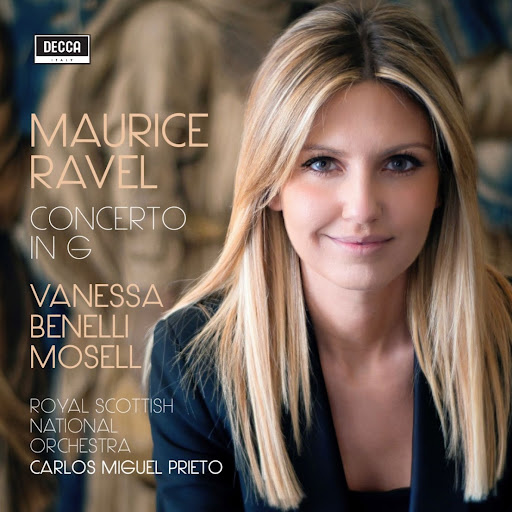
Vanessa Benelli Mosell is a rising star on the international music scene. She is continuously praised for her virtuosity, her technical brilliance and the sensitivity of her musical insight, which have been shaped significantly in mentorships with Karlheinz Stockhausen and Yuri Bashmet.

Benelli Mosell gave her debut appearance at eleven years old with pianist Pascal Rogé, who described her as “the most natural musical talent I have encountered in my entire life”. She has since performed with orchestras such as the Münchner Symphoniker, Berliner Symphoniker, the Zurich Chamber Orchestra and Orchestra del Teatro Comunale di Bologna.She also performed with the Moscow Soloists, replacing Martha Argerich in 2012. In the same year, Vanessa gave her celebrated debut at Londonʼs Wigmore Hall. Last year was one of new encounters including a tour to South America, concerts with the Jerusalem Symphony Orchestra and the Orchestre Philharmonique de Strasbourg, as well as a sell-­out solo recital at Hamburgʼs Laeiszhalle.

Vanessa Benelli Mosell began her comprehensive musical studies when she was exceptionally admitted at the International Piano Academy in Imola at seven years old, where she studied with Franco Scala. In 2007 she was invited to the Moscow Tchaikovsky Conservatory to study with Mikhail Voskresensky. Vanessa entered the Royal College of Music in London in 2007, where she graduated in 2012 studying with Dmitri Alexeev, generously supported by the Russell Gander Award.

Full biography

www.vanessabenellimosell.com