What is your first memory of the piano?

The instrument itself rather than the music. I remember being fascinated by the mechanics of it as a very small boy: how a finger could set in motion such a complicated chain of events, all culminating in a single note. It struck me then, and still does, as one of mankind’s great inventions.

Who or what inspired you to become a teacher?

Disappointment, perhaps. Like many young musicians, I imagined the concert platform would provide all the fulfilment I could ever require. It did not. One eventually realises that performing is only one means of serving music. Teaching allows one to leave something behind in another human being, and I have come to regard that as the greater privilege.

Who were your most significant teachers?

My first teacher taught me discipline. My second taught me imagination.

The first is indispensable. The second is everything.

What do you consider the most important qualities in a musician?

Curiosity. Not merely about music, but about life itself. One cannot hope to understand music through music alone. Beethoven, Schubert, Chopin – all demand something of our humanity as well as our musicianship. Technique is acquired through work; humanity has to be lived.

What do you expect from your students?

Honesty. I do not mind mistakes, but I do mind pretence. A wrong note played with conviction tells me more than a flawless performance that has nothing to say.

What is the greatest challenge in teaching exceptionally gifted students?

Protecting them. The world is very eager to applaud talent, but considerably less interested in preserving the person who possesses it. A gifted young musician must be allowed to remain curious, to read, to fall in love, to walk in the countryside, to make mistakes. Otherwise, one risks producing a brilliant pianist and an impoverished human being.

How important is technique?

Essential, but technique is a servant, never the master.

Students often imagine they are practising scales. In reality, they are practising freedom. The better the mechanism functions, the less one has to think about it when the music begins.

How do you approach interpretation?

By asking questions rather than providing answers. Why has the composer written this harmony? Why this dynamic? Why silence here rather than another note? If a student discovers the answer for themselves, they will never forget it.

How do you deal with performance anxiety?

Preparation first, perspective second. Though I would be dishonest if I suggested either is always sufficient. Fear is not necessarily rational, and knowing that one is prepared does not always silence it. I remind my pupils that audiences do not attend concerts hoping the pianist will make mistakes. They come because they wish to be moved.

Which composers do you return to most often?

Beethoven remains inexhaustible. Every decade of one’s life reveals another Beethoven. I suspect I shall still be discovering him on my final day.

Brahms has become increasingly dear to me with age, while Debussy continually reminds us that the piano is capable of colours we scarcely imagine.

Do you think performance and teaching belong together?

Absolutely – one informs the other. A teacher who has never stood before an audience cannot fully understand the peculiar loneliness of the concert platform. Equally, a performer who never teaches risks believing music exists only for applause.

What gives you the greatest satisfaction as a teacher?

The moment a student no longer needs me. That sounds rather melancholy, but it is precisely as it should be. A teacher’s task is not to create dependence, but independence.

Do you have a favourite pupil?

No – though there are certain students whose gifts make one feel extraordinarily fortunate to have crossed their path.

What advice would you give to a young musician embarking upon a professional career?

Do not chase success. Chase truth in the music. Success, if it comes at all, is merely a by-product. And remember that there is a life beyond the keyboard. If your music is to speak honestly, it must be nourished by friendship, kindness, disappointment, literature, laughter, and love. Otherwise you will become a very accomplished pianist indeed, and have very little worth saying.

A note about Mr Hines

Sadly, you won’t find Icarus Hines listed amongst the great piano teachers of the early twentieth century. He is a fictional character from F M Wilson’s debut novel Facing the Music, in which he is the teacher and mentor of the gifted young pianist Theo Browne. His opinions, however, are entirely his own…

(Image generated by AI)
Guest interview by Michael Johnson

A legend in contemporary piano music, Ursula Oppens has just turned 80 and shows no sign of trimming back her busy life of recording, performing, teaching and commissioning new works from American composers. She fights the aging process with tremendous vitality and mostly wins.

But as she told The New York Times recently, “The eyesight goes, the fingers, the retention”.

A few weeks later in my telephone interview with her, she was more optimistic. “My mind is still functioning the way I would like it to function. I am lucky to be very active at this time and I plan to continue.”

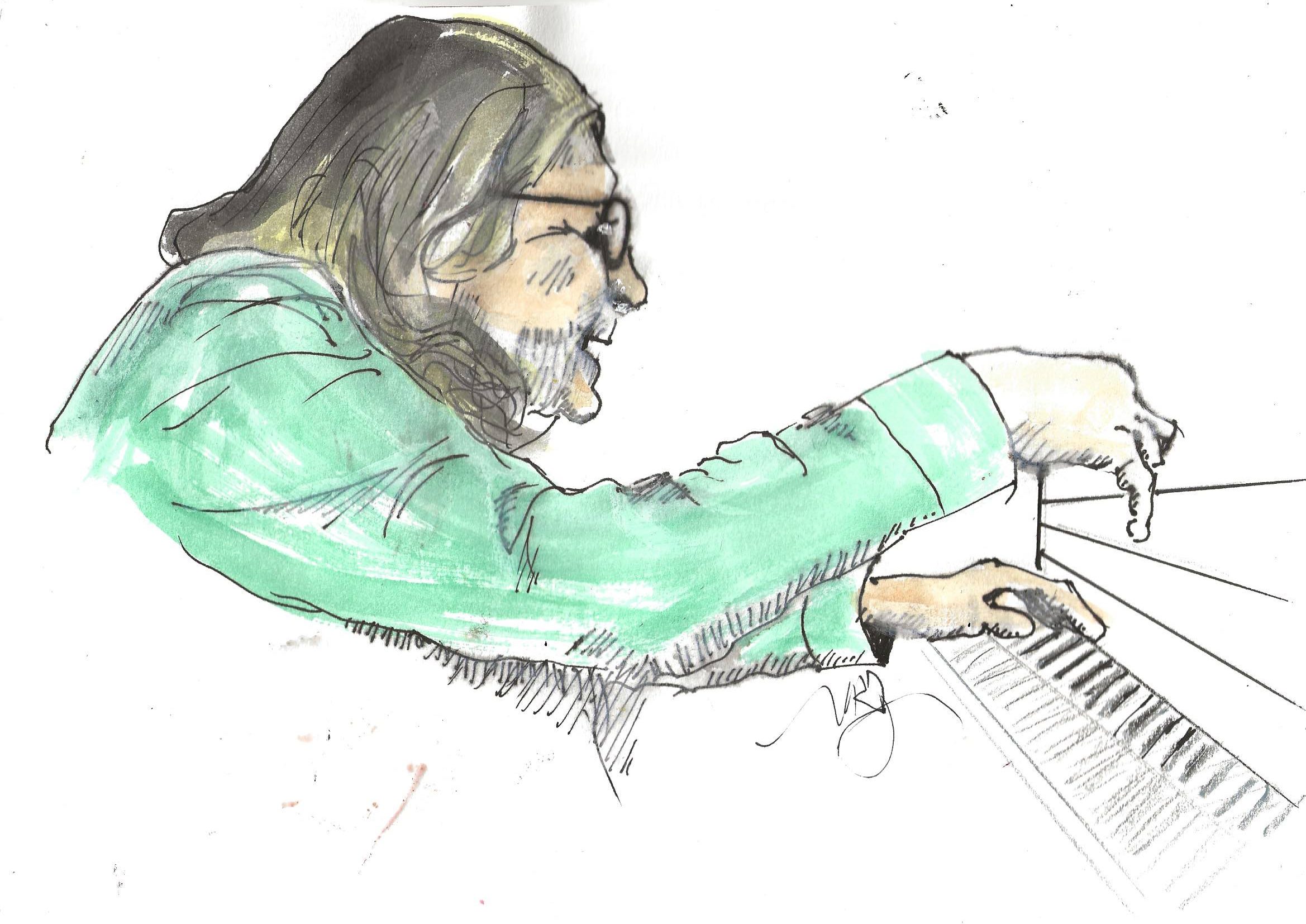
The Times rather bluntly described her as “a little fragile, tiny and stooped”. I tried to capture some of that in my portrait of her.

But she is also recognized as a powerful performer who tackles the thorniest of new pieces. As she said in our interview, she remembers hearing the difficult works of Julian Hemphill for the first time and thinking “This is for me!”.

Composers who have been commissioned by her or who have written works for her include such leading lights as Frederic Rzewski, William Bolcom, and Charles Wuorinen.

Perhaps her best known collaboration was with expatriate American Rzewski with whom she became “very, very, very close friends” and produced the now standard “People United will Never be Defeated”, a magnificent set of 39 variations. Some critics have classed it alongside Bach’s Goldberg Variations and Beethoven’s Diabelli Variations.

She worked together at a distance with Rzewski during the pandemic, ending with his musical tribute “Friendship”. As Oppens told me, we could not meet in person for two years but “he could write and I could play”.

In this clip she plays Rzewski’s “Friendship” on a Fazioli grand.

Her attraction to modernity took shape when she attended lectures and a concert at Radcliffe College with the young French composer Pierre Boulez. She was musically smitten and never looked back.

Edited excerpts from our recent conversation, recorded while she was at a music festival in North Carolina:

You have helped shape contemporary American music through your commissioning of new works. How did you become so interested in modernity?

My parents were refugees from Europe and they felt they had left a great culture behind. I found out much later in life that my mother had taken a course with Anton Webern. And my father joined the ISCM (International Society for Contemporary Music). So they had been interested in new music all along. I didn’t know that as I was growing up but it might have been an influence in ways I didn’t understand.

You are perhaps best known for your commissioning. Are there other people out there also looking for new works? Or are you alone?`

Oh no. There are people like that all over the place.

Where has the commissioning money come from? Family funds?

No, some has come from foundation grants. For example, I received a big grant from the Washington Performing Arts Society. But funding commissions can come from all kinds of sources.

When did you start commissioning?

I didn’t really commission until after college. The first composers I approached to write pieces for me were Tobias Picker and Peter Lieberson. I recorded both their pieces. One composer who had a great influence on me was composer John Harbison. I also played with this wife, the violinist Rosemary Harbison.

I believe the late Fredric Rzewski was among your friends. You knew him, didn’t you?

Oh yes, he was a very, very very close friend. I commissioned his “People United Will Never be Defeated”. The most recent piece I commissioned from him was “Friendship”. It was very much a pandemic piece. For two years we couldn’t see each other but he could write and I could play. He died at 83 in Italy during the pandemic.

You have a new CD coming out soon?

Yes, it’s the music of Charles Wourinen. Mostly solo piano but there’s also a ballet for two pianos that we still have to record. I knew Charles well and worked with him from 1966 to his death in 2020, maybe the longest relationship I’ve had.

What was your relationship with Julian Hemphill?

I lived with Julian for almost twelve years. He is a fine composer and a wonderful man. When I heard his difficult music I thought, “This is for me!”

In your CD “Winging It”, you featured the John Corigliano music that you had commissioned. Does that happen often? You commission something, the composer writes it and you record it. Is that how it works?

That’s what it’s all about. Yes, when you commission a piece it’s a little bit like having a child. You let the child go out into the world, make his own friends, and live his own life. What’s exciting is that after a while other people start playing it.

You seem to be focused on the American composers.

Basically yes, because American composers are people I can work with, people I can bump into. You want this personal contact and you become their friends, like Thomas Picker — I am very honored to be a friend of his, you know. Working with him has made my life very exciting.

Your fans worry about your health. Should they?

Not really. I work more slowly. I don’t run any more. But I’m perfectly healthy as far as I can tell. Of course as one gets older things get a little creakier. My mind is still functioning the way I would like it to function. I am lucky to be very active at this time and I plan to continue. I have had a wonderful share of happiness in my life.

What has aging done to your piano technique?

Luckily I don’t have any serious problems but I cannot say I play as well as I did when I was fifty. I am careful about expanding my repertory. I don’t take on impossible pieces, like Prokofiev’s eighth Sonata.

Are you slower, are you careful about your repertory?

Yes, recently I was teaching the Prokofiev. It was very sad that I had never played it. It’s too difficult a piece for me to learn at this point. I could practice but I probably would not be able to perform it.

But you could still teach it?

Oh yeah.

It is like a master class, I suppose? You play a few bars to show the way?

Not necessarily. You can point out the phrasing, and this and that. You’ve got to hear this note to make sense of the next one — and stuff like that.

Most of the musicians I talk to avoid contemporary music because it requires a lot of learning and they are not sure it’s worth the trouble. Is it really that difficult to master?

It can be difficult, yes, but often it is absolutely wonderful. There is no limit to how exciting it can be. It’s very, very thrilling. You bring to life something that has not existed before.

What about the limited reception by people who are not tuned into contemporary sound worlds? They say well, it’s not Mozart. Doesn’t that drive you up the wall?

No. Live music in a small hall with an audience of sixty people can be so wonderful. Sometimes I tell the audience to listen for certain passages. It makes it an exciting experience for them.

Do you have any fear of being slightly crowded out by the Asians who have suddenly discovered us?

No. If immigration were not part of America I would not exist. I am the daughter of immigrants. We are a mixture, and that is fantastic. I know some of the great young pianists are Chinese. There are people everywhere who can run better, who can jump better, and there are people who can play the piano better.

Do you have a swan song in mind? Are you even thinking of your legacy after the inevitable end?

I will keep making music as long as I can. I know that one day I won’t be able to, and that’s a normal part of life. But I don’t wish to be playing the harp for eternity.

(Ursula Oppens, portrait by Michael Johnson)


MICHAEL JOHNSON is a music critic and writer with a particular interest in piano. He has worked as a reporter and editor in New York, Moscow, Paris and London over his journalism career. He covered European technology for Business Week for five years, and served nine years as chief editor of International Management magazine and was chief editor of the French technology weekly 01 Informatique. He also spent four years as Moscow correspondent of The Associated Press. He is a regular contributor to International Piano magazine, and is the author of five books. Michael Johnson is based in Bordeaux, France. Besides English and French he is also fluent in Russian.

Michael Johnson, in collaboration with The Cross-Eyed Pianist (Frances Wilson), has published ‘Lifting the Lid’, a book of interviews with concert pianists. Find out more / order a copy

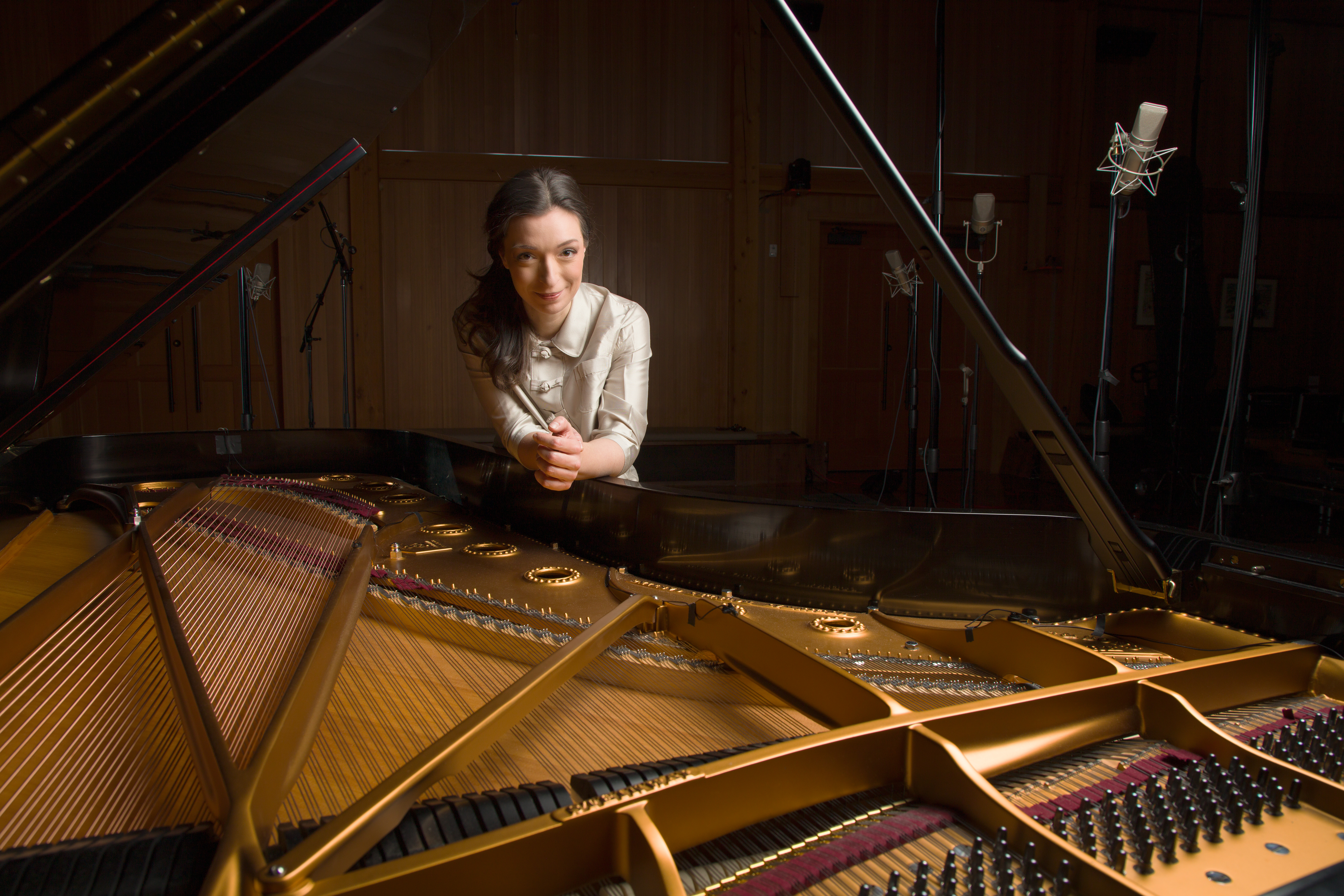
To coincide with the release of her new album ‘Chopin: Voyage’, Russian pianist Yulianna Avdeeva talks about her life in music, balancing one’s artistic needs with the external pressures of a professional career, and how inspiration “can be found anywhere”.….


Who or what inspired you to pursue a career in music and who or what have been the most important influences on your musical life and career?

In my childhood I was surrounded by music. Although my parents are not professional musicians, they were great music lovers and had an upright piano at home, as well as a solid LP collection. At some point they realized that I was trying to play a melody that I had just heard with one finger on the piano, and took me to the Gnessin Special Music School. When I was 5 years old I entered the piano class of Elena Ivanova, with whom I studied for 13 years, until my graduation, and who became a family member for me. Thanks to her amazing admiration and approach to music, I was able to discover this magical world for me as well. However, the moment I remember so well, which was crucial to me, was my first public performance, when I was 6. I was supposed to play 2 Tchaikowsky pieces from his Children‘s album, and my parents and teacher were explaining that I shouldn‘t be scared by the light and people and the audience and should be concentrating on the music I’d play for them. I was not scared at all; on the contrary, I enjoyed very much communicating with the audience through the language of music! And I wished to perform again. So the solution for how to stay motivated for practice was found! I keep that feeling until today and am so grateful to be able to speak this universal language with people all over the world.  

What have been the greatest challenges of your career so far?

I think the greatest challenge is to find out what your mental and physical needs are in order to achieve the most satisfying artistic result. This result depends on many factors, which I had to recognize and acknowledge in my preparation work as well as in my stage performance. Time management is one of the most essential elements; it means that I must know how I should organize my practice, so that I give each piece I perform enough space not only in my daily practice but also in my soul, since I need to “live” with a piece for a while so that it becomes, in a way, my co-creation. On the other hand, I have to know my limits — for instance, if I have a very tight schedule, how many programmes can I really handle? And does it make sense, artistically? My personal goal is to be in the best shape when I walk onstage, and it is probably a never-ending process to understand myself.

Which performances/recordings are you most proud of? 

It is always very difficult for me to listen to my own recordings or the recordings of my own concerts. I almost always think, “Oh, now I would play that completely differently!”. This is the charm and challenge of music — it exists only in the moment when it is being performed, and it is not easy to capture this moment on any recording. So I very rarely listen to my own performances — with some exceptions, of course. For example, it is an amazing inspiration and joy to work with Bernhard Guettler, the sound producer I have worked with for my latest two recordings — Resilience, and Voyage, my new Chopin album, on the Pentatone label, featuring his late works, which has just been released. This particular recording experience was absolutely unique for me for two essential reasons: the location and the instrument. I was so lucky to make this recording at the one and only Tippet Rise Arts Center, in Fishtail, Montana, surrounded by nature and a wonderful team. And on top of that, I played the music on Vladimir Horowitz’s personal piano, which has an exceptionally long and warm sound that opens up like a flower.

When I first touched this piano in September 2022 at the TIppet Rise Arts Center, my first thought was, “This piano is my dream partner for Chopin’s music!”. So I am very thankful to Peter and Cathy Halstead and the entire team at Tippet Rise Arts Center for their most kind support; Mike Toya for his amazing care of the piano; Bernhard Guettler for his patience and his unlimited desire to explore the sound worlds; and the Pentatone team for bringing this recording to life.

Which particular works/composers do you think you perform best?

The moment I decide to play any piece, it becomes “the best and dearest piece” for me, otherwise I will not be able to find an authentic approach to it. Nevertheless, of course there are composers I admire so much, since they have an enormous emotional impact on me, such as Bach, Beethoven, Schubert, Schumann, Chopin, Liszt, Rachmaninoff, Mahler, Prokofiev, Shostakovich, and Bartok, to name just a few. A great discovery for me was Bernstein’s Second Symphony, “Age of anxiety,” in which the piano has a very important solo-like part. It was an exciting process to prepare this unique work, based on Auden’s poem, and I am so lucky to have performed it a couple of times in Spain and Italy and finally to play it in the United States with the Minnesota Orchestra and Robert Trevino on October 18th and 19th, 2024!

How do you make your repertoire choices from season to season?

The piano repertoire is just limitless, which is the pianist’s curse and blessing! My personal list of pieces I would love to play is getting longer every year, so I have to make decisions about what I would like to play next. Sometimes it takes a long while to decide on a recital programme; for me it is important that there is a certain concept, or at least a connecting idea between the pieces. The programme I am performing at Carnegie Hall on October 22, 2024 is a Chopin and Liszt recital. They were the two giants of the Romantic era, both unique performers, and both were trying out the most extreme ways of expression on the piano, even if they were moving on very different paths.

Next year I will be performing Shostakovich’s 24 Preludes and Fugues, op 87, which for me is one the greatest cycles for piano of all time. It was inspired by Bach’s The Well-Tempered Clavier, which I will be playing in 2027. These cycles require my entire concentration in the preparation. At the same time, for next year I also prepared a programme that connects two composers you wouldn’t expect to see together — Chopin and Shostakovich. But Shostakovich was a participant at the first Chopin Competition, in 1927, in Warsaw, and he played Chopin a lot in his younger years. So it is always kind of a work of investigation to create a recital programme.

Do you have a favourite concert venue to perform in and why?

There are many; I could not pick only one. Some of the halls are very inspiring because of their history and the musicians who have performed there — like Carnegie Hall, or the Musikverein in Vienna, but also some modern halls are amazing because of their acoustics and atmosphere — for example, Disney Hall in Los Angeles, or Elbphilharmonie in Hamburg. 

What do you do off stage that provides inspiration on stage?

I am convinced that inspiration can be found anywhere — it can be a color from the sky or of the leaves on a tree; it can be a conversation, or a great book, or even a smell — like the smell of the air in the autumn, or the aroma of a fantastic meal. I just have to be very open to be able to absorb it.

What is your most memorable concert experience?

It is difficult to say. In every concert I share a part of my soul, and my soul in turn keeps the memories of each single concert. And, as I mentioned, the music exists only in a moment when it is being performed and cannot be repeated — that is why each concert experience, even with the same repertoire, is always different.

As a musician, what is your definition of success?

Artistic success for me is probably when I am able to present an interpretation of a piece which on the one hand comes as close as possible to the composer’s will — though this criteria is very subjective — so, on the other hand, it is about my personal feelings about the music, which should be very strong and authentic. And the message of the music I perform should be acceptable for the audience, otherwise I have failed to translate the music score into human feelings. 

What do you feel needs to be done to grow classical music’s audiences?

It is essential to give access to music to the youngest. That can be through playing an instrument, singing, dancing, or any other kind of musical activity, because music also helps children to feel and articulate the emotions they experience. This is what makes human beings unique and irreplaceable. Later on, children who have been exposed to these experiences will decide whether they want to play or sing for their family, or go to concerts, or become a professional musician. Maybe they will not have any interest in it at all. But our goal should be to give them a chance to explore this magical world of music.

What advice would you give to young or aspiring musicians?

I would like to encourage young musicians to think, before they go on stage, about how lucky we are to be able to speak the language of music and share our passion with the audience. And it does not matter if their audience is big or small, or if it is a concert, an exam, or a competition — it is only music, which matters for the performer, and we should only focus on it. I am wishing you a long, happy life, full of wonderful sounds! 

Yulianna Avdeeva performs music by Chopin and Liszt at Carnegie Hall, New York, on 22nd October. Find out more here

Yulianna Avdeeva’s new recording ‘Chopin: Voyage’ is available now on the Pentatone label.


Audiences love this music and playing it is a fascinating challenge

JAMES LISNEY pianist

The music of Fryderyk Chopin has been central to British pianist James Lisney’s repertoire since his Wigmore Hall debut in 1986.

This autumn he is touring some of Chopin’s most beloved piano music, including the Four Ballades and selected Nocturnes, with concerts in Prague, Belgium, the Netherlands, and France. The UK leg begins on 27 September, and includes major venues such as Bradshall Hall at Birmingham Conservatoire and the Stoller Hall in Manchester, and more intimate venues including London’s 1901 Arts Club. Those who cannot attend in person can enjoy a livestream of the programme from St George’s Bristol on 27 November. Full details here

In this podcast, James talks about the challenges and pleasures of playing Chopin, in particular the Ballades, concert preparation, and inspiring amateur pianists….


This site takes many hours each month to maintian and update. If you find value and pleasure in what I do, why not