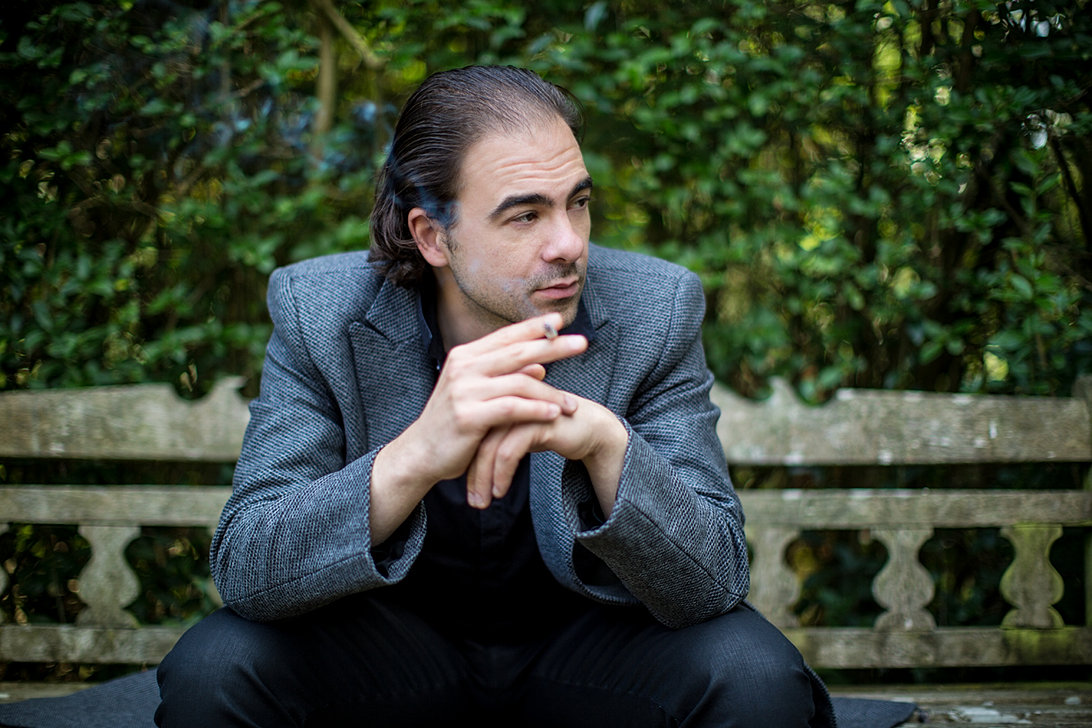
Who or what inspired you to take up the piano and make it your career? 

One Sunday morning, on satellite television, I heard for the first time W. A. Mozart’s Eine Kleine Nachtmusik; the family legend says I was in rapture for the whole broadcast and this gave my parents the idea to buy a small toy piano for my next – fourth – birthday. Since that day, piano and music have been faithful companions in my journey through life.

Making it my career was, quite simply, a question I really never posed myself. Practicing the piano was much more entertaining and challenging to me than any other school subject. Certainly it felt much more natural than solving mathematical equations or translating verses from Latin.

Who or what were the most important influences on your musical life and career? 

It is amazing how much one can learn from a fellow musician and how the smallest detail, the simplest word or metaphor can have an impact and open a whole new landscape of possibilities and thoughts. I have been very fortunate to study with and learn from tremendously inspirational figures and feel I have inherited from all a composite array of ideas and teachings.

Admiration for artists of the past has played an important role too in my development, on top of being a subject that has often spurred wonderful debates, and I feel that different periods of my life have been marked by an attraction for different giants of the past. When the great Horowitz-Rubinstein debate raged in pianistic circles in the late ‘80s I remember being a faithful follower of the former. Cortot captivated me ever since I heard a Chopin recording in class during my Master’s degree in the USA. Although, if I were forced to make one single name, and I feel you are challenging me for it, Arturo Benedetti Michelangeli is an artist who leaves me speechless and towards whom I am constantly drawn.

What have been the greatest challenges of your career so far? 

Mainly the struggle to keep my own development as the primary focus, especially after finishing formal education. I reached emancipation from any doubts after realising the gratification I get in trusting my instinct supported by historical research of a score. Upholding certain principles and my own artistic integrity has guided me through any glitches I may have had at times.

Which performance/recordings are you most proud of?

It is hard to avoid falling for the clichéd answer in this case: the last one. In fact, each album I have recorded is a unique creation; each represents, together with the build up that precedes the red light going on, a set of memories and a particular state of mind in a time and place.

I would like to share a few thoughts on my latest effort, Empire of Sound. The label A Fly on the Wall was set up to allow artists to express their individualities and to capture them at their most creative, taking live footage during recording sessions. A slight, but fundamental, difference with purely studio recordings.

It was by chance I noticed that Debussy’s Second Book of Preludes, Granados’ Second Book of Goyescas and Stravinsky’s Petrouschka (the ballet/orchestral version) were all composed in 1911. All signify a key moment for pianistic writing and music history in general, hence the title – a quote from Debussy in a letter to Stravinsky of the same period. This serendipity was too beautiful to be overlooked.

I could not have asked for a better artistic partnership to put on disc my passion for this programme.

Which particular works do you think you perform best?

I like to think I have a particular affinity for the music and worlds of Schumann and Brahms, although this is just my opinion. Posterity, or the listener, will judge if required.

How do you make your repertoire choices from season to season?

Planning for repertoire often takes unusual and unforeseen twists and turns. One piece may lead to ‘discovering’ another and I especially enjoy finding relations and threads that unite them, to create a combination that, with a little bit of luck, has not been tried before.

Do you have a favourite concert venue to perform in and why? 

As an adopted Londoner, Wigmore Hall – inaugurated by the Italian pianist Ferruccio Busoni – is a gem that remains dear to me above all others. I debuted there with the Pavào Quartet on the 40th anniversary of the Moon landing, a date I will forever remember. Aside from the glorious beauty of the stage and the intimate character of the hall, the backstage rooms are inspiring and make one feel part of a centenary musical legacy.

Favourite pieces to perform? Listen to?

Right now it would be Brahms’ Piano Quintet.

Surprisingly perhaps, I seem to escape listening to music as a pastime. Although when the mood strikes, recordings of Bernstein’s version of Tchaikovsky’s 5th Symphony or a Mozart Opera are never far away. I also indulge in some jazz – Jaques Louissier’s Bach arrangements are always in the car – and, probably even more surprisingly, enjoy the dark sounds of Pink Floyd.

Who are your favourite musicians?

Those who know how to listen and have an individual voice.

What is your most memorable concert experience? 

When this question arises my memory invariably goes to a solo recital in Nottingham a few years back. I was being driven to the venue and due to difficult road conditions I was still in the car by the 19:30 starting time. Phone calls were made in order to keep the audience reassured of my arrival, which meant I had to change to my performing clothes in the car, enter the venue through the main entrance (free of charge, I admit) and – summing up all courage – start Chopin’s first Scherzo without trying the instrument nor having had a chance to warm up. It all conjured up for a very pleasant post concert celebration.

What do you consider to be the most important ideas and concepts to impart to aspiring musicians? 

As with many things in life, it is all about balance. Without a doubt great sacrifices are required through the years, but the priceless payoff is the spiritual relationship created with our instrument. I always insist on the fact that this life-long endeavour gives us a special perspective on the world and a unique means to learn about our own selves.

What are you working on at the moment? 

I have two recording projects in the pipeline for A Fly on the Wall. The complete Clarinet Sonatas by J. Brahms (including the transcription for clarinet of his First Violin Sonata) with Jordi Pons and a Violin and Piano recital with Giovanni Guzzo; accidentally, musicians and friends who have an individual voice.

As far as solo repertoire is concerned, I am building a rather wonderful programme based on Variations by different composers, including an exciting 20th century English work.

What is your idea of perfect happiness? 

A fleeting moment of awe, a momentary loss of control over the senses. If that fails, a fine meal and a challenging conversation accompanied by a glass of Mosel Riesling and Mozart’s Le nozze di Figaro will get me close to a perfect happiness.

What is your present state of mind? 

Rachmaninov is ominously looking towards me and it is suitably late for a short practice session. It’s a good state of mind!

Marco Fatichenti was born in Italy in 1980 to parents of Italian and Spanish heritage. After receiving his Diploma at the Rossini Conservatoire in Pesaro, Italy, he moved to the United States to continue his studies in the class of eminent pianist Joaquin Achucarro at the Southern Methodist University, Dallas. At this institution, by the age of twenty-one, he completed an Artist Certificate program and consequently a Master of Music in Piano Performace. In 2002 Marco was granted a full scholarship to attend the Royal Academy of Music to study with Professor Christopher Elton. Having been a recipient for two consecutive years of the Myra Hess Scholarship, presented by the Musicians Benevolent Fund, and of a prestigious grant by the George Solti Foundation, Marco finished his formal studies receiving the highly coveted DipRAM award.

A keen performer both as recitalist and chamber musician, Marco has performed in some of the most prestigious venues across Europe and the United States, including the Auditorio Nacional de Musica in Madrid, the Teatro Arriaga in Bilbao, the Auditori in Barcelona, the National Concert Hall in Dublin and Birmingham’s Symphony Hall. Recent highlights include an invitation by the Italian Minister for Foreign Affairs to perform at the EXPO in Saragozza, performing on the revolutionary instrument Fazioli ‘Onda’, his debut at Wigmore Hall collaborating with the Pavao String Quartet and a chamber recital in the Palau de la Musica in Valencia.

His performances have been recorded and broadcasted by the Spanish RTVE, Irish RTE, Polskie Radio and several times by the BBC, including a live appearance in the program ‘In tune’ presented by Sean Rafferty. Marco has also released two albums under the Jaques Samuel label, which have received roaring press reviews as well as a great success among the public.

In the past few years Marco has become a very sought after teacher and lecturer, being invited to take a position at Uppingham School and holding annual masterclasses in the prestigious National Young Pianists’ Week.

www.marcofatichenti.net

Who or what inspired you to take up the piano and pursue a career in music?  

I started to play the piano at a very early age (I was 4 years old). I can’t remember exact details but my parents were telling me that every time I saw a piano, I always wanted to play on it. It was even hard to pull me out of it once I started playing. Then they decided to buy me a real piano at home. My father was a professional musician, a teacher and a child prodigy. His name was Georgi Stavrev. He played the violin, the guitar and his big dream later was to be a symphony conductor but he got very sick. I remember listening to classical music at home all the time (especially Brahms, Beethoven, Bach) and always playing the piano. Sometimes my dad would play The Beatles, Queen, Aretha Franklin and jazz but it was mostly classical music that I was surrounded by at home and at school. Music was just a part of my life and I was born at the right musical family where I was lucky to have my parents support to pursue music as a career from early age. There was music at home, music at school, I was going all the time to the school’s concerts, the festivals concerts and the local Symphony concerts. I was in an intensive professional music program for children since the age of 4. When my parents moved to Plovdiv two years later, I started working with the renowned pedagogue Mrs. Rositsa Ivancheva at the National Music School “Dobrin Petkov”. She is a major influence and she was my piano teacher for 13 years. During my last 3-4 years of music school, I started lessons also with Prof. Krassimir Gatev at the National Conservatory in Sofia (while studying in Plovdiv with Mrs. Ivancheva). I miss both of these incredible teachers because they left the world just few years ago…

Who or what were the most important influences on your musical life and career? 

Important influences from the past: growing up I was very inspired to listen to the interpretations of Horowitz, Richter, Gilels, Pogorelich, Van Cliburn, and Rubinstein. They all have influenced my musical life for years and here is an example how: after hearing Scriabin’s 3rd Sonata (performed by Horowitz) I immediately got inspired to learn it. I had big success with it at concerts and competitions. Later Horowitz inspired me to learn also Vers la Flamme and the Barber Sonata (my recordings of these works are all on YouTube).

New influences: 1) working with new composers (Mason Bates, Gil Shohat, Vasil Kazandjiev, Carl Vine, Penka Kouneva, Nikolai Kapustin etc.) – what is amazing about this, is that there are not that many recordings of these composers’ works. Often, there are even no recordings at all – which means that I have to learn the work on my own (can’t listen to another pianist to get inspired). This is a direction I would like to continue – to create from my inner self rather than get inspired by somebody else’s interpretation. 2) Contemporary pianists: I’ve had the pleasure to work with and share musical ideas with pianists such as Daniel Pollack and Frederick Chiu, whose unique program “Deeper Performance Studies” is a major influence on my musical life and career.

Acting: It might sound strange but acting had an important influence on me too. During my time in Bulgaria I also had 5 years of private acting training. I couldn’t do both – theater school and music school so I was taking acting lessons only privately and secretly (my parents didn’t allow me to study acting but I decided to do it anyway lol). Acting opened a special door in me as an artist and it helped me even further with music – being able to perform with imagination, to “speak”/connect to the audience, to transform into a different character depending on which composer/piece I am working on. These are classes musicians don’t learn at music conservatories and they help very much with interpretation and stage presence. In Bulgaria I was trained by the Stanislavski’s system and I am a similar performer when it comes to my piano works – I get very emotionally involved in the content. I feel that all the arts are connected within each other. They are like different languages we would like to learn or explore but only one is our mother language and in my case it is music.

What have been the greatest challenges of your career so far? 

Finances. When I first moved to the USA it was very difficult learning how to support myself, to rely on myself, to take care of myself all by myself. I was only 18 or 19 years old. I didn’t know anybody when I first moved to Boston, I wasn’t used to the language too. I had $20 cash in my pocket, two suitcases, a full scholarship and lots of dreams. The full scholarship covered my tuition and school fees but I had to work the max hours possible in order to pay by myself for rent/dorm, living expenses, etc. There was a law that freshman must live on campus during the 1st year. I wasn’t informed about it while in Bulgaria. I found out about it when I arrived. International students on a student visa F-1 were allowed to work only on campus, no more than 20h per week for only $8h. Imagine if this is really enough to pay $1500 per month for dorm required by the school (basically 3 girls in one room) without living expenses and if that would allow the needed time to focus on practice, studies, go to classes, etc. The stress was incredible! To keep long story short – my college years were some of the most difficult times ever in my life where I faced some serious challenges.

Which performance/recordings are you most proud of?  

Recordings: My upcoming debut album titled “Rhythmic Movement” to be released this coming fall, depending on finances. It features music by Bulgarian composers Pancho and Alexander Vladigerov, Mason Bates, Ginastera, Kapustin and I composed 2 works as well. A lot of the pieces on the program for July 25th at the 1901 Arts Club are also on the album.

Performances: it’s hard to point just one. I would say probably my Carnegie Hall/Weil debut. Harris Goldsmith was one of the critics reviewing the concert and this debut basically was the start of a real career. Another performance I will never forget was a multimedia at a modern space in NYC featuring music, live body painting and photography. I like to experiment with the idea of synesthesia and connect my art to other artists work.

Which particular works do you think you perform best? 

The ones that I practice the most! Also the ones that I’m spiritually connected to and the ones I have something meaningful and something special to say. I also believe that music (art in general) is a reflection on personal life and that’s one of the reasons my programs are very unique. The program on July 25th features works that are very close to my hearth. Each piece is very special and very meaningful to me.

How do you make your repertoire choices from season to season? 

My repertoire ranges from Baroque to Contemporary. Sometimes concert presenters would ask me to play anything I would like to put on a program but sometimes they would specify if they have any specific preferences. For example when I performed at the French Cultural Center, the entire program had to focus on featuring French and French influenced composers. When I performed at the Bulgarian Center in New England, I performed works by all Bulgarian classical composers. New music concert series require all contemporary composers programs and other presenters prefer more traditional (Bach, Beethoven, Chopin) type of programs and more well-known composers.

Do you have a favourite concert venue to perform in and why? 

In New York: I just recently performed at the Tenri Cultural Institute in New York – a beautiful and intimate concert venue and a gallery in West Village. I love the area (West Village in Manhattan), I also love art (the fact that it is a gallery) and that the setting is intimate (it allows a closer connection with the audience). There is a very good energy about the space and location and I just feel excited and comfortable performing there.

In Bulgaria: I was born in Sofia but my hometown is Plovdiv. There is a very unique amphitheater from Roman times in the center of the city that in the summer features film nights, concerts, dance performances, operas, etc. This would be a very magical place to perform – under the starts! The view from there is amazing too. I’ve never seen a piano on that stage but maybe one day soon… I started dreaming already

Favourite pieces to perform? Listen to? 

To perform: Right now I’m really into Schumann, I’m working on the piano concerto. Last month I was into Vladigerov. My current favorite pieces are the ones on the program for July 25th at the 1901 Arts Club but I assure you that I’m going to have more new favorites soon since I keep searching for new inspirations all the time 🙂

To listen to: I love “Gaspard de la nuit” (performed by Pogorelich), Scriabin’s 5th sonata (performed by Horiwitz), Beethoven – “Appasionata” (performed by Richter), Brahms – the 1st Piano Concerto (performed by Claudio Arrau), Prokofiev – the 2nd and 3rd Piano Concertos, works by Bach (especially when Glenn Gould performs them), Sonata for Violin and Piano (by composer Milcho Leviev). I love listening to orchestral music too: Daphne’s Cloe, Stravinsky – Firebird, Mason Bates – Alrernative energy. I also enjoy listening to jazz (Bill Evans, Miles Davis), some rock (a lot of British bands)

Who are your favourite musicians? 

Deceased favorite musicians: Bach, Richter, Horowitz, Gilels, Claudio Abbado, Evgeny Mravinsky, Rubinstein, Ginastera, Beethoven, Leonard Bernstein, Anton Dikov, Krassimir Gatev, Maria Callas, Freddie Mercury,

Living/contemporary favorite musicians: Joshua Bell, Keith Lockhart, Ricardo Mutti, Mason Bates, Vasil Kazandjiev, Yo-Yo Ma, Frederic Chiu, Daniel Pollack, Evgeny Kissin, Martha Argerich, Penka Kuneva, Will Calhoun, Matthew Bellamy,

What is your most memorable concert experience? 

Concert Hall: the Grammy Museum Auditorium (Clive Davis Theater) – I was a part of a great mix of artists and musical genres. I loved the red curtains at the back and the lightning.

Rock club: probably when I opened for Amanda Palmer at the Webster Hall in NYC. This is memorable since I got to play Ginastra in a rock club introducing the composer and a movement from his 1st sonata to several hundred fans of Amanda’s that never knew that classical music could sound like that. 😀 A lot of my friends from school were telling me that I was crazy and that this could affect my good reputation. It was fun. It’s a different type of energy on such stage. I like making classical music more accessible to untraditional audiences as well. Did you know that the British band ELP arranged the “Toccata” from the piano concerto by Ginastera and played it for Ginastera? He loved it and he said that this is how his music should be played

What do you consider to be the most important ideas and concepts to impart to aspiring musicians? 

To be present in life and also when they perform on stage, to be very strong, not to be afraid to take risks and experiment with new ideas, to take a good care of themselves (eat well, sleep well, exercise, meditate, stay healthy), to know what they want and from there to know what they give and why, to perform live as much as possible, to stay always inspired and motivated, to never give up, even when they face difficulties.

Where would you like to be in 10 years?

To travel the world while living in the present moment

What is your idea of perfect happiness?

Being present. You can tell that I am into meditation. Often the things we want are not the things that make us happy, even when we get what we want. There is something called “the wanting mind” that will never stop wanting no matter what we get. I feel happy the most when I do something to make somebody feel happy. I get happiness when I give happiness. Actually, when I give, sometimes I get even more than I expected.

What is your most treasured possession?

We don’t owe anything forever. We temporarily have things and people. We are even temporarily in our bodies. Greatest values in my life are my dearest friends, being surrounded by people who care about me and love me and people who made a difference in my life. But I don’t owe them, I’m just lucky to have them in my life…

What do you enjoy doing most?

Being on stage, collaborating with amazing artists, musicians, creating and sharing

Tania Stavreva performs in London at the 1901 Arts Club, 7 Exton Street, London SE1, on Saturday 25th July. The concert includes the UK premiere of her ‘Rhythmic Movement in 7/8’ as well as premieres of works by other composers. Further details and tickets here

More information about Tania here

Who or what inspired you to take up the piano and make it your career?

When I was 11, by chance, I saw a piano in a front garden in my street. It had a sign on it saying’ Good Home Wanted. I wanted it! We wheeled it home and I was instantly drawn to it. I somehow knew that it contained something life-changing. From then on it was just a matter of learning, studying, and finding a way to make the piano speak. I knew when I first touched the piano that it would become my life.

Who or what were the most important influences on your musical life and career?

That warrants a multi-layered answer, I’m afraid, as there have been so many! One hugely important aspect has been my personal drive – not a ‘pushy’ drive, but more an absolute necessity to strive to play and communicate. A kind of influence from within…

Studying with Yonty Solomon when I was at the Royal College was life-changing. Up until then I’d never been taught – teachers had never nurtured or enhanced anything musical in me, and I now put this down to ego-driven, lazy, (non) teaching. Yonty was so generous and humble – I often worked every day with him. He opened up a whole new world of sound, expression and creativity. His ability to make me aware of things the piano could do was sheer genius.

Finally, although it sounds a bit downbeat, I have to admit that going through tremendous turmoil and difficulty in life has influenced and strengthened everything I do musically. From anguish comes understanding and creativity…

What have been the greatest challenges of your career so far?

Although I didn’t quite realise it at the time, I think making a ‘comeback’ concert after some 15 years of not even owning or touching a piano was a huge challenge, physically and emotionally. Not to mention musically! And I hadn’t played to an audience of any size for 18 years. So, a packed Cadogan Hall, plus critics, TV cameras and radio, and the English Chamber Orchestra on stage, and then playing two concertos (a Bach and Beethoven No. 5) could’ve been a recipe for disaster. I’m not quite sure how I did it, actually!

Which performances/recordings are you most proud of?

Along with the above performance, I have to say I’m incredibly proud of my recording of Bach’s Goldberg Variations. It was my first CD – released after the ‘comeback’, but recorded just before it – and it was sheer joy to finally connect with the piano after so many years away from it. It felt like ‘coming home’ and embracing something truly wonderful.

Which particular works do you think you perform best?

That’s such a hard question. I adore performing Bach, Beethoven, Mozart and Schumann solo works and concertos. I can only leave it to others to decide which I perform best…

How do you make your repertoire choices from season to season?

It’s not difficult: I re-learn works that are programmed each season, and then I usually decide to add some new works to the mix. But I’m very, VERY traditional – core Classical repertoire only for me: Bach, Mozart, Haydn, Beethoven, and then Schumann and Brahms as the Romantics. I spent too many years thrashing away at Liszt, Prokofieff et al. Now I realise that there’s little room in that repertoire to stamp an absolute ideal, my own personality, or even something a bit different. It all pretty much sounds the same no matter who plays it – and so many do play it, and so well. But it still all sounds pretty much the same…

Do you have a favourite concert venue to perform in and why?

I have to make an admission here: I usually love each hall I play in, at the time, Then, on reflection, I usually end up thinking it wasn’t such a great hall to perform in after all! It’s probably more to do with the actual pianos. The perfect piano in the perfect hall is so hard to find. Each needs the other. Alas it’s the life of a pianist to have to adapt to so many differing instruments.

But, there is one hall I do absolutely adore. The Metropolitan Festival Hall (Bunka Kaikan) in Tokyo – playing there was a dream as I really did have a perfect piano in an utterly magnificent hall.

Favourite pieces to perform? Listen to?

Gosh, that’s a hard one. In theory, I love every work I’m playing. But, there’s nothing quite like performing the Goldberg Variations – yes, it’s massive and very draining by force of sheer concentration, but the experience is indescribable and almost other-worldly.

As for listening, I don’t really do as much of it these days as I’d like. So much music is whirring through my brain when I’m away from the piano that to add to it, by listening to something else, gets a little overwhelming.

Who are your favourite musicians?

I’m afraid they’re all dead. I am never unmoved by the commitment of Klemperer’s conducting. The effortless musicianship of Elisabeth Schwarzkopf’s voice. The power and pathos of Birgit Nilsson’s. Glenn Gould for the eccentric mind that drove his playing – and sometimes even for the odd giggle at what he does. Myra Hess’s piano playing, for the artistry. Youra Guller, a practically unheard of pianist now – but she was incredible. And so many more…

What is your most memorable concert experience?

Hearing/seeing ‘Tristan und Isolde’ in Munich a few years back – with the magnificent Waltraud Meier singing Isolde, and Zubin Mehta conducting. Earth-shattering!

What do you consider to be the most important ideas and concepts to impart to aspiring musicians?

To work on each piece as though your life depends on it. But always try, with or without a teacher, to find something ‘personal’ to put into the music – something uniquely ‘you’. Nothing distasteful or silly, I’m talking more about making each piece really mean something on an emotional level. Aspiring musicians are so often schooled to play for exams or competitions, or to please this or that teacher, that the music is lost sight of. If there’s going to be any hope for the future of Classical Music, then we have to get back to basics: music is about feeling. Those pieces, even if composed hundreds of years ago, contain emotions just as valid to us today as they were to the composer. These are not ‘elite’ feelings – they’re simple and real and available to everyone. We can all connect on this level. Let’s not lose sight of it!

What are you working on at the moment?

I’m juggling Beethoven and Schumann: Beethoven Concertos 1 and 4. And Schumann’s ‘Kreisleriana’ and the ‘Etudes Symphoniques’. Next week I’ll add a Bach Partita to the mix. I think I need a holiday!

What is your most treasured possession?

A silver chain my late mother gave to me the night before I recorded the Goldberg Variations. She wore it every day for 40 years. I am never without it.

What do you enjoy doing most?

Spending time at home with my partner and my dog.

What is your present state of mind?

Focused. Yet still raring to go. And it’s 3am!

Nick van Bloss’s new CD of Beethoven’s Diabelli Variations is available now

Nick van Bloss was born in London and began piano lessons at the age of 11. His musical training began as a chorister at Westminster Abbey and he entered the Royal College of Music at the age of 15 as a Junior, attending full time from the age of 17, studying with Yonty Solomon and winning prizes for his playing. Further studies were with Benjamin Kaplan. In 1987, on hearing him play, the great Russian virtuoso, Tatiana Nikoleyeva, described van Bloss as the ‘finished article of a pianist’.

Read Nick’s full biography here


christina2bmcmaster

Who or what inspired you to take up piano, and make it your career?

I am the youngest of three girls and I always wanted to do everything my sisters did including piano – which I think they found quite annoying! I begged my Mum to allow me to have lessons too, and when I was finally allowed there was no stopping me! A few years on I remember listening to Ashkenazy play Beethoven’s ‘The Tempest’ Sonata in the car and feeling so excited about this fantastic piece and thinking how amazing it would be if I could play it one day. Forging a career as a pianist is not something I really thought about until I went to the Purcell School. Being surrounded by musicians already performing on the International circuit was slightly intimidating, but it motivated me to strive for a career as a performer.

Who or what were the most important influences on your musical life and career?

There have been so many. More recently my mentor Joanna MacGregor has been an immensely important figure for me. Whilst at the Royal Academy of Music she taught me so much about programming, presentation, life skills, all in addition to playing the piano!  My parents have also been influential. They have been very supportive in a non-pushy way which has allowed me to find my own path and have a genuine passion and drive for what I do.

What have been the greatest challenges of your career so far?

Maintaining balance and focus between my many musical projects, overcoming the post-concert come downs and performing Birtwistle’s Harrison’s Clocks in front of the composer!

Which performance/recordings are you most proud of? 

I have just recorded my debut album Pinks & Blues which will be released later this year. It’s a mix of classical and contemporary to jazz and blues and includes music by György Ligeti, Bill Evans, Gerswhin, Rzweski, Ravel as well as two new commissions. It took me a long time to decide on the content and order but am proud of it because as well as being my first album I think it takes the listeners on an excursion of familiar and unfamiliar sounds which I hope they’ll enjoy discovering!

Which particular works do you think you play best?

I feel a strong affinity to American Music of the 20th Century. The American ‘can do’ attitude resonates strongly with me. I love a challenge and that is what is often presented by these composers. Charles Ives’s music can often be extremely complex – 13 note chords for example! Ives, Henry Cowell, John Cage and others pushed boundaries, proving that we are not limited by the piano or traditional techniques.

How do you make your repertoire choices from season to season?

My concerts are often curated and informed by my interests – I like to keep adding new repertoire or presenting the old in new ways. For my next performance at St John’s Smith Square (June 25) I have programmed the Debussy Preludes interspersed with the lesser-known Ruth Crawford-Seeger Preludes for a new perspective. Other concerts coming up include an American programme with violinist Lizzie Ball, a two week residency at Dartington International Summer School performing Poulenc’s La Voix Humaine with fantastic soprano Sarah Gabriel and a Film and Piano programme – so I like to keep it varied!

Do you have a favourite concert venue to perform in and why?

This year I performed at the Holders Season in Barbados; it was a grand outdoor venue and a beautiful place – I would definitely like to return there! I also recently performed in a private house concert in Holland Park; I loved the freedom of playing in this relaxed and intimate atmosphere, with some people sitting on the floor, others standing. Here I felt a real involvement and concentration from the audience.

Favourite pieces to perform? Listen to?

This changes all the time and depending on the season or even what time of day. I go through phases: recently I had a Mozart Sonata period, listening repeatedly to the complete recordings by Maria João Pires – this is good before noon and it helps to clarify my thoughts. The Britten/Pears recordings of Schubert’s Winterreise are another favourite – I would love to work with a singer on this work. I also spend a lot of time of Spotify exploring new pieces and for when I go running I definitely need something with a beat!

Who are your favourite musicians?

I have so many, but to name one of them: Radu Lupu. I adore his deep and warm sound and in particular his Schumann and Brahms recordings.

What is your most memorable concert experience?

Martha Argerich at the Royal Festival Hall. I was just a few seats back from the front row watching her play Prokofiev’s 3rd Piano Concerto and I could hear, feel and see everything – WOW!

What do you consider to be the most important ideas and concepts to impart to aspiring musicians?

Well, I am still learning myself, but I would say enjoy challenges, avoid imitation and explore other interests. There never seems enough time to practise at music college, but developing your character and having substance is absolutely crucial.

What do you enjoy doing most?

Practising (with a good coffee and high quality chocolate). When I first left Music College I found I had to do so much aside from practising in order to progress in my career. It was a basic yet incredible discovery for me that I am only happy if I have practised at least several hours a day. Without this I definitely notice a feeling of incompleteness and I’m probably not very pleasant to be around!

Where would you like to be in 10 years’ time?

New York. It’s a city I’ve always been drawn to – it’s a City for dreamers and big ambitions – I love that it never stops – a bit like me and I guess that’s why I am so attracted to it!

Christina is a highly innovative pianist and curator with a continually growing reputation for bold and vivacious performances.  Christina has performed extensively in major venues including at the Southbank Centre, Kings Place, Aldeburgh Festival and The Holders Season, Barbados. She has won numerous prizes including the Jacob Barnes Award, The Royal Academy Christian Carpenter Prize, The CAVATINA Chamber music trust prize and audience prize, and the audience prize in the Jacques Samuels Intercollegiate Competition.  

Christina attended the specialist music school Purcell School and achieved a first from the Royal Academy of Music in 2013, where she studied with her mentor Joanna MacGregor. Christina has continued her education and exploration of 20th Century French Music taking masterclasses with Maestro Bernard Flavigny who has a direct lineage to Debussy.

She has collaborated with a diverse mix of genres and arts, recently working with the Brodowski Quartet, violinist Lizzie Ball, rapper Tor Cesay, Director Richard Williams, actors from Central Saint Martin’s and a number of designers for London Fashion week. Christina is a strong supporter of diversity within and outside of the arts and recently founded Ensemble WOW – an organisation dedicated to promoting equality through unique and imaginative programming.  

Christina is a dedicated performer and discoverer of new music working with established composers including Sir Harrison Birtwistle, Sir Peter Maxwell Davies, Tansy Davies and Stephen Montague as well as emerging composers – collaborating most recently with Freya Waley-Cohen and Richard Bullen.

Christina McMaster is a 2016/17 St John’s Smith Square Young Artist
