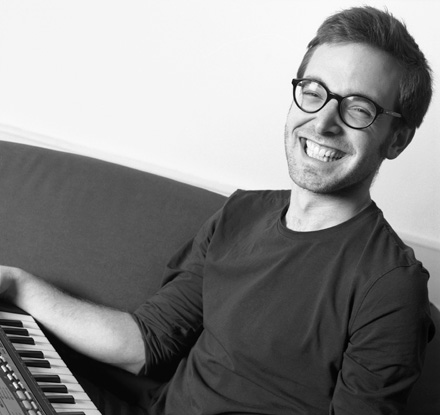
francoise

Who or what inspired you to take up the piano and pursue a career in music?

As a kid, my parents asked if I wanted to play an instrument. I loved the saxophone but teachers said I was too small for it so I turned to the piano instead. I was six and I loved it. At the age of 13, I eventually took saxophone lessons and have enjoyed playing it since but piano always stayed my main instrument. It was definitely chamber music experiences that made me decide to become a professional. The idea of sharing the music not only with an audience but also with other performers on stage was the most beautiful thing I could imagine.

Who or what were the most important influences on your musical life and career?

I’ll never forget as a kid listening to Murray Perahia playing Schubert on Sunday afternoons with my mother while eating chocolate, I realised then the power and beauty of classical music. I can easily say that the most important influences were the people I played with and still now every new musician I meet and perform with has an influence on me. I love discovering and sharing new ideas about music that will eventually change my own playing. From my very early chamber music experiences to my two groups formed as a student (Mercury Quartet and FranÇoise-Green piano duo) up until my current ensembles (NEC, Contrechamps, Nikel), every single person in those groups have challenged my playing and made me a better musician. And of course my teachers Paul Coker and Yonty Solomon that shared with me their knowledge and their passion for music. I also reserve a special place for the hungarian teacher and pianist Denes Varjon who opened a completely new world of understanding music for me.

What have been the greatest challenges of your career so far?

Hard to say, I’d like to think that every project is a challenge, and the ones that aren’t, I try to forget about them quite quickly. I love challenges so they become a pleasure. My most intense and draining experience may have been to embark on the complete performance of Beethoven’s symphonies for piano four hands with Robin Green, 5 concerts in 3 weeks, never have I worked that hard in my life. I also played recently ‘Opus Contra Naturam’ by Brian Ferneyhough, if you don’t know his music, people label him as a ‘new complexity’ composer, just have a look at his scores and you’ll understand the word challenge. Six months of six hours a day on one 15min long piece. It was so worth it though.

Which performance/recordings are you most proud of? 

Probably the Ferneyhough mentioned above, it was such a huge amount of work that I really became one with the piece. But I tend to love performances as they happen and the moment it is finished, I simply cannot wait for the next one, I don’t really like to think that one was better than the other, I simply hope that the next one will be even better.

Haven’t recorded many CDs but very proud of Mercury Acoustic, a free improvisation album with the Mercury Quartet, there was something very special in the studio and the quality of recording is unique. I also believe that the Bach, Schubert and Kurtag CD with the Françoise-Green piano duo (release planned for 2016) could be very special. We recorded music that was so dear to us and I hope people will hear this on the album.

Which particular works do you think you perform best?

Since a teenager, I have always loved performing new music, I feel like I understand the language of contemporary music and I love learning new pieces, especially if written for me or my groups. There are certain pieces that I have performed so many times like Messiaen’s Quartet for the End of Time or Schubert’s Fantasie in f minor that I know I can perform under any circumstances.

How do you make your repertoire choices from season to season?

I play with many new music groups that have an artistic director and decide the repertoire for me, like an orchestra, but the difference with an orchestra is that the repertoire is always new. It is so exciting, sometimes, I may not like certain choices as much as others but it’s the risk to take when we want to discover new things, and I definitely stick to that choice. If I discover a piece or a composer and fall in love with it, then I simply do everything in my power to programme it, and if there is nothing written for piano solo or my ensembles, then I commission.

Do you have a favourite concert venue to perform in and why?

Hard to say, it depends on the repertoire and the context. An audience can easily make a venue good or bad, and of course a great piano will change my perception of it. Yet I remember amazing gigs on bad piano just because the atmosphere and the audience was incredible.

Favourite pieces to perform? Listen to?

I have always had a special place for Luigi Nono’s …sofferte onde serene…, it is a piece for piano and electronics and the electronic part is made of recordings Nono did with Maurizio Pollini. There is so much poetry in this piece and you can really feel the connection and friendship between the composer and the pianist. When you perform it, it may look as if you are alone on stage but it is really a duo with the sound technician. Even though the electronic part is completely fixed, every performance feels so different. A masterwork.

Who are your favourite musicians?

All the people I have mentioned in the previous questions, all the people that forced me to think about music and be a better musician. Some are performers, some composers. I always have huge admiration for people that really brought a brand new way of understanding music, Glenn Gould is one of them. Not only his playing but his thinking and his entire body of work.

Recently I have found those kind of artists more in the pop/electronica world. There are so many geniuses that are breaking new barriers and changing the pre-conceptions of music, that’s what I love.

And of course also all the great story tellers, we should all learn from singers that could take the stage and tell you the most incredible stories. Belgium singer Jacques Brel for example is a real hero.

What is your most memorable concert experience?

As much as I love concerts and sharing music with audiences, I think my most memorable moments are often in rehearsals, when there isn’t so much pressure and you feel very free. I will never forget being in tears at the end of a play through of Beethoven 9th symphony with the piano duo, I had just realised for the first time how incredible this music was and simply couldn’t stop crying.

There are always wonderful moments shared with composers when a brand new piece finally comes to life for the first time, when you realise you’ve just created something together, those are my favourite moments.

What do you consider to be the most important ideas and concepts to impart to aspiring musicians?

Discover new things, always question yourself and learn from everyone around you. And never forget to tell stories. As a classical music interpreter, it can sometimes be a strange feeling to perform someone else’s music, so you have to feel like it’s your own story that you share with the audience.

Where would you like to be in 10 years’ time?

Somewhere new

What is your idea of perfect happiness?

Perfect happiness would be boring, happiness is about the journey towards something better. If it is perfect, where do you go?

What do you enjoy doing most?

Discovering new places

What is your present state of mind?

Tired – it was actually tough to answer all those questions…

Antoine Françoise is one half of the Françoise-Green Duo, who begin a residency at St John’s Smith Square, London on 21st January with the first in a series of concerts entitled The Viennese Salon.

After studying in Switzerland and United Kingdom with professors Paul Coker, Yonty Solomon, Andrew Ball, Ashley Wass (piano), Laurent Estoppey (saxophone) and Michael Oliva (composition), Antoine Françoise performs nowadays in Europe and further as a soloist, chamber musician, with ensembles and orchestras. At the term of his studies at the Royal College of Music in London, he was awarded the prestigious Tagore Gold Medal, for his outstanding talent and dedication to music. Antoine now is a professor of piano (contemporary specialism) at the RCM.

Fascinated by the chamber music of the 20th and 21st centuries, as well as all new expressions of modern music, Antoine is founding member of the Mercury Quartet and the Francoise-Green piano duo, 2011 winners of Concours Nicati (Switzerland). He is also principal pianist of Nouvel Ensemble Contemporain (NEC, Switzerland) and London Contemporary Orchestra. He also played with the London Sinfonietta, Ensemble Contrechamps, Philharmonia Orchestra and the London Philarmonic Orchestra. He played with conductors such as Diego Masson, Pierre-Alain Monot, Nicholas Collon or Vladimir Jurowski.

Antoine worked closely with composers such as Julian Anderson, Rebecca Saunders, Hans-Peter Kyburz (giving the uk premiere of his concerto) and Eric Gaudibert (who dedicated his last concerto GONG to him).

In the classical field, he has performed widely in Switzerland, France and the United Kingdom, including concerti by Grieg, Hindemith or Poulenc and is hugely in demand as an orchestral pianist and chamber musician.
www.francoise-green.com

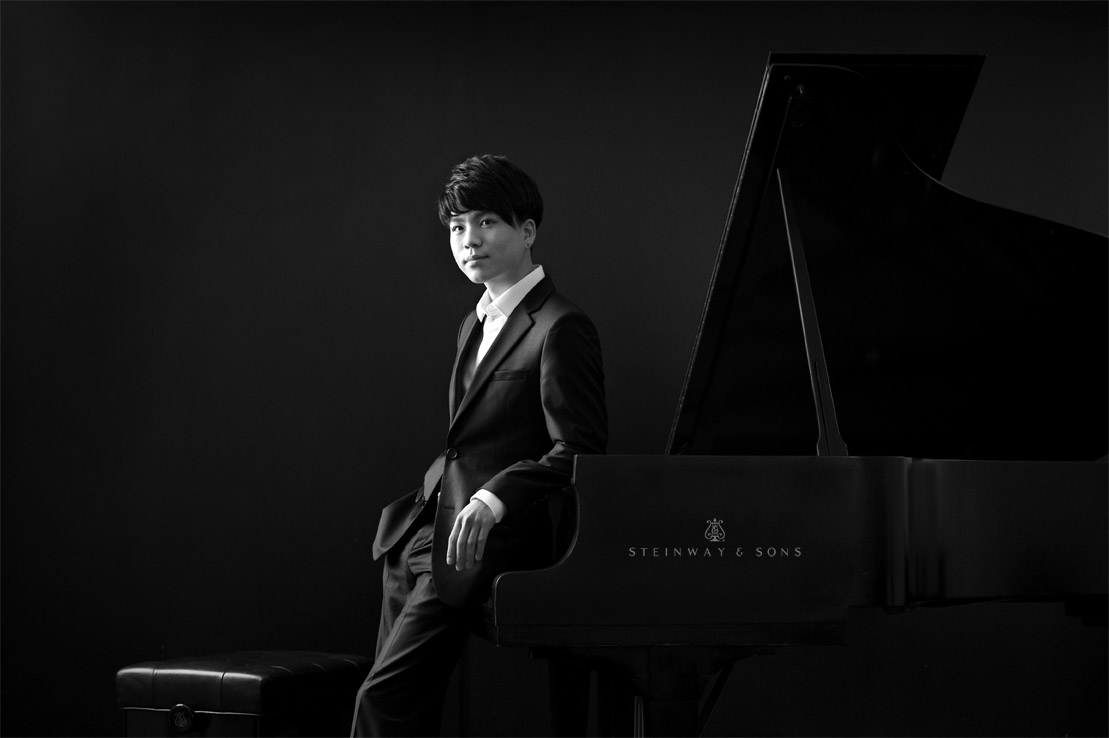
Meet the Artist…..Robin Green


J_Bae-140_LR_BW
(photo: Kelley Eady Loveridge)
Who or what inspired you to take up the piano and pursue a career in music?

My dear teacher and mentor, Dr. Rae de Lisle, senior lecturer at School of Music, University of Auckland, who has taught me for 12 years. Maestro Chung Myung-Hoon who was the first South Korean pianist who became the Silver Medalist (no Gold-Medalist awarded) at 1974 Tchaikovsky International Piano Competition, who is now an internationally sought-after conductor.

Who or what were the most important influences on your musical life and career?

My mentor, Dr. Rae de Lisle who has taught me since I was 9 years old until I graduated from University of Auckland with First Class Honours. She has seen me grow up and has guided me to where I am right now.

What have been the greatest challenges of your career so far?

I grew up in New Zealand until I came to London last year. London life is completely different to New Zealand life where its population is only 4 million people. Studying at the Royal Academy of Music and living in London, the metropolitan city has been very challenging since I didn’t know anyone and I didn’t have anyone who supported me. I had to completely depend on myself and this was great challenge.

Which performance/recordings are you most proud of? 

2009 my performance of Rachmaninov Piano Concerto No.2 when I was 17 years old. 2012 My debut recital at Auckland Town Hall, Chopin Preludes Complete, Bach/Busoni Chaconne. Recent performances of 2013 New Zealand Wallace Piano National Piano Competition of my Liszt Piano Sonata, Ravel Gaspard de la Nuit, Rachmaninov Piano Sonata No.2 and 2014 New Zealand Wallace Piano Festival my complete recital programme of J.S. Bach Partita No.6, Rachmaninov Moments Musicaux complete.

Which particular works do you think you perform best?

Rachmaninov Piano Sonata No.2 Op.36 (Original version), Rachmaninov Piano Concerto No. 2 and Rachmaninov Moments Musicaux Op.16 complete.

How do you make your repertoire choices from season to season? 

First of all, I have to know which venue I would be playing in and also what kind of audience, and this depends on the country, suburbs (whether it is a small town or big city). In small towns, I have to play relatively well-known works or well-known composers. In the big cities, I can introduce more contemporary works and new composers.

Do you have a favourite concert venue to perform in and why?

Auckland Town Hall Great Hall and Concert Chamber. Auckland is where I grew up and I went to almost every single concert in this venue where I received inspiration and motivation.

Favourite pieces to perform? Listen to?

Rachmaninov Piano Concerto No.2 Op.16. I have worked so hard to prepare this work and performed it so well. Now, I like listening to Rachmaninov Piano Concerto No. 3 which I am currently working on.

Who are your favourite musicians?

Stephen Hough, Leif Ove Andsnes, Arcadi Volodos, Gil Shaham, Joshua Bell, Hilary Hahn, Maxim Vengerov, Vasily Petrenko and Vladmir Ashkenazy.

What is your most memorable concert experience?

2012 Auckland Town Hall Concert Chamber Debut – Sold out. 2009 Lev Vlassenko International Piano Competition 2nd Prize – Brisbane, Australia. 2013 Tchaikovsky Piano Concerto No.1 with Auckland Philharmonia – Auckland Town Hall Great Hall, New Zealand.

What do you consider to be the most important ideas and concepts to impart to aspiring musicians?

Always have to remember that I am making music in order to solely share with audience. It’s never about showing off my talent but inspiring audience making them to appreciate the beauty of the classical music. Always aiming at making audience to feel that their couple of hours of listening to my performance was life-changing experience.

What are you working on at the moment? 

Chopin 4 Ballades, Rachmaninov Piano Concerto No. 3.

Where would you like to be in 10 years’ time?

Becoming an artist in residence for Wigmore Hall, London, Seoul Arts Centre, South Korea. Regular concerto soloist with Philharmonia Orchestra, London Symphony Orchestra, Seoul Philharmonic Orchestra, New Zealand Symphony Orchestra and Sydney Symphony Orchestra.

What is your idea of perfect happiness?

Continuing to enjoy making music even though it is difficult journey and lonely life in order to share the music with many people around the world (not just in major concert halls, big cities but small rural towns as well). I would like to have a good family who can continuously support me to achieve my vision of sharing classical music to as many people as possible.

What is your most treasured possession? 

My experiences of travelling to many countries for my performances.

What do you enjoy doing most?

Meeting with my best friends for a good catch-up and conversation.

What is your present state of mind?

I am looking forward to preparing new works for 2015.

Jason Bae was born in Daejeon, South Korea in 1991 where he began studying piano at the age of five. At age 12, he has made his concerto debut with Auckland Symphony Orchestra performing Grieg Piano Concerto Op. 16. A year later, he became the youngest concerto soloist to perform with Auckland Philharmonia Orchestra for the ‘SkyCity Starlight Symphony Concert in the Park’ at the Auckland Domain in front of 200,000 people. Under the baton of Rossen Milanov, Jason performed Stravinsky’s Concerto for Piano and Winds as a soloist with New Zealand National Youth Symphony Orchestra in 2010. He has also appeared as a concerto soloist with the Queensland Symphony Orchestra of Australia, Auckland Youth Symphony Orchestra, Christchurch Symphony Orchestra and Bach Musica. 

Jason’s full biography is on his website

Who or what inspired you to take up piano and make it your career?

I don’t remember much about what made me decide to play the piano and make it my life’s dedication, I only know that I always knew that I wanted to become a concert pianist.

I do remember getting a cassette tape with Chopin ‘Heroic’ Polonaise played by Ashkenazy and couldn’t get around how somebody could write something so beautiful and full of life.

Who or what were the most important influences on your musical life and career?

When I was in high school I met a classical guitarist who had a sensitivity and honesty as an artist which I had not seen. We would listen and discuss wonderful pieces of art in which he showed me delicacy in colour, shape and space which I didn’t think were possible. I was raised in a small coastal town in the Netherlands and in this seemingly non-artistic environment he was somebody who gave me the confidence to pursue the search for beauty.

Steven Osborne has been a big influence in the last years. He has helped me a lot, not only by his occasional mentoring but also seeing him perform and his work in seeking expression, character and technical confidence.

What have been the greatest challenges of your career so far?

I think the greatest challenge is still to come in securing a career and being able to reach a large audience in a world where classical music is still understood by a small number of people and where the artist has to deal with big political and intercontinental power shifts.

Which performances/recordings are you most proud of?

I have recently recorded my first disc. The things I have heard sound really good in terms of clarity and expression. But most proud am I to have been able to work with an incredible team – producer Andrew Keener and engineer Aleksandar Obradovic.

Which particular works do you think you perform best?

This is very difficult to answer: as an artist I am constantly looking to understand style and the composer’s score more and more thoroughly. Sometimes I have a pretty clear feeling of a particular expression in a particular style but realise that it couldn’t be the composer’s intention. It is a long search in which we must take our own life and experiences into account.

How do you make your repertoire choices from season to season?

Depending to what certain halls and concert series have programmed and wish to listen to, I try to build a program in which I feel confident and in which the pieces have common ground in terms of expression and character.

Do you have a favourite concert venue to perform in and why?

Not so long ago I performed in the Concertgebouw in Amsterdam. The experience was truly wonderful because the hall and the acoustics worked together so beautifully. My concept of sound in certain passages was suddenly so much more achievable as the circumstances were perfect.

Favourite pieces to perform? Listen to?

I very much enjoy performing Schumann Allegro Opus 8. I love the tremendous drive and power of this particular piece. It brings so many questions to me which I don’t always know how to answer, and this is the beauty of it.

I am constantly return to listening to Buckner symphonies, they give me such a sense of space and structure. There something about these works that gives me clarity of mind in times when I need it.

Who are your favourite musicians?

There are a lot of musicians and artists in general whom I admire for their contribution to art and music. Each of them, in their personal view of music, has taught me things and changed or affected the way I see things nowadays.

What is your most memorable concert experience?

When I was living in Rotterdam the first concert I attended was Bach’s St Matthew Passion with the Rotterdam Philharmonic. The experience of such an incredibly powerful piece in a setting of a beautiful concert hall was something which has stayed with me.

What do you consider to be the most important ideas and concepts to impart to aspiring musicians?

I think the most important thing for young artists is to have a very clear idea of how to reach the younger generation, and to be able to show why art is a necessity for the well being of our internal life.

What is your idea of perfect happiness?

Hopefully that is when mind, body and spirit become one and there is complete peace of mind.

What is your present state of mind?

At the moment I consider myself having a clear state of mind as I am able to make deeply-felt artistic decisions. In a world which is captured by an economical crisis, political shifts, and is in need of a new vision towards our perception of how we experience art, I find myself sometimes overwhelmed by all the possibilities on the one hand and doubts on the other.

Cyrill Ibrahim performs at St James’s Piccadilly, London on 11th January at 1pm

Born in Rotterdam in The Netherlands, in 1984, Cyrill Ibrahim started playing the piano at the age of seven. One of his first mentors was Leonardo Palacios, a classical guitarist from Uruguay. He subsequently enrolled at the age of 18 at the Rotterdam Conservatory. He graduated as Bachelor of Music with Distinction.

During his studies, his tutors were Aquiles Delle Vigne, Barbara Grajewska and Marcus Baban. To his delight, Cyrill was loaned a grand piano by the Dutch Music Foundation during his studies in the Netherlands.

In 2009, the pianist Paolo Giacometti offered him a place at the Utrecht Conservatory to follow the Master of Music programme. He studied there for a year before moving to the United Kingdom.

Cyrill graduated from the Royal College of Music after undertaking the Master’s Degree in Performance under the tutelage of Professor Andrew Ball. The Dutch Government showed its faith in Cyrill’s skills as a pianist by offering him a full Huygen’s Scholarship for the entirety of his studies with the RCM.

He participated in the masterclass of the Portuguese pianist Maria Joao Pires at the Karma Ling Institute in France. In addition to this, he studied at the Birmingham Piano Academy, Chetham’s Summer School, the Lucca Estate and the Orchestral Conducting Course that is run by Antonio Ros Marba in Spain. Over the years, he has received tuition from, among others, Philip Fowke, Peter Donohoe, Ruth Nye, Matthias Kirschnereit, Dr. Robert Markham, Malcolm Wilson, John Humpreys and Katarzyna Popowa-Zydron.

He has performed both as soloist and a chamber recitalist on the national and international stage for such halls as the Berliner Philharmonie and Concertgebouw in Amsterdam.

Cyrill has had the privilege of working with the concert pianist Steven Osborne. In a magazine interview, he said of the pianist: “I recently met a talented young Dutch pianist called Cyrill Ibrahim, who has an intensity and openness that really impressed me. I think he could be someone really worth listening to.”

www.cyrillibrahim.com


konstantin_scherbakov_fotos_-_oli_rust_fotograf_001

Who or what inspired you to take up piano and pursue a career in music? 

In my family, music was our everyday life, my father being an orchestral musician and a music teacher. Practising piano, learning music and going to symphony concerts and recitals every week was as a natural thing as going to school, skiing and skating, fishing, and biking around. I was therefore practically never given a choice to become or not to become a musician. Later the study became a passion, music turned into profession and a way of life.

Who or what have been the most important influences on your musical life and career? 

…My teacher Lev Naumov, the greatest artistic talent and musical encyclopaedist that I have ever encountered. The trace that this charismatic and extremely influential pedagogue left on my ideas about music was overwhelming.

Next, listening to music and sight-reading have been life-long passions. They always fed my appetite for musical discovery and set me on my path into the world of lesser-known music.

Winning prizes at competitions was another major contributor to my career. It helped establish my name. However, the most important influence on my career came from the labels with which I have been associated for more than twenty years: Marco Polo and Naxos. My first commercial recording (Lyapunov’s Twelve Transcendental Etudes, 1994) was not only the first step in my artistic journey; it also defined its direction.

What have been the greatest challenges of your career so far? 

The beginning of the project to record the complete works of Leopold Godowsky. The condition that Naxos set meant the project had to be finished in four sessions, I was supposed to record four CDs in each eight-day session, 16 CDs in total. The first session took place in Los Angeles in 1998 when we indeed recorded four CDs of Godowsky’s music in eight days!

Playing the 24 Preludes and Fugues by Shostakovich at the Salzburg Festival and breaking my right leg just two days before the performance (nobody noticed!).

Which performance/recordings are you most proud of?  

Rachmaninoff’s 3rd Piano Concerto with the Moscow Philharmonic under Yuri Simonov at Seoul Arts Center;

Strauss-Transcriptions (EMI);

12 Transcendental Studies by S. Lyapunov (Marco Polo);

24 Preludes and Fugues by Shostakovich (Naxos);

Sonatas by Scarlatti (Naxos).

Which particular works do you think you play best? 

From my very personal point of view it is the Russian repertoire and Beethoven.

How do you make your repertoire choices from season to season? 

There are a few factors that I take into consideration: my own repertoire preferences; wishes coming from concert organizers / orchestras; sometimes it is just the repertoire that is linked to current recording plans.

Do you have a favourite concert venue to perform in and why? 

Hard to say! I recall many wonderful halls which I thought were fantastic. Many British halls; the absolutely stunning Town Hall of Dunedin, the most southern city in New Zealand;  National Hall in Taipei, Tonhalle Zurich, the Great Hall of the Moscow Conservatory.

The acoustics and ambiance, a lively and enthusiastic audience, great piano – when brought together, all of this means a successful concert.

Good concerts stay in the memory and the concert hall where they took place is a huge part of that.

Favourite pieces to perform?  

Liszt’s transcriptions of the Beethoven Symphonies; Piano Concertos by Beethoven, Mozart, Rachmaninoff and Tchaikovsky; Anything by Chopin.  Listen to?

I can’t really name them all! I never sit and listen to a work that I would consider ‘my favourite’. Basically, I like whatever’s in my ear at a given time; it’s a very good critic.

If I had to choose, I’d say: Beethoven’s Symphonies and Quartets. Rachmaninoff’s 2nd Symphony; Brahms’s 3rd Symphony…

Who are your favourite musicians? 

There are many, various musicians at different times. Among pianists that have formed my idea of pianism (with this they are my all-time favourites) there are Vladimir Sofronitsky, Sviatoslav Richter, Vladimir Horowitz, George Cziffra, Emil Gilels; all pianists of the Golden Age.

What is your most memorable concert experience? 

A Beethoven recital in a small town some 70 km away from Krasnoyarsk, Siberia. Outside temperature -45°, in the hall – the most intense dialog with the audience. Unforgettable.

What do you consider to be the most important ideas and concepts to impart to aspiring musicians?

Practical advice: Practise a lot! Listen a lot! Sight-read! Every time you sit down at the piano think of the purpose of your practice!

General advice: next to playing, try to learn the profession. Every day ask yourself: what have I done today to be on stage in one – ten – fifty years’ time?

At all times try to answer the questions: Who am I? – Why do I play music? – What do I want to communicate? – Is my message clear?

Tell us about your new disc from your Godowsky collection: why did you decide to embark on this project to record 15 CDs?

As I said, the suggestion to undertake the project came from Naxos / Marco Polo. On the one hand it was my curiosity, my insatiable greed for new repertoire, the ability to learn fast; on the other hand, there were countless challenges involved – how could I resist?

You’re returning to Wigmore Hall on 26th November. How did you choose your programme for this concert? 

Given the concert’s length (an hour), my passion for Beethoven/Liszt’s Symphonies (I have played and recorded them all) and an intention to present an unusual and attractive program it seemed to be quite a natural choice. Moreover, I’ll be playing the Eroica Symphony many times this season, ending at the 2016 Beethovenfest in Bonn.

Besides, it is a sheer joy to play this marvel of musical genius, compositional beauty, and pianistic sophistication!

www.scherbakov.ch
