Who or what inspired you to take up the piano and pursue a career in music?

My mother studied piano and has taught piano all of her adult life. Her father has also played the piano since childhood, and has a keen interest in music, so any musical inclination comes from my mother’s side. There was always a lot of music in our house. My brothers all played something, though none of them persevered past their early teens – unfortunately I missed out on the opportunity to play in any kind of family band. Past that point there were also the sounds of more modern genres coming from different parts of the house.  I was first introduced to the piano aged five but at first didn’t really take to it, even though it seems there were things I could do without needing much instruction.  About a year later, I found that some school friends had begun regular piano lessons.  I didn’t like the idea of their being better than me, so from that point I started to take it more seriously! As I moved onto more challenging works, and to those by the great composers, I really felt a strong connection to music, and it was only a few years later that I realised that I wanted to be a musician.

Who or what have been the most important influences on your musical life and career?

My mother was my first teacher. She realised quite early that I needed additional guidance and, age 9, I also began to have lessons with Hilary Coates, and then soon after with Hilary’s husband, Christopher Elton, who is professor of piano (and at the time Head of Keyboard) at the Royal Academy of Music.  Hilary helped to focus and fine tune my technical development in those early stages, and Christopher guided me musically through my teens and into adulthood.

My first inspirations among other artists were some of those whose recordings were in our collection – pianists like Horowitz, Argerich and Rubinstein. I recall at that time being particularly inspired by listening to Rubinstein playing Chopin – in particular his carrying of a cantabile melody mesmerised me. In my early teens, I became interested in the playing of other pianists born or active in the first half of the century – Cortot, Rosenthal, Friedman, Edwin Fischer, Feinberg, Schnabel amongst others – and found in their playing particular aesthetics, ideas and inspiration to inform and enrich my own approach.  I also became interested in other historical performers.  Wilhelm Furtwängler’s conducting was a particular inspiration – the wholly ‘organic’ way in which he applied often acute agogics, always maintaining fluidity, was remarkable, as was the depth of the sonority he drew from the string sections.

What have been the greatest challenges of your career so far?

After the success in the BBC Young Musician Competition when I was 11, there was some pressure to become a full-time performer, but I’m glad that my parents and I resisted this, retaining two periods of a month each year in which I’d give concerts, but with the majority of my time reserved for music lessons and my wider education.  However, the transition from this pattern to performing more or less the whole year round in my late teens was a challenge.  I’d been used to the luxury of having relatively long periods for preparation and only playing one or two concerti and one recital programme each season.  The need to have a good deal more repertoire on the go at any given time meant I needed to make changes to my preparation regime.  It was tough at the outset of having to make these adjustments, but I managed to soldier through this period and realised that this was very much part of being a concert pianist.

Which particular works do you feel you play best?

I can’t answer this directly because I don’t think about works in quite this way.  Rather, I look at repertoire to which I feel a genuine connection (above all on an emotional level).  This could be a work by Couperin from the early Baroque or, as with this coming season, the Berg Sonata.  The question of whether a particular performance is any good or not is a separate issue, but I don’t personally feel that I’m best in, say, a given composer or period.

How do you make your repertoire choices from season to season?

I enjoy variety from one season to the next – while also striving to expand my musical horizons over time – and similarly within programmes. I can listen with pleasure to a recital of three Schubert sonatas, say, but I know that this kind of programming is not for me as a performer.  Perhaps I could flesh out my approach using this season’s programme as an example.  I enjoyed greatly playing Bach’s 4th Partita five years ago and wanted to play another of the suites, choosing the fifth French Suite which is one of my favourites.  I was considering programming Brahms op.119 – having performed a number of the chamber works and his 1st Piano Concerto I wanted now to explore some later works – when Brett Dean sent me his pieces Hommage à Brahms, written for Emmanuel Ax as interludes between each of the four Brahms Op.119 works. I thought it was very effective as a set, with the Dean pieces providing illuminating contrasts to the Brahms, and that it was fascinating to have this juxtaposition of old and new.

I have felt close to Berg’s music since performing some of his songs during my Royal Academy days. I also relished getting to know his violin concerto by reading it through with a friend who was preparing it. I love this rich and dense harmonic world, with its tonal ambiguity, whole-tone scales and chromaticism.   I think it is fascinating to consider that Debussy’s Prélude à l’apres midi d’un faune was written just a year after the Brahms op.119, and it is an ideal preface to the Berg sonata – Pierre Boulez called Debussy’s Prélude à l’après-midi d’un faune the beginning of modern music.  Debussy had used whole-tone scales and also unstable tonality, evoking atmospheres in sound that had not been known in Western music until that time.  Of course, Debussy’s work is for orchestra… However, Debussy’s champion and friend George Copeland had made a transcription for piano, as had Leonard Borwick.  There is a telling quote from Copeland about his arrangement: “I spoke to [Debussy] of my desire to transcribe some of his orchestral things for the piano — music which I felt to be essentially pianistic. He was at first sceptical, but finally agreed, and was in complete accord with the result. He was particularly delighted with my piano version of L’après-midi d’un faune, agreeing with me that in the orchestral rendering, which called for different instruments, the continuity of the procession of episodes was disturbed. This has always seems to me the loveliest, the most remote and essentially Debussyan, of all his music, possessing, as it does, a terrible antiquity, translating into sound a voluptuous sense that is in no wise physical.” Everyone knows this work and the orchestral original is indelibly imprinted.  I suppose the wanton challenge of playing a piano transcription thus appealed to me all the more…  In the end, I felt that Borwick’s was more effective in many sections (Copeland could be somewhat sketchy), so what I’m playing is mostly Borwick, with some bars from Copeland and some of my own.  I’m ending the programme with Gaspard.  I’d played and recorded this in my late teens, but I love this music and felt it was time to return to it.

Do you have a favourite concert venue to perform in and why?

Although the acoustic of the Royal Albert Hall is not a friendly one for piano (it is cavernous and projection will always be an issue), I particularly enjoy the atmosphere at the Proms. The audience is so responsive, yet they are so very quiet before you start playing. It’s hard to think of another venue where one can so immediately feel the response of audience members.

What is your most memorable concert experience?

It would be difficult to pick out one…but if I had to I might pick out the Proms once again! I have been lucky enough to have played both on the First and Last nights, which are both unique events. Certainly for my first Proms experience as a performer, playing Liszt 2 on the first night was very memorable indeed.

As a musician, what is your definition of success?

I’m sure whole books could be written on the subject of how to define success in music!  For me, having given a performance that seems to have been genuinely appreciated by colleagues brings what most feels like ‘success’.  This is one of the reasons I am increasingly drawn to chamber music.  It’s lovely if a conductor or the leader of an orchestra says something truly complimentary after a concerto, for example, but playing with a handful of colleagues and finding during the performance and afterwards that we seemed all to be firing off one another’s imagination and involvement is a wonderful feeling.

What do you consider to be the most important ideas and concepts to impart to aspiring musicians?

I don’t feel qualified to give any general answer, not least as I sense that each person needs to find his or her way of connecting deeply to music.  It could be that a promising young musician listens to the most magical (to me) performance of a Chopin Nocturne and is not particularly moved, but is shaken to the core by the last movement of Mahler 6.  I don’t want to sound in the least didactic but I have the feeling that seeking that deep connection – via whichever route works best – is the necessary starting point.  After that, ideas and concepts will begin much more easily to fall into place.


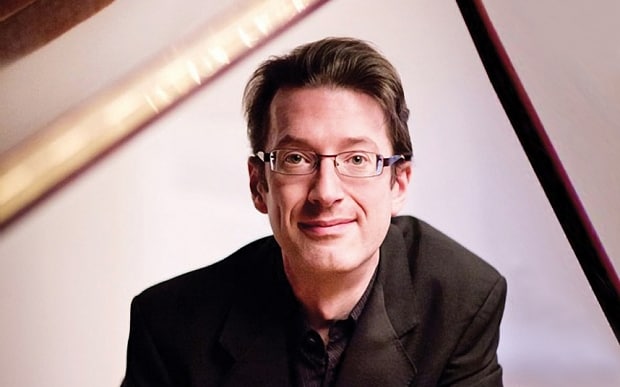
British pianist Benjamin Grosvenor is internationally recognized for his electrifying performances and insightful interpretations. His virtuosic command over the most strenuous technical complexities underpins the remarkable depth and understanding of his musicianship. Benjamin is renowned for his distinctive sound, described as ‘poetic and gently ironic, brilliant yet clear-minded, intelligent but not without humour, all translated through a beautifully clear and singing touch’ (The Independent), and making him one of the most sought-after young pianists in the world.

Benjamin first came to prominence as the outstanding winner of the Keyboard Final of the 2004 BBC Young Musician Competition at the age of eleven, and he was invited to perform with the BBC Symphony Orchestra at the First Night of the 2011 BBC Proms at just nineteen. Since then, he has become an internationally regarded pianist and was announced in 2016 as the inaugural recipient of The Ronnie and Lawrence Ackman Classical Piano Prize with the New York Philharmonic. As part of this he returns to New York in April 2018, performing Beethoven’s Piano Concerto No. 3 under the baton of Esa-Pekka Salonen as well as chamber music with members of the orchestra at the Tisch Center for the Arts at 92nd Street Y.

Read more

(photo: Patrick Allen/Opera Omnia)

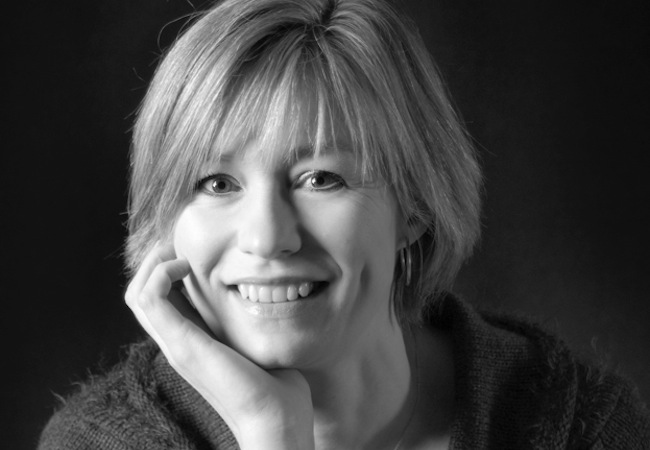
susie_allan_c-_simon_denison_bw_main

Who or what inspired you to take up the piano and pursue a career in music?

We had an upright piano in the corner of the dining room, which one of my older sisters was learning on. Aged about 6 I used to sit at it, crashing about on the keys and flailing my arms around as I imagined concert pianists did –  maybe I saw one on the TV. I think my parents realised my enthusiasm needed channelling and took me to a teacher who reminded me of Cruela de Vil – brown hair on one side and blonde on the other! I had a wonderful teacher at secondary school, Elaine Hugh-Jones, who was very inspiring and supportive. For a long while I toyed with becoming a solo pianist, but turned down the opportunity to study piano at the RNCM in preference to taking up an instrumental scholarship at Oxford. Over time I began to realise that my musical temperament did not lean towards life as a soloist, and there were many other ways to pursue a performing career. The Guildhall School of Music and Drama (GSMD) held those answers for me.

Who or what have been the most important influences on your musical life and career?

A chance conversation with Roger Vignoles prevented me from giving up altogether…I needed a teacher who knew about accompanying-he suggested some lessons with Paul Hamburger, and, as well as with him, at the GSMD I had the chance to work intensively with Graham Johnson, Martin Isepp and Iain Burnside, who were all hugely inspirational to me in their different ways. Playing for masterclasses at Snape for wonderful singers/teachers such as Elly Ameling, Anthony Rolfe Johnson and Elizabeth Soderstrom were also fantastic learning opportunities. In latter years, especially after moving to Shropshire, I have Roddy (Roderick Williams) to thank for continuing to take me with him on his musical journey, whilst it may have seemed I disappeared off the musical world’s radar; and for his natural, intelligent, sublime interpretations. Oh, and his irrepressible sense of humour.

What have been the greatest challenges of your career so far?

Trying to keep it going!! The move to Shropshire, having three children in close succession, and getting divorced made it particularly challenging to carry on playing at all.

Musically, I think some of the contemporary works I’ve performed have challenged me greatly, such as the four Songs by Torsten Rasch, commissioned for Gloucester Three Choirs Festival; and more recently getting out of my comfort zone and having to use an elbow in a new work called “The Rain is Coming” by Emily Levy.

Which performance/recordings are you most proud of?

Going way back, one which comes to mind is playing for Nathan Berg in the Gold Medal final at GSMD. He was singing Mahler’s Ruckert Lieder – trying to do these incredible songs justice for Nathan meant so much to me I was sick beforehand! Luckily it paid off – and he won. A recent performance of Die Schöne Mullerin with Roddy had a feeling of musical and emotional synchronicity – I was so glad to be part of that performance too. And I’m really proud to have been given the opportunity to record the new SOMM CD, songs that I have performed with Roddy many, many times over the years, all of which I adore.

Which particular works do you think you play best?

You may have to ask others about that!

Accompanists have to be like chameleons. It’s important to be able to feel comfortable in as many styles as possible. I like to think I can play best whatever I happen to be working on. Having said that, I have a particular penchant for the serious and intense, for example I think I can put across a pretty convincing “Ich bin der welt abhanden gekommen” (Mahler)… I also feel I now have a more confident approach to playing Schubert – Die Schöne Mullerin is a personal favourite; although tomorrow it may be Schwanengesang, and the day after, Winterreise.

How do you make your repertoire choices from season to season?

As an accompanist with many other demands made on my time, these choices are frequently not mine. Quite often my job is to fall in love with whatever repertoire I am tasked with – I enjoy that challenge.

Do you have a favourite concert venue to perform in and why?

Roddy and I did a tour of Schwanengesang in 2016. One of the venues was the Sam Wanamaker Theatre at the Globe in London. It was a very special place to play. It is an utterly beautiful bijou Jacobean-style space for starters, and as the performers, we were cocooned by the audience above us and around us, all of us bathed in the most atmospheric candlelight – a truly memorable experience.

What is your most memorable concert experience?

A festival in 2013 – memorable for the wrong reasons! I was attempting to give my all in an exceptionally beautiful postlude of Richard Sisson’s “So Heavy Hangs the Sky”, when the city council rudely began to empty the huge glass-recycling bins outside the venue – the sound continued for a good ten seconds… The second half of the concert was accompanied by reversing vehicle noises, pretty much matching the pulse, but not the atmosphere of Britten’s “The Sunflower”. The audience were not happy!

As a musician, what is your definition of success?

The ability to be able to move an audience through musical communication.

What do you consider to be the most important ideas and concepts to impart to aspiring musicians?

Respect the composer’s intentions, whatever you perceive them to be; try to communicate the spirit of the piece; enjoy the practice journey; have fun. Respect and support your colleagues.

Where would you like to be in 10 years’ time?

Back at the Wigmore Hall

What is your idea of perfect happiness?

The Beach House Goa Retreat

What is your most treasured possession?

My Steinway piano, given to me when I was 14

What do you enjoy doing most?

Walking the dog in the Shropshire hills with my kids

What is your present state of mind?

Busy!


Roderick Williams’ new CD, with Susie Allan, piano, ‘Celebrating English Song’ is available now on the SOMM label. Further information here

Susie Allan studied Music at Worcester College, Oxford, as a Hadow Instrumental Scholar, and Piano Accompaniment at the Guildhall School of Music and Drama. She won the GSMD Accompaniment Prize, the Gerald Moore Award, and a Geoffrey Parsons Memorial Award. Her teachers included Paul Hamburger, Graham Johnson and Iain Burnside. She has accompanied many masterclasses at the Britten-Pears School at Snape Maltings, Suffolk and elsewhere, and has been a Professor of Accompaniment at the RCM and the RWCMD.


Worbey & Farrell are Steven Worbey and Kevin Farrell….

Who or what inspired you to take up piano, and pursue a career in music?

We’d both say it was really a natural ‘calling’. We’re both from musical families and had a piano in the house. We have similar stories of our parents having difficulty getting us away from the piano. At school neither of us ever went into the playground – we could always be found at a piano somewhere in the music department surrounded by fellow students. A career in music was a happy option. What could possibly be better than doing something you love and being paid for it?

Who or what have been the most important influences on your musical life and career?

We both come from families involved in many aspects of the arts. Kevin’s mother was at the Royal Ballet School and Steven’s grandfather was an accomplished Jazz pianist who toured with a famous dance band. We were both fortunate to be raised with wide a range of great music around us. Steven had inspiring teachers from an early age. Kevin’s college professor Peter Wallfisch was an excellent teacher and rather intimidating but looking back Kevin says he was the most inspiring of them all. Steven’s first Royal College professor was Phyllis Sellick who was wonderful teacher and enormously influential.  He then went on to study with Yonty Solomon and Peter Katin.

What have been the greatest challenges of your career so far?

We’re always challenging ourselves with new arrangements. When we first launched our duo, to stand out we included a fair amount of musical comedy. We soon realised that our strengths were really in the music and arrangements so had to make the changes subtly making the emphasis on the music. This lead to more concert engagements.

Which performance/recordings are you most proud of?

We recently recorded and filmed our arrangements of Bach’s famous Toccata and Fugue in D minor and Gershwin’s Rhapsody in Blue. There are a couple of versions of the Bach arranged for four hands on one piano but we thought them too embellished and heavy with not enough colour and contrasting textures that the piece requires being composed for organ. We were inspired to arrange the Gershwin for four hands on one piano as we feel the versions available don’t quite use the piano to it’s full orchestral potential which can mean crossing hands a lot.

Which particular works do you think you play best?

We like to take orchestral works and try and create orchestral sounds on the piano. You could say we like to think of the piano as our very own symphony orchestra. We wouldn’t take a well written sacrosanct piano piece (i.e. Chopin) and arrange it for four hands as it would simply spoil it. With the use of four hands and some clever trickery, it’s amazing that you can make a piano sound like a lush string section, a muted trumpet or like triangles and Glockenspiels.

How do you make your repertoire choices from season to season?

We’ve discovered that changing repertoire every season isn’t ideal as some of it can go to waste and not be heard by enough audiences. We now add and take away gradually throughout the year making sure that each work is performed to its best and also gets a good airing. We simply choose music that we love rather than trying to pander to our audiences. It wouldn’t be fun for us to play a work that we’ve chosen just because we think the audience may like it.

Do you have a favourite concert venue to perform in and why?

We tend to perform in concert venues and theatres. Concert venues often have wonderful acoustics for the piano but on the flipside they’re not ideal to talk to your audience as your voice gets lost. Conversely playing a piano in a theatre tends to sound very dry but is good for the voice. In those cases we sometimes add a little concert reverb to the piano. Our recent favourite venues were the Dora Soutzker Hall at the Royal Welsh College of Music and Drama, the Sejong Centre in Seoul, Korea and the Newbury Corn Exchange as part of the Newbury Spring Festival. This coming November we’ll be performing at Edinburgh’s Usher Hall which acoustically is wonderful.

What is your most memorable concert experience?

There are two – and we have to tell you about both! We were once performing our own Paganini Variations (which we called ‘Deviations on a Caprice’) and both had one of those wonderful and very rare moments of sheer bliss – where we completely lost ourselves in the music and nothing got in the mind’s way. It was what we all strive for. The other moment was when we were performing at the Grassington Festival and during a comedy moment a young boy on the front row burst into laughter and simply couldn’t stop. His father was holding his hand in front of his mouth and had to take him out. We later received an Email from the father thanking us for introducing his boy to music and fun. It was very moving for us.

As a musician, what is your definition of success?

There’s lots of talk of ‘making it’ and unfortunately musicians often compare their careers to others’ careers but as far as we’re concerned if you can make a career out of any aspect of music you’re definitely a success.

What do you consider to be the most important ideas and concepts to impart to aspiring musicians?

We’d say “be yourself”. If that means re-inventing the traditional recital do it. If you love to talk, be funny or tell stories then do it. When a performer enters the stage the audience doesn’t really know if they like you. Why not smile, say hello or chat first. Concerts don’t have to be so glum anymore. We’ve been to some amazing performances recently by world famous pianists that just look so unhappy. There’s no reason why they couldn’t enhance their stage technique a little.

Where would you like to be in 10 years’ time?

If we’re still doing what we do now we’d be most happy. Making a good living out of something we love. Sometimes we spend so much time striving for more we forget to enjoy what we’ve got. We’ve come to realise that a moderate amount of ambition is fine.

What do you enjoy doing most?

Aside from the obvious music we enjoy socialising and cooking. We rarely have a night at home and watch very little television. There’s so much going on in the real world such as theatre, concerts, parties, restaurants etc

Worbey & Farrell are internationally acclaimed concert pianists with a wicked sense of humour. They have played with the world’s leading symphony orchestras, achieved over a million hits on YouTube, and entertained in over 150 countries around the globe with their barnstorming blend of sparky comedy and utterly sensational piano playing.

www.worbeyandfarrell.com

Who or what inspired you to take up the piano and pursue a career in music?

I used to listen to a lot of music (mainly vocal) when a young child and so my parents decided to buy a piano for me.

Who or what have been the most important influences on your musical life and career?

I’m largely self-taught as a pianist but have been inspired at different times by recordings of artists such as Richter, Gilels, Barenboim, Brendel and many others.

What have been the greatest challenge of your career so far?

Performing all the Beethoven sonatas in two weeks during the 2011 Edinburgh Festival.

Which performance/recordings are you most proud of?

I have just finished recording most of the Beethoven solo piano music and I’m currently listening to the tapes to work out whether I can be proud of them or not.

Which particular works do you think you play best?

I think that’s probably for other people to decide.

How do you make your repertoire choices from season to season?

I usually devise a large-scale project for the season such as a Beethoven or Schubert cycle but it’s also important to play as many different composers as I feel comfortable with. Inevitably I have to deal with requests from promoters which mean I always play more repertoire than is ideal each year.

Do you have a favourite concert venue to perform in and why?

The Concertgebouw in Amsterdam (both large and small halls) has amazing acoustics and I have fond memories of my Carnegie Hall debut.

What is your most memorable concert experience?

Possibly my debut at the Edinburgh International Festival in 2003 or returning there to play Charles Ives’ mind-bogglingly complicated Concord Sonata.

As a musician, what is your definition of success?

Being able to go to sleep after a concert and forget about it, not lying awake thinking that it wasn’t good enough.

What do you consider to be the most important ideas and concepts to impart to aspiring musicians?

The idea that music-making is not a circus and that we’re not necessarily interested in how fast you can play. Use imagination in choosing and exploring lesser-known parts of the repertoire as there is a risk that all young pianists now want to play the same pieces.