Guest post by Michael Johnson

It’s funny how some random experiences can teach us important lessons in life. On an Air France flight across the Atlantic recently, I clapped on a new set of Bose wireless headphones and within minutes a stewardess was squeezing my shoulder. I looked up and saw her mouth flapping – but she made no sound. All I could hear was Rachmaninoff’s Concerto No. 3 that I was playing through my headphones. It took me a few seconds to regain my composure.  No, I didn’t need any more café, I told her. Back to the music, I was  experiencing the true meaning of “active listening”.

The sharp trebles and thunderous basses of quality headphones create a private world of pure music. Was I listening? Of course. One can hardly avoid listening to the Arkady Volodos performance of this brilliant concerto.

Best of all, on headphones nobody yells at me, ”Turn it down, for God’s sake!”

And yet ironically, the advent of listening through high-tech recording systems has in some ways been harmful, not helpful, to the modern world of serious music. We have removed much of  music from the intimacy of live salon style performances and created the sterile experience of playing a CD or downloading tracks from the Internet. Just 60 or 70 years ago it was only the live performance that brought audiences to the music and the player. Everybody got involved, everybody listened. Now that is largely gone, as concert venues sell us the super-stars such as Volodos, Yevgeny Kissin, Yuja Wang,  and possibly Khatia Buniatishvili. The second tier players attract mainly aging retirees, some of them asleep by the end of the first movement.

“We seem to have mastered the art of hearing without listening.” Christy Thomas, Yale Center for Teaching and Learning. “Active learning is a frequent topic of discussion in pedagogical circles today, but the notion of active listening is rarely addressed—if at all.

But now, waking up and learning to listen may turn out to be the saving grace of the classical tradition. The salon style in various forms can help, and it seems to be in vogue again. Both solo and ensemble players are happy to play in private homes with only 50 or so seats.

Natasha Cherny, New York-based artist manager and producer, tells me her salons in past years “were infinitely more satisfying from every perspective”. Her recital-goers were encouraged to mingle before and after the program “always including protracted conversations with the artist”. And former Juilliard professor David Dubal, pianist, pedagogue and accomplished painter, has been running his series of ‘Piano Evenings’ in New York for 30 years. His aim is to bring “the glories of the piano repertoire, in an intimate setting, dedicated to the art of listening”. He calls it “a site for collective learning through the exchange between teacher and student, performer and listener”.

Indeed, recorded music, no matter how perfect, misses the point. “We kind of caused the problem,” admits Andrew Scheps, an American recording engineer, by making it too easy to hear the notes while missing the intimate experience that players, especially solo pianists, want and need.

Pianists in this overcrowded field find that much of their recorded music ends up in background. An Italian pianist friend tells me the world of recordings has never been such a waste. “There are too many CDs. We can never get noticed.” Too often, a fine piano talent merely exists for his or her  background noise. In Bordeaux, for example, the main underground car park offers Chopin Nocturnes murmuring along with  honking horns and shouts from angry French drivers, hardly a perfect venue. The artist remains mercifully anonymous. Worse, nobody is listening to Chopin.

A comprehensive treatment of regaining that connection is explored in the book Music: The Art of Listening by Jean Ferris, a former music history and appreciation professor at Arizona State University.  “Listening to classical music is itself an art,” she writes,  “and good listening is an active, creative experience.”

The personal experience is further investigated in a recent documentary of a similar name, “The Art of Listening”, available free on YouTube:

There are perhaps two kinds of pianist, those that just hammer the clavier louder and faster and those like Volodos who listen intently to themselves as they brush the keyboard with their fingertips. In this recording, Volodos playing Rachmaninoff was all ears, and so was I:

Working as a critic, I am pleased to find more and more  attention to listening skills, a mini-movement on an international scale. Indeed, learning to listen is perhaps the best hope for rescuing classical music from the dustbin of history. Statistics are at an all-time low, ranking rock and hip-hop, rap, electronic dance music (EDM), country and jazz comfortably ahead. Classical occupies only about 4 percent of this world.  Could it be true that there is nowhere to go but up?

Many others in the realm of classical music have joined the movement. Julian Blackmore, a British composer and sound designer, takes a professional interest in absorbing and processing music in the brain. He calls it “active listening” and says it leads to a far deeper understanding and appreciation of complex compositions.

Being prepared makes all the difference. “As woo-woo as this sounds, it’s a unique and priceless kind of satisfaction that money can’t buy,” he adds.

The online ‘Piano Encyclopedia’ promises that as you immerse yourself, “an ordinary auditory experience becomes  a profound connection – a kind of bond. Each note played has purpose and intention. By being fully engaging with the music, it speaks to your very soul.”

Learning to listen can provide this profound satisfaction, for example, in impressionist music. Creating color rather than line might seem elusive but through “active listening” this rich artistry can be appreciated.

Help is increasingly available. A wide choice of advice, courses and instructional videos from experts flood the internet  today. My favorite for beginners is a talk about how to take in what you are hearing: “How to Listen to Classical Music: Sonata Form”, accessible through this link:

And French musicologist Jean-Jacques Griot has marketed his “Ecoute Classique” (Listen to Classical) Zoom sessions effectively to internet users throughout the francophone world. He tells me he now has some 3,500 paying customers eager to follow his lessons for learning.  He does not try to make it easy. “”It takes time because learning classical music is a progressive process of assimilation,” he writes in his book Ecoute la musique classique – it can be learned”.

The late philosopher Rudolf Steiner wrote that music is the only art form that flows from the spiritual world, not from the material world as in architecture, painting, ballet, sculpture. If you step back and listen a great player such as Volodos, Yevgeny Kissin or the late Glenn Gould, you might agree with Steiner that music plays to your inner sense of well-being, as he wrote in his essays, compiled and published as The Inner Nature of Music: The Experience of Tone.

To take listening to classical music seriously is to find solace, reduce stress in your life and even improve your memory. Personally and for all these reasons, my life is filled with classical music, live and recorded. The sad opposite is also true: the latest fad fades away in seconds. When you listen to Rachmaninoff in the hands of Volodos you carry it in your head forever.


Michael Johnson is a music critic and writer with a particular interest in piano. He has worked as a reporter and editor in New York, Moscow, Paris and London over his journalism career. He covered European technology for Business Week for five years, and served nine years as chief editor of International Management magazine and was chief editor of the French technology weekly 01 Informatique. He also spent four years as Moscow correspondent of The Associated Press. He has been a regular contributor to International Piano magazine, and is the author of five books. Michael Johnson is based in Bordeaux, France. Besides English and French he is also fluent in Russian. He is co-editor with Frances Wilson of Lifting the Lid: Interviews with Concert Pianists.
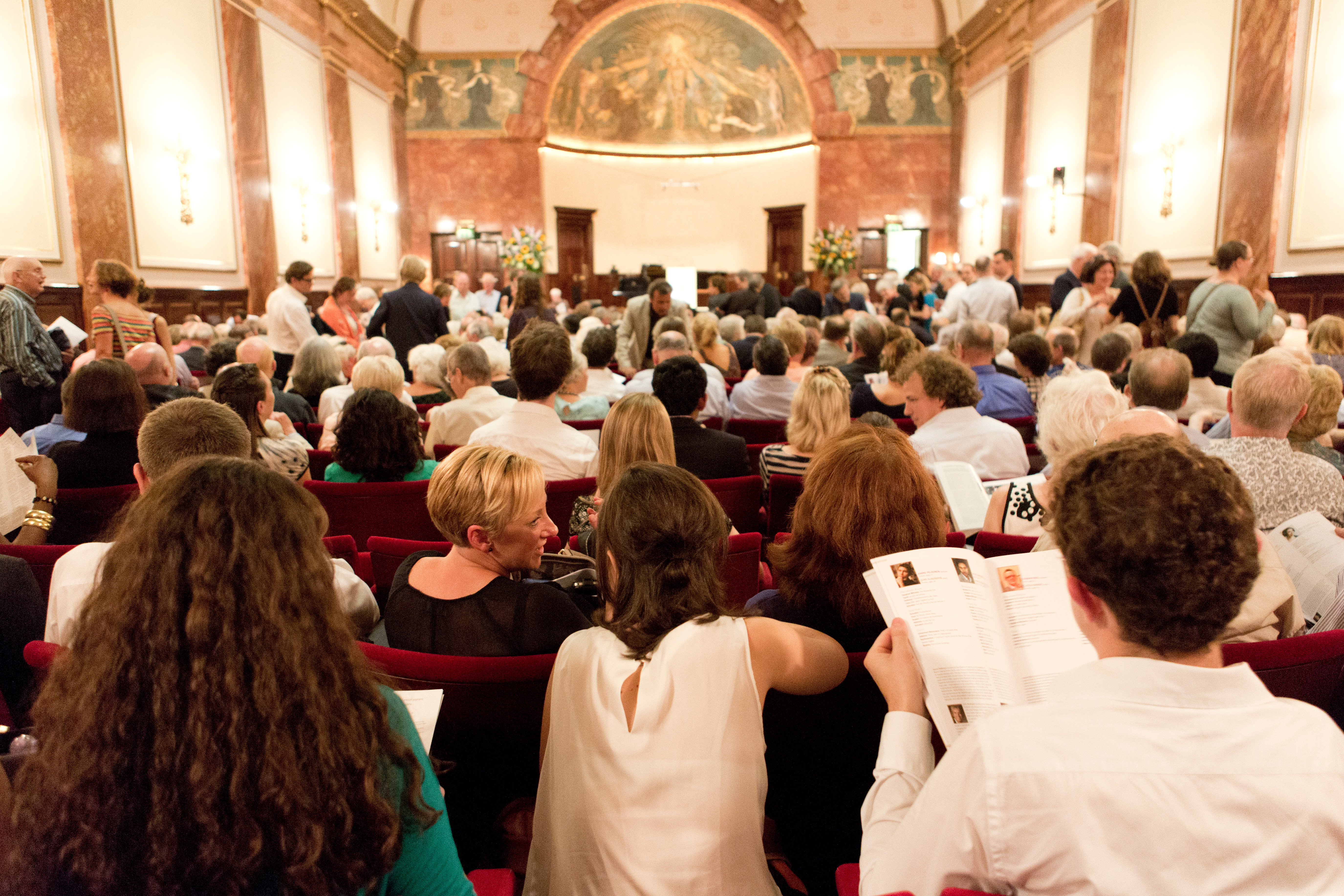
I’ve been going to live classical music concerts since I was a little girl – and not just professional concerts, but also amateur performances when my dad (a clarinettist) played in a local amateur orchestra. As keen music-lovers, my parents took me to all sorts of concerts – big orchestral performances at Birmingham Old Town Hall (the former home of the City of Birmingham Symphony Orchestra), chamber music, opera and choral concerts in churches. I quickly grew to love the “special occasion” nature of going to a live concert and enjoyed the rituals and etiquette (even if I found some of the music over-long or boring on occasion!).

Going to concerts with other people can be a very special shared experience. There is the pleasure of meeting beforehand, perhaps for a drink in the venue’s bar, purchasing a programme, easing oneself into plush seats and enjoying the hum of anticipation before the performers come on stage. Then there is the interval when one can chat about the first half and enthuse with friends before the music begins again.

When I started reviewing concerts in 2011, I tended to go alone, unless a friend or two happened to be at the same performance. At first I felt slightly awkward, sitting alone in the bar beforehand, a glass of wine in hand, reading the programme, making notes…. but gradually I came to enjoy the experience of attending on my own, and now I actively relish it.

Attending a concert can be a powerful, shared experience that transcends the boundaries of individuality, regardless of the genre of music being performed. While the idea of going to a concert alone might seem daunting to some, there is undoubtedly positivity in the shared atmosphere of live music. Whether you’re surrounded by a sea of familiar faces or standing alone in a crowd, the concert space creates a special sense of community, connecting individuals through the universal language of music.

London’s Wigmore Hall

Perhaps one of the most tangible aspects of this shared experience is the palpable sense of communal energy. The collective anticipation, excitement, and emotions create a shared atmosphere that unites the audience. As the house lights dim, an expectant hush pervades the concert space as the audience anticipate the arrival of the artist or artists. In such an environment, it becomes less about being alone and more about being part of a larger, unified whole.

Regardless of whether you attend a concert alone or with friends, the music itself becomes the common thread that binds everyone together. In a crowd of strangers, the shared appreciation for the artist’s craft creates an unspoken connection, fostering a sense of unity and camaraderie among concert goers. I love those moments when it seems that the entire audience is listening really intently, as if with one, collective ear. Or the sense that the audience is holding its collective breath, so engaged are they with the performance. And then, at the end, a joint exhalation as the audience relaxes, anticipating the applause.

Attending a concert on your own offers an opportunity for personal freedom and self-discovery. Free from the expectations of others – the obligation, perhaps, to express your opinion of the performance during an interval chat – when attending a concert alone, you can fully immerse yourself in the music, allowing it to resonate with you personally. You can choose to listen intently, or allow your mind to wander. The solitude within the crowd provides a space for self-reflection, and an opportunity to experience the music in a way that is entirely your own.

Thus, attending a concert alone is not an act of isolation; rather, it is an opportunity to experience the communal tapestry of music. Even if you never speak to a fellow audience member, there is something very special about experiencing music together.This is because the unifying power of live performance goes beyond individuality, creating an environment where strangers become companions in a collective journey of musical expression and a celebration of shared experience.


This site is free to access and ad-free, and takes many hours to research, write, and maintain. If you find joy and value in what I do, why not

a40bd2e4-26ee-11e6-b3b6-bdf44ca17c9d_1280x720
British pianist Stephen Hough in concert

The psychological and emotional reasons why musicians perform and why we feel a need to connect and communicate with audiences is a broad and complex subject. For many musicians, performing is their raison d’être – the need, the will to play, to perform for others, in public, sometimes so overwhelming that it engages them entirely, body and soul.

Perhaps the primary motivation is the desire to share one’s music with others: in discussing the question “Why Perform?” with musician friends and colleagues, the majority of respondents cited “sharing the music” as a significant motivator. Sharing music in concert celebrates common cultural values (identity, history) and performing can be regarded as a “cultural gift”, a gift to oneself and a gift to those who love to listen to music. It brings pleasure to performer and to audience – both in terms of pure “entertainment” and also the pleasures of intellectual stimulation and challenge, or being emotionally moved. Alongside this, performing gives voice to the human condition and the meaning of life, and examines and confronts shared values in ways which transcend spoken language. Through sharing in a musical performance, we can celebrate togetherness and common purpose.

By performing the great works we share in something which is so much greater than ourselves, celebrating and appreciating brilliant human beings, like Mozart or Beethoven, Wagner or Mahler. Performing is a form of conservation or “curation”, by keeping these great works alive; it also looks after and inspires the next generation – musicians and concert goers.

On a more personal level performing satisfies an inner, more selfish need – the need to be valued and appreciated, the need to impress, to be loved even. It gives us something to live for and to work towards. Performing is a very special form of self-expression and fulfillment, creating experiences that only exist “in the moment” of the performance and then resonate in our individual and collective memories. A performance offers audience, and performer, a single, one-off interpretation of or “variation” on the piece, remembered and/or preserved only as that interpretation.

From a practical point of view, performing endorses and validates what we do in the practice room, and confirms that we have done our practising and preparation correctly. It holds the music up for scrutiny and offers insights about the music and the music-making process which simply cannot be obtained in the practice room, and keeps us in touch with that process from beginning to end. A successful performance demonstrates that we have practised deeply and thoughtfully, instead of simply note-bashing. Preparing music for performance teaches us how to complete a real task and to understand fully what is meant by “music making”. You never really demonstrate your technique properly until you can demonstrate it in a performance. Performing also teaches us how to communicate a sense of the music, to “tell the story”, and to understand what the composer is trying to say. It adds to our credibility and artistic integrity as musicians. And if you haven’t performed a piece, how can you say it is truly “finished”? 

Performances are unique occasions where we live in, and for, the moment. They should never be like rehearsals and for a succession of fleeting moments, the music lives beyond the written score. For those of us who perform, at whatever level, it is probably the most challenging, and satisfying, thing we will ever do.

making an audience feel something profound, moving or incredible never gets any less wonderful and it’s the best job in the worldHeather Bird, double bassist


One concert leads to another, or so it would appear based on recent events in my musical life….. Less than a month ago, at a super lunchtime concert given by the sparkling young British pianist Christina McMaster, we were chatting after her performance and she asked me if I was free in early December to play in a private house concert down in Sussex at the lovely country home of Neil Franks, Chairman of Petworth Festival. And so a couple of weeks and two rehearsals at Steinway Hall later, I found myself playing the Wilberg Carmen Fantasy with three other pianists, including Christina and Neil. To say it was great fun would be an understatement – it was possibly the most fun I have ever had at a piano: making lots of wonderful noise (music!) with like-minded people with a true passion for the piano to a very appreciative audience. Add in welcoming, generous hosts, plenty of Prosecco and wine, good food and good company, and one has the makings for a perfect evening.

The programme was eclectic (see pictures below) but it worked and I think the audience really appreciated the range and variety of music played, from Rachmaninov’s striking and vibrant Symphonic Dances (brilliantly performed by Neil and Julian) to miniatures by Satie and Etudes by Debussy (beautifully played by Christina), interspersed with works by Peteris Vasks, Chick Corea, Britten, William Grant Still and Prokofiev. A programme need not have a theme nor a common thread when performed by a mix of people who simply want to share their favourite music – and their love of playing that music – with others. And that sense of a shared experience, between musicians and audience, was very palpable, judging by the lovely comments from audience members during the interval and after the concert.

We are so used to hearing music in formal or very large concert venues, like the Wigmore or Royal Festival Hall, that it’s easy to forget that until about 1850, the majority of music was written for and performed in private salons and the home (and music for piano four- or six-hands was composed to satisfy a growing market in the 19th century for piano music to be played in the intimacy of one’s home). Neil Franks’ Pianos at Parkhurst (House) recreates the atmosphere of the rather less formal nineteenth-century salon or haus konzert – an atmosphere that allows for greater connection between audience and performers – and is a delightful and very positive reminder that, fundamentally, music is for sharing.

It was a privilege and a pleasure to be part of such a wonderful and hugely enjoyable evening of shared music making – for friends, with friends and amongst friends.


Petworth Festival celebrates its 40th anniversary in 2018. A preview of the 2018 Festival will be on this blog.

For further information about the Festival, please visit www.petworthfestival.org.uk


