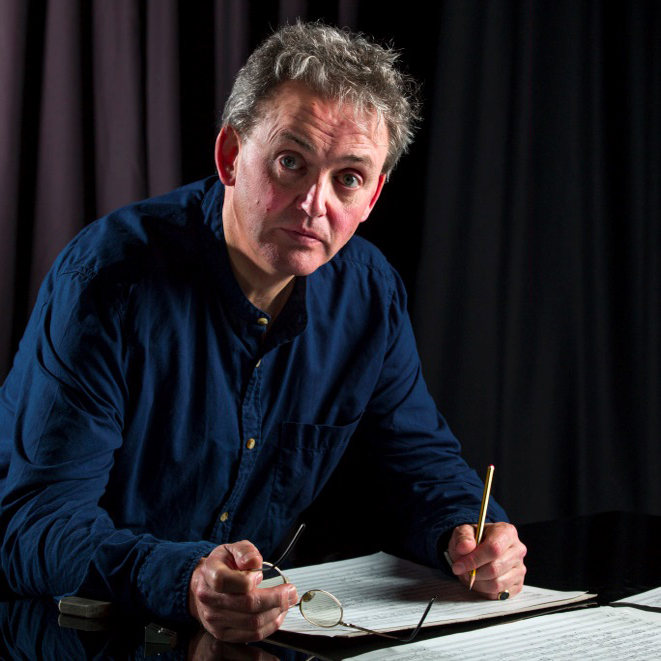
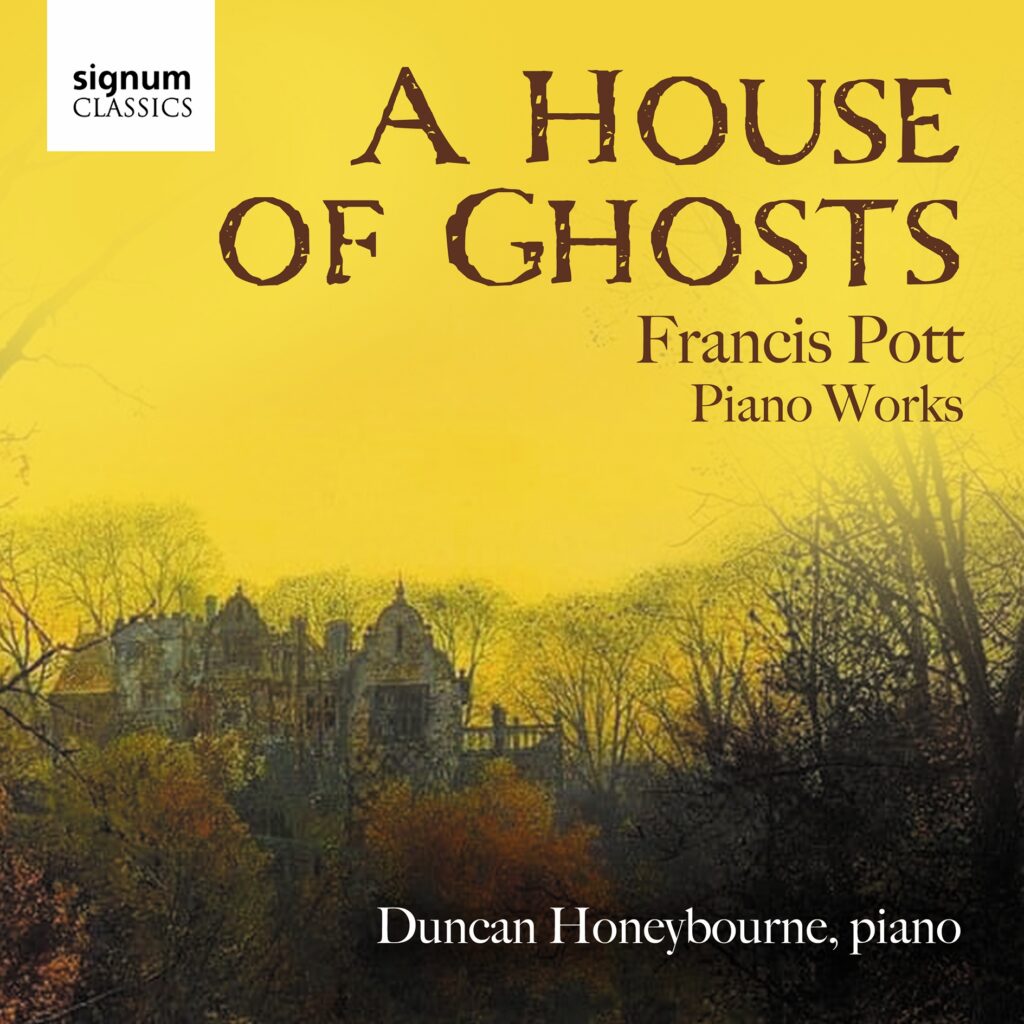
This new release of music by British composer Francis Pott, performed by Duncan Honeybourne, brings together piano works written between 1983 and 1997.
The title of the album, ‘A House of Ghosts’, reflects the character of the pieces: short works and miniatures which offer glimpses of places and voices that remain just out of reach, rather than an overall narrative. Pott’s music is elegant and restrained, reflecting on memory, landscape, and legend, occasional reference to medieval song (Minnelied, Blondel, Walsinghame), Chaucer (Pageant, with its distinctively ‘Medieval’ open fourth and fifth chords), T. S. Eliot (Revenant), and the abandoned community of St Kilda, a remote archipelago in Scotland (Farewell to Hirta). The mood of many of the pieces is wistful or nostalgic, with a timelessness which harks back to earlier times and musical styles: Pott’s influences include William Byrd, Gustav Mahler and Vaughan Williams, and one hears echoes of these composers, and others, in his harmonies, textures and long-spun melodies.
“A House of Ghosts is a sequence of a dozen short pieces concerned with the past, whether imagined, historical or (as in the case of the final piece) autobiographical. These movements are combined here with freestanding longer items, where sea music (Farewell to Hirta and Hunt’s Bay) is mixed with explorations of elusive memory (Le Temps qui n’est plus and Drowned Summer). Gently distinctive in its harmonic and tonal language, this music is the work of a professional pianist-composer with a refined and subtle insight into the physical and textural properties of the instrument.”
Duncan Honeybourne, pianist
I had the pleasure of page-turning for a performance by Duncan Honeybourne of several of the pieces featured on this album. This not only introduced me to Pott’s compelling soundworld but also offered a glimpse of his writing style. ‘A House of Ghosts’ is music written for the intimacy of the home, with the amateur pianist very much in mind. This is music that will appeal to the sophisticated amateur pianist who enjoys contemporary music that is melodic, structured and expressive, yet not overly-challenging. The music is highly pianistic (the composer is a pianist himself), approachable yet thought-provoking, consonant…. They may appear simple, but there is much scope for sensitivity in voicing, dynamics and pedalling to bring these finely-crafted pieces to life.
Duncan Honeybourne brings clarity, gracefulness and emotion to this elegant, atmospheric music, responding with much musical thought and sensitivity to its subtly-shifting colours and moods to create an album that is wholly enjoyable and deeply absorbing.
A House of Ghosts is released on digital streaming and download
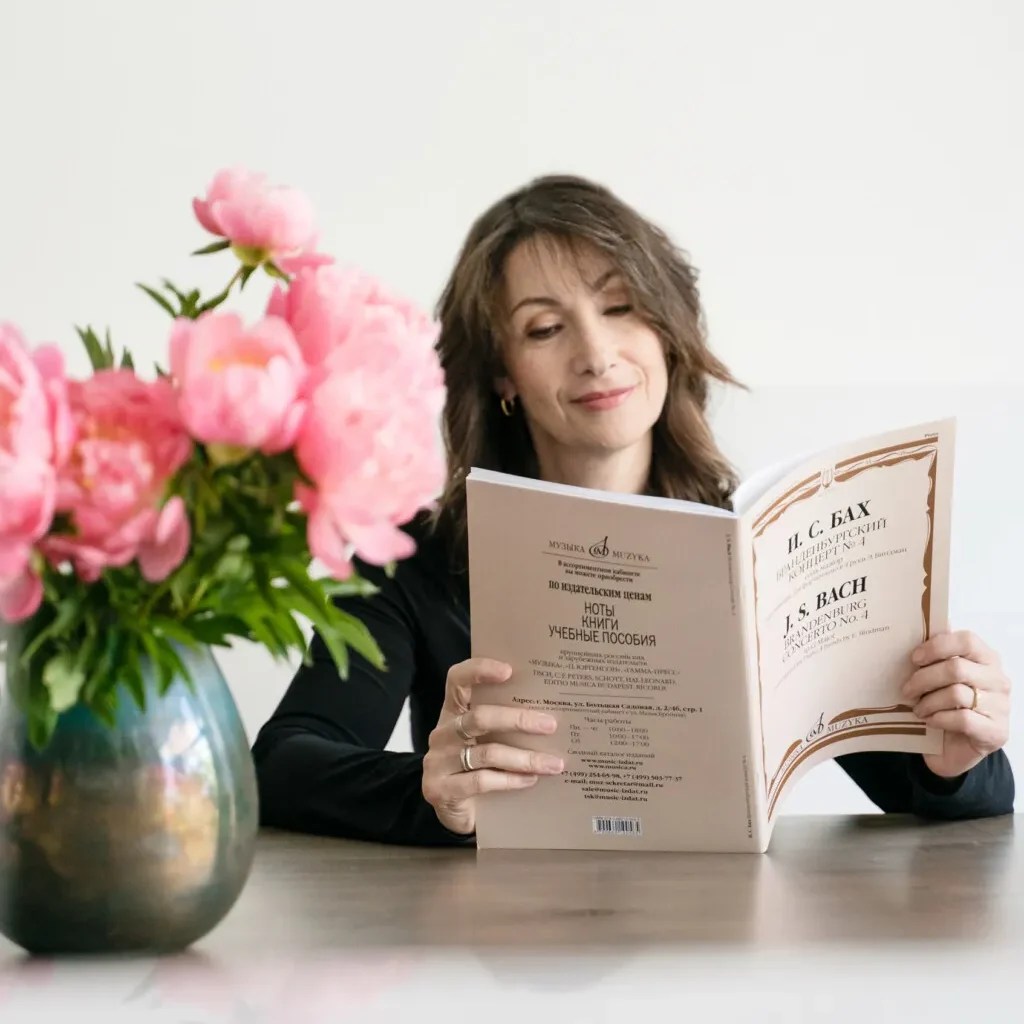
Latvian-American pianist Eleonor Bindman has often surprised pianophiles with her unique transcriptions, dating from Bach onward. The great cello suites, reworked for the modern piano, found new audiences in Europe, Asia and the United States. And her four-hand arrangements of all six Brandenburg concertos broke CD sales records.
She is achieving her ambitious aims – to widen the appeal of past keyboard and orchestral works, mainly the music of Bach, through her fresh and adventurous transcriptions.
And she is still doing it. Her new CD, which she cleverly titled AbsOlute, brings a flowing sense of joy to the Bach lute suites. They have never been heard like this.
“I don’t want to bore the listener,” she tells me in an extended interview. “I try to make my intentions clear about what I am doing.“
Traditionally, transcribers and arrangers have felt constrained by Bach’s already “perfect” compositions. But she is not about improving Bach, she says. “Not being a composer myself, I find that transcribing still gives me a feeling of creating something new.“
An imported New Yorker, Ms. Bindman speaks in an accent she brought with her from her native Riga, Latvia’s capital. Her American career has flourished as a performer, a transcriber and teacher. For several years she taught private students in her New York home, playing her beloved “mellow” Bosendorfer, perfectly chosen to enrich her lute scores. In recent years she has taught less frequently, being overwhelmed with massive transcription projects such as the four-hand piano version of the Brandenburgs and the larger Bach orchestral suites.
Is she Russian-trained? Not quite. She never studied in Moscow but her first teacher came from the great Heinrich Neuhaus line. Her professor Theodore Gutman was a Neuhaus student and her second teacher was Lev Natocherny, a product of the Moscow Conservatory, so the Russian tradition found its way into her sensibilities.
She cites the Russian pianist and conductor Vladimir Feltsman as a major influence. We have “similar temperaments” she says, so his teaching was easy to assimilate.
It is now time to focus on getting a fresh perspective, she says, a new look at Bach’s music. “In the past year or so, I’ve become a little less hesitant, a little less inhibited, even adding ornamentation that does not agree with any particular convention.”
Ms. Bindman has relied on lute recordings to help her find the piano voice she wanted. She cites the CDs of Italian Evangelina Maccardi as an influence and probably the best of the lutenists playing today.
Critical acclaim seems to have come easily to her. Some reviewers praise her transcriptions and Bach originals without holding back. One fell in love with her Partitas, calling her a “marvellous Bach performer”. “The prelude from Partita 1, he wrote “is deliciously slow and expressive, with unexpected marking of inner voices, beautiful ornamentation, shimmering tone.… There’s not a bad movement in the bunch.”
In this YouTube clip, Lute Suite in C minor, BWV997, her easy mastery of the transcription can he seen, heard and felt:
Ms. Bindman balances her note-perfect clarity with rubato touches that bring out the emotion that some Bach interpreters eschew. Her strong feelings emerged when I raised the subject of respecting the score to a fault. Bach should be very emotional, she insisted. “It’s not about playing the right notes at the right time. He wanted to leave room turn it into your Bach”.
Among her collection of videos posted on YouTube and on her own internet site are glimpses of her impish wit. In one version of the suites BVW 996-998 she dressed in 17th-century attire, including a voluminous wig and custom-made shoes. In this clip, note the swaying body language and confident, if silent, foot-tapping (both feet simultaneously). Her joy is uninhibited.
Edited excerpts from our Q&A interview:
You were obviously enjoying this. Smiling and rocking on the bench, you are conveying the joy Bach intended. Is there an actor in you trying to get out?
No, I don’t think so, but I’m glad I wasn’t the only one who had fun.
You cannot sit still while playing Bach. You almost dance to his music, don’t you? How do you reconcile your changes with the “perfect” scores you started with?
Well, not being a composer, I find that transcribing still gives me a feeling of creating something new. Some musicians feel constrained from doing very much with it. Not I!
Aren’t you also a jazz fan?
Yes, I also love jazz and the freedom it gives you, and I always try to bring a fresh, improvisatory element to my playing.
Bach predated the modern piano by more than 200 years so how does one try to recreate what his compositions would have sounded like in his day?
His lute suites were originally composed for the lautenwerk or lautenwerck (lute-harpsichord), one of Bach’s favourite instruments, similar to the harpsichord.
The 17th-century lute came to his attention through his son CPE Bach who was personally acquainted with a prominent lutenist of the day. Inevitably the lute became part of the Bach family.
You have remained independent-minded in your development as a musician but perhaps you could name principal teachers who have guided you?
Of course there were various teachers along the way, with pianist and conductor Vladimir Feltsman being the most important one.
You mix the Bach clarity with your own emotions, to make us love the music you are playing. How do you dare?
I am concerned about the listening experience. I don’t want to bore the public. I try to make my intentions clear about what I am doing. Bach can and should be very emotional. Playing him is not about hitting the right notes at the right time. He leaves room turn it into your Bach. Now that I have done my cello suites and the lute suites I feel I have a lot more data. I studied the scores so I could decide what I could do with them.
Haven’t you helped bring some international attention to these delicate lute suites?
Yes, many pianists do not know this music until they try the transcriptions.
Your reputation rests on your personal treatments of Bach. What other composers attract you?
Bach’s music is an endless source of wonder. But I also love Liszt, especially his poetic and mystical side, and have had some transformative experiences while playing his music. I feel a special affinity for the musical personalities of Schumann and Brahms, and the Russians, of course – Mussorgsky, Rachmaninov – since they permeated my upbringing. I absolutely revel in Spanish music, particularly Albeniz.
In an interview with The Cross-Eyed Pianist, you were asked what your definition of success is.
Being able to hold people’s attention and transport them into a different time and place.
AbsOlute is available on CD and streaming on the Orchid Classics label
This site celebrates its 15th birthday this month, a fact I find slightly hard to believe. It began as a kind of online practice diary for me: a few years previously, I had returned to playing the piano seriously after an absence of a quarter of a century, and by the time I started writing this blog, I was taking lessons with a master-teacher and preparing for a professional performance diploma. I used the site to ponder issues and challenges around piano playing which I was facing myself, in the hope that others might find the articles helpful. Alongside this, were articles about repertoire, piano teaching (I started teaching in 2006), concert and CD reviews, and other more esoteric musings on the piano and those who play it.
Since then, it has evolved and developed into a kind of online magazine, with what I hope is an interesting variety of content, by me and by other writers.
But it’s not just about the articles. Through this blog, I have forged meaningful connections and friendships, both online and In Real Life (you know who you are!); I’ve had the privilege of meeting some of the great musicians of our time, at their concerts and other events; and, perhaps most interestingly (because this was never an intention), my blog has led me to my current role as a publicist working with classical musicians and music organisations – a role which has come about entirely through the reputation of this site. The blog has also given me other writing opportunities – as a reviewer for Bachtrack.com from 2011 to 2018, a contributor to The Schubertian (the journal of The Schubert Institute UK), Classical Music and Pianist magazines, a regular writer for InterludeHK (since 2015), teaching notes for the Associated Board of the Royal Schools of Music and Trinity College London, and, more recently, programme notes for the Barbican and Bridgewater Hall. But it is this site where the writing journey began…..
I am enormously grateful to everyone who reads, shares, comments upon and contributes to this site. Without you, I would probably just be shouting into the ether…..
You have been an inspiration to others of us, and your site is rightly established as a leading page for classical piano news and views
PIANODAO
If you would like to contribute a guest article to this site, please feel free to contact me.
Thank you again for your support of The Cross-Eyed Pianist
When the first notes of Chopin sound through the concert hall there is a happy sign of recognition. All over the world men and women know his music. They love it. They are moved by it. When I play Chopin I know I speak directly to the hearts of people.
Arthur Rubinstein
Virtuosic, imaginative, and emotionally profound, Chopin’s music offers pianists a wealth of expressivity, requiring a combination of superior technique, which always serves the music (rather than as an end in itself), refined touch, a beautiful cantabile (singing) tone, highly nuanced dynamic shading, supple phrasing and rubato, and an appreciation of the interior architecture of this multi-layered music. Chopin is also symbolic of Poland, the country of his birth, whose musical idioms are evident in almost all his music, most obviously, the Mazurkas and Polonaises.
When asked, the great Chopin player Arthur Rubinstein could not explain why Chopin’s music spoke to him, but like the music of J.S. Bach (which Chopin greatly admired and studied), it expresses universal humanity which, combined with a certain vulnerability, speaks to so many of us, and on many different levels.
An unrivalled authority and one of the greatest interpreters of the music of Chopin, Rubinstein brought great dignity and refinement to the music, avoided unnecessary mannerisms and sentimentality, and revealed the structural logic of Chopin’s writing. His playing is memorable for its elegant vocal phrasing, beauty of tone, and natural yet sophisticated shaping.
Arthur Rubinstein Plays Chopin’s Polonaise in A Flat Major, Op.53
“A master of the keyboard” (Harold C Schonberg), Dinu Lipatti was the pupil of an older Chopin master, Alfred Cortot.
Lipatti’s immaculate performances of the waltzes, in particular, are spontaneous, light and nimble, lyrical and suitably dancing, with subtle rubato and great charm.
“It’s very inner music and very deep,” Maria João Pires has said of Chopin. For her, he is “the deep poet of music”. That depth is really evident in Pires’ playing of the Nocturnes: intimate, refined and passionate, her interpretations eschew drawing room night-time sentimentality and capture all the drama and emotional intensity of these much-loved pieces.
Described by one critic as “the greatest Chopin player to have emerged from Italy since the Second World War”, Maurizio Pollini’s association with Chopin goes right back to the beginning of his professional career when he won the Chopin Competition in Warsaw when he was just 18. His unsentimental, cultivated interpretations are notable for their clarity of expression, perfectly judged poetry, and close attention to the bel canto melodic lines which make Chopin’s music so immediately appealing.
Alfred Cortot is one of the most celebrated Chopin interpreters, combining flawless technique with a deep appreciation of the structure, voicing, and textures of Chopin’s music. His recordings are acclaimed to this day, and his detailed, annotated editions of Chopin’s music remain highly prized among pianists and teachers.
Hailed by her mentor Arthur Rubinstein as “a born Chopin interpreter”, Polish-Canadian pianist Janina Fialkowska captures the soul of Chopin, in particular in her performances of the Mazurkas, works which reveal Chopin’s patriotism and innermost sentiments towards his homeland. Fialkowska is sensitive to both the humble, peasant origins of the Mazurka and Chopin’s elevation of the genre into concert pieces. She really captures the poetry, poignancy, and whimsical emotions of these Polish folk dances, and her rubato is perfectly judged, especially important in these pieces where suppleness of pace lends greater emphasis to the emotional depth of the music.
The Cross-Eyed Pianist is free to access and ad-free, and takes many hours every month to research, write, and maintain.
If you find joy and value in what I do, please consider making a donation to support the continuance of the site