A new piano competition for emerging professional musicians is being launched in Weymouth, Dorset, with its inaugural Final taking place on Saturday 13 February 2027.

The Weymouth International Piano Competition (WIPC) is open to pianists aged 18 to 35 and has been established to provide talented young musicians at the beginning of their professional careers with a valuable platform for performance, recognition and artistic development.

At a time when opportunities for young classical musicians are increasingly competitive, WIPC aims to offer a supportive but professionally rigorous environment in which pianists can present themselves and their chosen repertoire. Rather than prescribing a particular style or period of music, the competition places the emphasis on musical personality, communication and individuality.

Entrants will be selected for the live Final through a preliminary recorded round. The finalists will then travel to Weymouth to perform before a panel of professional musicians and a live audience on 13 February 2027.

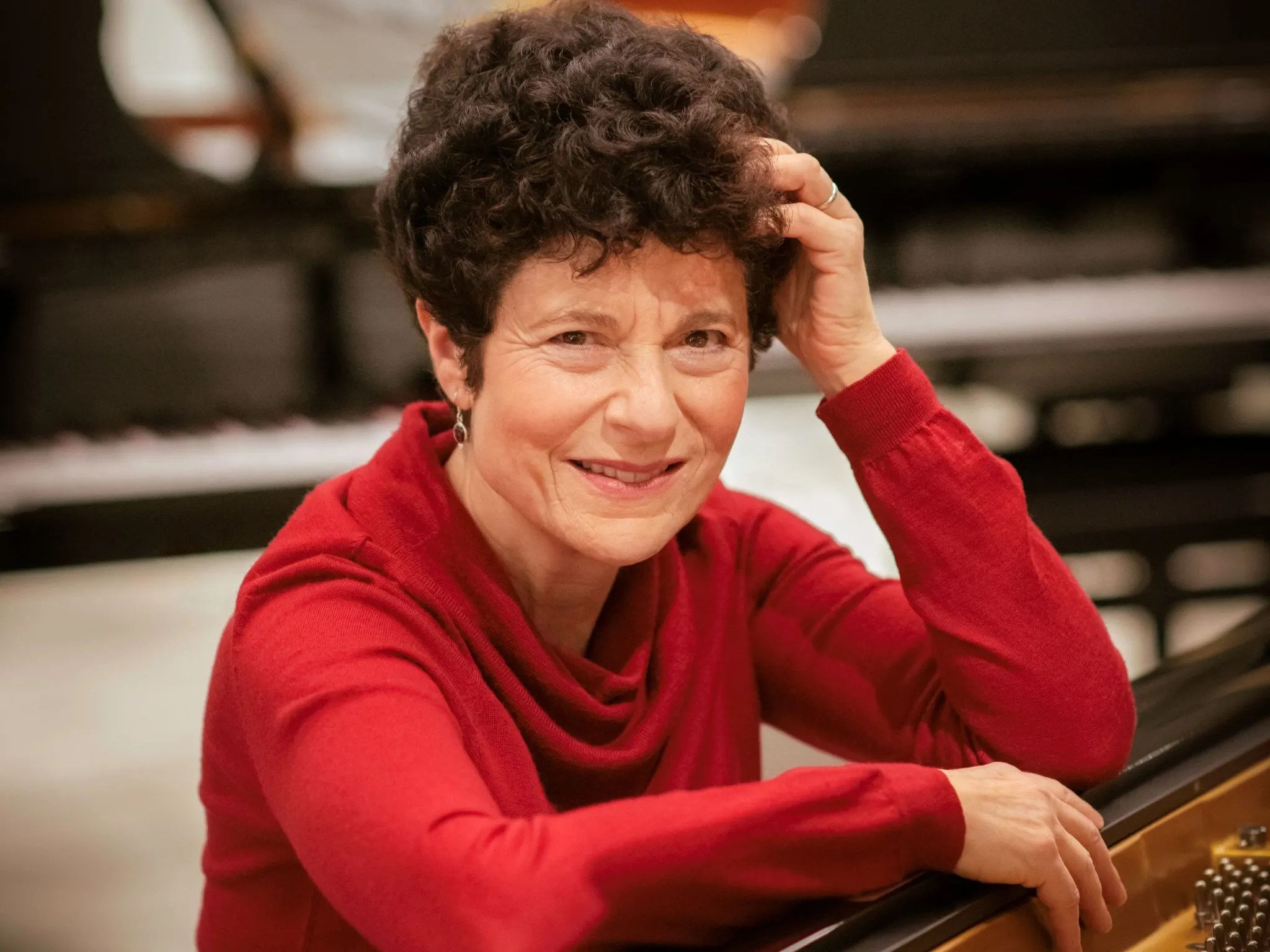
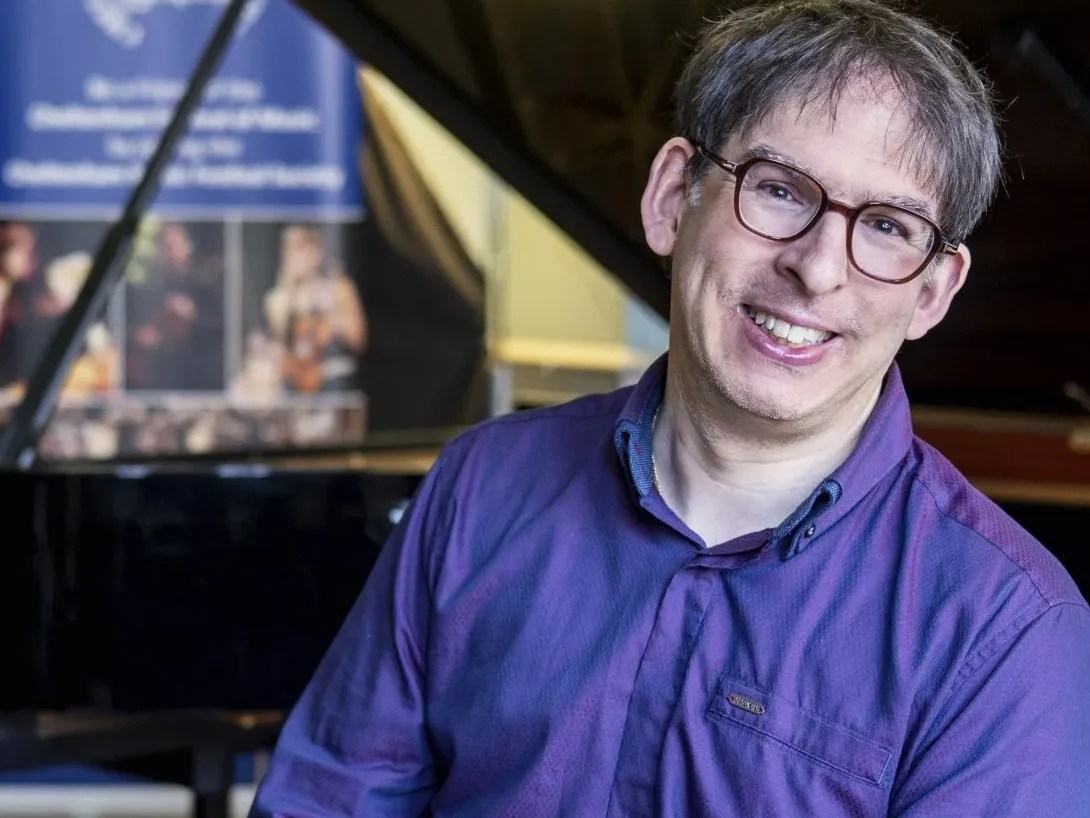
The winner will receive a First Prize of £500. More broadly, the competition aims to give its finalists the experience and exposure that come from preparing for and taking part in a public professional event. The competition is adjudicated by renowned pianists Margaret Fingerhut and Duncan Honeybourne.

Based on Dorset’s Jurassic Coast, the competition also reflects Weymouth’s growing profile as a centre for high-quality classical music-making. Its creation builds on the success of Chamber Music Weymouth, formerly Weymouth Lunchtime Chamber Concerts, which celebrates its 25th anniversary season in 2026/27 and has a long-standing commitment to presenting established performers alongside outstanding musicians of the younger generation.

The competition is hosted by Chamber Music Weymouth (formerly Weymouth Lunchtime Chamber Concerts), a popular and successful concert series founded by Duncan Honeybourne in 2002, which presents some of the best young and established artists in varied and imaginative programmes, mixing well-known works and classical favourites with lesser-known repertoire and composers. In 2026 the series was recognised with an award from Weymouth Civic Society for its continuing commitment to making high-quality live music accessible to everyone and for its contribution to arts and culture in and around Weymouth.

I can’t remember when I first heard this piece, but it was almost certainly on BBC Radio Three’s Breakfast programme and, as is often the way, the piece caught my attention and I decided to find out more about it.

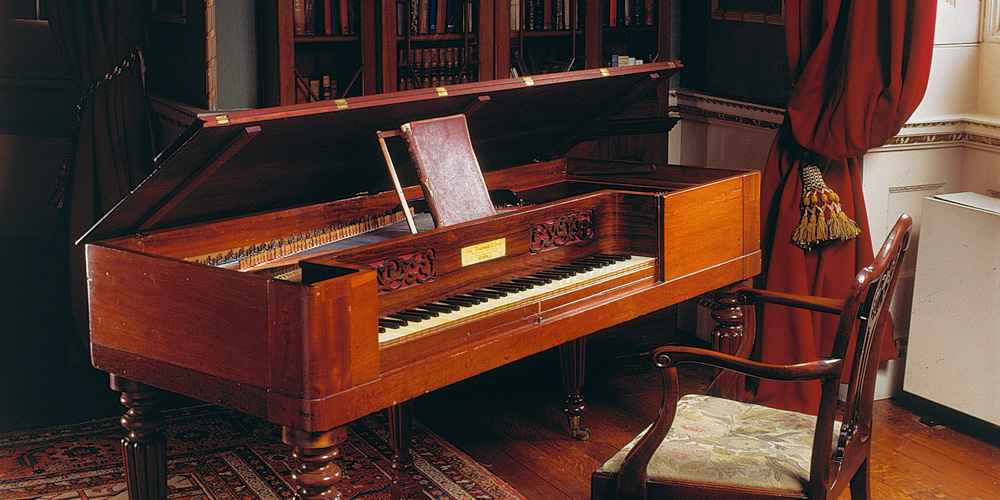
My score has the date “September 2013” inscribed on the inside cover, which means I purchased the sheet music just a month after I took delivery of my 1913 Bechstein model A grand piano. A few months prior to this, I visited the Cobbe Collection, a fascinating collection of historic keyboard instruments, and had the opportunity to play a square piano which had belonged to Edward Elgar. 

(Image: The Cobbe Collection)

Elgar composed Dream Children in 1902, so my piano is almost contemporary with the piece. Originally written for small orchestra, the work offers a glimpse into the composer’s more introspective and poetic side. The transcription for solo piano highlights the music’s delicate lyricism and nostalgic in a more intimate setting. The work’s reflective mood and gentle expressiveness make it one of Elgar’s most personal and touching miniatures.

The title Dream Children comes from an essay by Charles Lamb, “Dream Children: A Reverie,” published in 1822. In that essay, Lamb imagines telling stories to his children – who, by the end, are revealed to be only figments of his imagination, the children he might have had with his lost love, Alice. Elgar was deeply moved by Lamb’s bittersweet meditation on memory, loss, and the power of dreams, and he translated those emotions into music with remarkable sensitivity.

The piece consists of two short movements. The first, marked Andante, unfolds like a tender lullaby. Scored in 12/8, it has the feeling of a gentle barcarolle with a simple and songlike melody evoking the innocence of childhood and the wistful beauty of remembered joy. The music rarely leaves the pp and ppp dynamic range, except for bar 8 where there is a moment of drama marked molto lento, leading to a sustained g minor chord. Elgar emphasises the tender wistfulness of the piece through the use of rubato, ritardandos and pauses. At the very end, a single modulation through the introduction of a B natural in the bass brings the piece to an close on a hopeful, literally uplifting note.

The second movement, Allegretto piacevole, provides an animated contrast while maintaining the same emotional core. Its mood and rhythm is more animated, with a gently lilting character. A pianist friend of mine remarked that the semiquaver figures in this movement suggest the composer cycling around the countryside of Malvern where he lived. Yet even in its lighter moments, there is an underlying poignancy. The coda returns to the theme of the first movement, back in g minor now, but once again the music ends in G major, fading into a ppp whisper.

While not especially technically challenging for the pianist (I would say this piece is around Grade 6 to 7 standard), the piece requires sensitivity of touch and competent legato pedalling in the first movement to sustain the cantabile melody. And while the first movement remains in a mostly hushed dynamic range, there is plenty of scope for expressivity.

I recently played this piece for a friend who owns a beautiful Steinway B. Having not touched the music for nearly 10 years, I was reminded of just how charming this pair of miniatures is. The score is published by Faber Music.

Here’s another atmospheric solo piano piece by Elgar:

This site is free to access and advert-free, and takes many hours each month to compile and edit. If you find value and joy in this site, please consider making a donation to support its continuance:

Pianist Anastasiya Bazhenova announces her debut album, From Mendelssohn to Madness, exploring how music reflects psychological shifts in the human condition when stability falters.

Bazhenova traces an inward journey through the music of Mendelssohn and Prokofiev, moving from certainty to uncertainty.

The journey begins with Mendelssohn’s Songs Without Words, representing an era where clarity and beauty served as fundamental ways of understanding reality and oneself. Yet, even in this apparent transparency, Mendelssohn hints at emerging instability, setting the stage for a deepening exploration.

In the Fantasia in F-sharp minor, Mendelssohn’s music becomes a field of resistance, depicting an inner struggle between the desire for wholeness and the forces that threaten to dismantle it.

As the narrative unfolds, the focus moves to Prokofiev’s Sixth Sonata. Here, the music records reality in its most exposed form. In a world where the pace of change exceeds human grasp, Prokofiev’s work navigates extreme emotional states—including fear, fury, despair, irony, and paranoia.

For Bazhenova, this album is not merely a collection of distinct works, but a “single inner trajectory”. It serves as a musical narrative of a human being searching for meaning even when the old order no longer holds.

Track Listing:

Felix Mendelssohn Bartholdy

• Lieder ohne Worte (Songs without Words, selections from Opp. 19, 38, 67, and 85)

• Fantasia in F-sharp minor, Op. 28

Sergej Prokofiev

• Piano Sonata No. 6 in A major, Op. 82

From Mendelssohn to Madness is released on CD and streaming on 1 April 2026 on the Etcetera label. Anastasiya performs in London at the 1901 Arts Club on Friday 24 April.

Pre-order From Mendelssohn to Madness

PRAISE FOR ANASTASIYA BAZHENOVA

“Superb musicianship and captivating stage presence.”

“A pianist capable of drawing an astonishing range of colour and depth from the instrument.

“A highly sincere and intelligent musician with a unique artistic voice.”

(Comments from colleagues and audience)

Anastasiya Bazhenova is a concert pianist based in Norway, recognised for her intense musical concentration, refined sound palette, and a strongly individual artistic voice. She received her early training in Russia through the ten-year specialised programme for gifted children, a rigorous system known for producing pianists of exceptional technical and artistic discipline. This formative background continues to shape her uncompromising approach to sound, structure, and musical narrative.

Bazhenova later completed her advanced studies in Norway, earning a Master’s degree from the Norwegian Academy of Music in Oslo, where she is now based.

Her artistry is defined by a deep inner world and a strong sense of dramaturgy, with programmes conceived as coherent artistic statements rather than conventional recital formats. Her interpretations are often described as psychologically focused, emotionally charged, and marked by a distinctive clarity of musical thought.

She performs internationally as a soloist and chamber musician across Europe and North America. Her debut album, From Mendelssohn to Madness, is released on Etcetera Records in 2026 and presents a sharply articulated artistic concept, positioning her as a distinctive voice on the contemporary piano scene.

anastasiyabazhenova.com

This new release of music by British composer Francis Pott, performed by Duncan Honeybourne, brings together piano works written between 1983 and 1997.

The title of the album, ‘A House of Ghosts’, reflects the character of the pieces: short works and miniatures which offer glimpses of places and voices that remain just out of reach, rather than an overall narrative. Pott’s music is elegant and restrained, reflecting on memory, landscape, and legend, occasional reference to medieval song (Minnelied, Blondel, Walsinghame), Chaucer (Pageant, with its distinctively ‘Medieval’ open fourth and fifth chords), T. S. Eliot (Revenant), and the abandoned community of St Kilda, a remote archipelago in Scotland (Farewell to Hirta). The mood of many of the pieces is wistful or nostalgic, with a timelessness which harks back to earlier times and musical styles: Pott’s influences include William Byrd, Gustav Mahler and Vaughan Williams, and one hears echoes of these composers, and others, in his harmonies, textures and long-spun melodies.

“A House of Ghosts is a sequence of a dozen short pieces concerned with the past, whether imagined, historical or (as in the case of the final piece) autobiographical. These movements are combined here with freestanding longer items, where sea music (Farewell to Hirta and Hunt’s Bay) is mixed with explorations of elusive memory (Le Temps qui n’est plus and Drowned Summer). Gently distinctive in its harmonic and tonal language, this music is the work of a professional pianist-composer with a refined and subtle insight into the physical and textural properties of the instrument.”

Duncan Honeybourne, pianist

I had the pleasure of page-turning for a performance by Duncan Honeybourne of several of the pieces featured on this album. This not only introduced me to Pott’s compelling soundworld but also offered a glimpse of his writing style. ‘A House of Ghosts’ is music written for the intimacy of the home, with the amateur pianist very much in mind. This is music that will appeal to the sophisticated amateur pianist who enjoys contemporary music that is melodic, structured and expressive, yet not overly-challenging. The music is highly pianistic (the composer is a pianist himself), approachable yet thought-provoking, consonant…. They may appear simple, but there is much scope for sensitivity in voicing, dynamics and pedalling to bring these finely-crafted pieces to life.

Duncan Honeybourne brings clarity, gracefulness and emotion to this elegant, atmospheric music, responding with much musical thought and sensitivity to its subtly-shifting colours and moods to create an album that is wholly enjoyable and deeply absorbing.

A House of Ghosts is released on digital streaming and download

Scores of Francis Pott’s music are available from Composers Edition