
I can’t remember when I first heard this piece, but it was almost certainly on BBC Radio Three’s Breakfast programme and, as is often the way, the piece caught my attention and I decided to find out more about it.
My score has the date “September 2013” inscribed on the inside cover, which means I purchased the sheet music just a month after I took delivery of my 1913 Bechstein model A grand piano. A few months prior to this, I visited the Cobbe Collection, a fascinating collection of historic keyboard instruments, and had the opportunity to play a square piano which had belonged to Edward Elgar.
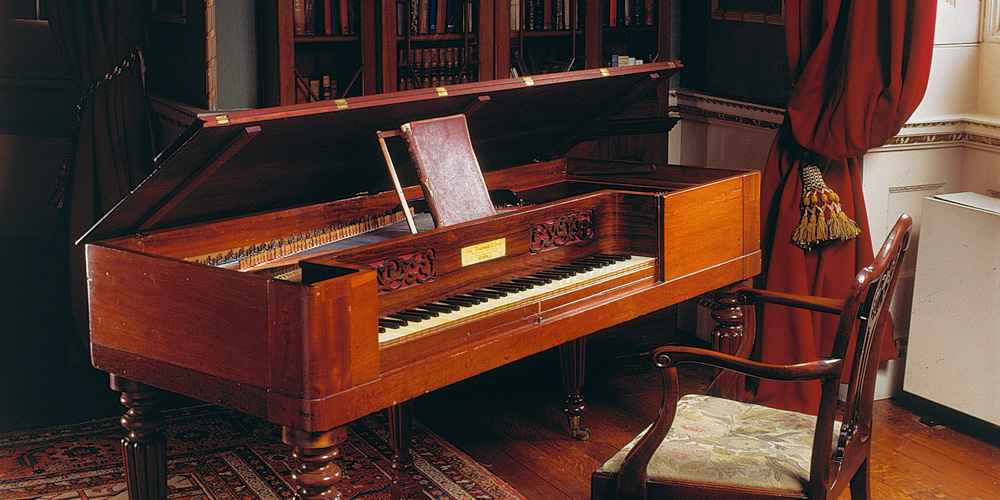
Elgar composed Dream Children in 1902, so my piano is almost contemporary with the piece. Originally written for small orchestra, the work offers a glimpse into the composer’s more introspective and poetic side. The transcription for solo piano highlights the music’s delicate lyricism and nostalgic in a more intimate setting. The work’s reflective mood and gentle expressiveness make it one of Elgar’s most personal and touching miniatures.
The title Dream Children comes from an essay by Charles Lamb, “Dream Children: A Reverie,” published in 1822. In that essay, Lamb imagines telling stories to his children – who, by the end, are revealed to be only figments of his imagination, the children he might have had with his lost love, Alice. Elgar was deeply moved by Lamb’s bittersweet meditation on memory, loss, and the power of dreams, and he translated those emotions into music with remarkable sensitivity.
The piece consists of two short movements. The first, marked Andante, unfolds like a tender lullaby. Scored in 12/8, it has the feeling of a gentle barcarolle with a simple and songlike melody evoking the innocence of childhood and the wistful beauty of remembered joy. The music rarely leaves the pp and ppp dynamic range, except for bar 8 where there is a moment of drama marked molto lento, leading to a sustained g minor chord. Elgar emphasises the tender wistfulness of the piece through the use of rubato, ritardandos and pauses. At the very end, a single modulation through the introduction of a B natural in the bass brings the piece to an close on a hopeful, literally uplifting note.
The second movement, Allegretto piacevole, provides an animated contrast while maintaining the same emotional core. Its mood and rhythm is more animated, with a gently lilting character. A pianist friend of mine remarked that the semiquaver figures in this movement suggest the composer cycling around the countryside of Malvern where he lived. Yet even in its lighter moments, there is an underlying poignancy. The coda returns to the theme of the first movement, back in g minor now, but once again the music ends in G major, fading into a ppp whisper.
While not especially technically challenging for the pianist (I would say this piece is around Grade 6 to 7 standard), the piece requires sensitivity of touch and competent legato pedalling in the first movement to sustain the cantabile melody. And while the first movement remains in a mostly hushed dynamic range, there is plenty of scope for expressivity.
I recently played this piece for a friend who owns a beautiful Steinway B. Having not touched the music for nearly 10 years, I was reminded of just how charming this pair of miniatures is. The score is published by Faber Music.
Here’s another atmospheric solo piano piece by Elgar:
This site is free to access and advert-free, and takes many hours each month to compile and edit. If you find value and joy in this site, please consider making a donation to support its continuance:



