Ludwig van Beethoven

Piano Sonata No. 6 in F major Op. 10 No. 2

7 Bagatelles Op. 33

Piano Sonata No. 26 in E flat major Op. 81a ‘Les Adieux’

Llŷr Williams, piano

Wigmore Hall, 4th April, 1pm

Fans of Beethoven’s piano music are in for a rich treat with Llŷr Williams’ new 12-disc box set Beethoven Unbound, released on the Signum label to mark the completion of Williams’ Beethoven cycle at Wigmore Hall and the Royal Welsh College of Music and Drama (RWCMD). All the works were recorded live at Wigmore Hall over three years and nine recitals. What is especially rewarding about this set is that it contains not only the 32 Piano Sonatas but also the Diabelli, Eroica and c minor Variations (WoO 80), two sets of Bagatelles Opp 33 and 126, and shorter works such as the Andante Favori and Für Elise.

Llyr Williams must credit Benjamin Ealovega handout ...

I had the pleasure of hearing Llŷr Williams live for the first time (rather cross with myself for missing his earlier Beethoven concerts at Wigmore Hall!) at a special lunchtime concert to launch the recording. The three works in the programme offered a striking snapshot of Beethoven’s creative life over the course of nearly 20 years, demonstrating the revolutionary forward pull of his artistic vision – a slow movement in an early sonata (Op 10/2) which foreshadowed the spaciousness and lyricism of Schubert – and his debt to the classical tradition (traces of Haydn in finales and the Bagatelles). Williams’ has a rather unique stage presence which some may find off-putting: he makes little witty gestural “asides” to the audience, often at the end of a section or movement, as if to say “well, there you have it!”. I found this rather agreeable: at times it felt as if Williams was communicating directly with me alone and it created a rather charming and sometimes cheeky intimacy: one felt as if one was very much party to the humour. And there was wit and humour aplenty in the F major Sonata Op 10, No. 2 – a first movement of bright contrasts was followed by a slow movement of almost Schubertian intensity, rounded off by a galloping finale. In the rarely-heard Op 33 Bagatelles, Williams revealed Beethoven’s symphonic and ensemble writing in these piano miniatures, with clear voicings (wonderfully bright brass fanfares in the first Bagatelle and deep, resonant ‘cellos in a later one) and orchestral textures, while always alert to the pianistic nature of Beethoven’s writing: Williams’ clarity and attention to detail was impressive, especially his articulation and use of the pedal. The Sonata in E flat, Op 81a, ‘Les Adieux’, had just the right amount of emotion and heartfelt expression without becoming sentimental, and the “reunion” of the finale was memorably joyful.

As Williams’ said at the reception after his concert, while others choose to focus solely on the 32 Piano Sonatas (in itself a monumental undertaking), this recording steps outside of that traditional presentation, and the works on the individual discs in his Beethoven Unbound set are arranged not chronologically but like mini recital programmes, reflecting the way Williams presented the music in concert.

Recommended – and at £45 (that’s just £3.75 per disc) it’s very good value.

Beethoven Unbound (Signum Classics)

Meet the Artist – Llyr Williams


(photo: Benjamin Ealovega)

iain-burnside-web-2017


Who or what inspired you to take up the piano, and pursue a career in music?

There was a wonderful piano teacher in Glasgow called Lilian Grindrod. I remember as a 5 year old watching my cousin Beth play and thinking, that looks like a lot of fun, I want to try that. My Grandpa was an organist and choral conductor and he put air under my wings at every stage of my childhood. My school was academically strong but ruthlessly anti-musical. I’m the only professional pianist I know who was never asked to play in a school concert. So all the music came through my family, where it seemed the most natural thing in the world.

Who or what have been the most important influences on your musical life and career?

When I was at Oxford, I nervously got on the London train for some lessons with Alexander Kelly. He opened my eyes to connecting emotionally with music in general, and the piano in particular. He was very generous and very funny, and lessons passed in a blur of excitement.

What have been the greatest challenges of your career so far?

Challenges change shape as careers develop. We all have demons perched on our shoulders, and the enduring challenge is to block out their noise. When I was starting out I jumped in at short notice to play for Margaret Price in Vienna. It was a hard programme with lots of songs i’d never played. No-one had pointed out that audience would be sitting on stage with me, close enough to touch. And that it was being broadcast live. I opened the music and thought, this would not be a good time to mess up.

Which performance/recordings are you most proud of? 

Recording is such a bittersweet experience. I mostly hate hearing my recordings, and see only things I don’t like. Occasionally there’s a track where you might think, hmm, that was ok, but mostly my (very Scottish) reaction is to question, did I get away with it? Being what the Americans call a collaborative pianist, it usually gives me more pleasure to listen to my collaborators.

Which particular works do you think you play best?

There is a particular circle of Performers’ Hell reserved for anyone who answers that seriously! I do identify more strongly with particular areas of repertoire, and I also have a few composer allergies. But those composers come up in programmes and it’s part of my job to be convincing with them too.

How do you make your repertoire choices from season to season?

That’s a jigsaw: some programmes I choose, others land in my lap. I adore programming – it’s one of the great joys of this profession. But the choices other people make are often more interesting, and lead to musical discoveries.

Do you have a favourite concert venue to perform in and why?

I love the Crucible in Sheffield. Performing in the round with an audience raked above you is a transformative experience, particularly when that audience is warm and knowledgeable and welcoming. In a totally different way, the church at St Endellion in Cornwall is a place where magic happens, for reasons I’ve never fully understood.

What is your most memorable concert experience?

I did a recital in Japan where every time I nodded for the page turner to turn, she slowly nodded back, transforming the gesture into a most elegant bow. Every time. I had to anticipate by half a line to keep the show on the road.

As a musician, what is your definition of success?

I’d love to come up with something highbrow and philosophical, but the honest truth is, getting by without major disaster. Actually enjoying the process is the Holy Grail.

What do you consider to be the most important ideas and concepts to impart to aspiring musicians?

Be true to the composer, and to yourself. In that order. Remember that a large part of talent is the capacity to change.

What is your present state of mind?

There’s not a pianist alive whose state of mind is anything other than “I Really Should Be Practising”.


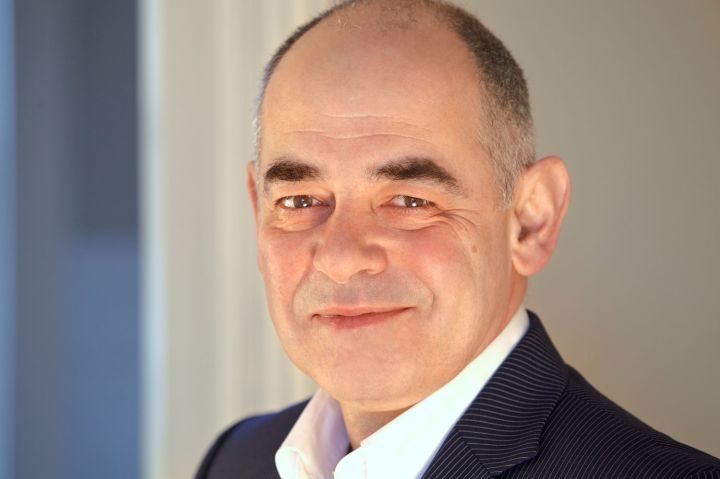
Iain Burnside is a pianist who has appeared in recital with many of the world’s leading singers (“pretty much ideal” BBC Music Magazine). He is also an insightful programmer with an instinct for the telling juxtaposition. His recordings straddle an exuberantly eclectic repertoire ranging from Beethoven and Schubert to the cutting edge, as in the Gramophone Award-winning NMC Songbook. Recent recordings include the complete Rachmaninov songs (Delphian) with seven outstanding Russian artists (“the results are electrifying” Daily Telegraph). Burnside’s passion for English Song is reflected in acclaimed CDs of Britten, Finzi, Ireland, Butterworth and Vaughan Williams, many with baritone Roderick Williams.

Away from the piano Burnside is active as a writer and broadcaster. As presenter of BBC R3’s Voices he won a Sony Radio Award. For Guildhall School of Music & Drama Burnside has devised a number of singular theatre pieces. A Soldier and a Maker, based on the life of Ivor Gurney, was performed at the Barbican Centre and the Cheltenham Festival, and later broadcast by BBC R3 on Armistice Day. His new project Swansong has been premiered at the Kilkenny Festival and will play in Milton Court in November.

Future highlights include performances of the three Schubert songcycles with Roderick Williams at Wigmore Hall. A Delphian release of songs by Nikolai Medtner launches a major series of Russian Song in the 2018 Wigmore Hall season. Other forthcoming projects feature Ailish Tynan, Rosa Feola, Andrew Watts, Robin Tritschler and Benjamin Appl.

Iain Burnside is Artistic Director of the Ludlow English Song Weekend and Artistic Consultant to Grange Park Opera.


(Artist photo and biography courtesy of Askonas Holt)

217

Who or what inspired you to take up the piano and pursue a career in music?

Initially my grandmother who played, though not to a professional level, and taught me how to read music when I was about 5 years old. Also I think for a large part I have been motivated by my love of music and have always enjoyed the challenge that learning a new work brings. I remember as a teenager learning progressively more challenging pieces and there was a certain thrill in challenging myself. As I have got older it has been the desire to share the music that I love with as many people as possible, especially the music of Scriabin and less well-known composers. In addition, music is endlessly fascinating and you never really ‘master’ anything; each performance brings new challenges and the more you perform a work, the more you discover about it.

Who or what were the most important influences on your musical life and career?

I have been lucky enough to study with a number of fantastic teachers, including: John York, Charles Owen, Martin Roscoe and Ronan o’Hora, and have of course learnt a great deal from all of them. I have always been excited by discovering composers and works which are not so well known – from the age of around 19 I found myself being drawn away from what might be considered the ‘core’ repertoire. This curiosity has led me to the performance of a lot of contemporary music, which is an area I am still very interested in. Most importantly it led to my ongoing obsession with the music of Scriabin, and particularly Scriabin’s late music. My desire to understand this music, and to comprehend how it came about has really shaped my career in the past 5 years, leading to 2 recordings and the completion of my Doctorate (which was based on the performance of Scriabin’s Sonata no. 6).

What have been the greatest challenges of your career so far?

At times, simply keeping going. There are always periods where things are quiet, or perhaps teaching has momentarily taken over. During these times I have always tried to challenge myself with something new – this is partly why I decided to work towards a Doctorate, and partly what led me to crowdfund 2 recordings. The music profession is changing and you have to make your own opportunities, which can be tough at times, as well as daunting.

Which performance/recordings are you most proud of?

The two Scriabin discs I have recorded, which cover the complete ‘late’ piano music. Both records were organised by myself: everything from the crowdfunding, to the CD design. This is not easy music to record and the second disc (completed in January) was recorded in 18 hours over two days, which was very taxing, but completely exhilarating. The resulting recordings I have now heard and am quietly very proud of.

Which particular works do you think you perform best?

That’s difficult to say, but the works I enjoy performing best would certainly include the late music of Scriabin, Ravel and Debussy, Brahms and Schumann, as well as quite a lot of contemporary music – in particularly James Macmillan’s piano sonata and Thomas Adès’ ‘Traced Overhead’.

How do you make your repertoire choices from season to season?

It’s important to play to your strengths, as well as to perform only works that you enjoy playing (where possible). I like varied programmes, particularly as I often include quite a lot of more unusual repertoire, so it’s nice to break this up with something more familiar.

Do you have a favourite concert venue to perform in and why?

I love the new Milton Court hall [near the Barbican]; it has a wonderful acoustic. I have also been very lucky to be able to participate in the ‘En Blanc et Noir’ festival in the south of France for a number of years now. Their concert venue is open air, in the main square of a little village called Lagrasse, under the covered medieval market. Despite the odd gust of wind, this is a really magical setting, especially when the sun is setting.

Who are your favourite musicians?

I have become a very big fan of Stephen Hough’s playing, for me it encapsulates what I love about live performance; it is at once extremely exciting and passionate, and completely controlled. Having studied a lot of Scriabin, I have got to know the recordings of Norwegian pianist Hakon Austbo, and these have been a real inspiration to me throughout my preparation. I have been lucky enough to play to Hakon a couple of times and have always been struck by the reverence with which he treats the music, as well as his musical imagination. Finally I would have to add Martin Roscoe, who I studied with at Guildhall. He is one of the most exciting and versatile musicians I have ever met and I will never forget his performance of Beethoven’s Appassionata at Guildhall: it remains for me one of the most memorable concert experiences of all time.

What is your most memorable concert experience?

I have performed a couple of recitals of Scriabin by candlelight, which were both very special occasions. The first was in the monks’ dining room in an old monastery in France – it had a wonderful vaulted ceiling and was a perfect setting for the music. The second was in the Asylum chapel in Peckham, which was to launch my first Scriabin disc – it was extraordinarily cold, but no one seemed to care as the venue and music were so perfect together. It was this performance that convinced me that some works are simply better suited to certain locations – Scriabin in the concert hall works fine, but in the ruined chapel of the Asylum, it took on new dimensions.

What do you consider to be the most important ideas and concepts to impart to aspiring musicians?

The musical world changes and to survive you must be in touch with how this is happening. For instance Facebook is now arguably one of the most important methods of publicity, and artists must be able to engage with this form of promotion and communication. In addition, you have to make things happen for yourself, and cannot expect opportunities to be handed to you. This means being willing to put yourself on the line, as well as being forthcoming – not something I find easy. Constantly finding new and innovative ways of presenting yourself seems to be the way forward. I would also add that it is very important to know your strengths and play to them.

What is your present state of mind?

Determined.

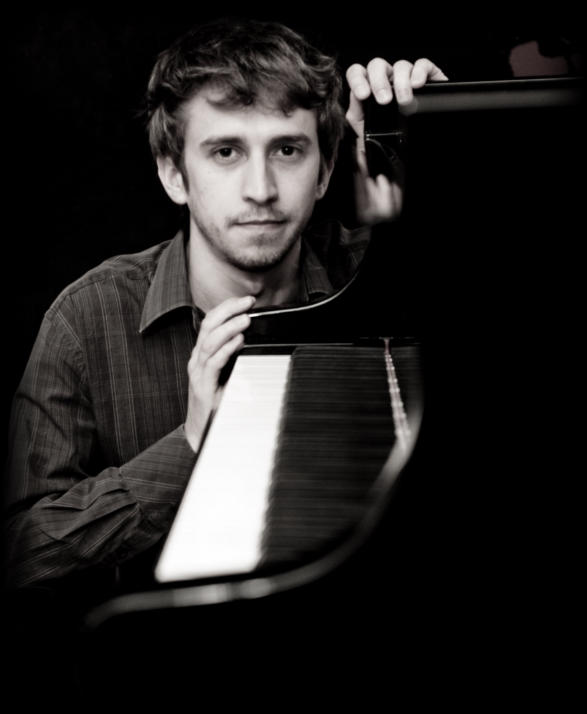
James Kreiling has performed in most of the major London concert halls, as well as throughout Europe. His interest in contemporary and new music has led to performances in the Royal Albert and Barbican Halls – most notably in the summer of 2007 he performed solo in the BBC Proms’ composer portrait of David Matthews. In 2008 James was selected as one of the Park Lane Group’s young artists and this resulted in a solo recital in 2009 at the Purcell Room to great critical acclaim, as well as recitals in St Martin in the Fields and in the Little Missenden Festival. In addition James has broadcast regularly for BBC radio 3, including performances of the music of Jonathan Harvey, David Matthews and Peter Eotvos. Together with his wife Janneke Brits, James is a member of the Brits-Kreiling piano duo. They have performed together regularly since 2009 and have been regulars at the En Blanc et Noir piano festival in Lagrasse, France. They have performed in many of the major venues in London, and broadcast for BBC radio. They are both teaching assistants at Music at Albignac, a summer course based in the south of France run by pianist and French music specialist Paul Roberts. One of James’ biggest passions is the music of Alexander Scriabin and he is currently working towards a performance-based research doctorate at the Guildhall school of music, which is focused on the analysis and performance of Scriabin’s late piano sonatas. He gives regular lecture-recitals on Scriabin’s piano music and as part of the celebrations for Scriabin’s centenary in 2015, he will be making his first commercial recording in June of this year, which will centre around Scriabin’s late piano music.

Who or what inspired you to take up the piano and pursue a career in music?

My mother studied piano and has taught piano all of her adult life. Her father has also played the piano since childhood, and has a keen interest in music, so any musical inclination comes from my mother’s side. There was always a lot of music in our house. My brothers all played something, though none of them persevered past their early teens – unfortunately I missed out on the opportunity to play in any kind of family band. Past that point there were also the sounds of more modern genres coming from different parts of the house.  I was first introduced to the piano aged five but at first didn’t really take to it, even though it seems there were things I could do without needing much instruction.  About a year later, I found that some school friends had begun regular piano lessons.  I didn’t like the idea of their being better than me, so from that point I started to take it more seriously! As I moved onto more challenging works, and to those by the great composers, I really felt a strong connection to music, and it was only a few years later that I realised that I wanted to be a musician.

Who or what have been the most important influences on your musical life and career?

My mother was my first teacher. She realised quite early that I needed additional guidance and, age 9, I also began to have lessons with Hilary Coates, and then soon after with Hilary’s husband, Christopher Elton, who is professor of piano (and at the time Head of Keyboard) at the Royal Academy of Music.  Hilary helped to focus and fine tune my technical development in those early stages, and Christopher guided me musically through my teens and into adulthood.

My first inspirations among other artists were some of those whose recordings were in our collection – pianists like Horowitz, Argerich and Rubinstein. I recall at that time being particularly inspired by listening to Rubinstein playing Chopin – in particular his carrying of a cantabile melody mesmerised me. In my early teens, I became interested in the playing of other pianists born or active in the first half of the century – Cortot, Rosenthal, Friedman, Edwin Fischer, Feinberg, Schnabel amongst others – and found in their playing particular aesthetics, ideas and inspiration to inform and enrich my own approach.  I also became interested in other historical performers.  Wilhelm Furtwängler’s conducting was a particular inspiration – the wholly ‘organic’ way in which he applied often acute agogics, always maintaining fluidity, was remarkable, as was the depth of the sonority he drew from the string sections.

What have been the greatest challenges of your career so far?

After the success in the BBC Young Musician Competition when I was 11, there was some pressure to become a full-time performer, but I’m glad that my parents and I resisted this, retaining two periods of a month each year in which I’d give concerts, but with the majority of my time reserved for music lessons and my wider education.  However, the transition from this pattern to performing more or less the whole year round in my late teens was a challenge.  I’d been used to the luxury of having relatively long periods for preparation and only playing one or two concerti and one recital programme each season.  The need to have a good deal more repertoire on the go at any given time meant I needed to make changes to my preparation regime.  It was tough at the outset of having to make these adjustments, but I managed to soldier through this period and realised that this was very much part of being a concert pianist.

Which particular works do you feel you play best?

I can’t answer this directly because I don’t think about works in quite this way.  Rather, I look at repertoire to which I feel a genuine connection (above all on an emotional level).  This could be a work by Couperin from the early Baroque or, as with this coming season, the Berg Sonata.  The question of whether a particular performance is any good or not is a separate issue, but I don’t personally feel that I’m best in, say, a given composer or period.

How do you make your repertoire choices from season to season?

I enjoy variety from one season to the next – while also striving to expand my musical horizons over time – and similarly within programmes. I can listen with pleasure to a recital of three Schubert sonatas, say, but I know that this kind of programming is not for me as a performer.  Perhaps I could flesh out my approach using this season’s programme as an example.  I enjoyed greatly playing Bach’s 4th Partita five years ago and wanted to play another of the suites, choosing the fifth French Suite which is one of my favourites.  I was considering programming Brahms op.119 – having performed a number of the chamber works and his 1st Piano Concerto I wanted now to explore some later works – when Brett Dean sent me his pieces Hommage à Brahms, written for Emmanuel Ax as interludes between each of the four Brahms Op.119 works. I thought it was very effective as a set, with the Dean pieces providing illuminating contrasts to the Brahms, and that it was fascinating to have this juxtaposition of old and new.

I have felt close to Berg’s music since performing some of his songs during my Royal Academy days. I also relished getting to know his violin concerto by reading it through with a friend who was preparing it. I love this rich and dense harmonic world, with its tonal ambiguity, whole-tone scales and chromaticism.   I think it is fascinating to consider that Debussy’s Prélude à l’apres midi d’un faune was written just a year after the Brahms op.119, and it is an ideal preface to the Berg sonata – Pierre Boulez called Debussy’s Prélude à l’après-midi d’un faune the beginning of modern music.  Debussy had used whole-tone scales and also unstable tonality, evoking atmospheres in sound that had not been known in Western music until that time.  Of course, Debussy’s work is for orchestra… However, Debussy’s champion and friend George Copeland had made a transcription for piano, as had Leonard Borwick.  There is a telling quote from Copeland about his arrangement: “I spoke to [Debussy] of my desire to transcribe some of his orchestral things for the piano — music which I felt to be essentially pianistic. He was at first sceptical, but finally agreed, and was in complete accord with the result. He was particularly delighted with my piano version of L’après-midi d’un faune, agreeing with me that in the orchestral rendering, which called for different instruments, the continuity of the procession of episodes was disturbed. This has always seems to me the loveliest, the most remote and essentially Debussyan, of all his music, possessing, as it does, a terrible antiquity, translating into sound a voluptuous sense that is in no wise physical.” Everyone knows this work and the orchestral original is indelibly imprinted.  I suppose the wanton challenge of playing a piano transcription thus appealed to me all the more…  In the end, I felt that Borwick’s was more effective in many sections (Copeland could be somewhat sketchy), so what I’m playing is mostly Borwick, with some bars from Copeland and some of my own.  I’m ending the programme with Gaspard.  I’d played and recorded this in my late teens, but I love this music and felt it was time to return to it.

Do you have a favourite concert venue to perform in and why?

Although the acoustic of the Royal Albert Hall is not a friendly one for piano (it is cavernous and projection will always be an issue), I particularly enjoy the atmosphere at the Proms. The audience is so responsive, yet they are so very quiet before you start playing. It’s hard to think of another venue where one can so immediately feel the response of audience members.

What is your most memorable concert experience?

It would be difficult to pick out one…but if I had to I might pick out the Proms once again! I have been lucky enough to have played both on the First and Last nights, which are both unique events. Certainly for my first Proms experience as a performer, playing Liszt 2 on the first night was very memorable indeed.

As a musician, what is your definition of success?

I’m sure whole books could be written on the subject of how to define success in music!  For me, having given a performance that seems to have been genuinely appreciated by colleagues brings what most feels like ‘success’.  This is one of the reasons I am increasingly drawn to chamber music.  It’s lovely if a conductor or the leader of an orchestra says something truly complimentary after a concerto, for example, but playing with a handful of colleagues and finding during the performance and afterwards that we seemed all to be firing off one another’s imagination and involvement is a wonderful feeling.

What do you consider to be the most important ideas and concepts to impart to aspiring musicians?

I don’t feel qualified to give any general answer, not least as I sense that each person needs to find his or her way of connecting deeply to music.  It could be that a promising young musician listens to the most magical (to me) performance of a Chopin Nocturne and is not particularly moved, but is shaken to the core by the last movement of Mahler 6.  I don’t want to sound in the least didactic but I have the feeling that seeking that deep connection – via whichever route works best – is the necessary starting point.  After that, ideas and concepts will begin much more easily to fall into place.


British pianist Benjamin Grosvenor is internationally recognized for his electrifying performances and insightful interpretations. His virtuosic command over the most strenuous technical complexities underpins the remarkable depth and understanding of his musicianship. Benjamin is renowned for his distinctive sound, described as ‘poetic and gently ironic, brilliant yet clear-minded, intelligent but not without humour, all translated through a beautifully clear and singing touch’ (The Independent), and making him one of the most sought-after young pianists in the world.

Benjamin first came to prominence as the outstanding winner of the Keyboard Final of the 2004 BBC Young Musician Competition at the age of eleven, and he was invited to perform with the BBC Symphony Orchestra at the First Night of the 2011 BBC Proms at just nineteen. Since then, he has become an internationally regarded pianist and was announced in 2016 as the inaugural recipient of The Ronnie and Lawrence Ackman Classical Piano Prize with the New York Philharmonic. As part of this he returns to New York in April 2018, performing Beethoven’s Piano Concerto No. 3 under the baton of Esa-Pekka Salonen as well as chamber music with members of the orchestra at the Tisch Center for the Arts at 92nd Street Y.

Read more

(photo: Patrick Allen/Opera Omnia)