Tucked away in a tranquil leafy corner of Great Elm, a small village near Frome in Somerset, is Jackdaws Music Education Trust. Now in its 25th year, Jackdaws was established by the singer Maureen Lehane in memory of her husband, the composer Peter Wishart, and took its name from his most-performed song, ‘The Jackdaw’. Their modest former home is host to a wide variety of very popular short music courses and workshops for adults and children, as well as concerts and opera performances.
Courses take place throughout the year, usually run from Friday evening until teatime on Sunday. The courses are led by inspiring musicians and teachers, and bring together passionate musicians, from the humblest amateur to the aspiring professional, to learn and develop together in a homely, nurturing and friendly environment. Tutors on the popular piano courses include Graham Fitch, Margaret Fingerhut, Julian Jacobson, Philip Fowke, Mark Polishook, Mark Tanner, Penelope Roskell and Stephen Savage. The ethos of Jackdaws is ‘Access-Inspiration-Inclusion’ and the atmosphere and teaching is relaxed, convivial and supportive. Course participants and tutors eat together at a large round table downstairs, meals are freshly made, generous and wholesome, and there are frequent breaks in the teaching schedule, plus free time to practise, socialise or explore the surrounding area. Participants stay with local bed and breakfast hosts in Great Elm or nearby villages.
I have been meaning to visit Jackdaws for several years: I’d heard so many positive reports of the courses and the place from pianist friends, and a short course with a small number of participants appealed to me. (I have not been tempted by larger piano courses such as the summer schools for pianists at Walsall or Chethams, nor the very expensive summer piano courses in France). It was serendipitous when my regular piano teacher Graham Fitch suggested I go on course called Finding You Voice At the Piano with Stephen Savage. Graham studied with Stephen at the Royal College of Music, and from the outset I found Stephen’s sympathetic and encouraging approach familiar from Graham’s teaching style.
Teaching is organised in a masterclass format which allows all participants to learn by observing one another being taught. We were fortunate in that there were only 4 people on this course which gave each of us the luxury of longer sessions with Stephen and the chance to further explore ideas which emerged from the teaching sessions. And from a piano teacher’s point of view, observing an expert tutor in action is also very instructive.
Our enjoyable mealtime conversations included repertoire, concerts, favourite recordings and artists and piano teaching anecdotes. These convivial interludes in each teaching day helped to forge a sense of shared purpose and musical friendship, which I think really aids learning because one quickly feels more at ease playing in front of others if you’ve shared the same dinner table with these people.
The teaching was of the highest quality: Stephen is expert at very quickly seeing what each person needs to bring their repertoire to life (in my case, a greater richness of sound and drama in the final movement of Schumann’s Fantasy in C, and more continuous energy in the opening movement of Schubert D959), and gave each of us useful advice and suggestions for practising, including strategies to bring security to leaps, chord progressions or rapid passagework. It is always wonderful to see how individuals develop, how their music changes, under the tutelage of a teacher like Stephen Savage, and it gives one inspiration and encouragement to keep going on one’s personal musical journey. In addition, courses such as these are a fantastic opportunity to hear, share and discover repertoire, and a chance to make new piano friends.
In terms of facilities, Jackdaws has a good Steinway grand in the main studios upstairs, a further Bechstein grand downstairs plus several upright pianos, a digital piano, a harpsichord and a spinet. Practice time is booked In half-hour slots using a simple rota and everyone was very good-natured about organising this. There is also free WiFi.
In sum, this was an inspiring, stimulating, enjoyable and highly instructive weekend piano “retreat” which I recommend to any adult pianist but particularly those who have not attended a piano course before or might be unsure about signing up for a longer course.
For further information about Jackdaws piano courses please visit
A magical place for music making, made more special by playing in such an intimate space, surrounded by beautiful nature……it encourages us to open up
– Wendy
Sharing music with empathetic people who understand what we’re trying to do and what the difficulties are. It takes courage to play at these events but as adult learners we bring our own life experiences to bear on our music
– Susan
Small, domestic ‘at home’ atmosphere and lovely people
– Mark
It’s about interaction with new people – I really do value that – and it’s humbling to work with people from a multiciplity of professions who come on these courses with their hang ups. But there’s always a way to face these and to really get some focus into their playing. I think the key factors are the ‘craft’ of playing and rhythmic organisation in the music. As a teacher it’s important to be non-judgemental and respectful
I never really intended to become a pianist and piano teacher – nor a blogger on classical music and pianism, and a concert reviewer. Sure, I was mad keen on the piano as a child and teenager, completing all my grade exams and enjoying consistent rather than startling success in them. I harboured some desire to go to music college rather than university, but an offhand comment by my music teacher at school, suggesting I was not “good enough” to audition for conservatoire (a comment which still has the power to sting, some 35 years on), set me on a different course at 18: I studied Anglo-Saxon at university and had a career in art and academic publishing for 10 years post-university, until I stopped full-time work to have my son.
But the piano had always been there, in the background, a rather frustrating itch which could not be scratched because my father sold my piano when I left home and I had no instrument on which to practise. I occasionally played a friend’s grand piano but lack of practise led to frustration, and it was not until my mother bought me a half-decent digital piano that my passion for the instrument was rekindled. It was gratifying to discover that music I’d learnt in my teens was still “in the fingers”, if rather rusty, and I began to enjoy the routine of practising once again. Around the same time, I started going to concerts regularly again, something I had enjoyed as a child with my parents, and into my teens, reacquainting myself with repertoire I knew and loved and making new discoveries. A chance conversation with a friend in the school playground while waiting to collect our children led me into piano teaching – that was 10 years ago…..
Alongside this, I felt it was important to improve my own playing, and in 2008 I returned to regular lessons with a concert pianist and professor of piano at one of London’s leading conservatoires. It was daunting initially: I had not been taught for nearly a quarter of a century, and lots of bad habits from my teens and lack of technique were quickly exposed, but the teacher was sympathetic and supportive, and it was satisfying to see my playing improve rapidly under her guidance. Because I had not had a formal musical training at 18, I always (and still do) felt I was trying to catch up with those who’d had that education, and this was a major motivation for taking an external performance diploma, in addition to the desire to continually improve my playing by setting myself the personal challenge of preparing for the diploma. And so in December 2011, some 28 years after I last stepped into a piano exam room, I took my Associate diploma in piano performance. The Licentiate diploma followed in 2013. Both experiences were entirely positive (in complete contrast to some rather uncomfortable exam experiences as a child): I enjoyed the challenge of learning and finessing the repertoire, researching and writing programme notes, and learning how to be a performer (for one is assessed not just on one’s playing but also on stagecraft and presentation, just as in a formal professional concert), and above all, I enjoyed studying with a teacher again and the self-imposed routine of regular practising. Since 2013, I perform quite regularly, in solo concerts and in joint recitals with friends and colleagues. Learning to manage and understand performance anxiety has been a big part of my development as a pianist, and an aspect I know many others struggle with, which is why I organise workshops for adult amateur pianists on coping with anxiety and developing good stage craft.
I think the rather “accidental” path into my current role, in addition to the long period of absence from the piano, has given me the freedom and confidence to fully indulge my passion for the piano and its literature. Had I gone to music college and had to make a career from music as a young woman, I may have lost that spark, that passion. I’ve met a number of professional musicians who have expressed resentment at the heavy demands of their career, which can rob them of their love of the piano and its literature. (Admittedly, I am fortunate in that I do not have to make my main living from music: I have what is fashionably called a “portfolio career” and do several other admin and writing jobs in addition to my teaching.) Returning to the piano in my late 30s, and completing my diplomas in my mid-40s, has brought a maturity to my approach – and in the years when I wasn’t playing I was still listening to music and going to concerts, soaking up all those notes and forming my own opinions about the music I was hearing (which in turn was given a further outlet when I started reviewing concerts for Bachtrack.com).
As an adult pianist, one has the freedom to explore whatever repertoire one pleases, without a teacher bossily insisting on Czerny exercises (been there, done that) or having to play repertoire which one hates (and I suspect many of us can remember, with a shudder, the terrible/dull music we were made to learn as children). We take responsibility for our practising without recourse to others. As we mature we get to know what repertoire suits us (I was very touched at a recent London Piano Meetup Group event when a friend commented on how much a certain piece “suited” me), what we are physically, and mentally, capable of tackling, and as pianists we are incredibly spoilt by the vastness of the piano’s repertoire: there really is something for everyone! While some of us dream of playing Rachmaninov’s Third Piano Concerto to a full house at Carnegie Hall, we gain a great deal of pleasure and satisfaction from working on pieces and presenting them to others at piano clubs, meetup groups, and on courses (where one can meet other piano fanatics and where lasting friendships are forged). We enjoy the challenge of learning a Beethoven sonata, a handful of Bach’s Preludes and Fugues, or a brace of Chopin Etudes, and the sense of achievement when we gain “ownership” of our music, making it our own.
“It’s an overriding passion, not just for the music [but] for the challenge……And the challenge is constant: there’s always a harder piece, you can always take it to the next level, you’re never finished. But there’s also the fact that the piano is your friend; it’s always there. That gathers more significance as you get older: what you can express through it, in a personal language, becomes incredibly important.”
Lucy Parham, concert pianist
Those of us who play at a semi-professional level, advanced pianists, intermediate players, beginners, returners, “Sunday pianists” all share this consuming passion. Eavesdrop on any conversation between members of a piano group and this love is more than evident as members discuss the myriad aspects of the craft of piano: practising, repertoire, exams, concerts, performance anxiety, favourite professional performers and recordings. Because of this, professionals are often quite envious of the freedom amateur pianists have to indulge their passion, to play whatever repertoire they choose and to play purely for pleasure.
Students at La Balie. France
The author’s 1913 Bechstein A grand piano
Improvisatory fun and games with Dr Mark Polishook at a London Piano Events one-day workshop
A member of the London Piano Meetup Group performing at LASSCO Brunswick House
Alan Rusbridger, a keen amateur pianist
The author performing at St John’s Smith Square
A London Piano Meetup Group event at the 1901 Arts Club
Music has known therapeutic benefits and the piano is no exception. Time spent with the instrument can be relaxing, invigorating, inspiring and comforting. A good practise session can feel as beneficial as a run – and we release the same “happy hormones”, endorphins, when we practise, as we do when we exercise. If I haven’t touched the piano for several days, I get tetchy and frustrated, and it’s the first thing I go to when I return home from a holiday. In fact, I don’t know what I’d do without it now, and I am lucky enough to possess a rather fine antique Bechstein grand piano, known affectionately as “Bechy”, who has pride of place in my living room and is treated by the rest of my family like a rather large pet.
If you are something of an “accidental pianist”, or someone who has returned to, or taken up the piano later in life, I would love to hear from you to explore this fascinating subject in more detail. Please feel free to contact me to tell me your story, or complete my Piano Notes – adult pianist interview (word document)
Pianist friends Alison Bestow and Claire Vane have set up a brand new adult piano course. I caught up with them to find out more about their new venture….
Why did you decide to establish a new piano course?
Claire: We wanted to have the opportunity to attend more piano courses, and we were looking for a course in the Easter holidays, but there were very few available. We decided to run our own course, with all our favourite ideas from the other courses that we have enjoyed. We love big, exciting projects, and this is our latest joint enterprise.
How did you go about finding the venue?
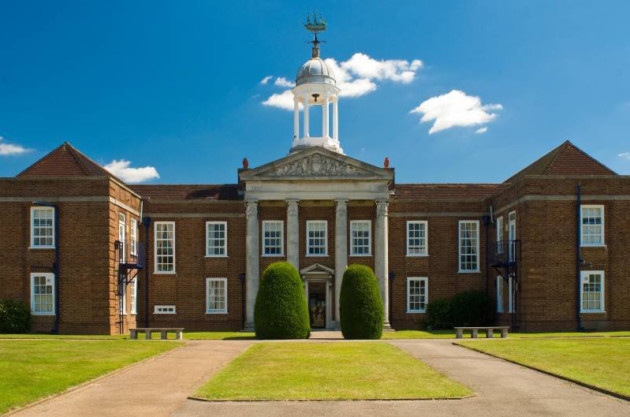
Alison: We approached many venues in Suffolk and Cambridgeshire that we thought would have the facilities that we were looking for, including the right number of pianos, a concert hall and comfortable residential accommodation on site. Initially, we had huge difficulties finding a venue because most schools and Cambridge colleges are booked several years in advance, often to bigger courses. We were really lucky to find the Royal Hospital School, Holbrook, which ticks all the boxes. We have been given full run of their state of the art music block, and the staff there have been very helpful.
Claire: The location is really beautiful, on the side of the river Orwell with spectacular views, so the environment should be inspiring as well.
Who are the tutors and how did you go about finding them?
Claire:Warren Mailley-Smith has been my teacher for the last 3 years and he is very keen on master classes and teaching adults. Penelope Roskell has been a friend of mine since I was a young teenager and we were both Saturday morning exhibitioners at the Royal Northern College of Music. Penelope has subsequently pursued a professional career in music as a concert pianist and later Professor of Piano at Trinity Laban Conservatoire of Music and Dance. Penelope is particularly interested in posture and tension-free playing and is a great exponent of yoga too.
Are there any other tutors at the course?
Alison: I currently have yoga lessons with Izzy Ixer and I was talking to her about the course and she thought it was a great idea and had lots of ideas for using yoga to help with relaxation and performance nerves. Another friend of mine, Claire Weston, was a principal soprano at ENO and she offered to come along to teach about being an accompanist as this is a skill that lots of pianists don’t get chance to practise. They are both highly experienced teachers and I know that their lessons will be great fun.
What are you going to be doing on the course?
Claire: Well, apart from masterclasses and individual lessons in piano, accompanying and yoga, there will be a lot of socialising, eating, drinking, practising and some relaxation. The facilities at The Royal Hospital School in Ipswich are amazing so we’ll have the opportunity to walk in the grounds and even the chance to swim if there is any space between master classes and having fun.
Alison: I am hoping to meet lots of other piano-mad people, make some new friends and play some piano duets. I’m looking forward to playing one of the grand pianos in the beautiful recital hall at the school.
I am very intrigued by the name ‘Pianissimi’ – how did you arrive at that name?
Claire: We wanted a name that conveyed the piano, and as music notation is largely in Italian, we wanted something with an Italian element. We thought that as this was a group event, we’d go for Pianissimi, signifying the plural rather than Pianissimo, and thought it was a bit different and the Italianates amongst the pianists would smile. It also conveys a sense of gentleness and softness, which is the atmosphere we’d like to convey – one of informality and security rather than loud and brash.
Is this a profit making venture?
Alison: We are doing this just for fun, and we have decided that any surplus made will go to Cancer Research so no, this is not a profit-making enterprise.
Who is this course aimed at?
Alison: We want the course to be very inclusive for anyone who loves the piano as much as we do, so we are suggesting that attendees are grade 7 onwards and including diploma level and post-diploma. The levels of experience and performance will be varied, but we want to ensure that everybody feels comfortable and confident playing in a group. The course is also ideal for those with a specific aim, such as preparing for a graded or diploma exam, or getting ready for a particular performance. There will be lots of performance opportunities for those who want them. But there won’t be any pressure on people to perform if they don’t want to.
Where can we find out more?
Claire: All the information about the course is on our website:
Our contact details are also on the site, so I hope people will get in touch if they want to participate and if they have any other questions. If you, like us, are a piano nut, do come and join us at Pianissimi during the Easter holidays in 2017.
Pianissimi
Course dates: 5.30 pm on Thursday, 20th April 2017 to 4 pm on Sunday, 23rd April 2017.
Location: Royal Hospital School, Holbrook, Suffolk IP9 2RX. There are good rail connections from London
Cost: £450 per person to include all tuition, full board and accommodation in the Royal Hospital School, Holbrook, Suffolk.
The Cross-Eyed Pianist is free to access and ad-free, and takes many hours every month to research, write, and maintain.
If you find joy and value in what I do, please consider making a donation to support the continuance of the site







 The Cross-Eyed Pianist