In a guest post for ISM (Incorporated Society of Musicians), I describe how I started this blog and the many benefits of having an online presence.
Read the full article here

In a guest post for ISM (Incorporated Society of Musicians), I describe how I started this blog and the many benefits of having an online presence.
Read the full article here
As part of the Southbank Centre’s Festival of Love this summer, there have been three screenings of the classic love story Brief Encounter, with a live performance of the score (drawn largely from Rachmaninov’s perennially popular 2nd Piano Concerto) by pianist Leon McCawley with the LPO. The film screening took place during the second half of the concert and was preceded in the first half by a full performance of the Rachmaninov Concerto. The whole event was introduced by Lucy Fleming, daughter of Celia Johnson, who plays Laura, the female lead in Brief Encounter. Her introduction was full of wonderful anecdotes about the making of the film (which took place during the final year of the war), including extracts from Celia Johnson’s diary.

Based on Still Life, a one-act play by Noel Coward, and directed by David Lean, the plot centres around Laura, a suburban housewife married to a dependable but rather dull man. A chance meeting with a doctor, Alec Harvey, in the ‘refreshment room’ at the station (which is fiercely guarded by the wonderfully-named Myrtle Bagot, played by Joyce Carey with some of the best lines in the entire film) leads Laura into a brief but intense romantic liaison with the doctor, before circumstances and their own moral integrity forces them to part, never to meet again…. Much of the action is narrated by Laura, and despite the plummy, cut-glass RP accents of the main characters, the plot is sharply-observed, witty, very funny at times, and also heart-rendingly poignant. The story is underpinned by the wonderful score, and was in fact largely responsible for bringing this epic piece of music to wider fame. It has undoubtedly contributed to the enduring appeal.
It must be 20 years since I last heard the ‘Rach 2’ performed live (I think by Evgeny Kissin at the Proms) and I had forgotten what a gloriously rich and expressive work it is. Towering and climactic, it is demanding work to play, and one of the chief challenges is avoiding an overly-romantic reading of it. Leon McCawley’s warm tone was perfect for this work, combined with an exquisite clarity and an ability to highlight some of the less obvious details in the score. The entire work had a classical edge to it which avoided sentimentality, yet never detracted from the rich textures of the score.

To perform the score with the film must have taken some very careful rehearsing to create such a smooth synthesis of film and soundtrack. In her introduction, Lucy Fleming explained that some complicated technical processes were used to strip out the original music from the film. A new soundtrack was commissioned especially for the RFH screening: this played while we watched the film was the most wonderful cinematic and musical experience, a nod back to the days of silent cinema, almost, when films would be accompanied and “narrated” by a resident pianist, small orchestra or organist. A really superb evening celebrating great music and a great film, both of which have most definitely stood the test of time. Oh, and the enduring power of love…..
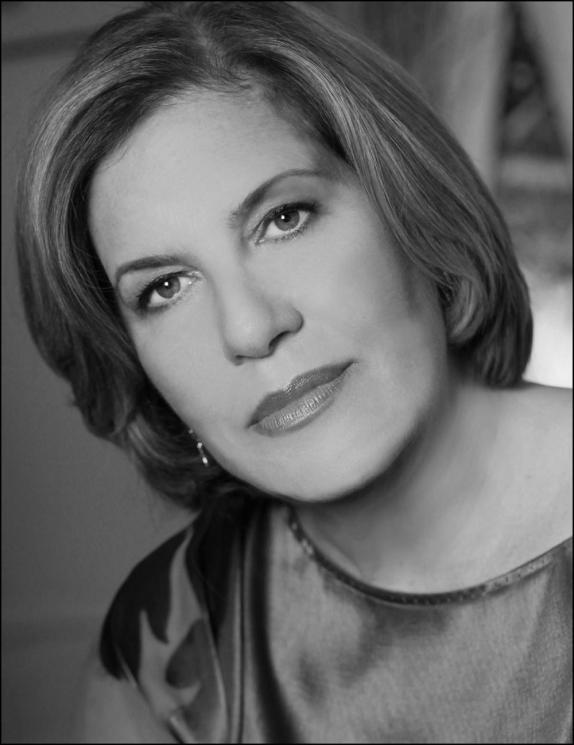
 Beth Levin’s latest disc Bright Circle is available now on the Navonna Records label. Details here
What is your first memory of the piano?
It is more of a feeling, I remember being struck by the beauty and loving the patterns of the keys. I don’t remember a time when there has not been a piano near by calling me to play.
Who or what inspired you to start teaching?
Inspire is the right word and it was probably the music which did it. It had always been my long term intention, however, I also wanted to know about the workings of the instrument so trained as a technician first. One day whilst tuning a piano I realised that I was ready to move into teaching.
Who were your most memorable/significant teachers?
Beyond my lovely students from whom I learn continually I have had 6 teachers and they have all been significant in their own way. If I had to pick one I would say Tim Barratt who snapped my playing, and practising into shape and guided me through the teaching diploma exams. I also learnt more than expected, musically, during my time tuning for Steinway. The sheer volume of high quality music I heard daily still runs through me. I used to practise at Steinway over the weekends, helping myself to the concert fleet model Ds and receiving helpful passing comments from the likes of Alberto Portugheis and Charles Rosen. When out on the road tuning I often had to wait for rehearsals to end, for me it was fascinating to listen in. I am a better musician than I might have been as a result.
Who or what are the most important influences on your teaching?
This is an interesting one and the first thought that comes to mind is this……. when I was around 15, a piano teacher told me that I did not have a good enough ear to consider tuning pianos as a career. By 22 I was tuning for Steinway covering Wigmore Hall and BBC Proms Concerts. As a result I will never discourage a student but rather guide them in what they need to do to achieve their goals. For me it is also important to keep myself musically stimulated through attending concerts, lessons and meetings with other musicians, taking the best from these experiences and passing it on. I find trusting my intuition to be a very open and reliable way of working.
Most memorable/significant teaching experiences?
They are probably the individual breakthroughs that students make after some time of careful work. These delight me, no matter what the level, because of the personal feeling of success it brings the student.
What are the most exciting/challenging aspects of teaching adults?
As well as the joy music brings, there is so much to be gained, on a personal level, from learning something later in life. It is wonderful to watch adult students begin to trust and rely on the process, accept their mistakes and move away from their natural tendencies to be over analytical and critical. The challenge for me is to lead by example!
Tell us how you developed the Music Me Piano Practice Books and how you think it will benefit piano students and teachers:
Music Me Piano is a piano practice note book available in three versions. They developed out of a practice-a-thon my students took part in which highlighted a vast difference in achievement between the two week event and normal termly lessons. We realised that the speed of their progress during normal term time was hampered, not by the difficulty or time requirements of what I was asking them to do, but by their ability to divide up their work and use their practice time smartly.
During lesson time student and teacher plan what needs to be practised day by day for the week ahead. Students benefit from very clear weekly targets which set in motion a positive cycle of achievements. Their self-efficacy and enjoyment is increased but they also develop really powerful learning skills which translate to any subject.
Teachers benefit because they are working with more motivated students who are placed in a greater position of responsibility. Teachers ensure, through the Reference Section, that the student has all the information needed to practise their work correctly.
A happy by product of all this is that lesson planning is a much more fluid process done in conjunction with the student. The book opens up a discussion between teacher and student on the topics of practice and all the different areas which need to be covered to develop into a rounded musician. The book can be used when you are teaching exam syllabuses and is also incredibly inspiring to use when lessons are not following the exam curriculum. Providing a tool for teachers to connect all aspects of theory, form and musicianship through the piece being studied. A great way to set your own syllabus tailored to your student, and a super way to teach and learn!
What do you expect from your students?
The same as I expect from myself……..To give it their best, remain open and never ever say “I can’t”
What are your views on exams, festivals and competitions?
As long as you approach them in a level-headed way when the time is right they are valuable learning experiences. Also, I really feel music should be shared, so developing performance skills is important
What do you consider to be the most important concepts to impart to beginning students, and to advanced students?
Actually they are not that different. Follow the sound you are making, you can learn so much this way. Don’t confine your musical education to the time spent in front of the piano, live it, music is everywhere. Go to concerts, you need to experience many different styles, lines, tones and colours before you can go in search of what you want to create. Observe yourself. Play from the heart. Know the value of deliberate practice, there is no quick fix which will give comparable results!
What are your thoughts on the link between performance and teaching?
For me it is important to do both because developments in one area fuels the other in ways I may otherwise have missed. Without stretching myself I would soon lose true empathy for my students; my best teaching and breakthrough moments with students come when I am working through difficulties of my own. As well as that, performance needs to be taught and students learn much from watching. I make sure I perform to all my students and parents during termly concerts. We are all human, we all make mistakes, some people are just more practised at letting them slip by.
Who are your favourite pianists/pianist-teachers and why?
Alfred Brendel, tone colour and mastery of every nuance and line. Jean-Efflam Bavouzet, I was blown away by his playing last year, I think it was one of those special concerts where music, pianist and venue work perfectly. Mitsuko Uchida, Maria Joao Pires, Krystian Zimmerman, especially the Schubert Impromptus. I think it is good though to keep listening to new pianists and new music in new venues.
If you would like to know more about Music, Me, Piano please visit www.musicmepiano.co.uk
For more information on lessons, book presentations and book details please contact Roberta on info@robertawolff.co.uk or via her website www.robertawolff.co.uk
Review of the Music Me Piano practice notebook




 The Cross-Eyed Pianist