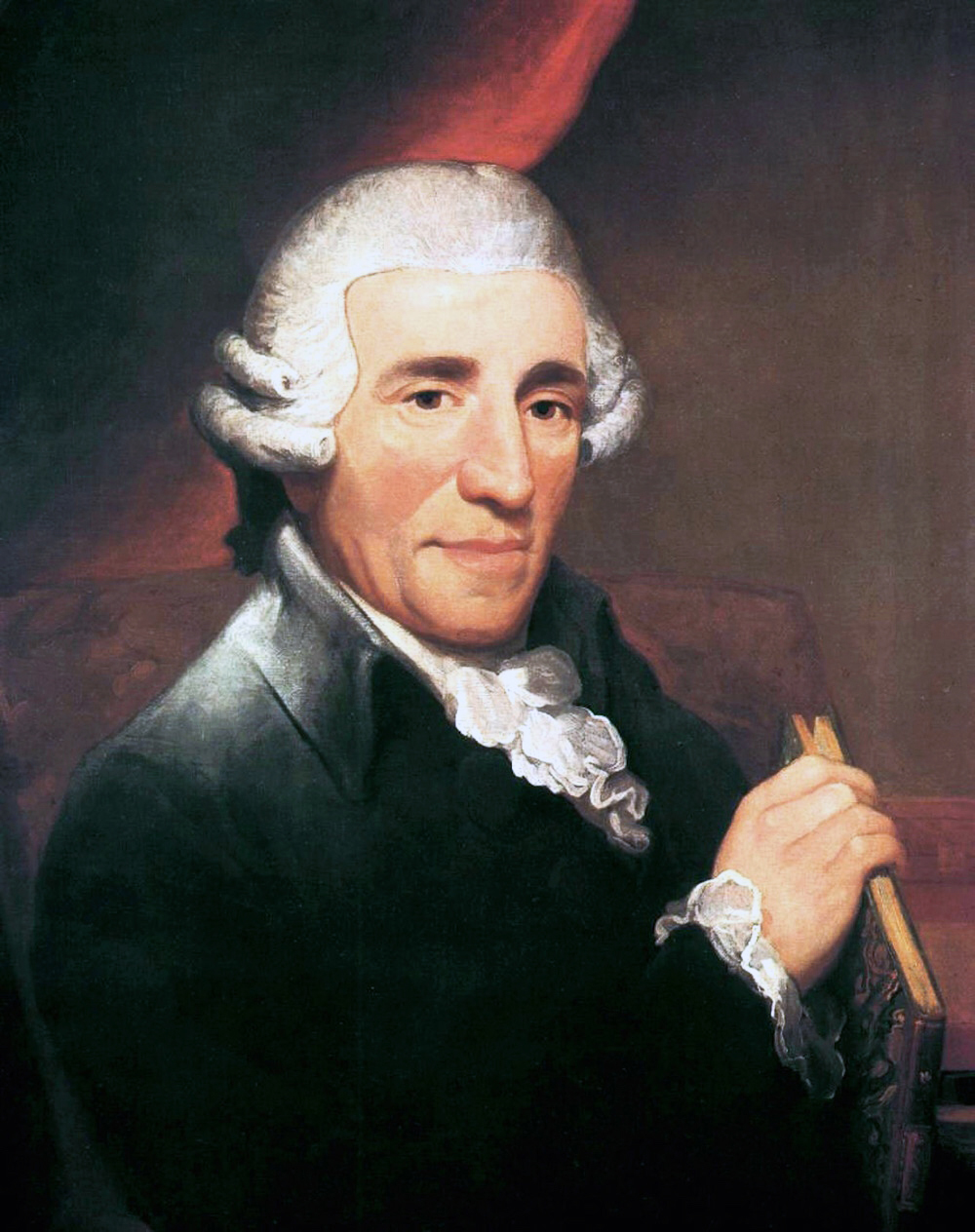
The Haydn Society of Great Britain is putting up the first commemorative plaque in London to the composer Franz Joseph Haydn.
There have been a number of attempts over the past fifty years to put up a plaque to Haydn in London but none has succeeded, perhaps because there are no original buildings left with which he is associated. However, the Haydn Society of Great Britain has been granted permission to put a plaque on the building occupying the site of 18, Great Pulteney Street in Soho.
We know from Haydn’s letters and diaries that he lived in a house on this spot when he first arrived in 1791, in rooms arranged for him by his promoter, Salomon. We also know he found 18th-century Soho very noisy, just as it still is today!
It’s hard to over-estimate the importance of Haydn to the development of classical music. Often referred to as “the Father of the Symphony” for the contribution he made to the development of that genre, ‘Papa’ Haydn is equally remembered for his influence on the development of the string quartet. Haydn’s music forms the the foundations on which Mozart and Beethoven built their greatest work.
The Haydn Society will commission a plaque from Ned Heywood MBE, a respected manufacturer responsible for many similar plaques across London (and all the square plaques in the City of London). It will look something like this:
The Haydn Society of Great Britain are doing this independently of any official plaque scheme and need to raise all the money themselves. This will be the first permanent commemoration of Haydn’s presence in London and his huge contribution to the cultural life of the city. The original subscribers to his Hanover Square Rooms concerts were attracted equally by his reputation and his musical genius – both of these will be acknowledged in a lasting memorial.
Help make a plaque for Haydn in London a reality by contributing to the Haydn Society of Great Britain’s Kickstarter campaign. Every donor will receive a Haydn-related gift, from an animated thank you from the composer himself to honorary membership of the Haydn Society of Great Britain, and more.
Who or what inspired you to take up the piano, and make it your career?
I was fortunate to be playing many instruments as a child and conducting choirs and chamber orchestras. Then suddenly I met a great pianist and person- Felicitas LeWinter- she has been a pupil of Emil von Sauer who had been a pupil of Liszt. She had the most amazing sound and talked about Friedman’s sound. She inspired me- I was 16 – and I was then determined to be a pianist- I had had wonderful teachers in Ireland but she had a very distinctive and important lineage of course! Later on I was touched when she said that I had finally achieved the Arthur Friedman sound!
Who or what were the most important influences on your musical life and career?
I studied with John Barstow at the Royal College and he was very important in my musical development- great passion for music and all music including opera- he opened my eyes. Then Maria Curcio who had studied with Schnabel was central in a very different way. She had a complete command of the piano and a great integrity – there was no showmanship unless it helped the expression of the music.
Other influences are of course- Richter, Giles, Carlos Kleiber and all the wonderful musicians I have worked with and continue to work with such as Svetlanov, Kurt Sanderling, Previn and Maazel – all great conductors.
What have been the greatest challenges of your career so far?
Right now I am recording the complete Brahms and Schubert solo works for Chandos – this is a huge task and very daunting but I am taking it slowly and methodically and I am learning so much.
Which performance/recordings are you most proud of?
I love all my recordings. However, the ones I did with Janowski in Paris hold a special place for me. And of course I love these Chandos recordings.
Which particular works do you think you perform best?
I am not sure – I wouldn’t like to say. It is for others to decide I guess?
How do you make your repertoire choices from season to season?
I play anything that inspires me and that I feel I bring something to. Of course Brahms and Schubert figure a lot at the moment- that is a privilege!
Do you have a favourite concert venue to perform in and why?
I don’t have one. There are great acoustics all around the world, there are great halls in beautiful places, there are places I like because of personal connections, like Ireland.
Favourite pieces to perform? Listen to?
I don’t often listen to music per se as I want to concentrate on my own solutions – but I adore opera and go to performances a lot. When I was 18 and fresh in London I practically lived in Covent Garden and the ENO.
Who are your favourite musicians?
I love my friends who come to my festival every August in Clandeboye, Northern Ireland. They are warm passionate and brilliant people. I love Alison Balsom – she played with my orchestra Camerata Ireland many times. I love Lynn Harrell the cellist and Chio Liang Lin the violinist – we worked together often.
What is your most memorable concert experience?
I think there are many – too many. I can’t choose one in particular.
What do you consider to be the most important ideas and concepts to impart to aspiring musicians?
You must be true to the music and be honest. Performance is not for show, but it must also look good- it is an entertainment (a refined one of course) but people want to see and hear something that will change them, and inspire them.
What are you working on at the moment?
My next Brahms and Schubert CDs – sonatas, Impromptus and intermezzi and the Paganini and Schumann variations of Brahms,
What is your idea of perfect happiness?
Sitting in Provence reading a book by the pool – perfect antidote to the pressurized concert season!!
What is your most treasured possession?
Apart from my family whom I don’t “possess” of course…….my Steinway piano I guess, and my Audi Quattro!!
What do you enjoy doing most?
Driving around Provence in the summer and eating a long lunch
Barry Douglas has established a major international career since winning the Gold Medal at the 1986 Tchaikovsky International Piano Competition, Moscow. As Artistic Director of Camerata Ireland and the Clandeboye Festival, he continues to celebrate his Irish heritage whilst also maintaining a busy international touring schedule.
Who or what inspired you to take up the piano and make it your career?
I don’t remember the inspiration per se; just remember that I liked it from the beginning!
Who or what were the most important influences on your musical life and career?
Leaving Japan at the age of 18 and coming to the UK. For a long time I was undecided about whether to stay in Japan to study or to emigrate to see the “wider” world. I feel the choice I made was the right one and I’m still here.
What have been the greatest challenges of your career so far?
It often feels like extra work, having to learn pieces that are really hard and that I know I won’t play again for a while, if ever. Then again, I do this all the time, as I love the so-called rarities so I can’t exactly complain…
On a slightly different note, I had a period when I seriously considered a career-change in the middle of my undergraduate studies. My confidence level was at a record low then. In the end I came through to the other side and I am glad I didn’t change career only to escape the negative feelings I suffered from.
Which performance/recordings are you most proud of?
For my latest Haydn disc from Artalinna, I intentionally chose his middle-period sonatas for harpsichord and fortepiano and recorded on a huge Steinway. I think it worked out pretty well. I’ve been in love with these sonatas ever since I found out about them when I was a teenager and there’s a talk of doing Vol.2. Please help us to make this happen!
The two great piano concerti (Catoire and Sherwood) I recorded with the RNSO for Dutton back in 2011 are both world-première recordings and I am rather proud of it too.
Which particular works do you think you play best?
Beethoven: Piano Sonata Op.111
Boulez: 12 Notations
Chopin: Sonata No.3 Op.58
Elgar: Enigma Variations
Grieg: Ballade in G minor
Medtner Sonata minacciosa Op.53 No.2
Parry: “Hands Across the Centuries” Suite
Schumann: Concerto
How do you make your repertoire choices from season to season?
I love exploring the lesser-known repertoire, both new and old, so if it is appropriate, I like putting together a whole programme with my recent discoveries. That’s why I love playing in places like the Husum “Rarities of Piano Music” Festival in Germany. At other times, I tend to recycle my old mainstream pieces as the framework of a programme and insert a few curios.
I am becoming more and more aware that I don’t have forever to learn everything I love, so I try to digest a few pieces from my “Learn by 40” list every season.
Do you have a favourite concert venue to perform in and why?
Not in particular.
Favourite pieces to perform? Listen to?
I keep finding new favourite pieces. My pattern is that I obsess over a piece for a while then move onto another obsession. I remember my first real obsession was Ravel’s La Valse: I would listen to it numerous times day after day when I was 13. Most recently, I’ve just graduated from Poulenc’s Dialogues des carmélites.
When I want to relax, I might listen to Nancarrow’s player-piano studies: they never fail to make me have a good laugh. Songs by Miyuki Nakajima are also on the list. She is a singer/songwriter who has an iconic status in Japan.
Who are your favourite musicians?
In no particular order and just off the top of my head – I’m bound to be missing many more.
Nelson Freire
Roger Muraro
Krystian Zimerman
Oleg Boshnyakovich
Rudolf Serkin
Wilhelm Furtwängler
Glenn Gould
Pierre Boulez
What is your most memorable concert experience?
This is more to do with the state of mind I would love to be in before each performance: I was preparing to go on stage in Salzburg. My mental conditioning was as best as I could imagine. I was not nervous but felt calm yet so sharp, I could feel I was going to play really well. Then I went to the bathroom. The lock in the cubicle was a kind which I was not used to. And because I was so concentrated on my imminent performance, I couldn’t work out how to open the door and panicked thinking I got locked in.
What do you consider to be the most important ideas and concepts to impart to aspiring musicians?
I mostly find musicians who have serious non-musical interests inherently more interesting, not only as people but also as musicians.
What are you working on at the moment?
I’m always trying to raise funds for the next recording projects, which I have so many! Also just starting to push my new CD of Haydn CD mentioned above.
To coincide with this release, I will be presenting a programme including two of the Haydn sonatas, Nancarrow & Prokofiev in a new festival in Paris Festival Piano-Oxygene on 3 October 2014.
Where would you like to be in 10 years’ time?
In a South American jungle looking for butterflies and orchids.
What is your idea of perfect happiness?
I had a great cigar lesson with the great Cuban pianist Jorge Luis Prats recently (with his custom-made Havanas). As a master of that art like him, one might get close, or at least I was made aware that that was the objective of the cigar culture. For this knowledge, I thank you, Jorge! My whole body stank of cigars for the next two days though.
What is your most treasured possession?
If music-related, it would be the first edition copy of Medtner’s book MuzaiModa (The Muse and the Fashion) signed by the composer.
Heralded by The Times as “just the sort of champion the newest of new music needs”, while being praised as “impeccable in his pianism and unfailing in his idiomatic grasp” by Gramophone, Takenouchi’s curiosity and a natural penchant for integrity makes his playing and vast repertoire unique amongst his generation of pianists: his love for the music of classical masters – particularly Haydn, Beethoven and Chopin – sits side by side with his passion for the music of Medtner and Rachmaninov, lesser-known British composers such as Sterndale Bennett and Parry, and the contemporary repertoire.
As a soloist, he has recently appeared on many concert platforms including the Wigmore Hall, Tokyo Opera City, the South Bank Centre. He has also performed at festivals in Bath, Cheltenham and Salzburg and given recitals in the UK, Japan, Austria, Germany, Switzerland, Portugal, Italy and Canada. His future engagements will take him even further to the Far East, including performances in Singapore and Vietnam. His more unusual recent appearances include the Rarities of Piano Repertoire Festival in Husum (Germany) and the BBC Four documentary The Prince and the Composer on the life and music of Parry alongside HRH The Prince of Wales. Takenouchi’s discography includes Cosmos Haptic: Contemporary Piano Music from Japan (LORELT) as well as the world première recordings of works by James Dillon (NMC), Edwin Roxburgh (NMC) and Jeremy Dale Roberts (LORELT). 2012 saw two further releases: two piano arrangements of Delius’s orchestral works (SOMM with Simon Callaghan), and a highly acclaimed disc of piano concertos by Catoire and Sherwood (another world première recording) with the Royal Scottish National Orchestra (Dutton Epoch).
Since 2012 Takenouchi has been teaching piano at the Royal Conservatoire of Scotland (Glasgow). He also returns every summer to give masterclasses at the Poros International Piano Academy (Greece) and Ingenium International Music Academy (UK).
I was delighted to be invited to contribute to a very interesting and stimulating discussion on the subject of professionalism in piano teaching at the The Oxford Piano Group on 29th October 2014. Other contributors to this important debate were Nigel Scaife (Syllabus Director, ABRSM), Lucinda Mackworth-Young and Sharon Mark-Teggart (Evoco) who each gave presentations which explored the many facets of professionalism, including proper accreditation, good business practice, membership of professional bodies and minimum standards of qualifications for piano teachers. After the presentations, there was a round table discussion about professionalism, which touched on other important aspects, including the setting of fees.
My own presentation was based on my personal views on this subject, discussions with friends and colleagues in the profession, and the results of my recent survey Perceptions of Independent Piano Teachers. The slides which I used as a starting point for my presentation and discussion are below, and you can read the text on which I based my presentation here: OPG presentation (click to download the PDF file)
The Cross-Eyed Pianist is free to access and ad-free, and takes many hours every month to research, write, and maintain.
If you find joy and value in what I do, please consider making a donation to support the continuance of the site

 The Haydn Society of Great Britain is putting up the first commemorative plaque in London to the composer Franz Joseph Haydn.





