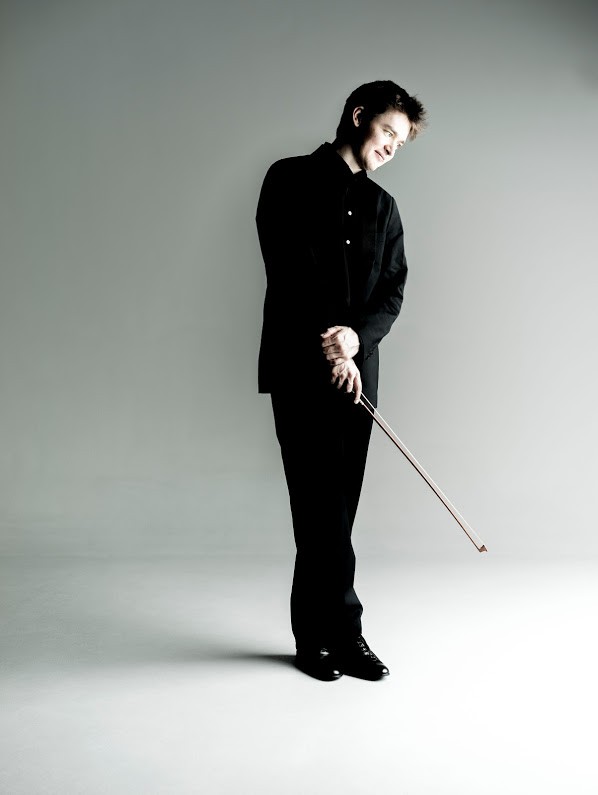
fda20c_c850cb4dd0214ff688db33d783c0140fMusic-in-Motion is a revolution in classical music performance, conceived and developed by conductor John Landor. The musicians perform without music stands or chairs, using movements and gestures designed to clarify the structure, drama and emotional impact of the music.

I met with John Landor to talk about early musical influences, significant teachers, the impetus for creating Music-in-Motion, and more…..


Who or what inspired you to pursue a career in music?

Although none of my family were professional musicians, my father was a keen jazz trumpeter in his youth, and my mother loved the arts and played piano. We had a rather large family of six children and we did a lot of singing as a family. I was born in the Midwest USA and I remember vividly evenings “on the porch” singing all the old American favourites like ‘She’ll Be Comin’ Round the Mountain’, all that homespun stuff.

All my siblings learnt musical instruments, so I just assumed it was something everyone did. I remember proudly carrying home my first violin, the sense of ownership of something special. But almost as soon as I started lessons the family moved around a lot, which meant that it was difficult to get any regular teaching. At age ten I ended up as a chorister at Westminster Cathedral Choir School. There was no violin teacher, so I spent every morning break teaching myself, and also started to compose little pieces.

At WCCS I absorbed the whole Italian Catholic choral tradition. With 10 services to sing each week we all essentially became professional musicians at an early age. Although I hated being away from home (we were all boarders) the music was my great solace.

Was violin your first study instrument at Royal Academy of Music?

No, I decided there wasn’t much point in pursuing it as I was never going to play at the level I wanted to. My first experience of conducting around age 15 (one of my own compositions at school) was an epiphany. I walked around for days in a state of bliss and knew from that moment that this was what I wanted to do. I went to Oxford University to get a music degree and spent all my time forming orchestras and conducting concerts and went on to the Academy for conducting and composition.

ld38439

Significant influences or teachers?

My huge inspiration was Ilya Musin. At 34, I took some time for an artistic ‘re-fresh’ and went to study for a few months with him at the St Petersburg Conservatory. It was a revelation. Musin didn’t speak English but he spoke what I felt was my musical language, far more than anything I had encountered in all my years of study. I really felt I had ‘come home’, and fell in love with Russia in the process – such a fascinating country and people, complex, difficult, but so beguiling. He was the first teacher who talked about ‘character’ in music and that was a light-bulb moment. In my classes at RAM everyone talked about the nuts and bolts of conducting, but no one said anything about character. If the character of the music is absorbed, everything else starts to happen on its own. It was a total Eureka moment. I spent three months in classes with astonishment, amazement and relief, and it had a deep impact on my conducting.

This experience helped in the creation of Music-in-Motion?

Yes, although not directly. My finding the concept of Music in Motion was a slow evolution. It all started with the Mini Maestro family concerts I gave at St Martin-in-the-Fields around 2000 with LMA Orchestra. Because the sightlines there are not ideal for small children I started to send the orchestra out into the audience to play, with the kids holding their music. It gave them a chance to hear and see professional musicians close-up. But an important by-product was that it showed me that musicians can play perfectly well together even if spread out over a relatively large area.

I also realized that audiences just love being close to, or even in the middle of, the musical action – they’d say “wow! An oboist is playing in my face while I’m holding the music!”. And that face-to-face interaction with their audience gave the musicians a real buzz too – they felt more that they were artists in their own right communicating as individuals as well as a collective.

Then it occurred to me that if the musicians were able to move around while playing, they could perform more like actors on a stage and I could ‘choreograph’ the movements to show the interactions in the music. We started doing demonstrations of this in my Meet-the-Music discovery sessions in the interval of some of our evening concerts. The audience reaction was so extraordinary, it was clear that we had found something that was unusually powerful and inspiring. Instead of a static group of musicians seated in front of music stands, here was a living, moving, breathing musical organism.

Since then I have realized that this way of playing has almost limitless uses. For a start it’s ‘educational’ almost by default as it makes clear visually what is happening in the music without need for verbal explanation. All those people who like (or want to like) classical music but are put off by traditional concerts might find this a great way in. And for any musician it’s a great training for general expressivity as it challenges them to think more about how they communicate.

What influences would you say led you to the idea of Music-in-Motion?

First, Lindsay Kemp’s work, which made me understand how important context is to a performance. Secondly, a performance by the Mark Morris Dance Company where I ‘saw’ as well as heard a fugue being performed – a musical ‘line’ of dancers animated each voice of the fugue in a way that was incredibly clear and expressive. And finally, and most directly, Jonathan Miller’s production of the St Matthew Passion. In the arias with obbligato instruments, both singer and instrumentalist stood face to face, and I found it so direct, human and intimate compared to how it is normally done – just amazing. That deeply impressed me.

Is there a historical precedent for this?

Not that I can find or think of! For an idea that seems so obvious to me now, I find it almost unbelievable that there seems to be no historical precedent. Of course there has been quite a lot of work in the past few decades where musicians move on stage with dancers or act while playing. But these I find essentially use music to enhance a theatrical experience – whereas I am using theatre to enhance a musical experience.

I want to emphasise that Music-in-Motion is about revealing and highlighting the choreography, drama and acting that is intrinsic to the physical act of playing music already – not adding show or gimmicks! I am acutely aware that the moment you add a dancer, actor, video projections or have artists painting during a musical performance, the music itself becomes background. It’s incredibly vulnerable to that. So, while I whole-heartedly endorse the concept of musical performance in these kind of theatrical or dramatic contexts, that is the complete opposite of what I am trying to achieve. In a nutshell: a theatre of music, not music of theatre!

Do you feel any music could undergo the Music-in-Motion treatment?

Undergo? I think ‘thrive with’ is more the phrase I would use!

I’ve been purposefully focusing on core repertoire that isn’t overtly ballet or dance-inspired. In the Bach double violin concerto where the ripieno music interjects we had the players stepping out and back like a backing group to the soloists. It made the structure of the music so crystal clear to the audience.

In Mozart’s Jupiter, there’s this little Alberti figure in the second violins accompanying the tune. Normally it barely features in the aural landscape, it simply fills in the harmony. But then we musicians know it is in fact a completely wonderful, busy little conspiratorial moment in its own right. So we got all the second violins to play it in a huddle. All the sudden it became a vital part of the performance, not just an accompanying figure.

I want every and any audience to be fascinated by the riches contained in every single bar of a Brahms Symphony or a late Beethoven quartet – and not needing to be a connoisseur to appreciate it to the fullest extent possible, even on a first hearing.

How do you find musicians respond to Music-in-Motion?

Funnily enough the only run-ins I’ve had were with double basses! They felt it was a gimmick. Mostly, musicians start out pleasantly bemused, but once they get a taste of the sense of liberation from the normal hierarchies of traditional performance they love it! It makes each member of the ensemble feel they really count as individuals. Of course a certain level of stagecraft needs to be learned if it is not all to look a mess and distract from the music.

Does it affect the sound?

Yes it does, in several ways. The sound is much better. Music stands block sound, so when they are all removed there is better overall projection of the music. Even when a player turns while playing, the acoustic changes, so there’s yet another aspect of Music-in-Motion that can be used to enhance the experience of listening. Though it must only be used to clarify the music.

What do you consider to be the most important ideas or concepts to impart to aspiring musicians?

Be yourself and know what you are communicating.

Because the space we need to play our instruments is relatively small and, after all, most instruments are attached to our bodies in some way, many musicians naturally tend to focus inwards. The next point of focus is “am I playing well?”, then “what would my teacher think?”, then “I hope I am living up to the composer’s expectation” then “will I get a good review?’ – and only then the ‘end-user’, the audience, is considered! Music-in-Motion starts with the audience. How can we inspire, delight and fascinate them with what we do? If we can do this, I have no fears about the future of classical music.

Music-in-Motion – Shostakovich String Quartet No.8 performed by the Konvalia Quartet


John Landor is Music Director of London Musical Arts Orchestra, based at St Martin-in-the-Fields. He has been developing a new concept in orchestral and ensemble performance called Music-in-Motion since 2013.

Musicians and ensembles interested in exploring the concept are warmly invited to apply for one of his Music-in-Motion Workshops held regularly in London. Further information here

about-sunwook

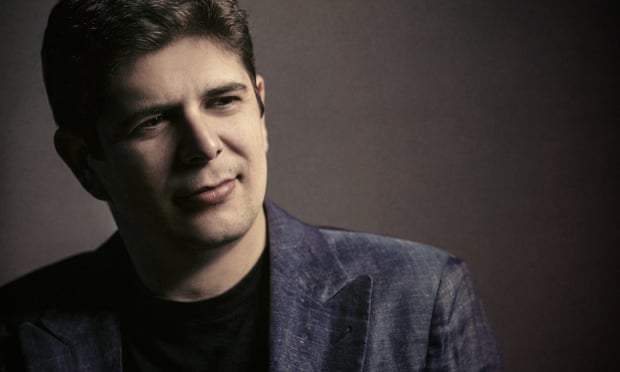
Who or what inspired you to take up the piano and pursue a career in music? 

Since  I was a child, I have been struck by the beauty of classical music. Even though I explored many areas including playing piano and violin, painting, calligraphy, Taekwondo (Korean martial art) and so on, only music stimulated me to practise constantly. It is definitely not easy to practise 4-5 hours every day without passion for music.

Who or what were the most important influences on your musical life and career? 

To be honest, competitions gave me a great motivation. I participated in many national competitions in Korea from a very young age and successful results made me realise that this is what I have to continue to work on. From 2004, I went to international competitions and finally won the Leeds Competition in 2006 at which point I decided to stop participating in competitions as it gave me the opportunity to give concerts on a regular basis. Since then, I have been exploring a variety of repertoires, learning about many composers and their music in depth and earning valuable experiences on the stage.

What have been the greatest challenges of your career so far? 

Each and every concert is a great challenge to me like an audition. I always try to learn and develop from every concert.

Which performance/recordings are you most proud of? 

I still vividly remember great experiences I had with many orchestras and conductors. Working with Sir Mark Elder (Halle Orchestra, Manchester), Kirill Karabits (Bournemouth Symphony Orchestra) and Myung-Whun Chung (former chief conductor of Seoul Philharmonic and Radio France Philharmonic Orchestra) were fantastic collaborations. Also I am very proud of my recording of Unsuk Chin’s Piano Concerto. It is an honour to play and record great works by highly respected living composers.

Which particular works do you think you play best? 

Beethoven and Brahms. I have been playing Beethoven’s Piano Sonatas (all 32!!), Piano Concertos, Violin Sonatas, Cello Sonatas, and also studied all his symphonies when I was a conducting student at the Royal Academy of Music. For Brahms, I have explored all his piano works, chamber music and symphonies etc. However, I am more excited to learn new repertoire including works by Janacek, Prokofiev, Schubert, Schumann, Mozart and Bach. I sometimes think that my life is lucky because it gives me an infinite challenge.

How do you make your repertoire choices from season to season? 

I make my programmes based on pieces which I would like to play with confidence. I include no more than 4 composers in one programme and the relationship between them in terms of their harmonies are very important. For example, if I start Beethoven E major sonata op.109, I put c# minor, op.27 no,2 ‘Moonlight’ for the next piece because E major and c# minor are relative.

Do you have a favourite concert venue to perform in and why? 

Wigmore hall in London, Philharmonie in Paris, Philharmonie in Berlin and Concertgebouw in Amsterdam. They have the most distinguished acoustics and extremely high quality keyboard instruments. They have truly the top level pianos I have ever played.

Favourite pieces to perform? Listen to? 

All Beethoven Sonatas, concertos and chamber music pieces by Brahms. It is quite interesting because most musicians in my generation love to play Tchaikovsky, Rachmaninoff, Prokofiev as well as Ravel and Chopin. However, I have played Tchaikovsky 1st and Rachmaninoff 2nd concertos only once in my life on the stage but more than 20 times for Beethoven 3rd, 4th and 5th.

Who are your favourite musicians? 

My greatest mentor is Andras Schiff, especially for Beethoven. I have been greatly influenced by him through his intellectual ideas on the structure and sound of Beethoven’s music as well as keyboard techniques and understanding the essence of composers.

What is your most memorable concert experience? 

In 2012, I played with London Symphony Orchestra for the first time as a replacement. I was so nervous because I was notified only 2 days before the concert but I think the concert was very successful with Maestro John Eliot Gardiner.

What do you consider to be the most important ideas and concepts to impart to aspiring musicians? 

This is my philosophy of being musician: Don’t aim to get large amounts of concerts, but do try to achieve good quality concertds. It is a long term/life-time project, don’t expect to have rapid improvements, just practice constantly on the regular basis.

Sunwook Kim’s new album of music by Franck and Brahms is now available on the Accentus Music label.

London-based Sunwook Kim came to international recognition when he won the prestigious Leeds International Piano Competition in 2006, aged just 18, becoming the competition’s youngest winner for 40 years, as well as its first Asian winner. His performance of Brahms’s Concerto No.1 with the Hallé Orchestra and Sir Mark Elder in the competition’s finals attracted unanimous praise from the press.

Full biography and website


I was delighted to rejoin the London Piano Meetup Group (a friendly and supportive group for adult amateur pianists in London which I co-founded in 2013) for the March performance event. We met in the airy upstairs studio at Peregrine’s Pianos where we had the opportunity to play a medium-sized August Förster grand piano (one of the many attractions of the group is the chance to play different pianos). There was, as usual, a varied range of repertoire from Scarlatti to contemporary British composer Cheryl Frances-Hoad, with some impressive and enjoyable Chopin, Debussy, Rachmaninov, Bach, Howells, Liszt, Mayerl and even a drop of “cocktail jazz” (‘A Nightingale Sang in Berkeley Square’). Afterwards, we repaired to The Clerk and Well pub for a jolly lunch and lively piano chat.

newroom3medium-470x314
Upstairs studio at Peregrine’s Pianos

The original motivation for forming the group remains very strong – to provide a supportive and relaxed environment for adult pianists to meet, play for one another, share repertoire and socialise. I’ve made some very good friends via the group, as have others, and it was very nice to reconnect with old friends and make new ones too. The popularity of the group – and others like it – is an indication of how many pianists there are in and around London who enjoy the opportunity to meet and explore new or familiar repertoire. The chance to exchange ideas about practising, taking exams, performing, teachers and teaching, courses, concerts and more is also very important, and many people use the informal performance opportunities as a place to run repertoire by a friendly audience ahead of an exam, diploma, competition or festival performance.

Being sympathetic towards nervous players is a crucial component in creating a “safe place” where nervous or inexperienced players can perform without fear of criticism or negative comments: everyone’s performance receives warm applause and appreciation.

For further information about the London Piano Meetup Group or to join the mailing list to be kept informed about upcoming events, please email londonpianomeetup@gmail.com or find the group on Facebook

Related content

Courses and Summer Schools for Adult Amateur Pianists


Piano pieces inspired by Erik Satie

biography-default2016 marks the 150th anniversary of the birth of Erik Alfred Leslie Satie, and to celebrate this occasion British composer Richard Fowles has released a personal hommage to Satie and his musical orginality.

Today Satie’s Three Gymnopedies are amongst the most well-known and much-loved music for piano, but during his lifetime, Satie was relatively unknown to much of the musical world. An unremarkable student, he was bohemian by nature, sceptical of established ideas and authorities, and was considered lazy by his teachers. Despite his relatively low profile during his lifetime, Satie helped shape the music of the 20th century: he was an inspiration and mentor to the group of composers known as “Les Six”, which included Poulenc, Milhaud and Honegger, and influenced contemporaries such as Debussy and Ravel who recognised him as a “new spirit” with a highly original approach to composition. It was not until the mid-20th century that his work became more widely known and appreciated, thanks in part to the endorsement of American composer John Cage.

Composer Richard Fowles was encouraged to pursue this composing project by his piano teacher at Brunel University, Sally Goodworth, after he wrote a couple of Satie-inspired pieces as a student. The result is a suite of 16 piano miniatures in part inspired by Satie’s own music (Knossienne Nos 1-3 being the most obvious, where the eastern melodies of the original Gnossiennes are woven into a harmonic framework redolent of the original, but never an imitation of it) and also by the composer’s life and unusual personality. For example, ‘Sea Bird’ (track no. 6) was the nickname given by Satie to his uncle Adrian, like Satie an eccentric character and an important figure in Satie’s early life. The music juxtaposes quirky melodies which unusual harmonies to create a work which is moody, enigmatic and witty.

In fact, wit pervades these charming miniatures, particularly in the triptych ‘The Velvet Gentleman’ which references aspects of Satie’s attire with which he was most associated, including his identical grey velvet suits:

On most mornings after he moved to Arcueil, Satie would return to Paris on foot, a distance of about ten kilometres, stopping frequently at his favourite cafés on route. According to Templier, “he walked slowly, taking small steps, his umbrella held tight under his arm. When talking he would stop, bend one knee a little, adjust his pince-nez and place his fist on his lap. The he would take off once more with small deliberate steps.”

Robert Orledge, Satie Remembered. French translations by Roger Nichols.

See also: “A Day in the Life of a Musician” by Erik Satie

From: ‘Daily Routines’, a blog by Mason Currey (published in book form as Daily Rituals)

In many of the pieces, Fowles mirrors the “walking beat” that seems to pervade many of Satie’s own piano pieces, a meter which may have been the results of his “endless walking back and forth across the same landscape day after day . . . the total observation of a very limited and narrow environment.” (Roger Shattuck, in conversation with John Cage).

Other pieces in the collection are more melancholy: ‘A Walk to the Chat Noir on a Snowy Day’ conjures up the solitary figure of Satie, dressed in his grey velvet suit, making his customary walk to a favourite haunt in the centre of Paris. Meanwhile the set called ‘Biqui’ recalls Satie’s relationship with Suzanne Valadon and his feelings of devastation when the affair ended. Each piece is offered in Andante and Lento, the slower metres and repeated chord motifs lending a desolate yet intimate atmosphere to the music.

‘Sylvie’, the final track on the disc, is named after one of three poems written by Satie’s friend J.P. Contamine de Latour that Satie put to music in 1886.Its jazz harmonies and winding melody is infused with a tender, almost elegaic air.

Throughout the collection, Fowles avoids pastiche by offering us the essence of Satie’s music, and some of his contemporaries,  viewed through the lens of own originality and inventiveness which fuses eastern melodies with sensuous perfumed harmonies.

The music is performed on this disc by pianist Christina McMaster, whose affinity for this type of music is evident in her crisp articulation, preciseness of touch, and an acute sense of pacing which brings the music to life with vibrancy and atmosphere. And there is an added bonus, for pianists may also purchase the collection as sheet music (roughly Grade 6-8 level). Fowles has scored the music in a traditional way and also without barlines, à la Satie.

There is much to enjoy in this evocative collection, for those who love the piano music of Satie, and for those who are just beginning to explore it.

The sheet music is available now. Order here

The CD is released on 8th April.

Sample tracks here

Richard Fowles is an English composer, guitarist and teacher. He has worked as both a composer and session musician in some of the UK’s biggest recording studios and has provided the scores for a number of films and television programmes. He is also an in demand orchestrator. ‘Un Hommage à Erik’ is Richard’s debut album and book.