Who or what inspired you to take up composing, and pursue a career in music?

The joy of discovering new things in music inspired me. I was self-taught, and I just found the notion of making music such a thrilling adventure.

Who or what were the most significant influences on your musical life and career as a composer?

I think a composer draws inspiration from all of the events in their lives. But looking back, I’m pretty sure some of the music I listened to when I was young provided some serious influence…the Beatles in particular. My flute teacher, Judith Bentley was also a huge influence. And then there are all of my colleagues…they continue to inspire me every day.

What have been the greatest challenges/frustrations of your career so far?

Starting out in my undergrad not knowing much of anything about classical music was an incredible challenge. For a long time I felt that I was climbing a huge mountain of knowledge, trying to pick up as many “pebbles” as I could manage to carry. But every step made me smarter and stronger. Along the way, I realized that one spends an entire lifetime learning.

What are the special challenges/pleasures of working on a commissioned piece?

Every piece is a challenge. To create something from nothing is a big thing. Sometimes I’m learning about a particular instrument’s needs (I just finished a tuba concerto…so I studied a lot of the repertoire and talked with various players to get a sense of what would be ideal in the piece). Other times, I’m trying to craft something that works for the performer(s). Then there is the challenge of getting notes on a page, which I hope the performer and listener will find interesting.

What are the special challenges/pleasures of working with particular musicians, singers, ensembles and orchestras?

I don’t think it’s possible to make a generalization about this (I’m so lucky to be able to work with such a huge assortment of performers)…each piece is different and the challenges and pleasures change daily and yearly.

Of which works are you most proud?

I don’t know if it’s possible to be proud of one particular work. They all reflect so many things for me. But the one that feels very personal is “Blue Cathedral” … it seems to affect so many people. I’m sometimes surprised at how many instrumentalists and composers tell me this is the first piece of contemporary music that they encountered when they were younger. Even more surprising is how many people have performed it more than once. That’s one of the things that makes it special.

How would you characterise your compositional language?

I let other people decide that for themselves.

How do you work?

I try to work every day, composing 4-6 hours a day: consistently, persistently, and conscientiously.

Who are your favourite musicians/composers?

Impossible to name as there are literally thousands!

What is your most memorable concert experience?

I’m lucky to have had many incredible and memorable experiences. One of the most life changing was the Philadelphia Orchestra premiere of my “Concerto for Orchestra” which took place at the League of American Orchestras’ Conference. My life changed over night after that performance. Suddenly I was known, and commissions started coming in.

What do you consider to be the most important ideas and concepts to impart to aspiring musicians?

Make sure you love what you’re doing, as you’ll spend so much of your waking time doing it. Work hard and do it to the best of your ability. Share the joy with as many other people as you can.

Where would you like to be in 10 years’ time?

Composing in my studio

What is your idea of perfect happiness?

Composing in my studio


Pulitzer Prize-winner Jennifer Higdon (b. Brooklyn, NY, December 31, 1962) is one of America’s most acclaimed and most frequently performed living composers. Higdon started late in music, teaching herself to play flute at the age of 15 and beginning formal musical studies at 18, with an even later start in composition at the age of 21. Despite this late beginning, she has become a major figure in contemporary Classical music and makes her living from commissions. These commissions represent a range of genres, including orchestral, chamber, choral, vocal, and wind ensemble.

Higdon holds a Ph.D. and a M.A. in Music Composition from the University of Pennsylvania, a B.M. in Flute Performance from Bowling Green State University, and an Artist Diploma in Music Composition from The Curtis Institute of Music in Philadelphia.

Hailed by the Washington Post as “a savvy, sensitive composer with a keen ear, an innate sense of form and a generous dash of pure esprit,” her works have been performed throughout the world, and are enjoyed by audiences at several hundred performances a year and on over sixty CDs. Higdon’s orchestral work, blue cathedral, is one of the most performed contemporary orchestral compositions by a living American with more than 600 performances worldwide since its premiere in 2000.

Her list of commissioners and performing organizations is extensive and includes The Philadelphia Orchestra, The Chicago Symphony, The Atlanta Symphony, The Baltimore Symphony, The Boston Symphony Orchestra, The Cleveland Orchestra, The London Philharmonic Orchestra, the Luzern Sinfonieorchester, The Hague Philharmonic, The Melbourne Symphony, The New Zealand Symphony, The Pittsburgh Symphony, The Indianapolis Symphony, The Dallas Symphony, as well as such groups as the Tokyo String Quartet, eighth blackbird, and the President’s Own Marine Band. Higdon has worked with musicians that include Nathan Gunn, Isabel Leonard, Hilary Hahn, and Yuja Wang.

Her Percussion Concerto won the Grammy for Best Contemporary Classical Composition in January, 2010. Higdon also received the 2010 Pulitzer Prize in Music for her Violin Concerto, with the committee citing Higdon’s work as “a deeply engaging piece that combines flowing lyricism with dazzling virtuosity.”

Among her national honors, Higdon has received awards from the Guggenheim Foundation, the American Academy of Arts & Letters (two awards), the Koussevitzky Foundation, the Pew Fellowship in the Arts, Meet-the-Composer, the National Endowment for the Arts, and ASCAP. She was also honored by the Delaware Symphony with the A.I. DuPont Award for her contributions to the symphonic literature. Most recently, she was awarded the Distinguished Arts Award by Pennsylvania Governor Tom Corbett.

Higdon has been a featured composer at many festivals including Aspen, Tanglewood, Vail, Norfolk, Grand Teton, and Cabrillo. She has served as Composer-in-Residence with several orchestras across the country including the Philadelphia Orchestra, the Pittsburgh Symphony Orchestra, the Fort Worth Symphony, the Green Bay Symphony Orchestra, the Wheeling Symphony and the Arkansas Symphony Orchestra. Higdon was also honored to serve as one of the Creative Directors of the Boundless Series for the Cincinnati Symphony.

One of Higdon’s most current project was an opera based on the best-selling novel, Cold Mountain, by Charles Frazier. It was co-commissioned by Santa Fe Opera, Opera Philadelphia and Minnesota Opera in collaboration with North Carolina Opera. All performances in Santa Fe were sold out and Higdon’s opera became the third-highest grossing opera in the company’s history at Opera Philadelphia. Higdon recently won the International Opera Award for Best World Premiere.

Dr. Higdon currently holds the Milton L. Rock Chair in Composition Studies at The Curtis Institute of Music, where she has inspired a generation of young composers and musicians. Her music is published exclusively by Lawdon Press.

For more information: www.jenniferhigdon.com

Guest article by Ian Flint, a pianist and piano teacher based in North London. It was originally published on pianoteachernorthlondon.com.

Chopin’s extraordinary Ballade No.1 seems to inspire serious students of the piano, whether dedicated hobbyists or aspirant professionals, like no other single piano work. Its role at a pivotal moment in Roman Polanski’s 2002 film The Pianist has doubtless contributed to its celebrated status. More recently the sense of Zeitgeist around this masterpiece has been further enhanced by former Guardian editor Alan Rusbridger’s book in which he outlines his endeavours to learn the piece against all the odds (Play It again: An Amateur Against the Impossible).

This article assesses the main recordings of the work available on YouTube, with the aim of helping you locate the most compelling performances. Given the range of richly rewarding interpretations on offer, from widely divergent artistic personalities, it’s clear that this piece of music truly inspires many of the world’s greatest pianists too. They are in good company: Chopin apparently told Schumann that this Ballade was his favourite among his own works.

Maurizio Pollini

Having long occupied an exalted place amongst interpreters of this work, Pollini is well represented on YouTube, mainly in recordings taken from ‘live’ performances. If Pollini is at his best when he combines his commanding brilliance with a sense of space and a willingness to yield to the more lyrical impulses of the music, one of these recordings is pre-eminent. This is indeed a magisterial account, granitic, turbulent when the music demands, but also with an enchanting sense of reverie in the second subject, truly faithful to Chopin’s sotto voce marking. Throughout the work Pollini’s phrasing comes in long, organic paragraphs, contributing to an inexorable sense of the work’s overall architecture.


Sviatoslav Richter

Richter is also well-served on YouTube, mostly via recordings of various concerts from the 1960’s. Richter’s interpretation remains fairly consistent across these performances. His introduction is restrained rather than consciously arresting, and leads to a subdued main theme, cowed with sorrow. In the midst of such a weighty reading, his rather insouciant way with the second limb of the second subject in the recapitulation (from bar 180) is rather quirky – hardly the con forza stipulated by the composer. But in general Richter is fully responsive to the unfolding drama, and the denouement is suitably demonic.


Vladimir Horowitz

Much less consistent are the various YouTube versions of Vladimir Horowitz, again from ‘live’ performances. The most impressive of these is a video of a Carnegie Hall concert. As might be expected from Horowitz, this is a big-boned rendition, but there are also many charming individual moments of lyricism and a delightfully teasing quasi-waltz (from bar 140). Even in this performance, though, there is sometimes an unwarranted heavy-handedness, a certain lumpiness in the phrasing and rhythmic relationships:

These less appealing characteristics are more pronounced on the various other Horowitz performances on YouTube. Indeed one version (posted by ‘boomzxz’) is nothing short of a travesty.


Arthur Rubinstein

The countless admirers of Arthur Rubinstein would cite the sheer individuality of his poetic sensibility as one of the crowning glories of his playing. His recording of the 1st Ballade, dating from 1959, certainly has those moments of insight, but some will feel that at times his rubato and tonal shading step across the border from revelatory to wilful. For example, the way he curtails the very first note of the piece or flattens out of the triplet in bar 4 seem difficult to justify. Chopin was a perpetual revisor, and was on occasion even capable of sending substantially varied versions of the same work to his different publishers, so it would be ill-advised to argue for a frigid fidelity to the text in the performance of his music. However, he notated the rhythm of this Ballade’s introduction so precisely that it seems appropriate to adhere to his written intentions.


Alfred Cortot

Whatever are Rubinstein’s eccentricities, they pale into insignificance when set alongside Cortot’s performance. There is certainly something of the tortured artist here, and Cortot’s rhythmic liberties are at times so spasmodic that he could scarcely be seen as a prime contender. However, if one can disregard his distortions of Chopin’s text in, for example, the second subject, one can be drawn into a quasi-improvisatory dreamscape that is oddly intoxicating.


Lang Lang

Yet pianists from a bygone era such as Cortot don’t have a monopoly on extreme expressive freedom. The ‘live’ video of Lang Lang reminds us that not all today’s pianists are sanitized in comparison with their predecessors. Lang Lang allows himself more poetic (and sometimes textual) licence than most of his colleagues, past and present. There is fervour and panache in abundance; indeed the overall effect might be mesmerising to someone who had never heard the piece before. For those more familiar with the composer’s score and the general stylistic history of Chopin playing, some aspects of his interpretation are likely to be puzzling at best.


Claudio Arrau

For more convincing examples of rhythmic flexibility one might turn to Claudio Arrau. Of the many versions available on YouTube, recorded at various stages of his career, perhaps the most consistently fulfilling is one dating from 1953. Here, his way with the third phrase of the main theme (bars 12-14) or the apogee of the second subject (bars 79-80), to give just two examples, is very rubato indeed, but seems to fit perfectly in the context. Indeed, Arrau’s second theme in general is one of the most exquisitely contoured to be found anywhere. It is true that Arrau is less scintillating than many in the more bravura passages of the work, but this is a performance to treasure for the beauty and gravitas of its musical soul.


Martha Agerich

In many ways Martha Agerich’s interpretation is the polar opposite of Arrau’s, in her characteristic emphasis on the volatile, tempestuous aspects of the work. Yet Agerich also finds room for a winningly tender second subject. Another strength of this performance is the dazzling clarity of her fingerwork in the central section, giving a wonderful sense of caprice.


Evgeny Kissin

This Russian artist strikes a fine balance between respect for the score and apparent spontaneity. Individual phrases are lovingly sculpted and intelligently related to each other; this thoughtful approach shines, for example, in his very organic transition between the first and second subjects (from bar 36). There is much profundity in both main themes (although the slightly halting quality in the first theme is somewhat curious), and the central section pulsates with verve and playfulness.

Unlike many others, Kissin observes Chopin’s con forza (bar 180) in the recapitulation of the second subject, giving this section a great sense of élan. The main body of the coda is not utterly relentless; instead he withdraws at the beginning of certain phrases, both tonally and rhythmically. Rather than detracting from the drama, this seems to magnify the ultimate annihilation.


Arturo Benedetti Michelangeli,

In a studio version captured on video, Michelangeli offers an aristocratic reading, understated and seemingly effortless. There’s not much red-blooded passion here, and the performance isn’t free of his ‘left hand before right’ mannerism, but there are substantial compensations, notably an irresistibly languid second subject.

There are also various ‘live’ performances by Michelangeli (posted by ‘RabidCh’ and ‘incontrario motu’ among others) which are by no means carbon copies of each other, but in general he seems more emotionally involved and allows himself more expressive freedom (not always to the music’s advantage) than in the video recording.


Vladimir Ashkenazy

The main recording by Ashkenazy, taken from his Decca box set, has that emotionally searching quality that is one of the hallmarks of this artist. The main theme is mournfully ruminative, setting the tone for a performance full of pathos, perhaps sometimes at the expense of propulsion. Yet there is plenty of the requisite majesty and drama too, and Ashkenazy’s peerless tonal refinement makes for a deeply satisfying listening experience.

There is an earlier ‘live’ performance by Ashkenazy, recorded in Moscow in 1963. This has much more of the impetuosity of youth (it’s over a minute shorter), the expression is in general more overt and the ferocity of the coda even more seismic. The recording quality is admirably clear but shows its age in an occasional hard edge to the piano sound.


Murray Perahia

Perahia gives a powerful and insightful account. Some of the underlying chords in the first theme (especially in the recapitulation) are a little dry and obtrusive, but this is a minor quibble. This is a highly convincing performance, poised and intelligent, titanic when necessary but devoid of hyperbole. Other versions might be more captivating in individual aspects of the work, but few achieve Perahia’s cohesion, both in the relationships between individual phrases and the logic of the overarching structural framework. This masterful grasp of the musical narrative is perfectly illustrated, for example, in the transition (bars 188-194) leading to the final stricken intoning of the first theme.


Emil Gilels

Gilels has an imposingly strident manner in this work, sometimes to good effect, especially in an exciting ‘live’ performance from Leningrad in 1963. There are moments of melting beauty, but in general the emotions are conveyed quite forcefully, and sometimes the sound is a little too stark for the context, for example towards the end of the first theme.


Umi Garrett

There is a remarkable ‘live’ recording by the 14-year-old Umi Garrett. This is not just a question of gaping at a Wunderkind, and musing sagely if the child prodigy will be able to mature into a genuine artist. On the contrary, this is already a fully-fledged performance, full of artistic sensibility as well as marvellous dexterity, one with which to try a ‘blind test’ on your musical friends.


Jorge Bolet

Bolet is represented by a video recording, made late in his career, and indeed this performance has a distinct sense of a master looking back. Although many other pianists engulf us more remorselessly in the work’s turmoil, this performance is suffused with a haunting sadness that perhaps compels more deeply than some other more extrovert readings.


Andrei Gavrilov

Another performance of impeccable artistry comes from Andrei Gavrilov. From his suitably portentous introduction Gavrilov takes us on an absorbing journey through the work’s ever-changing landscapes. This is music-making of the utmost sincerity, and Gavrilov always directs his stupendous physical prowess to the service of the music. Towards the end of a titanic coda, his pronounced rubato and the sheer slowness of the final octave descent (perhaps too melodramatic for some listeners) crown the work with an epic fatalism. Unfortunately the rather muffled sound quality of the recording is not commensurate with the quality of the playing.


Krystian Zimerman

The opening bars in Zimerman’s hands immediately set the tone for a performance of great grandeur and finesse. Every musical gesture is delivered with great conviction. His rubato is highly idiomatic and his phrasing wonderfully nuanced, although he is less ethereal than some in the more introspective episodes, especially the initial statement of the second subject. The central A major statement of the second theme is toweringly imperious. Overall, Zimerman’s interpretation has a severity that seems entirely appropriate, no more so than in the main body of the coda which is relentlessly pulverising rather than frenetic, leading with gripping inevitability to a bone-crushing final catastrophe.


So who are the best interpreters of Chopin’s First Ballade?

With such a range of outstanding performances to choose from it is genuinely difficult to select one definitive version. The most poignantly lyrical performances are not necessarily the most riveting in the more magmatic or mercurial aspects of the work. Ashkenazy, Gavrilov, Kissin, Pollini, Perahia and Zimerman are amongst the most enthralling communicators of Chopin’s kaleidoscope of emotions. But if forced to take just one performance to the proverbial desert island, it would be Krystian Zimerman.


About the Author:

Ian Flint is a highly experienced and versatile pianist and teacher, who has established a thriving piano teaching practice in London, where he specialises in coaching adult pianists. Inspired by his own Russian-influenced training, he is extremely dedicated to developing each student’s physical approach to promote maximum freedom, agility and beauty of sound. For more of his articles and additional information about piano lessons, go to pianoteachernorthlondon.com.

One concert leads to another, or so it would appear based on recent events in my musical life….. Less than a month ago, at a super lunchtime concert given by the sparkling young British pianist Christina McMaster, we were chatting after her performance and she asked me if I was free in early December to play in a private house concert down in Sussex at the lovely country home of Neil Franks, Chairman of Petworth Festival. And so a couple of weeks and two rehearsals at Steinway Hall later, I found myself playing the Wilberg Carmen Fantasy with three other pianists, including Christina and Neil. To say it was great fun would be an understatement – it was possibly the most fun I have ever had at a piano: making lots of wonderful noise (music!) with like-minded people with a true passion for the piano to a very appreciative audience. Add in welcoming, generous hosts, plenty of Prosecco and wine, good food and good company, and one has the makings for a perfect evening.

The programme was eclectic (see pictures below) but it worked and I think the audience really appreciated the range and variety of music played, from Rachmaninov’s striking and vibrant Symphonic Dances (brilliantly performed by Neil and Julian) to miniatures by Satie and Etudes by Debussy (beautifully played by Christina), interspersed with works by Peteris Vasks, Chick Corea, Britten, William Grant Still and Prokofiev. A programme need not have a theme nor a common thread when performed by a mix of people who simply want to share their favourite music – and their love of playing that music – with others. And that sense of a shared experience, between musicians and audience, was very palpable, judging by the lovely comments from audience members during the interval and after the concert.

We are so used to hearing music in formal or very large concert venues, like the Wigmore or Royal Festival Hall, that it’s easy to forget that until about 1850, the majority of music was written for and performed in private salons and the home (and music for piano four- or six-hands was composed to satisfy a growing market in the 19th century for piano music to be played in the intimacy of one’s home). Neil Franks’ Pianos at Parkhurst (House) recreates the atmosphere of the rather less formal nineteenth-century salon or haus konzert – an atmosphere that allows for greater connection between audience and performers – and is a delightful and very positive reminder that, fundamentally, music is for sharing.

It was a privilege and a pleasure to be part of such a wonderful and hugely enjoyable evening of shared music making – for friends, with friends and amongst friends.


Petworth Festival celebrates its 40th anniversary in 2018. A preview of the 2018 Festival will be on this blog.

For further information about the Festival, please visit www.petworthfestival.org.uk

Yuanfan Yang – Watercolour (Orchid Classics)

Nicholas McCarthy – Echoes (Leftnote Records)

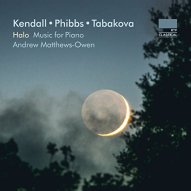
Andrew Matthews-Owen – Halo: Music for Piano (Nimbus)

5060189560738At just 20, Yuanfan Yang is already a promising pianist and young composer. Winner of keyboard final of the 2012 BBC Young Musician, he has been a prizewinner in many other international piano competitions. The works by Schubert, Chopin and Liszt on his debut disc represent the kind of mainstream showpiece repertoire one expects from competition participants, and the music played is well-mannered and attractive, rather than attention-grabbing. Schubert’s ever-popular B-flat Impromptu has the requisite lyricism and grace, while the opening of Chopin’s darkly-hued Fantasie in F minor, Op 49 is ponderous rather than portentous. The ‘Winter Wind’ Etude and Liszt’s ‘La Campanella’ are despatched with the kind of youthful gusto one would expect from a musician of this age who has been on the competition circuit for several years now: fleet and pristine fingerwork but rather bloodless in interpretation. La Vallee d’Obermann feels too restrained and lacks the grandeur and spaciousness to really recall the profound majesty of the Alps. Far more interesting are the works composed by Yuanfan himself, colourful programmatic pieces inspired by watercolours, whose titles link them to the pieces by Liszt on this disc and also to Philip Cashian’s ‘Landscape’ and Peter Maxwell-Davis’ ‘Farewell to Stromness’, the final work on the disc, which again feels too polite – a little more Scottish lilt would be welcome. Overall, a nicely-presented “recital” disc showcasing Yuanfan’s developing talents as both pianist and composer.


500x500Left-handed pianist Nicholas McCarthy presents an altogether more mature and convincing performance on his new album ‘Echoes’, which features repertoire by Bach and Rachmaninov which he first explored as a pianist in the early part of his career, all in fine transcriptions for the left hand alone. The final track on the disc is Paul Wittengenstein’s transcription of Bach’s evergreen Prelude in C. Like McCarthy, Wittengenstein was a left-handed pianist (he lost his right arm following an injury in the First World War). If you have seen Nicholas McCarthy in concert you will know that as a left-handed player he is incredibly athletic, utilising the entire range of the keyboard. Nicholas is no novelty act pianist; he is a serious concert pianist whose superb technical ability and musicality enable him to create a rich palette of sounds, colours and shadings, from full-bodied fortissimos to delicate pianissimos, and elegant, lyrical cantabile playing (try the Andante from Rachmaninov’s Cello Sonata Op 19 or Bach’s Prelude in C for particularly lovely examples of this). The album begins with a robust and entirely convincing transcription of Rachmaninov’s Prelude in G minor. It loses nothing being played with only one hand, and the same is true for all the pieces on this disc. You would never guess that this music is played with the left hand only, such is the quality and clarity of Nicholas’s sound. The album was recorded on a Yamaha CFX concert grand and the sound quality is direct but never strident with a warm resonance, particularly in the bass. Recommended.


51wyuc5onpl‘Halo’ is Andrew Matthews-Owen‘s first solo disc. A highly sought-after collaborative pianist and song accompanist and noted champion of contemporary music, Matthews-Owen showcases his affinity for this repertoire in this rewarding recording of contrasting works by Joseph Phibbs, Dobrinka Tabakova and Hannah Kendall. Phibbs’ Preludes (2016) were dedicated to Matthews-Owen and are short aphoristic works whose spare simplicity, delicate melodic fragments and piquant harmonies are redolent of Schoenberg’s Kleine Klavierstucke. Matthews-Owen’s directness and clarity allows these short works to speak for themselves. Dobrinka Tabakova’s ‘Modétudes’ – brief “studies” based on the main modes (Dorian, Lydian, Phrygian etc) – are characterful miniatures whose individual musical personalities Matthews-Owen delineates with delicacy and precision, alert to their ever-shifting moods. They are folksy in their idioms and immediately accessible to the listener. Hannah Kendall’s ‘On a Chequer’d Field Array’d’ is a work in three parts, inspired by a game of chess: again, Matthews-Owen is always sensitive to the contrasts and switches of emotion in this music. Tabakova’s ‘Nocturne’ is delightful, delicate and songful, while her ‘Halo’, evoking a lunar halo seen one summer’s night, is powerfully atmospheric (the second movement, ‘To blinding shine’ for example, begins with bright rapidly repeating notes, interjected with a hymn-like motif, somewhat reminiscent of Hovhaness’s Visionary Landscapes, before moving into far more dramatic territory). This disc is a splendid advocate for contemporary piano music from a performer whose understanding of and affinity for this music is clear from the very first note to the last.

Recommended.