3 – 7 October 2018
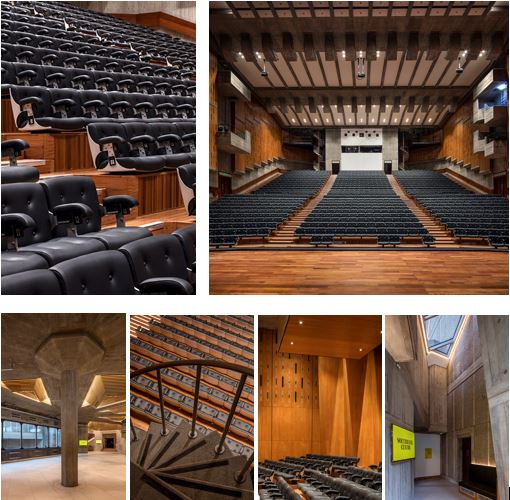
Kings Place, London
2018 promo video here

Katya Apekisheva | Alexandra Dariescu | Margaret Fingerhut | Ingrid Fliter | Stephen Kovacevich | Konstantin Lifschitz | Leszek Możdżer | Charles Owen | Paul Roberts

“A reminder of what a fabulous variety of sound can be conjured from two pianos”
5* The Telegraph

  • Third annual London Piano Festival at Kings Place with Co-Artistic Directors Charles Owen and Katya Apekisheva
     
  • Solo recitals by Konstantin Lifschitz and Ingrid Fliter, amplified jazz performance by Leszek Możdżer and lecture/recital on Debussy by Paul Roberts
  • Two-piano Marathon with Stephen Kovacevich, Margaret Fingerhut, Konstantin Lifschitz, Ingrid Fliter, Charles Owen and Katya Apekisheva which will be recorded by BBC Radio 3 for future broadcast in Radio 3 in Concert
  • Family concert of The Nutcracker and I by Alexandra Dariescu with piano soloist, ballerina and digital animation

img2171sim-canetty-clarkecurated

Charles Owen and Katya Apekisheva announce the programme of their third annual London Piano Festival, taking place from 3-7 October 2018 at Kings Place, London.  This year the Co-Artistic Directors bring together seven pianists in addition to themselves for a programme of solo recitals, jazz, a family concert, lecture/recital and the highly anticipated two-piano marathon.  The theme of this year’s Festival is the centenary of the death of Claude Debussy which is seen throughout the 5-day series.  This year the London Piano Festival are bringing in a student ticket scheme, offering £5 tickets to a number of events during the 5-day Festival.

The highlight of the London Piano Festival is its Two-Piano Marathon, referred to as “altogether exemplary” by The Times (2016). In various pairings, Stephen Kovacevich, Margaret Fingerhut, Katya Apekisheva, Charles Owen, Konstantin Lifschitz and Ingrid Fliter perform a range of works by Brahms, Bax, Debussy, Adès, Stravinsky, Rachmaninov and more.  The Two-Piano Marathon will be recorded by BBC Radio 3 for future broadcast in Radio 3 in Concert.

The Festival opens with a concert by Co-Artistic Directors Charles Owen and Katya Apekisheva performing both solo and duo repertoire.  Katya opens the concert performing Schubert’s Moments Musicaux 1-3, Granados’ The Maiden and The Nightingale and Ginastera’s Three Argentinian Dances before Charles performs Ravel’s Gaspard de la nuit. The second half of the concert sees the duo perform Three Nocturnes by Debussy (arranged by Ravel), marking the composer’s centenary, and Milhaud’s Scaramouche.

“At the London Piano Festival we want to bring together a whole range of music appealing to piano lovers of all ages.  As 2018 marks the centenary of Debussy’s death, we felt it was important to mark this within our programming this year.  We also love to present contemporary music at the Festival and this year we’ll be performing an existing piece by Thomas Adès who is a great friend of Charles’.” Charles Owen and Katya Apekisheva

Both Owen and Apekisheva will be releasing solo albums to coincide with the opening concert of the London Piano Festival this year.  Katya is releasing an album of Scriabin, Chopin and Fauré impromptus on Champs Hill Records, a programme which she brought to the Festival in 2016.  Charles is releasing a double-disc of Brahms’ late piano works on Avie. This follows the recent release of their duo recording in January 2018, Rachmaninov: The two-piano suites; Six Morceaux, Op. 11 which Gramophone magazine called “a highly recommendable disc”.

The London Piano Festival features two solo recitals by pianists making their debuts at Kings Place. Russian pianist Konstantin Lifschitz performs a programme of works by Schubert, Janáček and Debussy, and Argentinian pianist Ingrid Fliter performs Beethoven Sonatas before they both join the Two-Piano Marathon.   Celebrated Polish jazz pianist Leszek Możdżer brings a night of amplified jazz to the Festival, following his sold-out show at Kings Place in 2017 which London Jazz News called “a great show that held the attention from start to finish”. 

Commemorating the centenary of Claude Debussy, concert pianist and writer Paul Roberts presents a lecture/recital in Kings Place’s Hall Two about Debussy’s Piano Music on Saturday 6 October, focussing on Debussy’s Images books I and II.  Paul Roberts is the leading authority on the music of Debussy and Ravel, having written Images: The Piano Music of Claude Debussy, Debussy: a biography and Reflections: The Piano Music of Maurice Ravel.

For this year’s family concert, Alexandra Dariescu brings her ground-breaking multi-media piece The Nutracker and I, by Alexandra Dariescu for piano soloist, ballerina and digital animation to Kings Place for the first time, following its critically-acclaimed world premiere last year.  Tchaikovsky’s beloved ballet music features throughout and includes favourites such as Dance of the Sugar Plum Fairy, Arabian Dance, Chinese Dance, Pas de Deux, and the Flower Waltz in 15 virtuosic arrangements by Mikhail Pletnev, Stepan Esipoff, Percy Grainger and three brand new variations by Gavin Sutherland.  Dariescu is releasing an album of The Nutcracker and I on Signum Classics on 27 April.

Full programme

Wednesday 3 October, 19:30pm | Hall One
OPENING NIGHT – Charles Owen and Katya Apekisheva
Schubert Moments Musicaux 1-3, D.780 (KA)
Granados Maiden and the Nightingale from Goyescas, Op. 11 (KA)
Ginastera Three Argentinian Dances, Op. 2 (KA)
Ravel Gaspard de la nuit (CO)
Debussy Three Nocturnes (arr. Ravel) (KA & CO)
Milhaud Scaramouche (KA & CO)

Thursday 4 October, 19:30pm | Hall One
ON AN OVERGROWN PATH – Konstantin Lifschitz
Schubert Sonata in A minor, D 784
Janáček ‘On an Overgrown Path’ 1st series
Janáček ‘On an Overgrown Path’ 2nd series
Debussy Preludes Book I

Friday 5 October, 19:30pm | Hall One
LESZEK MOŻDŻER IN CONCERT 

Saturday 6 October, 14:00pm | Hall Two 
IN THE MIND’S EYE – DEBUSSY’S IMAGES – Paul Roberts

Saturday 6 October, 16:00pm | Hall One
TEMPEST – Ingrid Fliter
Beethoven Sonata No. 18 in E-flat major, Op. 31, No.3
Beethoven Sonata No. 17 in D minor ‘Tempest’, Op. 31, No. 2
Beethoven Sonata No. 22 in F major, Op. 54

Saturday 6 October, 19:00pm | Hall One
TWO PIANO MARATHON – Stephen Kovacevich, Margaret Fingerhut, Katya Apekisheva, Charles Owen, Konstantin Lifschitz, Ingrid Fliter
Brahms Variations on a Theme by Haydn, Op. 56 (KL&IF)
Bax The Poisoned Fountain and Hardanger (MF &CO)
Poulenc Élégie (MF & KA)
Poulenc Capriccio (d’après Le Bal masque) (MF & KA)
Poulenc L’embarquement pour Cythère (MF & KA)
Debussy En blanc et noir (SK & CO)
Rachmaninov Russian Rhapsody (1891) (KL & KA)
Arensky Suite No. 1, Op. 15 (IF & KA)
Thomas Adès Concert Paraphrase on Powder Her Face (CO & KA)
Stravinsky Scherzo à la russe (CO & MF)

Sunday 7 October, 14:00pm | Hall One
THE NUTCRACKER & I BY ALEXANDRA DARIESCU


(source: Albion Media press release)

Who or what inspired you to take up singing and pursue a career in music?
I came very reluctantly to a career in singing thinking that surely this couldn’t be a real job! And despite what every taxi driver in London tells me it turns out that it is in fact a very real job and one I love! I came to it in a very roundabout way having first studied for a degree in music and history which would have allowed me to become a teacher but after two weeks of teaching I realised that children were much more difficult to deal with than directors so I decided to embark upon a career in singing.
Who or what have been the most important influences on your musical life and career?
I’ve certainly had a touch of the luck of the Irish about my career. I was a young artist at the Royal Opera house and during that time won the Rosenblatt Recital prize at the Cardiff Singer of the World Competition and was also a BBC New Generation artist so all these things were huge opportunities for exposure when I was just starting out and gave me a super launching pad. The relationships I cherish most in my career are the ones I have with Wigmore Hall as I’m really devoted to song singing, the support the Royal Opera House have given my career over the years and my recital partnership and friendship with Iain Burnside who I have recorded many discs with and stood on the recital platform with many times.
What have been the greatest challenges of your career so far?
I think the travel has been the greatest challenge for me. When I’m performing opera is often takes me away from home for months at a time and I find that very difficult. I think that is part of the reason why I have such an affiliation with performing recitals.
Which performance/recordings are you most proud of?
I think the most fun I’ve ever had on a production was the most recent one I performed at Covent Garden. I was doing a very cookie role in Shostakovich’s ‘The Nose’. But it was particularly special for me because at the time I was six months pregnant with my baby Daisy And my husband was also playing in the orchestra so I think that particular time will always have a special place in my memory. The recording I’m most proud of is probably the Fauré disc with Iain Burnside. I just love French music and it was a special treat for me to get the opportunity to record an entire disc with one of my favourite composers.
How do you make your repertoire choices from season to season?
At the moment I have a small baby so she is making all the decisions! Opera is on the back-burner for a while as I don’t want to be away from home for long. This suits me perfectly as I really love recital and concert work
Do you have a favourite concert venue to perform in and why?
I love to perform in Wigmore Hall. The acoustic and intimacy of the venue allows me to give my best performance. Also I’m welcomed there like family and that makes a huge difference to how you feel on a performance day.
What is your most memorable concert experience?
I would have to say any of the Proms performances I’ve ever been involved in. I think I’ve been in about 13 Proms now! Maybe my most memorable was Beethoven 9 with the NYO but performing at the first night of the proms was definitely a close second.
As a musician, what is your definition of success?
A huge bank balance…. only joking… I wish! Being able to do the work you want to do.
What do you consider to be the most important ideas and concepts to impart to aspiring musicians?
It’s tough so be prepared to work hard. Stay true to yourself and stay yourself. Be kind to your colleagues. Try to enjoy it!
What is your idea of perfect happiness?
A walk in the park with my baby Daisy, my lovely husband Keith who puts up with all the madness that comes with being married to a singer and my little dog Jack….. Bliss…. the only thing that could make it better would be a bag of chips!

Ailish Tynan trained at Trinity College, the Royal Irish Academy of Music in Dublin and the Guildhall School of Music and Drama, London. She was a Vilar Young Artist at the Royal Opera House, Covent Garden and a BBC New Generation Artist. In 2003, representing Ireland, Ailish won the Rosenblatt Recital Prize at BBC Cardiff Singer of the World.

Recent highlights include Madame Podtotshina’s Daughter in Shostakovich’s The Nose for the Royal Opera, Gretel Hansel & Gretel for Welsh National Opera, Anna Intermezzo in her debut for Garsington Opera and the world premiere of Judith Weir’s Nuit d’Afrique at Wigmore Hall. Additionally, she was on the Jury for the Song Prize at BBC Cardiff Singer of the World, 2017. In the current season Ailish makes her debut with the Dresdner Philharmonie for Mahler Symphony No. 8, performs Glière’s Concerto for Coloratura Soprano with the Philharmonia Orchestra conducted by Vladimir Askenazy, Vaughan Williams Dona nobis pacem with the Britten Sinfonia and her recital debut in Stockholm with Magnus Svensson.

Operatic engagements include Gretel Hänsel und Gretel and Madame Cortese Il viaggio a Reims; Marzelline Fidelio (Royal Opera House, Covent Garden); Gretel Hansel and Gretel (Scottish Opera); Tigrane Radamisto (English National Opera); Papagena Die Zauberflöte (Teatro alla Scala); Despina Così fan tutte (Théâtre du Capitole de Toulouse); Héro Béatrice et Bénédict (Houston Grand Opera, Opéra Comique and the Grand Théâtre de la Ville de Luxembourg). Other operatic highlights include Sophie Der Rosenkavalier, Nannetta Falstaff and Atalanta Xerxes all for the Royal Swedish Opera; Miss Wordsworth Albert Herring (Opéra Comique and Opéra de Rouen) and Vixen The Cunning Little Vixen (Grange Park Opera).

Among her notable concert appearances are Mahler Symphony No.8 (Frankfurt Radio Symphony Orchestra under Paavo Järvi, Philharmonia under Lorin Maazel and Accademia Nazionale di Santa Cecilia under Sir Antonio Pappano); Mahler Symphony No.4 (Prague Symphony Orchestra under Jac van Steen and the Hallé under Sir Mark Elder) and Mahler Symphony No. 2 (Accademia Nazionale di Santa Cecilia under Myung-whun Chung); Verdi Requiem (Ludwigsburger Schlossfestspiele under Michael Hofstetter); Haydn The Creation (CBSO under Andris Nelsons); Handel Messiah (Academy of Ancient Music under Richard Egarr) and Vaughan Williams Hodie at the Royal Concertgebouw in Amsterdam. She performs regularly at the BBC Proms where she has performed Bella in Tippett’s A Midsummer Marriage (BBC Symphony Orchestra under Sir Andrew Davis) and Glière’s Concerto for Coloratura Soprano (Bournemouth Symphony Orchestra under Kirill Karabits).

In recital Ailish works regularly with pianist including Iain Burnside, James Baillieu, Graham Johnson and Christopher Glynn, amongst others, giving recitals at venues and festivals including Wigmore Hall, Edinburgh, City of London, Gregynog, St. Magnus, Brighton and West Cork Music Festivals, and the Vinterfespill in Norway.

Her discography includes Fauré Mélodies (Opus Arte), Nacht und Träume (Delphian), From a City Window Hubert Parry Songs (Delphian) and An Irish Songbook (Signum Classics) all with pianist Iain Burnside, Il re pastore for Classical Opera (Signum Classics), Michael Head Songs (Hyperion) with Christopher Glynn, Messiah with the Academy of Ancient Music (EMI), Mahler Symphony No.8 under Valery Gergiev (LSO Live) and with the Philharmonia Orchestra under Lorin Maazel (Signum Classics).

(Biography Steven Swales Artist Management)

Guest review by Mary Grace Nguyen

Extraordinary, unconventional, interactive and fun are the words I would use to describe the launch of crossover artist and classical music pianist AyseDeniz Gokcin’s new album, A Chopin Affair: Sonatas. On Friday night [March 9th] St James’s Sussex Gardens near Paddington was surprisingly packed – people had to find chairs and create their own space to sit down. The audience was a mix of savvy young artists, bright-eyed students, middle-aged professionals and family members keen to grab a glass of wine, relax and listen to some scintillating Chopin.

IMG_3036

The Turkish classical pianist has produced crossover albums including music inspired by Pink Floyd and Kurt Cobain from Nirvana. She recently told me in an interview, “if you look at history, Liszt was a showman and Chopin was very much behind the scenes…they were very innovative and active. We don’t have that anymore.” Breaking the mould, Gokcin sees a gap in the classical music industry, “although I do crossover projects, they have a message. There are issues that I care about.” Gokcin is on a mission to change society, one way or other, whether it’s through channeling classical works in a unique way or transmitting a social message about issues she cares about through brand new music.

Sitting on the right of the stage, by the grand piano, was street artist and Instagram star, Zabou and conceptual artist from the Royal College of Art, Tommy Ramsay. Both artists accompanied Gokcin in the art of painting as she performed Chopin’s Piano Sonatas Nos. 2 &  3. One sonata after the other, Ramsay and Zabou presented their own depiction of what Gokcin had prepared for them on the piano keys through Chopin’s music.

Screen Shot 2018-03-11 at 01.12

As a regular concertgoer, I am used to people turning off their phones beforehand, but here photography was almost encouraged. The audience took endless photographs of the entire event and despite the usual concert etiquette standards, it felt entirely acceptable for this relaxed and quirky event.

Although a late start, Gokcin was in good spirits and beaming with excitement when she came on stage. Presenting herself in a black laced skateboard dress, she expressed her personal relationship with Chopin’s music and her interest in his relationship with female writer George Sand with little hesitation. She recalled her years as a student, learning the sonatas and discovering the deep and emotional connection she had with the music from being away from home, performing in interesting and unusual venues such as the Kremlin in Moscow or a basketball court in Ecuador.

Piano Sonata No. 2 includes the immediately-recognisable Funeral March; a slow and sombre movement with a highly lyrical middle section. Gokcin’s dexterous fingers did not lose form in this movement. In fact, she appeared more focused and attentive. From the outset, the first two movements and last (Grave, Scherzo and Finale) are a feast of lyrical themes, varying tempo and dynamics. It was marvellous watching Gokcin perform with great control and confidence, sliding her fingers across the piano and never missing a beat.

The “Funeral March” sonata contrasts with the optimism and major key of the Piano Sonata No. 3. Gokcin encapsulated the serene and beautiful melodic tones in the Scherzo – Molto Vivace, and took the pace down a notch with the Largo. With Gokcin’s playing, she takes you on an infinite journey into the unknown, but you’d happily walk the same path for ever. Where the music was uplifting, Gokcin maintained the energy and where the notes needed emotional stock, Gorkin intimately fused with the music.

Interestingly, despite the more relaxed atmosphere, no one in the audience applauded between movements. Here was another of the very few concerts that celebrate the accessibility and inclusive nature of classical music. Maybe we need to take a leaf out of Gokcin’s book and find new ways to become more innovative.


Mary Grace Nguyen is a blogger and reviewer at TrendFem focussing on opera, theatre, dance, music and art. She holds an MA in Journalism from Birkbeck College, and graduated from SOAS with a degree in Anthropology and studied Modern Japanese at the School of Oriental and African Studies (SOAS). In addition to her blog, Mary has also written for various online publications including LondonTheatre1, LDNCARD, Fringe Opera, CultureVulture.net and Theatre and Perform.

Twitter: @MaryGNguyen


In Peter Shaffer’s play ‘Amadeus’, composer Antonio Salieri confronts and rages at the fact that “a boastful, lustful, smutty, infantile boy” can produce the most sublimely beautiful music. This tension between Mozart’s personality and his ability to create beautiful music is a central trope in the play. As audience, we share Salieri’s shock, and curiosity, yet we are also complicit in Mozart’s behaviour, laughing as he blows real and metaphoric raspberries at those around him, and weeping with delight and wonder when we hear his music.
92118363_amadeus-marc-brenner
Adam Gillen at Mozart in the National Theatre’s revival of ‘Amadeus’ (photo Marc Brenner)
We want to believe, and hope, that those who create beautiful things – music, art, poetry – are also good, kind, beautiful people.
Why would God choose an obscene child to be His instrument? It was not to be believed! This piece had to be an accident. It had to be!
– Antonio Salieri/Amadeus/Peter Shaffer
Creative people are different. They can be emotional, highly-sensitive dreamers who see the world differently. They think outside the box,  are often outliers and risk-takers in a society filled with cautious conformists. They can be arrogant, self-absorbed and anti-social. Because we value and revere creative genius, we tend to excuse these people for their maverick tendency because it is seen as part and parcel of their creative being and drives their creative impulses. But when their actions and attitudes overstep our moral code, offend our sense of propriety or damage others, it can be difficult to reconcile their beautiful creative outpourings with their personality and behaviour.
We confront this tension – and moral panic – when we discover those who have supposedly devoted their lives to the creation and recreation of beauty are not nearly as pure nor good as we imagined they should be. Recent revelations about the unsavoury and deeply inappropriate behaviour of, for example, conductors Charles Dutoit and James Levine – two people highly acclaimed for their remarkable ability to bring wonderful music to life – present us with a dilemma: do we choose to stop listening to these people’s recordings because of what they’ve done, recordings made before their proclivities were made public? Does their behaviour negate the cultural value or beauty of their work? (well yes, because it can render them hypocrites and make us suspicious of their intentions). In this unpleasant scenario, we are placed in the difficult position of loving and/or respecting the art and despising the man behind the art because of what he did.
I listened earlier this evening to a recording of Poulenc’s first piano concerto conducted by Dutoit. I realised as I was listening I was trying to eradicate the idea of there being a conductor present on the recording at all, seeking refuge instead solely in the melody crafted by the composer.
– Jon Jacob/Thoroughly Good
Can we ever listen again without prejudice?
Fortunately, Peter Shaffer’s portrayal of Mozart is highly fictionalised. Unfortunately, talented people do terrible things. Sometimes, their fame or position, or the environment in which they work encourages or disguises such behaviour, or those around them choose to overlook it. Sadly, the revelations about Dutoit and Levine are probably just the tip of a very dirty iceberg.