“a declaration of love – for all the many wonderful songs and cycles, and for many singers”
Robert Jungwirth, BR Klassik
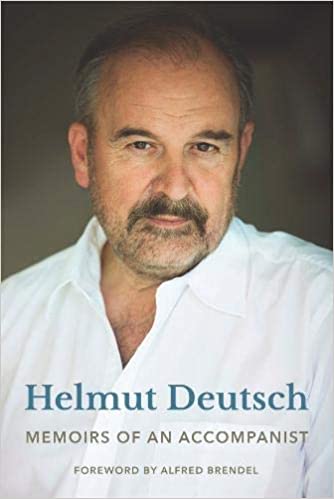
During a career spanning more than 50 years, pianist Helmut Deutsch has accompanied over 100 singers, including Ian Bostridge, Grace Bumbry, Diana Damrau, Brigitte Fassbaender, Jonas Kaufmann, Angelika Kirchschlager, Christoph Prégardien, Mauro Peter, Hermann Prey, Thomas Quasthoff, Yumiko Samejima, Peter Schreier, Irmgard Seefried and Anne Sofie von Otter.
Translated from the German by Richard Stokes, professor of lieder at the Royal Academy of Music, this memoir describes, with humour, honesty and intelligence, Helmut Deutsch’s journey from unknown repetiteur to one of the most refined and sought-after accompanists of the modern era, respected by the leading singers of our time, who make music with him and revere him as a great artist and strong musical partner.
In this engaging and entertaining account, Deutsch offers fascinating insights into pianistic technique, repertoire, performance, interpersonal relationships, and the special qualities required for his profession: empathy, flexibility, sensitivity, patience and the ability to stand back in the service of others.
Deutsch is a captivating narrator, frank and entertaining. From out of tune pianos to jealous singers, his memoir teems with anecdotes and reflections on his multi-faceted life as a musician, offering readers a glimpse of unforgettable moments on and off stage without a trace of vanity.
“quite simply treasure-trove: required reading for all those devoted to Lieder, and a wonderfully tasty appetizer for those as yet unfamiliar with the genre.”
Rotary-Magazin
“Outstanding. How often does one read a book from the first page to the last without putting it down? And feel sad when one has finished?”
Ingrid Wanja, OperaLounge
“This autobiography should be on the bookshelves of every singer and pianist, and everyone for whom classical music is more than just a hobby.”
Martin Hoffmeister, MDR Kultur
Memoirs of an Accompanist is published in paperback by Kahn & Averill on 15 September 2020.
Richard Stokes, the distinguished translator of this memoir, is Professor of Lieder at the Royal Academy of Music. He has written and lectured copiously on German song, and his singing translations of Berg’s Wozzeck and Lulu, and Wagner’s Parsifal, have met with high critical acclaim. He was awarded the Order of Merit of the Federal Republic of Germany in 2012.
Maurice Ravel has been an enduring part of pianist Ann Martin-Davis’ musical life and in the liner notes to her new collection of his piano music, she relates an anecdote which gave her a special connection to the composer. Having played the middle movement of Ravel’s Sonatine to the renowned pianist and teacher Phyllis Sellick who was adjudicating a competition, Ann became Sellick’s “newest (and smallest) recruit”. Sellick revealed that she too had played the very same movement to the composer himself (introduced to him in Paris through her own teacher, Isidore Philipp), who had remarked that it was “pas mal” (“not bad”). When Ann asked her teacher what Ravel was like, Sellick replied that he was “all pointy – pointy hair, pointy nose, pointy clothes”.
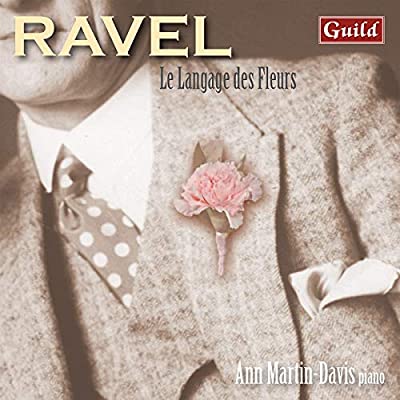
Ravel had a reputation for meticulous dress and reserved social manner. The image on the cover of the CD liner notes shows Ravel in an elegantly-cut tweed suit with a single carnation in his button hole, and this perhaps hints at the musical personality too: colourful, sensuous and flamboyant, but also intimate and tender.
Le Langage des Fleurs, Ann Martin-Davis’ new disc of Ravel piano music includes the much-loved Pavane pour une infante défunte, Sonatine, Tombeau de Couperin and a selection of the Valses Nobles et Sentimentales, as well as shorter piano works and miniatures. As part of her research for the recording, Ann read (and recommends) Professor Michael Puri’s groundbreaking book ‘Ravel the Decadent’, which places Ravel’s music in the context of the late nineteenth-century cultural and artistic phenomenon of Decadence, rather than that of the Neo-Classical or Symbolist labels more normally applied to his music.
This is certainly confirmed in Ann’s approach to the music. While there’s a fin de siècle poignancy and intimacy to the Valses Nobles et Sentimentales, elegance is tempered by an almost naughty playfulness and a hip-swinging sensuousness to the waltz rhythms, suggesting hidden pleasures of a more taboo kind. This is music redolent of the scent of Gauloises, Pastis – maybe even a hint of Absinthe – cologne, and the heavy heat of the Med in high summer. Ann’s supple tempi and pitch-perfect rubato are balanced by crisp articulation and a lovely translucence of tone.
This is even more evident in the Tombeau de Couperin, Ravel’s hommage to thekeyboard suites of the great French clavecinistes Couperin and Rameau, and also a dedication to friends of the composer who died during the First World War. A bright, direct sound brings immediacy and drama while also highlighting the Baroque structures of this music. But it is not without emotion – far from it, in fact, especially in the Menuet, which is wistful and tender. The final movement Toccata, by contrast, sparkles with vigour, Ann’s airy, fleet-fingered touch bringing its figurations to life with vivid colour and imagination.
The music on this disc represents about half of Ravel’s output for the piano, and the smaller works, such as the insouciant À la manière de Borodine and the Meneut sur le nom de Haydn, sit well with the longer suites. The selection closes with the much-loved Sonatine, utterly beguiling in its delicacy and simplicity, impeccably and imaginatively interpreted by Ann.
If you, like me, were not able to get to the south of France on holiday this year (my holiday, like so many others, had to be cancelled due to coronavirus), this disc is a delightful evocation of the heady scents, sounds and ambiance of that part of France.
The extended weekend of concerts begins on Thursday, 17 September with Warren Mailley-Smith in a programme featuring works by Beethoven, Brahms and Ravel.
Piano Fest continues on Friday 18 September with Duncan Honeybourne’s programme Forest Idylls featuring enchanting, evocative works by Sibelius, MacDowell and Schumann echoing nature. Known for his technical precision and warm musicality, Duncan Honeybourne has been lauded as “heroic” by Musical Opinion and “a gifted pianist in whom a spirit of adventure meets high musicianship” by MusicWeb International.
Saturday 19 September features two concerts. At 6:00 PM, Daniel Grimwood presents Nocturnes and Variations featuring one of his own compositions, “Variations on a Theme by Field”. Daniel Grimwood’s playing has been characterised as “stimulating and revelatory in equal measure” by The Telegraph, and his programme promises to exhibit both his virtuosity and his intellectual sensibility. Following at 8:00 PM, Yuki Negishi performs a concert entitled Passion, featuring works by Franck, Chopin and Beethoven. Praised for her “Piano Music by Women” series in June and July, Yuki Negishi was chosen in the Top 5 online performances for the week of 29 June by Pianist Magazine.
The weekend continues on Sunday with a matinee performance which celebrates The Piano Sonata by renowned pianist and Royal College of Music professor, Julian Jacobson. The programme features sonatas by Scarlatti, Berg and Beethoven. The weekend comes to a close on Sunday evening with Warren Mailley-Smith’s celebration of Chopin, a composer very close to his heart – he was the first British pianist to perform Chopin’s complete works for solo piano from memory in a series of 11 recitals at St John’s Smith Square in 2016.
Single tickets and festival packages are available. Book tickets
City Music Live is in the brainchild of pianist Warren Mailley-Smith. Since lockdown began in March, has presented over 30 online concerts through social media with over 400,000 total views, reaching audiences world-wide.
Who or what inspired you to pursue a career in music and who or what have been the most important influences on your musical life and career?
I grew up surrounded by music. We always had the radio playing at home and my older sister played the violin and piano. I wanted to be just like her so was more than happy to start playing those instruments at a young age, but I pestered my parents for years to start learning the harp!
I remember getting my first CD of harp music when I was young and it was all played by the incredible Marisa Robles; the ‘Impromptu-Caprice’ completely mesmerised me. I have been so fortunate to have lessons with Marisa and consider her a friend, thanks to my amazing teacher Daphne Boden.
There are so many wonderful harpists and nowadays it is so much easier to discover new (and old!) music through social media and online platforms. One of the most inspiring harpists I discovered in recent years has to be Dorothy Ashby. She broke stereotypes in all walks of life, especially in harp playing, and her music is very special.
What have been the greatest challenges of your career so far?
When I was younger I struggled with stage fright, so although I was busy performing on a regular basis, it was a challenge for me once I was on stage. I can still remember the day I was fortunate enough to turn this around and it made me very aware that I was pursuing the right career path. I now enjoy nothing more than sharing my music with others.
The last few months have been tough to say the least, not just for me but for all those who work in the arts. When the country pretty much closed overnight due to COVID-19, freelance musicians lost everything and it is still very uncertain when we will be able to return in full force. I was very fortunate to have some teaching I could do online, however the loss of income and opportunities to make music with others has been a real challenge.
Of which performances/recordings are you most proud?
I am so pleased with the singles I recently recorded as part of my new contract with Sony Music Masterworks. With the wonderful team at Sony and my incredible producer Anna Barry, we recorded some of my favourite harp pieces and also some exciting new material. Ronan Phelan at Masterchord Studios is a brilliant sound engineer and I hope everyone will enjoy the tracks as much as I did recording them!
Which particular works do you think you perform best?
I have always enjoyed playing uplifting and rousing music! That’s why ‘Baroque Flamenco’ was a piece I really wanted to record for my first single. It has so many exciting and unusual elements to it. That being said, I’ve also always enjoyed the French-Romantic genre. Harp music is spoilt for choice when it comes to French composers and there is some incredible music for us to play.
I am always open to new musical suggestions, genres and styles. I have often been asked by audience members to play some Metallica or Led Zeppelin, usually as a joke, because the majority of people would presume you can only play classical music on the harp. I took on the challenge and it really diversified my play list so that I could show that the harp is incredibly versatile and the possibilities are endless!
What do you do off stage that provides inspiration on stage?
I love being surrounded by nature. My favourite places in the world are the Lake District and Malta and I have been so fortunate to enjoy both, being of Maltese heritage and growing up in the UK. I could not be happier than when I am swimming in the Mediterranean or when I turn off my phone and go for a hike with my husband in the Lake District. I think cutting yourself off from technology and enjoying the simple things around you is so important and grounding.
How do you make your repertoire choices from season to season?
I try to listen to as large a range of music as possible. I don’t tend to stick to traditional harp repertoire all the time and I have started exploring a lot more piano music recently as that was how I originally started my musical journey. There is so much that can be arranged for the harp and I enjoy challenging myself technically as well as musically.
Do you have a favourite concert venue to perform in and why?
There are so many wonderful venues but in terms of acoustics, I think Wigmore Hall is very special. It provides an intimate and unique setting for recitals.
What do you feel needs to be done to grow classical music audiences/listeners?
I really do feel that a love of and interest in music has to be developed at a young age whilst still at school. Music is a vital part of every child’s education and it is so important overall development. It can increase self-confidence and there are many studies which suggest that music helps brain development which can help in the learning of many other subjects.
I am incredibly fortunate to have grown up listening to classical music and having the chance to have music lessons from a young age. I think it is important to remember that classical music is a huge part of all our lives whether we realise it or not. Many film scores are based on classical music and many current pop singers use classical music for samples.
To this end, I think that the Senbla Concert Orchestra’s performances of popular movies with live orchestra is a brilliant idea. Although people are going to watch the film, speaking to audience members after the concerts showed up how many people do not quite realise what goes on ‘behind the scenes’ in terms of the music and were blown away by the sound a live orchestra could make.
What is your most memorable concert experience?
My debut concerto at the Barbican when I was eighteen really stands out for me. It was such an honour to be given this massive opportunity and I worked so hard to make it as brilliant a performance as possible. I was so nervous before going on stage but can still remember the joy I felt once I finished.
In an orchestral setting, playing under Sir Roger Norrington’s baton when I was leading six harps in ‘Symphonie Fantastique’ was so inspiring and a really enjoyable experience. His humour and musical expertise are unrivalled in my opinion and it’s an experience I will never forget!
As a musician, what is your definition of success?
I don’t think there is one way to define success as a musician. We are always striving for better, hence why you can never stop practising as there is always room for improvement. I am so very fortunate to have been given a platform to share my music and I think success for me is being able to continue making music and sharing it with others.
What do you consider to be the most important ideas and concepts to impart to aspiring musicians?
Keep an open mind. Explore all avenues of music, even the ones you might think you do not like. Do not compare yourselves to other people, just keep working hard and have confidence in yourself and your choices. It is so easy to be overwhelmed by others on social media but if you are making yourself or another person feel something through your playing, then you are doing something right. Also, keep up the practise! Watching other musicians performing, whether at a live gig or on a recording or online can also be very inspiring. There is so much that can be learnt from musicians all over the world, playing in all kinds of genres and styles.
What is your most treasured possession?
My harp really is my most treasured possession. I try not to get too attached to material objects in general but my beautiful harp is something I have had for twenty years now. It has travelled the world with me and been there for all my auditions, exams, high and low points.
What is your present state of mind?
I am excited to see what the future holds. This has been an interesting year to say the least but I am determined that musicians will be back, stronger than ever and with even more to share than before.
Cecilia Da Maria’s second single is released on 4th September on the Sony label
Born in the UK to Maltese parents, Cecilia recently completed her Masters degree with distinction at the Royal College of Music where she was an ABRSM scholar, studying with Daphne Boden. Prior to this she graduated from the same institution with a First Class (Honours) undergraduate degree.
Cecilia originally started her musical life as a pianist before starting the harp at the age of eleven. A year later she was accepted into The Purcell School of Music and later joined The Royal College of Music, Junior Department.
Cecilia has been fortunate enough to travel extensively with her harp to countries including; Italy, Spain, Portugal, Trinidad and Tobago, Australia and The Baltic States.
The Cross-Eyed Pianist is free to access and ad-free, and takes many hours every month to research, write, and maintain.
If you find joy and value in what I do, please consider making a donation to support the continuance of the site

 New from Kahn & Averill
 Maurice Ravel has been an enduring part of pianist Ann Martin-Davis’ musical life and in the liner notes to her new collection of his piano music, she relates an anecdote which gave her a special connection to the composer. Having played the middle movement of Ravel’s Sonatine to the renowned pianist and teacher Phyllis Sellick who was adjudicating a competition, Ann became Sellick’s “newest (and smallest) recruit”. Sellick revealed that she too had played the very same movement to the composer himself (introduced to him in Paris through her own teacher, Isidore Philipp), who had remarked that it was “pas mal” (“not bad”). When Ann asked her teacher what Ravel was like, Sellick replied that he was “all pointy – pointy hair, pointy nose, pointy clothes”.



 The Cross-Eyed Pianist