cons-inst-perf-mmusThe first Birmingham City University International Piano Academy (IPA) will run 14 July to 2 August 2014. This exciting three-week course is part of the Birmingham City University International Summer School. The IPA is designed to help pianists from across the world develop their interpretative, technical and platform skills.
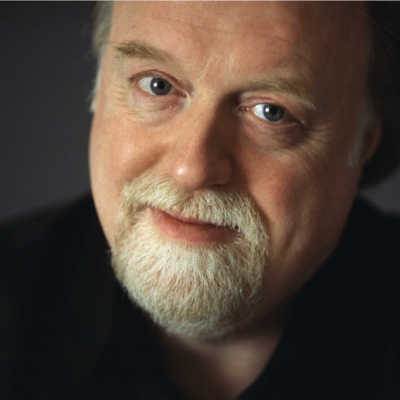
There are concerts, masterclasses and lectures with leading international artists and renowned teachers, including Peter Donohoe and Julian Lloyd Webber, together with special interest events such as an exploration of playing Mozart’s music on different pianos, including the fortepiano and modern grand piano, allowing participants to discover the differences in phrasing, fingering and interpretation at different periods in history. Peter Donohoe will also give a lunchtime recital of works by Schumann, Scriabin, Tchaikovsky and Brahms. All events are free for those under 18 years of age.

Image credit: Peter Donohoe © Sussie Ahlburg

In addition to this unique series of concerts, talks and other activities, the IPA offers a full programme of one-to-one tuition, group lessons and developmental activities.

The IPA is directed by Di Xiao, an international pianist, educator, writer and cultural ambassador.

Further details of the IPA here

Full programme of events brochure

http://www.dixiao.co.uk/

Oliver photoWho or what inspired you to take up composing, and make it your career? 

Like a great many other composers, the initial impetus or inspiration to write came from a deep-seated desire to emulate (and often imitate!) the music I had encountered in childhood and adolescence, through performing and learning music – in my case, through brass bands, orchestras and youth opera (I was blessed by the fact that Leeds County Council has an amazing music service with many inspirational teachers). Over time, I discovered the great power of music to express ideas about the world and about oneself, and this awoke in me the desire to make composition my vocation.

Who or what have been the most important influences on your composing and your musical career to date? 

My initial passions were fired by the English pastoral school, perhaps best represented by Vaughan-Williams and Holst. After this, I went through a Steve Reich phase (pun intended!), which had a very substantial impact upon my development, since it led me to realise that tonality could still be used in original and meaningful ways. Subsequently, I underwent a somewhat obsessive infatuation with Wagner, whose protean use of a wide variety of musical influences to create dramatic works of enormous philosophical depth planted in me the ambition to write opera. At this point, I re-discovered Benjamin Britten, who I came to see as a composer who had achieved equal dramatic mastery and psychological understanding, but in a more English and down-to-earth manner.

What have been the greatest challenges of your career so far? 

Undoubtedly my first two operas. Through these, I have learnt how to synthesise all my musical influences and gradually, from naïve beginnings, to write music and libretti which not only work poetically and musically but which also function well dramatically on the stage. Organising the performances and staging productions was just as much a challenge as the actual composition. For my first opera, The Nightingale and the Rose (after Oscar Wilde), written while I was still an undergraduate, I combined an orchestra of RCM students with the hundred-strong Yorkshire Philharmonic Choir and professional opera singers. My children’s opera, The Owl who was Afraid of the Dark (after Jill Tomlinson), then involved co-ordinating sixty primary-school children from around Cambridgeshire with professional musicians, as well as singers from Cambridge University, which was an even more formidable logistical challenge, since it meant one had to deal not only with some fairly mischievous young spirits, but also with their anxious parents!

What are the particular pleasures/challenges of working with individual artists, ensembles or orchestras? 

I always enjoy working with musicians and artists to bring a project into being. I would consider myself the entrepreneurial type, and tend to gather together a team of creative people to build a project around a dramatic conception. Collaboration involves a balance between allowing plenty of creative freedom to the individuals that you are working with, whilst striving to direct everybody’s energies towards a mutual goal. Maintaining this balance without creating too many frictions and tensions is always a challenge; the trick is to find people who share your ideals.

Please tell us more about your  opera Pincher Martin

Pincher Martin is an operatic adaptation of William Golding’s novel and poetic masterpiece. Recreating on the stage the existential plight of a marooned naval officer who struggles to survive first in the ocean, then on a lonely rocky islet in the middle of the Atlantic, has stretched my imagination to the limit, and has required the use of devices and technology which were previously unfamiliar to me. Throughout the course of the drama, we will be using a silver-screen movie-style cinematic backdrop, both to aid us in realising difficult scenarios such as a man drowning in the Atlantic, and to evoke the drama’s World War II setting.

Just one example of how this will work in practice is a scene in a moving motorcar, where the protagonist terrifies a woman with his dangerous and aggressive driving in a terrible attempt to make her acquiesce to his desires (yes, this is in the book…!). Musically, I have accompanied this scene with continuous unpitched and then pitched fluttertongues in four solo brass instruments, to evoke the sound of a car engine, first stationary and then in faster and faster motion. In terms of staging, this coordinates with the film, in that what is displayed on the screen is the view seen from the back seat of a car, first shaking very slightly as the car is parked in a layby with its engine idling, and then changing as the car moves off down the road. This is combined on-stage with the set, which in this case consists of a car bonnet behind which the protagonists will sit, with the backseat view behind them on the film. The bonnet itself is half-car, half-rock-like in substance, so that we can move expeditiously from a scene taking place on the rocky islet to this memory scene in the car, whilst also suggesting to the audience that the rock is actually an imaginary environment created by Pincher’s subconscious, and that we are dealing with scenes from his past life, which he is recalling during his purgatorial existence on the island.

Using this synthesis of music, film and staging to bring William Golding’s story to life has been an incredibly difficult challenge, but one which I am very glad to be undertaking, as it has expanded my creative world substantially.

What do you consider to be the most important ideas and concepts to impart to aspiring musicians/composers? 

To be yourself whilst learning from others.


Oliver Rudland is an English composer based in Cambridge, UK, known for his accessible style of modern composition. His operas have received particular attention and critical acclaim.

His latest opera, ‘Pincher Martin’, based on the novel by William Golding, was staged at the RCM Britten Theatre in July 2014: ‘This is an eloquent, succinct opera… In music and design…, Pincher Martin pinched and gripped. This opera deserves to live.’ (The Times: ★★★★)

‘Rudland appears to have achieved that rare and valuable object: a contemporary work that is both challenging yet accessible. Despite its disturbing subject matter, Pincher Martin is lyrical, inventive, and above all a thoroughly engaging work.’ (Bachtrack: ★★★★)

His first opera, ‘The Nightingale and the Rose’, after the story by Oscar Wilde, was staged at the Carriageworks Theatre for four nights in 2008 by Leeds Youth Opera. ‘Exceptional talent…Oliver is going to be a big name in the future.’ (Yorkshire Evening Post)

In 2011, his children’s opera, ‘The Owl who was Afraid of the Dark’, based on the classic story by Jill Tomlinson, was staged at the Cambridge University Church, and received very positive reviews from critics and the local community alike: ‘This was children’s opera at its best; it was fun and accessible to people of all ages and backgrounds.’ (GSM News)

‘Benjamin Britten, his Noah, and bad-tempered God must almost regret that a couple of owls made their way into the ark to reproduce themselves towards so effective a rival opera.’ (Music and Vision)

His chamber works have been performed at the Cheltenham International Music Festival, the Southbank Centre, and the DiMenna Center (NYC), as well as at other venues worldwide. His trombone sonata, ‘The Conquests of Zeus’, commissioned by Matthew Gee, principal trombonist of the London Philharmonic Orchestra, has been performed widely across Europe.

Oliver is currently Composer-in-Residence with the London Choral Sinfonia. He is also working towards a new large-scale, two-act opera due for completion in 2020.

Further information: www.oliverrudland.com

I don’t perform that frequently – maybe four or five times a year (excluding informal performances and “house concerts” at home) – but I understand the “process” of performing and the necessary and special preparation which goes into a public performance, not only the learning and refining of all those notes, but also understanding how to manage performance anxiety and hone stagecraft.

Anxiety is a natural part of the performance experience and should be accepted as such. For a long time performance anxiety or stage fright has been the “dirty secret” of performers, but recently a number of articles and books on the subject have revealed that it is common amongst even top international artists, which has, I think, made it easier for performers to speak openly about anxiety and nerves, and to offer coping strategies. The physical symptoms of anxiety are the result of the release of adrenaline, a hormone and neurotransmitter which is produced when we find ourselves in stressful or exciting situations. Known as the “fight or flight hormone”, it works by stimulating the heart rate, contracting blood vessels, and dilating air passages, all of which work to increase blood flow to the muscles and oxygen to the lungs. This gives the body an increased and almost instantaneous physical boost. In a performance situation, the side-effects of adrenaline pumping through the body include racing heart or palpitations, sweating, breathlessness and trembling or shaky hands, arms or legs. It also brings a heightened sense of awareness and increased respiration which can make one feel light-headed or dizzy. Fighting the symptoms of anxiety can simply make it worse, and I have found it easier to manage my nerves by simply accepting them as part of the performance experience (something which pianist Steven Osborne discusses in this article).

The symptoms of the release of adrenaline do not leave the body the instant the stressful situation ends, and when one is not actually in a genuinely dangerous situation, the effects of adrenaline can leave one feeling jittery, restless,  irritable and sleepless. In the immediate aftermath of the performance, you may continue to feel excited, “on a high”. Many people find it beneficial to “work off” the adrenaline rush after a particularly stressful situation (the classic musical example perhaps being the rock star trashing a hotel room after a gig!). It can take several hours for the body to settle down and the day after the concert, one can feel very flat as adrenaline leaves the system and one’s hormonal levels return to normal.

The euphoria of live performance is matched by a special kind of depression compounded by a profound tiredness after the event. A vast amount of energy – mental and physical – is expended in the experience of a performance, and the excitement of the concert fills your every moment in the hours leading up to it. And then, suddenly, it is all over. Now you’re ready for your bed, but you’ve still got to do the PR thing post-concert: meet people, sign programmes and CDs, give interviews. The day after the concert everyday life can seem exceedingly inferior to the excitement of the performance. In reality, there’s no time for exhaustion: you have work to do tomorrow – and work is the best antidote to these feelings of depression and tiredness. There may be another concert to prepare for, new repertoire to be learnt, old repertoire to be revived and finessed. We draw strength from our love of the repertoire, our excitement about our individual pieces and the prospect of putting them before an audience. The performance is what endorses all the lonely hours of careful practice and preparation.

“At this low point, we have only to let music itself take charge. For every challenge we can possibly want lies before us in the vast and inexhaustible repertory that cannot but replenish our spirit. For true musicians, depression is temporary because their music is permanent.” (Seymour Bernstein, from ‘With Your Own Two hands’)

Stage fright? Blame Liszt – article by pianist Stephen Hough

Performance Anxiety Anonymous  – strategies for coping with performance anxiety


Who or what inspired you to take up the guitar and make a career in music?

I had collected music since a very young child, but my life changing moment was hearing the rock guitarist Randy Rhoads. He was Ozzy Osbourne’s guitarist for his first two solo albums before his untimely death – Randy’s playing inspired me to go out and buy a guitar; he fused classical music with other styles such as blues and jazz into a unique heavy rock style. So I taught myself for a while and then began taking classical guitar and piano lessons before going to study guitar at the Guildhall School of Music. I became obsessed with classical music, I collected first everything I could find of Mozart, Beethoven, Bach and then more modern classical music. I taught myself improvising and composition whilst I studied the guitar. I didn’t receive any formal orchestration and composition training until I became a private student of Baz Elmes and then when I studied under Dr Stephen Goss as a post-graduate at the University of Surrey,

Who or what were the most important influences on your playing/composing?

As a composer J.S. Bach, John Barry, Leo Brouwer, Benjamin Britten have all been very influential on my writing style. However, in my thinking and approach to playing, there are people from various non-musical disciplines that have given me great inspiration. A lot of people are surprised to find out what a fan I am of people like the cyclist Victoria Pendleton and the footballer Jermain Defoe. Their outlook, their determination, and battles, on and off the track/football pitch, have inspired me greatly.

What have been the greatest challenges of your career so far?

As a mainly classical recitalist, the challenge is one many of us soloists face – and to put it bluntly it is attendance and generating a buzz about classical music. The music I perform is mainly contemporary with occasional programming of Bach or maybe Dowland. I use social networking and the internet to publicise things. I think for classical music to survive it really does have to move with the internet age.

Which performances/compositions/recordings are you most proud of?

I am most proud of my America Suite for classical guitar. It has brought a lot of good fortune and also cemented my friendship with the talented guitarist Jonathan Prag who performed the piece at the Edinburgh festival earlier this year.

Do you have a favourite concert venue to perform in?

Now that is a difficult one, because I have a very strict rule to only work with people I really trust and also to only perform somewhere that is exciting and has a warmth, so everywhere I tend to perform, I am very fond of. Having said that and if pushed I would say it is The Frax Foundation art gallery in Albir, Spain. The acoustics are great, the art work is fantastic – and the audience always are made of people that enjoy live classical music.

Favourite pieces to perform? Listen to?

I do enjoy opening a concert with Manuel de Falla’s Dance Of The Miller. That first chord really kicks people up the backside. The Bach Lute Suites are immensely difficult, but I do love them very much, especially BWV 997. To listen to, I never ever tire of Bach’s Goldberg Variations. Glenn Gould’s 1955 recording is my favourite.

Who are your favourite musicians?

I love a lot of what I think of as the musical mavericks, people like Glenn Gould, gypsy jazz guitarist Jimmy Rosenberg, and as mentioned previously, Randy Rhoads. All those guys broke out of what was the done thing and innovated and delivered something fresh and exciting to people who expected something different. They all had incredible technical facility but never once let that come before the music, that is so special and rare in a musician of any style.

It is difficult because there are things I like in almost everyone’s playing that I will go away and think, ‘well I wouldn’t have done that bit that way, but I did like the way they approached that section.’ There is ALWAYS something positive in every performance.

What is your most memorable concert experience?

Probably The New Music Series for young composers’ concert at St. Martin-in-the-Fields. I performed a recital of original pieces and it was first recital in St Martin’s. It was at the time the biggest thing I had done and I was so pleased, I thought if nothing ever happens again even, I have performed here, nothing can take that away.

What do you consider to be the most important ideas and concepts to impart to aspiring musicians?

I think to stay single minded and remember if you ever meet someone who says something cannot be done, that it is their opinion and it most likely can be done. People, have a habit of, if they can’t do something themselves, to discourage others. So my advice, even at 38 years of age (when I should be starting to become older and cynical), is to follow your heart, have fun and do your own thing.

What are you working on at the moment?

I am writing new music for the German soprano Susanna Risch and the English guitarist Jonathan Prag. At the time of writing I am in the final mixing stage of my latest classical guitar album ‘Made In England’ an album of music by Dowland, Britten and also for the first time on a recording, my America Suite.

What is your idea of perfect happiness?

This is an easy one – being in my home with my wife. We have thousands of DVDS, a lot of sheet music and my music room is my sanctuary, recording for hours and hours on my own is bliss. Add pizza breaks and then the promise of red wine and some alien documentaries at the end and I am a happy man!


Matthew Sear (b.1975) is a London-born guitarist, pianist and composer. He began teaching himself the guitar and piano aged thirteen (while also composing his first pieces), before commencing private instruction in both instruments.

At 1993, aged eighteen, Matthew was awarded an unconditional place to study classical guitar at the Guildhall School Of Music and Drama in London, where he stayed until 1996, leaving the conservatoire to write for the psychedelic rock band ‘Collusion’.

Through the 1990‘s he worked as a street musician and cafe guitarist, while studying composition under Baz Elmes and guitar with Martin Vishnick. The study culminated in Licentiates from the Royal Schools of Music and RGT, and a place on the University of Surrey’s Master’s Degree programme, in classical performance.

Matthew gave his classical guitar debut in 2006, performing on Valentines Day at St Paul’s church, Covent Garden, London. In addition to the warm reception from St Paul’s, his performance also received a glowing endorsement from Grammy nominee Antonio Forcione and also BBC Radio’s Jonathan Witchell – who later enthused on his show…

“…Vibrance, energy and the ability to really communicate through the guitar. Fantastic live music: A performer in complete command…”

Since then, Matthew has performed as a classical soloist in some of Britain’s most famous concert venues; including St James’ Piccadilly, St Martin In The Fields and St John’s Smith Square.

In addition to performances in his native country, he has given recitals throughout North America and Europe; performing across France, Sweden and Spain – and in 2010, under the mentorship of Carlos Bonell, was awarded a Fellowship from the London College Of Music, the college’s highest award.

His expressive playing style continues to receive praise from audiences and the media alike. The ‘Costa Blanca News’ (Spain) remarking after a 2012 recital…

“…A young virtuoso, whose playing was like a colourful waterfall..”

“America by Matthew Sear, created an an atmosphere containing both the bustling New York Metropolis and hints of Southern Bluegrass. The result was very characterful.”

Melinda Hughes, The 2013 Edinburgh Festival – Broadwaybaby.Com

Matthew’s work as a composer includes music for solo instruments and ensembles – and his pieces have been performed on a variety of indie and mainstream stations: including BBC and SW1 Radio. In addition to radio airplay, his pieces have been performed at St Martin-in-the-Fields ‘New Music Series’ for young composers, and most recently the Edinburgh Festival. Currently Matthew is honouring commissions from award-winning soprano Susanna Risch, guitarist Jonathan Prag and screen writer Edward Kelly.

Matthew lives happily with his wife Suzanne in south-east London, a musician in her own right.  In addition to classical and world music, they share a passion for English football, cinema, String Theory and autism. They also perform (and record) with their friend, the string player Alison Jones in the Gypsy Jazz Trio ‘String Theory’. 

Matthew Sear’s website
www.matthewsearguitarist.co.uk

Music samples (iTunes)
www.itunes.apple.com/us/artist/matthew-sear/id374847081


