In a guest post for ISM (Incorporated Society of Musicians), I describe how I started this blog and the many benefits of having an online presence.
Read the full article here

In a guest post for ISM (Incorporated Society of Musicians), I describe how I started this blog and the many benefits of having an online presence.
Read the full article here
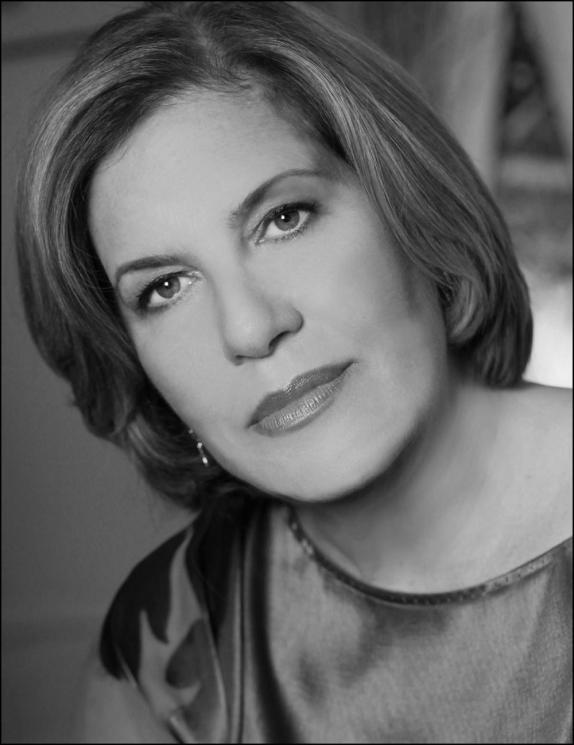
 Beth Levin’s latest disc Bright Circle is available now on the Navonna Records label. Details here
What is your first memory of the piano?
It is more of a feeling, I remember being struck by the beauty and loving the patterns of the keys. I don’t remember a time when there has not been a piano near by calling me to play.
Who or what inspired you to start teaching?
Inspire is the right word and it was probably the music which did it. It had always been my long term intention, however, I also wanted to know about the workings of the instrument so trained as a technician first. One day whilst tuning a piano I realised that I was ready to move into teaching.
Who were your most memorable/significant teachers?
Beyond my lovely students from whom I learn continually I have had 6 teachers and they have all been significant in their own way. If I had to pick one I would say Tim Barratt who snapped my playing, and practising into shape and guided me through the teaching diploma exams. I also learnt more than expected, musically, during my time tuning for Steinway. The sheer volume of high quality music I heard daily still runs through me. I used to practise at Steinway over the weekends, helping myself to the concert fleet model Ds and receiving helpful passing comments from the likes of Alberto Portugheis and Charles Rosen. When out on the road tuning I often had to wait for rehearsals to end, for me it was fascinating to listen in. I am a better musician than I might have been as a result.
Who or what are the most important influences on your teaching?
This is an interesting one and the first thought that comes to mind is this……. when I was around 15, a piano teacher told me that I did not have a good enough ear to consider tuning pianos as a career. By 22 I was tuning for Steinway covering Wigmore Hall and BBC Proms Concerts. As a result I will never discourage a student but rather guide them in what they need to do to achieve their goals. For me it is also important to keep myself musically stimulated through attending concerts, lessons and meetings with other musicians, taking the best from these experiences and passing it on. I find trusting my intuition to be a very open and reliable way of working.
Most memorable/significant teaching experiences?
They are probably the individual breakthroughs that students make after some time of careful work. These delight me, no matter what the level, because of the personal feeling of success it brings the student.
What are the most exciting/challenging aspects of teaching adults?
As well as the joy music brings, there is so much to be gained, on a personal level, from learning something later in life. It is wonderful to watch adult students begin to trust and rely on the process, accept their mistakes and move away from their natural tendencies to be over analytical and critical. The challenge for me is to lead by example!
Tell us how you developed the Music Me Piano Practice Books and how you think it will benefit piano students and teachers:
Music Me Piano is a piano practice note book available in three versions. They developed out of a practice-a-thon my students took part in which highlighted a vast difference in achievement between the two week event and normal termly lessons. We realised that the speed of their progress during normal term time was hampered, not by the difficulty or time requirements of what I was asking them to do, but by their ability to divide up their work and use their practice time smartly.
During lesson time student and teacher plan what needs to be practised day by day for the week ahead. Students benefit from very clear weekly targets which set in motion a positive cycle of achievements. Their self-efficacy and enjoyment is increased but they also develop really powerful learning skills which translate to any subject.
Teachers benefit because they are working with more motivated students who are placed in a greater position of responsibility. Teachers ensure, through the Reference Section, that the student has all the information needed to practise their work correctly.
A happy by product of all this is that lesson planning is a much more fluid process done in conjunction with the student. The book opens up a discussion between teacher and student on the topics of practice and all the different areas which need to be covered to develop into a rounded musician. The book can be used when you are teaching exam syllabuses and is also incredibly inspiring to use when lessons are not following the exam curriculum. Providing a tool for teachers to connect all aspects of theory, form and musicianship through the piece being studied. A great way to set your own syllabus tailored to your student, and a super way to teach and learn!
What do you expect from your students?
The same as I expect from myself……..To give it their best, remain open and never ever say “I can’t”
What are your views on exams, festivals and competitions?
As long as you approach them in a level-headed way when the time is right they are valuable learning experiences. Also, I really feel music should be shared, so developing performance skills is important
What do you consider to be the most important concepts to impart to beginning students, and to advanced students?
Actually they are not that different. Follow the sound you are making, you can learn so much this way. Don’t confine your musical education to the time spent in front of the piano, live it, music is everywhere. Go to concerts, you need to experience many different styles, lines, tones and colours before you can go in search of what you want to create. Observe yourself. Play from the heart. Know the value of deliberate practice, there is no quick fix which will give comparable results!
What are your thoughts on the link between performance and teaching?
For me it is important to do both because developments in one area fuels the other in ways I may otherwise have missed. Without stretching myself I would soon lose true empathy for my students; my best teaching and breakthrough moments with students come when I am working through difficulties of my own. As well as that, performance needs to be taught and students learn much from watching. I make sure I perform to all my students and parents during termly concerts. We are all human, we all make mistakes, some people are just more practised at letting them slip by.
Who are your favourite pianists/pianist-teachers and why?
Alfred Brendel, tone colour and mastery of every nuance and line. Jean-Efflam Bavouzet, I was blown away by his playing last year, I think it was one of those special concerts where music, pianist and venue work perfectly. Mitsuko Uchida, Maria Joao Pires, Krystian Zimmerman, especially the Schubert Impromptus. I think it is good though to keep listening to new pianists and new music in new venues.
If you would like to know more about Music, Me, Piano please visit www.musicmepiano.co.uk
For more information on lessons, book presentations and book details please contact Roberta on info@robertawolff.co.uk or via her website www.robertawolff.co.uk
Review of the Music Me Piano practice notebook

Who or what inspired you to take up the piano, and make it your career?
There was a piano in the house – an old Estey upright. I gravitated to it after my sister’s piano lessons. Like a magnet, I was drawn to the piano.
Who or what were the most important influences on your playing/composing?
In piano playing, my teachers, of course. Aside from Morton Estrin and Adele Marcus, I would have to say Josef Lhevinne, Artur Schnabel, Rachmaninov and of living pianists, Murray Perahia among many others.
What have been the greatest challenges of your career so far?
The greatest challenge in any career is to maintain a steady flow of employment. Fortunately, with standard repertoire, new concerto projects written for me, plus recordings and teaching, there is a nice flow and momentum to keep evolving as a musician.
Which performances/compositions/recordings are you most proud of?
I would have to say in 1983, performing my debut with orchestra, Prokofiev’s Second Piano Concerto, with the Juilliard Philharmonic in Lincoln Center; same concerto with the National Symphony Orchestra in Washington DC; Prokofiev’s Third Piano Concerto with the Philadelphia Orchestra; and performances of concerti with the following composers in the audience: Keith Emerson, Neil Sedaka, Lowell Liebermann, William Bolcom, Richard Danielpour, Charles Strouse, Marjorie Rusche and Ellen Taaffe Zwilich.
Which particular works do you think you play best?
I love playing everything actually. I never know which is best, however.
How do you make your repertoire choices from season to season?
I normally base the repertoire on new works being premiered and recorded, and the concerti asked for that particular season. next season includes Beethoven’s Choral Fantasy, Saint-Saens Concerto no. 2, Grieg’s Concerto, and Rachmaninov Concerti nos 2 and 3.
Do you have a favourite concert venue to perform in?
I enjoy everywhere I perform – each venue has its own magic.
Favourite pieces to perform? Listen to?
Too many to list!!
Who are your favourite musicians?
Too many to list!! In the pop world, David Foster, Keith Emerson, Neil Sedaka (and I can’t get Pink’s song, ‘Just Give Me a Reason’ out of my head – liking it!); pop/classic pianists, Victor Borge and Liberace; classical world – everyone! I always enjoy listening to other pianists and hearing their interpretations of music we all know and love.
What is your most memorable concert experience?
If I must narrow it down, it would have to be my New York recital debut on April 14, 1986, in Lincoln Center’s Alice Tully Hall for the Juilliard William Petschek Piano Debut Award–an annual honor given to a pianist. I remember looking out through the backstage to see all of my family, friends and colleagues go to their seats. It was like getting married to the instrument, formally, in New York, in front of everyone I know.
What do you consider to be the most important ideas and concepts to impart to aspiring musicians?
I would suggest creating and maintaining a network of musician friends, and friends in all artistic capacities. You never know when you might collaborate in special projects in performance, audio/video recording etc.
What are you working on at the moment?
I am now at work for a recording project in the fall of 2014 featuring the following works:
Gershwin: Rhapsody in Blue (1924)
Ellington: New World A-Comin’ (1945, orchestration by Maurice Peress; solo cadenza by Sir Roland Hanna)
Keith Emerson: Concerto no. 1 (1977)
Neil Sedaka: Manhattan Intermezzo (2010; piano part enhanced by Jeffrey Biegel)
Additionally, I will record Lucas Richman’s “Piano Concerto: In Truth” during the 2014-15 season; orchestra tba; and will learn a new concerto based on the famous rock group, The Monkees, to be composed by Dick Tunney out of Nashville. That will be premiered with Orchestra Kentucky in January 2015, along with Peter Tork’s “Moderato ma non troppo” for piano and orchestra. Kenneth Fuchs will be composing a Piano Concerto for me, which will have its world premiere in 2015-16 with the Springfield Symphony Orchestra in Massachusetts with Kevin Rhodes conducting. For the Dicterow-DeMaine-Biegel trio, I will be learning Suk’s “Elegie”, and Dohnanyi’s “Quintet” for our January debut in Fort Worth, Texas. Also, the world premiere of Jeremy Lubbock’s new composition, “Moods–a duet for Piano and Strings” will take place in February 2015 with the orchestra of Moravian College in Pennsylvania.
Still alive, performing and recording.
What is your idea of perfect happiness?
A peaceful world, allowing us to travel anywhere, anytime, without religious or political boundaries.
What is your most treasured possession?
A photo of pianist Josef Lhevinne to his student (and my teacher) Adele Marcus from May 26, 1928 – Adele changed the date to 1938 to make her younger!
Jeffrey Biegel’s biography
My review of Jeffrey Biegel’s CD ‘A Grand Romance’




 The Cross-Eyed Pianist