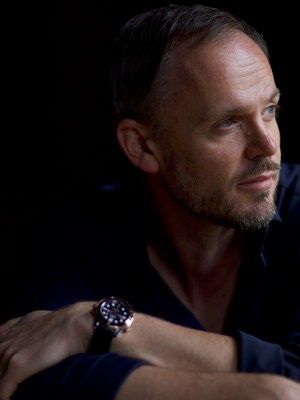
Who or what inspired you to take up the piano and make it your career?
My (non-musical) parents ran a seafront guesthouse and had an electric organ standing (unused) in the corner of the lounge. I’m an only-child and got nominated fairly early on to be the one who’d put it to use. (As a 5 year-old I suppose I couldn’t really argue.) I used to play Christmas carols and Richard Clayderman hits to the guests and haven’t looked back since.
Who or what were the most important influences on your musical life and career?
I think it was Stravinsky who said “great artists steal”. Now, I’m not calling myself a great artist by any means, but I do empathise with that quote; I feel I’m constantly learning – or ‘stealing’, if you like – from other musicians. I guess we all do really; part of what ultimately defines our individual musical personalities is the process of choosing which bits of ‘stolen’ information we nurture and which bits we cast aside.
What have been the greatest challenges of your career so far?
Deciding exactly what kind of career it is I want.
Which performance/recordings are you most proud of?
I’m (thankfully) quite fond of my last two CDs. The first – Bach to the Future – features a collection of solo pieces that have been particularly significant in my life and career to date. It was actually recorded just a couple of weeks after my daughter was born, so the fact I managed to produce something vaguely coherent is quite an achievement. More recently, my piano trio released its debut album. It’s called The Seafarer and includes a collaboration with Willard White and a brand new transcription of Debussy’s La Mer by Sally Beamish. It’s a project which took a tremendous amount of time and effort to realise, so it’s lovely to see it hit the shelves.
Which particular works do you think you play best?
Ha – that’s a question which is probably best answered by others. I know what I enjoy playing, but musicians are often their own worst judges.
How do you make your repertoire choices from season to season?
I love the process of developing repertoire-led ideas into fully-fledged projects that can be toured (and sometimes recorded) over a full season. They tend to be getting more eclectic and adventurous as I get older; I think I’m driving my poor agent mad.
Do you have a favourite concert venue to perform in and why?
St. George’s in Bristol. It has the best acoustic of any chamber hall in the UK, a fine piano and – best of all – is within 30 minutes of my home. It means I can play a concert in a beautiful space and still be home in time for Match of the Day. That’s the ideal set-up as far as I’m concerned.
Favourite pieces to perform? Listen to?
In truth, I hardly ever listen to music these days unless I’m in the car, and then it’s either jazz (my choice) or nursery rhymes (my daughter’s choice). The Wass household is a strict no-music zone (piano practice aside).
Who are your favourite musicians?
Ella Fitzgerald, Nina Simone and Oscar Peterson. Oh, and I’d better say my trio [Trio Apache] partners – Matthew Trusler and Thomas Carroll – too. They’d kill me otherwise.
What is your most memorable concert experience?
Probably my Proms debut. Though that’s less because of the performance itself and more because I’d got engaged to my now-wife during the overture.
What do you consider to be the most important ideas and concepts to impart to aspiring musicians?
Variety. It’s essential, both to the maintenance of a career and to one’s musical well-being.
What are you working on at the moment?
I’m working on a big project with Matt Trusler for 2015 which involves commissioning 12 pieces from 12 different composers, plus a yet-to-be-written script, so that’s taking up a huge amount of time. It’s going to be awesome – watch this space.
Where would you like to be in 10 years’ time?
Doing what I’m doing now, but with another ‘0’ added to my fees.
What is your most treasured possession?
Photos of my trek to Everest Base Camp. Not only because going there was a dream come true, but because it also reminds me that I was once relatively fit.
‘The Seafarer‘, Trio Apache’s debut album, featuring Sally Beamish’s transcription of Debussy’s La Mer alongside her original work, The Seafarer Trio (with Sir Willard White narrating), is now available on the Orchid Classics label.
Ashley Wass, began playing the piano at 5, and studied music at Chethams Music School from age 11. In his teens he studied on scholarship at the Royal Academy of Music, where his teachers included Christopher Elton and Hamish Milne. Wass later studied with Murray Perahia. He is the only British winner of the London International Piano Competition (1997), prize-winner at the Leeds Piano Competition, and a former BBC Radio 3 New Generation Artist.
Described as an ‘endlessly fascinating artist’, Ashley Wass is firmly established as one of the leading performers of his generation. Increasingly in demand on the international stage, he has performed at many of the world’s finest concert halls including Wigmore Hall, Carnegie Hall and the Vienna Konzerthaus. He has performed as soloist with numerous leading ensembles, including all of the BBC orchestras, Philharmonia Orchestra, Orchestre National de Lille, Wiener Kammerorchester, Hong Kong Philharmonic, Royal Liverpool Philharmonic Orchestra, and under the baton of conductors such as Simon Rattle, Osmo Vanska, Donald Runnicles, Ilan Volkov and Vassily Sinaisky.
Ashley Wass’s full biography
www.ashleywass.com

 The well-established music publisher Editions Peters has launched a new recording label,
  The label launches with a new disc of Fauré’s ‘Nocturnes’ by British pianist




 The Cross-Eyed Pianist