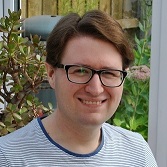
DSC_00032Who or what inspired you to take up composing, and pursue a career in music?

In some ways, I feel I’ve always been a composer. When I started piano lessons age six and had my first keyboard, I was far more interested in making up my own tunes than I was practising the ones the teacher gave me. My piano teacher was very willing though, and more than happy to try and notate my early efforts as a composer! One of the things I’ve always been very comfortable doing is improvising and inevitably, that’s where a composition begins. I think there are really two reasons for this: one is that I started accompanying pretty early on; as far back as the top of the junior school I was able to accompany singers and instrumentalists, and as any accompanist knows, the ability to cover a gap, invent an introduction or rescue the soloist is hugely valuable. Secondly, and really following on from this, at the age of 14, I took on the role of church organist, a role which I filled for 12 years. It was at this point where composing became a bit more important as I felt increasingly confident in writing pieces for the groups and ensembles I was working with.

I continued to develop my composing while I was at school, and I was lucky to have music teachers who encouraged and valued this skill (a skill which it seems to me is so-often seen as second rate to performing). I think the pinnacle of this came when in the Upper 6th I was asked to compose the anthem for the school’s Founders’ Day service. I set a text by Ronnie Wilson titled ‘The Time We Have is Precious’ and it was sung by the school choir in Gloucester Cathedral in July 2002. As for composing becoming a career, I guess this was when I first thought about submitting my compositions to publishers. I knew these pieces worked with the individuals and groups I’d composed them for, and I guess I was curious to see whether publishers would feel the same. I think I had my first pieces, Five Fanfares (Fagus Music) accepted in 2004, and as they say, the rest is history!

Who or what were the most significant influences on your musical life and career as a composer?

It’s hard to get away from being influenced by the music we enjoy listening to and playing. Several people have commented over the years that my writing is very ‘English’; not particularly surprising to me as I listen and enjoy an awful lot of English music: it’s part of who I am and it seems natural that it should influence my writing as a composer. Secondly, I think we’re heavily influenced by the musical activities we’ve been and are involved in. My experience has generally been working with amateur ensembles and choirs, often with very limited resources; my teaching also influences what I compose as it gives me an insight into the educational value and appeal of the music I write.

What have been the greatest challenges of your career so far?

I guess the greatest challenge is persuading people that your music is worth trying. Many of the schemes for composers and indeed the emphases in university courses has been to write ‘new music’. This ‘new music’ is, I guess, the music which the BBC commissions for the Proms and leaves out of it is television broadcasts in favour of the ‘classics’. I have, on more than one occasion joked that if I wrote a concerto for empty wheelie bin and silent cymbals, it would be performed and lauded everywhere! I’m not really sure what this ‘new music’ is we’re supposed to write, but I know that the music I write is ‘me’. That’s not to say my compositional style doesn’t change and develop, but it’s still essentially ‘me’: possibly one of the greatest challenges is therefore staying true to oneself? The music I write is, shall we say, pretty conventional? Over the last 10 years, I found in particular that the UK is very conservative in trying things by lesser-known composers; we seem to be very concerned by the composer’s ‘name’ in the UK. Publishers have their ‘house’ composers, something which is not so much the case in the USA where they’re very much more concerned with what you write rather than who you are. This is possibly why the majority of my music is published overseas.

I think that there is huge potential in the internet and social media to get music out there and known, but I also think it has its disadvantages. It’s easy for people to ‘Like’ or ‘Retweet’ your music, but it’s another thing to actually put your money where your mouth is and buy it.

What are the special challenges/pleasures of working with particular musicians, singers, ensembles and orchestras?

There is always a balance to be struck between accessibility and challenge. As I say, I have worked almost exclusively with ‘amateurs’ and I think the music I write reflects that. That, of course, doesn’t mean the music has been dull or boring, but it does have to take into account the skills and abilities of particular groups and individuals. I want performers to enjoy the challenge of learning something new, but I would never want them to lose sight of the act of enjoying making music. Too many challenges in a piece then you’re in danger of being on the wrong side of that line.

Which works are you most proud of? 

Gosh, that’s very difficult to answer! In some ways, I’m proud of them all because they all start from nothing. There are plenty of ideas and melodies which never go anywhere, so finishing a piece is hugely satisfying. I guess we can be proud of pieces for different reason: I’m proud of A Celtic Blessing (GIA Publications, Inc.) not only because it has sold well over 3,000 copies, but because several recordings have also appeared on YouTube (all from the US). It’s lovely to see that something you’ve written is being enjoyed and, more importantly, used. I’m proud of my solo for flute and piano Imagination (David Barton Music) because it was the first piece which generated a PRS royalty! Maybe I’m even more proud of the performers who are willing to give my music a fair hearing?

Who are your favourite composers?

I’ve always enjoyed a hugely diverse range of composers; Walton, Britten, Vaughan Williams, Bax, Moeran, Holst, Howells and Stanford all spring immediately to mind. I’ve always enjoyed early music: Byrd, Tallis, Victoria, Josquin and Penalosa. There’s the tunefully enjoyable Gilbert & Sullivan, and I’ve also a huge respect for light music composers and arrangers: Farnon, Tomlinson, Binge and Morley.

What do you consider to be the most important ideas and concepts to impart to aspiring musicians?

I know it sounds so simple, but people should listen to more music. I recently catalogued my CD collection: there are over 6,500 individual tracks…that’s a lot of listening. I am always discovering new music. So often, I’ll hear something on BBC Radio 3 or Classic FM and I’ll be off to buy it straight away. I think, alongside that, always being open to unfamiliar music. I think I’ve always been far more interested in individual pieces than a composer’s entire output, so there aren’t really any composers I ‘don’t like’; amongst their output, there are nearly always a few pieces which I do enjoy.

Secondly, and I’ve mentioned it already, staying true to yourself is important. When you compose, like any creative act, you have to give a bit of your inner-self; your compositions take on some of your identity. By all means push the boundaries and challenge conventions, but don’t try to be something you’re not.

Advice for aspiring composers? I think, above all, compose. Sounds ridiculous, but get composing. I think you need to be composing on a regular basis, and where possible, getting feedback on your writing. Don’t just write because you need to produce an A-Level composition; write because you enjoy writing. I have come across students in the past who want to study composition at university, but have only written four compositions: two for GCSE, one for AS Level and one for A-Level. Also, don’t spend so long planning for and dreaming about the next piece that you never get round to writing it. Getting started is the hardest part (the second hardest part is thinking up a title for your piece, but that’s another story…) Start by writing things for people you know or groups you have a link with.

Where would you like to be in 10 years’ time?

Interesting question! I don’t know many composers who are in it for the money, so in 10 years’ time, making more money from composing would probably be a bonus! I think that above all, I hope I’m still doing and enjoying doing what I do now. I get an enormous amount of pleasure and satisfaction from composing, and I hope those to do buy and perform my music enjoy it too.


David was born in Winchester in 1983, and has been at the helm of award-winning David Barton Music since 2001. He combines a busy portfolio of teaching, accompanying and composing both from his base in Lichfield, and across the UK.

He was educated at The Crypt Grammar School, Gloucester, where he won prizes for both music and drama. He took a leading role in all the school’s musical activities including choirs, orchestras and chamber ensembles. He also played a significant part in the school’s productions including as musical director for Cinderella and Bugsy Malone. Whilst at the school, he continued his instrumental studies as a pianist, flautist and singer; he also gained the skills and confidence to be an effective accompanist. Whilst at the school he also learnt the organ, and in the latter years, led the music at the school’s assemblies. In November 1998 he played 2nd flute in Malcolm Arnold’s Little Suite No. 2 under Sir Simon Rattle as part of the World’s Largest Orchestra at the National Indoor Arena in Birmingham.

David Barton Music was established during David’s last couple of years at school, and since leaving, he has developed a successful career as a teacher, composer and accompanist. He graduated with a BA(Hons) Open Degree in 2008, and a MEd in 2010, both with The Open University. He also holds the DipABRSM in Piano Teaching and the CertGSMD(T) in Flute Teaching. He was one of the first students to graduate on the Royal School of Church Music’s DipRSCM in Sacred Music Studies course. As a composer, he holds the LLCM and ALCM diplomas from the London College of Music. He is currently reading for a PhD in Music Education at the Institute of Education, University of London.

David has over 100 compositions and arrangements published in the UK, USA and Canada, and thousands of copies of his music have been sold worldwide. These include works for solo voice, choir, organ, woodwind, orchestra and chamber ensembles. Regular performances, particularly of choral works, take place especially in the USA. Publishers include several major companies including GIA Publications, Inc., Spartan Press (Phylloscopus Publications) and Augsburg Fortress. David also typesets and publishes a number of pieces under the David Barton Music umbrella, and these are sold direct via his website.

David writes in a variety of styles, but mainly classical. His music is designed to be tuneful, generally easy-on-the-ear and accessible to a wide range of ensembles, particularly those with limited resources. A number of works have received favourable reviews in Church Music Quarterly, Clarinet & Saxophone Magazine, and Pan Magazine. In 2011, his setting of A Celtic Blessing was selected as one of the prestigious JW Pepper ‘Editor’s Choice’ for that year.

More about David and his music and teaching on his website

On the 24 March Sir Neville Marriner will unveil a commemorative plaque in central London to celebrate the work of the composer Joseph Haydn.
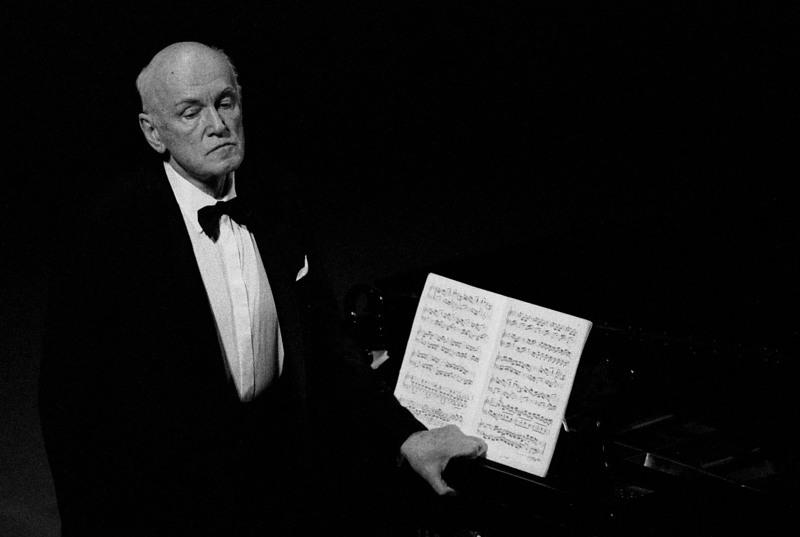
The plaque is the first dedicated to Haydn in London. When he visited for the first time in 1791, the composer was at least as popular as his contemporary, Mozart. Though Mozart has three plaques in London, Haydn had none, despite fifty years of attempts to establish one.

Now, taking inspiration from the successful subscription concerts of his day, the Haydn Society of Great Britain has raised funds through a crowdfunding campaign to commission and install the plaque. In addition to Sir Neville Marriner, both the director of the Haydn Society Denis McCaldin and the Austrian ambassador will speak at the unveiling.

The Haydn plaque will be unveiled at 18 Great Pulteney Street, Soho, London W1F 9NE in Soho on 24 March at midday (12pm), a week before the composer’s birthday.

haydnsocietyofgb.co.uk

Remembering Sviatoslav Richter, on the centenary of his birth, in words, pictures and music….. Please feel free to add more reminiscences, articles, pictures, video etc in the comments box below….

Sviatoslav Richter 1992 ©roberto ugolini
Sviatoslav Richter 1992
©roberto ugolini

Rubenstein on Richter:

“I was curious to hear the “great Richter” and went to his concert. He played three pieces by Ravel, simply incredibly! A sound of prodigious beauty! I had never heard before a piano sound like that. It was an other instrument. It brought tears to my eyes. Richter is a gigantic musician with great intelligence. He plays the piano, and the piano responds. He sings with the piano.”

Richter’s aversion to television (article)

Sviatoslav Richter about himself

I was born in Zhitomir in 1915, in Berditchev Street which was later called Karl Marx Street, even though it turned into Berditchev Highway, thus preserving the original name. This highway led to a bridge over the Teterev River. In a cabin at the edge of the city – I am digressing – lived Irina Ivanova, whom I knew as a girl, and her mother. When you entered the cabin, you ran the risk of tumbling head over heels. Irina later became the wife of Lev Nikolaevich Naumov. Neuhaus was very fond of him. Naumov was a magnificent musician, almost a saintly one, and was a loyal adherent of the Neuhaus School. A likeable and emotional man. I heard him play Chopin’s fourth Scherzo wonderfully well… From the bridge, looking to the left, one could make out a church in the distance, and it awakened hopes, as it were, of something both fascinating and mysterious. I always had a longing to go there – the name of the village was Stanishovka – but we never got there. The grown-ups always dodged my questions, they ascribed no importance to them. Stanishovka will remain forever in my memory… My first memories are dreams.

Aus Walentina Tschemberdschi
Swjatoslaw Richter, Eine Reise durch Sibirien
Residenz-Verlag Salzburg 1992

Sviatoslav Richter is dead – New York Times obituary

Benjamin Britten listens to a point being made by Richter in 1968. (Photography: Brian See)

Maris Jansons: “This is [pianist] Sviatoslav Richter and my father rehearsing when the Leningrad Philharmonic was at its summer home. It was around 1953. I knew all the artists very well; they were very good friends with my father. It was a family there in the summertime. We all lived for two months in a hotel, so we spent breakfast, lunch and dinner together. Of course I didn’t speak too much because I was quite shy. Since I studied music, it was all so interesting. I was all the time in the musical atmosphere … and I learned intrigue, bad things, things behind the scenes.”

10338622_936953876345610_8479147831750593336_o

Schubert Sonata in G Major, D 894

Richter in his own words….

“The interpreter is really an executant, carrying out the composer’s intentions to the letter. He doesn’t add anything that isn’t already in the work. If he is talented, he allows us to glimpse the truth of the work that is in itself a thing of genius and that is reflected in him. He shouldn’t dominate the music, but should dissolve into it.” Or, similarly: “I am not a complete idiot, but whether from weakness or laziness have no talent for thinking. I know only how to reflect: I am a mirror . . . Logic does not exist for me. I float on the waves of art and life and never really know how to distinguish what belongs to the one or the other or what is common to both. Life unfolds for me like a theatre presenting a sequence of somewhat unreal sentiments; while the things of art are real to me and go straight to my heart.”

Richter on Stalin’s funeral (from Richter: The Enigma, a film by Bruno Monsaingeon)

The Wild Man of Classical Music – filmmaker Bruno Monsaingeon recalls his first meeting with Richter

Who or what inspired you to take up the piano and make it your career?

My older brother used to play the piano, so there was a piano in the house which I ended up spending more time with.   I loved to imitate what I heard and to improvise.  I went to study piano at conservatoire and even though music was my life-blood, I was interested in so many things – I studied maths, Italian literature, Latin and musicology at Universitybut in the end, the piano just stuck very naturally.

Who or what were the most important influences on your musical life and career?

The professor who had the strongest influence on me was undoubtedly Dominique Weber. He was taught by Eduardo Vercelli and Leon Fleisher, where he also served as an assistant at the Peabody Conservatory of Music in Baltimore. His instinct and his musical intelligence make him an extraordinary pianist and outstanding pedagogue. During the 4 years I studied with him, he helped me consolidate my technique and develop my sense of structure, rhythm and beauty of sound. He taught me the need to be engaged fully, to communicate and to search for my own sense of expression. He was an ideal professor. Dominique Weber’s recitals, which I am delighted to have listened to, have been unforgettable moments in my life as a musician.

I often played for Paul Badura-Skoda, the most illustrious representative of the Viennese tradition. With him, I had an opportunity to study works of Mozart, Haydn, Beethoven and Schubert on original instruments. His open-minded approach and broad interests enriched his understanding of art and this was a major source of inspiration to me.

I also have regularly taken classes with John Perry in Germany. John Perry is one of the most talented musicians I have met. His knowledge of the repertoire is impressive. He is a magnificent artist, able to move his audience as he sits at the piano. He can draw out the best out of each student while respecting their own personality.

What have been the greatest challenges of your career so far?

There have been so many.  One recent example which springs to mind was recording two discs at the same time of Schumann Lieder and Haydn sonatas in four days.

Which performance/recordings are you most proud of?

Even if I would do everything again differently today, I still have a close recognition of those recordings and I don’t know which ones I prefer of the three for solo piano – Schumann, Schubert or Haydn.  This is compounded by the different circumstances – all three in 3 different halls with 3 different pianos – so they all have their own personalities and reflect where I was at the time of playing them.

A challenge presented itself recently which I am particularly happy about.   I was due to go to hear a concert at a festival an hour and a half away from home.   I had bought the ticket online, and I was just walking out the door, when the festival director gave me a ring to say that the pianist due to perform that evening was ill and did I want to play instead. I went back inside to change and I arrived on the stage at the last minute.  The strange thing is that probably if the director had phoned me the day before, I’d probably have turned it down, but the fact that the suggestion had come just at two hours notice, it was was so mad that I had gone ahead with it without thinking and chose the programme in the car on the way.  The concert went very well and it was the first time that I had bought a ticket to my own recital.

Which particular works do you think you play best?

That’s something to ask the audience.   I’m particularly drawn to the German repertoire, and audiences seem to find that I have a particular affinity for Schubert.

How do you make your repertoire choices from season to season?

There are promoters who ask me to perform certain works.  If not, I try to find a balance between something new and pieces I already have in my repertoire.

Do you have a favourite concert venue to perform in and why?

There are so many, but I am very happy to be returning in a couple of weeks time to Sala Mahler di Dobbiaco in Italy for the next recording of Bach (French Overture, 4th English Suite and the 1st Partita).    The acoutic is fabulous, and I will be playing a very wonderful piano – a Steinway D which is called Rufus, prepared by my favourite technician.

Favourite pieces to perform? Listen to?

It’s always a pleasure to play Schubert, which is often requested by promoters.   I often go to concerts, not only of classical music, and I seldom listen to piano discs.  At home, I willingly listen to jazz, lieder and string quartets.   A disc I particularly like is of pieces for lute by Bach played by Jakob Lindberg. 

Who are your favourite musicians?

It’s difficult to make a complete list.   I admire many pianists – Radu Lupu, Sergio Fiorentino, and amongst the musicians I have recently listened to live and which made a big impression, I’d mention Christoph Pregardien accompanied by the pianist Michael Gees, the Belcea Quartet, pianist Grigory Sokolov.   And that’s without forgetting jazz musicians like Keith Jarrett, Brad Mehldau and Bill Evans….

What is your most memorable concert experience?

I don’t know what to say.  I love playing solo in recital but I have experienced some magical moments on the stage with cellist Henri Demarquette or with the baritone Roman Trekel, a sensation of something truly unique, poetic and spontaneous.

What do you consider to be the most important ideas and concepts to impart to aspiring musicians?

From a performer, I expect musical honesty and respect for the work. The performer should always provide the musical structure intelligently and be able to communicate this fluently.  One has to search to understand and to make understood what is hidden behind a musical score, all the things that the composer couldn’t write on a page. Sound is most important. It is the fundamental ingredient of everything.

What are you working on at the moment?

I’m currently studying works by Bach which I am about to record.  Then also numerous concerts (recitals and chamber music) with works by Haydn, Mozart, Schubert, Schumann, Brahms, Janacek, Stravinsky, Britten and Kurtag. 

Where would you like to be in 10 years’ time?

I’d like to be a lottery winner like everyone else so that I could construct a concert hall and record the complete works of Schubert in it! And if it happens in 10 weeks or 10 months, that’s fine too.
Fabrizio Chiovetta studied the piano and music theory at the Superior Conservatory of Geneva, his hometown. He obtained diplomas in piano and theory  as well as the City of Geneva’s Adolphe Neumann Prize, an award bestowed upon particularly distinguished artists. He pursued his education with Dominique Weber at the Tibor Varga Academy in Sion until he obtained his Soloist Diploma in 2003 with the highest level of distinction. He has regularly worked with John Perry, Marc Durand and Paul Badura-Skoda – notably on the classical Viennese repertoire on original instruments – and has participated in the Master Classes of Gyorgy Sebok, Julian Martin, Yoheved Kaplinsky and Irwin Gage for the Lied. Recipient of the Göhner Foundation scholarship in 1999, he received the Audience Award at the Klaviersommer Festival (Cochem, Germany) in 2001 for his interpretation of Mozart. He has won the New Talents (Genoa, 2002) and the Orpheus (Zurich, 2003) competitions and has received the Honorary Mention Award of the Seventh International Web Concert Hall (USA, 2005). Fabrizio Chiovetta regularly gives concerts across Europe, North America, the Middle East ans Asia both in recitals and chamber music. His performing partners have included Henri Demarquette, Katia Trabé, Roman Trekel, Julian Bliss, Nicolas Gourbeix, Brigitte Fournier and Gérard Wyss. He has notably played under the direction of Gabor Takacs-Nagy and Ovidiu Balan and has accompanied Lady Jeanne’s and Sir James Galway’s Master Classes. His recordings include works from Honegger, Schumann and Schubert. His Schumann recording received the 5 Diapasons Award and Fanfare Magazine described his Waldszenen as “one of the best ever silver-disc’d”. Talented in improvisation, he performs with ensemble Piano Seven and with diverse musicians such as Anna Prucnal, Masako Hayashi, Levon and Gregoire.
Fabrizio Chiovetta’s new disc of Haydn Sonatas and Variations is available now on the Claves label


