 Who or what inspired you to take up composing, and pursue a career in music?
In some ways, I feel I’ve always been a composer. When I started piano lessons age six and had my first keyboard, I was far more interested in making up my own tunes than I was practising the ones the teacher gave me. My piano teacher was very willing though, and more than happy to try and notate my early efforts as a composer! One of the things I’ve always been very comfortable doing is improvising and inevitably, that’s where a composition begins. I think there are really two reasons for this: one is that I started accompanying pretty early on; as far back as the top of the junior school I was able to accompany singers and instrumentalists, and as any accompanist knows, the ability to cover a gap, invent an introduction or rescue the soloist is hugely valuable. Secondly, and really following on from this, at the age of 14, I took on the role of church organist, a role which I filled for 12 years. It was at this point where composing became a bit more important as I felt increasingly confident in writing pieces for the groups and ensembles I was working with.
I continued to develop my composing while I was at school, and I was lucky to have music teachers who encouraged and valued this skill (a skill which it seems to me is so-often seen as second rate to performing). I think the pinnacle of this came when in the Upper 6th I was asked to compose the anthem for the school’s Founders’ Day service. I set a text by Ronnie Wilson titled ‘The Time We Have is Precious’ and it was sung by the school choir in Gloucester Cathedral in July 2002. As for composing becoming a career, I guess this was when I first thought about submitting my compositions to publishers. I knew these pieces worked with the individuals and groups I’d composed them for, and I guess I was curious to see whether publishers would feel the same. I think I had my first pieces, Five Fanfares (Fagus Music) accepted in 2004, and as they say, the rest is history!
Who or what were the most significant influences on your musical life and career as a composer?
It’s hard to get away from being influenced by the music we enjoy listening to and playing. Several people have commented over the years that my writing is very ‘English’; not particularly surprising to me as I listen and enjoy an awful lot of English music: it’s part of who I am and it seems natural that it should influence my writing as a composer. Secondly, I think we’re heavily influenced by the musical activities we’ve been and are involved in. My experience has generally been working with amateur ensembles and choirs, often with very limited resources; my teaching also influences what I compose as it gives me an insight into the educational value and appeal of the music I write.
What have been the greatest challenges of your career so far?
I guess the greatest challenge is persuading people that your music is worth trying. Many of the schemes for composers and indeed the emphases in university courses has been to write ‘new music’. This ‘new music’ is, I guess, the music which the BBC commissions for the Proms and leaves out of it is television broadcasts in favour of the ‘classics’. I have, on more than one occasion joked that if I wrote a concerto for empty wheelie bin and silent cymbals, it would be performed and lauded everywhere! I’m not really sure what this ‘new music’ is we’re supposed to write, but I know that the music I write is ‘me’. That’s not to say my compositional style doesn’t change and develop, but it’s still essentially ‘me’: possibly one of the greatest challenges is therefore staying true to oneself? The music I write is, shall we say, pretty conventional? Over the last 10 years, I found in particular that the UK is very conservative in trying things by lesser-known composers; we seem to be very concerned by the composer’s ‘name’ in the UK. Publishers have their ‘house’ composers, something which is not so much the case in the USA where they’re very much more concerned with what you write rather than who you are. This is possibly why the majority of my music is published overseas.
I think that there is huge potential in the internet and social media to get music out there and known, but I also think it has its disadvantages. It’s easy for people to ‘Like’ or ‘Retweet’ your music, but it’s another thing to actually put your money where your mouth is and buy it.
What are the special challenges/pleasures of working with particular musicians, singers, ensembles and orchestras?
There is always a balance to be struck between accessibility and challenge. As I say, I have worked almost exclusively with ‘amateurs’ and I think the music I write reflects that. That, of course, doesn’t mean the music has been dull or boring, but it does have to take into account the skills and abilities of particular groups and individuals. I want performers to enjoy the challenge of learning something new, but I would never want them to lose sight of the act of enjoying making music. Too many challenges in a piece then you’re in danger of being on the wrong side of that line.
Which works are you most proud of?
Gosh, that’s very difficult to answer! In some ways, I’m proud of them all because they all start from nothing. There are plenty of ideas and melodies which never go anywhere, so finishing a piece is hugely satisfying. I guess we can be proud of pieces for different reason: I’m proud of A Celtic Blessing (GIA Publications, Inc.) not only because it has sold well over 3,000 copies, but because several recordings have also appeared on YouTube (all from the US). It’s lovely to see that something you’ve written is being enjoyed and, more importantly, used. I’m proud of my solo for flute and piano Imagination (David Barton Music) because it was the first piece which generated a PRS royalty! Maybe I’m even more proud of the performers who are willing to give my music a fair hearing?
Who are your favourite composers?
I’ve always enjoyed a hugely diverse range of composers; Walton, Britten, Vaughan Williams, Bax, Moeran, Holst, Howells and Stanford all spring immediately to mind. I’ve always enjoyed early music: Byrd, Tallis, Victoria, Josquin and Penalosa. There’s the tunefully enjoyable Gilbert & Sullivan, and I’ve also a huge respect for light music composers and arrangers: Farnon, Tomlinson, Binge and Morley.
What do you consider to be the most important ideas and concepts to impart to aspiring musicians?
I know it sounds so simple, but people should listen to more music. I recently catalogued my CD collection: there are over 6,500 individual tracks…that’s a lot of listening. I am always discovering new music. So often, I’ll hear something on BBC Radio 3 or Classic FM and I’ll be off to buy it straight away. I think, alongside that, always being open to unfamiliar music. I think I’ve always been far more interested in individual pieces than a composer’s entire output, so there aren’t really any composers I ‘don’t like’; amongst their output, there are nearly always a few pieces which I do enjoy.
Secondly, and I’ve mentioned it already, staying true to yourself is important. When you compose, like any creative act, you have to give a bit of your inner-self; your compositions take on some of your identity. By all means push the boundaries and challenge conventions, but don’t try to be something you’re not.
Advice for aspiring composers? I think, above all, compose. Sounds ridiculous, but get composing. I think you need to be composing on a regular basis, and where possible, getting feedback on your writing. Don’t just write because you need to produce an A-Level composition; write because you enjoy writing. I have come across students in the past who want to study composition at university, but have only written four compositions: two for GCSE, one for AS Level and one for A-Level. Also, don’t spend so long planning for and dreaming about the next piece that you never get round to writing it. Getting started is the hardest part (the second hardest part is thinking up a title for your piece, but that’s another story…) Start by writing things for people you know or groups you have a link with.
Where would you like to be in 10 years’ time?
Interesting question! I don’t know many composers who are in it for the money, so in 10 years’ time, making more money from composing would probably be a bonus! I think that above all, I hope I’m still doing and enjoying doing what I do now. I get an enormous amount of pleasure and satisfaction from composing, and I hope those to do buy and perform my music enjoy it too.
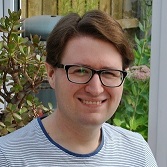
David was born in Winchester in 1983, and has been at the helm of award-winning David Barton Music since 2001. He combines a busy portfolio of teaching, accompanying and composing both from his base in Lichfield, and across the UK.
He was educated at The Crypt Grammar School, Gloucester, where he won prizes for both music and drama. He took a leading role in all the school’s musical activities including choirs, orchestras and chamber ensembles. He also played a significant part in the school’s productions including as musical director for Cinderella and Bugsy Malone. Whilst at the school, he continued his instrumental studies as a pianist, flautist and singer; he also gained the skills and confidence to be an effective accompanist. Whilst at the school he also learnt the organ, and in the latter years, led the music at the school’s assemblies. In November 1998 he played 2nd flute in Malcolm Arnold’s Little Suite No. 2 under Sir Simon Rattle as part of the World’s Largest Orchestra at the National Indoor Arena in Birmingham.
David Barton Music was established during David’s last couple of years at school, and since leaving, he has developed a successful career as a teacher, composer and accompanist. He graduated with a BA(Hons) Open Degree in 2008, and a MEd in 2010, both with The Open University. He also holds the DipABRSM in Piano Teaching and the CertGSMD(T) in Flute Teaching. He was one of the first students to graduate on the Royal School of Church Music’s DipRSCM in Sacred Music Studies course. As a composer, he holds the LLCM and ALCM diplomas from the London College of Music. He is currently reading for a PhD in Music Education at the Institute of Education, University of London.
David has over 100 compositions and arrangements published in the UK, USA and Canada, and thousands of copies of his music have been sold worldwide. These include works for solo voice, choir, organ, woodwind, orchestra and chamber ensembles. Regular performances, particularly of choral works, take place especially in the USA. Publishers include several major companies including GIA Publications, Inc., Spartan Press (Phylloscopus Publications) and Augsburg Fortress. David also typesets and publishes a number of pieces under the David Barton Music umbrella, and these are sold direct via his website.
David writes in a variety of styles, but mainly classical. His music is designed to be tuneful, generally easy-on-the-ear and accessible to a wide range of ensembles, particularly those with limited resources. A number of works have received favourable reviews in Church Music Quarterly, Clarinet & Saxophone Magazine, and Pan Magazine. In 2011, his setting of A Celtic Blessing was selected as one of the prestigious JW Pepper ‘Editor’s Choice’ for that year.
More about David and his music and teaching on his website


 I had a privilege having Slava as part of music upbringing through his many LPs, as I may humbly mention my mom has studied and gained her Masters with Heinrich Neuhaus in Moscow Tchaikovsky Conservatoire in the 60s.




 The Cross-Eyed Pianist