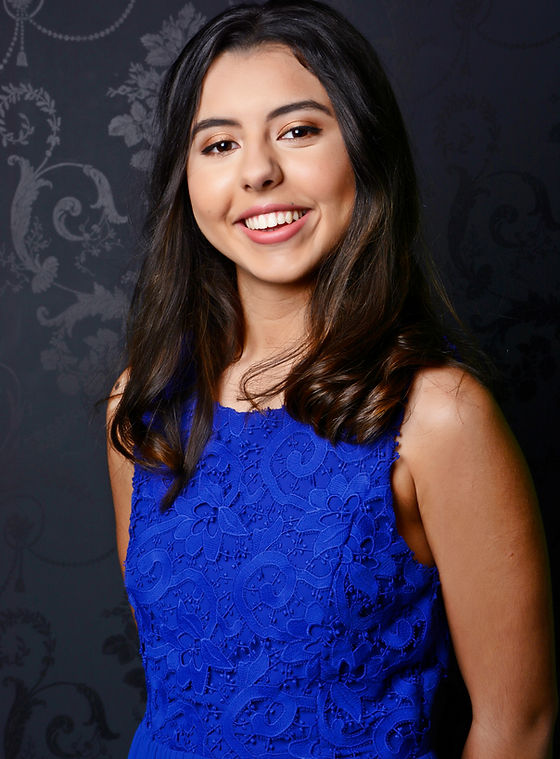
Guest post by David Lake

(This article first appeared on Facebook as a comment in response to my article Let classical audiences be quiet.)


The truth is we do have a problem. But we’re not solving it in the right way (in my very humble opinion! ). So, let’s break it down….

The problem: Younger audiences are not going to ‘traditional’ classical concerts.

The reasoning from the concert management: They want to see something more akin to a non-classical gig where they can interact with musicians in ‘real-time.’

The answer from the concert management: turn the classical concert into a gig. We know how to do this because most pro musicians don’t see music as a segregated genres but as a continuum so for many, whether it is Femi Kuta, The Manchester Collective or the Berlin Phil doesn’t actually (musically) matter and in fact just like a good diet, one should have a bit of everything.

But where this all falls down is when you get to the Great Paying Public who are obsessed with labels, genres, types, etc. and a total mis-understanding of the process of ‘musicking’ and how it applies to the different genres.

And the fact that our classical concerts are just TOO expensive starting from the ticket prices and the devious tricks the venues play to increase the price (‘convenience fees’ on an emailed ticket which by definition only exists so they don’t have to spend money printing and posting it!), horrendously-priced food and drink (glass of very mediocre red at the RAH is now heading towards £15), virtually non-existent public transport (endless strikes, endless cancellations and very expensive) – this is pricing out the younger punters unless they live within easy striking-distance of a TfL station (and many of my 50-something compatriots seem to have just given up and retired to remote locations which may as well be on the Outer Hebrides).

Several things I’ve done these past few weeks have brought this in to sharp focus. First, I went to a fabulous concert at Bold Tendencies by Pavel Kolesnikov and Samson Tsoy – tickets around £15 each, food (excellent) at Peckham Levels about £25 for 2, drink cheap, views from the rooftop free and To Die For. Age-range 9-99 – all colours, shapes, types, dress, etc. and massively respectful to the music and artists. Brilliant. Second, Glyndebourne; Semele. Ticket (cheap seats) over £150. Food – brought our own but had to pay for the table. Venue, utterly gorgeous. Music, world-class. Audience; old, white, rich, entitled and actually a good number who just seemed to be there for the event rather than the music (including the people behind us who chatted ALL the way through). Would I go again? Yes. Does it need to change? Yes or else it will simply turn into another corporate junket.

Then late-night Prom – Iestyn Davies, English Concert, Bach… Utterly amazing, totally silent, respectful, engaged audience. And they had to be because the pianissimo at times was SO pppp that you just HAD to listen.

The takeaway for me is that at events where the audience is engaged and sufficiently educated and invested they will, by nature, be quiet, be respectful, be interested. I don’t think the problem is with the true audience per-se; it is that we’re not putting on the right things in the right way at the right price point to attract them much of the time and many promoters are lazily programming stuff that they know that the rich, older audience will just tip up to because that is the only way the venues can survive.

What I’d like to see, alongside the ‘big ticket’ items, is the kind of diversity that organisations like Through the Noise run and promote throughout the country, and then making it easy and cheap to get to the city-centre venues by cheap, available public transport, fair-priced tickets and good quality, inexpensive catering (RAH ‘sausage’ roll – I’m looking at you in shame).


David Lake is a research scientist, engineer, pianist, concert-goer and choral singer and sees the barriers between art and science as purely artificial and unhelpful.  He is currently studying for his Licentiate Diploma (piano) and recently achieved a first in his BA from the Open University, whilst carrying on with the science-stuff in 6G mobile networks for the “day-job.” He also writes for The Cross-Eyed Pianist’s sister site ArtMuseLondon.com

… PLAY THE MUSIC !


Guest post by Alberto Ferro

Inspirational yet enigmatic, the recommendation to NOT PLAY THE NOTES is typically given in music classes of conservatories all around the world. It suggests that a musician should forget about technical things and focus on the poetic content of the music. Easy to say. And it doesn’t even remotely hint at how that shall be accomplished. How can one play the music without playing notes? Is it perhaps figurative speech?

What is the relationship between music and notes? Music is a way to communicate ideas, emotions, aesthetic content, and the notes are a notational device that helps reconstructing the complex series of actions necessary for music to be performed. While music is an undefinable, ephemeral phenomenon, a musical score is an inescapable, very tangible instruction manual that conveys in a rigorous way how to produce refined combinations of sounds on your instrument. The score (and every kind of musical notation) is a practical tool instructing on practical operations. What scores don’t show are the poetic intention, and they never will.

A note is possibly the smallest item we can identify in a score, a small brick in the architecture of a piece. The similarity with written language is striking: like notes, letters are meaningless by themselves but necessary to form words and phrases of content. In language, for a sentence to acquire meaning it must be organized properly at the level of letters, words and above; syntax, content, punctuation, vocabulary, etc.

Musical notes are grouped into motives, phrases, periods that are dynamic, contextualized by further levels such as harmony, organized in rhythms, sections, according to proportions, characterized by articulations, etc. The score presents all of it in visual form, through black dots on white paper: it takes some years of musical education to see all of that just by studying the score. Even more significantly, seeing doesn’t exactly translates in hearing, and even less easily transforms in performing.

Notes and music belong to two quite different dimensions: instrument and art, instruction and expression, gesture and intention. The ability to maintain the former at the service of the latter is possibly the highest way of conducting ourselves in music.

When you listen to music, do you hear notes or do you pay attention to the music? What is more rewarding, to connect with the poetic message or to detect intervals, tonalities, chords, and notes? Any listener knows that music is relevant when it goes beyond its means of production: every score looks the same, black dots on paper, how uninteresting, but every piece of music is unique. The most passionate listeners don’t hear pianos, cellos, oboes, but emotions, art, sublime ideas, pure creations, etc.

As instrumentalists, when do you stop playing notes and start playing the music? As you practice, there is a point where you have grown so much familiarity with the piece that the score stops showing notes and starts presenting an emotional roadmap, a poetic journey, an aesthetic design. What makes a piece of music exciting are the ideas, colours, gestures, the human characters we find in it, so we must practice it until these emerge, until sound projects ideas, colours, gestures or characters.

‘You must learn by memory, then forget’. The score ought to be forgotten so to express the human message that is in the sound and missing from the score. Or, only when we ‘play without thinking’ music acquires a deeper meaning, since thinking is the very process by which we inhibit more instinctive ways of expression, and the number one reason we get distracted while listening to music.

Start with one bar, one phrase, one chord, and when it works build up from there: the bar, the chord, the phrase, will at once become a vision, a gesture, an emotion, and that means you are not playing notes anymore. There is only one way for the magic to happen and requires that everything is ready in place, solid in your fingers, clear in your heart, and you, the performer, must be free of concerns.

No doubt it is hard, but there isn’t any more valuable route in music. As listeners, for music to reach out and move us, it must be really a special mixture of unique qualities. For musicians the process is backwards: we first try figure out what is it that we are trying to say, why this music matter for us, what is the composer telling us, and keep trying until the exact balance of ingredients (gestures, ideas, visions, intentions, etc.) emerges to align in a perfect, magical mixture.


Alberto Ferro is a composer and pianist. Current Creative Director at the London Contemporary School of Piano, Alberto holds a Piano Performance Degree from Milan Conservatory and a Master in Music from Washington State University, U.S.

Read more

If you’ve enjoyed Orchestra of the Swan’s intriguing and imaginative “mixtape” albums – Timelapse, Labyrinths and their latest, Echoes, then you’re in for a treat with this film of members of OOTS performing at The Grange, Northington, a beautiful Neo-Classical stately house, now in a rather sad yet gracious state of disrepair. (The building is used as the backdrop for the annual Grange Festival Opera.)

The stunning music, much of which is arranged by OOTS leader and AD David Le Page, is complemented by atmospheric interior scenes in the building, creating an arresting and absorbing visual and aural experience.

Watch ‘Echoes’ here

https://youtu.be/SA0lEc-KGaY?feature=shared

Guest post by Ian Tindale, pianist and Artistic Director of Shipston Song

In a quiet corner of Warwickshire, not far from the picturesque towns of Chipping Norton and Moreton-in-Marsh, is a haven for music. At the end of a long track, a farm complex appears and it’s here that locals ‘in the know’ on occasion flock to hear classical music at its best. I had the good fortune to be invited by the owners to give a recital with long-standing colleague tenor Nick Pritchard in their intimate music room for an audience of around 60, and the kernel of an idea started to form. In lockdown in 2021, I remembered this quiet corner of the country and assembled some singing colleagues and made a series of recorded recitals and it dawned on me that this place could be a vehicle for my own creative vision and passion. Thanks to the
endless generosity and willingness of the owners, Shipston Song was formed under my direction and we opened our doors in September 2022 for our first long weekend of song.

My focus in that first year was on what I wanted to do: artists on my ‘wish list’, repertoire I was passionate about, and research projects coming to fruition. In addition to giving a platform to two ‘Shipston Song Rising Stars’, current students who had demonstrated an affinity with song, James Gilchrist, Harriet Burns, Jess Dandy and Julien van Mellaerts joined me on stage, and in a moving tribute James Gilchrist highlighted the crucial nature of small festivals creating a space for an intimate genre in intimate venues, words which continue to resonate for me.

Shipston Song in its 2023 edition very much reflects my desires for the development of our corner of the industry more generally. I believe we have an obligation to redress the imbalance of repertoire that we programme; the realm of song has long been open to many female composers, even if only in a private or amateur sphere, and there are countless works by women that would give a richer fabric to this special repertoire-tapestry of words and music, if only they were heard. In 2022 I focussed a whole recital on the life and music of Josephine Lang, a research project of mine which drew together words and music, and brought to a new audience Lang’s own strife and that of many composers of her sex in the 19th century. This project has gone on to have a life of its own (you can hear it at London’s Conway Hall on 19th
November); the success of the project is down to the unique compositional voice we can discover in her music and the relevance that Lang’s story still has today.

In 2023, as we extend our reach and our platform for performance expands, I have made the decision to commit to equal programming of male and female composers, and so over 3 recitals, we have 35 individual songs by men, and 35 by women. We are surrounding songs by female composers with repertoire by men which has become a core part of the canon – we cannot turn our back on these masterpieces, especially when aiming to attract a wide-range of audiences – so we are marking anniversaries of Michael Tippett and Sergey Rachmaninoff, and other major pillars of the repertoire that feature are Gustav Mahler, Ralph Vaughan Williams, and Gerald Finzi. On the other side of the coin we have the (increasingly) familiar (Fanny Hensel, Clara Schumann, Alma Schindler-Mahler, Rebecca Clarke, Amy Beach, Lili Boulanger) and the still-neglected (Joan Trimble, Ina Boyle, Dilys Elwyn-Edwards, Cécile Chaminade, Nadia Boulanger). It was no small challenge for me, the artists, and our Rising Stars to ensure we maintained this overall repertoire balance, but my hope is that by delving into a body of repertoire which still has many dimly lit corners, we can carry new discoveries out into the world with us.

Another goal for Shipston Song 2023 is to use our platform to programme songs written within the last ten years, and to give a few pieces an invaluable second or third performance. I’m thrilled that Roderick Williams is bringing a new piece by Anna Semple to Shipston, and that we can give its world premiere alongside the piece it was written to partner, ‘Earth and Air and Rain’ by Gerald Finzi. This concert will be the high point of a weekend that also sees Helen Charlston and Laurence Kilsby realise repertoire by Josephine Stephenson, Richard Barnard and Joshua Borin.

On top of this, I wanted to find a way to share the artists’ resources and talents visiting us during the weekend, so I have expanded our ‘Shipston Song Rising Star’ scheme to include three singers and a pianist who will be in residence with us for the whole weekend. These artists (who are current postgraduate students) are invited to take part, and will work together in masterclasses with Helen Charlston, Roderick Williams, and me, as well as perform in one recital each in a now-familiar format. The most formative experiences for me were those in which I was immersed in a community, secluded and protected from the business of the outside world (for a short time at least), living and learning alongside fellow musicians sharing their
insights; I hope we are moving towards being able to offer this kind of total immersion for all our artists at Shipston Song.

I don’t take my ability to create any of this at Shipston Song for granted; the ongoing plight of many organisations at the mercy of Arts Council England sends shockwaves throughout the profession and its supporters. We are all inevitably led to question our existence, the content of our mission statements, and our purpose. In our corner of the Cotswolds, we are hugely lucky: we rely on the generosity of the local population, both as audience members and as private donors, as well as small grant-giving bodies who support specific portions of our work and help bridge the gap between income from ticket sales and elsewhere – a yearly process of book-balancing where nothing can be taken for granted and which is very much ‘hand to mouth’ right up until the week before the festival begins.

Our festival theme in 2023 is by Walter de la Mare: ‘I sang it under the wild wood tree’,
highlighting our particular closeness to nature as a festival in our Warwickshire home. I hope to continue to bring my passion for song to this special place, where the peace and quiet of our rural setting comes together with intimate music making and collegiality and defines our relationship with artists and audiences alike, in 2023 and beyond.

Ian Tindale
Artistic Director, Shipston Song

Shipston Song runs from 22-24 September 2023. Full details of artists and programmes here