What is ‘Mastery’?
Mastery is about fulfilling your own intrinsic potential. It is not simply the commitment to or achievement of a goal but rather a constant pursuit. “It’s about the journey not the destination” is a neat platitude that is often trotted out in the aftermath of a failed exam or missed goal, but it is relevant to the process of mastery for which the actual point of arrival may be quite elusive. Specific goals can be curiously anti-motivational: if all your effort is focused on a single goal, what else is there to work for when that goal has been reached? Mastery, in contrast, is an ongoing process – a process which can provide immense satisfaction, stimulation and surprising creativity.
We are all capable of mastery. In his book on the subject, Robert Greene explains how the attainment of mastery is hard-wired into us, the result of our evolutionary development, a dogged and persistent acquisition of skills through which our ancestors learned the necessary expertise which enabled them to survive and rise to the top of the food chain. Thus the “intensity of effort” required to achieve mastery is genetic and is driven by a powerful inclination towards a particular subject.
Those who achieve mastery are not necessarily geniuses or former child prodigies, nor highly talented individuals or those with a high IQ. Creativity and brilliance do not come from nowhere (though many believe that they do, that they are inherent, “inborn” in some people), but rather from a passion for one’s chosen subject combined with persistence and determination and an intense desire to learn.
Mastery is about embracing the role of the life-long student and dedicating oneself to the pursuit of excellence. Mastery is the antithesis of “dabbling” or “having a go”. It is the commitment to really stick with something – be it music, writing, chess, tennis – until we excel at it. The moment at which we believe we have attained excellence is ambiguous; as such, it has no fixed end point, and it is this ambiguity which drives the continual pursuit.
Masters are not experts because they take a subject to its conceptual end. They are masters because they realize that there isn’t one
– Sarah Lewis, ‘The Rise’
What Mastery is not
Mastery is not about perfectionism, which is an artificial construct, an ideal as opposed to a quantifiable reality, and as such an impossibility. No matter how hard you practice the fine motor skills involved in playing a musical instrument there is still no guarantee that you will never make a mistake. Mastery is the pursuit of excellence – and for the pianist, it is about appreciating and accepting our own fallibility, enabling us to learn from our mistakes and to draw satisfaction from incremental improvements and marginal gains, rather than large, potentially unattainable goals. This approach allows us to make long-term progress towards excellence, which is far more valuable and achievable than short-term results or instant gratification. And long-term fulfillment actually comes from the process of mastery.
The acquisition of Mastery
For the pianist (or indeed anyone else) seeking mastery, the first step on the path is identifying your lifelong passion, then undertaking an “apprenticeship” (or becoming a student) and finding a mentor or teacher to guide you. It is a simple process, accessible to us all, but only if we are willing to commit time and effort to it.
Mastery is hard won, by necessity. And so it should be, because the striving sets us on a path to self-determination and fulfillment, and allows us to move towards a goal which is imperative for any musician: autonomy. It requires an open-minded, ever-curious, spontaneous and mindful approach to one’s passionate pursuit and a willingness to embrace setbacks and cul-de-sacs along the way.
The skill to mold the material into what we want must be learned and attentively cultivated
– Goethe
Mastery comes not simply from 10,000 hours of piano practice, but from 10,000 hours of deliberate, intelligent, thoughtful, self-questioning practice. During this process, basic skills are acquired, which allow us to take on new challenges and make connections which were previously elusive. Gradually, we gain confidence in our ability to problem-solve or overcome weaknesses, make more profound interpretive or artistic decisions about our music making, and at a certain point we move from student/apprentice to practitioner. Now we have the confidence to try out our own ideas while gaining valuable feedback in the process, and our growing knowledge and skill allows us to become increasingly creative, and bring our own individuality and personal style or flair to the task.
Such finesse or craft takes inordinate amounts of work – concentrating on very short sections of the score, seeking feedback from intense self-monitoring, at all times remaining curious and open-minded – but this approach provides us with accountable pianistic tools (interpretative, technical, artistic, and psychological) and validation methods that put us on the path to mastery. From a practical perspective, such pianistic tools are a virtuous circle of intense self-evaluation, analysis, reflection and adjustment, and the ability to always see errors as pointers to improvement. It’s a kind of “apprenticeship of incremental gains” informed by continual reflection, adjustment and refinement.
The ability to work independently, without a teacher acting like a coach running alongside us with megaphone encouraging us to let go, play more freely, play more simply, to get the notes right, is crucial in the acquisition of musical mastery. Much of this independence comes from confidence and the ability to recognise one’s own strengths and weaknesses and to act upon them. But it goes further than that: the autonomous musician does not look for approval from colleagues, the public or the media. Instead one seeks approval from the music itself, by living with it and in it. Thus we take ownership of the music by recognising the value of what we have to say, rather than imitating more senior or more advanced musicians or acclaimed recordings, or constantly referring to a teacher or mentor for approval.
As you grow older, converse more with scores than with virtuosi
– Robert Schumann
The effort to achieve mastery brings with it a host of psychological difficulties, including feelings of inadequacy as a musician which may be born of a former teacher’s or parent’s criticism, unfavourable feedback from peers or critics, career setbacks including injury, negative self-talk and feelings of guilt or self-blame. To move further on the path to mastery, these difficulties must be confronted, examined, and rejected or befriended – with or without the support of mentors, friends and trusted colleagues – and only by creating a personal toolkit to deal with such exigencies can we move forward with greater self-confidence. For example, when one asks of oneself “Am I good enough?”, it is worth examining the bar by which one’s skill and talent is measured. Comparing oneself to others is not helpful: there will always be people out there whom we perceive as “better” – and good luck to them! Does it really matter if they can play ‘Gaspard de la Nuit’ and you cannot? Instead, draw confidence from positive endorsements and feedback from trusted mentors, colleagues and peers, know that one is good at what one does, and disregard the “chatter” and competitiveness (sadly, something which is rife in the piano world, both professional and amateur). To accept and appreciate one’s own abilities and be trusting of one’s musical self is an important part of our autonomous musical development and maturity.
Another significant aspect in the acquisition of mastery is shutting out the “noise” of others’ commentary or criticism, however well-intentioned it may be. The musician seeking mastery knows that intelligent advice or critique given by a trusted mentor or colleague can be valuable, but he/she also knows when to ignore or reject criticism (the didactic teacher who says there is a “right way” to play Bach, the sneering critic who dislikes your use of the pedal). Because the creative process requires an absence of interruptions to develop, we need to be free of “noise” to build a “safe space” where innovation and creation can be nurtured. The practice room thus becomes the test bed, the laboratory, where ideas are explored and examined, embraced or rejected, and where the inner critic is interrogated, challenged, accepted or dismissed. Eventually, this way of thinking and working becomes intuitive, and at that point we develop an instant instinctive realisation of our musical imagination unhindered by technical obstacles, able to react to complex or unexpected situations without becoming overwhelmed or losing a sense of the whole or the structure of the music, and much more open to possibilities. In this state of “relaxed alertness”, we are better able to connect with self, music and audience, and we become more objective, individual and resourceful in our approach to our music making
When we practise we should do so actively and creatively with joy, playfulness and spontaneity, appreciating every note, every sound, the feel of the keys beneath the fingers, the way the body responds to the music, the nuances of dynamics (both indicated and psychological as the music demands), articulation, expression, and so forth. In short, our music making should be an ongoing, responsive process of discovery and refinement, rather than one of predictability, averageness or “good enough”.
‘Failure’ and the ongoing quest
I have not failed, I’ve just found 10,000 ways that won’t work
– Thomas Edison
Often “failures” or errors occur because our focus becomes too narrow and we forget to look at the bigger picture: perhaps we are obsessing about a small section of a piece of music we are working on rather than standing back to consider the piece as a whole, its landscape, narrative and choreography. As our music becomes more “embodied” within us, so we become more adaptable.
To carry with us always the sense that our musical study is an ongoing process, that despite many performances a piece can never really be described as “finished”, encourages a growth mindset and a forward-looking, open-minded attitude – another crucial aspect of mastery. This is related to the idea that “failure” encourages further endeavour. In her book ‘The Rise’, Sarah Lewis offers another word for “failure”: she suggests “blankness”, a 19th-century alternative, which offers the possibility to clean the slate and start again from scratch after an unsuccessful attempt. Instantly this feels far more positive than recovering from a “failure”.
A person’s errors are his doorways of discovery
– James Joyce
When my students tell me they wished they had achieved a higher mark in their piano exams, or that they had “played better” on the day, I remind them that the exam is a one-off, a moment in time, which may be disrupted by any number of personal or external forces which tip the balance one way or another. Far better to reflect on and appreciate the huge amount of learning and accumulated knowledge which come from regular thoughtful practising and knowing how to apply that knowledge to learning new repertoire or reviving old repertoire. All that good, important work can never be taken away from us nor undermined by any examiner or adjudicator or critic, and knowing how to build on it and progress is another important facet of mastery.
As our authority and autonomy in our music making grows and our confidence and self-reliance deepens, we become more insightful, more aware of what needs to be done next, learning always from what we have already done (and not done), created and built. We reach a state where the divide between intention and realisation has been narrowed such that they become one and the same. This is far, far more valuable than any certificate or exam report, newspaper review or letters after one’s name (which are, after all, merely exterior indicators of achievement or ability).
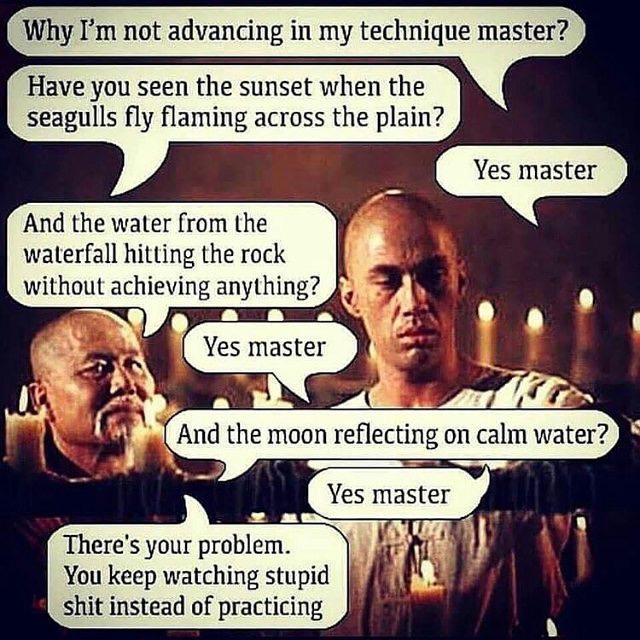
If you, like me, are someone who by nature thrives on purpose and “incompleteness”, the feeling that there is much more to be done, so much more to be revealed in the music, you are already on the path to mastery, motivated to try harder, to grow and to improve. From childhood, I’ve thrown myself into passionate pursuits – first dinosaurs and ancient Egypt, later writing, art and music/the piano. I believe my ability to focus, often quite obsessively, on one or two areas of study/personal fascination, have enabled me to now fully immerse myself in my music. It has become my most passionate pursuit and one for which I am more than willing to put in the required effort to progress and develop.
You may be unaware of how the necessary struggles of your own unconscious mind, if misunderstood, will bruise your heart, arrest your efforts prematurely, and prevent your staying absorbed in your errand. Yet, the same struggles, appreciated, will enable your creativity and the larger processes of mastery
– Janna Malamud Smith, ‘An Absorbing Errand’
The musician’s life requires courage, patience, persistence, empathy, openness, the ability to deal with rejection; the willingness to be alone with oneself and to be kind to oneself; to be disciplined, but at the same time, take risks; to be spontaneous and playful, yet able to submit to a daily routine; to be willing to fail – not once, but again and again, over the course of a lifetime. For those willing to embrace this life, the road to mastery becomes one of discovery and continuous self-improvement leading to deep and lasting personal fulfillment.
As human beings, our greatness lies not so much in being able to remake the world…as in being able to remake ourselves
– Mahatma Gandhi
Further reading
Mastery by Robert Greene (Viking Books, 2012)
The Rise: Creativity, the Gift of Failure, and the Search for Mastery by Sarah Lewis (Simon & Schuster, 2015)
An Absorbing Errand: How Artists and Craftsmen Make Their Way to Mastery by Janna Malamud Smith (Counterpoint LLC, 2013)
What does it take to become a master?
Overcome Nerves with Mastery Goals




 The Cross-Eyed Pianist