In compiling this mixtape I’ve tried to include tracks that represent both the decades of my life and musical tastes.  Unfortunately Bucks Fizz’s Making Your Mind Up didn’t make the final edit although I was obsessed with this song towards the end of my first decade on this planet.  My rather rebellious teenage years are best represented by Bowie’s Heroes – like all teenagers I really did think this was written just for me and my friends.  My twenties coincided with the rise in ‘Britpop’ and after much deliberation I narrowed my choice down to Oasis’s Wonderwall – but the Directors’ Cut includes other greats from this era including Pulp’s Common People which narrowly lost out to the Gallagher brothers.

In my thirties I was travelling the world as part of my Corporate career, and spent many happy and insane weekends in New York – notionally for work but really to go dancing with my like-minded colleagues.  Lady Gaga‘s Telephone best sums up this decade for me, or what I can remember of it.

I’ve always loved some of the great musicals.  Whilst the Director’s Cut contains many of my favourite numbers, my selected track is Liza Minelli singing Cabaret – which, along with the Bernstein, will be played at my funeral.

An interest in my Jewish heritage has also led me to include some music with a Jewish theme.  John William’s Schindler’s List theme needs little introduction other than to say it is the best soundtrack to a film ever.  I’ve also included a classic Klezmer track which is typically haunting and uplifting at the same time, and the beautiful Shalom Aleichem which almost makes me want to light the candles and prepare a Sabbath supper.

My latest interest (or fad) is jazz and I am currently studying jazz piano: which is a totally different experience from classical piano.  Thelonious Monk‘s Smoke Gets in Your Eyes is a great example of what I’ll never be able to do in a thousand years.

Choosing music to represent my classical (in the broadest sense of the word) taste proved near impossible.  Wagner’s Liebestod missed the cut despite being the sexiest piece of music ever written (other than Tom Jones‘ Sex Bomb).  Instead,  I settled on music with a religious theme:  Bernstein’s Chichester Psalms no.2, the Hebrew setting to The Lord is my Shepherd, contains the most beautiful countertenor aria to which I expect people to weep copiously when it is played at my funeral (and then party to Cabaret).  To conclude my mixtape, the final Aria in Bach’s St Matthew Passion, “Mache dich, mein Herze, rein” (Make Yourself Pure, My Heart).  I’m sure there must be some way in which this sums up the entire collection but I’ll leave that to the listener to discern……

Here’s the 45 minute version:

https://open.spotify.com/user/r2knight/playlist/5iewBFnAcdYyk5QS60nSEX

And the Director’s Cut:

https://open.spotify.com/user/r2knight/playlist/7hFnnP8yYgLVCFfBXIaSQs


Rebecca Singerman-Knight is a piano teacher based in Teddington, SW London

rebeccasingermanknight.com

cropped-Logo-small-centred-1

Cracked Voices is a new song cycle, based on original research, created by writer Graham Palmer and composer Jenni Pinnock. Following in the footsteps of Schubert and Schumann, this is a cycle of “art songs” or poems set to music. Each song in Cracked Voices is short (around three minutes) with a character and story behind it drawn from the borderlands of Hertfordshire and Cambridgeshire (where Graham and Jenni both live).

From Servandus waiting on his lost Celtic goddess, to the POWs celebrating Hitler’s birthday on Therfield Heath,  James Lucas’s confrontation with Charles Dickens to Joyce Hatto’s “acclaimed” recordings later found to have been fabricated by her husband, the songs give voice to these largely forgotten characters through Jenni’s “tantalizingly beautiful” and accessible music and Graham’s vibrant text.

Jenni on the compositional process:

Working with a partner on a project gives you the opportunity to bounce ideas off of one another and ultimately produce better work (or at least, it has for me). Having the opportunity to work with a living writer is wonderful too – and quite a rarity really. It does mean you have to ensure your setting is true to the spirit of the text though, and the writer’s intentions. Capturing the spirit of the words and the essences of the characters contained therein is a challenge, and something I feel we’ve achieved in the Cracked Voices songs.

Alongside the song cycle itself, each song will work as a stand-alone piece and some will be arranged for choir, giving a whole host of performance options after the premiere. A CD will be released in 2018. Jenni and Graham are also involved in outreach projects which relate directly to the song cycle, including a series of workshops on writing and opportunities to give local people and schoolchildren the chance to find out more about the characters who are given voice in the songs.

Cracked Voices’ receives its premiere at Anglia Ruskin University, Cambridge on Saturday 10th March, with a further performance on 28th April in Royston. Full details and tickets here


18-04-18_gregory_rose_web

Who or what inspired you to take up conducting and pursue a career in music?

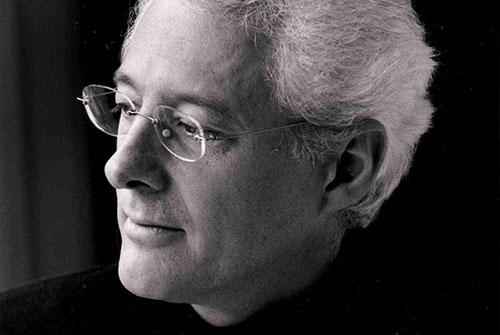
I was born into a musical environment: my father, Bernard Rose, was a huge inspiration. He was a conductor, composer, scholar, organist, horn player, singer, inspirational teacher. I studied with him at Oxford and sang in his daily choir at Magdalen College, but before that I was a chorister at Salisbury Cathedral, as was my father, his brother and both my brothers. At Salisbury we had about 8 services a week, with about 12 rehearsals, from the age of 8-13. I remember thinking at the age of 12 or so that I wanted to be in music, and thought conducting would be good. My father sent me to have lunch with his old teacher at the Royal College of Music, Sir Adrian Boult, and Boult gently grilled me for over an hour over lunch, insisting that I should only pursue conducting if I really wanted it. This helped focus my mind. Leopold Stokowski used to stay frequently at our house from when I was very young, and I think this must have had an influence on me also. As soon as I went to Oxford I began serious conducting, having already taken on a small Oxfordshire choral society.

Who or what are the most significant influences on your musical life?

In the early days Christopher Dearnley, Organist at Salisbury Cathedral, and my first piano teacher, was a strong influence. Then at my senior school my teacher for A-level played me Stockhausen’s “Gesang der Juenglinge”. I was 15 years-old, and it blew my head off. I knew from that moment that I would dedicate much of my life to ‘living’ music.

When I left school I studied ’12-note music’ in Vienna with a former pupil of Arnold Schoenberg, and this has been a strong influence all my life. Whilst at Oxford I became fascinated by the conducting of Pierre Boulez, and used to go to watch him conduct. This was my main conducting influence.

What, for you, is the most challenging part of being a conductor? And the most fulfilling?

The most challenging aspect is inspiring musicians, professional, students or amateur, to create exciting musical sounds, and, hopefully, display their enjoyment of this to the audience. Certainly, it is very fulfilling teasing the written notes into audible sounds, whether it be medieval music, Classical or music of today.

As a conductor, how do you communicate your ideas about a work to the orchestra?

Through gesture as much as possible. When teaching conducting I stress the importance of “less talking is more music”. The fact that in the concert or recording venue at the moment of impact there is no speaking is a vital aspect of communication from conductor to musicians.

How exactly do you see your role? Inspiring the players/singers? Conveying the vision of the composer?

My first role as conductor is my being the representative of the composer in the room, from whatever period. I always do masses of research into the composer’s background at the time of composition, etc, before studying a work. I have had the pleasure of working directly with many hundreds of living composers, and I am a composer myself, so feel I am “on their side”! If the piece is not written out logically I do all I can to persuade the composer to make the scores as logical as possible.

Is there one work which you would love to conduct?

Stravinsky “Sacre de Printemps”

Do you have a favourite concert venue to perform in?

The Philharmonic Hall in St Petersburg, Russia, is unbelievable!

Who are your favourite musicians/composers?

There are too many to list. It goes from Perotin in the 1150s through to Machaut, Byrd, Tallis, Sheppard, Monteverdi, Bach, Mozart, Hummel, Beethoven, Mahler, Schoenberg, Berg, Webern, Stockhausen, Ligeti, Xenakis, Arvo Paert, Steve Reich…

As a musician, what is your definition of success?

Achieving a fine/masterful performance.

What do you consider to be the most important ideas and concepts to impart to aspiring musicians?

The joy of performing at the highest possible standard; rehearsal, rehearsal, rehearsal!

Where would you like to be in 10 years’ time?

Still conducting and composing internationally

What is your idea of perfect happiness?

The morning after a great concert!

What is your most treasured possession?

The autograph score of Bach’s B Minor Mass

What is your present state of mind?

Good! I’ve just finished editing a new CD in Latvia and am preparing for my 70th birthday concert in April. I am a lucky person!


Gregory Rose’s 70th birthday concert is on 18 April 2018 at St John’s Smith Square. The programme includes several premieres, including a piece for solo voice with Loré Lixenberg and a new Violin Concerto, specially composed for the acclaimed violinist, Peter Sheppard Skærved.

Full details here


Gregory Rose is particularly noted for his performances of the romantic and contemporary repertoires, having conducted over 300 premieres of orchestral, choral and ensemble music throughout Europe and the Far East. He studied violin, piano and singing as a young child and was a pupil of Hans Jelinek (Vienna Academy) and Egon Wellesz (Oxford University), both former students of Arnold Schoenberg, and of his father, the late Bernard Rose.

Gregory is Music Director of the Jupiter Orchestra, Jupiter Singers, Singcircle and CoMA London Ensemble. He has conducted many concerts and operas for Trinity College of Music, including concerts with the Contemporary Music Group, and operas by Poulenc, Stravinsky, Virgil Thomson, Scott Joplin, Berthold Goldschmidt, Samuel Barber, Nino Rota and Malcolm Williamson. He is a professor of conducting at Trinity Laban Conservatoire.

Full biography

St John’s Smith Square announces OCCUPY THE PIANOS Festival 2018 
Friday 20 -Sunday 22 April 2018
Celebrating two themes: Protest and The Journey Within 

Including more than a dozen world premieres, a led meditation, a queer concert and Radulescu’s Icons in SJSS’s crypt (pianos laid on their sides with their action removed) 

St John’s Smith Square is delighted to announce its third full Occupy the Pianos festival curated by pianist and composer Rolf Hind. The numerous concerts from 20-22 April are studded with many freshly-written works and radical takes on music and concert-giving, with new and radical piano music at its core.

The two themes this year are Protest (from the feminist angle in Maxwell Davies to the words of prisoners in Rzewski, from a plea for compassion to animals to radical rethinking of music making from a queer angle) and The Journey Within. These themes don’t merely relate to the music chosen but the manner of presentation: so the second main day – The Journey Within – will gradually dissolve into audience participation with everyone ending up downstairs in the cafe together, by way of a concert conducted as a led meditation with Eliza McCarthy.

Rolf Hind says of this year’s festival:

St Johns’s Smith Square is only a stone’s throw from Parliament Square, site of protest and agitation for hundreds of years. In keeping with our name, this year’s programming considers politics and protest. At the same time – reflecting the beautiful, serene space in which we find ourselves in this church, the festival’s 2nd day will move towards spirituality and the journey within, offering new ways for the audience to encounter music and their experience of it.

There will be more than a dozen new works over the weekend, placing the focus on future directions for the piano, a focus also highlighted by the appearance of the extraordinary Magnetic Resonator piano in Rolf Hind’s Friday night recital. There has been a Call for Scores (Occupy the Pianos received over 100 new pieces in the past) and the weekend begins with a workshop on writing for the piano, with further pieces dropped into the weekend as surprises.

Increasing the sense of fluidity between events there will be two of Radulescu’s Icons housed in the crypt. These Icons are grand pianos laid on their sides which have had the action removed and are then played in unique ways.   At the end of the festival there will be a chance for members of the public to improvise on these instruments themselves.

Don’t miss the concert “On a Queer Day” on 21st April at 4pm, where several pieces will be introduced by an investigation of what it means to play Bach queerly and later that evening at 7.30pm there is Kagel’s Staatstheater, a surreal theatre piece, funny, disturbing, and politically engaged, which takes apart the whole concert hall experience, and doesn’t really put it back together again!

Also on the 20th there is a must-see performance of Peter Maxwell Davies’ extraordinary glimpse into the mind of a mad, wronged woman – uniquely in this case the role of Miss Donnithorne is shared by two of our most exciting vocalists, Elaine Mitchener and Loré Lixenberg.

The musicians involved in Occupy the Pianos are hand-picked by Rolf Hind: creative, multi-faceted and collaborative.

As well as being wonderful players they are thoughtful and curious about repertoire, and willing to take part in different elements of the weekend which gives it a joyful, collegiate feel. In each festival new players are added to the mix, fascinating young players often at the beginning of their careers. Not necessarily the “prize-winners” but brilliant musicians with a distinctive edge and profile.

At the festival’s heart is an ever-growing team of brilliant musicians whose approach is outwardlooking, unconventional and curious. The collegiate communal spirit of that group has made Occupy the Pianos such an adventure. An adventure that continues…

– Rolf Hind


For more information & tickets please visit

www.sjss.org.uk/otp2018


Source: press release/ Jo Carpenter Music PR Consultancy