As friends and followers of this blog probably know by now, I moved to Dorset at the end of May after 40 years living near or in London. We spent six weeks in temporary accommodation with my mother-in-law and our cat Monty, with just some basic furniture and effects to enable us to function and continue to work day to day (my husband runs his own business, working from home). Meanwhile, the bulk of our furniture and belongings went into storage. Three days after we moved into our new home on the island of Portland, near Weymouth, a large Pickfords van arrived to deliver our effects and left us a few hours later surrounded by packing boxes. The efficiency of Pickfords’ packing service ensured that every box was clearly marked, though some were rather ambiguous, such as “shoes and books” – which turned out to contain all the files associated with my London piano teaching practice. As I gradually unpacked, drawing our possessions out of their wrapping paper, a certain item – a book or a vase – would elicit a response or a Proustian rush of memory. Finding photos of my son as a baby and little boy were particularly poignant and special (he is now 20, living in his own flat and working as a chef at one of London’s top hotels).

It also occurred to me, as I worked my way through the boxes, that being reunited with these items, accumulated over a marriage of nearly 30 years and remembering how and why they came into our home and our joint lives, was like reacquainting myself with piano repertoire I had learnt previously. Just as I recalled why that mid-century white vase was special, so I also recalled what I liked about the repertoire and why I selected it in the first place. Some pieces go back a long way in my piano life – to when I was a teenager (Schubert’s D899 Impromptus, Mozart’s Fantasies), or when I was starting to play the piano seriously again as an adult (Bach’s Preludes and Fugues, Chopin’s Nocturnes). Others have more recent heritage – the music I learnt for my performance Diplomas or pieces played in concerts, which will always remain special because of their association with positive and enjoyable performances.

Returning to previously-learnt repertoire can be extremely satisfying – like reacquainting oneself with an old friend, while also making a new friendship. Some pieces reveal their subtleties and qualities more slowly than others and benefit from a cycle of work, rest, work, rest. A prime example for me is Mozart’s Rondo in A minor, K511, a profoundly emotional and complex work which I revisited four times and will work on again this autumn, such is the work’s appeal and breadth. Picking up a piece again after a long absence often offers new insights into that work, revealing details one may not have spotted the first time round, while time away from the music – perhaps spent listening or reading about it – helps one crystallise thoughts and form new ideas to put into practice. It can be surprisingly easy to bring previously-learnt work back into one’s fingers, and this ease is a good sign – that one learnt the work deeply in the first place.

At the time of writing, my grand piano is still in storage with a friend in London. In the meantime, I have been enjoying listening to music I’ve previously learnt while also considering new repertoire for performance later this year.

Oh, and I’ve also been enjoying the fantastic scenery on Portland…..

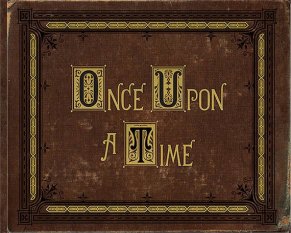
Henry-Storybook-50

The title of this post is a quote from an interview with pianist Gabriela Montero. Story-telling is about conveying a message and music is of course all about conveying messages, telling stories and stimulating the imagination, of listener and performer. Some pieces have evocative titles which hint at the story within, while others have nothing more than a generic word like ‘Sonata’ and a number. In concerts or recordings, programme/liner notes may tell the whole story of the music for the listener, or suggest certain events within the work, providing signposts, while leaving the listener to form a personal narrative during the course of the performance.

Composers create the sense of a narrative through musical devices such as dynamics and tempo, the contouring of phrases, melody, repetition, tension and release of harmonies, articulation, suggesting different instrumentation, and the use of pauses and silences. Because we spend our lives with stories, from the moment we are born, listening to them and sharing them, we absorb the patterns which make up stories: we sense when drama or tension is building and feel relief or pleasure at its release or resolution. These same patterns fill music: certain motifs or harmonies suggest particular moods, from triumphant joyful fanfares to moments of heart-stopping tenderness or poignancy; suspended harmonies take the listener to the brink, while the resolution brings wonderful sense of completeness or homecoming. The performer’s role is to act on all these devices to create a performance which is rich in expression.

A good story evokes an emotional response, positive or negative, in the audience, and a good story engages and absorbs the listener, excites and inspires them. It also makes them want to hear more of the music. But in order to convey the message to the audience, convincingly and expressively, we first have to form our own distinct narrative for every piece we play.

Asking ourselves questions about the music can pique the imagination to start forming a narrative –

  • “What does this section make me think of?”
  • “What emotions is are evoked in this passage?”
  • “How does this harmony make me feel?”

Using words to describe the music, not technical/musical terms but other adjectives which spring to mind when considering the piece, also stimulate one’s vision. Sometimes it’s helpful write these words on the score as an aide memoir.

From the initial hearing of a work, we each form a personal story for it, based on what we have heard. It may not be exactly the same story the composer had in mind, it may be very far from their original vision, but in order to shape the music expressively and communicate the story of the music to the audience, it is important to form a narrative and vision for the music from the moment we start work on learning it. When we take ownership of this through deep practising, this narrative becomes internalised with all its drama and tension, its triumphs and tragedies, its love and death. This then enables us to bring the music vividly to life in performance and to communicate the stories to our audience.

In performance, we express our and the composer’s humanity to the audience, and we succeed in making our connection to the audience stronger through our storytelling.

I try to decorate my imagination as much as I can

– Franz Schubert


Further reading/resources:

Stimulating the musical imagination

The Musical Adjectives Project


Who or what inspired you to take up the ‘cello and pursue a career in music?

When my father gave me the possibility to try a cello, everything went naturally its own way. There has never been a moment of decision-making.

Who or what were the most important influences on your musical life and career?

All my teachers, mostly Eberhard Feltz; Nikolaus Harnoncourt and many musicians I’ve played with, including Janine Jansen, Gidon Kremer, the Quatuor Ébène and Alexander Lonquich to name a few.

What have been the greatest challenges of your career so far?

The next concert.

Which performance/recordings are you most proud of? 

None.

Which particular works do you think you perform best?

That way of thinking prevents you from making music.

How do you make your repertoire choices from season to season?

There are a lot of pieces that speak to you at different times. It is not always easy to judge the amount of time you need to bring them to life. Being aware of that amount, you choose the music that you want to spend your life with and grow.

Do you have a favourite concert venue to perform in and why?

Musikverein in Vienna, Concertgebouw in Amsterdam and the Philharmonie in Warsaw. They have a special spirit, they support and inspire you to give your best.

Who are your favourite musicians?

I very much admire Alexander Lonquich for his integrity, the Quatuor Ebène for the diversity and devotion in their work, Janine Jansen for her utmost urgency. Playing with them feels like the best thing you can do.

What is your most memorable concert experience?

Schubert Quintet with the Quatuor Ebene, Goldberg Variations and Brahms c-minor piano Quartet with Janine Jansen come to my mind. Listening to rehearsals with Nikolaus Harnoncourt.

What do you consider to be the most important ideas and concepts to impart to aspiring musicians?

Integrity and curiosity. Accepting failures as an inspiration to grow. Sharing something that unites everyone.

What is your idea of perfect happiness?

The concert experiences mentioned above.

What is your most treasured possession?

Love.


Renowned worldwide for his musical integrity and effortless virtuosity German-French cellist Nicolas Altstaedt is one of the most sought after and versatile artists today. As a soloist and conductor he enthralls audiences with repertoire spanning from the baroque to the contemporary.

Read more at:

www.nicolas-altstaedt.com

(photo: Marco Borggreve)

stream_img

I admit it – I watched The Football. Not all of it, of course, but certainly the England matches. It has been refreshing and inspiring to watch this young, relatively inexperienced team in action under the tutelage of Gareth Southgate (who, as a friend of mine tweeted the other day, is the kind of person you would happily introduce to your mum). I say “refreshing” because unlike previous England world cup squads, this young team seems largely devoid of artifice and ego. There are no strutting peacocks here (recall David Beckham and co in their designer suits….) nor the entourage of WAGS, there for the shopping, the champers and the paparazzi. As many commentators have observed, this young England team is different – lean, keen and focussed, with a clear appetite for success. This is evidently due in no small part to the calm, composed leadership of Gareth Southgate, who chooses to encourage rather than berate, praise rather than criticise, thus establishing a supportive environment for the team to train and compete. The positive effect of this “kinder” management style has been evident throughout the matches England have played

But they lost the semi final match, you cry. Yes, but just look at what they have gained – and that “loss” in the semi final against Croatia should not be regarded as a “failure”. To get to the last four in the World Cup is a huge achievement in itself; add to that, the fact that Croatia fielded a team which included some of the top players in the world. What a privilege to play against such players!

The result of the match against Croatia should offer Gareth Southgate and the team much food for thought and reflection, which, if done right, will enable this young team to develop and grow and, hopefully, achieve greater success in the Euro championships and the next World Cup in 2022.

In ‘The Rise’, her excellent book on the search for mastery, Sarah Lewis explores the notion of the “near win” (rather than the “near miss”) as instrumental to achieving success.

A near win shifts our view of the landscape. It can turn future goals, which we tend to envision at a distance, into more proximate events….The near win changes our focus to consider how we plan to reach what lies in our sights, but out of reach.

Success motivates us, but a near win can propel us in an ongoing quest.

Sarah Lewis

To have reached the semi-finals of the 2018 World Cup, and to have played so confidently and largely successfully in the matches leading to it, the England team should enjoy the glow of their near win and use it to spur them to greater victories. The road to mastery is paved with setbacks, but if we are prepared to embrace them, they carve the way for further endeavour, achievement and fulfilment of goals.

This growth-mindset attitude applies as much to sportspeople as to musicians.


Further reading

The Success in Failure

A Passionate Pursuit

How the psychology of the England team could change your life


(image from ITV)